RV Solar Panels: Power Your Road Trip Without the Grid

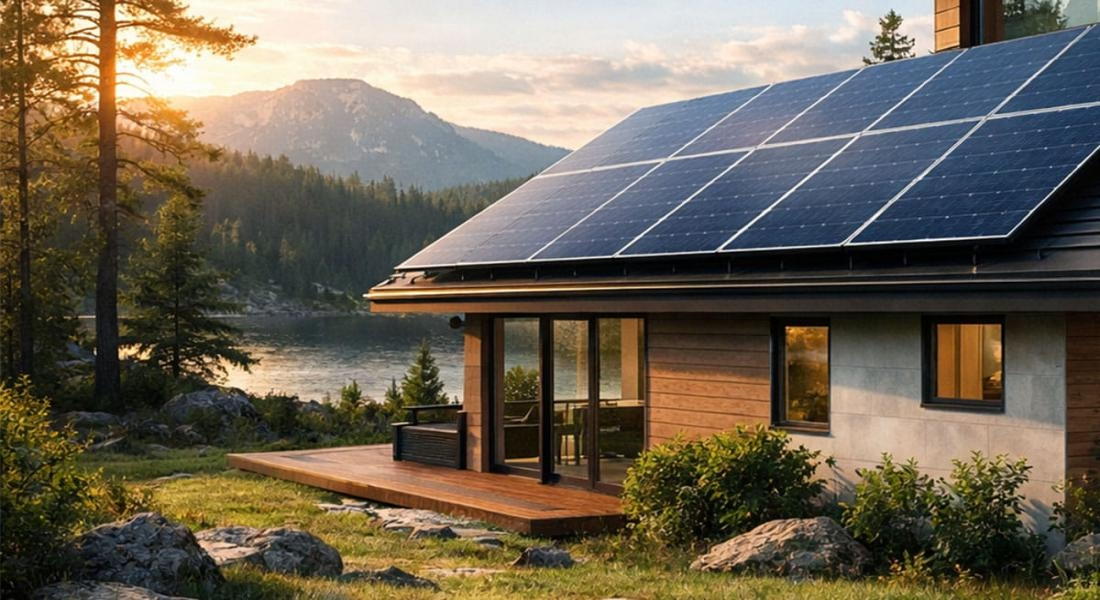
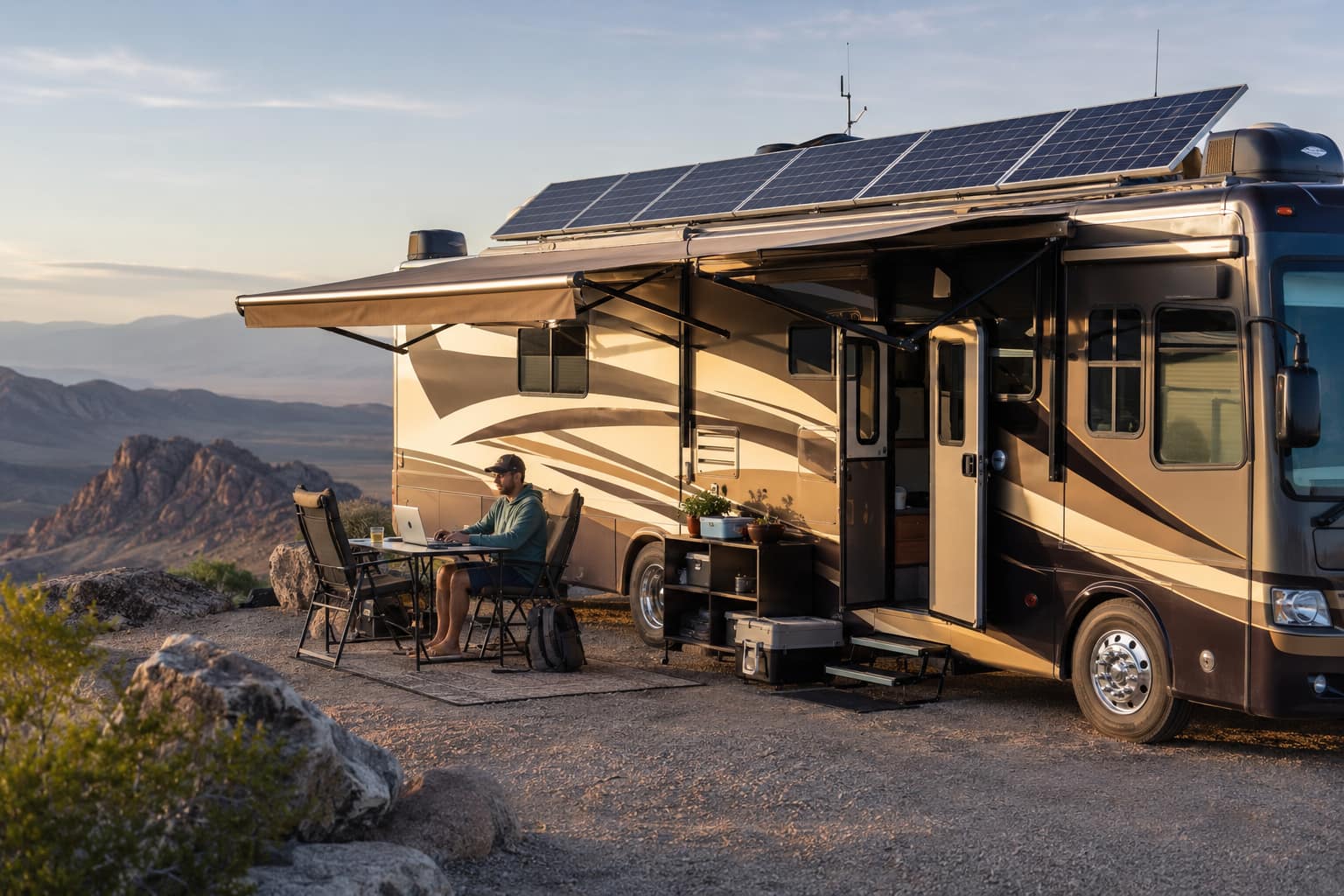
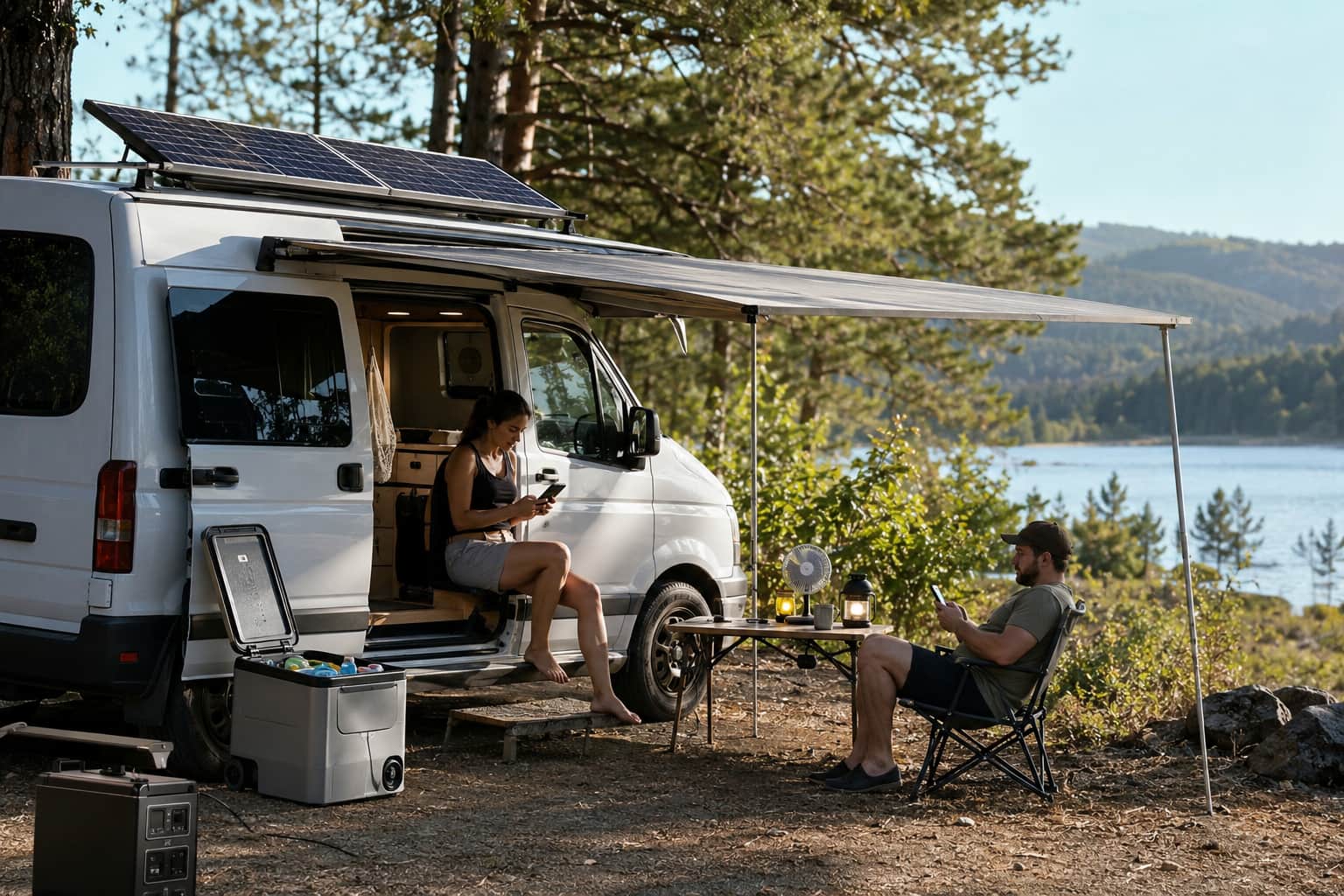
You pull off the highway onto a dirt track, follow it three miles into the trees, and park facing a mountain view that no campground would ever give you. The coffee maker runs. The fridge keeps your food cold. The lights work fine after dark. No hookup, no generator noise, no fee — just RV solar panels doing exactly what they’re supposed to do.

That’s the version of van life and RV travel that most people picture. The gap between that picture and reality is usually just one thing: the right solar setup.

Why RV Solar Panels Change the Way You Travel

The obvious benefit is free electricity. But the deeper shift is freedom of location. Without solar power for RV use, you’re limited to campgrounds with electrical hookups — which means crowds, booking windows, and nightly fees. With a properly sized solar system, any flat piece of ground with a sky view becomes a viable campsite.

Beyond location flexibility, solar eliminates the noise and fuel cost of running a generator. A well-designed camper solar system operates silently and requires almost no day-to-day attention. Most RV travellers report that switching to solar changes their entire relationship with where and how they park.

Why RV Solar Panels Change the Way You Travel

What to Look for When Choosing RV Solar Panels

The market is full of options. Most of them work. The difference is in how well they match your actual usage and roof space.

Panel Wattage and Roof Space

Start with your daily power consumption. Add up the watt-hours used by your fridge, lighting, phone charging, water pump, and any other devices you run regularly. A typical full-time RV setup draws between 100 and 300 watt-hours per day. That figure determines how much panel wattage you need to keep the batteries charged on an average sunny day.

Monocrystalline panels are the best choice for most RV roofs — they produce more power per square foot than polycrystalline alternatives, which matters when roof space is limited.

Battery Storage

RV solar panels generate power only when the sun is out. Batteries cover the rest — overnight, on cloudy days, and during early morning hours. Lithium iron phosphate (LiFePO4) batteries are the standard for off grid RV living. They’re lighter than lead-acid, discharge more deeply, and last significantly longer. A 100Ah lithium battery provides roughly 80–90Ah of usable power. Lead-acid of the same rating delivers closer to 50Ah.

Charge Controller

The charge controller sits between your panels and your battery bank. It regulates the charging process to prevent overcharging and maximise battery life. MPPT (Maximum Power Point Tracking) controllers are more efficient than PWM models — especially in partial shade or on cooler days. For any system over 200W, MPPT is worth the extra cost.

Flexible vs Rigid Panels

Rigid glass panels are more efficient and longer-lasting. Flexible panels conform to curved roofs and weigh less. For most RVs with flat or near-flat roofs, rigid panels are the better long-term investment. Flexible panels suit vans and irregular roof profiles where rigid mounting isn’t practical.
What to Look for When Choosing RV Solar Panels

How RV Solar Panels Actually Work Together

Understanding the system as a whole makes installation and troubleshooting much simpler.

Daytime Generation

During daylight hours, RV solar panels convert sunlight into DC electricity. That current flows through the charge controller, which conditions it and directs it into the battery bank. Any excess power beyond what the batteries can accept is regulated away — which is why sizing your battery bank to match your panel output matters.

Overnight and Cloudy Day Draw

Once the sun sets, your inverter draws from the battery bank and converts stored DC power to AC for standard appliances. On overcast days, panels still generate — typically at 10–25% of their rated output depending on cloud density. A well-sized system accounts for two to three consecutive low-sun days without leaving you short.

RV Solar Panels for Different Types of Travellers

Not every setup needs to be the same. The right system depends on how you actually use your RV.

Weekend and Seasonal Campers

A 200–400W panel setup with a 100Ah lithium battery covers most weekend use comfortably — phone charging, LED lighting, a 12V fridge, and a small fan. Installation is straightforward, the cost is manageable, and the system requires zero maintenance beyond keeping the panels clean.

Full-Time and Extended Travellers

Full-timers running laptops, a residential fridge, air circulation fans, and regular cooking appliances typically need 600W or more of panel capacity and 200–300Ah of battery storage. The investment is higher, but the return — months or years of free electricity in any location — makes it one of the most cost-effective upgrades a full-time traveller can make.
RV Solar Panels for Different Types of Travellers

Getting Started with RV Solar Panels

The best way to approach a camper solar system is to start with your actual power needs, not with a product. Calculate your daily consumption, choose a battery bank that covers two days of usage without solar input, and size your panels to recharge that bank on an average sunny day. That formula works for a 200W weekend system and a 1,000W full-time setup alike.

RV solar panels have made genuine off-grid travel accessible to anyone willing to spend a weekend on installation. The technology is reliable, the components are widely available, and the payback — in both money and freedom — starts from the first campsite you park at without paying for power.
Best Affordable Off Grid Solar System Kits for Rural Households & Farms

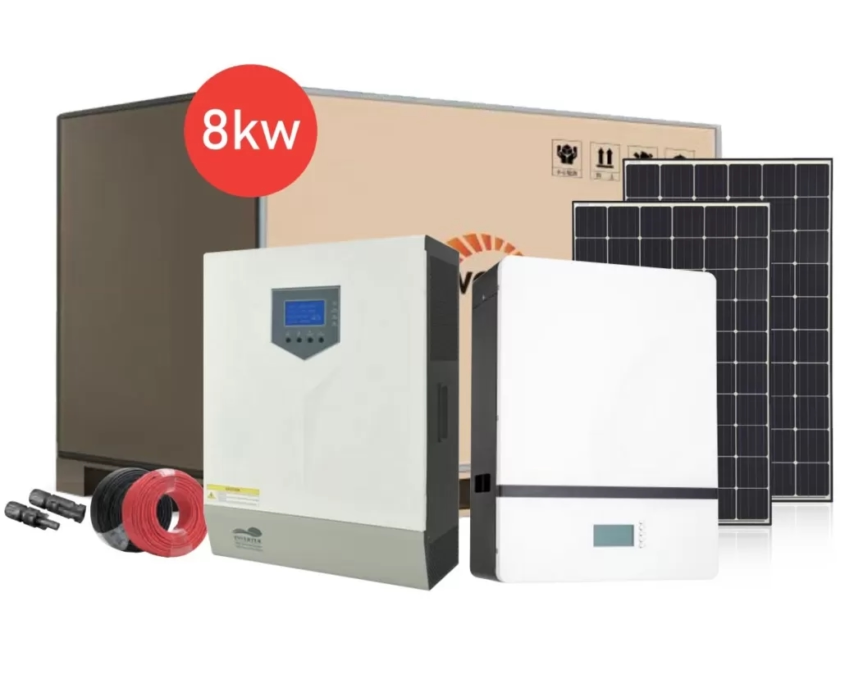
If you live in rural areas or run a farm, unreliable power and frequent outages can quickly become a real headache. Modern solar power offers a simple, effective fix, and affordable off-grid solar system kits have become a game-changer for remote properties. Our 8kW off-grid systems deliver enough power to cover all your household and farm basics, come at a budget-friendly price, and keep running reliably even in areas with weak or unstable grids.
Affordable off-grid solar setups have let countless homes and farms break free from unreliable utility power. Going off-grid isn’t just swapping out equipment—it’s taking full control of your own energy supply. These 8kW kits strike the perfect balance, so you don’t have to give up any modern conveniences, even when the grid goes down.

How Can You Achieve Full Energy Independence with Affordable Off-Grid Solar System Kits?

Living remotely or running a farm means consistent, reliable power is non-negotiable. Even if you live in a suburban area with frequent blackouts, energy security makes a huge difference. An 8kW off-grid solar system hits the perfect balance of power and affordability.
This capacity is ideal for modern household and farm use. It can easily run 12–15 devices at the same time, from kitchen appliances and air conditioners to home office equipment and lighting. With affordable off-grid solar system kits, you also avoid the extremely high cost of extending grid power to remote areas—often more expensive than the solar system itself.

Key Components of a Reliable 8kW Off-Grid Solar System

A strong system depends on high-quality parts. Our 8kW affordable off-grid solar kits use carefully selected, professional-grade components for long-term performance.
  • SPF 8000T DVM Hybrid Inverter

    The inverter acts as the brain of the system. It includes a built-in MPPT charge controller to maximize solar energy harvest. With automatic switching and full protection features, it safely manages power flow between solar panels, batteries, and your home appliances.

  • 550W Monocrystalline Solar Panels (18 pcs)

    High-efficiency monocrystalline panels perform well even in low light and changing weather. They provide consistent power output year-round.

  • 51.2V Lithium Battery (1 unit)

    Lithium batteries last up to three times longer than traditional lead-acid batteries. They support deep discharge and keep your system running at night and during cloudy days.

Key Components of a Reliable 8kW Off-Grid Solar System

All-in-One Off-Grid Solar for Home & Farm

Unlike small, portable solar setups, our 8kW off-grid system easily handles heavy-duty appliances essential for rural living and farming.
  • Climate control: Run air conditioners smoothly even in hot summers.
  • Food storage: Power large fridges and freezers with no risk of spoilage.
  • Water management: Support well pumps, water heaters, and irrigation for livestock and crops.
These affordable off-grid solar kits let you go green without giving up the modern comforts you rely on every day.

Economic & Environmental Benefits

Choosing an affordable off-grid solar system benefits both your wallet and the planet.
  • Eco-friendly: Clean solar energy reduces your carbon footprint and replaces fossil-fuel power.
  • Cost-saving: After the initial investment, you eliminate or greatly reduce monthly electricity bills.
  • Low maintenance: Lithium-based systems need almost no ongoing care, keeping long-term costs very low.
The return on investment is clear, especially for rural and farm users.

Complete Off Grid Solar System – Easy Installation & Worldwide Support

We make quality off-grid solar solutions accessible everywhere. We work with distributors and installers in over 100 countries to ensure fast delivery and professional support.
All components are rigorously tested to withstand harsh rural, remote, or coastal environments. From order to installation, we help you get your system up and running quickly.

Flexible, Modular Design for Future Growth

Every home and farm has different energy needs. Our off-grid solar kits are modular and expandable, so you can adjust your system as your needs change.
The hybrid SPF 8000T inverter allows you to add more panels or batteries later, future-proofing your investment. Whether you need more storage for winter or extra power for new farm equipment, the system grows with you.
Flexible, Modular Design for Future Growth

Heavy-Duty 8kW Solar Kits Built for Farms & Remote Living

Built tough and reliable, our 8kW off-grid solar kit is made for the real-life needs of rural homes, farms, and places with little to no grid coverage. An affordable off grid solar system keeps your daily appliances, farm machinery, water pumps, and tools running steadily—no more unexpected blackouts, no more relying on an unstable power supply.
By choosing this system now, you lock in consistent power for your home or farm for the next 25 years. For anyone living in remote or rural areas, energy independence isn’t a luxury. It’s simply dependable, worry-free power you can always count on.

Frequently Asked Questions (FAQ)

1. Can an 8kW affordable off-grid solar system really power an entire house?

Yes. An 8kW system is specifically designed for medium to large households. It can comfortably manage 12-15 appliances, including high-draw items like air conditioners, refrigerators, and pumps, provided the energy usage is managed efficiently.

2. What happens during a week of cloudy or rainy weather?

The affordable off-grid solar system includes a high-capacity 51.2V lithium battery. This unit stores excess energy generated during sunny periods to provide reliable power during the night or during extended periods of low sunlight.

3. How difficult is the maintenance for these kits?

Very minimal. Unlike gas generators, there are no moving parts in the panels or the inverter. The lithium battery technology requires virtually no maintenance compared to older lead-acid versions. Periodic cleaning of the panels to remove dust or debris is usually all that is required.

4. Are these affordable off-grid solar system kits compatible with local building codes?

Our components are manufactured to international standards and are used in over 150 countries. However, we always recommend consulting with a local certified electrician to ensure your specific installation meets regional electrical codes and safety regulations.

5. What is the expected lifespan of the 550W solar panels?

The monocrystalline silicon solar panels in our affordable off-grid solar system are built for longevity, typically carrying a performance warranty of 25 years. They are designed to withstand high winds, snow loads, and extreme temperature fluctuations.

What should I keep in mind when using an off grid solar home system for the first time?

First-time users of off grid home solar system often assume the experience will be identical to using the utility grid. In reality, however, the two are quite different. The most immediate distinction is that an off grid system is not merely a power source; it is also an energy management system that requires users to consider factors such as usage timing, battery reserves, weather conditions, and appliance usage priorities. For first-time users, provided they select an appropriately sized system, ensure correct installation, and adhere to a few basic operating guidelines, most homeowners can adapt very quickly.

Understanding the Intended Purpose of Off Grid Home Solar System

The first thing to understand is that every off grid home solar system is designed based on a specific load profile. While it can easily power certain appliances, it cannot simultaneously supply power to all appliances. First-time users often assume that since the system runs on solar power, it can operate with the same unlimited capacity as a utility grid connection. This is not the case; their operation depends on the amount of available sunlight, the capacity of the battery bank, and the rated power output of the inverter.

A well-designed off grid solar system can typically meet basic electricity needs quite effectively, such as LED lighting, fans, televisions, mobile phone charging, small refrigerators, and similar devices. If the system is appropriately sized, it can also support water pumps, laptop computers, and certain laundry appliances. Therefore, before you begin using the system for the first time, make a list of your most important appliances and identify which ones are truly essential. This simple practice helps first-time users establish realistic expectations.

Understanding the Intended Purpose of Off Grid Home Solar System

The Three Core Components of an Off Grid Home Solar System

A reliable off grid home solar system consists of three core components, each serving a distinct function. Solar panels collect sunlight and convert it into electrical energy. Batteries store this electrical energy for later use. The inverter converts the stored DC energy into AC, the type of electricity that household appliances can utilize. Once you understand how these three components work together, you will find that managing the system becomes much easier.

Solar panels generate the most power during the day when sunlight is strongest particularly on sunny, clear days. When sunlight diminishes, such as during the late afternoon, at night, or on overcast days, the batteries take over to supply power. The inverter acts as the bridge between the energy storage system and your household appliances. It must possess sufficient capacity to support the appliances running simultaneously. If the inverter’s capacity is too low, it may trip even if the batteries still hold a charge. If the battery capacity is too small, the lights may continue to shine for a while, but the system will quickly run out of power. Conversely, if the solar panel capacity is insufficient, the battery may fail to fully recharge on a daily basis.

For first-time users, this checklist serves as a useful guide for reviewing your usage habits:

  • Check the battery charge level every morning and evening.
  • Pay close attention to any warning lights or fault indicators on the inverter.
  • Only operate high-power appliances when solar power output is strong.
  • Keep the area surrounding the battery and inverter clean and well-ventilated.

The Three Core Components of an Off Grid Home Solar System

Daily Habits for Ensuring the Smooth Operation of an Off Grid Home Solar System

Once the system is up and running, the most critical daily habit is prioritizing your electrical loads. A common mistake made by first-time users is treating the system as if it were an inexhaustible grid-tied power supply. Doing so leads to rapid battery depletion and may cause the inverter to trip due to overloading. A better approach is to group your electrical loads by priority level.

Start by powering up essential devices: lighting, refrigeration, communication equipment, and similar necessities. You can schedule secondary devices to run later in the day. For optional appliances like irons, vacuum cleaners, and larger kitchen equipment, you should use them carefully and try not to run them at the same time as motor-driven devices. Such planning helps extend the operating duration of your off-grid home solar system during the night and minimizes unnecessary battery wear.

Daily Habits for Ensuring the Smooth Operation of an Off Grid Home Solar System(1)

Proper Charging and Discharging: Protecting Your Battery

The battery is the core component of any solar system; therefore, first-time users should exercise particular care. A home solar system relies on the health of its battery to provide reliable power during the night and serve as a backup source during cloudy weather. If the battery is discharged too deeply or too frequently, its overall lifespan will be significantly shortened. Similarly, repeated overcharging will accelerate the degradation of the battery’s performance.

Modern off grid home solar systems typically utilize lithium-ion batteries, which are designed to be much easier to manage than older battery technologies. Nevertheless, it remains crucial to monitor the battery’s state of charge and avoid completely draining the battery unless absolutely necessary. Allowing the battery to fully charge during periods of abundant sunlight helps maintain cell balance and enhances long-term performance. If you are using lithium iron phosphate batteries, they are generally more tolerant of deep discharge cycles than many older battery types. Batteries thrive in stable environments; therefore, avoid exposing them to extreme heat or cold. Always store your battery in a clean, dry, and well-ventilated location.

Closely Monitor Your Off Grid Solar System During the First Month

The first month of operation is the ideal time to establish good monitoring habits for your off grid solar system. Users utilizing an off-grid solar system for the first time should regularly monitor the inverter display, battery status, and system alerts. Please do not overlook warning signs such as a rapid drop in battery charge, inverter fault notifications, or unusually low solar power generation. Detecting issues early can often prevent them from escalating into major problems later on. Sometimes the issue is simple, like when dirt builds up on the solar panels and connectors. At other times, however, it may require adjusting system settings or conducting a technical inspection.

Understanding Core Technology and Cultivating Operational Habits

For first-time buyers and users of off-grid home solar systems, the primary objective is not to master complex technical intricacies, but rather to cultivate proper daily operational habits. This process is predicated on understanding your system’s capacity, prioritizing the power supply for critical loads, and monitoring battery performance. Every component within an off-grid solar system, from the solar panels to the batteries and the inverter, must work in concert to form a cohesive energy ecosystem. Over time, operating the system will become increasingly intuitive; you will not only learn how to optimize your energy usage but also how to expand and adapt the system to meet your household’s evolving needs.

What are the core technological advantages of a 15kWh solar battery?

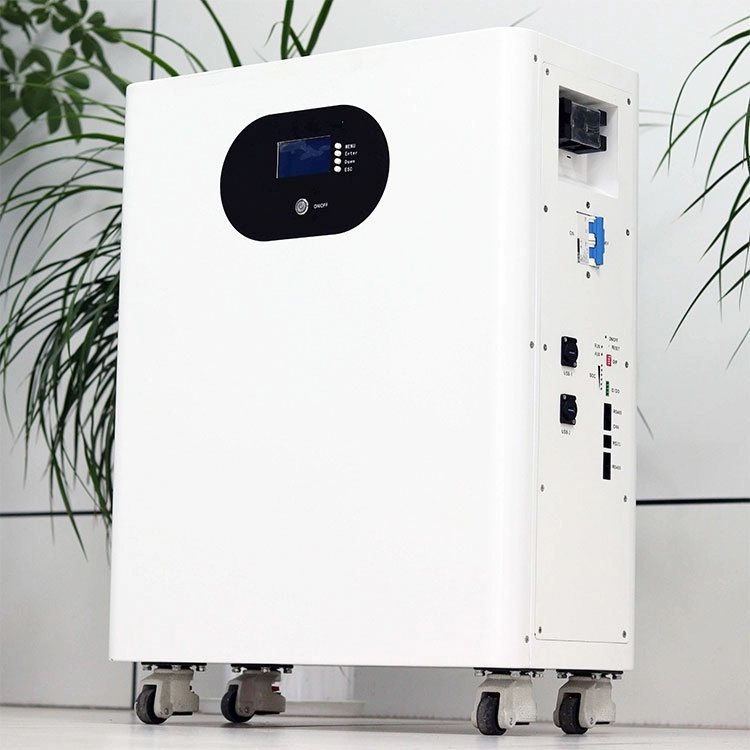
A 15kWh solar battery typically represents the critical balance point between residential convenience and commercial-grade performance. It can meet household electricity needs, light commercial requirements, backup power demands, and off-grid applications, while also offering practical ease of deployment and management. Our 15kWh solar battery is designed not merely as a passive component, but as an active energy platform. It boasts an extended service life, tolerance for more demanding operating environments, superior charge retention, support for higher power output, and intelligent communication with other system components. Its core advantages include an ultra-long lifespan, military-grade temperature tolerance, massive industrial-scale capacity, zero-loss energy storage, and high-power output capabilities.

Specific Core Advantages and Features of the 15kWh Solar Battery

An ultra-long lifespan is its primary advantage. This solar battery is designed to withstand up to 10,000 charge-discharge cycles while maintaining a SOH of 70%, a leading industry benchmark. Even if a battery appears attractive at the time of purchase, it ceases to be a cost-effective investment if it offers only a short operational life. A lithium-ion solar battery with a cycle life of 10,000 cycles delivers significantly higher long-term value. The 70% SOH retention ensures that, even after numerous cycles, the battery remains fully functional without experiencing a drastic decline in performance. This level of stability instills greater confidence in customers regarding their long-term planning. For commercial users, it facilitates more accurate and reliable calculations of ROI.

Parameter PowerDream 15kWh Solar Battery
Capacity 15kWh
Voltage 51.2V
Capacity (Ah) 280Ah
Battery Type LiFePO₄ Lithium-Ion
Cycle Life 10,000 cycles (70% SOH)
Discharge Temp -20°C to 60°C
Charge Temp 0°C to 60°C
Charge Retention ≥90% (28 days)
Continuous Discharge 70A
Communication RS485 / CAN / RS232

Military-Grade Temperature Tolerance: Capable of Withstanding Temperatures Ranging from the Arctic to the Desert

Another major advantage is its environmental adaptability. The PowerDream 15kWh solar battery operates effectively across a remarkably wide temperature spectrum: its discharge temperature range spans from -20°C to 60°C, while its charging temperature range covers 0°C to 60°C. This robust tolerance makes it suitable for deployment in environments ranging from frigid northern regions to scorching desert climates. In many real-world scenarios, batteries must function reliably under extreme weather conditions, seasonal fluctuations, or harsh installation environments. Batteries with inferior performance characteristics may experience degraded performance—or even complete failure—when operating outside a narrow temperature window.
In contrast, our high-performance lithium-ion solar battery maintains effective operation across a much broader range of conditions. This capability effectively expands the scope of potential applications for the 15kWh solar batteries. Whether the system serves remote residences, commercial backup power sites, or outdoor energy storage installations, its exceptional temperature tolerance is a distinct core advantage.

Capable of Withstanding Temperatures Ranging from the Arctic to the Desert

Lossless Storage with the 15kWh Solar Battery

PowerDream’s 15kWh solar battery retains ≥90% of its charge for 28 days and can operate continuously for 7 days at 55°C. In certain home energy storage systems, batteries may remain idle for extended periods. If stored energy depletes too rapidly, users lose the practical value of that stored power. However, lithium-ion solar batteries with robust energy retention capabilities can safeguard this stored energy. Our 15kWh solar battery maintains stable performance even under high-temperature conditions, thereby ensuring that stored energy remains readily available whenever needed. For users, this translates to higher efficiency, reduced energy waste, and greater confidence in their energy supply.

High Power Reserve to Meet High-Load Demands

The function of a battery extends beyond merely storing energy; it must also discharge that energy efficiently. PowerDream’s 15kWh solar battery supports a continuous discharge current of 70A, meaning it can effortlessly handle high-load scenarios and operate stably even under heavy demand. This makes it ideally suited for real-world applications where multiple appliances or commercial systems are operating simultaneously.

It also features RS485, CAN, and RS232 communication interfaces, enabling seamless integration with Industrial IoT ecosystems. In modern environments, a lithium ion solar battery should not exist in isolation from the rest of the power system. It must be capable of clear communication, accurate status reporting, and intelligent operational support. This high-power capability extends the battery’s scope of application far beyond basic backup power; it can support energy systems that demand rapid response, stable discharge, and flexible integration.

High Power Reserve to Meet High-Load Demands

How Capacity, Chemistry, and Structure Determine the Performance of the 15kWh Solar Battery?

Operating at 51.2V, this PowerDream product delivers a capacity of 280Ah, thereby achieving a true energy storage capacity of 15kWh. This capacity is not merely a marketing figure; it directly dictates how much energy the system can store—whether for nighttime consumption, backup power during outages, or load shifting during peak demand periods.

Users rarely utilize energy storage devices under strictly ideal conditions. They require sufficient capacity to meet an entire night’s household electricity needs, a full day’s backup power requirements for a business, or to support multiple solar charging and discharging cycles without the anxiety of the power running out too quickly. While smaller-capacity batteries might appear simpler in theory, a 15kWh solar battery offers a far more practical energy reserve, thereby alleviating this pressure. Furthermore, we utilize 3.2V Lithium Iron Phosphate (LiFePO₄) cells, arranged in a 16-series, 1-parallel configuration to ensure voltage stability and reliable battery pack performance.

How Capacity, Chemistry, and Structure Determine the Performance of the 15kWh Solar Battery

A Scalable Platform for Systems of Varying Sizes

Although the battery carries a nominal capacity of 15kWh, its value extends far beyond a single application. This 15kWh solar battery can serve as the core energy storage unit in a standalone system or as a component of a larger, modular system. For residential users, a 15kWh capacity may be entirely sufficient to cover backup loads, household appliances, and nighttime electricity consumption. For commercial users, multiple units can be combined to support more demanding applications. This inherent scalability transforms the lithium-ion solar battery into a highly practical energy tool, capable of expanding alongside the customer’s growing energy demands rather than requiring premature replacement.

Portable Energy Storage Tailored to Diverse Power Needs

The core technological advantages of the 15kWh solar battery include an ultra-long lifespan—boasting 10,000 cycles with a SOH remaining at 70%—setting an industry-leading standard for operational longevity. It features military-grade temperature tolerance, with a discharge temperature range spanning from -20°C to 60°C and a charging range from 0°C to 60°C, making it suitable for environments ranging from the Arctic to the desert. It offers a massive industrial-grade capacity of 280Ah at 51.2V, delivering 15kWh of energy storage, powered by 3.2V LiFePO₄ cells arranged in a 16S1P configuration. Additionally, it offers high-efficiency features such as near-zero-loss storage (retaining ≥90% of charge over 28 days), continuous discharge capability of 70A, and support for RS485, CAN, and RS232 communication protocols. Supported by these advanced technologies, this battery is fully equipped to meet the energy storage requirements of both residential and industrial sectors.

How to choose a solar power street light that can operate continuously for 3-5 days on cloudy days?”

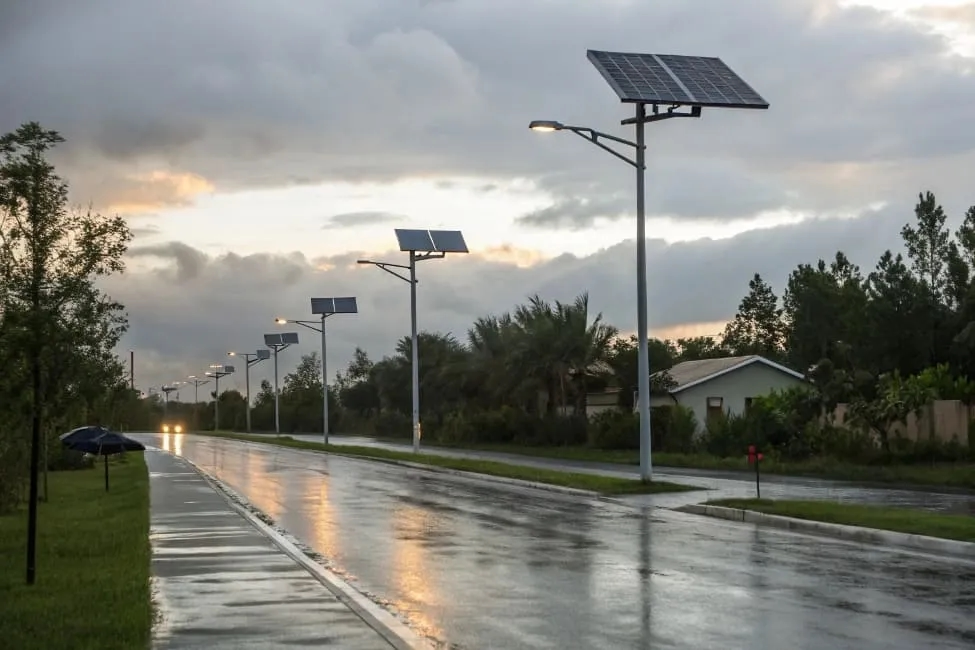
A properly functioning solar power street light should not fail simply because of cloudy weather. In outdoor environments, solar street lights must continue to provide reliable illumination even after several consecutive days of overcast skies or rain. The standard for a high-performance solar street light involves ensuring stable nighttime illumination, rapid daytime charging, robust battery protection, and sufficient energy storage to guarantee continuous operation for 3 to 5 days, even during cloudy periods. Therefore, solar power street lights must integrate high-efficiency solar panels, durable lithium-iron phosphate (LiFePO4) batteries, intelligent charge-control systems, and robust outdoor protection mechanisms to ensure 3 to 5 days of continuous illumination, even on overcast days.

How Solar Power Street Light Achieves 3–5 Days of Autonomous Power Supply During Cloudy Weather?

When purchasing solar power street lights, many buyers focus on factors such as lumen output, pole height, or panel wattage; however, a far more critical question is: How long can the solar street light continue to operate under adverse weather conditions? In real-world outdoor projects, cloudy skies, rainy seasons, dust accumulation, and seasonal fluctuations are the norm. A high-brightness street light that ceases to function after just one or two cloudy days cannot be considered a reliable lighting solution.

Consequently, PowerDream has prioritized energy storage and charging efficiency right from the initial design phase. The objective is simple: even with only approximately four hours of effective daily sunlight, the system should be capable of storing sufficient energy to power the fixture for an entire night. Should the cloudy weather persist, the battery must be able to sustain power delivery for 3 to 5 days without any noticeable decline in lighting quality. This design approach is crucial for a wide range of locations, including roadways, parking lots, sidewalks, campuses, industrial zones, and remote communities.

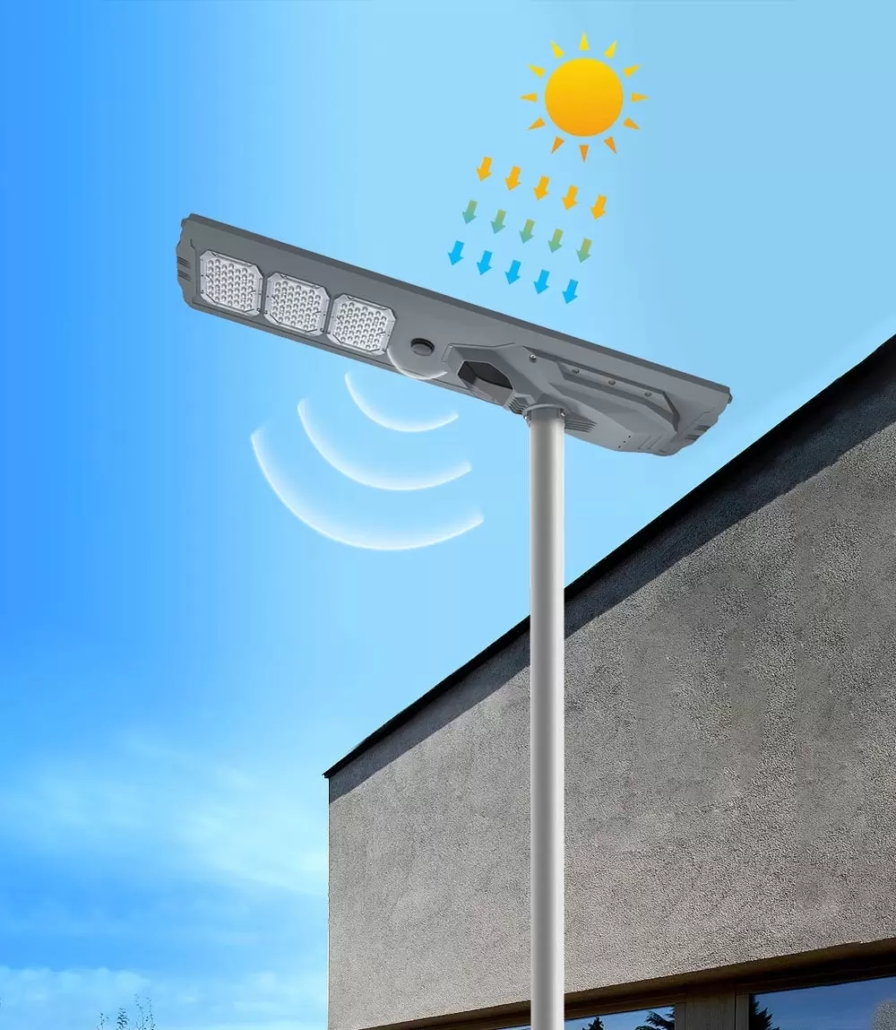
Solar Power Street Light 2

Grade A Polycrystalline Silicon Solar Panels: The Foundation for Rapid Daytime Charging

The solar panel serves as the primary critical component of the system. To ensure the reliability of solar street lights during cloudy operation, PowerDream utilizes Grade A polycrystalline silicon solar panels. These panels feature exceptional light absorption capabilities, stable performance, and robust durability in outdoor environments. Even under conditions where sunlight is scarce, these panels remain highly efficient at capturing solar energy.

In essence, a truly high-quality solar street light should be able to convert limited available sunlight into sufficient stored energy to power the lighting throughout the night. Solar panels can rapidly absorb energy and efficiently transfer it to the battery via a charge controller. Even with only four hours of daylight per day, the system can still charge efficiently and support uninterrupted illumination throughout the night. This is particularly crucial in regions with unstable weather or short daylight hours during the winter months.

Grade A Polycrystalline Silicon Solar Panels The Foundation for Rapid Daytime Charging

Lithium Iron Phosphate Batteries: The Core Energy Storage for Days of Continuous Lighting

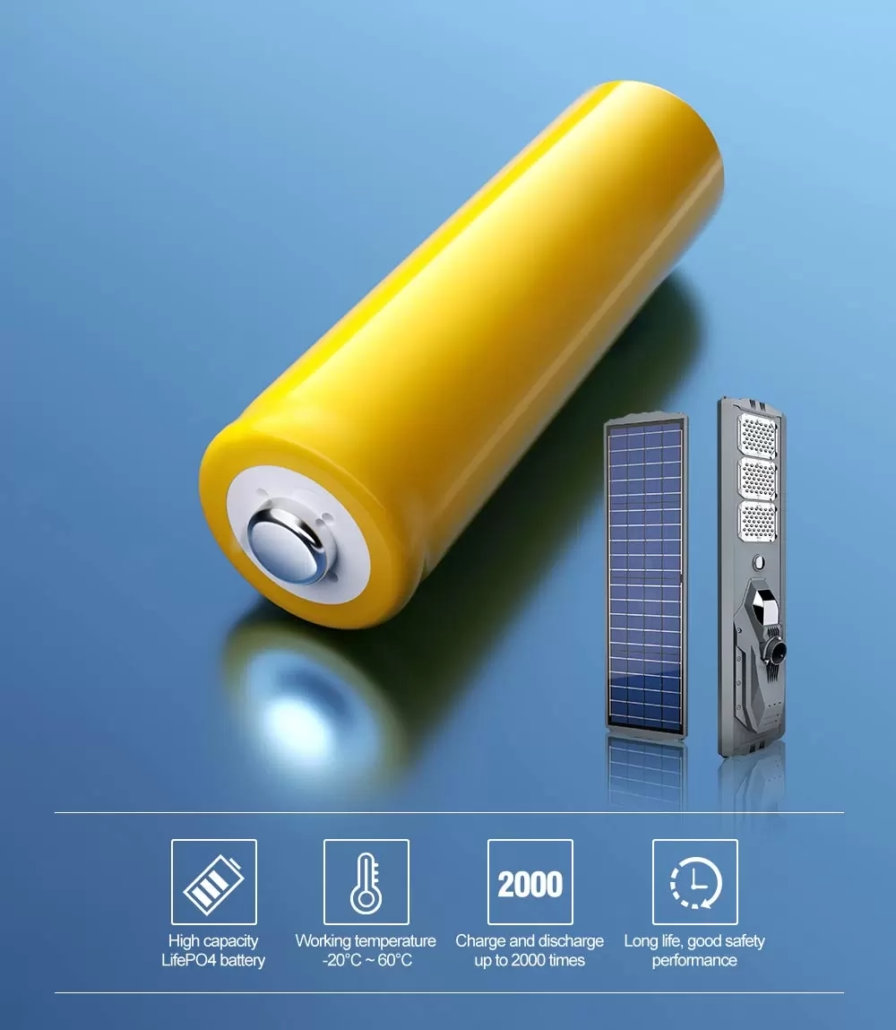
The second key component is the battery; in the context of autonomous power supply, especially in overcast environments, it is the battery’s quality that truly determines a solar power street light’s performance. PowerDream utilizes lithium iron phosphate batteries due to their exceptional stability, long cycle life, and robust safety features. An outstanding solar street light battery must do more than merely store energy; it must also discharge reliably throughout the night, withstand repeated charging cycles, and maintain stable performance amidst fluctuating temperatures and weather conditions.

LiFePO4 batteries support deep cycling and rapid charging while offering powerful protection against overcharging. In a well-engineered solar street light system, the battery should provide 4–5 days of continuous illumination during rainy weather. This ensures that the system remains operational even if solar energy input is diminished for several consecutive days. For municipalities, real estate developers, and infrastructure planners, this level of reliability minimizes downtime risk and reduces maintenance burdens. Another significant advantage is their exceptional longevity; under proper operating conditions, high-quality LiFePO4 batteries can deliver up to five years of reliable service. By equipping its products with LiFePO4 batteries, PowerDream assures users that its solar street lights will remain bright, safe, and dependable year-round.

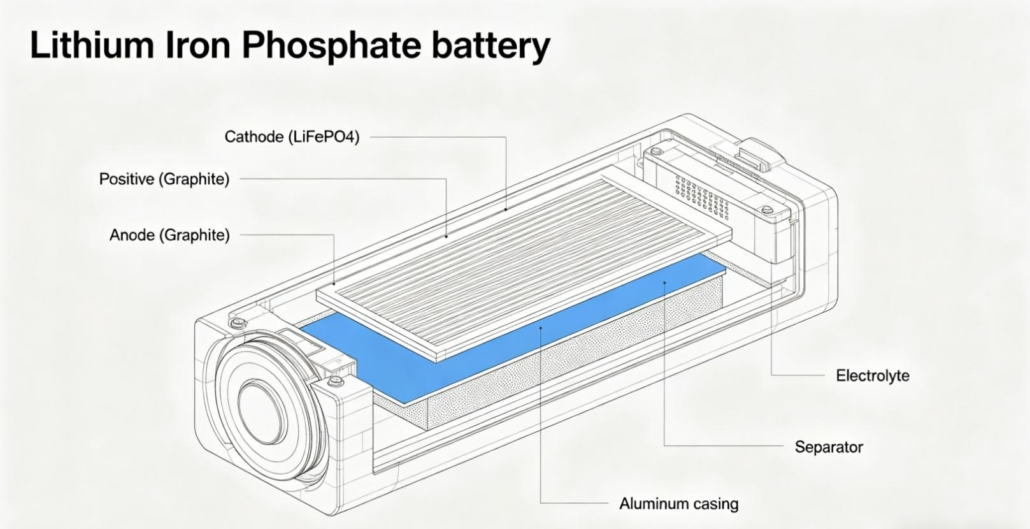
Lithium Iron Phosphate Batteries

How Do We Ensure the Reliability of Outdoor Solar Power Street Lights?

Solar street lights must withstand the rigors of rain, wind, sand, high temperatures, humidity, and seasonal shifts. If you don’t properly protect the battery, controller, or housing, their performance will quickly start to decline. Consequently, PowerDream incorporates overcharge protection, robust structural design, and an IP65 ingress protection rating into its solar street light systems. Overcharge protection prevents battery overload, thereby enhancing safety. Furthermore, we utilize corrosion-resistant materials—such as AL6063 aluminum alloy combined with Teijin PC—along with sealed enclosures and weather-resistant connectors to shield the system from moisture and dust intrusion. For buyers, a reliable solar street light should be specifically engineered for long-term outdoor deployment—not merely for short-term use during fair weather. Safety and durability are the true keys to a system’s long-term cost-effectiveness.

Choosing the Right Solar Power Street Light for the Right Location?

Not all locations require solar street lights with identical specifications. Settings such as sidewalks, parking lots, rural roads, and campuses each have distinct requirements for brightness levels, runtime, and installation methods. Therefore, before selecting a solar street light, buyers should carefully assess factors such as pole height, coverage area, local weather patterns, the average number of overcast days, and whether the site requires constant brightness or adaptive dimming.

For instance, roads where continuous illumination is critical for public safety may require a battery with greater endurance than that needed for private walkways. Remote or hard-to-reach locations may necessitate larger battery capacities and more robust solar panel designs. The ideal solar street light is perfectly matched to the actual operating conditions of its specific location. Factors such as panel angle, mounting orientation, and cable quality all play a significant role in determining the system’s charging speed and operational efficiency. When installed correctly, a solar street light can deliver the performance buyers expect: robust charging during the day, stable light output at night, and reliable operation even during periods of 3 to 5 consecutive overcast days.

Ensuring Continuous Operation During Overcast Weather

A solar power street light capable of operating for 3 to 5 days during overcast weather requires specific components: Grade A polycrystalline silicon solar panels designed to maximize energy absorption even in low-light conditions, and durable lithium iron phosphate batteries capable of providing stable, multi-day energy storage. When these components are combined with efficient energy management systems, overcharge protection, and sound installation planning, they ensure the solar street light remains fully operational for 3 to 5 consecutive overcast days.

Is Professional Installation Required for a Plug-and-Play off grid solar home system?

The advent of plug-and-play off-grid solar home systems has simplified the process of using solar energy for households worldwide. This off-grid solar home system is user-friendly, modular, and quick to deploy, allowing users to generate and store energy without the complexities of traditional solar installations. Plug-and-play off-grid solar system is designed with simplicity in mind. From photovoltaic panels to inverters and lithium-ion battery storage systems, each component is pre-configured for easy connection, typically requiring only simple assembly steps and no specialized installation.

Considerations for Installing a Plug-and-Play Off Grid Solar Home System

A plug-and-play off-grid solar home system typically includes solar panels, an inverter, a battery storage system, a charge controller, installation hardware, and pre-wired connectors. You need to assemble each component correctly to ensure it delivers energy to your household appliances. Even with a user-friendly design, it’s still necessary to understand basic electrical principles, the function of each component, and the correct orientation and tilt angle of the solar panels to obtain optimal sunlight exposure. Most plug-and-play systems use MC4 connectors, pre-wired cables, and labeled terminals to reduce complexity; however, incorrect connections can still lead to system malfunctions, battery damage, and even fires. Therefore, understanding these components before installation helps with the process and allows homeowners to troubleshoot minor issues without compromising safety.

Considerations for Installing a Plug-and-Play Off Grid Solar Home System

Roof Structure and Installation Considerations

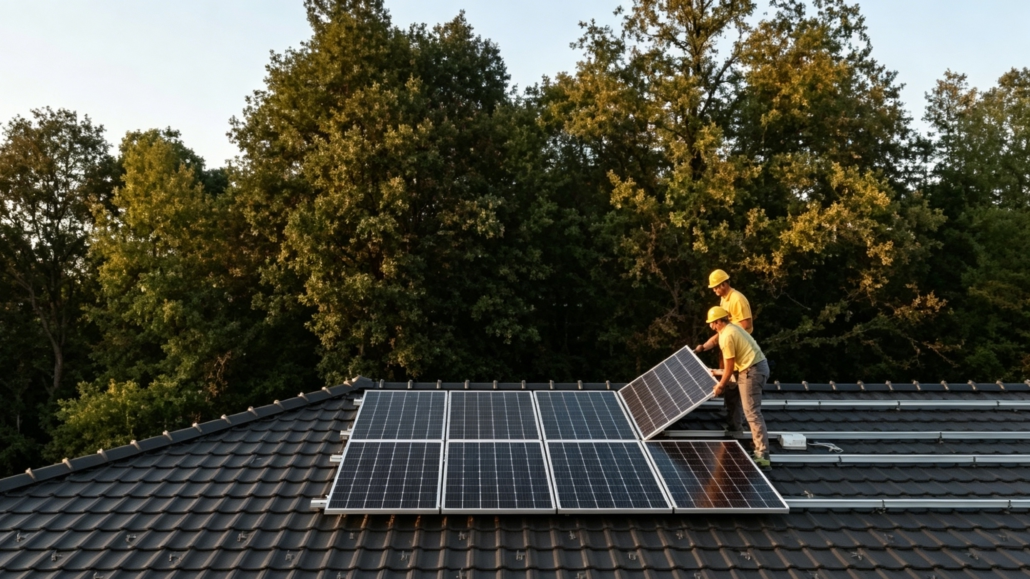
Even with plug-and-play off-grid residential solar systems, structural integrity and proper installation are crucial. The roof must be able to support the weight of the solar panels and mounting hardware, while also considering the effects of wind, rain, and snow. Professional installers check the roof slope, material type, and potential shading to securely install the panels and position them for maximum sunlight absorption. Incorrect installation can reduce energy output, accelerate panel wear, or create safety hazards during storms. While plug-and-play systems include simplified installation kits, homeowners must still verify correct alignment, use appropriate fasteners, and follow the manufacturer’s guidelines to prevent long-term problems.

Roof Structure and Installation Considerations

Electrical Safety and Regulatory Compliance

Installing a plug-and-play off-grid solar system involves managing the DC voltage of the solar panels and the AC output of the inverter. Electrical safety is paramount, as incorrect wiring or bypassing safety features can lead to electric shock, fire, or damage to household appliances. Local regulations may also require inspection or certification, especially for systems connected to a backup generator or existing wiring. Even with pre-wiring designs, ensure all components comply with local safety codes and that the system is legally connected and operates safely. Professional installers can also optimize cabling, grounding, and circuit protection to minimize energy loss and extend the lifespan of your off-grid residential solar system. While homeowners with some technical skills can install it themselves, professional involvement ensures full compliance with safety standards.

Electrical Safety and Regulatory Compliance

Battery Management and Lifespan

At the heart of an off grid solar system lies its energy storage device, and most off-grid systems use lithium-ion batteries. Properly connecting, configuring, and monitoring the battery pack improves safety, performance, and lifespan. Lithium-ion batteries are highly sensitive to overcharging, over-discharging, and high temperatures; even minor errors during installation can shorten battery life or cause operational problems. Professional installers ensure correct battery size, secure connections, and seamless integration with the charge controller and inverter. They can also calibrate the system for optimal performance, allowing you to monitor charging status limits and prevent damage.

Real-time Monitoring of Off Grid Home Solar System

Plug-and-play off-grid home solar systems typically feature network monitoring capabilities, enabling users to track energy production, storage status, and consumption. While these systems are simple to set up, professional installers optimize data acquisition, ensure correct network configuration, and integrate alarms for faults or performance issues. Proper monitoring ensures efficient system operation and allows users to identify and resolve problems before they impact daily use. Optimized monitoring also aids in energy planning. Homeowners can schedule high-energy-consuming appliances for peak solar power generation periods, avoiding unnecessary battery cycling and extending system life. Choosing professionals with experience balancing generation, storage, and load in real-world environments is crucial for improving system performance.

When is Professional Installation Recommended?

While homeowners with some technical skills can install plug-and-play systems themselves, experts recommend professional installation in the following situations:

  • Complex roof designs or challenging installation locations
  • Integration with existing wiring or a backup generator
  • Ensuring compliance with local regulations and inspection requirements
  • Handling large systems with higher voltages or multiple battery packs
  • Requires an extended warranty and requires certified installation.

Although ordinary users can install them themselves, professional installers can reduce risks, ensure system lifespan, and provide peace of mind, especially for first-time users or families with limited technical experience.

Hybrid solar system: Scalable 5 kW–10 kW Capacity Fits All Household Sizes

The advantage of an expandable hybrid solar system lies in the fact that homeowners can select a capacity that suits their current needs while retaining the flexibility to expand the system’s capacity as required. This is precisely where the significance of the 5 kW, 8 kW, and 10 kW configurations lies. A 5 kW configuration may be ideally suited for compact homes with lower electricity demands. In contrast, an 8 kW system can support a greater number of appliances and provide an extended battery backup duration. A 10 kW system is better suited for larger households or those with higher daily electricity consumption. Regardless of the specific configuration, a hybrid solar system integrates solar power generation, battery storage, and grid electricity to ensure a stable and reliable power supply.

How to Choose a Hybrid Solar System Based on Your Household’s Electricity Usage?

Selecting the appropriate hybrid solar system depends primarily on a household’s total electricity consumption and usage patterns. A small home equipped with energy-efficient appliances may require only a 5 kW configuration; a medium-sized home with significant evening electricity usage might require an 8 kW configuration; while a large household with multiple high-energy-consumption appliances typically requires a 10 kW solution.

A 5 kW hybrid solar system is generally suitable for households with relatively low to moderate electricity demands that prioritize energy efficiency. An 8 kW system works better for households that run more appliances and need extra solar charging capacity. A 10 kW system is ideal for households with high daily electricity consumption, those running numerous appliances simultaneously, or those requiring a higher level of system stability. Of course, homeowners must also take future changes into consideration. For instance, a family might plan to purchase an electric vehicle, install additional air conditioning units, or expand a home office. Such changes can significantly increase the electrical load. Choosing the right hybrid solar solution means ensuring that the system remains capable of performing effectively well into the future.

5 kW Hybrid Solar System: Compact, Energy-Efficient, and Ideal for Small Households

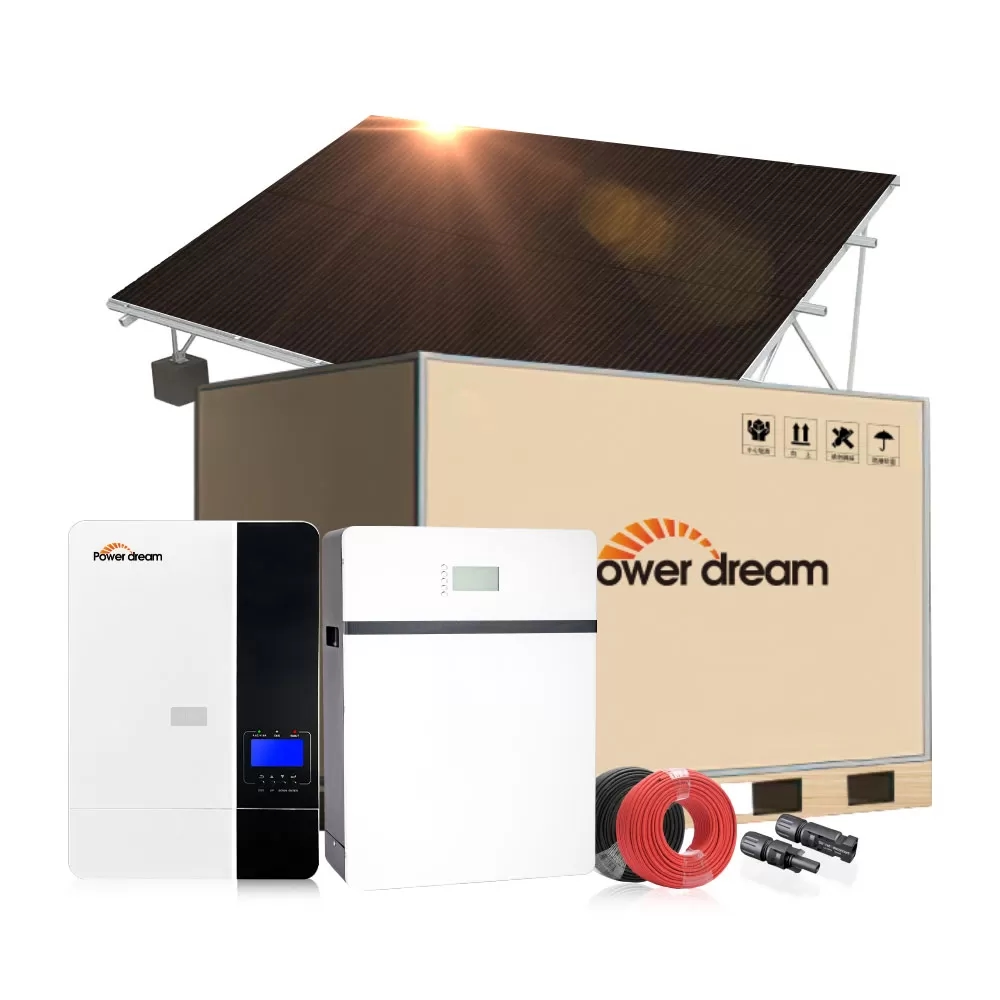
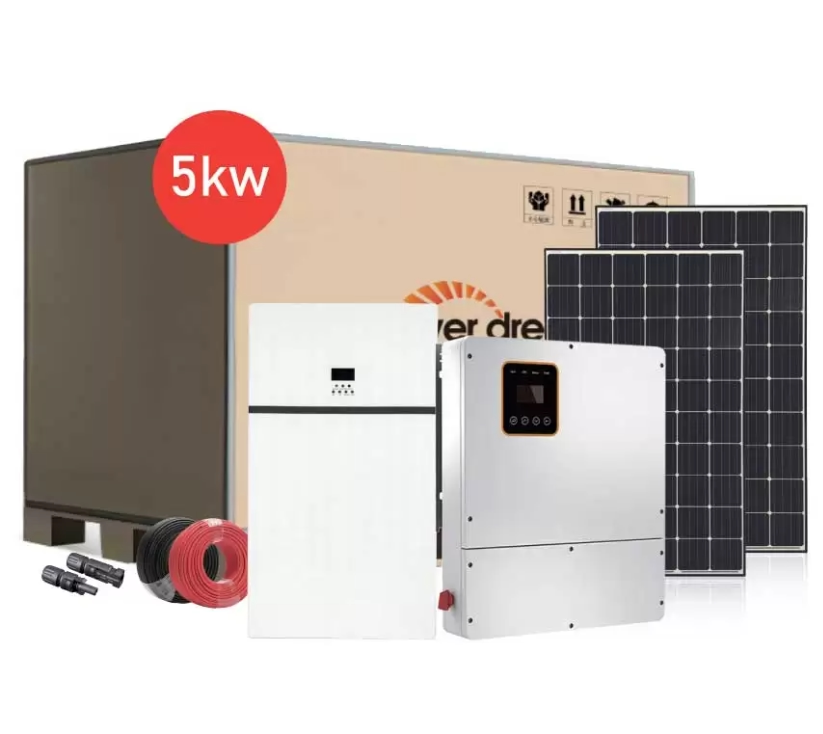
For many small to medium-sized households seeking a reliable backup power source and daytime energy savings without the need to install an excessively high-capacity system, the 5 kW hybrid solar system represents the most practical choice. PowerDream’s 5kW hybrid solar system comprises one R5KLNA inverter, one 51.2V lithium battery, and 10× 550W monocrystalline silicon solar panels, along with supporting materials such as roof mounts, PV cables, and MC4 connectors.

This hybrid solar power system is ideally suited for households requiring only basic lighting, a refrigerator, fans, a TV, a laptop, a router, and a few kitchen appliances. With careful energy management, it can also accommodate light usage of a washing machine and short-duration operation of a water pump. The 5kW configuration strikes an excellent balance between power generation and energy storage; it charges the battery during the day, directly powers appliances in use during daylight hours, and retains sufficient reserve power to cover evening electricity needs or brief power outages.

5 kW Hybrid Solar System

8kW Hybrid Solar System: Meeting Growing Household Energy Demands

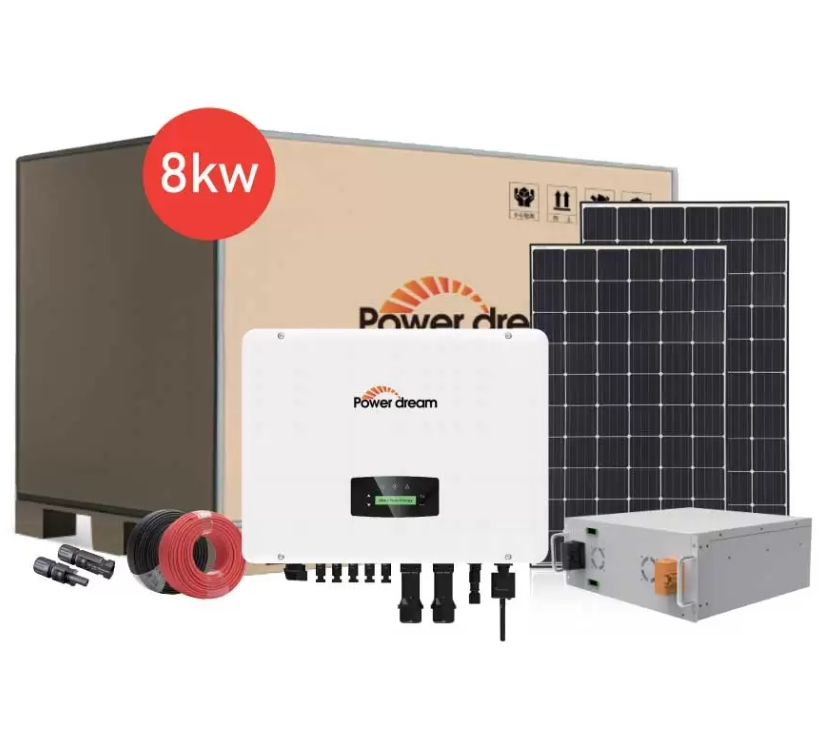
The 8kW hybrid solar system is an ideal choice for households with moderate energy requirements—satisfying needs that exceed those of a small-scale system without requiring the full generation capacity typically associated with large residential properties. PowerDream’s 8kW hybrid solar system includes one AF8K-TH inverter, one 21.7088V lithium battery, and fourteen 550W monocrystalline silicon solar panels, along with supporting materials such as roof mounts, PV cables, and MC4 connectors. The fourteen 550W solar panels provide a photovoltaic generation capacity of approximately 7.7 kWp; compared to the 5 kW package, this system offers superior charging capabilities and higher daily power output.

This capacity usually works best for medium-sized households that have more rooms, more people, or run more appliances at the same time. For instance, households featuring a large refrigerator, multiple televisions, extensive lighting usage, ceiling fans, a washing machine, and the occasional need for a water pump or cooking appliances will benefit significantly from the additional power reserves. Furthermore, the 8kW package helps homeowners avoid the common issue of insufficient system capacity. Consequently, the 8kW hybrid solar system delivers more stable operation, higher solar charging efficiency, greater operational flexibility, and a superior long-term user experience.

8kw Hybrid Solar System

10kW Hybrid Solar Power System: Higher Output Power, Ideal for Large Residences

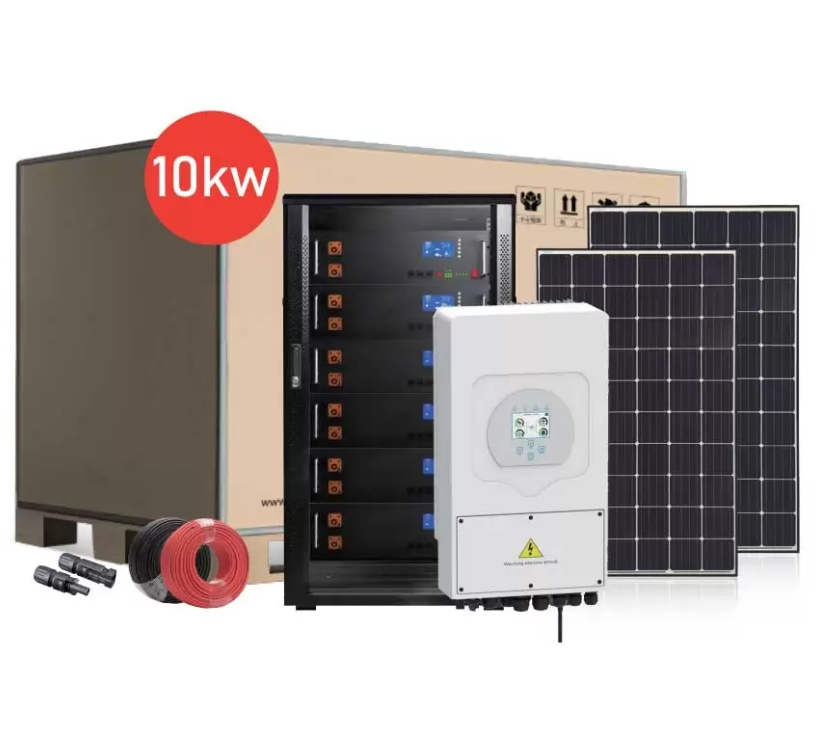
The 10kW hybrid solar system is specifically designed for households with high energy demands, a large number of family members, or complex electricity usage patterns. PowerDream’s package includes one DEYE hybrid inverter, eighteen 550W monocrystalline solar panels, and six rack-mounted lithium batteries, as well as supporting materials such as DC circuit breakers, roof mounting brackets, PV cables, and MC4 connectors. The eighteen 550W solar panels form a photovoltaic array with a capacity of approximately 9.9 kWp—a substantial solar resource for residential users. The rack-mounted battery bank also provides the system with greater storage capacity and enhanced flexibility to meet electricity demands during nighttime hours or power outages.

For households with many family members, multiple bathrooms, a home office, frequent appliance usage, or high instances of simultaneous electricity consumption, the 10kW system represents the most robust option among the three available solutions. It also works really well for homes that use a lot of air conditioning, rely on water pumps, or want more energy independence during periods of grid instability. It offers a larger operational margin, which means there is a lower probability of the batteries undergoing deep discharge daily.

10kw Hybrid Solar System

Installation, Roof Design, and Electrical Protection

A high-quality hybrid solar system solution depends on more than just the solar panels and batteries; it also requires a safe and meticulously planned installation process. PowerDream’s 5kW, 8kW, and 10kW packages include roof mounting brackets, PV cables, and MC4 connectors, while the 10kW package additionally includes DC circuit breakers. These components directly impact the system’s overall performance and safety. Proper roof mounting ensures that the solar array remains secure and stable, even when exposed to wind and rain.

Regarding various roof designs, the 5kW system, comprising 10× 550W monocrystalline solar panels, is sufficiently compact for many residential rooftops. The 8kW system utilizes 14 ×panels, thereby requiring a larger available roof area and more detailed layout planning. The 10kW system employs 18 panels, which may necessitate an even larger roof area or a highly optimized installation configuration. DC circuit breakers and professional cable routing both serve to mitigate risks and enhance reliability. During installation, we meticulously attend to these details, ensuring that homeowners receive a hybrid solar system that is both safer and more durable.

Flexible Power for Every Household.

The true strength of PowerDream’s hybrid solar systems lies in their scalability and adaptability. We offer a range of flexible configurations—including 5kW, 8kW, and 10kW options—enabling homeowners to select a solution that precisely meets their current energy consumption needs while also accommodating future growth. This modular design ensures that every hybrid solar system not only operates efficiently in the present but can also be continuously upgraded as the household’s needs evolve.

Power Dream Off Grid Solutions: Compatible with Diverse Global User Needs, Safe and Durable

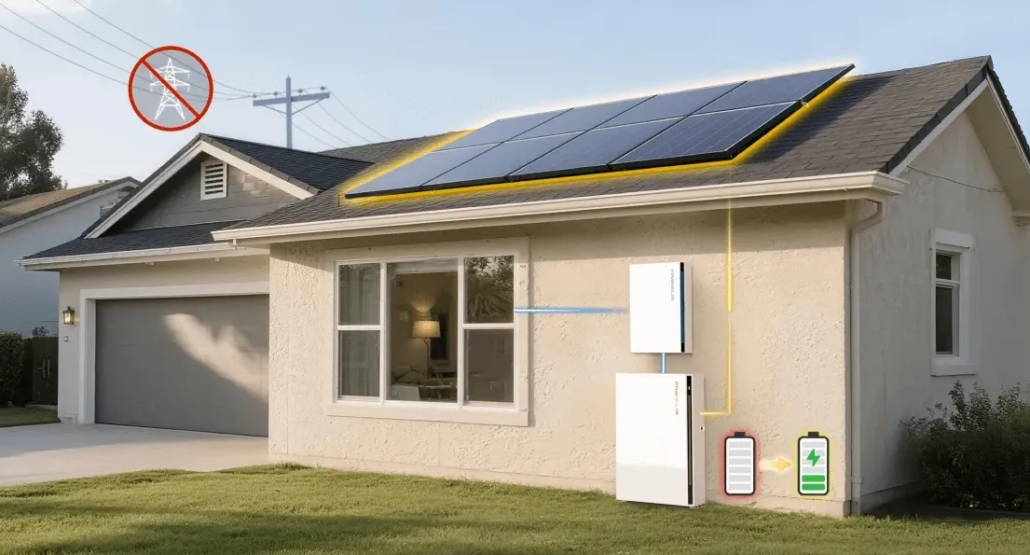
A home energy system must do more than provide power; it should integrate seamlessly with the building’s structure, remain compatible with local grid standards where necessary, protect the roof’s integrity, and operate stably year-round—all without turning the home into a perpetual construction site. PowerDream’s off grid solutions embody precisely these qualities. Designed to serve homeowners across diverse countries and regions, these off grid systems are built upon core principles of universal compatibility, long-term durability, and easy scalability. They can be deployed in regions utilising either 230V or 120/240V residential power standards, offering truly global flexibility. Furthermore, these off-grid solar systems feature all-aluminum mounting brackets and a modular architecture, ensuring stable operation across a wide range of roof and building types. They offer internet-based monitoring capabilities that allow users to track system performance in real time.

PowerDream Off Grid Solutions: Designed for Homes Worldwide

An off-grid solution capable of serving users worldwide must be compatible with various residential voltage standards without requiring users to undertake custom modifications. For this very reason, PowerDream designs its residential off grid solar system kits with dual-voltage applications specifically 230V and 120/240V in mind. This ensures that the products within the solution are suitable for deployment in numerous countries and regions, regardless of whether the residence utilizes a single-phase 230V grid standard or the 120/240V split-phase standard common in North America.

From an engineering and construction perspective, voltage compatibility impacts every aspect of the installation process from inverter selection to load balancing and wiring layout. If you match an off grid system poorly to the electrical environment, it can cause frequent circuit trips, reduce inverter performance, or even force you to redo expensive work after installation. PowerDream addresses this challenge by designing its off-grid solar systems around compatible inverter platforms and a standardized system architecture. This approach not only mitigates installation risks but also makes it easier for installers to deploy the same core solution across multiple geographic regions.

Off-Grid Solutions Designed for Homes Worldwide

An off grid solar system should be tailored to the Home

One of the primary advantages of a residential off grid solution is the freedom from reliance on the external power grid. However, you can only fully realize this advantage when you design and size the system correctly to match your home’s actual energy needs. PowerDream designs the off grid solar systems in its solutions to serve a wide range of households, including small homes, villas, remote properties, and buildings in areas with unstable or no grid access. Instead of forcing homeowners to modify their buildings, these solutions integrate smoothly with the existing structure and energy requirements.

In the global market, residential architectural styles, climatic conditions, and daily electricity demands vary significantly. A compact urban residence may require a different system configuration than a rural home, which might feature a larger roof area, higher evening electricity consumption, or a need for extended backup power. PowerDream’s modular off-grid systems give installers the flexibility to meet diverse requirements without having to design a solution from scratch for every project.

Versatility demands a flexible design for off grid solar systems

The functionality of a residential off grid solar system extends far beyond mere electricity generation. It must also integrate solar energy input, battery storage, inverter conversion, and AC power consumption into a single, cohesive platform. This is precisely why PowerDream’s off-grid solutions are engineered to construct a complete energy ecosystem from their individual components. Solar panels harvest energy during the day; batteries store it for later use; and inverters deliver a stable supply of AC power to the home.

This entire energy chain must maintain its reliability across varying temperatures, installation angles, and consumption patterns. Rigid or single-purpose designs struggle to deliver this level of flexibility within a global market context. Instead of limiting these solutions to a specific climate zone or a single type of home, designers build them to support a wide range of applications from homes in sunny, warm regions to those in cold or more unpredictable climates.

Size determination method for off grid solar systems for farms

Monitoring, Scalability, and Durability of Off Grid Solutions

The success of a comprehensive off grid solar solution depends on more than just its electrical performance; it also requires a mounting structure that can withstand years of exposure to wind, rain, thermal cycling, and mechanical stress. PowerDream utilizes all-aluminum mounting brackets for its solar systems, as aluminum strikes the perfect balance between strength, weight, and corrosion resistance. This is a critical factor for residential off grid solar systems, where installers must securely anchor solar panels to the roof and building structure, no matter the climate, whether it’s humid coastal conditions or hot, dry inland environments.

Furthermore, the use of all-aluminium mounting brackets simplifies and improves the installation process. Thanks to its lightweight properties, installers can work more efficiently, thereby reducing labor hours and enhancing overall safety during roofing operations. Furthermore, aluminum’s superior corrosion resistance—outperforming many traditional materials—helps ensure long-term structural integrity. This is particularly crucial in off-grid applications, where solar systems must deliver reliable performance without requiring frequent maintenance.

Suitable off grid solutions must be compatible with Diverse Roof Types

Given the wide variety of residential roofing styles, PowerDream designs its off grid solutions to adapt to different roof pitches, surface materials, and structural conditions. In fact, PowerDream builds its residential off-grid solar systems so installers can place them on almost any suitable roof or building structure, which makes them usable in a much wider range of scenarios. Whether a project involves a flat roof, a pitched roof, a metal roof, or other standard building types, the system ensures a secure installation without introducing unnecessary complexity.

This versatility minimizes project delays and reduces the need for custom fabrication. The more adaptable an installation system is, the faster installers can complete their work, and the more convenient future maintenance becomes. For homeowners, this means they can install a solar system without redesigning their roof or undertaking extensive structural renovations.

Suitable off grid solutions must be compatible with Diverse Roof Types

Internet-Based Monitoring Connects Off Grid Systems

PowerDream offers internet-based remote monitoring capabilities, allowing both users and installers to track system performance anytime, anywhere. This feature enables them to check solar power generation output, battery status, inverter operation, and fault diagnostics without visiting the site in person. This functionality is particularly valuable for users worldwide, as service conditions and logistics can vary significantly across different regions.

Remote monitoring enhances reliability in several key ways. First, it facilitates early detection of issues, enabling proactive intervention before minor problems escalate. Second, it optimizes maintenance scheduling, as technicians can respond based on real-time data rather than mere speculation. Third, it boosts user confidence by increasing system transparency; users no longer have to guess whether their batteries are charging correctly or if their inverter is overloaded—they can view the data directly.

Bringing Energy Independence to Users Worldwide

PowerDream’s off grid solutions offer a precise, flexible, and reliable response to the diverse energy demands of a global community. Each off grid system within this solution supports both 230V and 120/240V standards, ensuring seamless compatibility across different regions and making them an ideal choice for residential and remote-area applications. Furthermore, the robust architecture of these off-grid solar systems, combined with an all-aluminum mounting structure, guarantees exceptional durability, corrosion resistance, and stable performance across a wide range of climatic and installation conditions. Most importantly, designers put scalability and intelligence at the forefront when they design these systems. Through remote monitoring capabilities and modular expansion options, users can secure a stable, safe, and sustainable energy supply that adapts to their evolving energy needs.

Can lithium ion solar battery be used with any type of solar inverter?

Lithium ion solar battery represent one of the most efficient methods for storing solar energy; however, they are not simply “plug-and-play” devices. If a battery is incompatible with the inverters currently available on the market, it cannot be utilized. In practical application, a solar battery must precisely match the inverter’s voltage window, charging strategy, communication protocols, and safety logic. While some combinations of inverters and solar batteries work together in perfect harmony, others may require additional configuration to function. Still, you should absolutely never pair some components together. A lithium battery system only works properly when the battery management hardware matches the power electronics—and you typically ensure that compatibility by using certified batteries, setting up proper communication links, and clearly defining the operating parameters.

What Does “Compatibility” Mean for a Lithium-ion Solar Battery?

Lithium ion solar batteries can only be paired with inverters specifically designed to accommodate their unique electrical and control characteristics. A solar battery is not merely a simple energy storage device; rather, it is an integral component of a comprehensive, controlled energy system. Any lithium-ion solar battery intended for use with a specific inverter must comply with relevant local standards, incorporate inherent safety features, use a compatible battery management system (BMS), and maintain an operating voltage within the range permitted by the inverter.

Although many products are compatible with common lead-acid batteries, users intending to use lithium batteries or batteries based on other chemical chemistries must consult the relevant technical documentation and operating guidelines. This is because engineers need to establish a strong communication link between the battery’s management hardware and the power electronics. For the average homeowner, this implies that when selecting a system, the primary question should never be, “Is this a lithium battery?” Instead, the critical questions are, “Is this specific lithium battery certified? Has it been configured for use with this particular inverter model? Do its electrical characteristics precisely match those of the inverter?” If the answers to these questions remain unclear, the system should, without exception, be treated as “incompatible” until explicitly verified by manufacturer-issued documentation.

What Does  Compatibility Mean for a Lithium-ion Solar Battery

Inverter Type Matters

Common types of inverters include PV inverters, battery inverters, hybrid inverters, and off grid inverters. The compatibility of a lithium ion solar battery with a given system depends largely on the inverter’s specific topology. A standard PV inverter converts the DC electricity generated by solar panels into AC electricity for household use or the power grid; a battery inverter, conversely, converts the DC electricity stored in a battery back into AC electricity. A hybrid inverter integrates both functions into a single device, simultaneously handling PV and battery conversion. This distinction is crucial, as a standalone grid-tied PV inverter is not the same as a controller designed to support battery-powered or hybrid systems.

This means you can’t just connect lithium-ion solar batteries to any inverter and expect them to work properly. If an inverter is strictly a PV inverter, it may lack the specific battery-charging logic, communication ports, or voltage-control capabilities required by solar batteries. In contrast, engineers design off-grid and hybrid inverters to handle energy storage, battery charging, and grid interactions. A hybrid inverter, specifically, combines the functionalities of both a standard PV inverter and a battery inverter into a single unit.

Four Compatibility Checks

Before connecting a lithium ion solar battery to any inverter, four checks are absolutely critical: voltage range, charge and discharge current, battery safety certifications, and communication compatibility. The battery must be intrinsically safe; its Battery Management System (BMS) must be compatible with the product; the battery’s voltage range must fall within the inverter’s permissible input range; and the battery voltage must never exceed the inverter’s maximum DC input voltage limit. These factors constitute the technical foundation of compatibility.

The same principles apply to solar batteries in real-world project installations. Excessively high voltage can damage the inverter; excessively low voltage may cause the inverter to shut down or refuse to charge; if the inverter cannot handle the current demands of the battery, charging may proceed too slowly, or the inverter may trigger a fault protection mode; finally, if the battery lacks the necessary certifications for the inverter’s operating environment, the manufacturer may refuse to provide installation support.

Solar Cell Compatibility Check

Battery Management Communication: Often the Deciding Factor

In lithium battery systems, the communication link between the inverter and the Battery Management System (BMS) is often the deciding factor in whether the system qualifies for technical support. This is because engineers need to establish a strong communication link between the battery’s management hardware and the power electronics. For lithium-ion solar batteries, this communication involves more than just exchanging status data. It also informs the inverter when to limit charging, when to cease charging, when temperatures are too high or too low, and when the battery has reached a safe charging state.

How ​​to Select the Right Inverter for Lithium Ion Solar Battery?

The most common compatibility issues stem from mismatched charging settings. Lithium ion solar batteries charge differently from lead-acid batteries. The inverter or charge controller must support the correct logic for constant current, constant voltage, and float charging; furthermore, in many lithium battery systems, a Battery Management System (BMS) dynamically regulates charging limits based on temperature, state of charge, and individual cell health. Technical documentation often explicitly states that the BMS in a lithium-ion battery dynamically adjusts limit values, such as the charging ceiling, based on component temperature, state of charge, and the condition of individual cells.

Consequently, a solar battery must never be connected to an inverter with a fixed charging profile or a voltage range that does not align with the battery’s specifications. The battery’s operating voltage must fall entirely within the inverter’s permissible input range. It must not exceed the inverter’s maximum allowable DC input voltage. For buyers, the decision is pretty straightforward: you need to choose an inverter that matches the battery’s voltage, current, and communication protocols; otherwise, don’t deploy the system at all.

How ​​to Select the Right Inverter for Lithium Ion Solar Battery

Pairing the Right Inverter with Lithium Ion Battery

True compatibility between a lithium-ion solar battery and an inverter hinges on several key factors, including voltage matching, charge/discharge parameters, communication protocols, and overall system design. Neglecting any of these factors can lead to diminished performance, system instability, or even safety hazards. If you choose lithium-ion solar batteries that your inverter officially supports or that are technically compatible, you can ensure smooth day-to-day operation, better energy management, and a longer service life. A well-matched combination of solar batteries and inverters fulfills every user’s expectations: efficient charging, stable power output, and reliable system operation under real-world conditions. By adhering to a rigorous selection process and relying on verified compatibility data, users can confidently build a solar energy storage system that is safe, scalable, and built to last.

Which appliances in a home can a small residential off grid solar system power?

Before opting for an off grid solar system, owners of small homes often ask themselves, “Exactly which appliances can it power?” This is because a small-scale off-grid solar system is not designed to power every single appliance in the house, unlike a connection to the public utility grid. Instead, its purpose is to provide reliable, carefully managed electricity to the most critical electrical loads. If you size and configure the system correctly, an off-grid solar setup can keep a small home comfortable, fully functional, and consistently powered—without wasting money on oversized hardware or unnecessary battery capacity. For small homeowners, the real value of an off grid solar system comes from how well you match your home’s appliance demands with the available solar generation, battery storage, and inverter capacity—so you can confidently power all the appliances you actually use.

How Much Power Can a Small Residential Off Grid Solar System Actually Provide?

Small residential off grid solar systems perform best when meeting basic to moderate electricity needs rather than powering every device simultaneously. This is because off-grid living relies on the sensible prioritization of energy usage. You must take into account your daily kilowatt-hour consumption, peak power requirements, battery runtime, and the inverter’s surge capacity. Small systems usually work best for powering essential loads and everyday devices with low to moderate power use, like LED lights, Wi-Fi routers, phones, tablets, laptops, TVs, fans, and energy-efficient refrigerators. These types of appliances ensure daily comfort while keeping electricity demands effectively under control.

In off-grid system design, the most important principle is to distinguish between essential appliances and secondary ones. Most people consider refrigerators, lighting, and communication devices essential. You can still use appliances like blenders, vacuum cleaners, and microwaves—they’re helpful, but you can run them on a schedule instead of all the time. A well-designed off-grid solar system allows you to manage these priorities effectively, thereby ensuring the home remains fully operational without prematurely draining the battery bank.

How Much Power Can a Small Residential Off Grid Solar System Actually Provide

Lighting, Electronics, and Communication Devices Are the Easiest Loads to Power.

For a small residential off grid solar system, the easiest appliances to power are low-wattage electronics and lighting fixtures. LED lights serve as an excellent example of this. This becomes especially important when you’re dealing with appliances that use motors or compressors, like refrigerators, water pumps, and washing machines. This makes LED lighting one of the most efficient and reliable applications for small residential off grid solar systems. The same applies to mobile phones, tablets, routers, modems, and laptops. These devices don’t use much power, and you can usually charge them during the day when solar output is at its peak.

Televisions are also manageable, particularly modern LED TVs, which consume far less electricity than older models. If you set up the system properly and keep the battery bank in good shape, a small off-grid home solar system can usually power several hours of TV in the evening without any trouble. For households seeking both comfort and energy efficiency, these low-power appliances should be the top priority.

Electronic and Communication Devices in Small Residences

Kitchen appliances can also be utilized, provided their usage is carefully managed

The kitchen is often where many homeowners begin to test the limits of their small residential off grid solar systems. Some appliances are easily accommodated, while others can quickly overwhelm a small inverter or battery bank. Energy-efficient refrigerators and freezers are generally acceptable, as they cycle on and off intermittently rather than running continuously at full power. Using other kitchen appliances requires more careful management. Microwaves, toasters, coffee makers, and rice cookers can all be used, though typically only one at a time. These appliances require moderate to high bursts of power, so the inverter must possess sufficient surge capacity. As long as residents avoid operating multiple high-power appliances simultaneously, an off-grid home solar system can effectively meet these demands.

How to Prioritise Home Appliances for a Stable Off Grid Lifestyle?

For small residential off grid solar systems, supporting high-power heating and cooling equipment presents the greatest challenge. Consequently, expectations must remain realistic. Small off-grid home solar systems are generally ill-suited for large-scale resistive heating devices such as electric ovens, space heaters, water heaters, or clothes dryers. These devices consume vast amounts of electricity over extended periods, placing extremely heavy demands on both the photovoltaic array and the battery bank. Even if the inverter theoretically possesses the capacity to start these devices, their energy consumption can rapidly deplete the battery reserves, thereby compromising the comfort and stability of off-grid living.

Cooling can also prove to be a challenge, particularly for households relying on traditional air conditioning systems. Small fans are easy to run, but central air conditioning or large window AC units can overwhelm a system—unless you design that system specifically to handle those loads. Off-grid home solar systems can sometimes support high-efficiency split-system air conditioners, but this only works when you properly size the solar panels, battery capacity, and inverter output to meet the actual demand.

Stable Off-Grid Lifestyle

Surge Loads vs. Running Loads in Small Residential Off Grid Solar Systems

When calculating system capacity, people often focus solely on the power ratings listed on appliance labels. However, this is far from sufficient. A small residential off grid solar system must also be capable of handling “start-up” or “surge” loads. This matters most when you’re running appliances with motors or compressors, like refrigerators, water pumps, and washing machines. These devices may draw a starting current several times greater than their standard running power during the brief moment of start-up. If the inverter cannot withstand this surge load, the appliance may fail to start altogether, even if its average energy consumption is well within the system’s limits.

This underscores the importance of selecting the right inverter for an off grid solar system. You need sufficient continuous output power to ensure appliances run normally, as well as adequate surge output power to handle those momentary start-up spikes. Consequently, for homeowners relying on small residentiall off grid solar systems, cultivating sound load management habits is one of the most valuable practices they can adopt.

Building a Practical and Reliable Off-Grid Living Strategy

Small residential off grid solar systems are fully capable of meeting the basic power demands of a wide range of household appliances. However, a well-designed off-grid solar system does not attempt to power *every* device found in a grid-tied home; instead, it prioritizes meeting the needs of critical loads—such as lighting, refrigeration, communication devices, and other energy-efficient appliances. This approach ensures daily comfort while simultaneously maintaining system stability and preserving the long-term health of the battery bank.