
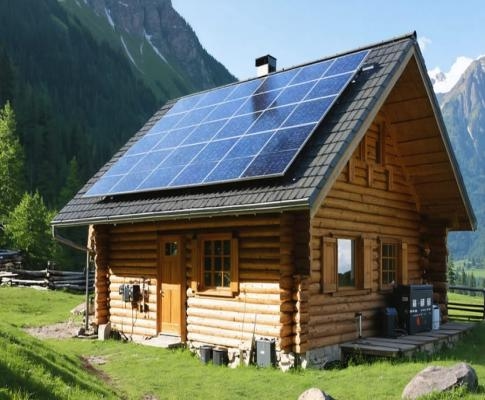
Power Dream Off Grid Solutions: Compatible with Diverse Global User Needs, Safe and Durable
A home energy system must do more than provide power; it should integrate seamlessly with the building’s structure, remain compatible with local grid standards where necessary, protect the roof’s integrity, and operate stably year-round—all without turning the home into a perpetual construction site. PowerDream’s off grid solutions embody precisely these qualities. Designed to serve homeowners across diverse countries and regions, these off grid systems are built upon core principles of universal compatibility, long-term durability, and easy scalability. They can be deployed in regions utilising either 230V or 120/240V residential power standards, offering truly global flexibility. Furthermore, these off-grid solar systems feature all-aluminum mounting brackets and a modular architecture, ensuring stable operation across a wide range of roof and building types. They offer internet-based monitoring capabilities that allow users to track system performance in real time.
PowerDream Off Grid Solutions: Designed for Homes Worldwide
An off-grid solution capable of serving users worldwide must be compatible with various residential voltage standards without requiring users to undertake custom modifications. For this very reason, PowerDream designs its residential off grid solar system kits with dual-voltage applications specifically 230V and 120/240V in mind. This ensures that the products within the solution are suitable for deployment in numerous countries and regions, regardless of whether the residence utilizes a single-phase 230V grid standard or the 120/240V split-phase standard common in North America.
From an engineering and construction perspective, voltage compatibility impacts every aspect of the installation process from inverter selection to load balancing and wiring layout. If you match an off grid system poorly to the electrical environment, it can cause frequent circuit trips, reduce inverter performance, or even force you to redo expensive work after installation. PowerDream addresses this challenge by designing its off-grid solar systems around compatible inverter platforms and a standardized system architecture. This approach not only mitigates installation risks but also makes it easier for installers to deploy the same core solution across multiple geographic regions.
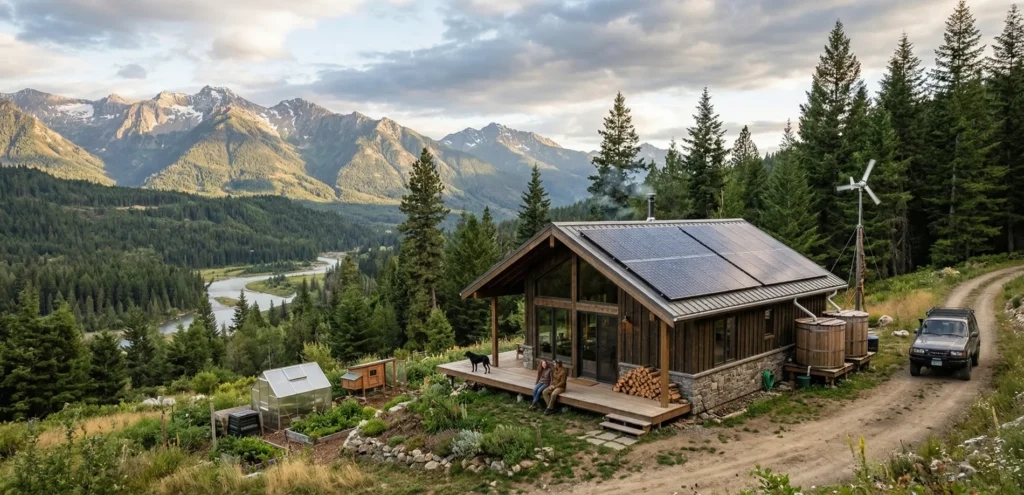
An off grid solar system should be tailored to the Home
One of the primary advantages of a residential off grid solution is the freedom from reliance on the external power grid. However, you can only fully realize this advantage when you design and size the system correctly to match your home’s actual energy needs. PowerDream designs the off grid solar systems in its solutions to serve a wide range of households, including small homes, villas, remote properties, and buildings in areas with unstable or no grid access. Instead of forcing homeowners to modify their buildings, these solutions integrate smoothly with the existing structure and energy requirements.
In the global market, residential architectural styles, climatic conditions, and daily electricity demands vary significantly. A compact urban residence may require a different system configuration than a rural home, which might feature a larger roof area, higher evening electricity consumption, or a need for extended backup power. PowerDream’s modular off-grid systems give installers the flexibility to meet diverse requirements without having to design a solution from scratch for every project.
Versatility demands a flexible design for off grid solar systems
The functionality of a residential off grid solar system extends far beyond mere electricity generation. It must also integrate solar energy input, battery storage, inverter conversion, and AC power consumption into a single, cohesive platform. This is precisely why PowerDream’s off-grid solutions are engineered to construct a complete energy ecosystem from their individual components. Solar panels harvest energy during the day; batteries store it for later use; and inverters deliver a stable supply of AC power to the home.
This entire energy chain must maintain its reliability across varying temperatures, installation angles, and consumption patterns. Rigid or single-purpose designs struggle to deliver this level of flexibility within a global market context. Instead of limiting these solutions to a specific climate zone or a single type of home, designers build them to support a wide range of applications from homes in sunny, warm regions to those in cold or more unpredictable climates.
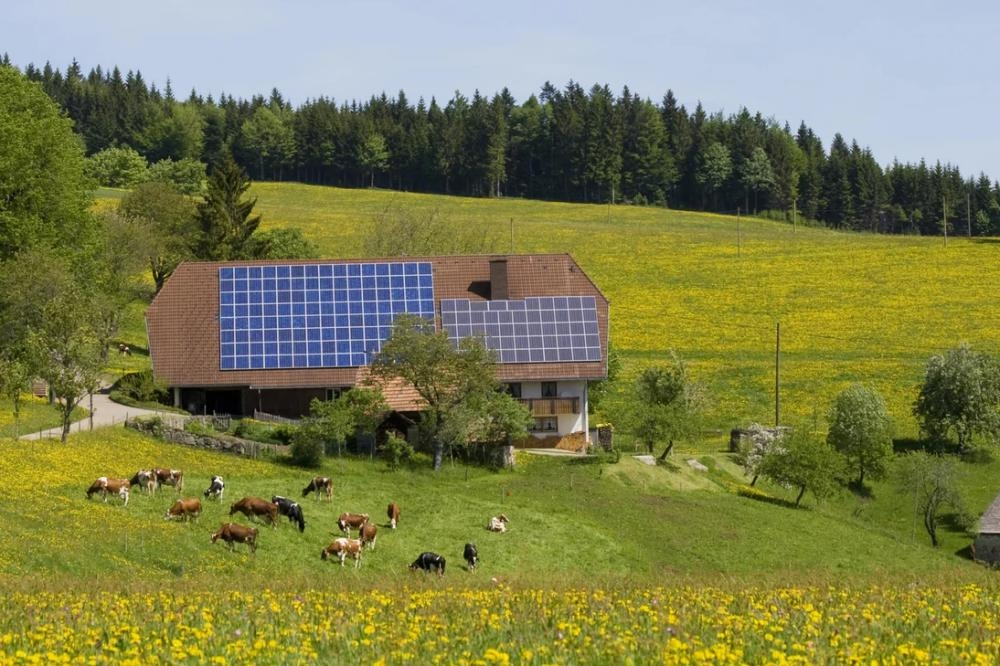
Monitoring, Scalability, and Durability of Off Grid Solutions
The success of a comprehensive off grid solar solution depends on more than just its electrical performance; it also requires a mounting structure that can withstand years of exposure to wind, rain, thermal cycling, and mechanical stress. PowerDream utilizes all-aluminum mounting brackets for its solar systems, as aluminum strikes the perfect balance between strength, weight, and corrosion resistance. This is a critical factor for residential off grid solar systems, where installers must securely anchor solar panels to the roof and building structure, no matter the climate, whether it’s humid coastal conditions or hot, dry inland environments.
Furthermore, the use of all-aluminium mounting brackets simplifies and improves the installation process. Thanks to its lightweight properties, installers can work more efficiently, thereby reducing labor hours and enhancing overall safety during roofing operations. Furthermore, aluminum’s superior corrosion resistance—outperforming many traditional materials—helps ensure long-term structural integrity. This is particularly crucial in off-grid applications, where solar systems must deliver reliable performance without requiring frequent maintenance.
Suitable off grid solutions must be compatible with Diverse Roof Types
Given the wide variety of residential roofing styles, PowerDream designs its off grid solutions to adapt to different roof pitches, surface materials, and structural conditions. In fact, PowerDream builds its residential off-grid solar systems so installers can place them on almost any suitable roof or building structure, which makes them usable in a much wider range of scenarios. Whether a project involves a flat roof, a pitched roof, a metal roof, or other standard building types, the system ensures a secure installation without introducing unnecessary complexity.
This versatility minimizes project delays and reduces the need for custom fabrication. The more adaptable an installation system is, the faster installers can complete their work, and the more convenient future maintenance becomes. For homeowners, this means they can install a solar system without redesigning their roof or undertaking extensive structural renovations.
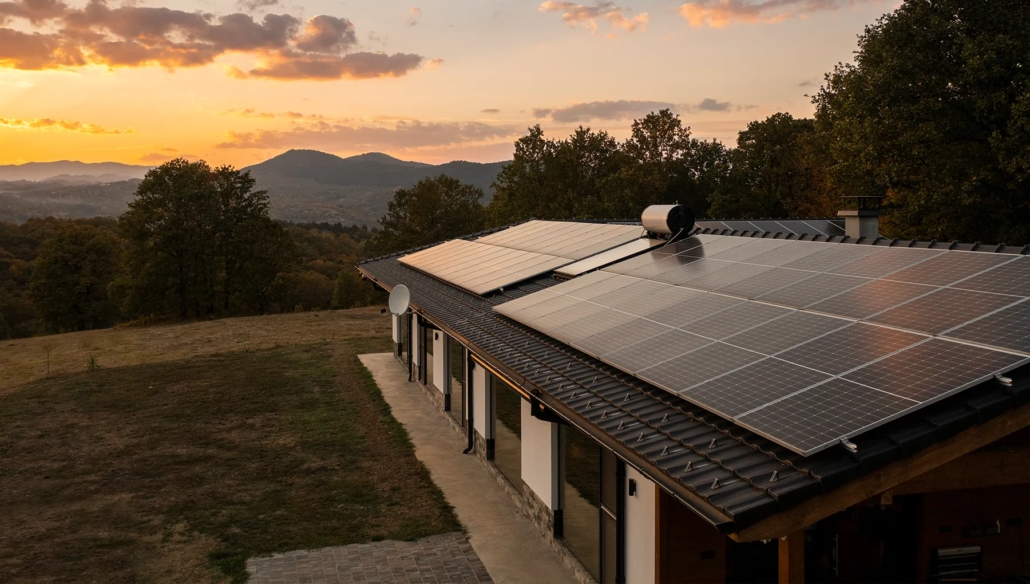
Internet-Based Monitoring Connects Off Grid Systems
PowerDream offers internet-based remote monitoring capabilities, allowing both users and installers to track system performance anytime, anywhere. This feature enables them to check solar power generation output, battery status, inverter operation, and fault diagnostics without visiting the site in person. This functionality is particularly valuable for users worldwide, as service conditions and logistics can vary significantly across different regions.
Remote monitoring enhances reliability in several key ways. First, it facilitates early detection of issues, enabling proactive intervention before minor problems escalate. Second, it optimizes maintenance scheduling, as technicians can respond based on real-time data rather than mere speculation. Third, it boosts user confidence by increasing system transparency; users no longer have to guess whether their batteries are charging correctly or if their inverter is overloaded—they can view the data directly.
Bringing Energy Independence to Users Worldwide
PowerDream’s off grid solutions offer a precise, flexible, and reliable response to the diverse energy demands of a global community. Each off grid system within this solution supports both 230V and 120/240V standards, ensuring seamless compatibility across different regions and making them an ideal choice for residential and remote-area applications. Furthermore, the robust architecture of these off-grid solar systems, combined with an all-aluminum mounting structure, guarantees exceptional durability, corrosion resistance, and stable performance across a wide range of climatic and installation conditions. Most importantly, designers put scalability and intelligence at the forefront when they design these systems. Through remote monitoring capabilities and modular expansion options, users can secure a stable, safe, and sustainable energy supply that adapts to their evolving energy needs.

