
RV Solar Panels: Power Your Road Trip Without the Grid
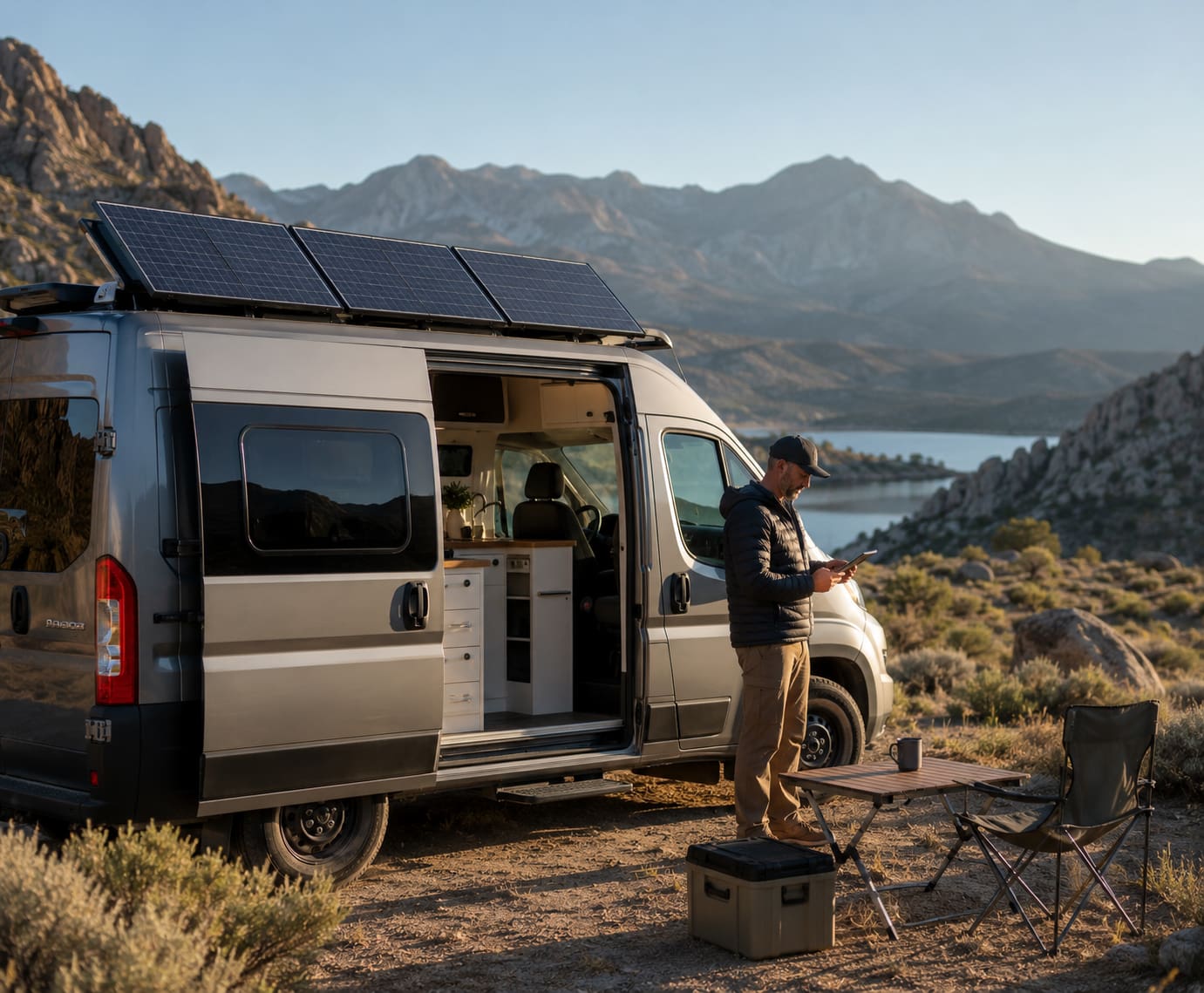
You pull off the highway onto a dirt track, follow it three miles into the trees, and park facing a mountain view that no campground would ever give you. The coffee maker runs. The fridge keeps your food cold. The lights work fine after dark. No hookup, no generator noise, no fee — just RV solar panels doing exactly what they’re supposed to do.
That’s the version of van life and RV travel that most people picture. The gap between that picture and reality is usually just one thing: the right solar setup.
Why RV Solar Panels Change the Way You Travel
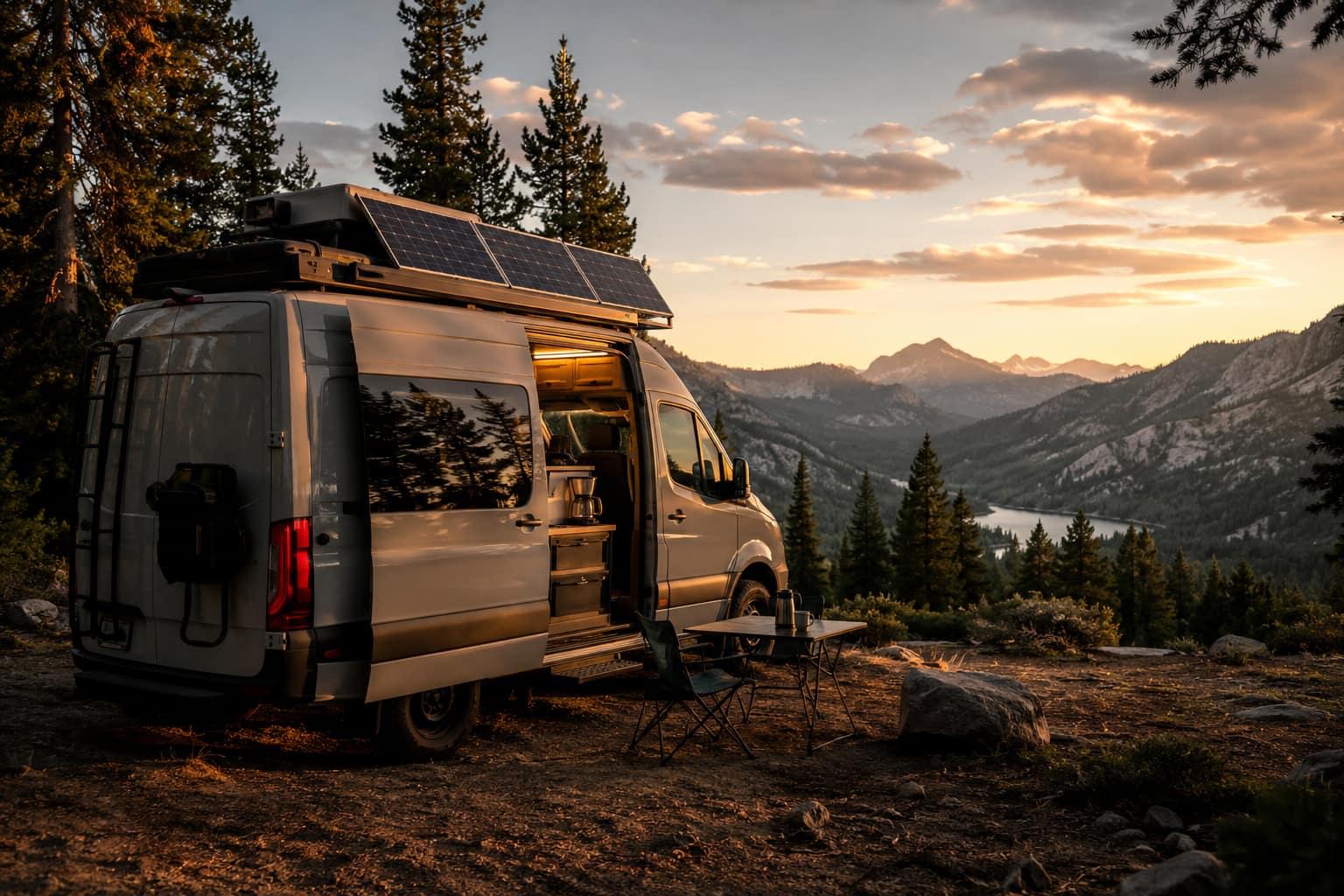
The obvious benefit is free electricity. But the deeper shift is freedom of location. Without solar power for RV use, you’re limited to campgrounds with electrical hookups — which means crowds, booking windows, and nightly fees. With a properly sized solar system, any flat piece of ground with a sky view becomes a viable campsite.
Beyond location flexibility, solar eliminates the noise and fuel cost of running a generator. A well-designed camper solar system operates silently and requires almost no day-to-day attention. Most RV travellers report that switching to solar changes their entire relationship with where and how they park.
What to Look for When Choosing RV Solar Panels
The market is full of options. Most of them work. The difference is in how well they match your actual usage and roof space.
Panel Wattage and Roof Space
Start with your daily power consumption. Add up the watt-hours used by your fridge, lighting, phone charging, water pump, and any other devices you run regularly. A typical full-time RV setup draws between 100 and 300 watt-hours per day. That figure determines how much panel wattage you need to keep the batteries charged on an average sunny day.
Monocrystalline panels are the best choice for most RV roofs — they produce more power per square foot than polycrystalline alternatives, which matters when roof space is limited.
Battery Storage
RV solar panels generate power only when the sun is out. Batteries cover the rest — overnight, on cloudy days, and during early morning hours. Lithium iron phosphate (LiFePO4) batteries are the standard for off grid RV living. They’re lighter than lead-acid, discharge more deeply, and last significantly longer. A 100Ah lithium battery provides roughly 80–90Ah of usable power. Lead-acid of the same rating delivers closer to 50Ah.
Charge Controller
The charge controller sits between your panels and your battery bank. It regulates the charging process to prevent overcharging and maximise battery life. MPPT (Maximum Power Point Tracking) controllers are more efficient than PWM models — especially in partial shade or on cooler days. For any system over 200W, MPPT is worth the extra cost.
Flexible vs Rigid Panels
Rigid glass panels are more efficient and longer-lasting. Flexible panels conform to curved roofs and weigh less. For most RVs with flat or near-flat roofs, rigid panels are the better long-term investment. Flexible panels suit vans and irregular roof profiles where rigid mounting isn’t practical.
How RV Solar Panels Actually Work Together
Understanding the system as a whole makes installation and troubleshooting much simpler.
Daytime Generation
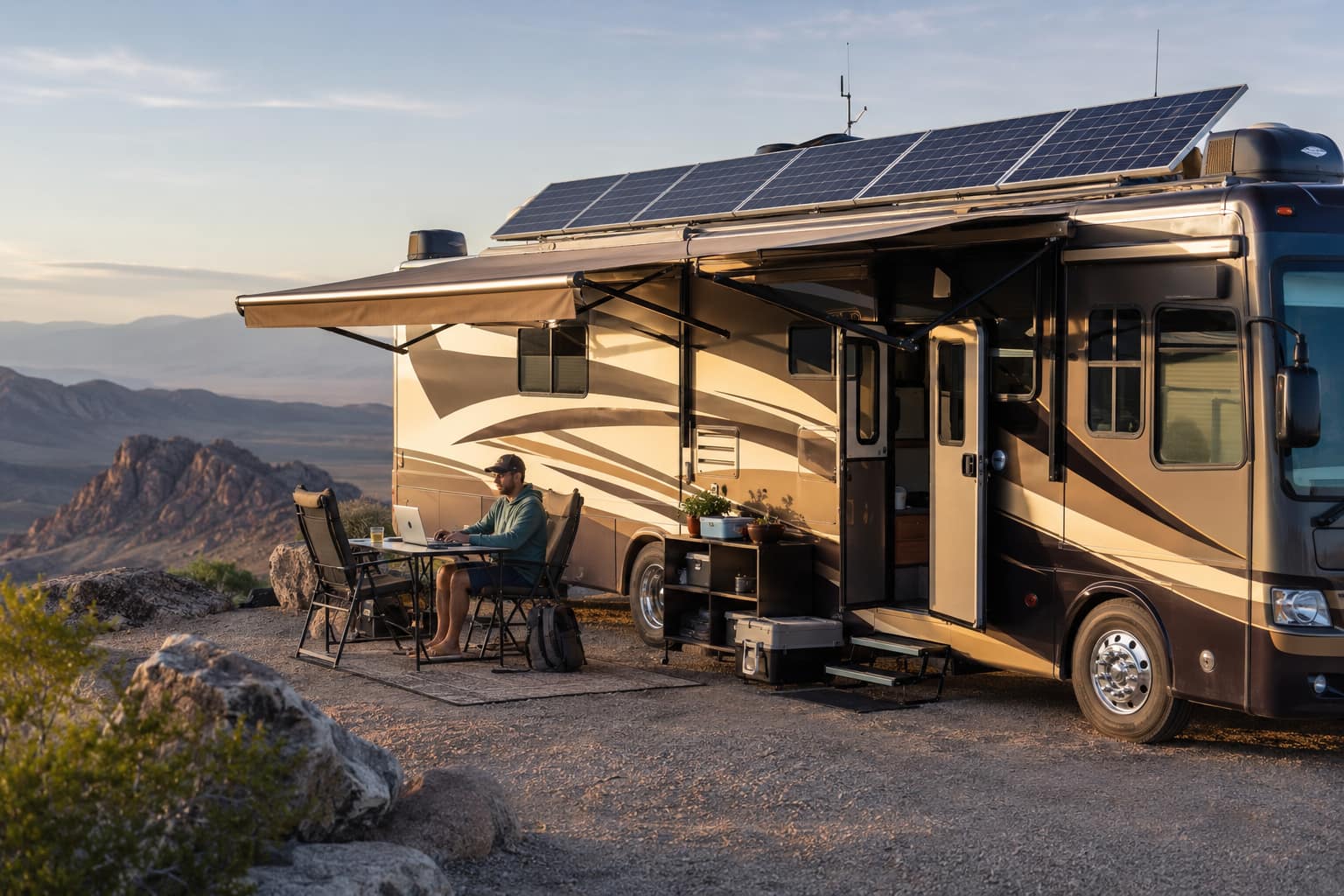
During daylight hours, RV solar panels convert sunlight into DC electricity. That current flows through the charge controller, which conditions it and directs it into the battery bank. Any excess power beyond what the batteries can accept is regulated away — which is why sizing your battery bank to match your panel output matters.
Overnight and Cloudy Day Draw
Once the sun sets, your inverter draws from the battery bank and converts stored DC power to AC for standard appliances. On overcast days, panels still generate — typically at 10–25% of their rated output depending on cloud density. A well-sized system accounts for two to three consecutive low-sun days without leaving you short.
RV Solar Panels for Different Types of Travellers
Not every setup needs to be the same. The right system depends on how you actually use your RV.
Weekend and Seasonal Campers
A 200–400W panel setup with a 100Ah lithium battery covers most weekend use comfortably — phone charging, LED lighting, a 12V fridge, and a small fan. Installation is straightforward, the cost is manageable, and the system requires zero maintenance beyond keeping the panels clean.
Full-Time and Extended Travellers
Full-timers running laptops, a residential fridge, air circulation fans, and regular cooking appliances typically need 600W or more of panel capacity and 200–300Ah of battery storage. The investment is higher, but the return — months or years of free electricity in any location — makes it one of the most cost-effective upgrades a full-time traveller can make.
Getting Started with RV Solar Panels
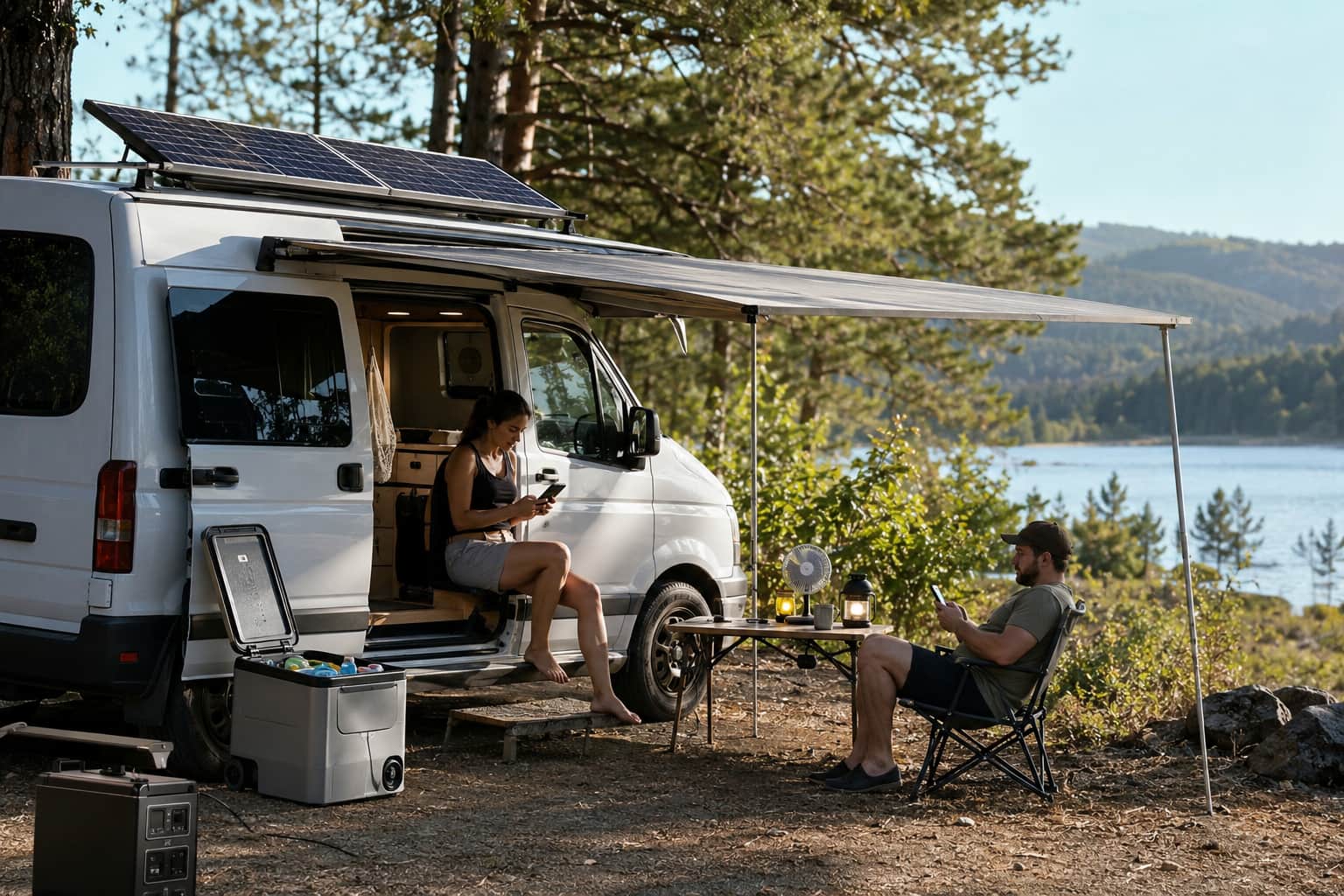
The best way to approach a camper solar system is to start with your actual power needs, not with a product. Calculate your daily consumption, choose a battery bank that covers two days of usage without solar input, and size your panels to recharge that bank on an average sunny day. That formula works for a 200W weekend system and a 1,000W full-time setup alike.
RV solar panels have made genuine off-grid travel accessible to anyone willing to spend a weekend on installation. The technology is reliable, the components are widely available, and the payback — in both money and freedom — starts from the first campsite you park at without paying for power.
