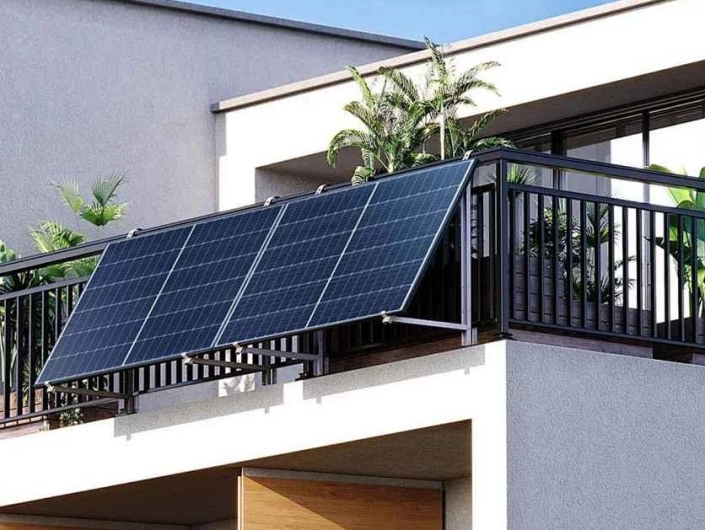
How to choose solar panel mounting bracket for carport electric vehicle charging station?

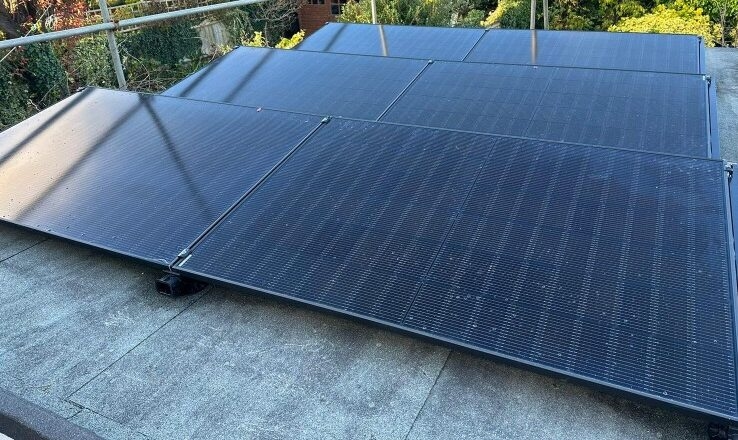
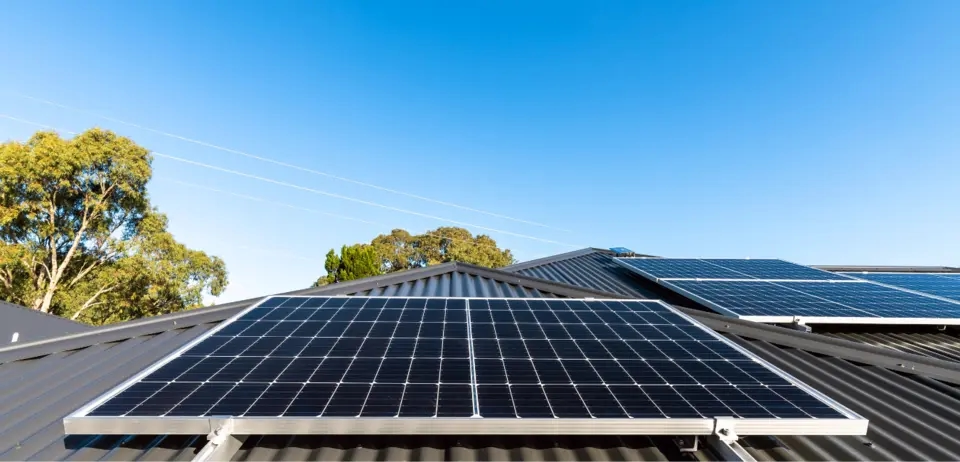
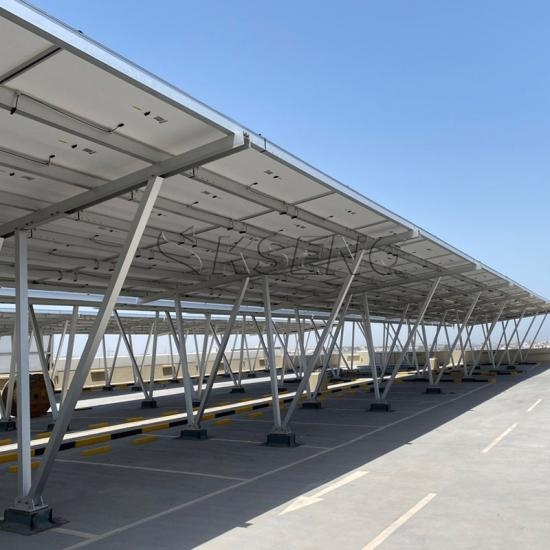
Choosing the right solar panel mounting bracket for a carport-type EV charging station requires careful consideration of site loads, module layout, foundation type, and operational requirements. The Power Dream solar carport mounting system features a modular structure that allows for vertical or horizontal PV panel installation, supports tilting of 5° to 15°, and can be installed on reinforced concrete or pile foundations. Power Dream utilizes cold-rolled S235JR/S355JR steel coils that comply with EN 10025 and are hot-dip galvanized according to ISO 1461:2009. S350GD galvanized steel coils that comply with EN 10326 or equivalent are also available. This meets the requirements for solar panel mounting brackets in carport-type EV charging stations.

Determining the Material and Corrosion Resistance of the Solar Panel Mounting Bracket

The material choice determines the service life and maintenance costs of the solar panel mounting brackets on the carport. Busy public charging stations, frequently exposed to vehicle salt spray, urban pollution, and occasional de-icing splash, require robust corrosion protection. Power Dream’s solar carport mounting systems utilize cold-rolled S235JR or S355JR steel coils (EN 10025) hot-dip galvanized according to ISO 1461:2009, providing a uniform, metallurgically bonded zinc layer. For corrosive coastal or industrial environments, you can choose S350GD galvanized steel coils according to EN 10326 or corrosion-resistant substrates such as Aluzinc, Magnelis, Corrender, or Posmac. These coatings provide enhanced barrier and cathodic protection, specifying a minimum zinc or equivalent coating mass of 275 g/m², ensuring decades of service life with low maintenance costs and meeting relevant certification requirements.
Determining the Material and Corrosion Resistance of the Solar Panel Mounting Bracket

Consider the Structural Design and Environmental Loads of the Solar Panel Mounting Bracket

When selecting a carport solar panel mounting system, it must be able to safely withstand environmental loads while providing adequate clearance for the vehicle and charger. First, define the design loads according to local building codes. For example, US projects refer to ASCE 7 for wind and seismic load design; European projects refer to Eurocodes; and Indian projects refer to IS Codes. The mounting system’s cross-sectional area, component dimensions, and connections must be verified through structural analysis based on these site-specific loads.

Key structural considerations include panel orientation, effective tributary area per module, and tilt angle. In certain latitudes, a higher tilt can improve energy capture, but it increases wind lift and snow accumulation, increasing the required mounting stiffness and foundation size. For urban carports where clearance height is a concern, designers should achieve a minimum of 2.2–2.4 meters.

Furthermore, you must ensure that the mounting system maintains module clamping force and alignment under dynamic loads. Use lock washers or pre-torqued nuts where applicable, and design connectors to allow for simple on-site replacement without disturbing adjacent modules. For locations with significant temperature fluctuations, provide expansion joints or slots in the rails. For long spans, include mid-span supports or stronger profiles to prevent excessive deflection. If the carport utilizes a multi-bay modular array, consider modular column spacing that matches the bay dimensions to reduce material waste and simplify installation.

Foundation and Mounting Options

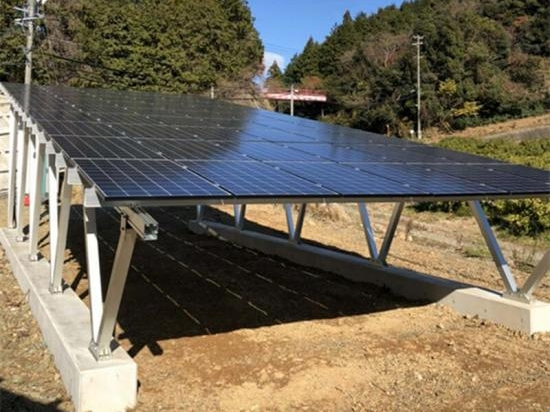
Choosing the appropriate solar panel mounting bracket for a carport electric vehicle charging station also depends on local soil conditions, budget, and installation speed. Power Dream’s solar carport mounting systems are designed for reinforced concrete pad foundations as well as driven or bored pile foundations.

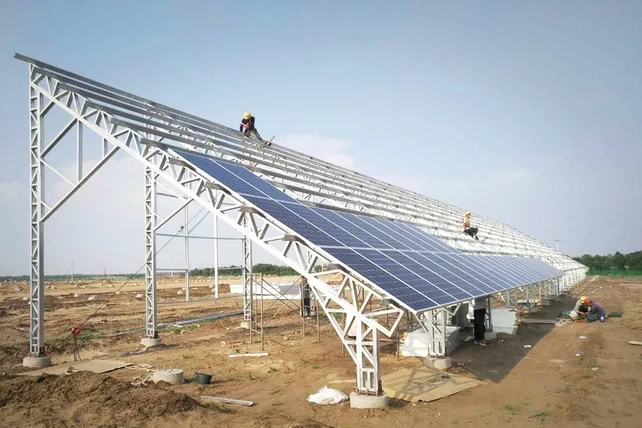
Reinforced concrete provides stable support and is suitable for sites with good bearing capacity and surface preparation. To prevent corrosion, we hot-dip galvanize or use stainless steel for anchor bolts, and we protect the baseplate-concrete interface with a coating or sleeve to prevent water seepage. For pile foundations, we prefer screw piles, driven steel H-piles, or bored piles on sites with poor surface soil or limited excavation. Screw piles speed installation and reduce concrete usage. They can be load-tested on-site and provide immediate load-bearing capacity. For carport charging stations, we pre-assemble the main beams and tracks into manageable modules and then hoist them into place, rather than assembling numerous small components at height.

Determining PV Panel Layout and Orientation

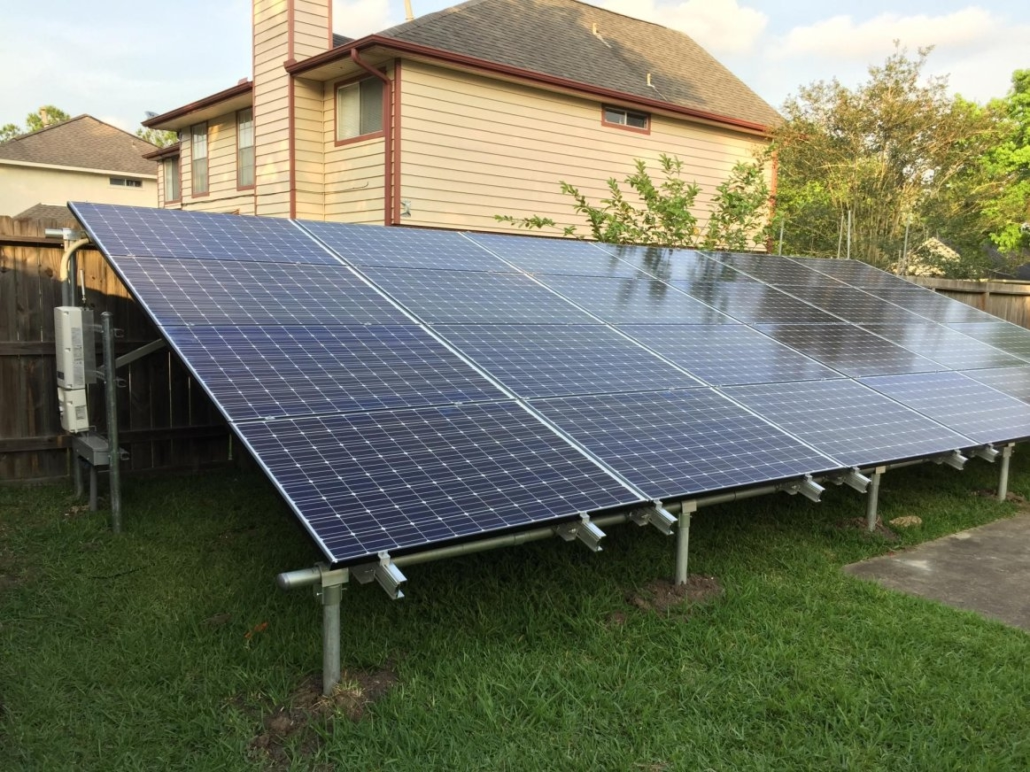
The availability and usability of a charging carport depend not only on the solar panel mounting brackets but also on the PV panel layout and orientation. Power Dream’s flexible solar carport mounting systems allows panels to be installed vertically or horizontally, with tilts of 5° to 15° to the south or east. Leverage these degrees of freedom to optimize energy production and address site constraints.

For customers in the Northern Hemisphere, a south-facing array (or a north-facing array in the Southern Hemisphere) maximizes peak energy production. An east-facing array better suits morning charging patterns. For public or workplace charging with irregular arrival times, consider an east-west split array to balance power generation throughout the day. Both horizontal and vertical mounting options affect shading and panel spacing. Vertical layouts allow for closer integration with lampposts or signage, while horizontal layouts reduce wind and facilitate panel replacement. The electrical design should also consider string length, MPPT allocation, and distance from the EV charger and inverter. During the expected lowest temperature, you should keep the string voltage within the inverter input range to avoid overvoltage. Finally, the design should consider future expansion by reserving spare capacity in the column base and planning routing for additional cabling.
Solar Carport Mounting Systems

Suitable Mounting Brackets for Carport-Type Charging Stations

Selecting the appropriate solar panel mounting bracket for a carport-type EV charging station requires a balance between structural design, material science, electrical integration, and construction practicality. Power Dream provides solar panel mounting brackets certified to relevant standards. Under standard conditions, they utilize hot-dip galvanized, cold-rolled S235JR/S355JR steel compliant with ISO 1461:2009, as well as S350GD/Aluzinc/Magnelis steel for harsh environments, or anodized aluminum alloy. We also select the appropriate hardware based on site requirements, ensuring ISO-compliant A2-70 stainless steel or coated carbon steel. We also provide comprehensive certification, FAT/SAT testing, and a comprehensive warranty. Furthermore, engineers use energy modeling and shading analysis to confirm panel orientation and tilt, ensuring safe, long-term electric vehicle charging operations.
Why do monocrystalline PV modules have excellent low-light performance?

Monocrystalline PV modules often outperform other modules in low-light conditions, whether on an overcast morning or a cold winter day. Monocrystalline PV modules combine purer silicon, advanced cell structure, and optimized optical surfaces to convert a higher proportion of diffuse and low-irradiance light into useful electricity. First, the crystal quality and doping uniformity of monocrystalline silicon wafers reduce electrical losses and enable better carrier collection in low-light conditions. Second, cell and surface engineering enhance light absorption and maintain efficiency in low-angle and diffuse light. Third, module- and system-level designs preserve the advantages of cells, enabling installed solar panel systems to generate higher energy even under non-ideal conditions.

The advantages of crystal quality and semiconductor physics in monocrystalline PV modules

The core of excellent low-light performance lies in material quality. The core of monocrystalline PV modules is monocrystalline silicon ingots, whose wafers have extremely uniform atomic order and far fewer grain boundaries than multicrystalline silicon grains. These grain boundaries act as microscopic traps for photogenerated carriers, so fewer grain boundaries mean lower recombination losses in monocrystalline batteries. Under low irradiance conditions (where fewer carriers are generated), preserving each carrier becomes even more critical. Therefore, the advantages of monocrystalline silicon are more pronounced under cloudy skies or in early morning sunlight.

In addition, many monocrystalline PV module manufacturers use advanced processes to control doping concentration and lifetime, thereby increasing the diffusion length of minority carriers. When the diffusion length exceeds the cell thickness, carriers generated far from the pn junction can still reach the junction and generate current. Because the generated carrier density is lower at this point, better carrier collection results in a higher short-circuit current compared to competing batteries.

The advantages of crystal quality and semiconductor physics in monocrystalline PV modules

Battery Structure and Surface Engineering for Monocrystalline PV Modules

Materials are necessary but not sufficient. Battery structure and optical engineering are crucial for translating silicon’s advantages into practical output. Many monocrystalline PV modules utilize advanced cell structures such as PERC, heterojunction, TOPCon, or staggered back-contact designs. These structures reduce surface recombination, trap light internally, and allow for a longer optical path within the silicon wafer, thereby increasing the absorption of oblique and diffuse photons.

Surface treatment is also crucial. Anti-reflective coatings and textured surfaces can reduce reflection losses over a wide range of angles. At low solar angles or in diffuse lighting, modules that maintain low reflectivity will capture more photons. Furthermore, light-harvesting technologies such as rear reflectors, microtexturing, and specially designed rear passivation reflect weak rays into the silicon wafer, giving edge photons a second chance to generate charge carriers. Bifacial monocrystalline PV modules are particularly noteworthy. Because bifacial modules receive usable energy from both the front and back sides, their gain is higher under diffuse or ground-reflected light conditions.

Battery Structure and Surface Engineering for Monocrystalline PV Modules

Electrical Properties and Current-Voltage Behavior Under Low Irradiance

Low-light performance is not only reflected in optical aspects, but also in electrical aspects. The electrical properties of monocrystalline PV modules under low irradiance conditions determine whether captured photons can be converted into usable power. Two of the most important parameters are the scaling of the short-circuit current (Isc) and the maintenance of the fill factor (FF).

Under ideal conditions, Isc has a roughly linear relationship with irradiance. However, actual modules can exhibit deviations due to shunting paths and recombination effects. High-quality monocrystalline batteries, due to their lower leakage current and longer carrier lifetime, are better able to maintain Isc in low-light conditions. Fill factor is also crucial; batteries with high internal series resistance or severe recombination effects will experience a reduction in fill factor in low-light conditions. However, monocrystalline batteries with low series resistance and good passivation processes can maintain fill factor, resulting in higher power output even with reduced Isc. Furthermore, open-circuit voltage (Voc) is less sensitive to irradiance but is affected by temperature. Voc is higher in low-light conditions and on cool mornings, helping maintain the module operating point and improving MPPT efficiency.

Preserving the Advantages of Low-Light Rooftops

Even the best monocrystalline PV module can underperform if poorly designed at the module and system levels. Good practices can preserve the advantages of the batteries and maximize the capture of low-light energy. First, keep the string voltage within the MPPT operating window and minimize mismatch losses. Mismatch becomes particularly critical in partial shading or when the modules are oriented differently. At the same time, designers should use string layout and module matching to ensure that the MPPT algorithm operates in the most efficient IV region under low irradiance. For systems affected by shading, microinverters or MLPE can maintain the single-module advantages of monocrystalline batteries by independently extracting maximum power from each module.

Secondly, well-placed bypass diodes can prevent localized hotspot losses under partial shading conditions. They can also prevent a sharp drop in power across the entire string when a partial area is shaded. Monocrystalline delivers its best performance when even illumination evenly lights the batteries. Finally, you must also use a charge controller or inverter with reliable low-irradiance MPPT performance. When combined with monocrystalline modules, which offer clearer IV characteristics in low-light conditions, this can result in higher daily energy yields.

Finally, the tilt, orientation, and height of the installation determine the amount of diffuse and reflected light reaching the modules. For example, in Thailand, a slight tilt can reduce midday overheating while capturing more diffuse light in the morning and evening. In southern Argentina, optimizing the tilt for the winter months can improve low-sun-angle performance. For solar panel systems, consult your monocrystalline PV module supplier for installation guidance to maintain the advantages of low-light conditions on site.

Preserving the Advantages of Low-Light Rooftops

Site Examples and Recommendations for Thailand and Argentina

Both Thailand and Argentina have areas where diffuse light, seasonal variations, or high-latitude sun angles reduce peak irradiance. During the monsoon season in Bangkok and the cloudy winter weather in Santiago, installed systems benefit from modules that efficiently convert diffuse photons. Similarly, in Patagonia or southern Argentina, the shorter winter days and lower sun angles require modules that can extract more energy at low irradiance levels.

For users in Thailand, consider monocrystalline PV modules with robust anti-reflective coatings and excellent hotspot performance. However, be mindful of the temperature coefficient, as tropical regions often experience higher ambient temperatures. Modules with a better temperature coefficient can maintain low-light gain in hot, cloudy weather.

For users in Argentina, in temperate and high-latitude locations, optimize module tilt and orientation based on the winter sun angle, prioritizing modules with strong low-angle response. When selecting a solar panel package, consider seasonal energy yield models and examine the cell’s nominal operating temperature (NOCT) and low-irradiance IV curves to obtain realistic winter energy yield estimates.

Leveraging the advantages of monocrystalline for better real-world yields

Monocrystalline silicon PV modules excel in low-light environments thanks to their superior wafer quality, advanced cell architecture, and carefully engineered optical and electrical designs that maintain carrier collection and fill factor even in photon-scarce conditions. Furthermore, combined with thoughtful module-level engineering and system design, appropriate stringing, MPPT, and site-specific installation translate into more reliable energy collection in diverse climates.

The Most Important Specifications to Check Before Buying Solar Street Lamp

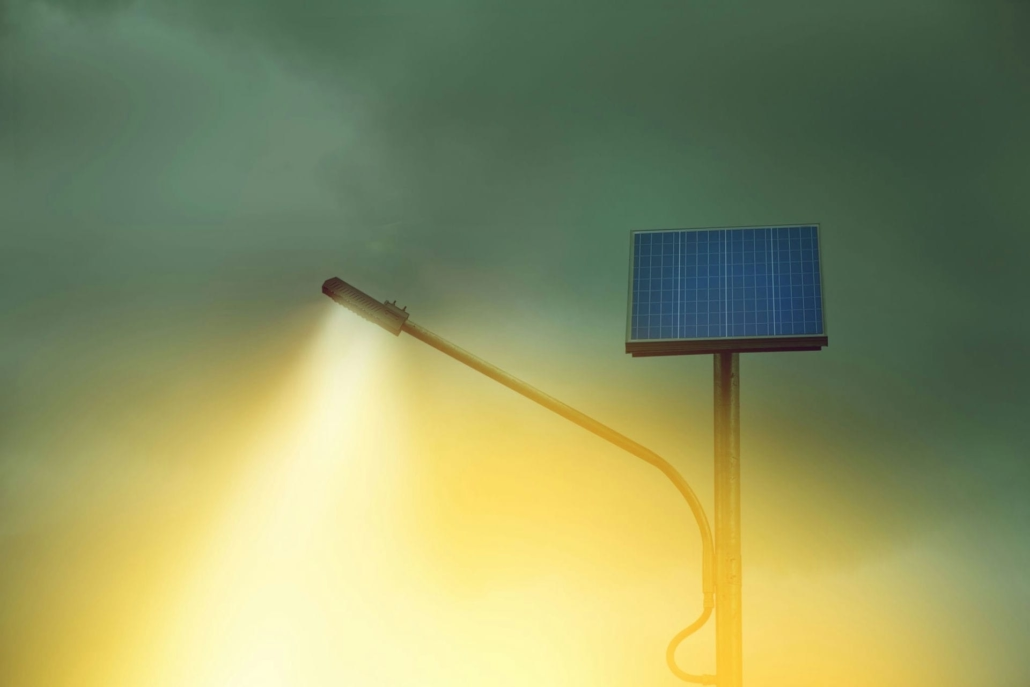
When purchasing a solar street lamp, carefully examine the technical specifications that determine its long-term performance. This will help you avoid common pitfalls and select a street lighting system that can provide the expected light levels and uptime. Common specifications include PV module rating and orientation, battery capacity and chemistry, LED output and efficiency, charge controller and MPPT performance, battery life and dimming strategy, warranty, certifications, and more.

Check the specifications of the solar panel and PV array for your solar street lamp.

The solar panel is a critical component of any solar street lamp, so when purchasing a solar street light, check the peak power (Wp) rating under standard test conditions (STC). Don’t just consider panel size; always compare Wp and module efficiency. A 100 Wp module with 18% efficiency will perform differently from a 100 Wp module with 21% efficiency for the same area. For street lights, higher efficiency can be beneficial when the area on top of the pole is limited.

Next, check the actual temperature performance. Modules lose power when heated. As a solar street light manufacturer, we list the temperature coefficient. In hot climates, such as India and the Middle East, modules with a lower negative coefficient can retain more energy. Furthermore, module performance under low light conditions and non-ideal irradiance should be examined. Finally, their open-circuit voltage (Voc), maximum power point voltage (Vmp), and short-circuit current (Isc) under nominal operating conditions should be verified. These voltage points must be compatible with the charge controller and battery pack.

Check the specifications of the solar panel and PV array for your solar street lamp

Battery Chemistry, Capacity, and Sizing Standards

Batteries can determine the uptime and autonomy of solar street lamps. Therefore, when purchasing, consider their chemistry, available capacity, depth of discharge, cycle life, and temperature tolerance. Common battery types include lead-acid, lithium iron phosphate (LiFePO4), and certain designs of lithium NMC. LiFePO4 is often used for streetlights due to its longer cycle life, higher available DoD, and better performance in extreme temperatures. In contrast, sealed lead-acid batteries typically have a shorter cycle life.

Then, the battery size needs to be determined. First, determine the average nighttime energy consumption of the solar street lamp under the desired operating schedule, then specify the number of days of autonomous operation. Multiply the nighttime usage by the number of days of autonomy, and add a margin to account for performance degradation and unforeseen cloudy days. For example, if a light consumes 20 Wh during dusk-to-dawn operation and needs five nights of autonomy, it will require approximately 20 × 5 = 100 Wh of usable energy. Adding the margin, this yields 130 Wh of usable energy. If you choose a LiFePO4 battery with a 90% depth of discharge (DoD), you’ll need a battery rated at approximately 145 Wh to power the solar street lamp.

Check the solar street lamp’s lumen output, efficacy, and color.

The LED components determine the light quality and energy efficiency of a solar led street lamp. In addition to the total wattage, pay attention to the actual lumen output and system efficacy. Efficacy is the combined performance of the LEDs, driver, and optics. High-quality solar LED street lights can achieve 120-170 lumens per watt or higher. A lamp rated at 30 watts and outputting 3,600 lumens is more efficient than a 30-watt lamp outputting 2,400 lumens.

Next, confirm the lumen degradation rating (L70 or L80) and the expected hours of use. L70-50,000 hours means the LED will retain at least 70% of its initial luminous flux after 50,000 hours. For public lighting, the target L70 value should be greater than 50,000 hours to minimize maintenance. Photometric data showing intensity distribution, cutoff angle, and ultra-low illuminance are also required. Use these files to model spacing and ensure compliance with illuminance standards for roads, sidewalks, and parking lots.

Check the solar street lamp's lumen output, efficacy, and color.

Charge Controller, MPPT, and System Management Functionality

A charge controller is an intelligent device that correctly converts photovoltaic power into battery power. For solar-powered LED street lights, MPPT controllers are preferred over PWM controllers because they can harvest 10-30% more energy, especially under varying light intensity or with higher panel voltage configurations. Check the controller’s nominal efficiency and operating voltage range, and ensure that the open-circuit voltage (Voc) and open-circuit voltage (Vmp) are compatible with the PV module characteristics. Important controller features include programmable charging profiles, battery temperature compensation, low-voltage disconnect (LVD) thresholds, and configurable lighting schedules. Confirm that the controller supports your chosen voltage. Also, identify remote telemetry options and their reporting frequency. A robust management platform provides real-time status: battery state of charge (SoC), PV power generation, and fixture on/off.

Mechanical Design, Protection Rating, and Installation Considerations

Solar led street lamps must be able to withstand weather, vandalism, and mechanical loads. Therefore, ensure their IP rating and IK impact resistance match the installation environment. For outdoor luminaires, IP65 or higher is standard, providing effective protection against dust and water. Installations in coastal or high-humidity environments may require more corrosion-resistant materials and conformal coatings. The IK rating indicates impact resistance, which is particularly important in public spaces. Materials and finishes also impact longevity. Casings should ideally be made of die-cast aluminum or marine-grade stainless steel, with a polyester powder coat or anodizing finish for UV stability. During installation, confirm pole and bracket compatibility, wind load certification, and recommended mounting height. Wind speed ratings should comply with local regulations. Additionally, ensure the fixture effectively dissipates heat to maintain LED efficiency and longevity.

Choosing Practical Specifications

Reliable solar street lights require a balance of photovoltaic power generation, battery capacity and chemistry, LED performance, intelligent controls, robust mechanical design, and comprehensive warranty and support. A phased procurement strategy can be adopted, starting with a small pilot to test real-world field performance across different seasons. This specifications-driven approach can help you avoid common failures and ensure your solar street lights deliver true value.

Small Residential Off Grid Inverter: Compact and Efficient Solutions

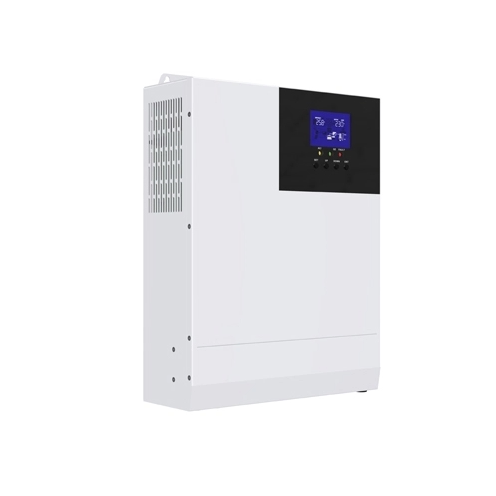
With increasing demand for renewable energy in regions like Pakistan and Turkey, more small homeowners are adopting renewable energy solutions. Consequently, the demand for compact and efficient off grid inverters has surged. To meet the needs of small homes, Power Dream’s BHF 3kW off grid inverters are specifically designed for small residential applications, prioritizing both space and energy efficiency. Rated at 3kW/6kVA, they are 40% smaller than comparable products, with an ultra-compact body measuring just 378×280×103mm. This makes them ideal for small homes or garages. BHF solar inverters offer a maximum hybrid charging capacity of 100A (solar + grid), charging 2.5 times faster than traditional grid charging, fully charging a 5kWh battery in less than an hour. Furthermore, their quiet operation ensures they won’t disrupt your living space.

Compact Design: Advantages of Off Grid Inverter for Small Homes

Compactness and space-saving design are key considerations when considering off grid inverters for small homes. The designers created the BHF 3kW off grid inverter with these needs in mind, offering a 40% smaller footprint than comparable products. Its ultra-compact dimensions of just 378×280×103 mm make it easily fit into tight spaces, such as garages and utility rooms, making it ideal for homes with limited space. This compact form factor doesn’t sacrifice power or performance. Despite its compact size, the BHF inverter still delivers 3kW of power, more than enough for most small homes. This design innovation means homeowners no longer have to choose between space and performance, as this off-grid inverter offers the best of both worlds.

BHF 3kW off grid inverter1

Fast and Efficient Hybrid Charging for Faster Energy Storage

A key highlight of the BHF 3kW off grid inverter is its hybrid charging capability. With a maximum charging current of 100A, this off grid inverter can charge a 5kWh battery 2.5 times faster than traditional grid charging (typically 40A). This fast-charging capability ensures the battery is fully charged in less than an hour, maximizing the efficiency of your energy system. For homeowners, this means less time waiting for power to be stored, ensuring more reliable access to electricity even during extended periods of cloudy weather or when solar panels are generating insufficient power. This fast-charging feature is particularly beneficial for smaller homes with limited energy storage, ensuring the battery is always ready for use.

Quiet Operation Perfect for Small Living Spaces

Noise is an often-overlooked consideration when choosing an off grid inverter. Traditional inverters generate considerable noise during operation, which can be a significant distraction for small homes or those requiring quiet operation. The BHF 3kW off grid inverter, however, produces less than 50dB of noise, making it one of the quietest models available for off-grid applications. For smaller homes, especially those where the inverter may be located in shared spaces like garages or basements, noise can be disruptive to daily life. The BHF inverter’s silent operation ensures it doesn’t disrupt daily life, providing peace of mind and comfort for homeowners. Whether placed in a utility room, under a stairwell, or near living areas, it remains silent.

Quiet Operation Perfect for Small Living Spaces

Versatility and Flexibility for Various Off Grid Applications

The BHF 3kW Off Grid Inverter is a feature-rich solution suitable not only for small homes but also for various off-grid applications. Its hybrid charging system integrates solar and grid power, providing flexible energy management options. This versatility makes it ideal for remote cabins, rural areas, or areas prone to power outages.

Furthermore, the BHF inverter is adaptable and can be used for larger off grid solar systems. As energy needs increase, you can add additional inverters or battery storage systems, creating a scalable solution that grows in proportion to the size of the home or system. The off grid inverter’s hybrid charging capability is handy in off-grid environments, where a continuous power supply can be unreliable. This scalability provides a long-term, adaptable power solution.

Off Grid solar Applications

Cost-Effectiveness of Off Grid Inverter for Small Homes

The BHF 3kW Off Grid Inverter offers a significant ROI for small homes. While the upfront cost of purchasing and installing an off grid system may be higher than that of a grid-connected system, it generates and stores solar energy without the need to pay ongoing utility bills. In addition to saving energy, the BHF 3kW inverter operates efficiently, ensuring that it stores and uses energy most economically. Its fast charging, space-saving design, and silent operation combine to help reduce operating costs and gradually increase them over time. Therefore, homeowners in areas with high electricity prices or unstable grid connections can deliver significant savings and potentially recoup the initial investment in just a few years.

An off-grid power solution perfect for small homes

With its ultra-compact design, fast hybrid charging, and silent operation, the BHF 3kW off grid inverter offers small homeowners a reliable, cost-effective, and environmentally friendly way to harness solar power and reduce their reliance on traditional grid power. Whether you live in a small home, a remote area, or want better control over your energy consumption, this off-grid solar inverter provides a powerful solution that can scale with your needs.

Several key features to look for when purchasing a solar panel roof mount

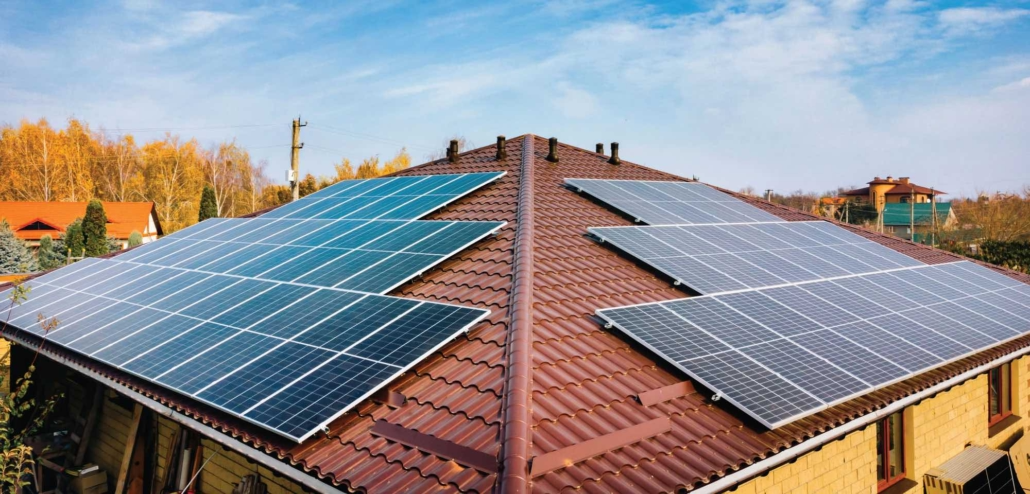
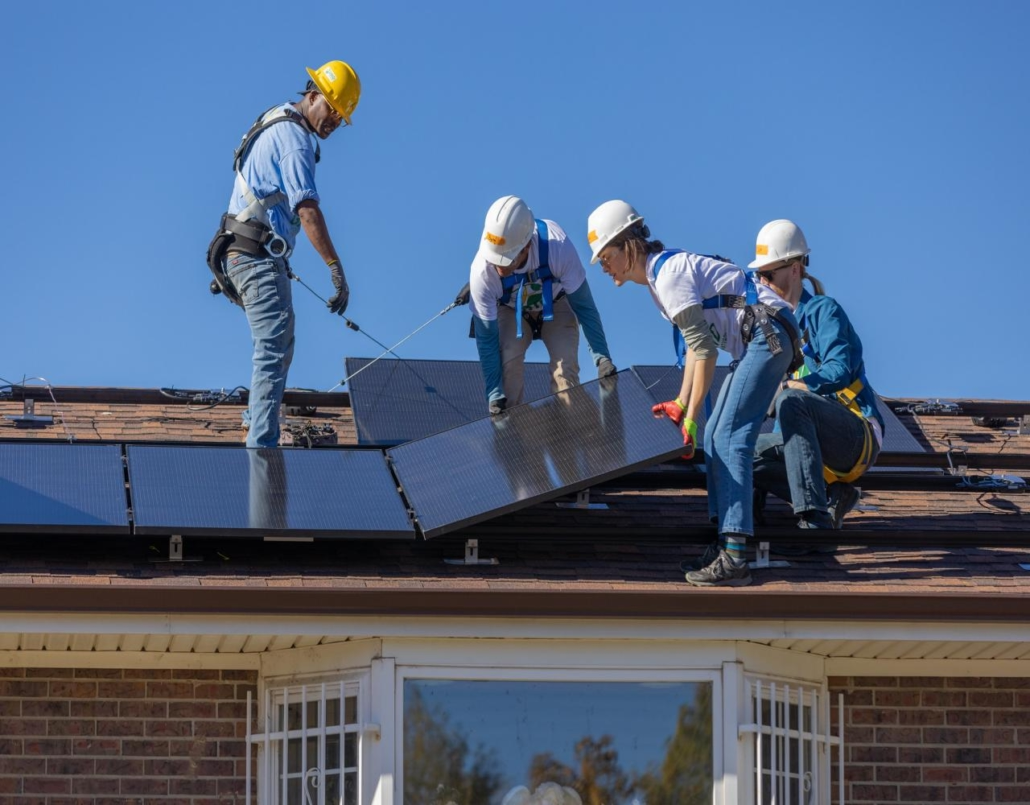
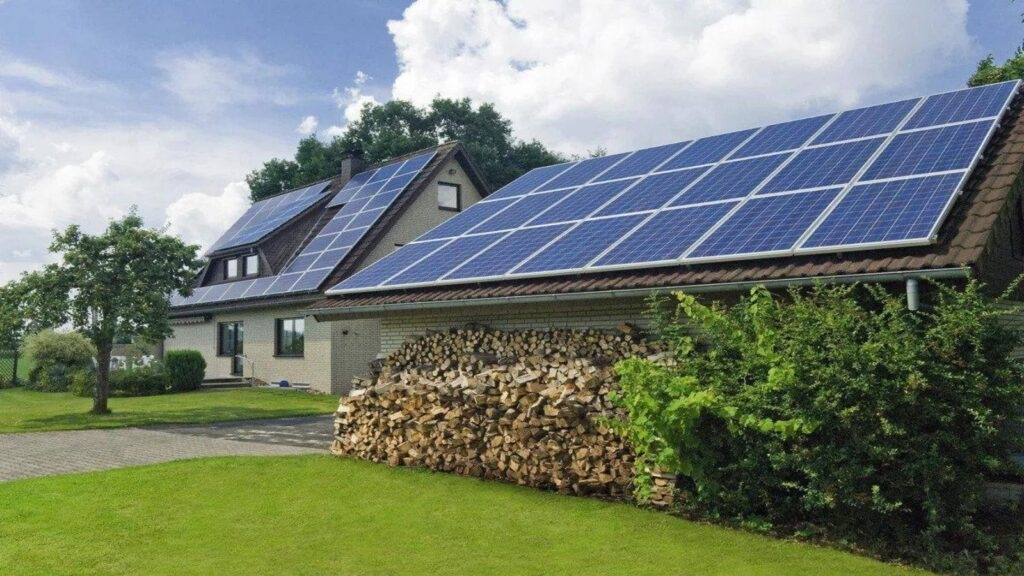
When installing a solar power system, the most critical yet often overlooked component is the solar panel roof mount. The rooftop solar panel mounting system not only securely holds the solar panels in place but also plays a vital role in ensuring the overall efficiency, durability, and longevity of the solar power system. Whether you’re installing solar panels for your home or business, choosing the right solar panel mounting system will maximize energy production and ensure your solar product lasts for years to come.

Material Quality and Durability of Solar Panel Roof Mount

One of the most important factors when choosing a solar panel roof mount is its construction material. Solar panel roof mountings and mounting systems must be made of high-quality, corrosion-resistant materials to withstand the harsh environmental conditions they may be exposed to. Common materials for solar panel roof mounting include aluminum, stainless steel, and galvanized steel, all of which are recognized for their strength and resistance to corrosion.

Aluminum is popular for its lightweight properties, rust resistance, and exceptional durability. While slightly heavier, stainless steel offers outstanding rigidity and resistance to extreme weather conditions, making it ideal for areas subject to strong winds or heavy rainfall. Galvanized steel, coated with a protective zinc layer, is also corrosion-resistant, making it a cost-effective alternative. Therefore, when choosing a solar panel roof mount, it’s essential to ensure the material is suitable for your area’s specific weather conditions, as this will directly impact the long-term reliability and stability of the installation.

Material Quality and Durability of Solar Panel Roof Mount

Roof Compatibility and Installation Flexibility

Every roof is unique, so when choosing a solar panel roof mount, it’s essential to ensure it’s compatible with your roof type. Whether your roof is flat, pitched, or metal, choosing a solar panel roof mount system tailored to your specific needs is crucial. Alternatively, you can choose a versatile mount that’s compatible with multiple roof types, ensuring a secure installation without compromising the roof’s integrity.

Flat roofs often require adjustable mounts to tilt the solar panel to the optimal angle for sunlight exposure. On the other hand, pitched roofs may require mounts that align more easily with the slope. Mounts for metal roofs should utilize specialized mounting solutions to ensure a secure system that prevents leaks and damage to the roof surface. These types of rooftop mounts should be easily adjustable in tilt and angle, ensuring maximum solar energy absorption throughout the day, thereby increasing the efficiency of your solar installation.

Ease of Installation and System Integration

When purchasing a solar panel rooftop mount, ease of installation is also a key consideration. A well-designed solar panel mount should be easy to install, even for professionals working in demanding environments. Therefore, choose systems that provide clear installation instructions, pre-assembled components, and adjustable accessories for a seamless installation process.

Furthermore, a solar panel rooftop mount should integrate seamlessly with other components of your solar power system, such as panels, inverters, and wiring. Some solar panel rooftop mounts are designed for specific panel brands, while others are more universal (you should consult your solar panel mount supplier for details). A solar panel rooftop mount that is easy to install, adaptable to various systems, and compatible with a range of panel types can save you time and simplify the installation process.

Adjustability and Flexibility of Solar Panel Rooftop Mounts

The angle at which installers mount solar panels significantly affects their efficiency. An easily adjustable solar panel bracket enables flexible tilting and reorientation of panels to optimize sunlight capture. By adjusting the tilt of your panels, you can ensure they’re in the optimal position to maximize energy production throughout the day, especially during seasonal periods when the sun’s angle fluctuates. Look for solar panel roof mounts with features like adjustable tilt and a swivel base for precise alignment with the sun. This feature is particularly valuable in areas with highly variable weather conditions and sunlight patterns. This adjustability can help you achieve maximum energy efficiency, optimizing the return on your solar system investment.

Adjustability and Flexibility of Solar Panel Rooftop Mounts

Weatherproofing and Protection from External Elements

Since solar panel roof mounts are exposed to the elements year-round, weatherproofing is crucial. Ensure the mounts can withstand extreme weather conditions, such as strong winds, heavy rain, snow, and intense sunlight, without performance degradation or damage. Choose solar panel roof mounts with weather-resistant coatings and sealed components to protect them from corrosion, rust, and other environmental damage. In coastal areas, saltwater can accelerate rust and corrosion, so choose corrosion-resistant materials like stainless steel and aluminum. Additionally, solar panel mounts with sealed fasteners and integrated waterproofing can help prevent water intrusion and damage.

Making the Right Choice for Your Solar Panel Roof Mount

When purchasing a solar panel roof mount, consider several key factors, including material quality, compatibility with roof type, ease of installation, adjustability, weather resistance, cost-effectiveness, and aesthetic design. Carefully considering these factors will ensure that the solar panel roof mount provides stable, secure, and efficient support for your solar panels, optimizing their performance and lifespan.

Common Questions When Purchasing Solar Panel Brackets

Q1. How is a solar panel roof mount compatible with my roof?
A1: Contact us to review specifications and find out if a solar panel roof mount is suitable for your roof type (flat, pitched, or metal).

Q2. Can solar panel roof mounts withstand heavy snow and strong winds?
A2: Yes, most high-quality solar panel roof mounts are designed to withstand harsh weather conditions, including strong winds and heavy snow. For optimal durability, choose mounts with a high wind load rating and corrosion-resistant materials.

Q3. What is the best material?
A3: The best material is corrosion-resistant, such as aluminum or stainless steel. These materials offer strength and durability in a variety of environmental conditions.

Q4. Do I need a permit for installation?
A4: This will depend on your location. Please consult your local building department to ensure compliance with local regulations and zoning laws.

BMS Features to Look For When Buying a lithium ion solar battery

When purchasing a lithium ion solar battery, the battery management system (BMS) is the most significant factor influencing its safety, lifespan, performance, and cost. A high-performance BMS can transform a battery pack into a reliable energy asset; a weak or underspecified BMS can turn the same batteries into a liability. Therefore, buyers of lithium ion solar batteries should prioritize BMS features early in the purchasing process, rather than as an afterthought. Features to consider when purchasing a lithium-ion solar cell include: individual cell voltage and temperature monitoring; accurate state of charge and state of health estimation; active or passive battery balancing; and robust overvoltage, undervoltage, and overcurrent protection. We will explain in simple terms the importance of each feature for both residential and commercial lithium ion solar battery applications.

The Foundation for Long Life and Safe Operation of Lithium ion solar battery

Accurate individual battery monitoring and effective battery balancing are core BMS responsibilities for any lithium ion solar battery. Batteries age and drift: Initially, minor differences in capacity and internal resistance increase with cycling and calendar aging. If left uncontrolled, these differences can concentrate stress on weaker cells, accelerating performance degradation and creating safety risks. Therefore, a qualified BMS should continuously measure the voltage of individual cells and frequently sample temperatures at multiple locations within the battery stack.

Balancing maintains a uniform state of charge across all batteries. Currently, there are two prevalent balancing strategies: passive balancing, in which excess charge from high-voltage batteries is dissipated as heat; and active balancing, in which excess charge is removed from high-voltage cells. Active balancing redistributes charge from high-voltage cells to lower-voltage cells. Passive balancing is simpler and less expensive; active balancing is more complex and slightly more costly. It is suitable for large battery stacks and systems with significant imbalances, resulting in a longer battery life. Therefore, buyers of lithium ion solar batteries who desire frequent deep cycling or extended battery life may prefer BMS designs with active balancing.

The Foundation for Long Life and Safe Operation of Lithium ion solar battery 1(1)

Accurate Estimation of Voltage, Current, State of Charge (SOC), and State of Health (SOH)

State of Charge (SOC) and State of Health (SOH) estimation significantly impact nearly every aspect of lithium ion solar battery operation, from the system’s initial charge acceptance to the depth of discharge during backup events. A BMS that can report SOC to within a few percentage points and reliably track SOH enables strict depth-of-discharge strategies, maximizing available energy without risking premature capacity loss. BMSs typically combine multiple methods to calculate SOC, including coulomb counting (tracking charge inflow/outflow) and model-based corrections related to voltage and temperature.

The most accurate systems layer in model-based estimators, such as Kalman filters or adaptive algorithms, compensates for sensor drift and cell aging. Lithium ion solar battery suppliers are required to provide SOC accuracy specifications at typical operating temperatures (e.g., ±2-5% SOC at 25°C, ±5-10% SOC from -10°C to +50°C), detailed information on the estimator algorithm, and evidence of long-term calibration strategies. Finally, BMSs are required to support configurable depth of discharge settings and automatic derating as SOH decreases; these features ensure safety and extend service life.

Thermal Management and Safety Features of Lithium ion Solar Battery

For any lithium solar battery, thermal performance is a primary factor affecting its safety and service life. BMSs must quickly detect and manage temperature, a critical requirement for systems operating in hot climates, in enclosed cabinets, or near heat-generating inverters. Practical BMS thermal features include temperature sensors for each module, dynamic charge and discharge derating based on temperature, active thermal control outputs, and well-defined thresholds for emergency shutdown in the event of a runaway indicator.

A high-quality BMS design distributes multiple temperature sensors throughout the battery stack, enabling the system to respond to local hot spots, not just the average stack temperature. The BMS should implement a graded response: mild derating when temperatures rise, forced shutdown at a preset maximum, and emergency pre-charging or isolation measures when temperatures rise to levels that indicate thermal runaway. For high-risk applications, the BMS can incorporate thermal event mitigation measures such as forced ventilation, fire suppression interlocks, or commands to external HVAC systems.

Thermal Management and Safety Features of Lithium ion Solar Battery

Protection Mechanisms, Fault Handling, and Fail-Safe Logic

A robust lithium ion solar battery BMS can provide layered protection to handle both conventional and catastrophic faults. These protections include overvoltage and undervoltage protection at the cell and module levels; overcurrent and short-circuit protection; high and low temperature protection; isolation monitoring; and ground fault detection. Furthermore, the BMS must not only detect faults but also coordinate the isolation of cells, comprehensively report events, and enable controlled recovery when necessary.

The choice of fault handling design is also crucial. The BMS should use time-domain logic to distinguish transient faults from sustained faults. It should offer configurable trip thresholds and lockout strategies to accommodate the system integrator’s tolerance for automatic recovery versus manual inspection. Therefore, when purchasing, consider both protective hardware and intelligent software logic, and request fault injection test results from the supplier, along with examples of how the BMS responds to simulated worst-case scenarios.

Communication, Interoperability, and Smart Grid Capabilities

Modern lithium ion solar batteries must be fully compatible with the rest of the energy system, making the BMS’s communication capabilities a crucial purchasing parameter. Essential features include support for widely used protocols (CANbus, Modbus RTU/TCP, RS485, and the increasingly popular Ethernet/IP), secure remote telemetry, and a comprehensive integration API.

Beyond basic telemetry capabilities, BMS functionality for lithium ion solar batteries can enhance value by enabling time-of-use scheduling, programmable charge and discharge profiles, demand response integration, and virtual factory compatibility. Therefore, the BMS should accept external setpoints and must be able to enforce local safety limits independently of external commands. Good communication and intelligence capabilities can transform lithium-ion solar cells from static energy storage into flexible assets that participate in grid optimization and revenue generation strategies.

Choosing a BMS that protects value and enables integration

When purchasing lithium ion solar batteries, evaluate the BMS as a tool to protect your investment, enhance safety, and support integration with a broader energy strategy. Prioritize single-cell monitoring and active balancing to extend battery life; accurate SOC/SOH estimation to determine usable capacity; and robust thermal management and well-defined derating curves to ensure safety in real-world installations. Additionally, ensure the BMS supports the correct protocols, enables secure remote operation and firmware management, and provides lifecycle features that align with your procurement and operational maintenance (O&M) plans.

On Grid Solar System Payback Calculator: What Can Buyers Expect?

Many on grid solar system users are concerned about how long it will take to recoup their investment and which variables most influence this timeline. Put, a on grid solar system payback calculator converts the energy generated and the utility purchases avoided into dollars and compares these savings to the net installation cost. This expectation is subject to change, and the model’s output is expected to depend more on local utility rates, net metering regulations, and system performance than on the brand of solar panels. To illustrate this more intuitively, we will explain this later this afternoon.

On Grid Solar System: Key Inputs Every Payback Calculator Needs

A reliable on grid solar system payback calculator requires accurate inputs. The most influential variables include system size, installation cost, local solar resource, system performance ratio (inverter, line, pollution, and temperature losses), retail electricity prices, incentives, and behavioral drivers such as self-consumption and time-of-use.

Start with the nameplate capacity of the on grid solar system; this is the baseline for estimating energy generation. Next, quantify local irradiance. Payback calculators typically accept location-specific daily peak sunshine hours or energy production in kilowatt-hours/kilowatt-year. Next, focus on the application performance ratio, a comprehensive factor that accounts for inverter efficiency, mismatch losses, temperature losses, pollution, and cabling. Because the performance ratio can significantly impact annual energy production, document the assumed performance ratio in your scenario.

For economics, use the installed price, which includes solar panels, inverters, installation, wiring, labor, permits, and any balance-of-system (BOS) costs. Then apply known incentives: direct rebates can reduce upfront costs, while tax credits can reduce the buyer’s net cash outlay. Additionally, consider recurring operating and maintenance costs, as well as potential upgrades to the battery or meter. Finally, use the correct retail electricity price and billing structure, as this can significantly impact the return on investment. System ROI Estimation.

On Grid Solar System Key Inputs Every Payback Calculator Needs

On Grid Solar System: Energy Production Modeling and Real-World Example Calculations

The core of any on grid solar system ROI calculation is annual energy production modeling. A simple method is to multiply the system capacity by the average peak sunshine hours, then by the system performance ratio (PR) to estimate annual energy production. We can use the following formula:

Annual Energy Production = System Size × Peak Sunshine Hours × 365 × Performance Ratio

For a practical example, consider a 6.0 kW system with approximately 4.5 hours of peak sunshine per day and a PR of 0.77. This yields:
Daily Raw Energy Production = 6.0 kW × 4.5 hours = 27 kWh/day;
Annual STC Energy Production = 27 × 365 = 9,855 kWh/year;
Adjusted PR = 9,855 × 0.77 = 7,588 kWh/year;

This annual energy production figure forms the basis of revenue in the payback model. If your retail utility rate is $0.16/kWh and your system’s output and consumption credits are matched 1:1, the first-year savings are ≈ $7,588 × $0.16 = $1,214. Therefore, these savings directly offset your installation costs, resulting in a payback.

Energy Production Modeling and Real-World Example Calculations

Upfront Costs, Incentives, Payback, and Examples

The financial model converts electricity generated into dollars and compares that flow to costs. For buyers of solar on grid systems, report at least three metrics: simple payback period, net present value or discounted payback period, and levelized cost of energy. I will illustrate this with a simple, easy-to-understand example.

Example Scenario:
System Size: 6.0 kW DC.
Installation Cost: $2.75 per watt → Installed cost = $16,500.
Incentive: 30% Investment Tax Credit → Reduces net upfront cash outlay to $11,550. Annual power generation (before): 7,588 kWh
Retail electricity price: $0.16/kWh → First-year savings ≈ $1,214
Annual O&M estimate: $20/kW-year → $120/year
Degradation: 0.5%/year; calculated system life: 25 years

Based on these numbers, the simple payback period is ≈ 9.5 years. This means net positive cash flow begins in the 10th year, before discounting. For the lifetime cost metric, calculate the lifetime energy delivered after degradation and then divide the lifetime cost by the lifetime electricity consumption to estimate the levelized cost of energy. Therefore, based on the above assumptions (0.5% annual degradation over 25 years and $120 annual O&M costs), the levelized cost of energy for this example system is approximately $0.081/kWh.

Upfront Costs, Incentives, Payback, and Examples

How net metering, time-of-use pricing, and rate structures change payback

A calculator that ignores how you pay for the energy you export is incomplete. Buyers of on grid solar systems also need to understand utility compensation models, including net metering, net billing based on avoided costs, time-of-use (TOU) differentials, and demand charges, as these models directly affect the practical value of each kilowatt-hour generated.

If your utility offers full retail net metering, each kilowatt-hour of electricity exported offsets the kilowatt-hour you would have otherwise purchased at the retail rate. This can maximize first-year savings and shorten the payback period. However, many utilities have shifted to net billing or time-of-use (TOU) rates. Demand charges are calculated differently, and commercial customers may pay an additional fixed fee for peak demand. While a pure solar system can reduce energy consumption, it may not significantly reduce peak demand unless it is specifically sized and controlled for this purpose. In this case, adding battery energy storage to reduce peak demand can significantly improve economics, although this will increase capital costs.

Advanced Metrics and Sensitivity Analyses Buyers Should Run

Beyond simple return on investment, some experienced buyers evaluate net present value, internal rate of return, and levelized cost of energy to compare investments in on grid solar systems with other capital options. Net present value (NPV) discounts all future cash flows to their present value using a selected discount rate. Internal rate of return (IRR) is the discount rate that makes the NPV zero and represents the annualized rate of return for the project. The levelized cost of energy (LCOE) spreads the total lifecycle cost across the lifetime energy consumption to answer the question, “What will it cost per kilowatt-hour of electricity generated over the lifetime of the system?”

To calculate NPV, project the annual net cash flows, select a discount rate, and add the present values ​​for each year. The internal rate of return (IRR) is a root-finding method; if the IRR exceeds your required return or cost of capital, the project is considered attractive relative to the buyer’s alternatives. For many residential projects, the utility price per kilowatt-hour and incentive levels are the primary factors to consider. For commercial projects, demand charges and financing terms often take precedence. Use these insights to prioritize actions; negotiating a better installation price or obtaining local rebates can often shorten the payback period more quickly than improving panel efficiency.

Maximizing Return on Investment

A on grid solar system payback calculator can provide buyers with a realistic forecast of when their investment will generate net positive cash flow. However, its accuracy depends on the quality of inputs and the transparency of electricity pricing structures and incentives. Estimated payback periods range from the mid-single digits to the low double digits, depending on your region, utility rates, and incentives. To maximize returns, focus on negotiating the itemized installation price, leveraging available incentives, and sizing and orienting the system to maximize self-use during periods of high electricity prices. Commercial buyers should address demand charges and consider implementing energy storage or load control measures to add value.

Commercial Solar Street Lights: A Better Choice for Commercial Solar Use

Commercial solar street lights are widely used in municipal, campus, retail, and industrial applications. When facility managers or developers purchase commercial solar street lights for use in commercial settings, they must simultaneously analyze multiple performance dimensions: reliable daily energy harvesting, predictable nighttime lumen output, durable hardware that can withstand harsh outdoor environments, and easy maintenance to minimize lifecycle costs. Commercial applications require continuous operation, not only under laboratory conditions but also in harsh environments that include years of weather, dust, and heavy use.

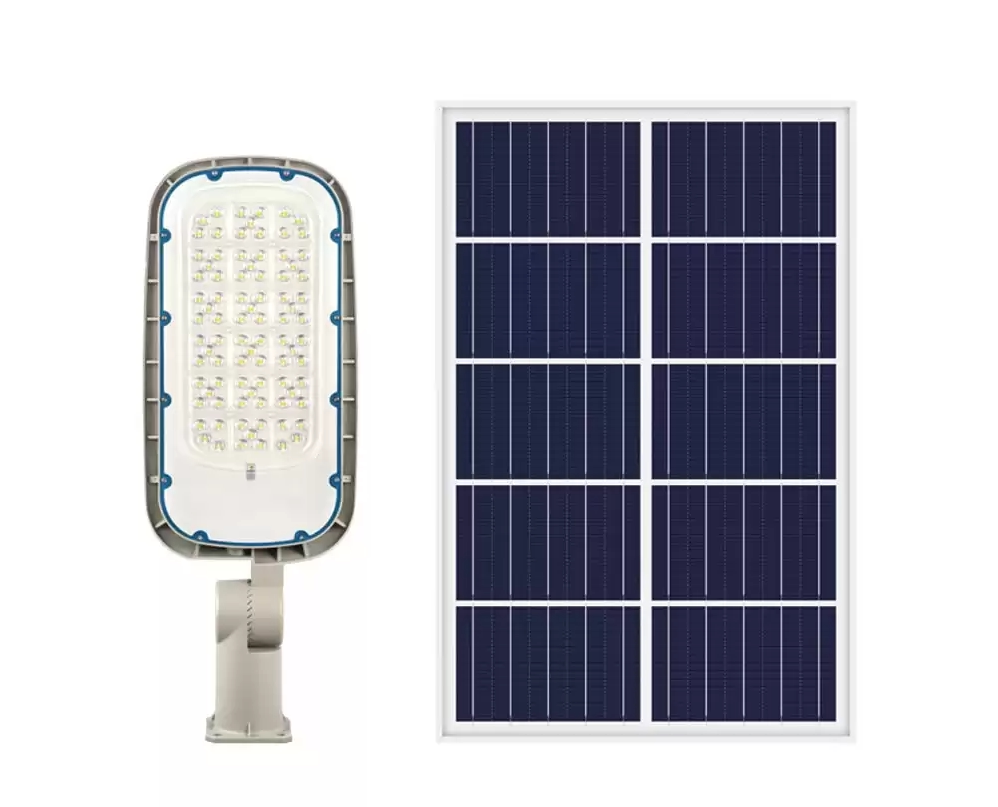
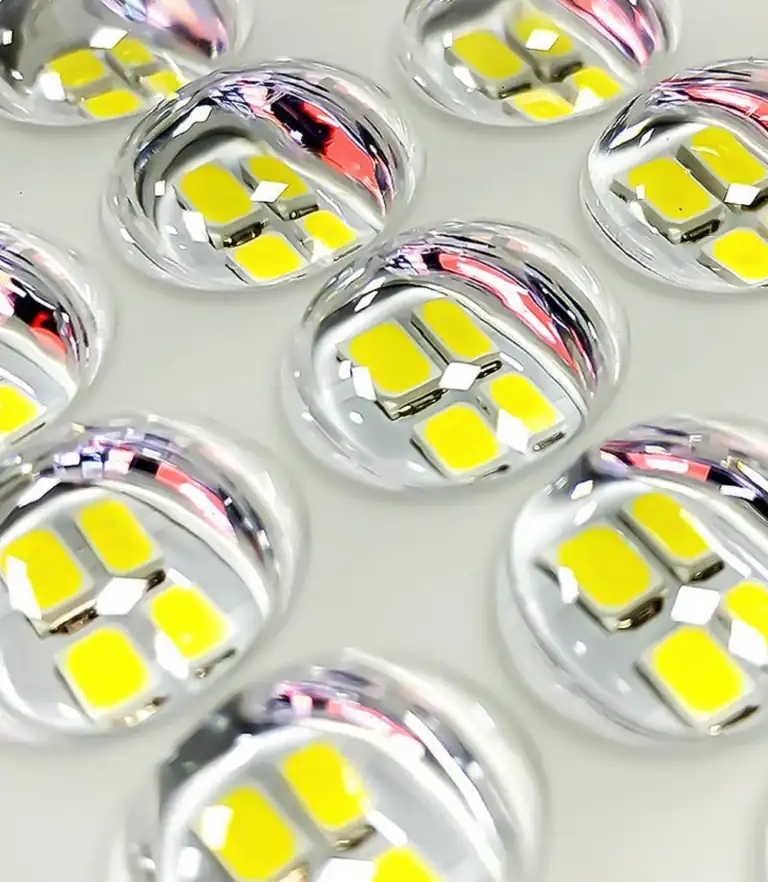
Commercial solar street light supplier PowerDream positions the MJ-LH model as a solar lighting solution for a wide range of commercial applications. The MJ-LH solar street light incorporates key design choices that commercial buyers value. Its LED array features evenly spaced bulbs and optical elements, and its mechanical and electrical designs are designed for outdoor toughness. Paired with high-quality polycrystalline silicon solar panels, it quickly harvests available sunlight and shortens the charging window—all crucial features for commercial applications.

Key Performance Characteristics of Commercial Solar Street lights in Commercial Deployments

For commercial projects, brightness alone is not enough. Efficient commercial solar street light require a combination of photometric performance, electrical performance, and intelligent energy management. First, consider photometric requirements. Commercial solar streetlights for parking lots, sidewalks, and roads typically target an average illuminance of 20-50 lux, with a uniformity ratio of 0.4-0.6 for pedestrian and parking applications. Arterial roads typically require higher-maintained illuminance and stricter uniformity. The MJ-LH solar street light’s uniformly distributed LED architecture and integrated optics help achieve these uniformity targets while reducing glare, making it easier to meet IESNA/IES RP-8 and other regional standards.

Second, consider lumen efficacy. System-level efficiencies for the commercial solar street light should exceed 120-160 lm/W. High efficiency reduces the LED power required to achieve the target lux level, thereby reducing battery capacity and PV array size. The MJ-LH’s low optical loss design embodies this principle: for the same luminous flux output, fewer wasted lumens means smaller balance-of-system components.

Key Performance Characteristics of Commercial Solar Street lights in Commercial Deployments

Durability, Protection Rating, and Environmental Adaptability of Commercial Solar Street Lights

Commercial installations subject luminaires to a variety of stresses: extreme weather, mechanical stress, electrical transients, and vandalism. Therefore, the mechanical and electrical durability of commercial solar street lights is a primary consideration when purchasing. Begin by clarifying the protection rating and mechanical shock standards. IP65 is the benchmark for water and dust resistance, indicating that solar street lights can withstand low-pressure water jets and provide reasonable protection against dust. Therefore, many commercial buyers prefer IP65 ratings for harsher environments. The MJ-LH’s IP65 rating provides robust protection against rain and splashes, while features like sealed cable glands and gaskets ensure the long-term integrity of the luminaire.

Lightning protection and surge suppression are crucial for commercial locations, particularly in areas where buildings, metal poles, and extensive wiring runs increase the risk of power surges. PowerDream’s MJ-LH includes lightning protection, reducing downtime and avoiding costly electronics replacement after storms.

Durability, Protection Rating, and Environmental Adaptability of Commercial Solar Street Lights

Designing the Powertrain

The core of any solar street lighting system is the powertrain: solar panels, battery storage, and charging/motor control. For commercial solar street lights, careful and industrial-grade component selection is crucial to ensure predictable lifetime performance. As a professional commercial solar street light supplier, PowerDream specified high-quality polycrystalline silicon panels for the MJ-LH. Polycrystalline silicon panels offer reliable performance in a wide range of climates and generally provide stable thermal and mechanical properties for the luminaire’s mounting system. Furthermore, battery chemistry determines cycle life, safety, weight, and usable depth of discharge. Lithium iron phosphate batteries have become a mainstream choice for commercial solar street lights due to their long cycle life, wide operating temperature range, and safety. Older lead-acid and gel batteries are less popular in commercial applications due to their shorter lifespan and higher maintenance costs.

Designing the Powertrain

Installation, Siting, and Operational Optimization

Proper site selection and installation are just as important as the hardware. Commercial solar street lights will perform poorly if they are installed at suboptimal tilt, shading, or at suboptimal pole height, regardless of their quality. First, a site survey is required to simulate isolation, shading dynamics, and microclimate. PowerDream utilizes GIS or simple sun path analysis tools to ensure that solar panels receive unobstructed sunlight during most peak hours, taking into account seasonal variations in sun angle and potential shading from future landscaping or development.

Regarding pole height and spacing, height affects illuminance and uniformity. For parking lots and commercial parks, 6-10 meter poles are standard; for main roads, taller poles (10-15 meters) may be required to achieve appropriate beam distribution. Commercial solar street light suppliers’ photometric profiles (IES or LDT) allow you to model spacing based on target lux values ​​and uniformity. Generally speaking, you should orient solar panels due south or north whenever possible; you may find east-west arrays more beneficial for morning and evening use. For year-round optimization, you typically set the tilt angle near the latitude of the location.

Economics, Lifecycle Cost, and Return on Investment

Purchasing commercial solar street lights is not only an engineering decision, but also a financial one. The total cost of ownership (TCO) encompasses initial capital expenditures, installation, maintenance, energy savings, and disposal or recycling costs upon retirement. When these factors are quantified, commercial solar street lights generally offer a competitive return on investment (ROI) compared to grid-powered lighting, especially in situations where grid expansion or ongoing energy costs are high.

Due to the need for solar panels and batteries, commercial solar street light typically have higher upfront costs than traditional lamps with grid connection. However, cost savings can be achieved by avoiding trenching, reducing utility connection fees, and lowering electricity costs. Battery replacement, cleaning, and electronics repair are the primary operating cost items. However, choosing lithium-iron-phosphate batteries and industrialized modules can help reduce annual maintenance costs.

In terms of return on investment and levelized cost of electricity, commercial solar street lights typically have a lifespan of 10-15 years. You can model the energy and maintenance costs avoided over this period to calculate ROI. The levelized cost of electricity for solar street lights considers the system’s kilowatt-hour output and lifecycle costs. High-efficiency LEDs, efficient MPPTs, and longer battery life can reduce LCOE.

MJ-LH Solar Street Lights Are a Better Choice for Many Commercial Applications

Commercial solar street lights are now a proven option for a wide range of commercial locations, including distribution centers, campuses, municipal streets, and retail parking lots. When carefully designed and installed, they provide flexible lighting solutions, simplify installation, lower operating costs, and support sustainability goals. PowerDream’s MJ-LH solar street light perfectly embodies the features commercial buyers seek: uniformly distributed LED optics ensure uniform light distribution with low loss; IP65 weather and lightning protection ensures robustness for outdoor use; and high-quality polycrystalline silicon panels ensure efficient solar energy collection, making it an attractive and low-maintenance solution.

How to Compare Solar Panel Types When Buying an Off Grid Solar Kit?

When purchasing an off grid solar kit, it’s essential to compare different solar panel types based on the energy delivered per unit area, durability in your specific climate, actual lifespan, and system-level compatibility, rather than relying solely on a single specification. For homeowners building an eco-friendly homes off grid solar system, choosing the right solar panel directly impacts the annual kilowatt-hours of energy available and the total cost of ownership over decades. Therefore, it’s crucial to translate technical specifications (efficiency, temperature coefficient, degradation rate, warranty) into site-specific metrics, such as annual energy production per unit of available rooftop area, lifetime cost per kilowatt-hour, and maintenance expectations, to make your selection.

Different Solar Panel Types in Off Grid Solar Kit

When purchasing an off grid solar kit, it is essential to understand the available panel technologies. The main panel types include monocrystalline, multicrystalline, bifacial, and thin-film.

Monocrystalline panels are the mainstay of the residential solar system market. They offer the highest cell efficiency. Because monocrystalline panels deliver higher wattages per square foot, they typically provide the best energy production when rooftop or ground space is limited. Furthermore, monocrystalline silicon panels generally have lower degradation and come with a good warranty, making them more suitable for residential users who require long-term, stable power generation. Multicrystalline silicon panels are slightly less expensive, have lower efficiency (approximately 15-18%), and need a larger footprint for the same wattage. If you have ample mounting space and require a low initial investment, multicrystalline silicon panels are a viable option.

Bifacial modules capture light from both the front and back sides and can generate more energy if mounted above a reflective surface or with sufficient ground clearance. This bifaciality benefits ground-mount installations and some rooftop installations with reflective platforms. For off-grid solar panels, bifacial gain depends heavily on albedo and mounting geometry, requiring careful modeling. Thin-film technologies such as CIGS perform better in diffuse light and at high temperatures, and also have lower temperature coefficients. Their drawbacks include lower efficiency and a generally larger area, but the flexibility of thin-film technology enables customized installations or integration into building surfaces.

Solar Panel Types

Choose based on efficiency, area, and expected annual output.

Efficiency directly determines how much electricity an off grid solar panel can collect from a given rooftop area. When rooftop area is limited, more efficient solar panels can provide greater capacity, resulting in more annual electricity production.

Convert efficiency to actual production by calculating watts per square meter and annual energy production. Calculate the power per square meter of solar panels by ≈ efficiency × 1000 watts/square meter (solar irradiance). For example:

1. 22% efficient panels ≈ , 220 watts/square meter.

2. 18% efficient panels ≈ , 180 watts/square meter.

Suppose your off grid solar system’s annual load demand is 4,000 kWh. In that case, the efficiency of your solar panels will determine whether you choose a single-array solution or require additional racks or more solar panels. Also, consider orientation losses and tilt. A south-facing solar array with the correct tilt can achieve higher annual energy production; an east-west facing solar array may have a flatter daily energy production curve but lower peak midday energy production.

Temperature Coefficient, Actual Performance, and Shading

Solar panel specifications are measured under standard test conditions, but actual performance is highly dependent on temperature and shading. When comparing panels for off grid solar modules, it’s essential to consider the temperature coefficient, particularly in hot climates and for eco-friendly residential off-grid solar systems. The temperature coefficient indicates the power loss of a panel when the cell temperature exceeds 25°C. Typical monocrystalline silicon panels may have a coefficient of around -0.30 to -0.35%/°C, while some thin-film and premium N-type panels may have coefficients closer to -0.20 to -0.25%/°C.

Shading performance and partial sunlight response are also important. Module designs using half-cut cells or multi-busbar layouts can reduce mismatch and losses caused by partial shading. In off-grid solar systems, where arrays may be shaded by trees or obstacles, modules that maintain optimal output under partial shading can reduce the need for additional modules and improve reliability. In installations with significant sunshades, you can also consider using a microinverter or DC optimizer for module-level MPPT.

Temperature Coefficient, Actual Performance, and Shading

Mechanical Durability, Certifications, and Environmental Resistance

In off grid solar kit installations, solar panels are exposed to wind, snow, salt spray, hail, and UV radiation. Therefore, when comparing off grid solar kit options, it’s essential to examine the mechanical and environmental specifications, as well as relevant certifications.

Standard key mechanical specifications include checking the frame and glass. Tempered low-iron glass and a sturdy anodized aluminum frame are both impact- and corrosion-resistant. Thicker glass and a reinforced frame can increase hail and snow load ratings. For areas with heavy winter snow, choose solar panels rated for a wind load of at least 2400 Pa and a snow load of at least 5400 Pa. Installations in coastal areas require modules that are PID-resistant and IEC salt spray-tested to avoid accelerated degradation near seawater.

Also, installing a waterproof (IP65/68) junction box and durable MC4 connectors can reduce points of failure. Finally, ensure certifications for IEC 61215 and IEC 61730, as well as ammonia resistance certifications such as UL 1703 or IEC 62716.

Ensure compatibility with off grid solar systems.

Choosing solar panels is only part of sizing an off-grid solar system. You must also ensure the system is compatible with the inverter, MPPT charge controller, battery chemistry, and mounting method. The electrical characteristics of the solar panels determine the string configuration, which must be kept within the operating range of the MPPT controller or inverter, especially on cold nights when the open-circuit voltage (Voc) rises.

For off grid solar systems, ensure that the off-grid charge controller and hybrid inverter have a maximum open-circuit voltage and input voltage range that matches the system’s requirements. If connecting high-voltage strings to an inverter/charger, ensure the equipment supports the string voltage; otherwise, use a lower voltage configuration or connect strings in parallel. It’s also essential to select a racking system that complies with local structural codes and optimizes the tilt based on seasonal energy conditions. If necessary, ensure the kit includes monitoring capabilities that report PV power generation, battery SoC, and inverter status.

Choosing the Right Panels for Your Off Grid Solar Kit

Comparing solar panel types for off grid solar kits requires translating the solar system supplier’s specifications into site-specific energy and lifespan metrics. First, quantify the available area and daily energy requirements. Then, prioritize panel performance, assess the mechanical durability of the panels for your local environment, and ensure electrical compatibility with the inverter/MPPT and battery system to create a safe, reliable, and environmentally friendly off-grid solar system for your home.

How do solar micro inverter affect the energy yield of a system?

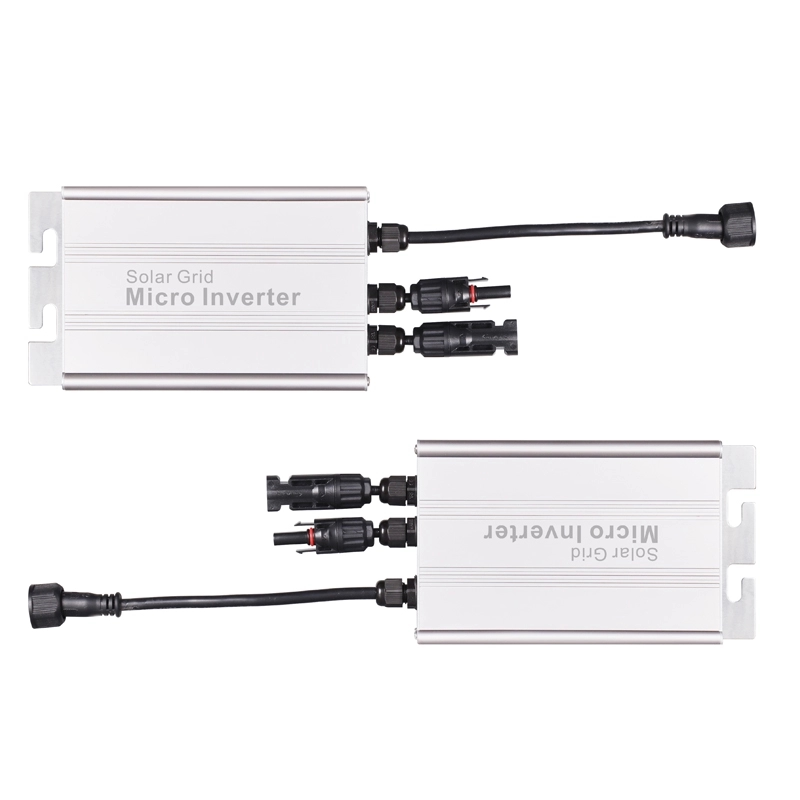
A solar micro inverter transforms energy production from the first rays of daylight to the last kilowatt-hour of output at dusk. Micro inverters perform two key tasks at the module level: extracting the maximum available power from each PV module through MPPT and converting DC power to grid-compatible AC power near module power. Because these functions are performed at the module level, microinverters impact not only instantaneous conversion efficiency but also annual energy production, system reliability, and the economics of the array. Specifically, PowerDream’s micro inverters feature an ultra-wide MPPT voltage range (18–55V) and achieve peak efficiencies of 93%, CEC efficiencies of 92%, and MPPT efficiencies of 99%, maximizing solar energy harvesting.

Solar micro inverters play a fundamental role in energy conversion and module-level optimization.

Solar micro inverter shifts intelligence and conversion functions to each PV module, changing the rules of energy conversion. Unlike centralized inverters that rely on string-level MPPT, microinverters assign an MPPT to each module, independently optimizing its operating point. As a result, even if module output varies due to orientation, contamination, manufacturing tolerances, or partial shading, the overall system can harvest more energy. For this reason, microinverters often outperform string inverters in non-ideal installation environments. Furthermore, on grid micro inverters, in particular, tightly integrate each module’s MPPT performance with DC/AC conversion. This architecture minimizes the Impact of poor performance from a single module on neighboring modules, allowing you to gain incremental energy while mitigating performance risks.

Solar micro inverters play a fundamental role in energy conversion and module-level optimization.

Solar Micro inverter MPPT Voltage Range and Low-Light Start Advantages

To maximize system energy harvesting, PowerDream’s solar micro inverters feature an ultra-wide MPPT voltage range (18-55V). First, the lower startup threshold (18V) allows the solar micro inverter to begin extracting usable power at lower irradiance levels, such as at dawn, dusk, and on overcast days. Second, the higher threshold (55V) supports longer PV strings and a higher number of input modules per microinverter in specific hybrid or paired configurations, reducing wiring and BOS costs.

Why is an 18V startup voltage so important? When irradiance is low, module voltage drops. During these low-voltage periods, the module voltage sits idle, compared to 30V or higher, missing out on the incremental energy that could have been provided during these hours. At the same time, the 55V high-voltage capability frees designers to use strings with more modules in specific system configurations, thereby reducing parallel wiring, plumbing, and labor costs.

The Impact of 99% MPPT Tracking Efficiency on Marginal Revenue

MPPT tracking efficiency determines how closely an inverter extracts the theoretical maximum available power from a solar panel at any given moment. PowerDream’s solar micro inverters offer 99% MPPT tracking efficiency, minimizing energy losses at the point of capture. Compare a microinverter with 97% MPPT efficiency and 92% inverter conversion efficiency to a microinverter with 99% MPPT and 93% peak conversion. The former delivers 5,820 kWh of AC energy. The conversion efficiency is 5,524.2 kW. The latter, on the other hand, produces 5,940 kWh. The difference and relative benefit represent an annual increase of 169.8 kWh, or approximately 3.17%. These data indicate that minor improvements in module-level energy capture combined with modest increases in conversion efficiency can lead to several percentage points of annual energy production growth.

The Impact of 99% MPPT Tracking Efficiency on Marginal Revenue

Conversion Efficiency—Peak Efficiency vs. CEC Efficiency and Their Practical Impact

Conversion efficiency determines how much of the collected DC power can be converted into usable AC power and fed into the grid. Two commonly used metrics are peak efficiency and CEC efficiency. PowerDream’s micro inverter achieves a peak efficiency of 93% and a CEC efficiency of 92%, both demonstrating top-tier conversion performance within the module-level electronics. As previously mentioned, increasing the conversion efficiency from 92% to 93%, combined with a higher MPPT capture rate, can further enhance AC power production. Secondly, weighted metrics like CEC better reflect typical everyday performance because they account for a wide range of operating conditions. High CEC efficiency means the inverter performs well under typical irradiance and temperature cycles, which are key to its lifetime output.

String Length, Cabling Costs, and System Architecture Advantages

The ultra-wide upper MPPT voltage range of solar micro inverters has a tangible impact on the economics of system cabling and overall energy yield. Because the inverter can operate efficiently at higher DC input voltages, designers can configure longer PV strings or connect multiple modules in series to create hybrid configurations. Longer strings reduce the number of parallel connections, shorten wiring lengths, and reduce installation labor and material costs. Furthermore, shorter wiring reduces resistive (I²R) losses, thereby increasing energy output.

Every meter of copper wire reduces resistive losses, especially at higher currents. While the specific value depends on cable size and site geometry, the architectural flexibility afforded by the higher permissible string voltage is significant. Combined with the micro inverter’s module-level optimization and high MPPT efficiency, the net effect is increased AC output power per watt of installed power.

Greater Energy Yield for Homes

Solar micro inverters impact energy output through multiple interlocking mechanisms: module-level MPPT optimization, low-light startup, and an extended MPPT window, improved MPPT tracking efficiency, high conversion efficiency (93% peak / 92% CEC), and architectural flexibility that reduces BOS losses. These features work together to achieve compound gains in AC output—gains that are both measurable and substantial, accumulating over the entire installation and decades of operation.

Micro inverter FAQs

Q1. How much additional energy does a solar micro inverter with 99% MPPT deliver compared to a typical 97% MPPT?
A1: Compared to 97% MPPT, the increase is approximately 3.17%. The specific results will vary by site, but how does a small percentage improvement add up over time?

Q2. Does an 18V startup voltage really matter in my location? A2: Yes, especially if your location has a long twilight period, frequent cloudy days, or you want to capture marginal energy at dawn and dusk. An 18V startup voltage allows the microinverter to start generating power earlier and stop generating power later in low-light conditions.

Q3. Which is more important, peak efficiency or CEC efficiency?
A3: CEC efficiency is generally more representative of actual long-term performance because it accounts for variations in irradiance and temperature. Peak efficiency represents the absolute maximum under ideal conditions, whereas CEC efficiency more accurately reflects daily output.