What conditions should a wind-resistant solar mounting system meet?

In severe weather, many solar system failures stem from insufficient wind resistance in the solar mounting system. For American homeowners, this means that each wind-related repair costs a significant amount of money. At the same time, commercial projects can suffer tens of thousands of dollars in losses due to downtime and energy production losses resulting from mounting failures. The root cause of these poor wind resistance systems is that they fail to meet three non-negotiable conditions: load-bearing capacity, safety standards, and regulatory compliance. Wind-resistant solar mounting system do more than “support solar panels”; they protect your solar products by distributing wind force, withstanding gusts, and adhering to strict engineering specifications.

Load Capacity Requirements and Solar Mounting System

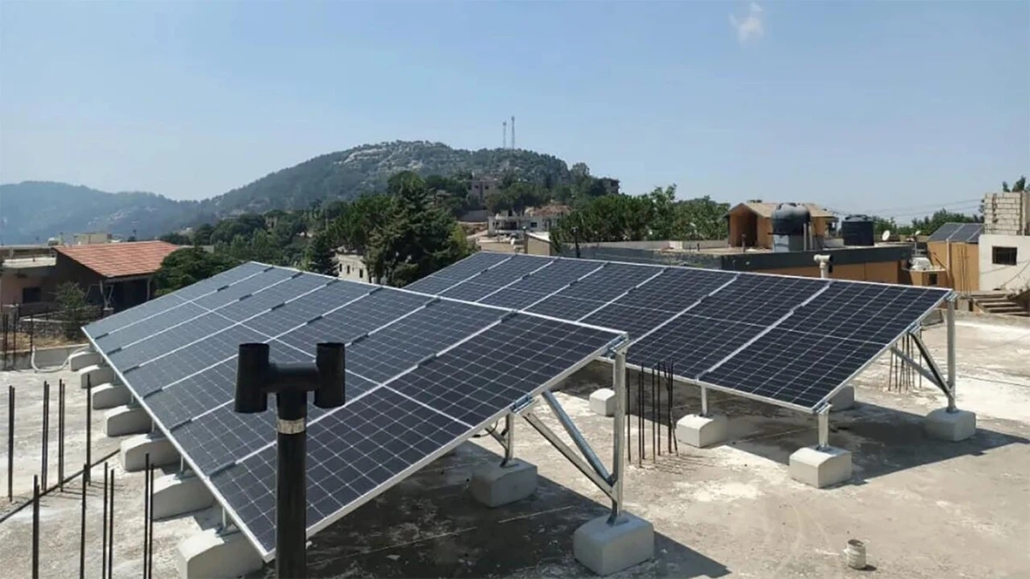
Wind exerts two types of forces on solar mounting systems: static loads and dynamic loads. A wind-resistant system must be able to withstand both wind and rain. Load-bearing capacity is critical to every component, from the solar mounting brackets to the fasteners. The first step is to calculate the wind load using industry standards such as ASCE 7-16 to determine the maximum wind speeds in your area. This value determines the load the system must withstand. The solar panel mounting brackets are the “pillars” for load distribution. These mounts secure the solar panels to rails, which in turn connect to anchor points. Well-designed brackets distribute wind loads throughout the system, rather than concentrating them at a weak point. For example, PowerDream’s aluminum mounting brackets use a “T-bar” design, distributing 30% more load than flat brackets, thus reducing stress on anchor points.

Additionally, pull-out forces must be considered. Wind not only pushes the panels but also pulls them upwards. Wind-resistant systems must include pull-out fasteners to secure the system to a stable structure. Neglecting these fasteners is a leading cause of installation failure in strong winds.
Load Capacity Requirements and Solar Mounting System

Safety Factor Standards and Solar Mounting System

While a solar mounting system meets basic load requirements, a safety factor is also needed to handle unexpected stresses, such as stronger-than-expected gusts. Wind-resistant systems must meet stringent safety factor standards. First, a minimum safety factor must be met; international standards such as IEC 62738 require solar mounting systems to withstand 1.5 times the expected wind load. In high-wind areas, a safety factor of 2.0 or higher is required. For example, in hurricane or tornado zones, PowerDream recommends a 2.0 safety factor. This extra buffer helps withstand turbulence, debris impact, and long-term wear and tear.

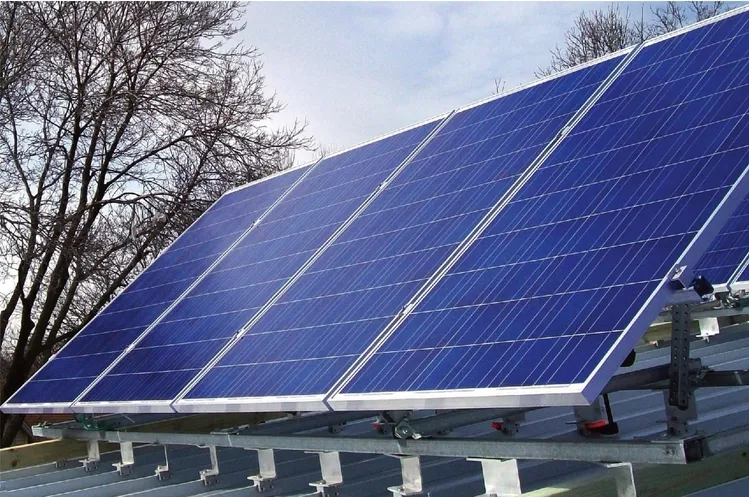
PowerDream verifies the safety factor of these solar panel mounting brackets through testing. We measure the forces that the solar mounting brackets and fasteners can withstand before failure. Engineers conduct wind tunnel simulations to replicate real-world wind conditions, ensuring the system remains stable and does not bend or break. Simultaneously, the aluminum rails, steel fasteners, and plastic components are verified to meet tensile strength requirements.
Safety Factor Standards and Solar Mounting System

Compliance with Building Codes is Essential

A wind-resistant solar mounting system must not only be “robust” but also comply with local, national, and international building codes. Codes ensure that the system’s design and installation protect homes, businesses, and workers; violations can lead to failure. Here’s what you need to know:

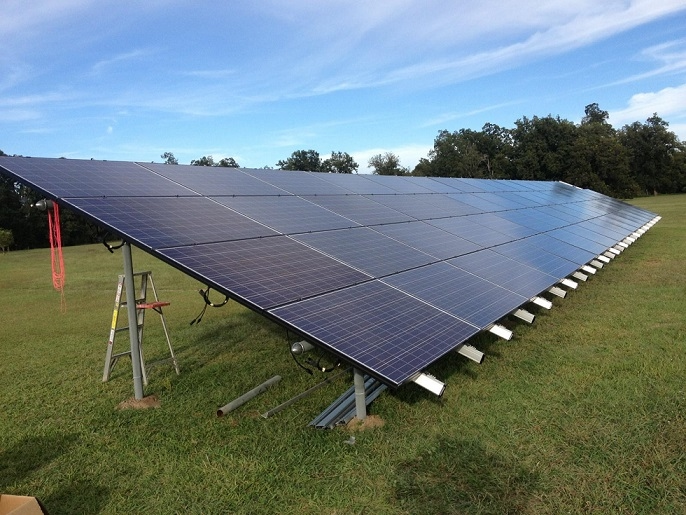
Key International Standards: IEC 62738 and ISO 12944 set global benchmarks. These standards specify everything from material thickness to fastener spacing.

US National Standard: ASCE 7-16. This standard utilizes factors such as topography and building height to calculate wind loads in various regions of the United States. Engineers must design solar mounting systems to comply with ASCE 7-16 for wind load calculations specific to your area.

Local regulations are paramount: Many regions have stricter rules. For example, Florida requires all solar mounting systems to meet TAS 100 (Hurricane Test) standards.

California mandates that mounting brackets must be wind-resistant and fire-resistant; therefore, the brackets must be non-combustible.

Check certifications: UL or Intertek certification proves the system complies with regulations.
Solar Mounting System 2-2

Wind-Resistant Material Selection

Even the best design will fail if the materials are poor. Wind-resistant solar mounting systems rely on specific materials that strike a balance between strength, weight, and corrosion resistance, which is crucial for long-term performance. PowerDream uses 6061-T6 aluminum alloy for its rails and brackets. This lightweight alloy is strong enough to withstand tensile strength of 30,000 psi, making it ideal for solar panel mounting brackets. Furthermore, it is corrosion-resistant, unlike carbon steel, which rusts and loses its strength in the presence of rain or saltwater.

316 stainless steel is used for fasteners. While ordinary steel fasteners are prone to rust, 316 stainless steel is resistant to seawater and moisture, which is crucial for coastal areas. Additionally, reinforced plastic is used for the clips used to secure the panels. We use glass-fiber-reinforced nylon (GRN), not cheap plastic, to make the panel clips. GRN can withstand UV damage and drastic temperature changes, ensuring the clips won’t crack due to excessive wind force and cause the panels to detach.

Ensuring Installation Precision

The performance of a wind-resistant solar mounting system depends on the quality of installation. Even the strongest brackets and rails will fail if improperly installed—for example, being secured to roof linings instead of rafters, or bolts that are too loose (or too tight). Here are the requirements for precise installation:

Secure to Structural Support: Solar mounting brackets must be securely fastened to roof rafters or ground stakes, never to roof or wall panels. Roof panels cannot withstand wind loads, which can cause the system to detach from the roof.

Follow torque specifications: Each bolt and fastener has specific torque requirements. Too loose a torque will cause bolts to loosen due to wind vibrations; too tight a torque will cause threads to strip or brackets to crack. PowerDream equips each system with a torque wrench to ensure torque accuracy.

Adjust angles to minimize wind resistance: Panels should be tilted to the optimal angle for your area and evenly distributed. Misaligned panels create wind “pockets,” increasing wind resistance and putting extra stress on the system.

Three essential conditions for wind resistance

A wind-resistant solar mounting system must meet three core conditions: load-bearing capacity, safety factor standards, and compliance with regulations. Additionally, it requires high-quality materials, precise installation, and rigorous long-term durability testing to ensure your investment is protected for over 25 years. As PowerDream’s technical engineers, we fully consider wind resistance when designing every solar installation system, not only meeting standards but also ensuring that the solar mounting system you purchase can withstand the worst weather conditions.
Why are monocrystalline silicon solar panels more suitable for on grid solar systems?

A survey of on grid solar systems users revealed that homeowners using monocrystalline silicon solar panels generate 18% more electricity annually than those using polycrystalline silicon panels. For a typical residential 6kW on grid solar system, this translates to an extra 850 kWh of electricity generated per year, resulting in a $320 saving on electricity bills. This difference is precisely what motivates many solar system providers and grid-connected users to choose monocrystalline silicon panels over other materials. On grid solar systems rely on maximizing power generation to offset electricity bills and feeding excess power back into the grid, and monocrystalline silicon panels are designed for this purpose.

Monocrystalline silicon solar panels perform better in on grid solar systems

Unlike off grid systems that rely on batteries, on grid solar systems connect directly to the public grid, resulting in high energy production. More electricity means greater bill savings and more excess electricity that can be sold back to the grid (through net metering). They also offer greater space efficiency, as most residential and commercial rooftops have limited space, requiring solar panels to generate maximum power per square foot. Furthermore, they offer long-term reliability. On grid systems represent a multi-year investment, requiring regular maintenance of solar panels to ensure optimal performance and a return on investment. Polycrystalline, thin-film, and other types of solar panels fall short in one or more of these areas. In contrast, monocrystalline silicon solar panels excel in all three.

on grid solar systems

Making on grid solar systems More Efficient

The primary advantage of monocrystalline silicon solar panels for an on grid solar system is their efficiency. Efficiency measures how much sunlight a panel converts into electricity, and monocrystalline silicon panels boast efficiencies of 22% to 24%, significantly higher than the 15% to 18% of polycrystalline silicon panels. This maximizes net metering revenue for grid-connected solar systems, which sell excess electricity back to the power company at retail price. A 6kW monocrystalline silicon system generates approximately 10,200 kWh per year, while a similarly sized polycrystalline silicon system generates approximately 8,600 kWh per year, earning an additional $570 in net metering credit annually.

This higher efficiency can shorten the payback period. Monocrystalline on grid systems can recoup their costs in 5-7 years, while polycrystalline systems require 7-9 years. Furthermore, as electricity costs rise, the increased energy generated by high-efficiency solar panels can protect you from price increases.

on grid solar systems 1-8

Maximizing Space Utilization in Limited Roof Space

Most homeowners and businesses have limited roof space, and monocrystalline silicon solar panels maximize the use of that space, a key advantage for residential users of an on grid solar system. Specifically, each monocrystalline silicon solar panel produces 350–400 watts of power, while a polycrystalline silicon solar panel of the same size produces only 250–300 watts. This means you need 20–25% fewer solar panels to achieve the desired system size.

Additionally, a 5kW on grid solar system requires 13–15 monocrystalline silicon solar panels, while polycrystalline silicon requires 17–20. This difference makes on grid solar systems possible for situations with limited roof space. This also means fewer panels translate to fewer roof perforations, faster installation, and lower labor costs. A 6kW monocrystalline silicon solar system can be installed in just 1-2 days, while a polycrystalline silicon solar system of the same capacity takes 2-3 days.

It provides a more stable power supply from the grid.

Grid-connected solar systems need to generate electricity throughout the day, not just during the peak sunlight hours, to maximize energy savings. Monocrystalline silicon solar panels, due to their monocrystalline structure, perform better than other materials in low-light conditions.

The uniform crystal structure of monocrystalline panels captures more light across the solar spectrum, including diffuse and red/infrared light. This maintains a stable voltage even in low-light conditions, ensuring efficient operation of the grid-connected inverter. Polycrystalline silicon solar panels, on the other hand, often experience voltage drops below the inverter’s minimum threshold in low-light conditions, resulting in power generation being halted. Furthermore, monocrystalline silicon solar panels generate 1-2 hours more power per day than polycrystalline silicon solar panels, which translates to an additional 300 kWh of power generation per year for a 6kW system.

It provides a more stable power supply from the grid.

Long-Term Durability

Solar on grid systems are a long-term investment, with most homeowners using them for 25 years or more. Monocrystalline silicon panels are durable, ensuring your solar on grid system continues to generate benefits for decades to come. PowerDream’s monocrystalline silicon solar panels come with a 30-year warranty, guaranteeing 80% of their original efficiency over an extended period of use. They also boast a superior temperature coefficient: monocrystalline silicon solar panels lose only 0.34% of their efficiency for every 1°C increase above 25°C (77°F), compared to 0.4% for polycrystalline silicon solar panels. In hot climates, this translates to a 5% to 7% annual increase in energy production. Monocrystalline structures are also less prone to microcracks and photodegradation than polycrystalline panels, which may lose 2-3% of their efficiency in the first year.

Compatibility with on grid Inverters

Solar on grid systems rely on inverters to convert the direct current (DC) generated by solar panels into alternating current (AC) supplied to the grid. Monocrystalline silicon solar panels are perfectly compatible with modern on grid inverters. Monocrystalline silicon solar panels have higher open-circuit and operating voltages, matching the input voltage range of most on grid inverters. This ensures the inverter operates at maximum efficiency, converting a higher percentage of DC into usable AC. Additionally, the stable voltage of monocrystalline silicon panels prevents the inverter from shutting down due to voltage spikes or drops. Scalability: Monocrystalline silicon solar panels are easily scalable for larger-scale on grid solar systems. Their uniform performance ensures all panels in the array operate synchronously, avoiding string losses.

The Best Choice for on grid Systems

For on grid solar systems, monocrystalline silicon solar panels offer higher efficiency, maximum energy output, space savings that fit limited rooftops, a stable power supply even in low-light conditions, durability to ensure a high return on investment, and perfect compatibility with inverters. Compared to users of other types of solar panels, monocrystalline silicon users generate 18% more electricity, have lower electricity costs, and recover their investment more quickly.

Battery Types for a solar led street light: LiFePO4 vs Lead-Acid

Many failures in solar LED street light stem from battery malfunctions, with lead-acid batteries accounting for 89% of these failures. For a medium-sized city with 1,000 solar streetlights, this translates into hundreds of thousands of dollars in battery replacements annually, along with over 200 man-hours of maintenance. The choice between lithium iron phosphate and lead-acid batteries for solar LED street lights depends not only on upfront costs but also on total cost of ownership, reliability, and long-term performance.

The Crucial Role of Batteries in Solar LED Street Light

Unlike grid-connected streetlights, solar LED street light rely on batteries to store energy collected by solar panels during the day, powering the LED lights from dusk till dawn. Using inferior batteries can lead to three key failures: first, short operating time, with streetlights dimming or going out at midnight, resulting in unsafe roads or parking lots; second, frequent replacements due to premature battery failure, which are costly and time-consuming. Finally, wasted solar energy: inefficient batteries cannot store all the energy generated by the solar panels, reducing the overall system efficiency.

For solar LED street lights, batteries must meet four key requirements: high energy density (storing more energy in a smaller space), deep discharge capability to fully utilize stored energy, temperature resistance (withstanding extreme high/low temperatures), and long cycle life. Lead-acid batteries meet some of these requirements, while lithium iron phosphate batteries excel in all aspects.

The Crucial Role of Batteries in Solar LED Street Light

Lead-acid Batteries – Traditional Configuration with Numerous Problems

For decades, lead-acid batteries have been the standard configuration for solar street light, but they have certain limitations. On the one hand, they have low upfront costs. The upfront cost of lead-acid batteries is 30-40% lower than that of lithium iron phosphate batteries. They are also readily available, sold in most hardware stores and solar product stores, facilitating emergency replacement.

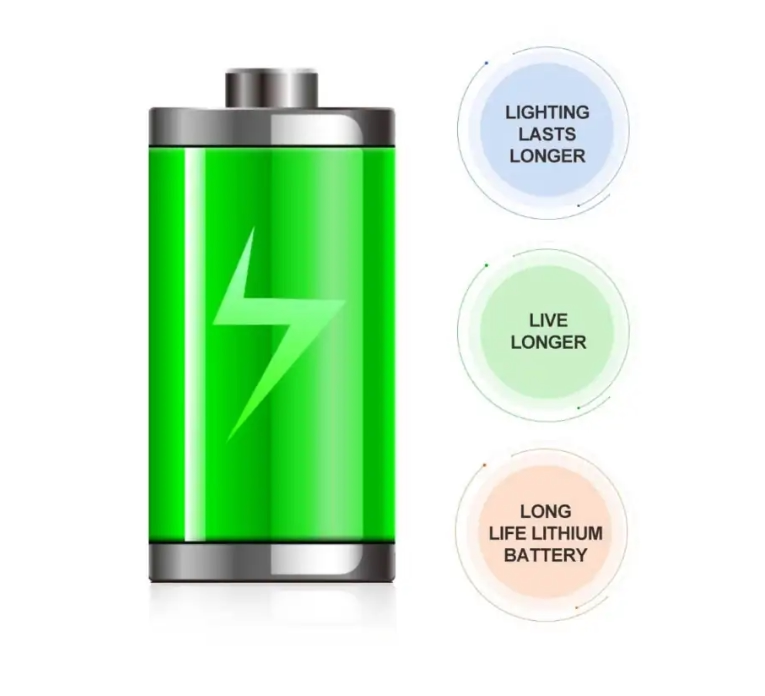
However, their disadvantages are also obvious: short lifespan. In solar LED street light applications, lead-acid batteries only last 3-5 years, compared to the much longer lifespan of lithium iron phosphate batteries, which last 10-15 years. Furthermore, their depth of discharge is limited; to avoid damage, you can only safely use 50% of their capacity. Some liquid lead-acid batteries require regular water additions and corrosion removal. Their temperature performance is also poor: below 0°C (32°F), they lose 50% of their capacity, and they rapidly degrade at temperatures above 38°C (100°F), a significant drawback for solar LED street lights operating in extreme climates.

Lithium Iron Phosphate Batteries—Long-Term Reliability

Lithium iron phosphate (LiFeP) batteries overcome all the limitations of lead-acid batteries. They have an exceptionally long lifespan, lasting 10-15 years, three times that of lead-acid batteries. Furthermore, they have a 90% depth of discharge, allowing you to safely use the full capacity of a LiFeP battery without damaging it. This means smaller and lighter batteries for the same range, reducing installation and transportation costs.

Additionally, LiFeP batteries feature a sealed design, preventing leakage and eliminating the need for water additions or corrosion cleaning. This reduces annual maintenance costs to $0, saving municipalities thousands of dollars over the battery’s lifespan. Meanwhile, they can operate reliably in a temperature range of -20°F (-29°C) to 140°F (60°C), making them ideal for solar LED street lights in deserts, cold northern regions, or high-humidity coastal areas. When using lithium iron phosphate batteries in solar LED street lights, overheating is avoided, and they exhibit good short-circuit resistance, improving safety.

Lithium Iron Phosphate Batteries

Lithium Iron Phosphate Batteries vs. Lead-Acid Batteries – A Direct Comparison

To help you make a clearer choice, here is a side-by-side comparison of key specifications for 100Ah batteries (commonly used in solar LED street lights):

Metric LiFePO4 Battery (PowerDream) Lead-Acid Battery (Flooded/SLA)
Lifespan (Years) 10–15 3–5
Effective Capacity (Ah) 100 (100% DoD) 50 (50% DoD)
Annual Maintenance Cost $0 \(50–\)80 per light
Temperature Range -20°F to 140°F 32°F to 100°F (reduced capacity outside this range)
Weight (Lbs) 28 60
Charging Efficiency 95% (stores 95% of solar energy) 75% (wastes 25% of solar energy)

The data speaks for itself: lithium iron phosphate batteries are cheaper, require no maintenance, and perform better over 15 years. For a city with 1000 solar LED street lights, switching to lithium iron phosphate batteries can save significantly more money over 15 years.

How Solar LED Street Light with Lithium Iron Phosphate Batteries Save Time and Money

Let’s look at a real-world case study to illustrate the value of using lithium iron phosphate batteries in solar street lights. After the city of Riverside, California, replaced 500 solar street lights with PowerDream lithium iron phosphate (LFP) batteries in 2018:

Before replacement:
Number of battery replacements per year: 100 (20% of the total).

Annual maintenance cost: $25,000.

Operational issue: 15% of the streetlights dimmed before dawn in winter.

After replacement:
Number of battery replacements per year: 0.

Annual maintenance cost: $0.

Operational issue: 0 (streetlights remained lit from dusk to dawn).

The Riverside Director of Public Works stated, “Switching to LFP solar streetlights was one of the best decisions we made. We solved a major maintenance problem and saved money that can be used for other community needs. The streetlights are more reliable, and residents feel safer.”

How Solar LED Street Light with Lithium Iron Phosphate Batteries Save Time and Money

Delivering reliable and long-lasting lighting

For those looking to purchase solar LED street lights and save on upfront costs, consider models with lead-acid batteries. While solar LED street light with lithium iron phosphate batteries have a slightly higher initial investment, their lifespan is three times that of lead-acid batteries. They require no maintenance and offer superior performance—making them the best choice for municipal agencies, commercial real estate, and anyone who values ​​reliability.

When did you decide to expand battery storage into an existing solar hybrid system?

Many users of solar hybrid systems expand their energy storage capacity within three years of installing their initial battery. The main drivers? A 30-50% increase in household energy consumption, longer outages, and reduced net metering credits. For a home with a 5kW solar hybrid system and a 51.2V lithium-ion battery, for example, this gap means more wasted solar power and no power during extended nighttime outages. Therefore, we’ll outline six key scenarios that indicate the need for additional batteries and explain how PowerDream’s modular design simplifies upgrades, ensuring you get the most value from your energy storage system.

Adding battery storage to a solar hybrid system when home energy use spikes

The most common trigger for hybrid solar power system users is a sudden surge in energy use, which 40% of US homeowners experience within five years of switching to solar. Key reasons include:

Electric vehicle (EV) adoption: Charging an EV can add 500-1,000 kWh of electricity per month, enough to deplete a 10 kWh battery over 5-10 days of nighttime use.

Heat pump installation: Replacing a gas furnace with an electric heat pump can increase winter energy consumption by 30-40% because heat pumps consume more electricity in cold weather.

Home expansion: A new bedroom, home office, or garage can increase floor space by 15-25%, increasing energy demand.

When your initial solar-powered battery storage can’t keep up, you’ll notice increased reliance on the grid during peak hours, reduced savings, or the battery depleting before bedtime.

Adding battery storage to a solar hybrid system when home energy use spikes

When prolonged power outages and grid unreliability occur

Since 2018, weather-related power outages have increased by 45%, with the average duration increasing from 7.8 hours to 12.1 hours. For solar hybrid system users with small batteries, this means their backup power can deplete during an outage, causing equipment to shut down.

Increasing battery capacity can transform short-term backup power into long-term power security. A 10kWh battery can power critical loads (refrigerator, LED lights, space heater) for 1-2 days; a 28kWh battery can extend that time to 3-5 days. California homeowner Sarah expanded her power supply after the 2023 wildfire outage: “My 10kWh battery died after the second day. Now with 28kWh, I have four days of power for my refrigerator, fan, and phone charger—and no worries, my food won’t spoil.”

When prolonged power outages and grid unreliability occur

Net metering credits for solar hybrid system have further decreased

Net metering policies aren’t a one-time change; they’re gradually weakened over time. Since 2022, 27 US utilities have cut the credit twice: first from $0.15/kWh to $0.10/kWh, and then again to $0.07/kWh. For solar hybrid system owners, this means your initial battery now holds excess daytime energy worth only pennies. At the same time, you’re forced to buy more grid power at full price, offsetting any savings. Expanding solar-battery storage capacity allows you to store more excess power instead of selling it cheaply. PowerDream’s BMS automatically prioritizes storage over grid output, maximizing your own electricity consumption.

Net metering credits for solar hybrid system have further decreased

Time-of-use (TOU) peak electricity prices are surging

TOU prices are becoming increasingly extreme: 68% of utilities now charge three times more during peak hours. Your initial solar array may be able to meet peak demand for 2-3 hours, but the longer peak hours mean you’ll pay higher rates for the remainder. Expanding your battery bank can extend your time avoiding peak electricity prices. For example, a 28kWh PowerDream battery bank can power a home for 5 hours, while a 10kWh bank depletes after 2 hours. “My utility’s peak-hour rate is $0.38/kWh until 9 PM,” said a New Yorker. “Adding a second 14kWh bank allows me to avoid peak periods completely.”

PowerDream’s modular design makes expansion seamless.

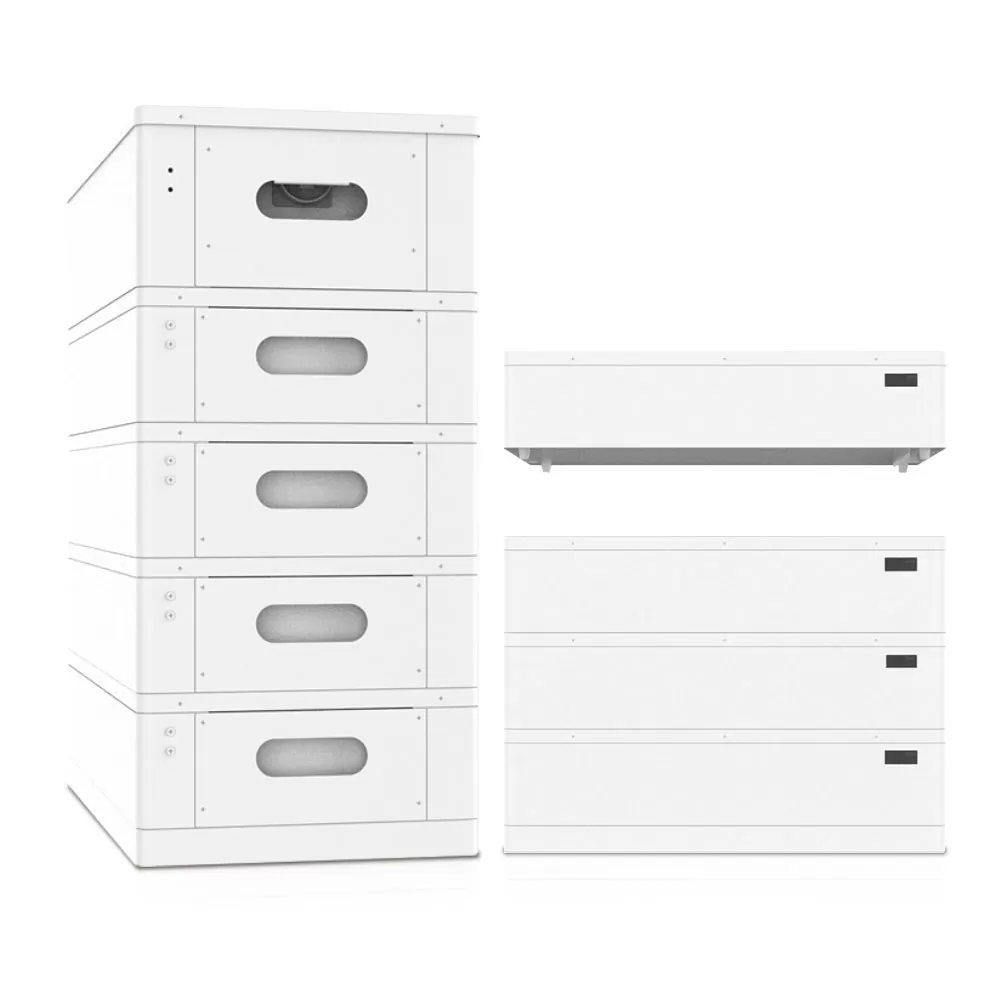
The biggest concern about expanding battery storage is ripping out the old system, but PowerDream’s hybrid solar power system-compatible batteries eliminate that stress. Our design prioritizes convenience:

Daisy-chain wiring: New batteries can be added to an existing system with a single cable, eliminating the need to rewire the entire system.

Shared BMS: All PowerDream batteries use the same BMS, so the system automatically balances the charge and discharge of new and existing batteries.

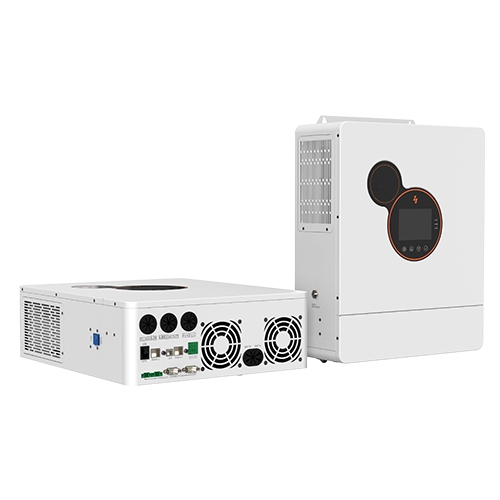
Inverter Compatibility: Our hybrid solar system inverters are compatible with our existing solar-energy storage batteries.
Installation takes only 2-3 hours and allows your solar hybrid system to remain online at all times, save for a 15-minute inspection.

When Demand Can’t Be Met, Expand Battery Storage

The right time is obvious: when your current configuration can’t meet your energy usage, outage, or savings goals. Whether you’re adding an electric vehicle, preparing for longer outages, or responding to utility rate increases, PowerDream’s modular batteries are compatible with your solar hybrid system. We design our energy storage systems to be flexible and adaptable to your changing needs.

Off grid home solar system kit specifications: Key parameters buyers should ask for

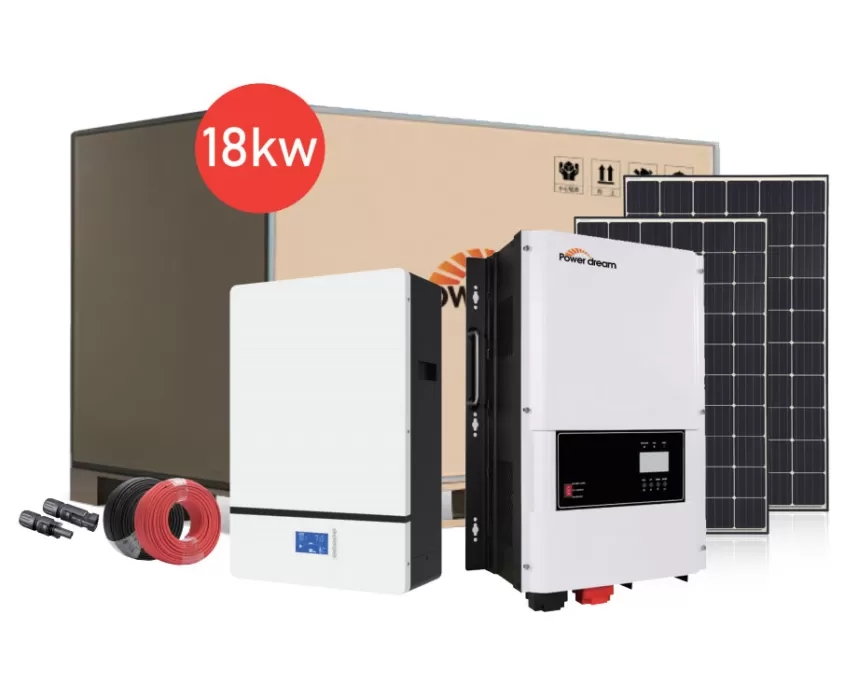
Many off-grid households experience power shortages two years after installing their off-grid systems. Many of these issues are attributed to mismatched specifications—for example, the battery capacity is too small to cover cloudy days, or the inverter is too weak to power basic appliances. For families relying on off grid power, this means power outages can disrupt their lives at any time. Therefore, before purchasing an off grid home solar system kit, it’s crucial to inquire about the correct specifications. As a supplier, PowerDream carefully designs all off grid solar system specifications to avoid these pitfalls. We also explain six key specifications buyers must verify, using our 18 kWh kit as an example to illustrate the importance of proper sizing.

Off grid Home Solar System Kit: Solar Panel Power and Efficiency

If the solar panels in your off grid home solar system kit have too little power or low efficiency, you’ll never generate enough electricity to meet your needs. Buyers should be aware of the following questions and the specific performance of the PowerDream 18 kWh solar system:

Question 1: “What is the total power of the solar panels? How many panels are included in the kit?” The total power determines the daily power generation. A 1,500-square-foot (approximately 147 square meters) off-grid home requires 5-7kW of solar panels; PowerDream’s 18 kWh kit includes 36 550-watt monocrystalline solar panels, enough to generate 19.8kW of electricity on a sunny day.

Question 2: “What is the efficiency rating of the solar panels?” Efficiency is crucial for off-grid homes with limited rooftop/ground space. PowerDream’s solar panels have an efficiency of up to 23%, while budget kits have an efficiency of only 18-20%, allowing them to generate more electricity in the same space.

Question 3: “Are the solar panels suitable for extreme weather?” Off-grid homes often face inclement weather. PowerDream’s solar panels are IP68-rated and can withstand harsh conditions.

18Kw Off Grid Solar Kits

Battery Capacity and Type for Off Grid Home Solar System Kit

Off-grid solar systems cannot rely on the grid for backup power; your battery is your “energy bank” for nighttime and cloudy days. This is a common mistake buyers make. Here are some questions to ask and specifications to understand:

Question 1: “What is the usable capacity of the battery?” The nominal capacity is the total energy a battery can hold, while the usable capacity is the amount of energy you can safely use without damaging the battery. The PowerDream 18 kWh solar system uses a 19.2 kWh lithium-ion battery, which is enough to power a 1,500-square-foot house for more than 2 days on cloudy days.

Question 2: “What type of battery does this kit use, and what is its lifespan?” Lead-acid batteries have a lifespan of 3-5 years; lithium-ion batteries have a lifespan of 10-15 years. PowerDream uses lithium-ion batteries, which are safer and have a longer lifespan than other types.

Question 3: “Can the battery withstand temperature fluctuations?” Off-grid batteries can freeze in the winter and overheat in the summer. PowerDream batteries operate at a temperature range of -20°F to 60°F.

Battery Capacity and Type for Off Grid Home Solar System Kit

Inverter Power and Waveform, Converting DC to AC

Solar panels generate DC power, but your home appliances use AC—the inverter converts DC to AC. An underpowered or low-quality inverter can shut down when you need it most. Here are some questions to ask:

Question 1: “What is the inverter’s continuous power rating? What is its surge rating?” Continuous power rating refers to the amount of power it can deliver uninterrupted; surge rating refers to its ability to withstand short bursts of current. The PowerDream 18 kWh kit includes a 5kW pure sine wave inverter with 10kW surge power, enough to simultaneously power a 3kW heater, refrigerator, and lights.

Question 2: “Is this a pure sine wave inverter or a modified sine wave inverter?” Modified sine-wave inverters can damage sensitive electronics and generate noise. Ours uses pure sine wave, so all your devices will operate safely.

Question 3: “Does the inverter have built-in monitoring?” Off-grid households need to track their electricity usage. PowerDream’s inverters connect to a mobile app, allowing you to view real-time power generation, battery charge, and appliance usage on your phone.

Inverter Power and Waveform, Converting DC to AC

Charge Controller Type and Amperage to Protect Your Batteries

A charge controller regulates the power flow from the solar panel to the battery. Excessive current can damage the battery, while too little current wastes energy. Here are some essential spec questions buyers should ask:

Question 1: “Is it an MPPT or PWM charge controller?” MPPT controllers have an efficiency of 90-99%; PWM controllers are only 75-80% efficient. PowerDream’s 18 kWh kit uses a 60A MPPT controller.

Question 2: “What is the controller’s voltage compatibility?” It must match your system voltage (12V, 24V, 48V). PowerDream’s kit uses 48V, which means lower current and thinner wiring, resulting in less energy loss.

Question 3: “Does it have battery protection?” Overcharging or deep discharging can damage the battery. The PowerDream controller cuts off power when the battery reaches 100% or 20% charge, extending battery life by 30%.

One user who recommended the PowerDream kit stated, “The PWM controller is overrated. The MPPT controller in the 18kWh kit yields 20% more battery power per day—a great value for off-grid customers.”

Backup Generator Compatibility for Extended Cloudy Days

Even the best off grid home solar system kits require backup power for weeks of cloudy days. To ensure compatibility, the following specifications should be determined:

Question 1: “What size generator is compatible with this kit? How do I connect it?” The PowerDream 18kWh kit works with 3-7kW propane/gas generators. It also has a built-in generator input, eliminating the need for additional wiring.

Question 2: “Will the kit automatically switch to generator power when the battery is low?” Manual switching is cumbersome. PowerDream’s off-grid solar system automatically starts the generator when the battery reaches 15% charge and automatically shuts down at 80%.

A Minnesota homeowner said, “Last January, we had 10 cloudy days. My generator automatically switched on and off, keeping the batteries charged, and I didn’t have to take cold showers or eat spoiled food.”

Understand the specifications to choose a reliable off grid solar system

The quality of an off grid home solar system kit depends on the specifications you choose or the specifications provided by the supplier. By understanding the panel power/efficiency, battery capacity/type, inverter size/waveform, charge controller type, generator compatibility, and warranty, you can avoid common problems that plague 62% of off-grid homeowners.

Home Solar Systems and Home Values: What Buyers Can Expect?

A Zillow Home Trends report indicates that homes with home solar systems sell for an average of 4.1% more than comparable non-solar homes. For a home valued at £500,000, this represents a £20,500 increase in value, more than offsetting a significant portion of the system’s upfront cost. However, 62% of homeowners remain skeptical: Does purchasing a solar system truly increase the value of their home? What factors determine the magnitude of this increase? PowerDream, a provider of home solar solutions and home solar system suppliers, has helped thousands of homeowners answer this question. The answer isn’t simply “yes,” but “it depends on how you build your system.”

The Science Behind Home Solar Systems Raising Home Value

A 2023 national study by Zillow, covering 2 million home sales across the United States, found that the average price premium of 4.1% remained constant even after controlling for factors such as location, size, and age. In sunny states like California and Arizona, the premium soars to 4.7%. At the same time, in more temperate climates, it remains at an average of 3.5%, dispelling the perception that home solar systems only increase value in sunny areas.

A 2022 LBNL study found that every additional $1 in annual electricity bill savings translates into a $20-25 increase in home value. For a home solar system that saves $1,800 annually, this translates to a $30,000-$40,000 increase in value, far exceeding the typical system cost.

Why is this so? Because homebuyers view solar systems as a “prepaid utility,” they avoid the upfront cost of installing the system while still reaping the monthly savings. As a PowerDream customer in Colorado put it, “When we sold our house, buyers kept asking about the solar savings. They considered it a ‘no-brainer’ upgrade that justified our asking price.”

The Science Behind Home Solar Systems Raising Home Value

Three Factors That Maximize the Value of Home Solar Systems

Home solar systems can add value to a home, but not all solar systems are created equal. Three key factors determine how much your system adds to your home’s value:

System size and efficiency: An appropriately sized system that can meet 70% to 100% of your energy needs will increase your home’s value more than an undersized system. PowerDream’s home solar solutions all use high-efficiency solar panels, which can generate more electricity in a smaller space. This means a PowerDream 5kW system can better meet your home’s needs than other suppliers.

Net metering availability: Homes in areas with strict net metering policies, such as California, Massachusetts, and Texas, experience higher home values. Net metering allows homeowners to sell excess solar power back to the grid, increasing their monthly savings. A 2023 study by the Solar Energy Industries Association (SEIA) found that homes in net-metered states sell for 1.2% more than similar homes in non-net-metered areas.

Installation quality and warranty: Installing a poorly made system can damage your home’s value. PowerDream works with certified installers to offer a 30-year solar panel warranty and a 5-year inverter warranty, which are transferable to new buyers. This gives buyers confidence that the system will last for decades, boosting the home’s appeal.

Three Factors That Maximize the Value of a Home Solar System

How Monthly Energy Savings Translate into Resale Value

For buyers, the appeal of a home solar system comes down to one thing: predictable energy savings. Let’s analyze how these savings translate into higher resale value through a real-world example:

System: PowerDream 5kW Home Solar System.

Monthly Savings: $150.

Annual Savings: $1,800.

Value Enhancement: Using Lawrence Berkeley National Laboratory’s (LBNL) “$20-25 in Returns for Every $1 Saved” strategy, this translates to an increase of $30,000-40,000 in home value.

Even in states with lower electricity rates, this can result in monthly savings of $110. Therefore, buyers are looking for more than just a “solar home”; they’re looking for a home that will save them thousands of dollars in the long run. As one real estate agent put it, “I’ve met buyers who would choose a solar-powered home even if it cost $10,000 more than a non-solar home. They know the savings will more than make up for the cost.”

Sustainability Demand: A Growing Value Driver

A 2023 National Association of Realtors (NAR) survey found that 77% of homebuyers consider energy efficiency a “very important” factor when purchasing a home. Many also said they would be willing to pay 2-3% more for a home with environmentally friendly features like solar.

A home solar system is a “visible sign” of a home’s sustainability. Unlike attic insulation or energy-efficient windows, solar panels are easy to see and use. PowerDream clients frequently feature their solar systems in their listing photos, and many report that their homes sell faster: one client in Oregon sold their house in 18 days, half the local average, because “buyers loved the home and enjoyed the solar-ready, environmentally friendly environment.”

Myths about the Value of Solar

Misconceptions about home solar systems often prevent homeowners from investing, but most of these misconceptions are unfounded. Let’s examine three common myths:

Myth: “Solar energy only increases value in sunny states.”

Fact: Zillow data shows that solar energy increases value in all regions of the United States, even in cloudier states like Washington and Maine. Thanks to net metering and high-efficiency solar panels, solar energy can still provide significant energy savings even in less sunny areas.

Myth: “Leased solar systems don’t increase value.”

Fact: Leased systems can increase value if the lease agreement is transferable and the monthly payments are lower than utility bills. A 2022 Redfin study found that homes with leased solar energy sold for 2.3% more than homes without solar energy. This is less than the increase for homes with owned solar systems, but it is still an improvement. PowerDream offers flexible ownership options to maximize value.

Myth: “Solar panels will damage your roof and reduce its value.”

Fact: Reputable home solar system providers use roof-safety mounting systems to prevent leaks. In fact, solar panels protect your roof from UV damage, extending its lifespan.

Save Costs, Add Value to Your Home

A home solar system can increase your home’s value, save costs, and make your home more attractive to buyers. Maximizing these benefits lies in choosing the right system and provider. PowerDream’s home solar solutions, featuring high-efficiency panels, a warranty, and professional installation, ensure your system is more than just an energy upgrade; it’s a value-added investment. For anyone considering solar power, the question isn’t, “Will it add value?” but, “How much value can the right system add?” So if you’re unsure about the right size system for your home, contact us. With PowerDream, you’re not just installing solar panels; you’re investing in the future of your home.

How a solar attic fan accelerates air circulation: 360° wide-angle circulation air supply

Many users of solar attic fan report that they still experience uneven attic temperatures. This is because most solar attic fans rotate in one direction or have a narrow oscillation range, leaving 50% of a room or attic without airflow. This is not only uncomfortable but also wastes energy: a hot attic forces frequent air conditioning use, increasing electricity bills by 10-15%. BARANA’s solar attic fan, with its 360° wide-angle oscillating air circulation and 3D humidification, not only moves air but also distributes it evenly, reaching every corner of the attic or house, thereby accelerating air circulation throughout the entire attic.

Why Don’t Solar Attic Fan Circulate Air Adequately?

The shortcomings of most solar attic fans stem from two restrictive design features:

Fixed-direction blades: These fan blades point straight up or rotate at a single angle, pushing air in only one direction. For an attic, this means the entire space never receives fresh air, leading to hot spots and moisture accumulation.

Narrow Oscillation Range: Some “improved” models can oscillate left and right, but their limited range still misses corners. A 90-degree oscillation only covers a quarter of a circle, leaving three-quarters of the attic stagnant.

These drawbacks can have serious consequences. A Florida homeowner using a traditional solar attic fan told us, “The west corner of my attic is so hot the roof shingles are peeling, but the east side is cool. The fan can’t reach there at all.” Moisture can also be a problem. The BARANA solar powered attic fan, however, oscillates 360 degrees, accelerating air circulation throughout the room.

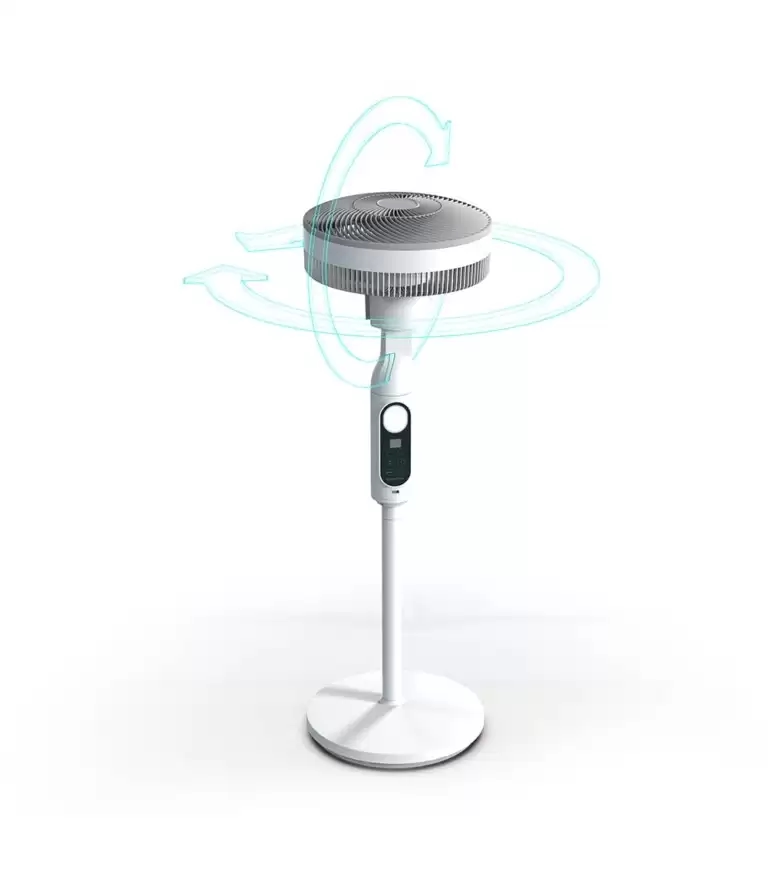
BARANA Solar Attic Fan’s 360-degree Wide-Angle Oscillation

The BARANA solar attic fan’s highlight is its 360-degree wide-angle oscillation design, which accelerates air circulation.

360-degree Continuous Rotation: Unlike fans that start and stop, our solar attic fan’s blades rotate smoothly through a full circle (360 degrees) at adjustable speeds (low, medium, and high). This ensures even air flow through every square foot of the attic.

Adjustable Airflow: The fan’s solar panels power the blades, which, at high speed, deliver enough airflow to refresh the air in a 1,500-square-foot attic every five minutes. At low speed, the fan operates quietly for gentle circulation.

A homeowner in Texas experienced a 30°F (1.2°C) drop in their 1,400-square-foot attic after installing our solar attic fan, with no hot spots. “Now, the temperature is the same in every room,” they said.

BARANA Solar Attic Fan's 360-degree Wide-Angle Oscillation

3D Humidification Balances Airflow and Humidity

Air circulation isn’t just about moving hot air; it’s also about controlling humidity. Traditional solar fans dry out the air in their direct airflow path, leaving dead spots overly humid. This solar fan, however, features 3D humidification to ensure even moisture distribution without accumulation. The 3D humidification feature releases a fine mist as the fan rotates. This prevents over-drying and traps excess moisture, maintaining humidity levels between 40-50%. It also features 3D mist distribution, reaching every corner through 360° airflow. This means there are no dry spots near the fan, nor damp areas further away. Many users have found this solar fan has resolved their attic mold issues and maintained stable humidity levels throughout their entire home and attic.

Versatility – From Attic Workhorse to Home Fan

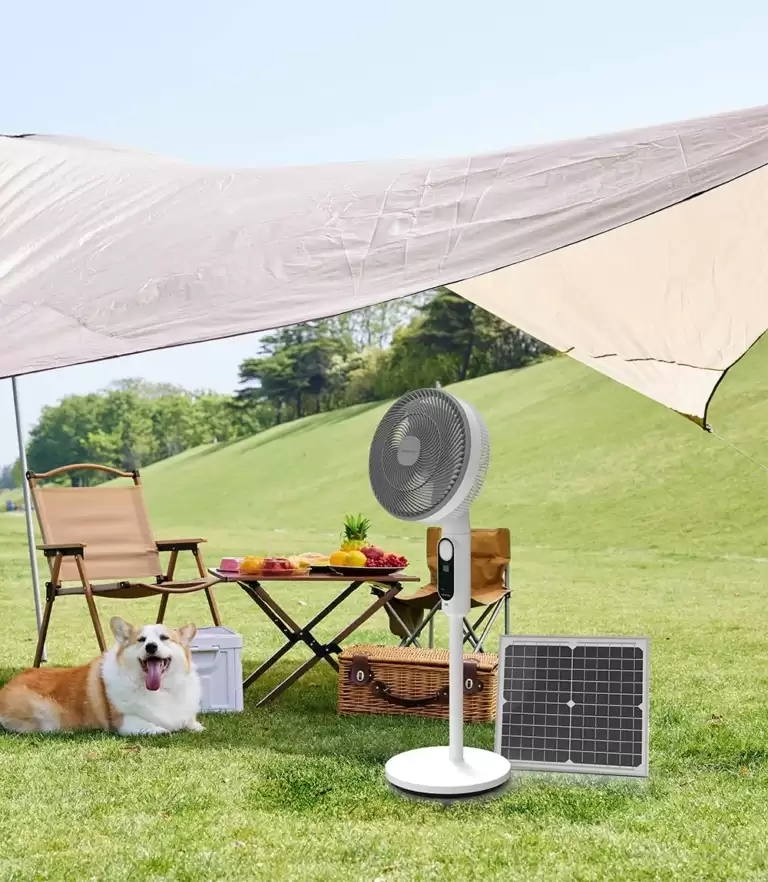
This solar attic fan isn’t just for attics; it’s also a versatile solar fan that can be used in the living room, garage, or patio. This adaptability solves another pain point: buying multiple fans for different spaces. They can be switched between different scenarios. If mounted on the attic ceiling, they use solar energy to circulate hot air and draw in fresh air. When placed on a stand in the living room or bedroom, they’re solar-powered and can also be connected to a small solar panel for nighttime use. The 360° oscillating design keeps the room cool without pointing directly at anyone. The durable plastic casing is dust- and rain-resistant, making it ideal for garages or covered patios. Many of our customers use them in three different scenarios: as an attic fan in the summer, as a living room fan in the fall, and as a patio fan in the spring.

Versatility – From Attic Workhorse to Home Fan

Energy Saving and Off-Grid Compatibility

Solar attic fans should save energy, not consume it, so we prioritized energy efficiency in their design. The solar panels on these fans generate enough power to keep them running at high speed even on cloudy days. They also charge a small built-in battery, allowing the fan to continue running for 2-3 hours after sunset.

If you already have solar panels, you can connect the fan to these batteries via a 12V adapter for all-day operation. They can also be used with portable solar generators, making them ideal for off-grid homes. They also operate at just 35 decibels on low speed and 45 decibels on high speed, making them quieter than most ceiling fans.

Accelerate air circulation in your home

For those tired of hot spots, mold, and energy waste caused by traditional solar attic fans, the BARANA solar attic fan offers 360° wide-angle circulation to cover every corner, 3D humidification to balance humidity, and the versatility to meet your home’s needs. It’s more than just a solar fan; it’s a system that keeps your attic and your entire home comfortable, safe, and efficient.

How to effectively calculate the static load bearing structure of a ground mount solar system?

According to one of our survey reports, 8% of ground mount solar system failures are due to flawed static load-bearing structure calculations. For ground-mount users, this translates to an average repair cost of thousands of dollars per failure, in addition to 4-6 weeks of lost power generation while the system undergoes maintenance. Even worse, the same study revealed that 62% of these failures could have been avoided with proper load analysis. As a solar racking system provider, we combine site-specific data, advanced engineering techniques, and detailed design documentation (layout drawings, joint specifications, installation guides) to ensure your system can withstand a wide range of loads, addressing your biggest installation challenges and providing peace of mind.

What is the static load-bearing structure of a ground mount solar system?

First, as a user, you need to understand the static load-bearing structure of a ground-mounted solar system and how it differs from other solar mounting systems. The static load-bearing structure refers to the framework that supports the solar array and prevents movement or deformation under constant (static) forces. For ground-mounted solar systems, this includes:

Foundation: The concrete foundation or anchor bolts that anchor the system to the soil.

Support columns: The metal or aluminum poles that connect the foundation to the track.

Tracks: The long beams that hold the solar panels.

Mounting hardware: The bolts, clamps, and brackets that secure the panels to the track.

Unlike dynamic loads, static loads act continuously. The system structure must withstand these forces. These loads can last for over 25 years without degradation. For example, a 5kW ground-mounted solar system has a static load of approximately 150 pounds per panel. This static load never dissipates, so the system structure must support it indefinitely. BARANA calculations ensure that every component, from half-inch bolts to 4-foot-tall columns, can withstand these long-term forces.

ground mount solar system 1

Calculating Critical Static Loads for Ground Mount Solar System

Effective static load calculations begin by determining all the forces acting on a ground-mounted solar system. BARANA analyzes three core load types and tailors the calculation to your site’s specific conditions:

1. Dead Loads
This is the fixed weight of the system itself, including the solar panels, rails, posts, and hardware, and the concrete foundation.
For a ground-mounted solar system with 20 solar panels, the total dead load is approximately 600-900 pounds. BARANA uses the exact specifications of your selected panels and solar racking system components to calculate this accurately to the nearest ounce.

2. Live Loads
Live loads are temporary forces, typically from maintenance workers. The International Building Code (IBC) requires a minimum of 250 pounds per worker for ground-mounted solar systems. Even if you do not plan on frequent maintenance, BARANA considers this in every calculation, as unexpected repairs require someone to stand on the rails.

3. Environmental Loads
These loads vary the most and are the most critical, as they depend on your location:
Wind Loads: Calculated based on National Oceanic and Atmospheric Administration (NOAA) data, for example, winds of 120 mph in Florida’s hurricane belt and 80 mph in tornado-prone areas of the Midwest. Miles per hour. Wind pushes against the solar panels, creating “lift” that pulls the system upward.
Snow load: Based on average local snowfall. Wet snow weighs more, so for areas with heavier wet snow, we use a compaction weight of 50 pounds per square foot.
Soil bearing capacity: Soil testing (required for all BARANA projects) tells us how much weight the ground can support, which determines the depth and type of foundation.

Calculating Critical Static Loads for Ground-Mounted Solar Systems

BARANA’s Four-Step Static Load Calculation Process

BARANA’s process is a site-specific, code-compliant workflow that eliminates risk. Here is how we calculate the static load-bearing structure of a ground mount solar system:

Step 1: Site Assessment
First, we gather field data to avoid making sweeping assumptions. Our engineers test your soil to measure its bearing capacity and drainage properties. We also obtain 30-year average wind and snow loads from the National Oceanic and Atmospheric Administration (NOAA) Climate Data Center. After determining the exact weight, size, and wind resistance data for your selected solar panels, we assess the load-bearing capacity of your soil.

Step 2: Load Quantification
We input all site data into our proprietary engineering software to calculate the magnitude of each load. For the dead load calculation, we factor in the combined weight of the panels, rails, and hardware. For live loads, we add 250 pounds for each potential worker position. We also calculate environmental loads such as wind pressure and snow weight.

Step 3: Structural Analysis
We use FEA software to simulate how each component will withstand the total load. We test whether the rails bend under the combined dead and snow loads and verify whether the columns tilt under wind loads. We also ensure that the foundation will not sink into the soil.

Step 4: Apply a Safety Factor
To account for unexpected forces, we multiply all loads by a safety factor according to IBC standards: dead load + live load x 1.5 times to ensure the structure can withstand a weight 50% higher than expected. Environmental load x 1.3 times. This process ensures your ground-mounted solar system not only meets code but also exceeds it.

BARANA Detailed Design Documents – Installation Guidelines

Calculations are meaningless without a clear execution plan. BARANA provides detailed design documents to ensure your ground mount solar system is installed correctly. These documents address the user’s primary concern: “Will the installer be able to install it correctly?” Our service includes three key components:

1. Layout Diagrams

2D/3D maps showing panel spacing, post location, and foundation location, along with instructions for setbacks (e.g., 5 feet from property line) and drainage (to prevent water accumulation around the foundation), as well as load labels for each section.

2. Mounting Joint Specifications

Includes precise bolt sizes, torque requirements, and joint cross-sections to prevent misalignment.

3. Installation Techniques

Foundation specifications: depth, concrete mix, and curing time, as well as track leveling tolerances and checkpoints.

Installation Guide for Ground-Mounted Solar Systems

Common Calculation Mistakes and BARANA’s Solutions

Even experienced installers can make mistakes in static load calculations, and BARANA’s process eliminates the most common pitfalls:

Mistake 1: Using Generic Weather Data

Problem: Installers rely on national averages instead of local data.
BARANA’s Solution: We use NOAA weather data. County-level data (e.g., 40 lbs/ft2 in northern Maine and 0 lbs/ft2 in southern California).

Mistake 2: Ignoring Soil Type
Problem: Skipping soil testing and using a standard foundation depth results in sinking in soft soils.
BARANA’s Solution: Soil testing is mandatory for every project, and we adjust foundation depth capacity based on soil bearing capacity.

Mistake 3: Forgetting Live Loads
Problem: Not accounting for maintenance workers, resulting in track bending when someone stands on it.
BARANA’s Solution: Including Live Loads in every calculation.
By addressing these mistakes upfront, we can better ensure your ground-mounted solar system avoids common failures with other systems.

Static Load Calculations: The Basics of Ground-Mounted Solar System Installation

For anyone considering installing a ground-mounted solar system, static load structural calculations are crucial in determining whether the system will last 25 years or fail within 5. BARANA We eliminate risks and address your biggest installation challenges based on field data, rigorous engineering, and detailed design documentation. We sell more than just solar mounting systems; we ensure your ground-mounted solar system is robust and durable, regardless of weather or time of year.

How does net metering work with grid-connected solar system and what must buyers know?

Buyers of grid-connected solar systems using net metering can see a 2-5 year payback period, which is 30% faster than for those without net metering. However, according to a recent survey, 62% of US homeowners considering a grid-connected solar system admitted they “didn’t fully understand” how net metering works. This gap can cost buyers thousands of dollars: some of our customers in California save $150 per month on a 5kW grid-tied solar system with net metering, but only $90 per month without it, resulting in a three-year payback period. As a manufacturer of grid-tied solar systems, Power Dream understands how net metering can turn solar energy into a wise financial investment.

What is a grid-connected solar system?

Before understanding net metering, you must understand what a grid-tied solar system is and why it’s the only system that uses net metering. Unlike off-grid solar systems, on grid solar systems connect directly to your local utility grid. Here’s how it works in a nutshell:

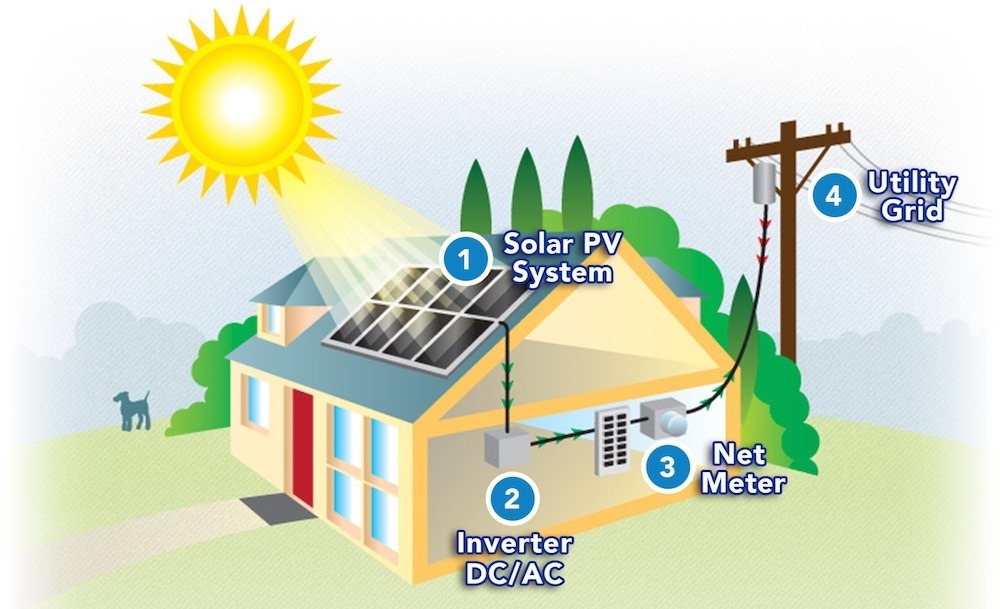
Your solar panels generate electricity during the day, and you can use that electricity as needed (for example, to power a refrigerator, lights, or air conditioning). Any excess electricity not used then flows back to the utility grid (this is where net metering comes into play). Then, when your solar panels aren’t generating enough electricity (for example, at night or on cloudy days), you can draw power from the grid, just as you do now.

Grid-connected solar systems don’t require batteries, though you can add batteries for backup, making the upfront cost lower than off-grid systems. The utility grid acts as your “virtual battery,” storing excess electricity through net metering for you to use later.

grid-connected solar system 2

How Net Metering Works with a Grid-Connected Solar System: Step-by-Step

Net metering is a utility program that tracks the “net” amount of electricity you use—the difference between the amount your grid-connected solar system generates and the amount you draw from the grid. Here’s a simple, practical explanation:

Step 1: The utility company installs a net meter
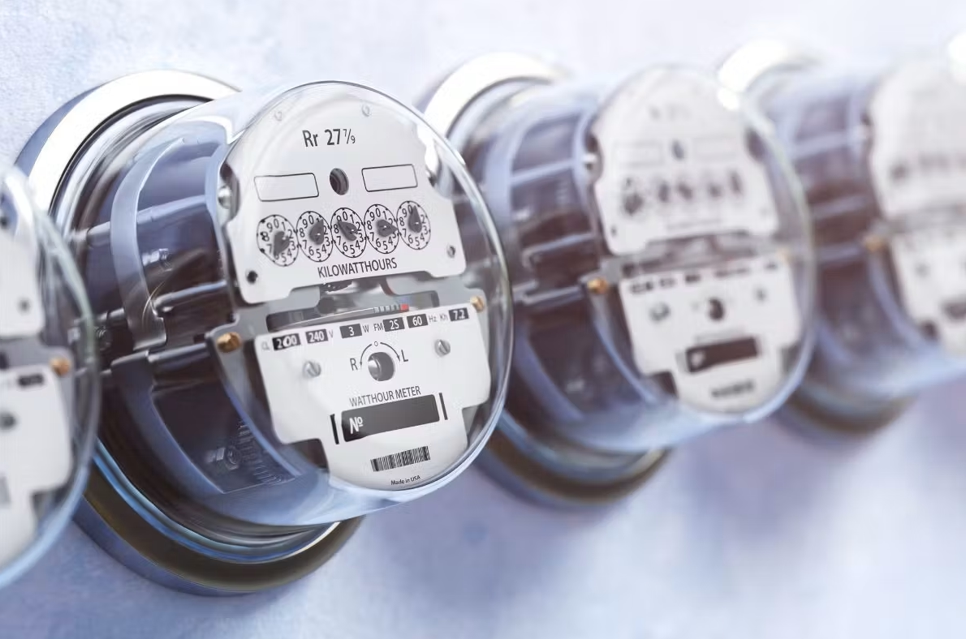
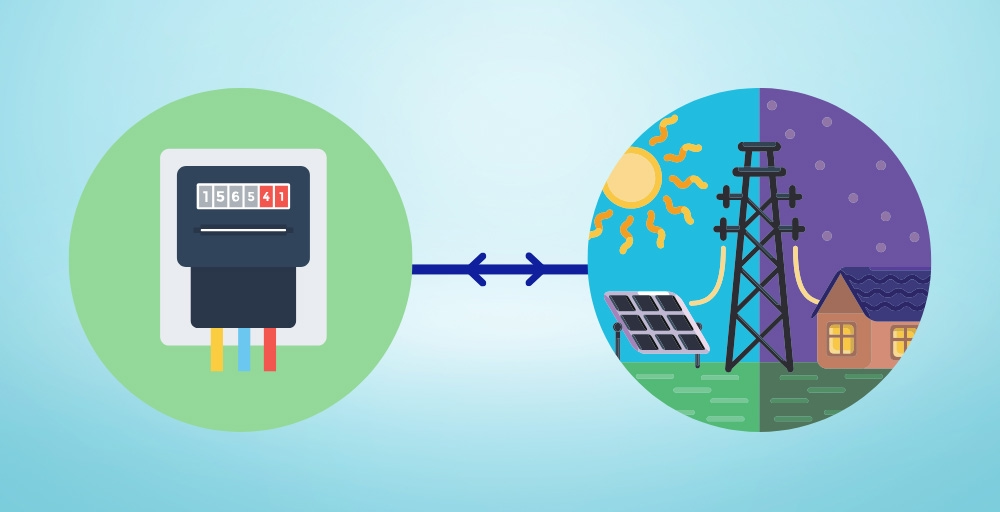
When you install a grid-tied solar system, the utility company replaces your standard electricity meter with a net meter. This meter tracks two numbers:

Input electricity: The amount of electricity drawn from the grid.

Output electricity: The excess electricity your solar panels deliver to the grid.

Step 2: Your grid-connected solar system generates electricity, which you use or export.
During the day, your solar panels generate electricity. Let’s assume a typical day: from 9 AM to 5 PM, the solar panels generate 8 kWh, and you use 4 kWh (exporting 4 kWh to the grid). From 5 PM to 11 PM, the solar panels generate 0 kWh, and you use 6 kWh (importing 6 kWh from the grid).

Step 3: Your utility company bills you for your “net” usage.
At the end of your billing cycle (usually monthly), your utility company calculates your “net” usage: Net usage = electricity imported – electricity exported.
In the example above, 6 kWh – 4 kWh = 2 kWh net usage. Therefore, you only pay for these 2 kWh, plus a fixed utility fee. If you export more electricity than you import, you’ll receive a net metering credit for the 2 kWh difference. These credits will then be rolled over to your next bill to offset future usage.

How Net Metering Works with Grid-Tied Solar Systems

Key Net Metering Rules You Must Know When Purchasing an On Grid Solar System

Net metering rules vary across states, utilities, and even cities. Ignoring these rules can lead to missed savings or unexpected costs. We’ve summarized the three most critical rules to verify before installing a on grid solar system:

1. Wide Variations Across States and Utilities

Each state handles net metering differently. For example, in California, the Net Energy Metering (NEM) 3.0 program pays lower rates for exported energy than previous versions, while still providing significant credits. Net metering in Texas isn’t a state requirement; each utility sets its own rules. Some utilities offer full net metering, while others restrict export limits. Be sure to review your local utility’s net metering policy and use the DSIRE database to confirm regulations.

2. Net Metering Credits Are Not “Cash,” But Bill Credits

A common misconception is, “My on grid solar system makes money by selling excess energy to the utility.” This is rarely true. Most net metering plans offer bill credits, not cash.

3. Some Utilities Limit Exports

Many utilities limit the amount of excess energy a on grid solar system can export to the grid, typically to 100% of your historical annual usage. If you install an oversized system, the utility may refuse to net meter the extra 5 kW or pay you at a much lower rate.

Key Net Metering Rules You Must Know When Purchasing a Grid-Connected Solar System

How Net Metering Improves Your Grid-Tied System’s ROI

Net metering is the most critical factor in ensuring the economic viability of an on grid solar system. Let’s use a real-time example to illustrate its impact:

Example: 5kW On Gird Solar System in Arizona

Upfront cost: $15,000.

Monthly Solar Power Generation: Approximately 700 kWh (Arizona has abundant sunshine). Monthly electricity usage: Approximately 500 kWh.
Electricity price: $0.14/kWh.

Without net metering:
You use 500 kWh of solar power, but the additional 200 kWh is fed back to the grid and not counted towards the credit. Although you pay $0 for the kWh, you miss out on potential savings of $28 per month.
Annual savings: $0.
Payback period: Approximately 12.5 years.

With net metering:
You use 500 kWh of electricity and export 200 kWh, earning a $28 credit. In a cloudy month, if you use 600 kWh of electricity and export 400 kWh, you can use the $28 credit to offset the 200 kWh you imported.
Annual savings: $1,680. Payback period: Approximately 9 years. This represents a 3.5-year reduction in payback period.

Common Myths About Net Metering and Grid-Tie Systems

Debunking these myths will help you set realistic expectations for your grid-tied solar system:

Myth 1: “Batteries Replace Net Metering”

Batteries allow you to store excess electricity for nighttime use, but they don’t replace net metering. If your battery is fully charged, the excess electricity will still be delivered to the grid, and net metering will pay you accordingly. Batteries complement net metering, not replace it.

Myth 2: “Net Metering Is On the Way Out”

While some states have updated their net metering rules, the complete elimination of net metering is rare. Utilities need distributed solar to reduce the strain on the grid during peak hours. As long as your grid-tied solar system was installed before significant rule changes, you’ll likely be able to enjoy current electricity rates for 10 to 20 years.

Myth 3: “All grid-connected solar systems are eligible for net metering”

Some utilities exclude small commercial systems or systems over a specific size from net metering. So, before you commit to a grid-tied system, be sure to check with your utility company to confirm your eligibility.

Net metering is essential for grid-tied systems.

For anyone considering a grid-connected solar system, net metering isn’t just a bonus; it’s what makes solar a wise economic choice. It turns excess energy into real savings, shortens payback times, and makes solar energy accessible to homes and small businesses. The key to success lies in doing your homework: review state/utility regulations, size your system appropriately, and work with a grid-tied solar system manufacturer who can guide you through the net metering process.

How can hybrid solar power system improve resilience and provide stable power during grid outages?

Some areas with severe weather experience unexpected power outages of 1.5 to 4 hours annually, with these severe weather events causing outages lasting several days. Traditional grid-connected solar systems pose a significant cost to homeowners during these crises, as they automatically shut down during outages, leaving users without electricity.The Hybrid solar power system offer a solution. Unlike grid-connected or off grid systems, hybrid solar power systems combine solar panels, battery storage, and a grid connection to provide reliable power regardless of grid conditions.

What is a hybrid solar power system? How does it differ from grid-connected/off-grid systems?

Hybrid solar power systems differ from other solar installations in that they bridge the gap between grid-connected and off-grid systems:

On grid systems: Connect to the utility grid but lack battery storage. They save on electricity costs but shut down during outages.

Off grid systems: Use batteries to operate independently of the grid, but are too complex for most users. They require more panels/batteries than needed for daily use and cannot rely on the grid for power during extended periods of cloudy weather.

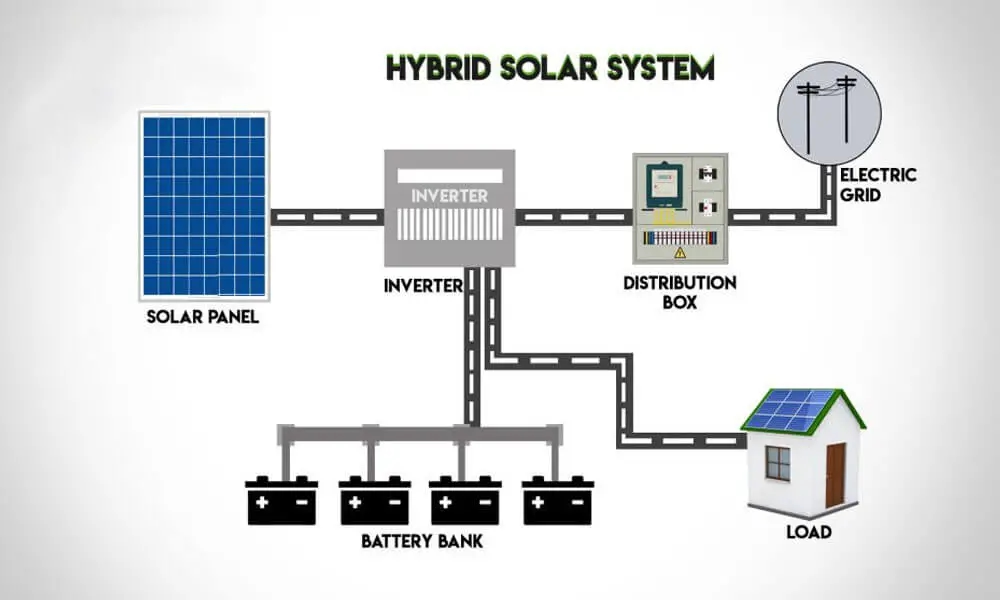
Hybrid solar system combine solar panels, batteries, and bidirectional inverters. When solar/battery power runs low, they draw power from the grid and automatically switch to battery backup during a power outage. This “best of both worlds” design makes hybrid solar systems an excellent choice for users who value resilience.

What is a hybrid solar power system

Hybrid solar power systems use batteries to store excess solar energy for use in the event of a power outage.

The key to a hybrid solar power system’s resilience to power outages lies in its battery storage technology. During regular grid operation, your solar panels generate electricity. Any unused energy is immediately charged to the hybrid solar system’s batteries. In the event of a grid failure, the system disconnects from the grid and uses the stored battery power to power your home or business.

This revolutionizes the ability of solar power systems to withstand power outages. On grid systems without batteries cannot achieve this, as they immediately cease power supply in the event of a grid failure. Even backup generators rely on fuel, which can be depleted during a prolonged power outage. In contrast, a hybrid solar power system stores energy for free, ready for use when needed. A typical 5kW hybrid system, paired with a 10kWh battery, can power critical household loads for 2-3 days during a power outage—even longer if there is sufficient sunlight to recharge the battery.

Hybrid solar power systems use batteries to store excess solar energy for use in the event of a power outage (1)

Seamless Switchover Between Grid and Backup Power

One of the most frustrating aspects of a grid outage is the “blackout interval,” the time between when the grid goes out and when the backup power source kicks in. Generators typically take 5-10 minutes to start, and manual transfer switches require frustrating manual switching from the grid to the backup source. Hybrid solar power systems eliminate this gap with seamless, automatic switching.

A hybrid solar system’s inverter continuously monitors the grid voltage. Once it detects a grid fault, it triggers islanding mode and switches to battery power in just 10 to 50 milliseconds. That is faster than the blink of an eye. For users, this means no interruption: your lights will stay on, your refrigerator will keep running, your Wi-Fi will stay connected, and you might not even notice the grid outage. This seamless switchover is crucial for sensitive loads, such as medical equipment or commercial equipment.

Seamless Switchover Between Grid and Backup Power

Continuous battery charging during power outages provides long-lasting power

Unlike backup generators or standalone battery systems, hybrid solar systems continuously charge their batteries during a power outage, as long as the sun is shining. This “self-sustaining” feature provides a level of power far beyond what traditional backup systems can provide.

During a power outage, a hybrid solar system’s solar panels will continue to generate electricity if there is sufficient sunlight. Instead of sending this energy to the grid, the system transfers it directly to the batteries, providing power for overnight use or extended outages. For example, a 5kW hybrid solar system with a 10kWh battery might consume 4kWh of energy overnight while powering critical loads. The next morning, four hours of sunlight will generate 15kWh, fully charging the battery and providing additional power for the day. This means a hybrid solar system can power your home for days, not just hours, even during multi-day outages.

Prioritize critical power needs with load management

During extended power outages, battery capacity is limited, and hybrid solar power systems employ intelligent load management to ensure you power your most important devices. Most hybrid solar systems allow you to program “critical loads” and “non-critical loads.” In the event of a grid failure, the system automatically cuts power to non-critical loads, dedicating all battery energy to essentials. This feature extends battery life and ensures resilience when you need it most. With load management, a 10 kWh battery can last five days instead of two, doubling your power resilience. As a hybrid solar system manufacturer, we pre-program load management into the system, but users can adjust it via the mobile app.

Providing Reliable Solar Power

Hybrid solar systems combine four key features: battery storage, seamless transfer, solar charging, and load management, resulting in more reliable operating power. Unlike grid-tied systems or generators, hybrid solar power provides reliable, free solar power even during grid failures.

As a hybrid solar system manufacturer, we recommend that you assess your outage risk and critical loads when sizing your system. A small home might require a 5kW system with a 10kWh battery, while a business might need a 15kW system with a 30kWh battery. This allows you to find the power generation system that’s right for you.