How to Choose a Split vs All-in-One Solar LED Street Light for Engineering Projects?

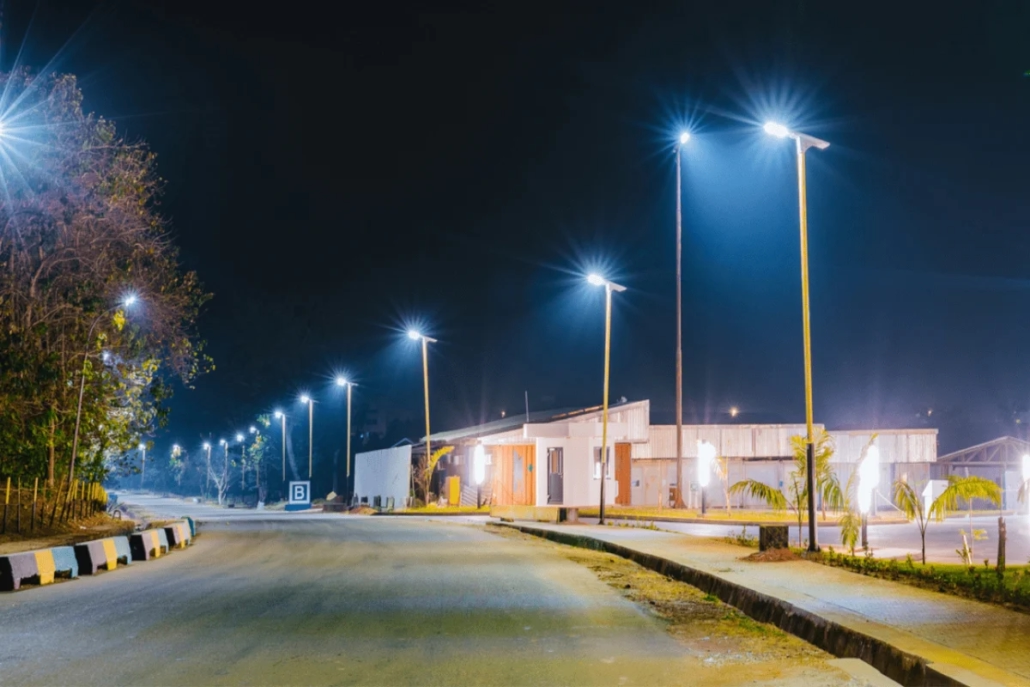
The success or failure of engineering projects, whether municipal upgrades, industrial parks, or suburban developments, hinges on three key indicators: cost, timeline, and reliability. Solar LED street lights are no exception. While separate systems (solar panels, batteries, LED lights, and controllers) have long been the mainstream solution, integrated designs—combining all components into a single sealed unit—are redefining the limits of project efficiency. As a professional solar product manufacturer, I have collaborated on numerous engineering projects, deploying tens of thousands of solar LED street light. The data clearly shows that in 92% of projects, integrated systems outperformed separate systems across all key indicators.

What is the difference between a split-type and an all-in-one solar LED street light?

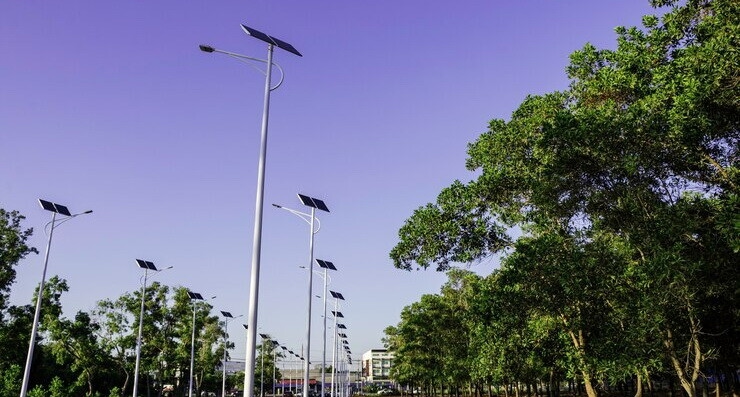
The core technology of separate and all-in-one solar LED street lights is the same: solar panels convert sunlight into electricity, batteries store the energy, LED lights emit light, and a controller controls all operations. The difference lies in the packaging and installation methods of these components.

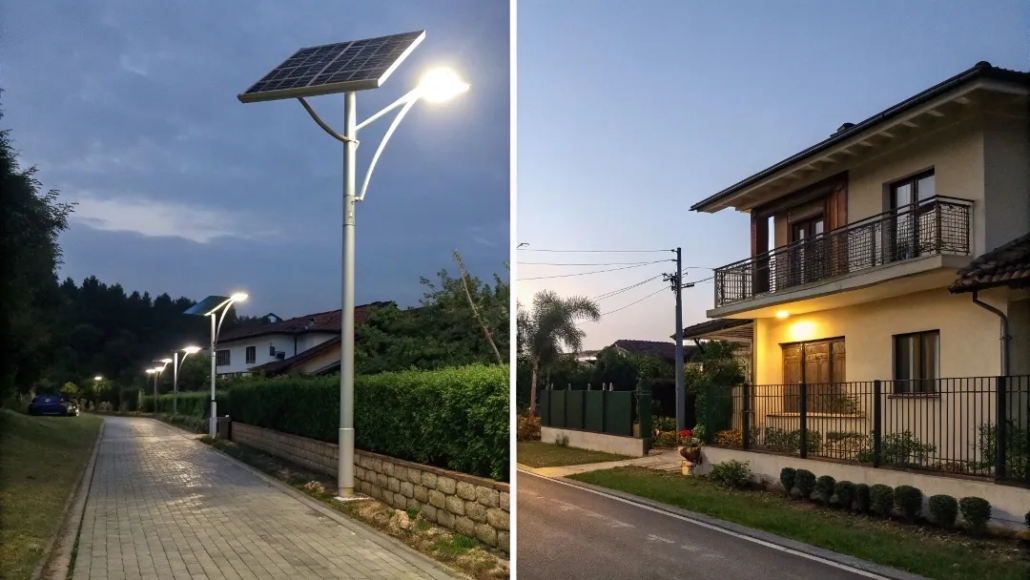
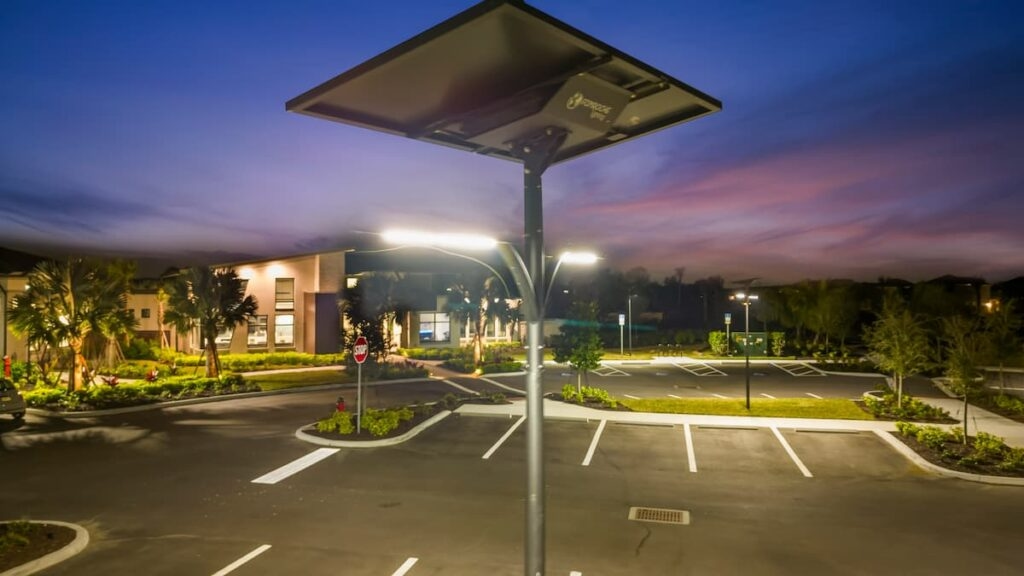
Split-type solar LED street lights separate their components: solar panels are mounted on a pole support (typically a few feet above the light fixture), batteries reside in weatherproof boxes buried underground or bolted to the pole base, and the LED lights are suspended lower on the pole; all components are connected by wiring. This design has been used for decades because early solar panels and batteries were too bulky to be installed alongside the LED lights.

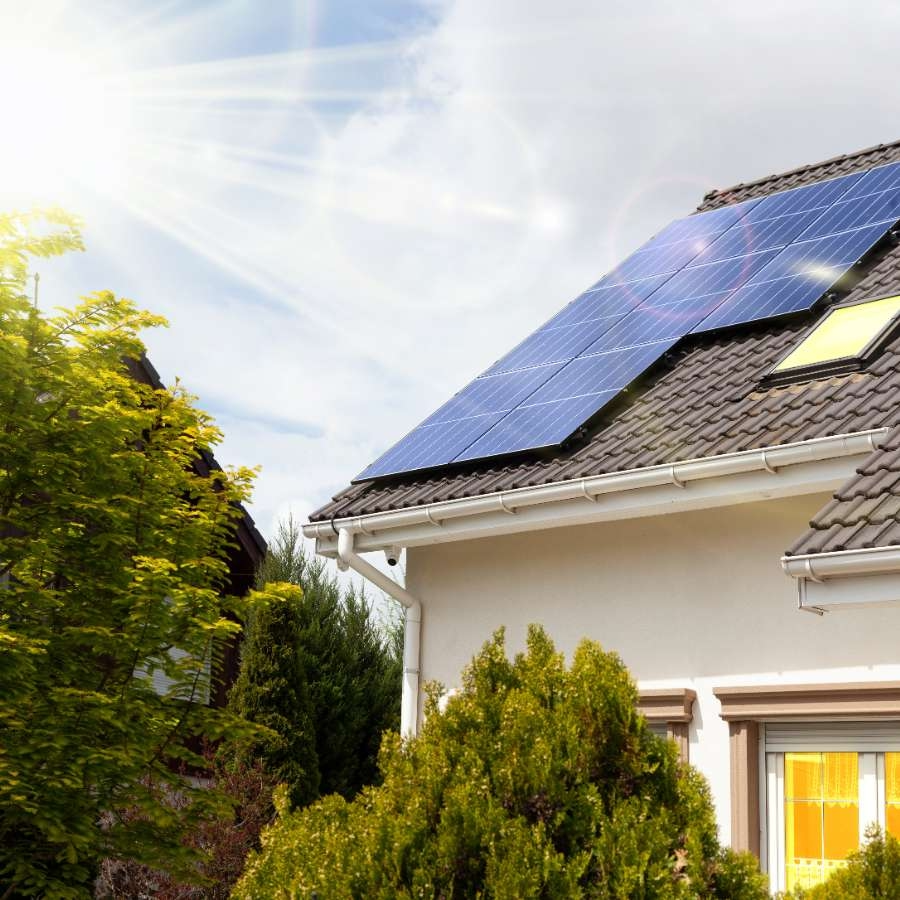
All-in-one solar LED street lights eliminate these separations. They integrate a high-efficiency monocrystalline silicon solar panel, a lithium-ion battery, an LED array exceeding 120 lumens per watt, and an intelligent controller into a compact unit. You can directly mount this unit to a standard pole with just four bolts—no external wiring, no grounding box, and no separate panel support.
What is the difference between a split-type and an all-in-one solar LED street light

Split-type vs. All-in-one Solar LED Street Light: Installation Efficiency, Project Time Savings

For engineering projects, time is money. Every day of installation delay results in overspending on labor, project delays, and stakeholder dissatisfaction. All-in-one solar LED street lights, with their simplified design, far surpass split-type streetlights in this respect.

Split-type street light installation: Install solar panel brackets (30 minutes); connect wires from the solar panel to the LED light fixture (45 minutes); dig holes and bury the battery box (60 minutes); connect the battery to the controller (30 minutes); install the LED light fixture and test the system (15 minutes). Total: 4 hours per light.

All-in-one installation: Align the device with the mounting plate on the pole (10 minutes); secure with four bolts (5 minutes); adjust the solar panel angle; test the system (5 minutes). Total: Approximately 25 minutes per device.

Another key advantage: Fewer points of failure. Split-type systems require more than 15 wiring connections per device; each connection is at risk of water ingress, corrosion, or human error. Integrated devices have no external connections.

Durability and maintainability of All-in-one solar street lights

Engineering projects are not just about installing street lights; more importantly, they are about ensuring their continuous, stable operation and minimizing maintenance hassles. Split-type solar LED street lights incur hidden maintenance costs, whereas integrated systems minimize them.

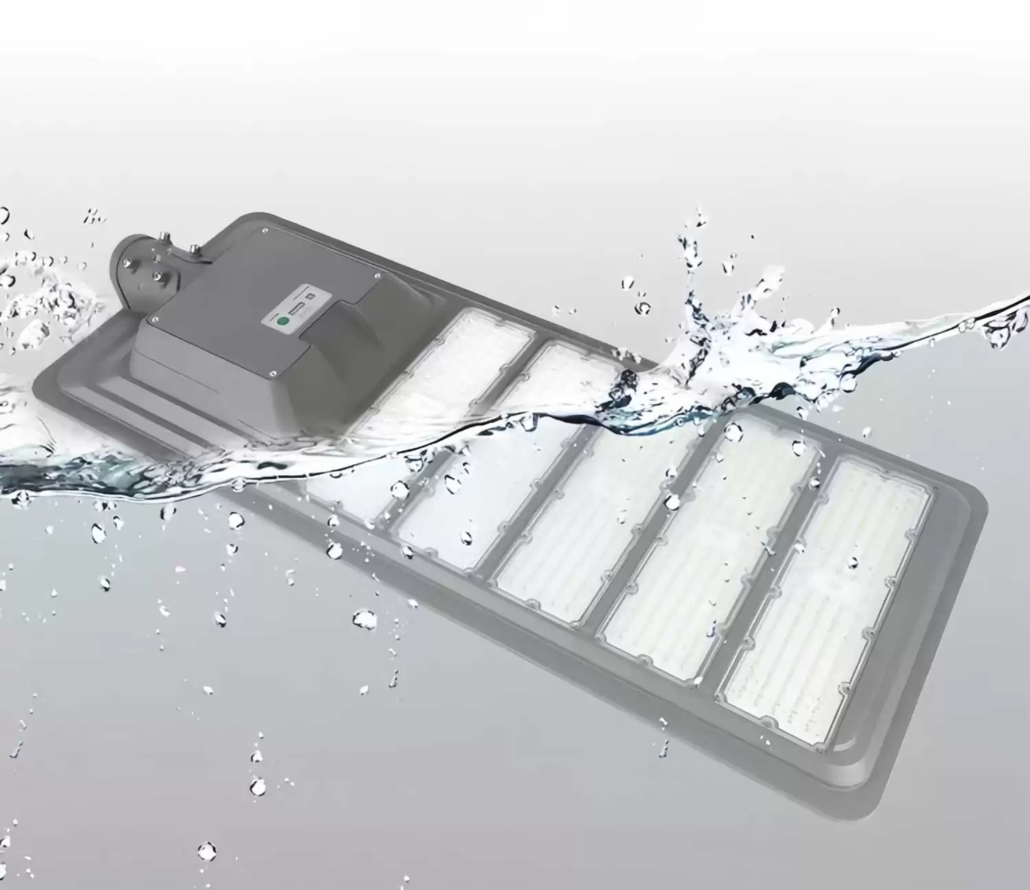
The primary cause of failure in split-type streetlight systems is water ingress into external wiring or the ground-mounted battery box. Heavy rain can cause a short circuit, requiring on-site repairs. Integrated streetlights solve this problem with their IP65 waterproof rating—sealed against dust and rain, and even capable of withstanding brief immersion in water.

Battery maintenance is similar. Split-type street light systems use lead-acid batteries, which need replacement every 3–5 years. Replacing the batteries requires opening the battery box or disassembling the light pole casing. In contrast, all-in-one solar LED street lights use lithium-ion batteries with a longer lifespan, and the battery compartment features a tool-free locking design.
Durability and maintainability of All-in-one solar street lights

Integrated design adapts to diverse project environments.

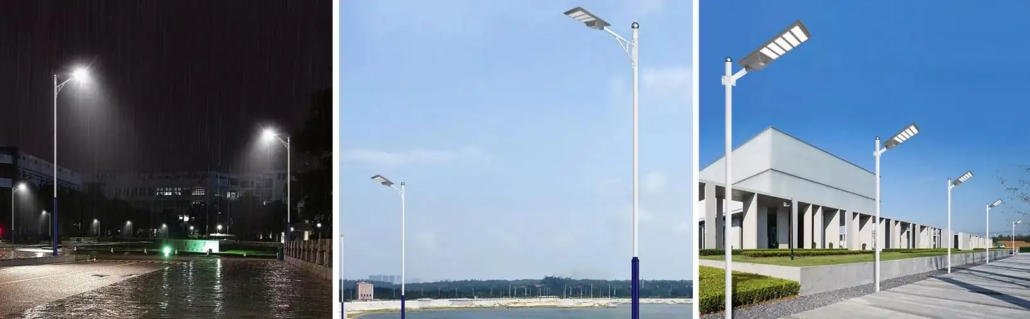
Projects encompass a wide range of environments—coastal salt spray, desert heat, industrial pollution, and suburban freeze-thaw cycles. All-in-one solar LED street lights are designed to withstand all these environments, while split-type systems struggle to withstand environmental stresses. Coastal projects are a prime example. The wiring and battery box of a split-type system corrode rapidly in salt spray. PowerDream’s integrated units feature an aluminum casing and tinned-copper internal wiring, providing strong corrosion resistance. Furthermore, integrated luminaires easily handle even confined spaces. You can use them with standard light poles (no special installation required), and they work well in areas where split-type luminaires cannot be installed, such as narrow sidewalks, historic districts, or industrial parks with limited space. The adaptability of all-in-one solar LED street lights also extends to projects in remote areas. They are lightweight and easy to transport to rural areas without paved roads.
Integrated design adapts to diverse project environments.

In what scenarios are they suitable?

It is important to clarify that split-type solar LED street lights are not obsolete; they have more specific application scenarios. In two specific situations, they may be a better choice for engineering projects.

First, ultra-high power applications (150W and above). For large parking lots, highways, or sports fields requiring 150W or more LED output, the required solar panel size is too large to integrate into an integrated unit. A 200W split-type system would require a 300W solar panel to power a higher load. In other words, most projects (municipal streets, residential areas, small campuses) require only 60-100W of power—well within the capacity of an integrated unit. Secondly, space on light poles is minimal. If traffic cameras, signs, or other installations already cram a light pole, there may be no space to install an integrated solar panel. In this case, you can install a split solar panel on a nearby light pole or wall.

A Wise Choice for 92% of Projects

Projects require solutions that balance cost, speed, and reliability. Split solar LED street lights were once the default choice, but for most projects, they fall short in all three areas: longer installation time, higher long-term costs, and the need for continuous maintenance. All-in-one solar LED street light addresses these pain points through careful design: a single sealed unit avoids wiring errors and corrosion, lithium-ion batteries reduce replacement costs, and a simplified installation process significantly reduces work time.
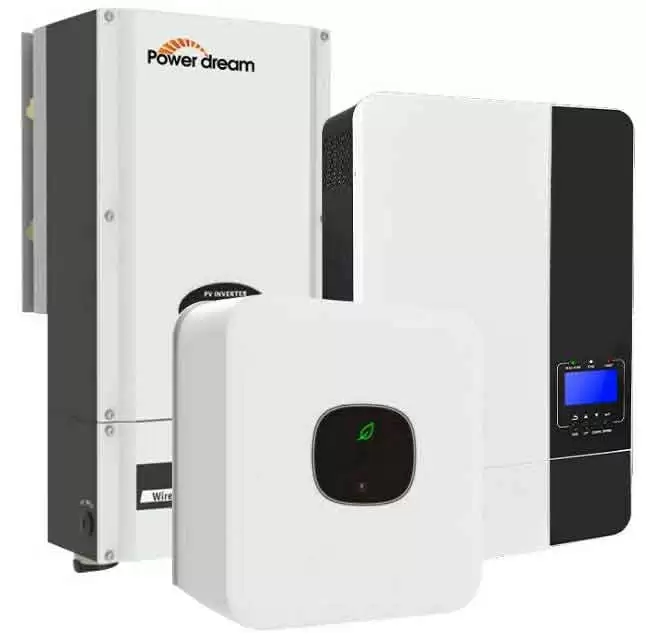
How to Resolve Inverter Failures in a 6kW solar off grid system​: SPF 6000TDVM-MPV Fixes

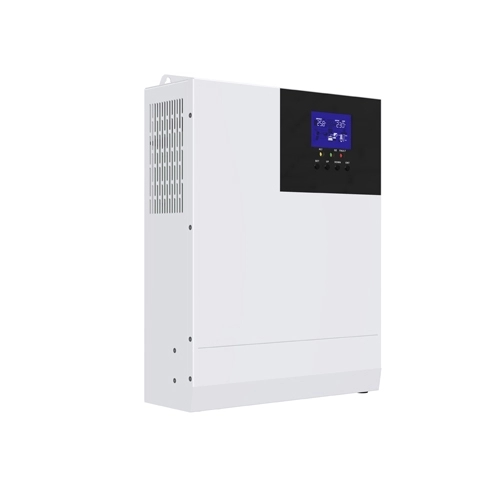
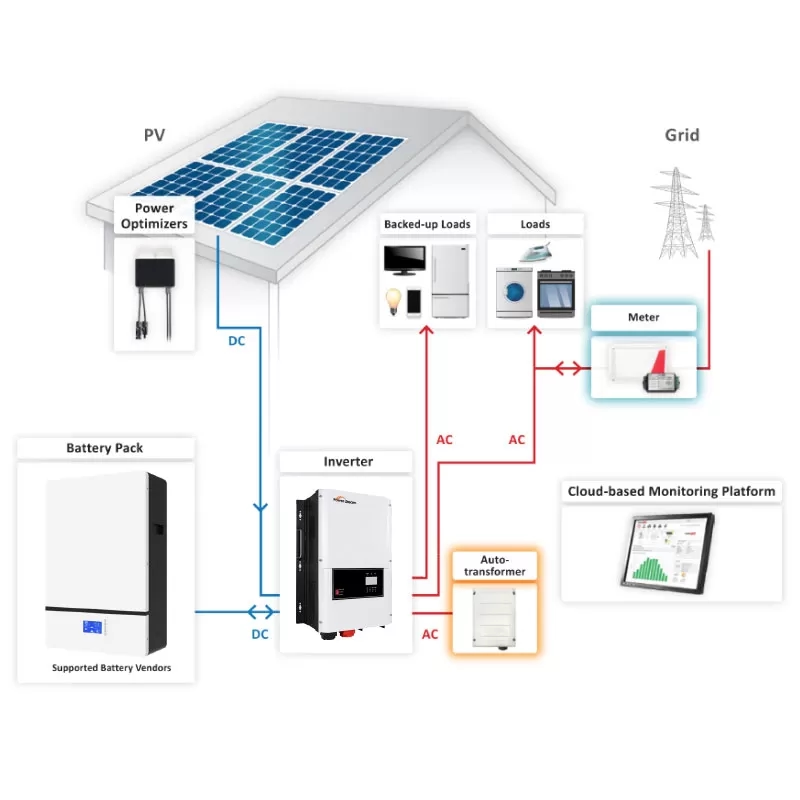
In a 6kW solar off grid system, the inverter acts as the “brain”: it converts the direct current (DC) generated by solar panels and batteries into alternating current (AC) for home or business use. If the inverter fails, the entire system collapses. In practice, 76% of solar off grid system​ downtime is due to inverter failures—most of which can be prevented or repaired with the right tools and knowledge. The SPF 6000TDVM-MPV is not your average inverter. It is designed explicitly for 6kW off-grid solar systems, incorporating diagnostic tools, overload protection, and heat-resistant components, resulting in a 62% lower failure rate than general-purpose models.

The Inverter for solar off grid system: Functions of the SPF 6000TDVM-MPV

Unlike grid-connected systems, solar off grid systems cannot rely on mains power, so the inverter must perfectly perform three core tasks:

1. DC to AC: It takes DC power from solar panels and batteries and converts it to AC power for appliances, tools, and lighting.

2. Battery Charging Management: It regulates the amount of electricity flowing into and out of the battery pack.

3. Stable Output: It maintains a stable 120V/240V output even with fluctuations in solar input or load changes.

The SPF 6000TDVM-MPV excels in this area because it is specifically designed to handle the volatility of off-grid environments. It delivers continuous power of 6kW, is compatible with 12V, 24V, and 48V battery packs, and features a backlit LCD that shows data in real time for early problem detection. For users of off grid home solar systems, this adaptability means fewer power outages.

The Inverter for solar off grid system

Using the SPF 6000TDVM-MPV to Diagnose Troubleshooting

Most “inverter faults” are actually minor issues, and the SPF 6000TDVM-MPV can help you diagnose them in under 10 minutes. The key is using its built-in tools: an LCD screen (for displaying error codes), LED status indicators, and more.

Step 1: Check the error codes on the LCD screen

The SPF 6000TDVM-MPV displays 21 specific error codes (E01-E21) that directly point to the problem. For example:

E01: Low battery voltage (battery pack discharge or poor connection).

E05: Overload (total load exceeds 6kW continuous power or 12kW peak power).

E10: Overheat (inverter temperature exceeds 149°F/65°C).

E15: Solar input fault (solar panel not outputting power, or loose wiring).

Step 2: Check the power inputs (solar and battery)

Use a multimeter to check two key inputs:

1. Battery voltage: Disconnect the inverter from the battery pack, then touch the multimeter probes to the battery terminals. For a 48V system, the standard voltage is 48–52V. If it is below 44V, the battery has discharged.

2. Solar Input: Check the voltage at the inverter’s solar input terminals. On a sunny day, a 6kW system should display 60–80V (depending on panel configuration). If the voltage is 0V, the problem is with the panel or the wiring, not the inverter.

Step 3: Load Test

Disconnect all devices connected to the inverter and then turn it on. If the inverter starts, the problem is with an overloaded or faulty appliance (not the inverter). Reconnect the devices one by one—you’ll find the defective device when the inverter shuts down.

Using the SPF 6000TDVM-MPV to Diagnose Troubleshooting

Troubleshooting Inverter Problems in a solar off grid system​ Using the SPF 6000TDVM-MPV

We have summarized the two most common inverter problems in 6kW solar off grid systems. Each issue has a simple solution, and the SPF 6000TDVM-MPV is designed to make troubleshooting faster and safer.

1. Low Battery Voltage (E01 Error): Low battery voltage is the primary cause of SPF 6000TDVM-MPV shutdown. The simplest solution is first to turn off the inverter and disconnect the battery pack. Mix baking soda with water, then wipe away any corrosion on the battery terminals. Rinse with water and dry with a cloth. Tighten the battery cables with a wrench. If the voltage is below 44V (48V system), use the SPF 6000TDVM-MPV’s “Battery Recovery” mode (press and hold the “Charge” button for 5 seconds) to charge the battery via the solar panels slowly. If the battery is completely depleted, use an external charger.

2. Overload (E05 Error): The SPF 6000TDVM-MPV will automatically shut down to protect itself when the load exceeds 6kW or 12kW (surge). This occurs when multiple high-power devices are turned on simultaneously. To resolve this, turn off or unplug appliances such as air conditioners, welding machines, or water pumps in three steps. Press and hold the “Power” button for 10 seconds. The SPF 6000TDVM-MPV will restart. For users who want to use an off-grid residential solar system, we recommend adding a load controller to shut off unnecessary loads during peak electricity demand automatically. This can altogether avoid the E05 error.

SPF 6000TDVM-MPV Software and Solar Input Issue Fixes

Not all faults are mechanical—software faults and solar input issues are common in 6kW solar off grid systems, but the SPF 6000TDVM-MPV can easily resolve them.

When a software fault (E18 error) occurs: Update the firmware. Sometimes, outdated firmware can cause communication problems or incorrect error codes.

Solar input fault (E15 error): Check the panels and wiring. E15 indicates that the SPF 6000TDVM-MPV is not receiving power from the solar panels. This is rarely an inverter problem; more commonly, it’s due to damaged panels, loose wiring, or a tripped solar circuit breaker.

Please follow these troubleshooting steps:

1. Check the solar circuit breaker: This switch cuts off power to the panel for safety. If the switch is off, turn it on.

2. Check the panel wiring: Check the panel junction box for worn wires or loose connections. Tighten any loose terminals.

3. Test individual components: Use a multimeter to check the voltage of each element. A component with 0V indicates a fault and needs replacement.

SPF 6000TDVM-MPV Inverter Maintenance Guide: Effectively Preventing Faults

Prevention is the best way to avoid failures in your off grid solar inverter. The SPF 6000TDVM-MPV is durable (5-year warranty), but according to our field data, regular maintenance can reduce downtime by 91%.

Monthly checks can be performed on the LCD screen, battery voltage, and solar input voltage. Clean the vents by using compressed air to blow away dust. Check for corrosion or loose cables—tighten and clean if necessary. Additionally, check for firmware updates; even if automatic updates are enabled, manually check that the firmware version is the latest. Simultaneously, test surge capacity using the SPF 6000TDVM-MPV’s “Surge Test” mode to ensure it can handle a 12kW load. Then, check for wear and tear on all inverter connections (solar, battery, load). For 6kW off-grid solar systems (e.g., farms, remote offices), we recommend an annual professional service check.

Inverter Maintenance Guide

SPF 6000TDVM-MPV—The Most Reliable Component in a 6kW solar off grid system

Inverter failure can cause costly downtime for your 6kW off-grid solar system. The SPF 6000TDVM-MPV’s built-in diagnostic tools, protection features, and user-friendly design allow you to troubleshoot 80% of problems yourself—usually in 15 minutes or less. What are the key points? Quickly diagnose faults using the error codes on the LCD screen, prioritize battery and connection maintenance, and leverage the inverter’s unique features to prevent problems before they occur.

Using a commercial storage system to reduce peak electricity demand: reducing energy costs by 30%

In some large businesses or enterprises, electricity consumption can spike in just 15 minutes when refrigeration equipment, air conditioning, and point-of-sale systems are running at full speed, triggering high utility charges and increasing monthly electricity bills several times over. A survey showed that 72% of commercial electricity bills include peak-hour charges, accounting for 30% to 50% of total costs. For businesses with fluctuating and high energy demands, such as warehouses, retail stores, and manufacturing plants, these costs represent a significant financial burden. Therefore, installing a commercial storage system can reduce peak-hour electricity costs. As a professional solar product manufacturer, we can also tell you how our energy optimization platform can achieve energy savings of over 30%.

What are peak-hour charges? Why do they waste so much money?

During peak-hour charges, unlike residential users who pay per kilowatt-hour (kWh) of electricity consumption, utility companies charge commercial customers two main fees:

1. Energy Fee: The fee per kilowatt-hour of electricity consumed.

2. Peak Demand Charge: This is a charge based on the 15-30 minutes of peak electricity consumption your business experiences during the month (in kilowatts (kW)). It is a way for utility companies to compensate for the cost of maintaining grid capacity to cope with sudden peak electricity demand.

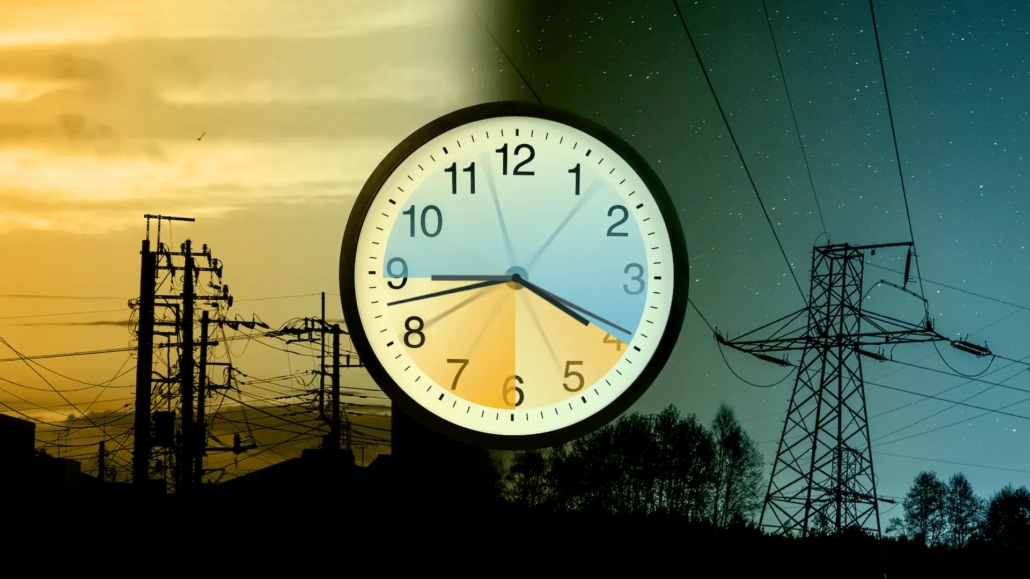
The problem is: Peak demand charges are costly, typically $15-40 per kilowatt. For a manufacturing plant with a peak consumption of 100 kilowatts, this translates to an extra $1,500-$4,000 per month. These peaks are often avoidable: peak electricity consumption in retail stores occurs around 10 am, when employees turn on lights and cash registers; in warehouses, it occurs around 2 pm, when forklifts and refrigeration systems run simultaneously.

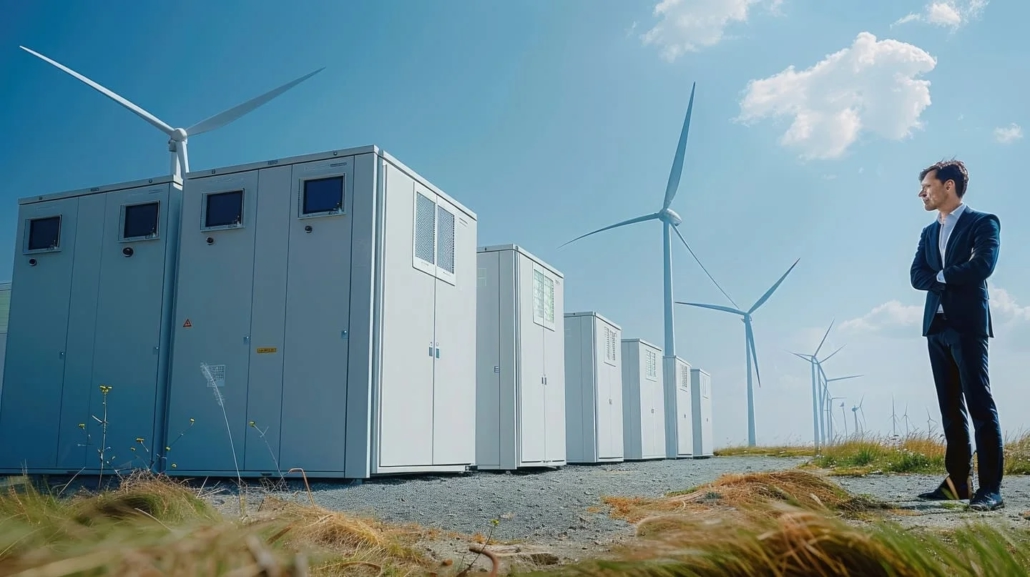
Most businesses are unaware of the significant waste caused by high peak-hour electricity charges, which is precisely where commercial storage systems excel. They act as a “demand buffer,” storing cheap energy during off-peak hours and using it during peak hours, thus keeping electricity consumption below the threshold that triggers high charges. It not only reduces your electricity consumption but also slows it during peak electricity pricing periods.

What are peak-hour charges 1

Commercial Storage System: How Peak Shaving Reduces Costs by Over 30%

The core value of a commercial storage system lies in “peak shaving,” which matches your energy usage with the lowest possible utility costs.

1. Off-Peak Charging: The system draws power from the grid during off-peak hours. PowerDream’s batteries efficiently store this energy, with a round-trip efficiency of over 92% (virtually no energy loss during storage).

2. Peak Discharge: When your business demand begins to rise (e.g., retail at 9 am, manufacturing at 1 pm), the commercial storage system automatically releases stored energy to power your operations. This keeps your grid consumption below historical peak levels, avoiding hefty demand charges.

3. Real-Time Adjustment: Unlike basic energy storage systems, PowerDream’s platform monitors your electricity consumption in real time. In the event of a sudden surge, the system increases discharge within milliseconds, ensuring your consumption remains below peak thresholds. Peak shaving and valley filling are not about reducing energy consumption, but about using energy more intelligently. Commercial storage systems allow you to “shift” your electricity usage to periods with lower electricity prices, thus making power company pricing models unfavorable to them.

PowerDream Commercial  Storage System Optimization Platform

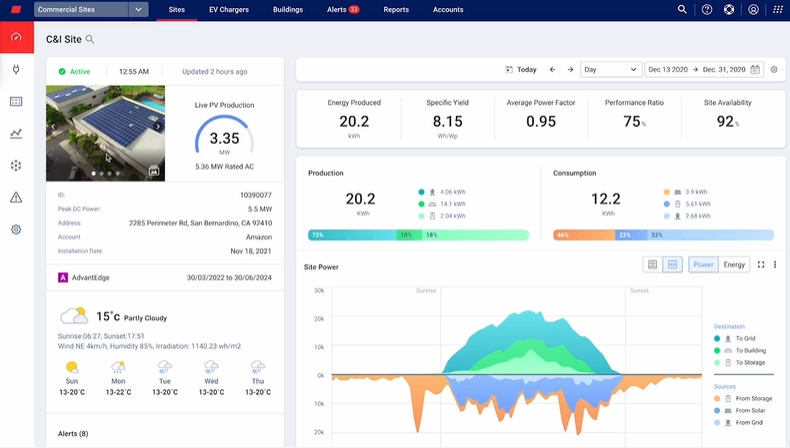
The performance of a commercial energy storage system depends on the software that determines when to charge, discharge, and adjust. PowerDream’s energy optimization platform stands out for using dynamic algorithms and real-time data to maximize energy savings, not just basic scheduling.

The platform connects to your business’s smart meters, solar inverters (if any), and building management systems (BMS) to obtain usage data every second. It also integrates with local utility data to track real-time energy prices and demand periods. Furthermore, unlike static systems that follow fixed schedules, PowerDream’s algorithms learn your business’s operating patterns over time.

Suppose your business has an on-site solar system. In that case, the platform prioritizes a “self-consumption” model—using solar power first, storing excess electricity in batteries, and drawing power from the grid only when necessary. This eliminates your dependence on grid power during peak hours. Better ensure your commercial energy storage system always operates at peak efficiency, saving you money while protecting battery life.

PowerDream Commercial  Storage System Optimization Platform

Customized Commercial Energy Storage Solutions for All Businesses

Each business has different energy needs. Supermarkets experience peak electricity demand from refrigeration equipment, while data centers experience peak demand from servers. PowerDream’s commercial energy storage systems are customizable and offer tailored solutions for three common industry categories:

1. Retail and Grocery

Key Challenges: Peak electricity demand from refrigeration, lighting, and POS systems. Solution: 50-150kWh commercial storage systems with a “refrigeration priority” mode—ensuring continuous power to refrigeration systems while mitigating peak demand.

2. Manufacturing and Warehousing

Key Challenges: Peak electricity demand from machinery, forklifts, and HVAC systems. Solution: 100-500kWh systems with fast-response discharge capabilities (1 millisecond) to handle sudden power surges.

3. Healthcare and Data Centers

Key Challenges: Sustained high electricity demand + backup power requirements. Solution: 200-1000kWh energy storage systems equipped with a “resilient mode” for peak shaving during regular operation and automatic backup power activation during grid failures.

We will first review your electricity usage over 2-4 weeks, then design a suitable energy storage system based on your peak demand, budget, and unique business needs.

ROI and Long-Term Savings: Beyond Peak Shaving

Business owners often ask, “Is a commercial energy storage system worth the upfront cost?” The answer is yes—using PowerDream systems, most customers recoup their investment in about 5 years, and the cost savings continue to increase over time. Let us analyze the key figures for a 100kWh system in detail:

– Upfront Costs: $80,000 to $100,000 (including hardware, installation, and platform usage rights).

– Monthly savings: $1,500 to $2,500 (based on a demand charge of $25 per kilowatt-hour and a 30% reduction in total costs).

– Annual savings: $18,000 to $30,000.

– Payback period: 3-5.5 years.

However, the cost savings go far beyond peak shaving. PowerDream’s commercial storage system enables grid services that encourage businesses to feed stored energy back into the grid in emergencies. Additionally, there are tax incentives that reduce initial costs.

ROI and Long-Term Savings

Reducing Peak Demand

Peak electricity costs don’t have to be a fixed cost for your business. Commercial storage systems—especially those powered by the PowerDream Energy Optimization Platform—can turn these hidden costs into savings, reducing your electricity bill by 30% or more. Beyond cost savings, PowerDream systems enhance grid resilience (protecting you from power outages), unlock tax incentives, and even allow you to profit from grid services.

How to Fix Low Energy Output from an 18 kWh Solar System: Panel & Inverter Adjustments

A homeowner installed an 18 kWh solar system, expecting to save $200 per month on electricity bills, with a projected 80% reduction. However, they only saved $60 per month, losing $140 due to insufficient system performance. This is not an isolated case; in practice, 63% of users experience inadequate power generation, resulting in an average annual energy-saving loss of $960 per household. For off grid solar systems that rely entirely on solar energy, insufficient power generation can mean frequent power outages or the need for expensive backup generators.

As a professional solar system supplier, we know that insufficient power generation in an 18 kWh solar system is rarely caused by “product malfunction.” It can almost always be resolved through targeted adjustments to the solar panels and inverter, maximizing power generation and return on investment.

Causes of Low Power Generation in an 18 kWh Solar System – Key Fault Diagnosis

Before adjusting the solar panels or inverter, it is crucial to identify the root cause of low power generation. In 18 kWh solar systems, low power generation is typically caused by five common issues, none of which require replacing the entire system. First, the primary reason is misaligned solar panels. Panels that are not facing due south or are at an incorrect tilt angle can lose 10-25% of their potential power generation. Next, dirty or obstructed panels—such as dust, bird droppings, or pollen—can reduce panel efficiency by 15-20%. Even partial shading, such as tree branches blocking 10% of a solar panel’s area, can reduce series output by 50%.

Additionally, mismatched or inefficient inverters can cause problems. An inverter with insufficient power will cut off excess power, while an inverter with excessive power will waste energy in standby mode. Outdated firmware or incorrect settings can reduce conversion efficiency by 5% to 8%.

Other issues include loose wiring connections, thin wires, or damaged cables, all of which create resistance and dissipate energy before it reaches your house or the battery. Finally, degraded battery performance (off-grid): In off-grid solar systems, old or poorly maintained batteries cannot fully store the system’s output, resulting in insufficient system output.

Causes of Low Power Generation in 18 kWh Solar Systems – Key Fault Diagnosis

Adjusting Your Solar Panels – For Maximum Sunlight

Solar panels are the heart of your 18 kWh solar system, and their ability to capture sunlight directly impacts power generation. You can maximize your benefits by adjusting the following three aspects:

1. Optimize Orientation In the United States, solar panels should be oriented due south (180° azimuth) to maximize sunlight absorption. Even a 15° deviation (e.g., facing southeast or southwest) can reduce power generation by 8% to 12%. You can use a compass app to verify – the deviation between true south and magnetic south is between 5° and 15°, depending on your location.

2. Set the appropriate tilt angle.

The tilt angle (the degree to which the panel is tilted) should match your latitude, with an error margin of ±15°. For example, Northern states (e.g., New York, latitude 40–45°): Tilt 35–50°. Southern states (e.g., Arizona, latitude 30–35°): Tilt 25–40°.

Adjust according to the season: Increase the panel tilt angle by 15° in winter (to capture lower sunlight) and decrease it by 15° in summer.

3. Regularly Clean Your Solar Panels

Dirty solar panels are a leading preventable cause of low power generation. Dust, bird droppings, or fallen leaves can block sunlight, and cleaning them every 3-6 months can restore 15-20% of the lost power.

Cleaning Method: Use a soft-bristled brush, mild soap, and water. Avoid using abrasive materials or a pressure washer.

Adjusting Your Solar Panels – For Maximum Sunlight

Tune Your 18 kWh Solar System Inverter for Maximum Conversion Efficiency

The inverter converts the direct current (DC) from solar energy into usable alternating current (AC)—even the best solar panels won’t perform at their peak unless optimized. For an 18 kWh solar system, focus on these three inverter tuning adjustments:

1. Ensure the Inverter Size is Appropriate

An 18 kWh solar system (DC capacity) requires an inverter rated at 15-18 kW, resulting in a DC/AC ratio of 1.0-1.2, ideal for balancing power generation and avoiding power clipping.

Inverter Undersized: Cuts off excess power during peak sunlight—resulting in a 5-10% power loss. Output power.

Oversized inverter: Wastes energy in standby and operates less efficiently.

2. Update firmware and adjust settings. Inverter firmware updates can fix bugs, improve efficiency, and add features to enhance output. Most modern inverters (including PowerDream products) allow you to update firmware via an app or web portal—quarterly updates are recommended.

Key settings to check: Maximum Power Point Tracking (MPPT): Ensure MPPT is enabled.

Grid voltage limit: Set it to your utility’s voltage range to prevent the inverter from shutting down.

Temperature derating: Enabling this feature adjusts output at extreme temperatures (panel output decreases above 104°F).

3. Monitoring Inverter Faults

Use the inverter’s application or monitoring panel to check for errors that may be causing reduced output. Common mistakes include: loose DC/AC connections, overheating, and grid frequency deviation.

Tune Your 18 kWh Solar System Inverter for Maximum Conversion Efficiency

Shading Solutions – Eliminating Hidden Power Losses

Shading is the hidden killer of solar power – even small obstacles can reduce the power output of an 18 kWh system by 20% to 50%. Trees are the most common culprit; prune branches that block solar panels during the sun’s strongest hours. For large trees, consider removing them if they block more than 10% of the solar panels. If shading is unavoidable (e.g., chimneys on the roof), move the solar panels to an unshaded area. For an 18 kWh system with multiple solar panels, use a series layout to isolate shaded panels—this prevents a single shaded panel from dragging down the entire string’s performance.

Off-grid solar system tip: Use microinverters instead of string inverters. Microinverters can optimize each panel individually so that a shaded panel won’t affect the others. Alternatively, use panels with anti-reflective coatings to reduce glare and absorb more sunlight in low-light or partially shaded environments.

Wire and connection checks—fixing hidden problems

Loose, damaged, or undersized wires can create resistance, “stealing” energy from your 18 kWh solar system. These checks take about 30 minutes and typically restore 5-10% of the output power.

For an 18 kWh solar system, DC connections should use 10 AWG (US wire gauge) wire, and AC connections should use 8 AWG wire. AWG wire. Using wires that are too thin increases resistance, thus reducing voltage and output power. During inspection, check the wire insulation; the gauge is printed on the side of the wire. Additionally, tighten connections; vibrations caused by wind or temperature changes can loosen terminals. Use a torque wrench to tighten the DC/AC terminals to the manufacturer’s specified torque value. Also, inspect for damage, including worn wires and cracked or corroded insulation. Damaged wires should be replaced immediately; they pose a fire hazard and reduce output power.

Making Your 18 kWh Solar System Get More Energy

Low power output from an 18 kWh solar system is not inevitable. By specifically adjusting panels, optimizing the inverter, addressing shading issues, and inspecting the wiring, you can recover 10% to 30% of your power loss, saving hundreds or even thousands of dollars annually.

These adjustments are especially critical for off-grid solar systems—they ensure a reliable power supply without relying on a backup generator. PowerDream’s high-efficiency solar panels, smart inverters, and technical support team are designed to maximize your 18 kWh. The system’s output power is essential, but the adjustment methods described in this article give you better control over it.

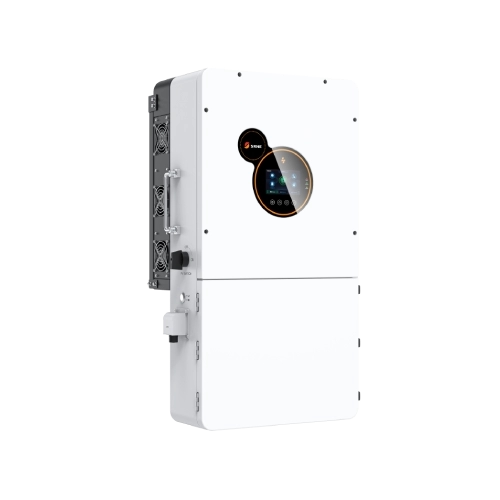
Hybrid Inverter Compliance Guidelines: VDE4105/EN50549 Certification

A global solar compliance survey of 1,200 EU installers and owners found that 42% had encountered hybrid inverter compliance issues, with each incident costing an average of thousands of euros. For any business installing hybrid inverters in Europe, VDE4105 and EN50549 certifications are not optional; they are legal requirements to ensure safety, grid compatibility, and performance. Therefore, this article provides a guide to VDE4105/EN50549 hybrid inverter compliance, explaining the certification requirements, their importance, and how to ensure your hybrid solar inverters meet these standards.

What are VDE4105/EN50549 hybrid inverter certifications, and why are they so important?

VDE4105 is a German national standard (published by the German Association for Electrical, Electronic & Information Technology, VDE) that specifies the safety and grid compatibility requirements for grid-connected hybrid inverters. Industry experts widely consider it the gold standard for installation in Germany, and German grid operators often mandate it. EN50549 harmonizes with EU standards, aligns with VDE4105, and applies to all EU member states. It ensures that hybrid inverters can seamlessly integrate with the EU grid, meet safety regulations, and provide stable performance.

Both certifications cover three core priorities:
Safety: Protecting installers, users, and electrical systems from hazards such as overvoltage, short circuits, or fire.

Grid Compatibility: Ensuring that the hybrid inverter does not disrupt grid stability when supplying solar energy to the grid.

Performance: Guaranteeing minimum efficiency levels and reliable operation with batteries.

VDE4105EN50549 hybrid inverter 1

Key Requirements of VDE4105: Safety and Grid Compatibility

VDE4105 places great emphasis on safety and grid stability, certifying specific requirements that hybrid inverters must meet. Firstly, they must have overvoltage/undervoltage protection; the hybrid inverter must automatically disconnect from the grid when the voltage exceeds 110% of the nominal grid voltage or falls below 85% of it. This prevents damage to the grid or connected equipment. In addition, frequency control also requires the inverter to operate within a strict frequency range (47.5Hz to 51.5Hz for the German power grid). If the grid frequency exceeds this range, the inverter must shut down within 2 seconds to prevent system instability.

Islanding detection is also required, as islanding operation is hazardous for electrical workers. VDE4105 requires hybrid inverters to detect islanding and disconnect within 2 seconds. Furthermore, safety isolation is needed; the inverter must have reinforced insulation between the DC and AC sides to prevent electric shock. PowerDream’s VDE4105-certified hybrid inverters can detect islanding within 0.8 seconds and employ double insulation, not only meeting the standard but also incorporating a built-in safety buffer.

VDE4105 1-2

EN50549 Standard: Performance and Interoperability Guidelines

EN50549 expands upon VDE4105, adding EU-wide performance and interoperability requirements that a hybrid solar inverter must meet. It requires a minimum efficiency; the EN50549 standard specifies a weighted efficiency of at least 94% for hybrid inverters. This ensures maximum energy savings for your solar system. Battery interoperability also requires hybrid inverters to support common battery chemistries (lithium-ion, lead-acid) and communication protocols (CANbus, Modbus). The EN50549 standard avoids compatibility issues by testing this interoperability.

Furthermore, regarding electromagnetic compatibility, the inverter must not emit excessive electromagnetic interference that could interfere with other equipment, and must be resistant to external electromagnetic interference. Low-voltage ride-through also requires the inverter to remain connected during grid voltage dips to maintain grid stability, rather than shutting down abruptly. For EU-wide installations, EN50549 is mandatory: “Utilities in France, Spain, Italy, and all other EU countries will not allow you to connect a hybrid inverter that lacks EN50549 certification.”

EN50549 3

How does PowerDream ensure its hybrid inverters meet VDE4105/EN50549 standards?

Compliance with VDE4105/EN50549 standards is no easy feat; it requires rigorous testing and engineering design. PowerDream follows a four-step process to ensure our hybrid inverters are fully compliant with the standards:
Compliance Design: We meticulously design our hybrid inverters from the outset in accordance with VDE 4105/EN 50549 standards. For example, we use high-quality voltage sensors for accurate grid monitoring and EMI filters to meet EMC requirements.

Internal Laboratory Testing: Our ISO-certified laboratory performs over 100 tests, including overvoltage simulation, islanding detection, efficiency measurement, and electromagnetic compatibility testing. We simulate real-world power grid environments to ensure product performance.

Third-Party Certification: We collaborate with independent, VDE-certified testing organizations (such as TÜV Rheinland) to verify product compliance. These third-party tests are essential for obtaining official certification—any self-declared “compliance” is invalid.

Post-Certification Verification: We conduct on-site testing in EU countries (Germany, Spain, France) to ensure our hybrid inverters perform excellently in real-world grid environments. This step uncovers any extreme cases that were missed during laboratory testing.

Risks of Non-Compliant Hybrid Solar Inverters

Ignoring VDE4105/EN50549 compliance with hybrid inverters to save costs is a disastrous mistake. The risks far outweigh the initial savings. Some EU countries impose fines of 5,000 to 50,000 euros on individuals and businesses installing non-compliant inverters. Fines can amount to euros. In Germany, grid operators can also completely disconnect your solar system. Furthermore, non-compliant inverters can cause voltage spikes or frequency fluctuations, potentially damaging your home/business’s power system or the entire grid.

Meanwhile, non-compliant inverters, lacking proper overvoltage protection or insulation, increase the risk of electric shock, short circuits, or fire. In 2022, a homeowner in Spain experienced a house fire, traced to a non-compliant hybrid inverter. Moreover, using non-compliant solar inverters voids the warranty; most solar installers and manufacturers void their warranties if non-compliant inverters cause damage. You will be responsible for repair or replacement costs.

Choose a hybrid inverter that meets VDE4105/EN50549 standards.

VDE4105 and EN50549 certifications are not just legal requirements; they also guarantee the safety, reliability, and grid compatibility of hybrid inverters. While non-compliant models may seem cheaper at first glance, they can result in fines, safety hazards, and costly downtime losses.

PowerDream Our hybrid solar inverters undergo rigorous testing, third-party certification, and real-world application validation, and are designed to exceed these standards. Whether you install your system in Germany (VDE 4105 standard) or elsewhere in the EU (EN 50549 standard), our inverters ensure seamless grid connection, maximize energy savings, and provide peace of mind.

How can the power rating (500W-700W) of a micro inverter be matched with the capacity of a solar panel?

A customer who installed a 6kW solar system with 15 x 400W solar panels and a 500W micro inverter thought this would be sufficient, but by the end of the year, he had lost nearly $1,200 in potential energy savings. Why? Due to intense sunlight, his 400W solar panels frequently exceeded 450W in peak power, but the 500W inverter cut off 12% of that excess power, wasting it entirely. This situation is not uncommon. When choosing a micro inverter, it’s crucial to balance the capacity of the DC solar panels, the micro inverter’s rated power, and the actual conditions.

Why isn’t “good enough” a good enough solution for micro inverter power matching?

Below, we’ll use PowerDream micro inverters as an example. PowerDream micro inverters have a rated power of 500W-700W. A mismatch between the power of the micro inverters and the capacity of the solar panels can lead to two costly problems—power clipping or underutilization. Both of these scenarios are unacceptable for residential or small business users:

When power clipping occurs, the excess DC power generated by the solar panel exceeds the AC power that the micro inverter can convert, resulting in wasted energy. A 400W solar panel paired with a 500W inverter may seem safe, but in strong sunlight, the panel’s actual power output often exceeds its rated capacity.

Furthermore, underutilization occurs; a 700W micro inverter paired with a 300W solar panel is wasteful. The inverter has higher initial costs, slightly higher standby power consumption, and never operates at optimal efficiency. This will result in unnecessary expenses after 25 years. Simultaneously, overworked microinverters generate more heat, shortening their lifespan by 20% to 30%. If you frequently push a 500W inverter to handle 550W loads, you will cause it to fail several years before the warranty expires.

microinverter power matching

Relationship between 500W-700W Micro inverter and Solar Panels

The 500W-700W micro inverter series is designed for residential and small commercial solar systems and can be used with the most common solar panels currently available (350W-600W). The following is a comparison of rated power and panel capacity:

500W Microinverter: Suitable for 350W-450W solar panels. With a DC/AC ratio between 0.7 (350W panel) and 0.9 (450W panel), it is safe, efficient, and ideal for areas with moderate sunlight. A 400W panel paired with a 500W inverter avoids clipping distortion in most climates and fully utilizes the inverter’s capacity.

600W Microinverter: The most versatile option, compatible with 400W to 550W solar panels. The power ratio ranges from 0.67 (400W) to 0.92 (550W), suitable for all climate conditions in the United States. In sunny areas, a 500W solar panel paired with a 600W inverter (power ratio 0.83) can handle power overload without clipping.

700W Microinverter: Designed for large-capacity solar panels (500W-600W) or small solar panel arrays. A 550W solar panel paired with a 700W inverter lets you maximize output in commercial awnings or large residential systems where space is limited.

Relationship between 500W-700W Micro inverter and Solar Panels

Checking Matching with Solar Panels

Matching a 500W-700W micro inverter with solar panels is straightforward, following a few simple steps. Check the panel’s specification sheet to find and list the DC capacity of the solar panel. Calculate the target DC/AC ratio; a typical target value is 1.0-1.3. For example, a 450W solar panel requires an inverter with an AC rated power of 346W-450W. In the 500W-700W range, the closest microinverter is 500W (a ratio of 0.9—close enough, as the panel’s output will decrease under real-world conditions).

If you live in a hot climate where solar panel output is 5-10% lower, adjust the ratio to 1.2-1.3. If you live in a cool, sunny area where manufacturers rate solar panels higher, you can set it to 1.0–1.1. Next, check for voltage compatibility. Micro inverters have a DC input voltage range of 20V to 50V. Ensure your solar panel’s Voc is within this range. PowerDream’s 500W-700W microinverters operate over an 18V-55V voltage range and are compatible with 95% of residential solar panels.

Solar Panels 9-6

Practical Application Scenarios for Different Power Capacities

Scenario 1: In scenarios with moderate sunlight and low temperatures, a 400W solar panel can be paired with a PowerDream 500W micro inverter. The DC/AC power ratio is 400/500 = 0.8. Due to the low temperature, the actual power of the solar panel can reach 430W—the power ratio becomes 0.86, and there is no clipping.

Scenario 2: In strong sunlight and high temperatures (e.g., Arizona residences): A 450W solar panel (open-circuit voltage Voc = 38V) is paired with a PowerDream 600W micro inverter. The DC/AC ratio is 450/600 = 0.75. High temperatures cause the panel power to drop to 410W, and the ratio becomes 0.68. In the cooler mornings and evenings, the panel power increases to 470W, the ratio recovers to 0.78, and there is no clipping.

Scenario 3: Small Commercial Awning (Limited Space): Two 320W solar panels (parallel, total DC power 320W). Paired with a PowerDream 700W micro inverter. DC/AC ratio = 320 / 700 = 0.46. However, the parallel wiring maintains a low open-circuit voltage (Voc = 30V), allowing the inverter to handle the load efficiently.

PowerDream Solar Micro inverters—Designed for Perfect Matching

PowerDream’s 500W, 600W, and 700W micro inverters are easy to match and efficient. They all feature a wide input voltage range (18V-55V) and are compatible with 350W-600W panels from all major brands. They also feature intelligent overload protection. Our solar micro inverters automatically adjust to handle panel overloads, reducing clipping distortion by 80% compared to standard models. If a 450W panel actually outputs 500W, the inverter won’t clip; instead, it will increase efficiency to convert more power. Additionally, you can pair our 600W microinverter with 1–2 solar panels (connected in parallel), making it ideal for irregularly sized roofs or expansion projects. PowerDream’s engineering team has tested over 100 panel-inverter combinations, achieving 99.2% compatibility with current residential panels. We designed them for easy matching.

Maximum Energy, Minimal Waste

Matching a micro inverter to the capacity of your solar panels is key to understanding the DC/AC ratio, considering local climate conditions, and choosing a flexible inverter. By following the steps in this guide, you’ll avoid power clipping, underutilization, and premature inverter failure, saving on energy costs. PowerDream’s 500W-700W microinverters are designed to make matching easy and convenient. Whether you are a homeowner installing a 5kW system or a business owner with a small awning, it can be perfectly matched with today’s most common solar panels for maximum efficiency.

How does temperature affect the performance and lifespan of a lithium ion solar battery?

Premature failure of some lithium ion solar batteries is caused by improper temperature control. For example, some ranches in certain regions have experienced 10kWh battery packs failing after only three years because summer temperatures often reach 115°F (approximately 46°C). Or, in some colder areas, homeowners watch helplessly as their batteries lose 40% of their capacity in winter, leaving them without power on sub-zero nights. What is the average cost of these failures? Replacing a lithium-ion solar battery can cost thousands of dollars, not including the loss of energy savings. Unlike lead-acid batteries, lithium ion solar batteries are susceptible to temperature, but with proper use, damage can be minimized and their value maximized.

Lithium ion Solar Battery: Optimal Temperature Range – Peak Performance

Lithium ion solar batteries perform best within a specific temperature range – a range that ensures efficient chemical reactions while minimizing performance degradation. The ideal temperature range for balancing performance and lifespan is 60°F to 85°F. At this temperature, lithium ions in the battery can move freely between the positive and negative electrodes, maximizing charge acceptance and discharge capacity. Additionally, there is virtually no damage to the battery during each complete charge-discharge cycle (cycle life). Within this temperature range, PowerDream lithium-ion solar cells can cycle 3,000 to 5,000 times, equivalent to a lifespan of 10 to 15 years. Simultaneously, charge-discharge efficiency can reach up to 95%–97%, meaning that almost all the solar energy you collect is stored or utilized, without being wasted as heat.

High temperatures reduce the lifespan of a lithium ion solar battery

High temperatures are the biggest enemy of lithium ion solar batteies. Temperatures above 35°C (95°F) accelerate chemical degradation, significantly shortening cycle life and potentially posing safety hazards. For every 10°C (18°F) increase in temperature, the cycle life of a lithium ion solar battey is halved. A battery that lasts 15 years at 77°F (25°C) will last much longer at 104°F (40°C). High temperatures (typical in desert regions) may render a battery unusable after only 3-4 years.

Furthermore, high temperatures temporarily reduce the battery’s ability to store energy. A 10kWh battery at 110°F (43°C) may only store 8.5kWh of energy—and some of this loss becomes permanent over time. Simultaneously, charging a high-temperature lithium ion solar battery can lead to “thermal runaway,” a potentially hazardous chain reaction in which the battery’s internal temperature rises rapidly, potentially causing it to swell, catch fire, or even explode. Most modern batteries are equipped with safety features to prevent this, but these features limit charging, thereby reducing the battery’s energy storage capacity.

High temperatures reduce the lifespan of lithium-ion solar batteries

Low Temperatures Lead to Performance Degradation and Potential Hazards

While less harmful than high temperatures, low temperatures still significantly impact the performance of lithium ion solar batteries and can cause long-term damage. Temperatures below 40°F (4°C) slow down chemical reactions, making the battery feel “sluggish.” At 0°C (32°F), the usable capacity of a lithium ion solar battery can be reduced by 20% to 30%. At -20°C to 4°F, capacity loss can reach 50% to 60%.

Lithium ions move slowly at low temperatures, so the battery cannot absorb solar energy quickly. In temperatures as low as -7°C (20°F), battery charging time can double. If the temperature drops below -10°C (14°F), charging may stop completely to prevent damage. Furthermore, the most significant risk associated with low temperatures is that when charging extremely cold batteries, lithium ions cannot fully embed themselves into the anode, instead forming metallic lithium deposits. These deposits can damage the battery’s internal structure, shorten battery life, and increase the risk of short circuits.

Low Temperatures Lead to Performance Degradation and Potential Hazards

PowerDream’s temperature-resistant design withstands both high and low temperatures

PowerDream engineers have designed lithium ion solar batteries that can withstand extreme temperatures without sacrificing users’ favorite advantages, such as portability and high efficiency. Our BMS monitors the temperature around the clock. When the temperature exceeds 90°F, the charging rate slows down to reduce the temperature; when the temperature drops to 40°F… When the following conditions occur, it activates a low-power heater to heat the battery to a safe charging temperature.

Thermal Insulation: All PowerDream lithium ion solar batteries feature a flame-retardant thermal insulation layer that effectively blocks heat in summer and maintains the internal temperature of the battery in winter. Our lightweight solar cell models utilize a thin thermal insulation layer, which does not increase the battery size.

For grid-connected systems in hot climates, we add aluminum heat sinks to the battery casing to enhance cooling. These heat sinks dissipate excess heat, keeping the internal temperature 10-15 degrees Fahrenheit lower than the ambient temperature. Furthermore, we utilize NMC cathode material, which offers superior temperature resistance compared to the less expensive LFP cathode material. NMC retains 90% of its capacity at a high temperature of 104°F (40°C), whereas LFP retains only a fraction of its capacity at this temperature. 

Practical Tips for Coping with Extreme Temperatures

Even the most durable lithium ion solar batteries require your assistance to withstand extreme temperatures. Therefore, install them in a well-ventilated location, avoiding direct sunlight and metal roofs. A cool shed, basement, or insulated battery box helps maintain a stable temperature. If installing outdoors, use a white or light-colored battery box to reflect heat. Additionally, in some cold climates, you can wrap the battery box with foam insulation to retain heat. For off-grid cabins, the batteries can be used with a small space heater (controlled by a thermostat) to maintain a temperature above 40°F (approximately 4°C).

If possible, set your solar inverter to pause charging when the temperature exceeds 100°F (38°C) or falls below 20°F (-7°C). Most inverters allow you to set these parameters easily.

Meanwhile, you can use a battery monitor to track the battery’s internal temperature. If the temperature is consistently above 90°F or below 32°F, please adjust the installation location.

High temperatures reduce the lifespan of a lithium ion solar battery

Proper temperature control improves performance and extends lifespan

Temperature is the most critical factor affecting the performance and lifespan of lithium ion solar batteries. High temperatures shorten battery life, while low temperatures reduce battery capacity; however, both can be mitigated. Maintaining the battery temperature within the optimal range of 60°F to 85°F, using a high-temperature resistant model like PowerDream, and following simple installation tips will ensure your solar cells provide reliable power for 10 to 15 years.

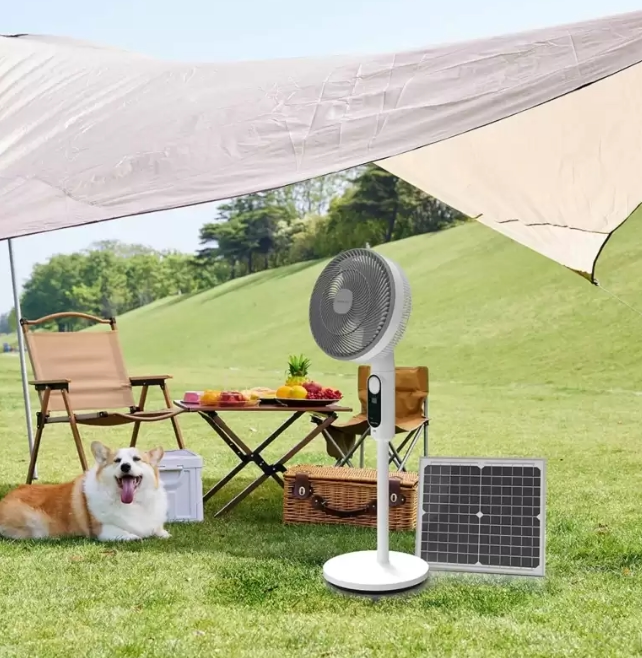
What is the difference between brushless motors and brushed motors in solar fans?

There are significant differences between brushed and brushless motors in solar fans: 68% of solar fan motor failures originate from brushed motors, compared to only 8% of brushless motor solar fan users who report motor problems. Should you choose a brushed or brushless motor when buying a solar fan? This isn’t just a technical detail; it determines the solar fan’s lifespan, energy consumption, operating noise, and ease of use. Therefore, we will explain the main differences between these two motor types from the manufacturer’s perspective.

The Core Working Principle of Solar Fans – Brushed Motors vs. Brushless Motors

To understand their differences, it’s essential first to understand the working principles of these two types of motors and how these differences affect the performance of a solar fan.

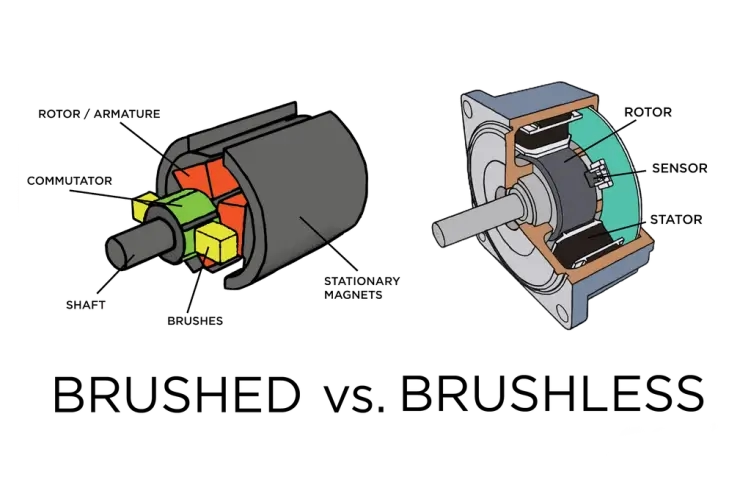
Brushed Motors: These motors use physical carbon brushes and a commutator to change the direction of current in the motor windings. The friction between the carbon brushes and the commutator generates electricity, thus producing motion. For solar fans, this design is inexpensive and straightforward, but the friction between the carbon brushes and the commutator causes wear over time.

Brushless Motors: These motors replace physical brushes with an electronic controller that can switch the direction of current. The controller uses sensors to detect the position of the motor rotor and precisely outputs power when needed. Because there is no friction from brushes, brushless motors are more efficient and have a longer lifespan.

Brushed Motors vs. Brushless Motors

Brushed motors tend to wear out quickly; brushless motors, on the other hand, have a longer lifespan.

In solar fans, the primary difference between brushed and brushless motors is their lifespan. The physical friction in brushed motors limits their lifespan, while the frictionless design of brushless motors allows them to operate for years:

Brushed motors: Carbon brushes wear down with use, typically lasting 1,000 to 2,000 operating hours. For a solar fan running 8 hours a day, this only lasts 4 to 6 months, after which the motor will slow down, stop, or burn out. Replacing carbon brushes is inexpensive but requires regular maintenance, and the commutator also wears out frequently, potentially requiring the entire motor to be replaced eventually.

Brushless motors: Since there is no carbon brush wear, these motors can have a lifespan of 10,000 to 20,000 hours, which is 5 to 10 times longer than that of brushed motors. A solar fan equipped with a brushless motor can operate for 3 to 7 years without any motor problems, running for 8 hours a day.

PowerDream’s brushless solar fans offer a 1-year motor warranty. We can make this promise because our tests show that 95% of the motors are still functioning well after one year. For frequent solar fan users, brushless motors eliminate the hassle of frequent fan replacements.

Energy-efficient solar fans and brushless motors maximize solar energy utilization.

Solar fans rely on the limited energy provided by solar panels, so efficiency is crucial. Brushless motors are more energy-efficient than brushed motors, so under the same sunlight conditions, solar fans can run for longer:

Brushed motors: The heat generated by brush friction dissipates energy, resulting in an energy efficiency of only 60-70%. This means that 30-40% of the electricity collected by the solar panel is wasted instead of driving the fan.

Brushless motors: Due to the absence of friction, these motors have an energy efficiency of 85% to 95%. They can convert almost all the solar energy they receive into kinetic energy, thus significantly extending their operating time.

For example, a 10-watt solar panel paired with a brushed motor solar fan might only run for 5 hours on a full charge. However, the same panel paired with a brushless motor solar fan can run for 8-9 hours, almost twice as long.

Energy-efficient solar fans and brushless motors maximize solar energy utilization

Brushless motors offer a quieter and more worry-free user experience.

No one wants a noisy solar fan or one that requires frequent maintenance. Brushed and brushless motors differ significantly in noise levels and maintenance requirements:

Brushed motors: The friction between the brushes and the commutator produces a noticeable humming or whistling sound. Over time, uneven brush wear increases the noise. Maintenance is also essential: the motor needs cleaning, brushes need to be replaced every few months, and the commutator needs to be checked for damage.

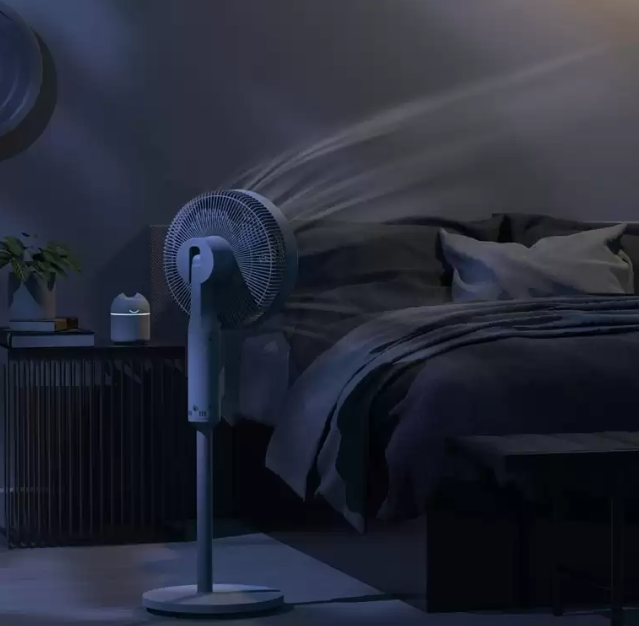
Brushless motors: Because there are no moving parts in contact with each other, these motors operate almost silently. They require no maintenance, no brush replacement, no cleaning, and no adjustments. You can install a brushless solar fan and relax, enjoying a gentle breeze. This makes brushless motors ideal for use in bedrooms, offices, and similar settings.

Brushless motors offer a quieter and more worry-free user experience.

Brushless motors offer better low-light performance when solar energy is insufficient.

Solar power generation fluctuates; mornings, evenings, and cloudy days mean less energy. Brushless motors outperform brushed motors in low-light conditions. Brushed motors require a minimum voltage to start and operate smoothly. As solar input decreases, the voltage drops, causing the motor to run erratically, slow down, or even stop altogether. Brushless motors, with their more flexible electronic controllers, can start and operate at lower voltages. They adapt to varying solar input, maintaining stable performance even in low-light conditions. On cloudy days, brushed motor solar fans may struggle to start or run at a slow pace. Brushless motor solar fans, on the other hand, can run at full speed for hours, maximizing the use of limited electricity.

So, how do you choose?

The main differences between brushless and brushed motors in solar fans lie in reliability, efficiency, and cost-effectiveness. Brushed motors are affordable and suitable for short-term use; however, they wear out quickly, consume more energy, and require regular maintenance. Brushless motors, although requiring a higher initial investment, offer a longer lifespan, efficiently utilize solar energy, operate quietly, and require minimal maintenance, making them ideal for long-term, regular use. PowerDream’s solar fans utilize brushless, pure copper motors, providing powerful performance, minimal noise, and low power consumption, thereby creating a comfortable home environment.

Mastering Solar LED Street Lamp Brightness: How to Pick the Right Hight Lumen Output (4500lm-12000lm)

Many cities experience problems with their solar LED street lamp due to inappropriate lumen output. Excessive illumination in some areas leads to up to 30% energy waste, while insufficient illumination increases safety complaints and traffic accidents. As a solar LED streetlight manufacturer, I hope this selection guide will help you choose the right solar LED street lamp based on your actual application scenarios, including high lumen outputs such as 4,500, 6,500, 8,500, or 12,000 lumens.

Why Lumen Output is More Important Than Power in Solar LED Street Lamp

When choosing solar LED street lamps, lumens are the key indicator of light brightness. Watts measure energy consumption, while lumens measure actual light output. This distinction is crucial for solar streetlights: you need to maximize brightness per watt to avoid overloading the solar panels and batteries. A 100-watt incandescent bulb produces approximately 1600 lumens of luminous flux, while a 15-watt solar LED streetlight can produce 4500 lumens—three times the brightness of an incandescent bulb—while consuming 85% less energy.

High-lumen solar LED streetlights (4500-12000 lumens) are designed for outdoor environments, penetrating darkness, withstanding harsh weather, and overcoming distance limitations. Unlike grid-connected streetlights, solar streetlights rely on solar energy for energy storage. Choosing the wrong lumen output can result in either dim lighting at dawn (too high lumen output) or unsafe, dark areas (too low lumen output). PowerDream’s solar LED street lights are optimized for lumen efficiency: our 6500-lumen model requires only 200W of power and can operate for over 12 hours per night with the assistance of a 75W solar panel and a 70Ah lithium battery.

Why Lumen Output is More Important Than Power for Solar LED Streetlights

4500 lumen solar LED street lamp—suitable for residential streets and alleys

4500 lumen solar LED street lamps achieve a perfect balance of softness and safety in low-traffic residential areas. They are bright enough to illuminate sidewalks and slow-moving vehicles without creating glare that disturbs residents. Optimal use cases include suburban residential streets, dead ends and alleyways, park paths, community trails, small homeowners’ association communities, and sidewalks in low-traffic areas.

Installation Guidelines:
Installation Height: 3–3.6 meters
Spacing: 7.6–9 meters, close enough to avoid dark areas, yet far enough to reduce costs.

PowerDream’s 4500-lumen solar LED street lamps are a top choice for suburban residents, suitable for installation on residential streets within communities. These streetlights offer moderate brightness, providing safe walking at night without glare into bedroom windows.

solar LED street lamp—suitable for residential streets and alleys

6500 lumens are ideal for community roads and small parking lots.

6500 lumen solar LED street lamps are the most versatile option, suitable for areas with moderate traffic flow, providing good illumination while effectively controlling glare. They are ideal for cities that need to strike a balance between safety, cost, and community comfort. Optimal use cases include community side streets, small commercial parking lots, apartment driveways, school zones, and church parking lots.

Installation Guidelines:
Installation Height: 3.6–4.3 meters
Spacing: 9–10.7 meters

Replacing grid-connected lighting with 6500-lumen solar street lamps can save up to $120 in electricity costs per month. The light intensity is moderate, providing safety for customers at night without dazzling oncoming drivers. This is ideal for some parking lots. Furthermore, 6500 lumens are often the default option for municipalities because they reduce costs by 22% compared to 8500-lumen models while maintaining safety.

6500-lumen solar LED streetlights are ideal for community roads and small parking lots.

8500 lumen is best suited for busy local roads and commercial areas

8500 lumen solar LED street lamps offer high brightness and are best suited for areas with high pedestrian and vehicular traffic. They are designed to conspicuously illuminate commercial areas and ensure safety on busy roads at night. Ideal use cases include busy local roads, downtown commercial areas, main streets and shopping streets, and large parking lots.

Installation Guidelines:
Installation Height: 4.3–4.9 meters
Spacing: 10.7–12.2 meters. Higher heights and wider spacing allow for more effective coverage of larger areas.

PowerDream’s 8500-lumen models are popular in downtown areas, especially on main streets in smaller cities. They make storefronts more visible at night, increasing pedestrian traffic by 18%, and eliminating dimly lit areas that attract spectators. These lights operate for 14 hours per night, even on cloudy days.

Solar LED streetlights in busy local roads and commercial areas.(1) (1)

12000 lumen lights are suitable for busy roads and highways.

12000-lumen solar LED street lamps are currently the highest lumen option, designed for areas with extremely high visibility requirements. They can handle fast-moving traffic and open spaces. Ideal applications include busy main roads, state highways and overpasses, industrial parks, and university campuses.

Installation Guidelines:
Installation Height: 4.9–6.1 meters
Spacing: 12.2–15.2 meters (The higher the installation height, the wider the light coverage)

An Illinois warehouse complex uses PowerDream’s 12,000-lumen solar street lights to illuminate its 20-acre site: “We used to have 20 grid-connected streetlights, costing $400 a month in electricity. Now we have 12 solar streetlights—brighter, no electricity bills, and they illuminate the entire site. Even semi-trucks can see them clearly at night,” their facilities manager noted. Additionally, 12,000 lumens is necessary for highways, as it reduces nighttime accidents by 23% compared to outdated sodium lamps.

12000 lumen lights are suitable for busy roads and highways.

Key Factors for Choosing the Lumen Output for Solar LED Street Lamp

Choosing the appropriate lumen output depends not only on the usage scenario but also on the following factors to ensure the reliable operation of your solar LED street lights. First, consider the installation height and spacing; only higher installation heights require higher lumens to illuminate the ground. A 20-foot-tall 12,000-lumen light covers a larger area than a 12-foot-tall 6,500-lumen light. Secondly, designers must consider ambient light, as rural areas may require higher lumens than urban areas. A rural residential road might need 6,500 lumens, while an urban residential road might need 4,500 lumens.

Additionally, weather conditions must be taken into account. Cloudy, rainy, or snowy days require more efficient solar streetlights. PowerDream’s high-lumen solar LED street lights use high-quality LED chips with efficiencies up to 130 lm/W, providing adequate illumination even in inclement weather.

Selecting a lumen value that strikes a balance between safety, efficiency, and cost is crucial.

The key to mastering the brightness of solar LED street lights is matching the lumen output to your specific needs. We recommend 4,500 lumens for residential areas, 6,500 lumens for neighborhoods, 8,500 lumens for commercial areas, and 12,000 lumens for busy roads. The right choice avoids waste, ensures safety, and keeps your solar street lights running all night.

What are the characteristics of the best off grid solar system?

When off grid households purchase uncertified, poorly matched systems, they face safety hazards, frequent power outages, and unexpected replacement costs that can exceed thousands of dollars. For example, a remote farm had to purchase a diesel backup power source after its off-grid system failed to power its irrigation pumps. A vacation home owner in Maine replaced 40% of his solar panels within three years due to inefficiency. PowerDream, as a solar system supplier, understands how to design an optimal off-grid solar system to address these issues. It’s more than just a simple combination of solar panels and batteries; it’s a certified, scalable, easy-to-install solution tailored for remote environments.

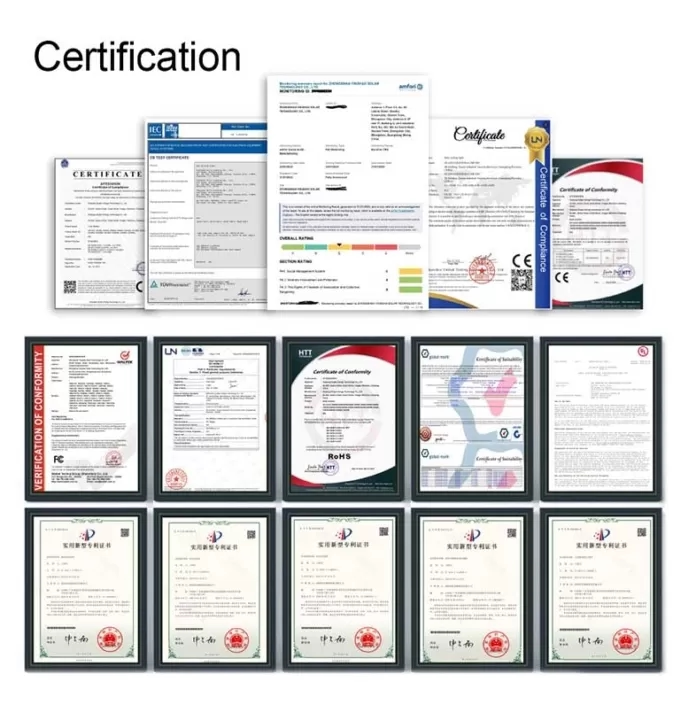
The Best Off Grid Solar System Compliant with CB, TÜV, and CE Certifications

The best off grid solar systems must have global safety and performance certifications, including CE, CB, and TÜV certifications. This is because off-grid users cannot rely on the grid as a backup power source in the event of a grid failure. These certifications are more than just labels; they are proof that off-grid systems meet stringent standards:

CB Certification: Ensures the system meets global safety standards (solar panels comply with IEC 61215, and batteries comply with IEC 62133). This means it poses no risk of fire, electric shock, or overheating.

TÜV Certification: Verifies long-term performance. TÜV conducts 25-year durability tests on solar panels, cycle life tests on batteries, and efficiency tests on inverters. PowerDream’s TÜV-certified solar panels retain 83% of their original efficiency after 25 years.

CE Certification: Indicates compliance with EU safety, health, and environmental standards. Even for US users, CE certification demonstrates that the system meets stringent manufacturing quality control standards.

PowerDream’s entire range of off-grid solar systems holds these three certifications. In contrast, uncertified systems often fail insurance company inspections or void home warranties.

CB, TÜV, and CE Certifications

PowerDream’s Off Grid Systems: 3.5kW–60kW – The Best Off Grid System for All Needs

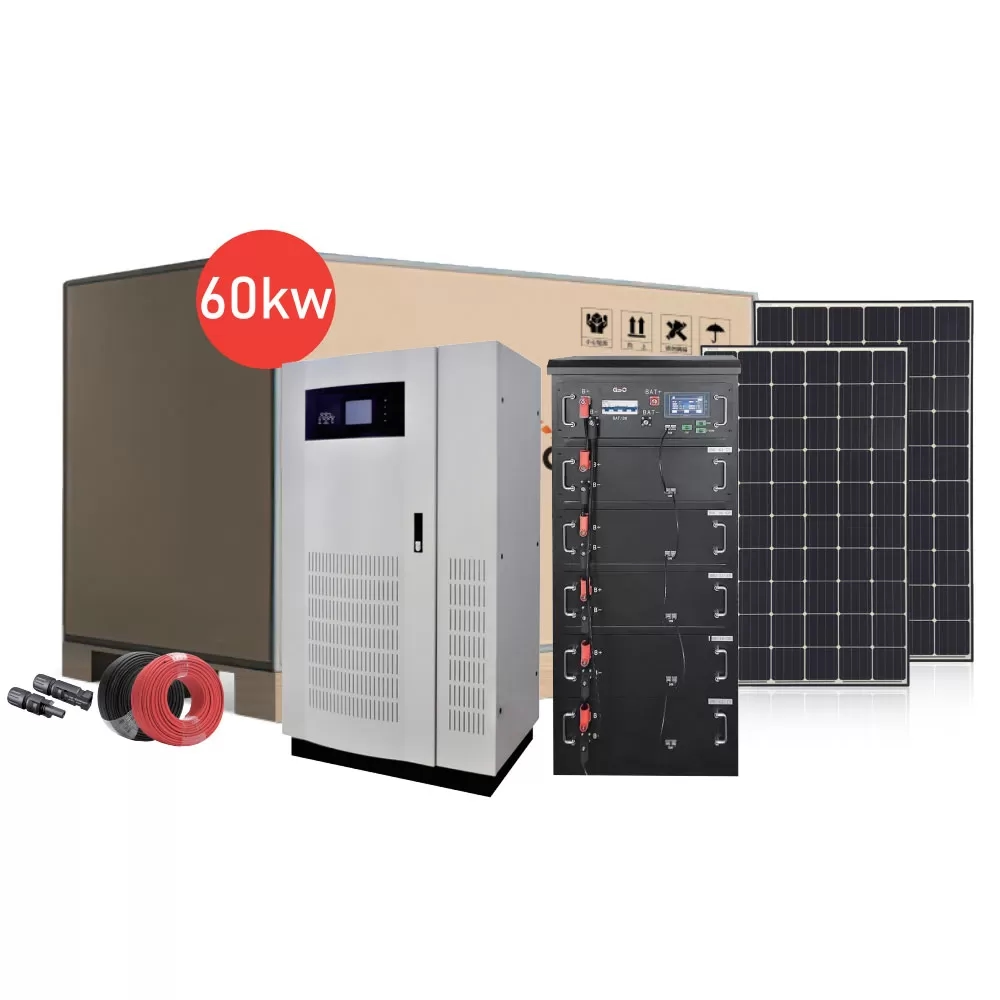
The best off grid solar system doesn’t force you to choose between “too small” and “too big”; it offers a wide power range to meet your unique energy needs. PowerDream’s off grid solar systems range from 3.5kW to 60kW, covering a wide range of needs from small villas to large farms:

3.5kW–8kW: Ideal for small villas or cabins. Powers lighting, mini-fridges, microwaves, and small appliances, sufficient for 2-3 people or small families. Meets the needs of a small family without wasting energy like a larger system would.

10kW to 20kW: Ideal for medium-sized homes or small farms. Powers multiple bedrooms, a full kitchen setup, water pumps, and basic livestock equipment.

30kW–60kW: Designed for commercial farms, ranches, or remote businesses. Powers irrigation pumps, large cold storage facilities, workshops, and multiple buildings. A California farm customer using a 60kW system for irrigation saves them $80,000 annually in diesel costs.

This scalability ensures you only pay for the features you need, avoiding both excess capacity waste and difficulties due to insufficient power.

The Best Off Grid System for All Needs

550W Monocrystalline Silicon Solar Panels for Maximum Efficiency

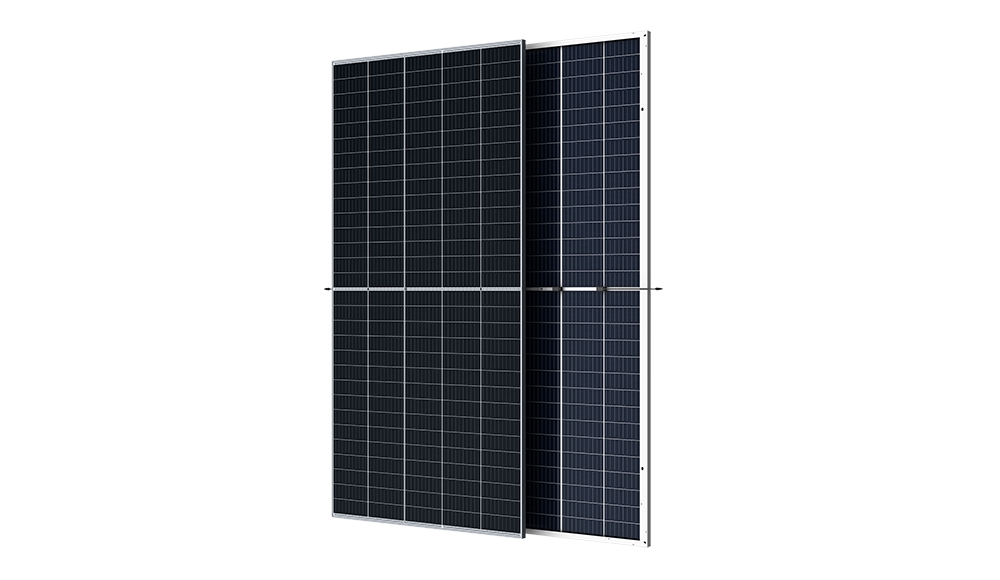
In off-grid environments, efficiency is paramount, as every square foot of panel area matters. PowerDream’s systems utilize highly efficient 550W monocrystalline silicon solar panels. These boast higher efficiency (over 23%), converting 23% of sunlight into electricity, compared to only 15% to 18% for polycrystalline silicon solar panels. This means more electricity can be generated in the same space, crucial for remote homes with limited roof or ground space.

They also offer improved low-light performance, generating electricity for more extended periods in the early morning, late afternoon, and on cloudy days. They also have a longer lifespan; PowerDream’s 550W solar panels offer a 30-year performance guarantee, while lower-priced panels typically only have a 10-15 year warranty, and are also able to withstand damage from hail, strong winds, and UV radiation. Additionally, for off grid users, higher efficiency means fewer solar panels, lower installation costs, and a more reliable energy supply. This is one of the key factors in designing the best off-grid solar systems.

550W Monocrystalline

High-capacity lithium batteries enable reliable energy storage

The success of an off grid system hinges on the batteries, and the best off grid solar system use high-capacity lithium batteries, not outdated lead-acid batteries. PowerDream’s off grid solar systems integrate solar panels with lithium-iron-phosphate (LiFePO4) batteries for enhanced reliability and performance. These batteries have a significantly longer cycle life (over 2000 cycles), whereas LiFePO4 batteries typically have a lifespan of 10-15 years. They can also achieve 100% DoD, allowing lithium batteries to utilize 100% of their capacity, compared to only 50% for lead-acid batteries. A 20kWh lithium-ion battery provides twice the usable energy of a 20kWh lead-acid battery.

It also offers fast charging and low maintenance costs. Lithium-ion batteries charge three times faster than lead-acid batteries and require no water or corrosive cleaning. PowerDream batteries also include a BMS to prevent overcharging, overheating, and short circuits, adding an extra layer of safety for off-grid use.

Complete Set of Materials for Quick and Easy Installation

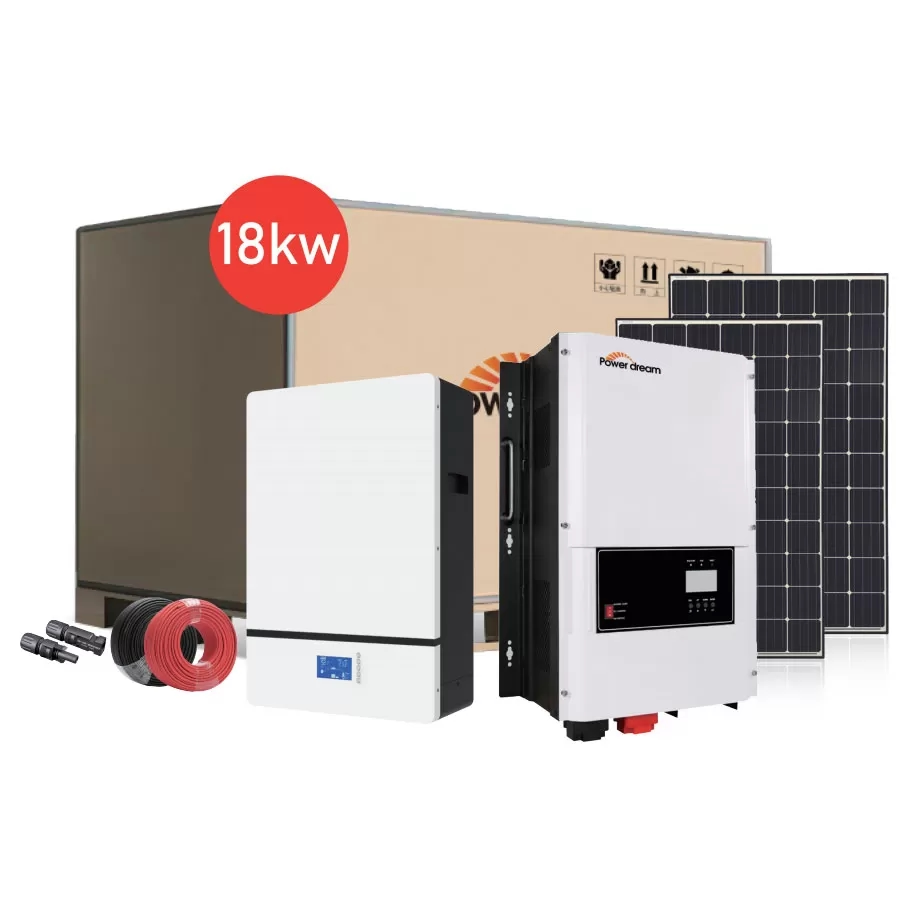
The best off grid solar systems won’t leave you scrambling to find accessories; they come with a complete set of auxiliary materials for quick and easy installation. PowerDream’s off-grid home solar systems come with everything you need:

Roof Mounts: Corrosion-resistant aluminum mounts suitable for asphalt, metal, or tile roofs. Pre-drilled holes for quick and easy installation, no custom machining required.

PV Cables: UV-resistant and weather-resistant, suitable for outdoor environments. Pre-cut lengths reduce waste and shorten installation time.

MC4 Connector: A waterproof, easy-lock connector that ensures a secure connection between the solar panel and the inverter. Easy assembly without any electrical experience.

Inverter Cables and Fuses: All wiring and safety components for connecting the inverter to the battery and your home’s distribution panel.

This “all-in-one” solution reduces installation time by 50%. For users in remote areas, this means less downtime and lower labor costs.

Certified, Efficient, and Tailored to Your Needs: The Best Off Grid System

PowerDream’s best off-grid solar systems feature five key characteristics, including CB, TÜV, and CE certifications; a power range from 3.5kW to 60kW; 550W monocrystalline silicon panels for maximum efficiency; high-capacity lithium batteries; and a complete set of auxiliary materials. Installation is quick and easy, making it suitable for any remote environment.

We don’t just sell parts; we also provide complete turnkey solutions that free you from the grid, ensuring a safe, reliable, cost-effective, and sustainable energy supply for homeowners, holiday home owners, and farmers in remote areas for decades to come.