How do off grid solar power system help households save on electricity bills?

As electricity prices continue to rise in different parts of the world, households of all types are constantly looking for ways to reduce their energy consumption and lower their monthly bills. One of today’s most effective solutions to achieve this goal is using an off grid solar power system. These systems provide reliable and sustainable energy that can reduce or eliminate dependence on the grid, reduce electricity costs and provide long-term savings. We will also explore how off-grid solar power systems can help households save on electricity bills. We will also look at the components of these systems, their advantages, and how to optimize them to maximize energy savings.

Grid Solar Power System and How They Work

Off grid solar power systems are self-sufficient energy solutions that operate independently of the public power grid. These systems use solar panels to capture solar energy and convert it into electricity, which is then stored in batteries at night or on cloudy days without sunlight.

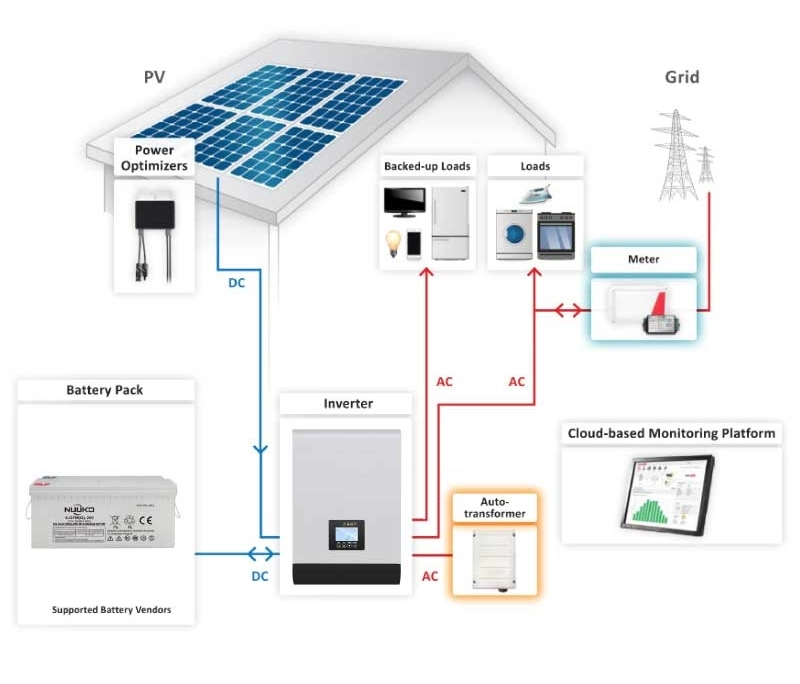
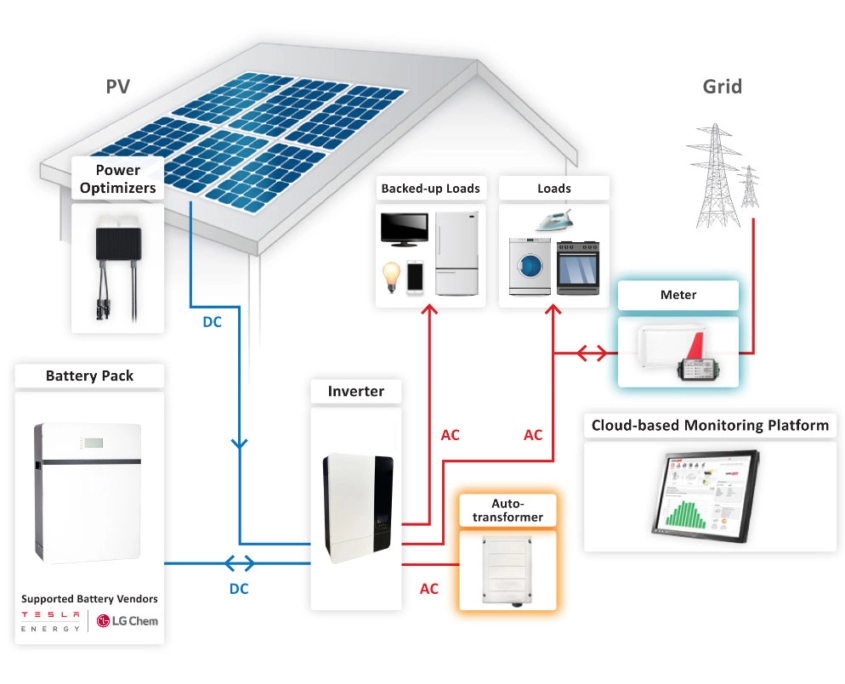
Unlike on grid solar systems, off-grid solar systems are completely autonomous. This means that once the system is installed and running, homeowners can use the solar energy generated by their system without purchasing electricity from the utility company. This dramatically reduces their dependence on the grid and lowers their monthly electricity bills. Generally speaking, off-grid systems consist of solar panels, charge controllers, batteries, and inverters. Solar panels collect sunlight and convert it to DC, which is then stored in a battery. An inverter converts the DC to AC, which is the electricity most household appliances need. Households can reduce their energy costs by generating and storing their electricity.
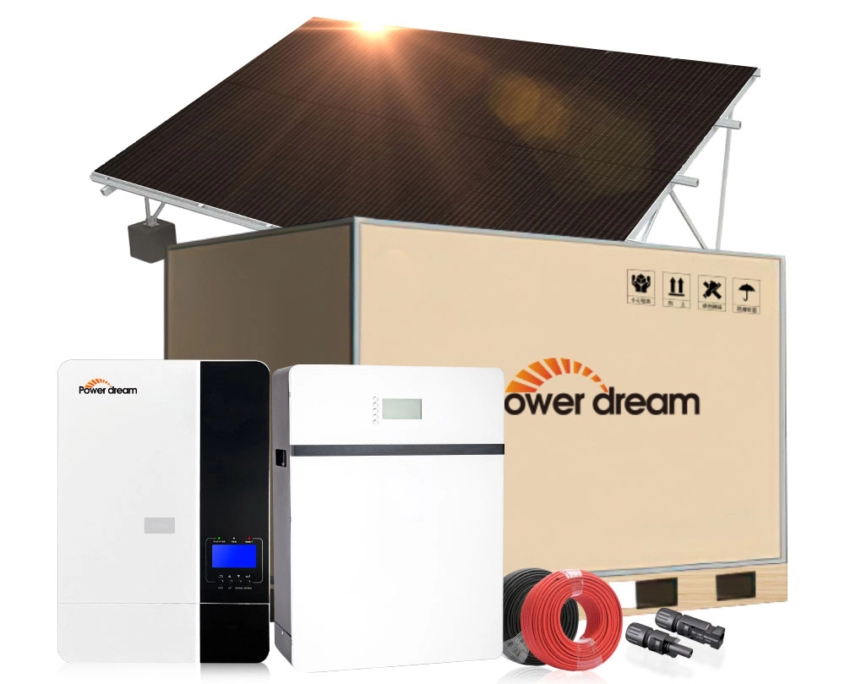
10kW off grid home solar system 1-2

Reduce Energy Consumption with Off Grid Solar Power System

Because off grid solar power systems generate electricity, homeowners can use solar energy to operate appliances, lights, and other appliances without relying on grid power. The household’s energy depends on the size of the off-grid solar power system and how well it is optimized. Larger systems, with more solar panels and storage capacity, can power more appliances, reducing the need to draw electricity from the grid. For example, a household can use the energy generated by solar panels to power lighting, heating, cooling, refrigerators, and even electric vehicles. By reducing their reliance on grid power, homeowners can reduce their electricity bills and lower the overall cost of energy consumption. In addition, as more efficient and innovative solar technologies become available, off grid solar power systems continue to offer more significant energy production potential.
off grid solar power system 1-3

Use Battery Storage to Maximize Solar Energy Use

When the sun is shining during the day, solar panels can generate more electricity than a household consumes. Without a battery storage system, this excess power would go to waste. However, homeowners can store this excess power with batteries and use it when the sun is not shining. This energy storage feature allows homeowners to optimize their off grid solar power systems, ensuring that solar power is available even when not generating electricity. By using energy storage during peak hours, homeowners can avoid relying on grid power and reduce their electricity consumption. Over time, this can result in significant savings on monthly utility bills. To maximize cost savings, modern battery technologies such as lithium-ion batteries are more efficient, have longer lifespans, and have greater storage capacity.
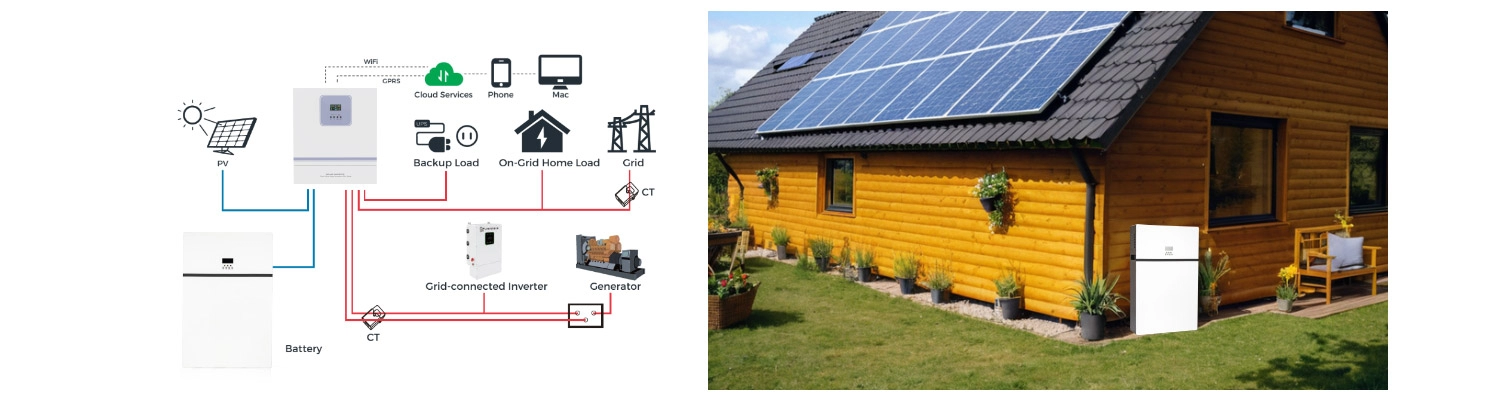
Use Battery Storage to Maximize Solar Energy Use

Save on Monthly Electricity Bills

The most significant benefit is the potential for substantial savings on monthly electricity bills. Homeowners can reduce or completely eliminate their reliance on the public grid by generating and storing their own electricity. This directly lowers electricity costs because the energy generated by the solar panels replaces energy generally purchased from the utility company. While the initial investment in an off-grid solar power system can be significant, the savings on electricity bills in the long run make it a worthwhile investment. In many cases, homeowners can recoup the cost of their solar system in a few years through reduced energy bills. In areas where electricity costs are high or where power outages are common, the savings potential of off grid solar power systems is even more significant.

Installation Costs and Long-Term Return on Investment

While off grid solar power systems can significantly reduce electricity bills over the long term, their installation costs depend on factors such as system size, battery capacity, and the quality of components used.

However, an off grid solar power system’s return on investment (ROI) can be very significant. The savings on electricity bills combined with incentives such as tax credits or rebates can significantly reduce the initial investment in the long term. In many cases, homeowners can expect to recoup the cost of the system within 5 to 10 years, after which they will enjoy free electricity for the remainder of the system’s life. The payback period can vary depending on energy consumption, local electricity prices, and available incentives, but generally, the long-term savings far outweigh the initial cost.

Impact on Home Energy Costs

Off grid solar power systems offer a powerful solution for homes looking to save money on their electricity bills. Homeowners can reduce or eliminate their reliance on the grid by generating and storing their electricity, saving significantly on monthly energy costs. While the initial installation cost of an off grid solar system can be high, the long-term cost savings and return on investment make it an option worth considering for many homes.
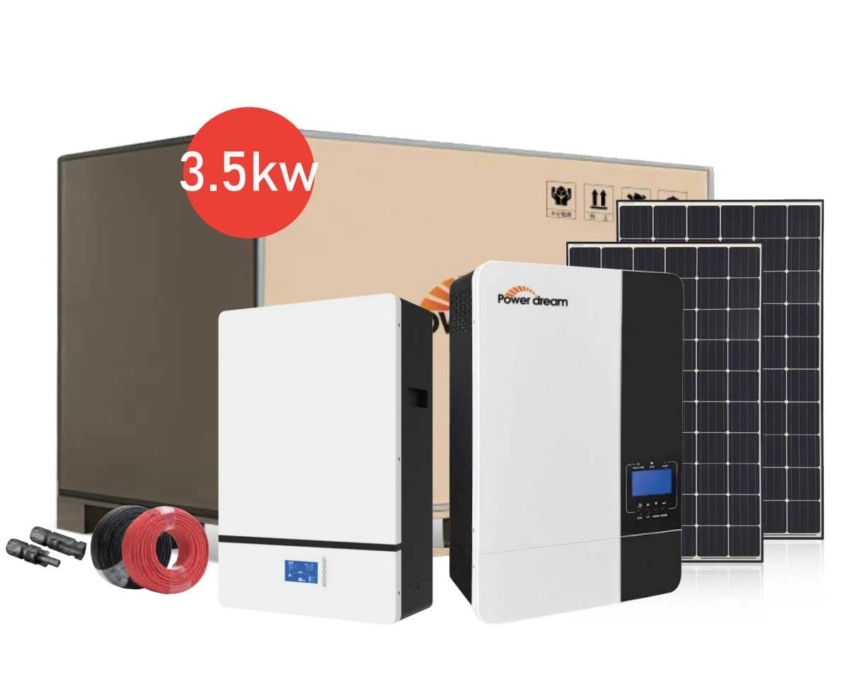
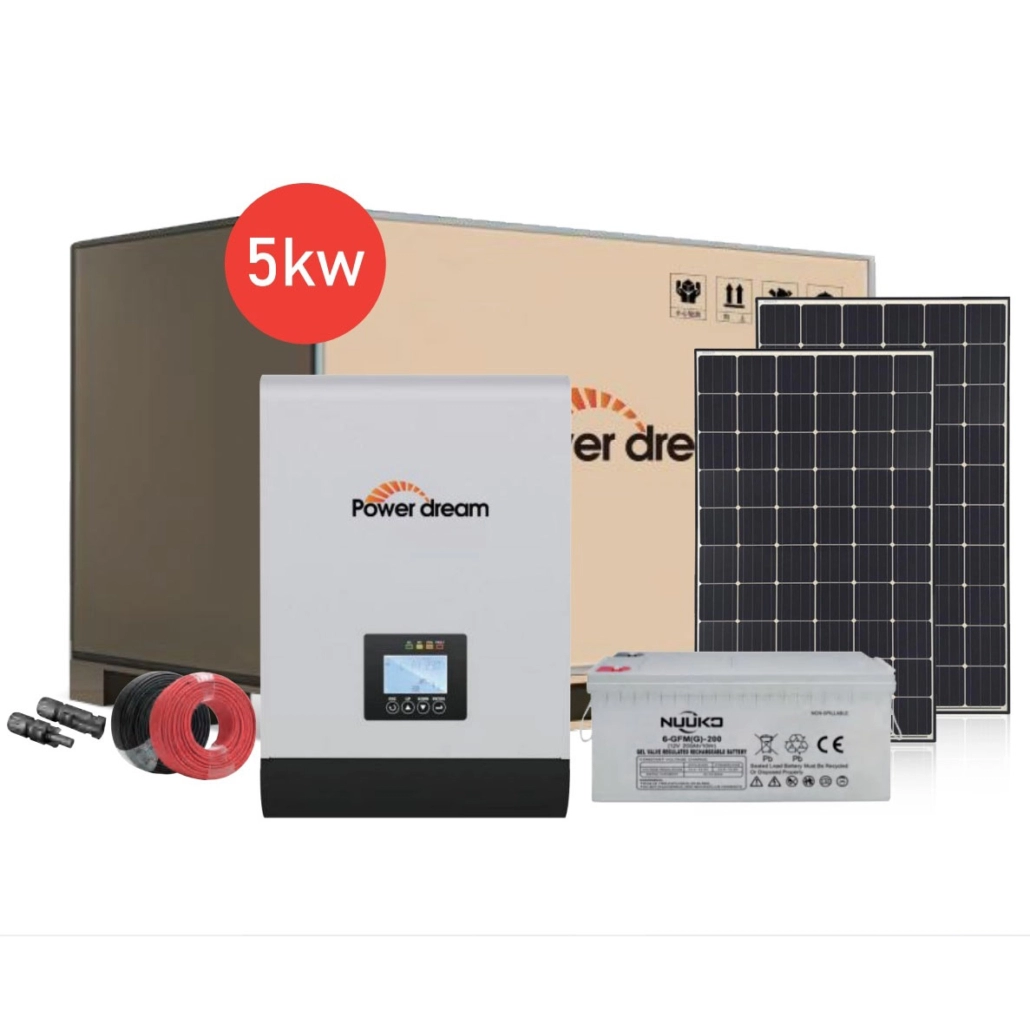
Solving residential energy problems with off grid home solar system

As more homeowners worldwide seek ways to reduce their reliance on the public grid, off grid home solar system is an effective and sustainable solution to address energy issues for all types of homes. Whether you live in a small, medium, or large home, the versatility and scalability of off grid solar systems can provide you with the energy independence you need while reducing energy costs and your carbon footprint. From tiny homes with minimal energy needs to large homes that require much electricity, BARANA has a wide variety of solar solutions to choose from that can not only help homeowners meet their energy needs but also provide additional benefits. In this article, we will share how to solve energy problems for different home-size types and how to tailor them to the unique needs of various residential environments.

How can off-grid home solar systems meet the energy needs of tiny homes?

We recommend homeowners adopt 3kW off grid home solar systems for tiny homes with relatively low energy consumption. These systems are designed to provide enough power for everyday household appliances such as lighting, refrigerators, washing machines, and heating. In urban or suburban areas where space is limited, the compact size of the 3kW off grid solar system makes it an efficient and affordable off-grid energy solution.

A 3kW off grid solar system typically consists of 6 solar panels, a core kit for solar arrays and off-grid inverters, and other accessories. It ensures that the energy needs of a small family are met. In addition, the battery storage component of the system allows homeowners to store excess energy generated during the day for use at night or on cloudy days, ensuring a constant supply of electricity without a grid connection. In addition to providing energy independence, a 3kW off grid home solar system can also help homeowners significantly reduce utility bills, minimizing dependence on the public grid. At the same time, the process of a 3kW off grid solar system is relatively simple and requires low maintenance.

off grid home solar system 1

Off grid home solar system for medium-sized homes

As the size of a house increases, its energy needs also increase. For medium-sized houses with relatively high energy consumption, a 5kW-8kW off grid home solar system is a more suitable choice. The system can power a home or residence with 7-10 sets of household appliances (including refrigerators, air conditioners, and home entertainment systems) without compromising efficiency or sustainability.

5kW-8kW off grid home solar systems work similarly to the smaller 3kW systems but provide more power through an expanded solar panel array and a larger battery bank. The larger capacity ensures that you can easily power your home appliances and devices while remaining independent of the grid. The main advantage is the balance between cost, efficiency, and space requirements. Although it is more significant than a 3kW system, it is still compact enough for a residential environment and does not take up space. In addition, the additional power generated by the more significant solar array allows for more extensive battery storage.

off grid home solar system 1

Meeting the energy needs of large homes

For large homes or homes with very high energy consumption, 10kW or more off grid home solar systems are the most effective solution. They can power 12-15 appliances or even multiple appliances and meet the power needs of homes that run a large number of appliances at the same time. Whether you have multiple bathrooms with electric heating or a complete set of kitchen appliances, a 10kW off grid system ensures that you have the power you need without connecting to the grid.

The 10kW off grid home solar system consists of a 20-panel solar panel array, large-capacity battery storage, and smart inverters. The increased system capacity also means that homeowners can store more energy for off-peak use. The added smart inverter can seamlessly switch between using stored solar energy and obtaining energy from the grid, allowing you to connect to the utility grid when necessary while being independent of energy sources for more flexibility.

10kW off grid home solar system 1-2


The role of smart inverters

One of the key innovations in BARANA’s off grid home solar system technology is the integration of smart inverters. Taking the 10kW off grid system as an example, the addition of smart inverters enables homeowners to connect to the grid when necessary, providing additional flexibility and peace of mind.

Smart inverters can adjust to fluctuations in energy demand, thereby monitoring and controlling electricity consumption. These inverters come with communication functions that enable real-time data transmission between the solar system and the grid, allowing efficient load balancing and energy distribution. They not only provide grid connection but also ensure seamless transitions between off-grid and grid-connected modes. Smart inverters are of great value, especially for large homes with highly variable energy needs. It increases the flexibility of the system and ensures that homeowners always have access to reliable and affordable electricity.

Economic Advantages of Off-Grid Solar Systems

In addition to the environmental benefits of using off grid solar systems for utility, residential, and commercial applications, there are significant economic advantages. By investing in solar energy, homeowners can significantly reduce their reliance on the public grid, lower their electricity bills, and reduce long-term energy costs. Regardless of the kW of the solar system you use, each option provides a path to greater energy independence. That economic benefit is a reduction in monthly utility bills. In many areas, electricity prices can fluctuate, making it difficult for homeowners to predict their energy expenses. With a solar home, you make energy costs more predictable by relying on renewable energy, and once you install the system, energy costs become essentially free. Over time, you can recoup the initial investment in an off-grid home solar system through savings on utility bills.

Economic Advantages of Off-Grid Solar Systems

Helping Homes Achieve Energy Independence

Whether you choose a 3kW off grid home solar system for a small home, a 5kW-8kW system for a medium-sized home, or a 10kW system for a large house, each system offers customized benefits for different energy needs. The integration of smart inverters and the ability to connect to the grid when needed make these systems flexible and reliable, ensuring homeowners always have access to the power they need.

Free professional installation guidance: How to install solar panel at home?

How to Install Solar Panels at Home

Installing solar panels at home is a great way to reduce your reliance on traditional energy sources, lower your energy bills, and contribute to a greener environment. While it may seem like a complex task, with the right information and some basic DIY skills, you can successfully install solar panels on your own. Here’s a step-by-step guide on how to install solar panels at home.

Step 1: Determine Your Energy Needs (how to install solar panel at home)

Before you begin, it’s important to assess your household’s energy needs. Consider your electricity usage, the number of panels you’ll need, and the amount of sunlight your roof receives. This information will help you determine the size and type of solar panel system you should purchase.

Step 2: Choose a Suitable Location

Select a clear, unobstructed area on your roof with good sun exposure. Avoid shading from trees, chimneys, or other obstacles. The roof should also be strong enough to support the weight of the panels and installation hardware.

how to install solar panel at home

Step 3: Purchase Your Solar Panel System

Once you have determined your energy needs and chosen a suitable location, it’s time to purchase your solar panel system. Consider factors such as efficiency, durability, and warranty when selecting your panels. Additionally, you’ll need to purchase mounting hardware, inverters, cables, and other components to complete the installation.

Step 4: Prepare Your Roof (how to install solar panel at home)

Before installing the panels, make sure your roof is clean and free of debris. Remove any loose shingles or damaged areas. You may also need to install mounting brackets or rails on your roof to support the panels.

Step 5: Install the Solar Panels

Carefully lift each panel and position it on the mounting brackets or rails. Secure the panels in place using the provided hardware. Make sure to follow the manufacturer’s instructions for proper installation.

Step 6: Connect the Wiring (how to install solar panel at home)

Connect the solar panels to the inverter using the provided cables. Ensure all connections are tight and secure to prevent any potential electrical issues.

Step 7: Install the Inverter

Mount the inverter in a suitable location, such as an outdoor wall or utility box. Connect the inverter to the solar panels and your home’s electrical system. Follow the manufacturer’s instructions for proper installation and wiring. (how to install solar panel at home)

Step 8: Test and Inspect

Once all the components are installed, turn on the system and test it to ensure it’s working properly. Monitor the system’s performance for a few days to ensure there are no issues. If any problems arise, consult the manufacturer’s documentation or contact a professional for assistance.

Step 9: Enjoy the Benefits (how to install solar panel at home)

Congratulations! You’ve successfully installed solar panels at home. Now you can enjoy the benefits of renewable energy, including lower energy bills, a reduced carbon footprint, and increased energy independence.

Remember, safety is always the most important consideration when working with electricity and rooftops. If you’re not confident in your ability to install solar panels safely, consider hiring a professional installer to handle the job. (how to install solar panel at home)

Solar Energy System Industry Trends Analysis for 2024

As we enter 2024, the solar energy system industry continues to evolve, driven by technological advancements, policy incentives, and growing global demand for clean and renewable energy sources. Here are some key trends that are shaping the solar industry this year.
Technology Innovation and Efficiency Gains: The solar industry is witnessing significant improvements in photovoltaic (PV) cell efficiency, thanks to advancements in material science and manufacturing processes. Technologies such as TOPCon, HJT, and Perovskite are emerging as promising candidates for achieving higher energy conversion efficiencies. These advancements are expected to reduce the cost of solar electricity and make it even more competitive with traditional energy sources.

solar energy

Integration with Smart Grid and Energy Storage: The solar industry is increasingly integrating with smart grid technologies and energy storage solutions. This allows for more efficient management of solar energy production, distribution, and consumption. With the help of advanced analytics and AI, smart grid systems can optimize the operation of solar plants and reduce energy losses. Meanwhile, energy storage solutions, such as batteries, help address the intermittency of solar energy and ensure a reliable supply of electricity.
Continued Growth in Global Demand: The global demand for solar energy systems is expected to continue growing in 2024. This is driven by the increasing awareness of climate change and the need to transition away from fossil fuels. Governments around the world are providing incentives, such as tax breaks and subsidies, to encourage the adoption of solar energy. Additionally, the development of new markets and the expansion of existing ones will further boost demand.
Collaboration and Partnerships: In 2024, we will see more collaborations and partnerships between solar energy companies, research institutions, and governments. These partnerships aim to accelerate technology development, share resources, and promote the widespread adoption of renewable energy. By working together, stakeholders can address common challenges, such as reducing costs, improving efficiency, and integrating renewable energy into existing energy systems.
Focus on Sustainability and Environmental Impact: As the solar industry grows, there is an increasing focus on sustainability and minimizing the environmental impact of energy systems. This includes using renewable materials in manufacturing, reducing waste and emissions, and promoting recycling and reuse. Additionally, there is a growing interest in using renewable energy to power electric vehicles (EVs) and other applications, further reducing the carbon footprint of transportation and other sectors.

Stonepeak platform firms seek 500 MW of solar power system for Asian data cetres

Digital Edge Singapore Holdings said on Thursday it will pursue 500 MW of green energy capacity for its Asian data centres under a partnership with solar power system developer Peak Energy Investments that could be expanded to up to 1,000 MW.

The two portfolio companies of US infrastructure investor Stonepeak will initially pursue commissioned capacity to support Digital Edge’s operating and planned data centres over three years. The target projects should be located in countries where Digital Edge has existing deployments, including Japan, Korea, Indonesia, India and the Philippines. Other markets will be included as well, in line with the tech group’s expansion.

The initiative will support the decarbonisation of up to 1 GW of power and facilitate the generation of more than 1,300 GWh of green electricity annually, contributing to each of Digital Edge’s and Peak Energy’s sustainability goals and business objectives.

Digital Edge aims to make its operations carbon neutral by the end of the decade. The company already has a data centre facility in Indonesia running on 100% renewable power.

Iberdrola strikes 11-year solar PPA with retail chain Alcampo in Spain

Spanish utility Iberdrola SA (BME:IBE) has entered into a long-term power purchase agreement (PPA) to supply solar energy to all Alcampo hypermarkets and supermarkets in Spain.

Iberdrola Espana, the utility group’s subholding in Spain, will provide Alcampo with 3,740 GWh of electricity over the course of 11 years, the power firm said. The contracted electricity will be sourced from Iberdrola’s solar photovoltaic plants, including the 350-MW Velilla facility and the Tagus I-IV solar farm complex of 200 MW located in Caceres province.

This PPA aligns with Alcampo’s commitment to decarbonisation and its efforts to achieve zero net emissions in its carbon footprint. Alcampo, part of French retail group Auchan, has already been consuming 100% renewable energy since 2018 and has set ambitious targets approved by the Science Based Targets initiative, including a 46% reduction in scope 1 and 2 emissions by 2030 and climate neutrality by 2043, the press release said.

As for Iberdrola, the utility says that it has sold around 90% of the electricity it is set to generate between 2024 and 2025 under off-take contracts.

US’ solar additions surge to 32.4 GW in 2023

The US added a record 32.4 GW of solar capacity in 2023, up 51% year-over-year and 37% more than the previous record in 2021, according to a report released today by the Solar Energy Industries Association (SEIA) and Wood Mackenzie.

SEIA and Wood Mackenzie already signaled in their report for the third quarter that the US was poised to add record solar capacity in 2023.

“If we stay the course with our federal clean energy policies, total solar deployment will quadruple over the next ten years,” said SEIA president and CEO Abigail Ross Hopper.

The total US solar capacity is expected to grow from 177 GW DC at the end of 2023 to 673 GW DC by 2034 in the base case outlook. However, developments in the supply chain, tax credit financing and interest rate environment can significantly swing the outlook.


In 2023, all segments of the solar market grew compared to 2022. The utility-scale sector added 22.5 GW, marking 77% annual growth and underscoring the impact of supply chain constraints in 2022. More than 10 GW DC was installed in the fourth quarter. Residential solar expanded 12% to 6.8 GWdc, helped by a rush in California to take advantage of more favorable net metering rules before April.

According to the data, solar module manufacturing capacity increased from 8.5 GW to 16.1 GW in 2023. However, the organisations warned that record-low module prices and a difficult economic climate could make it hard for US manufacturers to follow through on announced facilities. In 2023, prices for monofacial and bifacial solar modules dropped 26% and 31%, respectively. At the moment, the US does not have any operational ingot, wafer or cell manufacturing facilities.

SEIA and Wood Mackenzie further said that 53% of all new electric generating capacity added to the grid last year was solar, the first time in 80 years that a renewable electricity source has accounted for more than half of annual capacity additions.

HOME PV SYSTEMS – How They Work

Home PV (photovoltaic) systems can be found in different varieties, however, the most basic and economical type of home systems today are offered in Grid connected or On-grid configurations. The term On-grid basically means that the PV system for your home will need to be connected, just like any other home appliance in your main electrical fuse box, or in essence, to your electricity service provider network (grid) in order for it to work.

Other home PV systems types are available in the market today such as Hybrid PV systems, which include a battery storage system for when the power goes out, are a bit more complex in their operation. Nevertheless, this article will focus on the most basic type of PV system which is On-Grid home PV systems.

Is solar energy for me?
Solar energy is the most upcoming renewable energy technology and has
a proven and constant growth record throughout the last decade. Whether you want to reduce your electricity bill, increase the value of your property or contribute to the next generations by reducing your carbon footprint, solar energy is the right choice for you. At the end of the day, Home PV Systems can usually pay themselves off in less than 5 years which means many years of 0 or reduced electric bills. There are few low risk investments in the market today as good as solar energy.

How do Home PV Systems work?
The main goal of a home PV system is to generate electricity by converting the sun’s energy, (energy collected during daylight hour periods) from photos into electrons. As simple as it might seem, this conversion will determine the amount of energy/power a PV system can generate throughout its expected life-cycle.
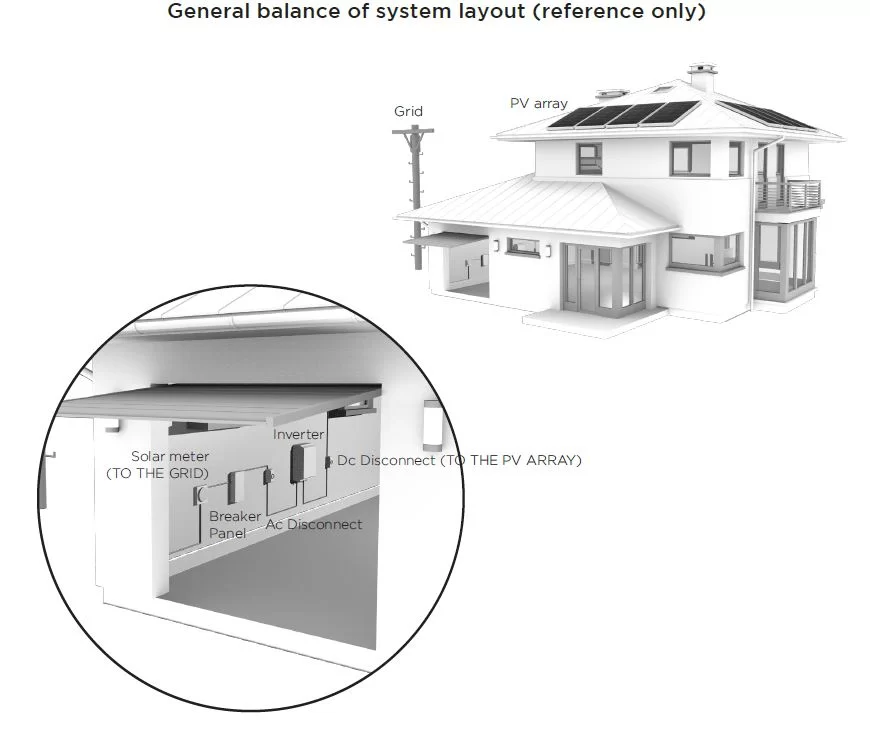
The energy converted by the PV modules, as a first step, produces direct current (DC electricity) which flows through the DC circuit and is transformed, converted or inverted, (as a second step) into alternating current (AC) electricity. This conversion process is performed by a solar inverter which matches the electrical systems or home appliances power source. This is all done seamlessly and without any moving parts.

The electricity generated by an ‘on-grid’ PV system can be used either for self-consumption or can be fed back to the grid at periods when the home electricity consumption is low. Feeding electricity back to the utility grid will rely on grid connection permissions offered by your electricity provider.

How much electricity can my PV system generate?
This will depend on the following criteria:

Size of the PV system
Amount of sunshine hours throughout the year (Irradiance)
Optimal installation conditions
A very simple equation can be used however please note this is just for estimation purposes only.

Average DAY PV system production in kWh’s
(4 peak sunshine hours/day) x (size of PV System in kW) x (0.85 system derating factor = kWh/day generation

Average YEAR PV system production in kWh’s
(1460 peak sunshine hours/year) x (size of PV System in kW) x (0.85 system derating factor = kWh/year generation

What are the main components of On-grid Home PV Systems?

PowerDream ON GRID PV SYSTEMS

What is the lifetime of a PV system?
PV Modules serve as the main component of a PV system and include a power output warranty of 25 years. This means that your system can last for at least 25 years after installed. With that said however, other system components such as inverters, conductors and mounting systems will sometimes need to be replaced or maintained throughout the lifetime of the system. Inverters usually offer 5 to 20 year warranties, PV mounting systems or racks depending on the manufacturer include 10+ year or more warranty the same stands for other components.

How expensive is a PV system?
PV Module prices continue to show a decreasing cost within the market which makes them more affordable year after year. However, the price of a PV system will depend not only on the brand and technology of components selected for the system but other factors that need to be considered for their installation.

The following considerations will determine the overall cost of a PV system:

PV System size (kW)
PV system components
Labor installation costs
Installation material costs
Material transportation costs
Administrative costs
Depending on your local energy policies, some electricity service providers and or States offer PV system users incentives which will decrease the overall costs of a PV system.

Can I install my home PV System?
The PV components of a system are electronic devices manufactured under electrical safety principles that need to be compliant with grid interactive standards since these will indirectly or directly be connected to your home and the utility grid. It is recommended to seek an authorized professional installers that meets all electrical, building and safety credentials which will guarantee a successful installation.


PV Installation Cycle Diagram
The list of tools below will be required to install the PV module roof kit. It is recommended that they are acquired preceding the installation.

Hammer
Tape Measure
Cable knife
Combination pliers
Crimping tool for cable lugs (suitable for cable cross-sections of up to 2/0 AWG)
Diagonal cutting pliers
Wire stripping pliers
Chalk Line
Electric Drill
Drill Bits (e.g. masonry or wood bit), 5/16th or 0.3125mm
Extension cords
Flathead screwdriver (small and large)
Philips screwdriver (small and large)
Hexagon/Allen keys, 3 mm to 8 mm
Open-end/box wrenches or socket wrench in the sizes 1/4, 5/8th,
Spirit level
Multimeter
Ladders and or roof staging (optional)
Metal Saw (optional)
20.Safety harnesses (optional)
Safety helmet
Work Gloves
Shingle Knife (optional)

Embracing Energy Independence: The Off-Grid Home Energy Storage System

In an era where sustainable living takes center stage, the concept of off-grid home energy storage systems has become increasingly appealing. These systems, designed to liberate households from traditional power grids, offer a multitude of benefits that extend beyond environmental considerations.

Harnessing Solar Power

At the heart of off-grid living is the utilization of solar panels to capture and convert sunlight into electricity. The installation of solar panels on rooftops or within the property allows for a continuous and renewable energy source. This eco-friendly approach not only reduces carbon footprints but also provides homeowners with a reliable and sustainable power solution.

Battery Storage for Uninterrupted Power

One of the key components of off-grid systems is advanced battery storage technology. These batteries store excess energy generated during sunny days for use during periods of low sunlight or at night. This feature ensures a constant and uninterrupted power supply, granting homeowners autonomy over their energy needs irrespective of external factors.

Energy Management and Efficiency

Modern off-grid systems are equipped with sophisticated energy management tools. Users can monitor real-time energy production and consumption, enabling them to optimize usage patterns for maximum efficiency. Smart technologies ensure that power is distributed intelligently, minimizing waste and maximizing the utility of stored energy.

Environmental Impact

The environmental benefits of off-grid living are profound. By relying on renewable energy sources and minimizing dependence on conventional power grids, households contribute significantly to the reduction of greenhouse gas emissions. This eco-conscious approach aligns with global efforts to combat climate change and promote sustainable practices.

Economic Considerations

While the initial investment in an off-grid home energy storage system may seem significant, the long-term economic advantages are substantial. Reduced reliance on external power sources translates into lower electricity bills over time. Additionally, some regions offer incentives and tax credits for adopting renewable energy solutions, further enhancing the financial appeal of off-grid living.

Challenges and Future Developments

Despite the numerous advantages, off-grid living comes with its set of challenges. Storage capacity limitations, occasional reliance on backup generators, and the need for occasional maintenance are aspects that homeowners must consider. However, ongoing advancements in technology are addressing these challenges, with innovations aimed at enhancing efficiency and overcoming existing limitations.

Off Grid Solar System Kit for Single-Story vs Multi-Story Homes: Panel Placement

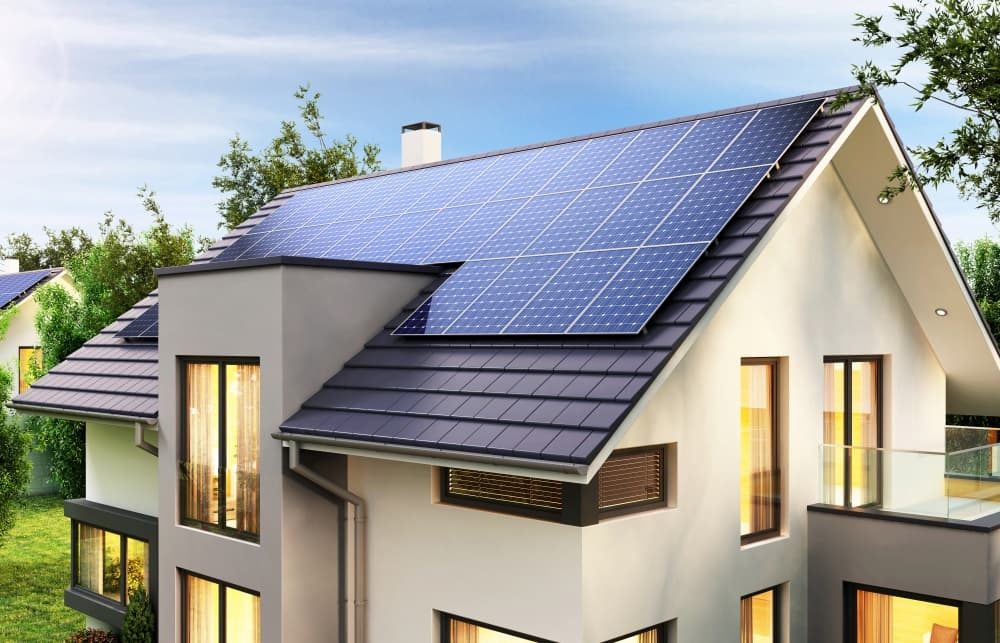
One building is a single-story residence, and the other is a three-story building with balconies and dormer windows. Both houses require a reliable power supply during grid outages, but how sunlight hits the roof and the placement of the solar panels will determine whether the final system will meet your needs. For homeowners evaluating an off grid solar system kit, the placement of solar panels is more than just a rooftop task; it is one of the most critical design decisions affecting energy harvesting, battery capacity, cost, and long-term stability.

Assessing Roof Geometry and Solar Resources for Single-Story Residences

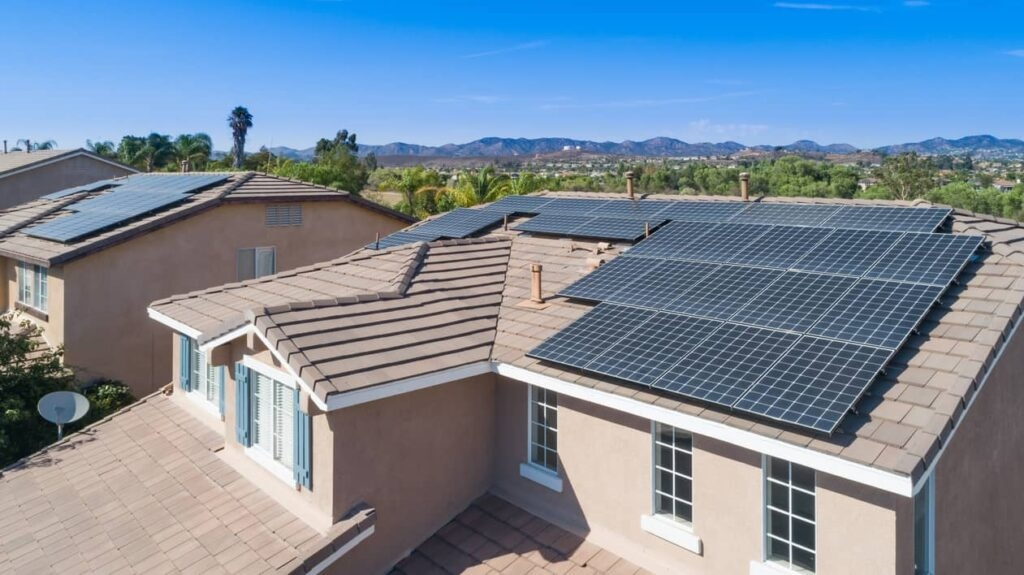
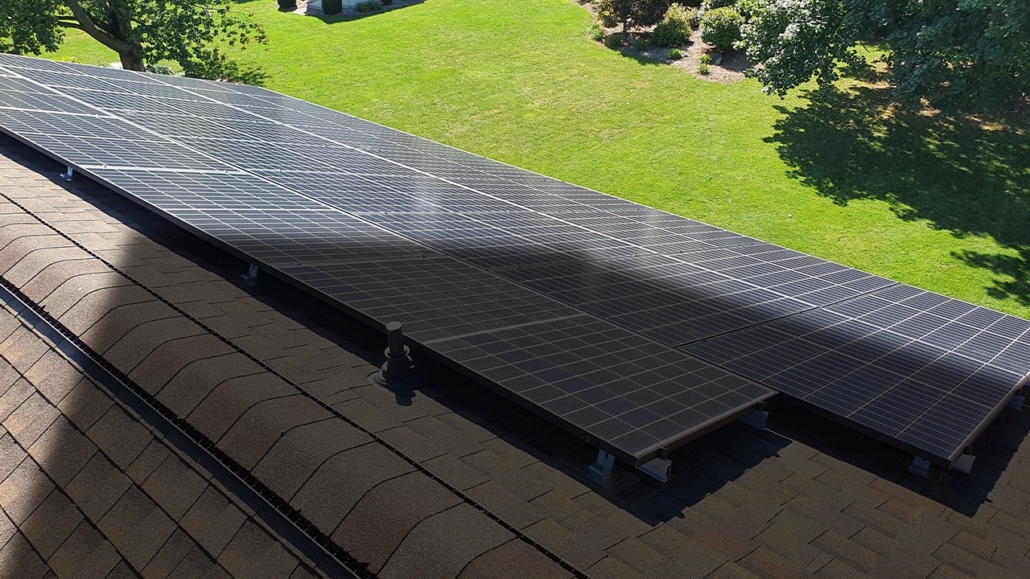
For single-story residences, the roof geometry is often the best choice for installing off grid solar system kit. Key advantages include a large roof area, predictable azimuth, and simple shading patterns. A site assessment of the system is essential, including roof orientation, slope, available area, and shading analysis for different seasons.

First, measure the available floor area and document any obstructions. Single-story residences often allow for larger, continuous arrays, simplifying series configurations and reducing system balancing costs. Second, assess the azimuth: in the Northern Hemisphere, south-facing or near-south-facing planes capture the most annual power generation. Third, determine the roof slope: a slope angle close to the local latitude generally achieves balanced power generation throughout the year; flatter roofs may require tilted supports to optimize energy capture.

Additionally, considering shading is crucial; even small trees or nearby buildings can cast long shadows in winter, disproportionately reducing power generation. A simple solar path application or a professional shading analysis can create a shading map and prioritize unshaded planes. For single-story homes with minimal shading, ground-mounted microinverters or optimisers are unnecessary; string inverters are typically the most cost-effective option. Finally, consider the ease of cleaning and maintenance of the panels. Lower roofs are easier to maintain and contribute to long-term energy output.

Assessing Roof Geometry and Solar Resources for Single-Story Residences

Complexity of Installing Off Grid Solar System Kit in Multi-Story Homes

The vertical structure of multi-story homes results in varying roof orientations, slope angles, and azimuths. Therefore, designing the installation locations of solar panels for multi-story homes requires a more meticulous and comprehensive approach.

First, plot the azimuth and slope angles for each roof plane. Multi-story building roofs typically include a south-facing gable, east-west dormer windows, and a north-facing shaded side. You can leverage this diversity to install more efficient solar panels on less-than-ideal surfaces and larger arrays in optimal locations. Next, assess shading from surrounding tall trees, neighboring buildings, and the building’s own eaves—multi-story buildings can experience self-shading over time.

Due to varying orientations and tilt angles, MPPT segmentation technology is necessary. This can be achieved through multiple MPPT inputs on a string inverter, a DC optimizer, or a microinverter, to avoid losses caused by string mismatch. For example, connect east-facing panels to one MPPT and west-facing panels to another. If panels are located on balconies or vertical facades, designers should treat them as auxiliary generators and account for their lower output in the off grid solar system design.

Complexity of Installing Off Grid Solar System Kit in Multi-Story Homes

Balancing Orientation and Tilting Angle

Orientation (south/east/west) and tilt angle determine the energy output time and total power generation of an off grid solar system suite. For both single-story and multi-story residences, during installation, we prioritise factors such as daily peak power generation (south-facing), power generation during peak electricity demand periods (east- or west-facing), or a more balanced, flatter power generation curve.

South-facing arrays typically maximize annual power generation and simplify string design. If your load is evenly distributed and you prioritise maximum total power generation, a south-facing orientation is recommended, with the tilt angle set to the local latitude. East-facing arrays concentrate power generation in the morning; west-facing arrays concentrate it in the evening. For households with higher evening electricity consumption, a slightly west-facing orientation can improve self-consumption and reduce battery cycle counts or generator runtime. East-west-oriented split arrays are particularly useful when roof geometry limits the continuous south-facing area. They produce a flatter daily power generation curve, better matching the electricity demands of many residences. Additionally, for multi-story residences with multiple orientations, you should use dedicated MPPTs or module-level power electronics to maximize energy from different orientations without compromising the off grid solar system kit’s efficiency.

Shading Mitigation and Array Layout for Off Grid Solar System Kit

Shading causes energy loss. Whether it’s a single-story or multi-story building, we incorporate shading mitigation measures and rigorous power generation modeling into your off grid solar system kit or residential solar solution. First, we conduct 24/7, year-round shading simulations to quantify expected losses and determine the optimal solar panel installation locations.

Mitigation measures include:

Micro-inverters/DC optimizers: These component-level electronics allow each panel to operate independently at its maximum power point, significantly reducing shading losses common in multi-story roofs under mixed azimuth or partial shading conditions.

Multiple MPPTs: Different strings are used for each azimuth or tilt angle, assigned to separate MPPT channels on the inverter so that each group performs optimally.

Strategic panel placement: Avoid installing panels in locations that will be shaded at least part of the time in the morning/afternoon; choose unshaded flat surfaces and sunny, fan-shaped areas whenever possible. If shading is unavoidable, consider its impact—use shaded modules for lower-priority loads or as supplemental power. Panel Spacing and Row Layout: In installations with significant inclination, ensure rows do not overlap during winter; maintain adequate setback distances for maintenance access and to comply with fire safety regulations.

Shading Mitigation and Array Layout for Off Grid Solar System Kit

Performance Monitoring, Maintenance, and Size Selection Considerations

For off grid solar system kits, panel installation location determines system capacity, monitoring strategies, and maintenance plans. After installation, continuous monitoring and preventive maintenance ensure power generation and that the system meets household electricity demands.

Performance Monitoring: Install a monitoring platform to report power generation, battery SoC, and inverter status for each MPPT or each series connection. For mixed-orientation sites, real-time data from each MPPT helps quickly identify poorly performing roof surfaces or shading. Many off-grid inverters include cloud monitoring or maximum power point tracking diagnostics.

Maintenance: Single-story systems typically require seasonal inspection and cleaning every 6-12 months. Multi-story systems may require longer maintenance intervals due to complex access routes, but can benefit from remote monitoring alerts.

Key Considerations for Capacity Planning: The installation location of the panels will affect actual daily power generation, so engineers need to run model simulations based on expected orientation and shading conditions to determine battery backup and generator capacities. For example, if peak demand does not match power generation, an east-west-oriented split array may require a larger battery buffer capacity.

Finally, we consider lifecycle factors to estimate solar panel degradation, seasonal fluctuations in power generation, and future load growth. Therefore, when selecting the location for solar panel installation, we consider both current demand and reasonable growth expectations.

Adjusting Layout to Home Conditions for Resilient Off-Grid Living

The panel layout in an off grid solar system kit is a design consideration that brings together roof geometry, home needs, and system structure. For single-story homes, priority should be given to large, unobstructed south-facing planes, simple series designs, and ease of maintenance. For multi-story homes, segmented layouts, MPPT diversity, and carefully designed shading measures should be adopted to utilize complex roof areas while minimizing power generation losses fully. Throughout the process, we select appropriate inverters/chargers and battery capacities based on the actual power generation of the chosen layout, and plan the installation process, safety measures, and permit compliance as early as possible.