Solar Micro Inverter vs String Inverter: Efficiency & Shade Tolerance Comparison

As solar energy systems evolve from simple rooftop installations to highly optimized power generation assets, the choice of inverter technology has become a critical factor in determining system performance. Many users focus on solar panel power or battery capacity, but actual efficiency often depends on how effectively solar energy is converted, managed, and protected under non-ideal conditions. This is where the choice between solar micro inverter and traditional string inverters becomes essential. At PowerDream, we share this information with you not from a marketing perspective, but from an engineering and performance-driven standpoint. This article provides a clear, data-driven comparison of solar micro inverters and string inverters by examining efficiency metrics, shading tolerance, and energy harvesting accuracy.

Efficiency Metrics of Solar Micro Inverter and Their Impact on Energy Output

When evaluating any photovoltaic system, efficiency is not a single number but a combination of metrics that collectively determine how much solar energy is converted into usable AC power, whether for the solar micro inverter or string inverters.

The following three metrics are most important:

Peak (DC-to-AC) Conversion Efficiency: This is the maximum percentage of DC power from the solar panels that the inverter can convert to AC under ideal test conditions. PowerDream micro inverters achieve a peak efficiency of up to 93%.

CEC Weighted Efficiency: This more realistic metric weights the inverter’s performance across a range of operating voltages and temperatures, providing a more accurate representation of real-world performance. PowerDream microinverters boast a CEC efficiency of up to 92%, demonstrating strong conversion capabilities at actual operating points.

Tracking Efficiency: This refers to the inverter’s ability to keep the photovoltaic modules operating at their Maximum Power Point (MPP) under varying light intensities and temperatures. PowerDream microinverters achieve a tracking efficiency of up to 99%, meaning the inverter’s MPPT algorithm can capture virtually all available DC power from each module at all times.

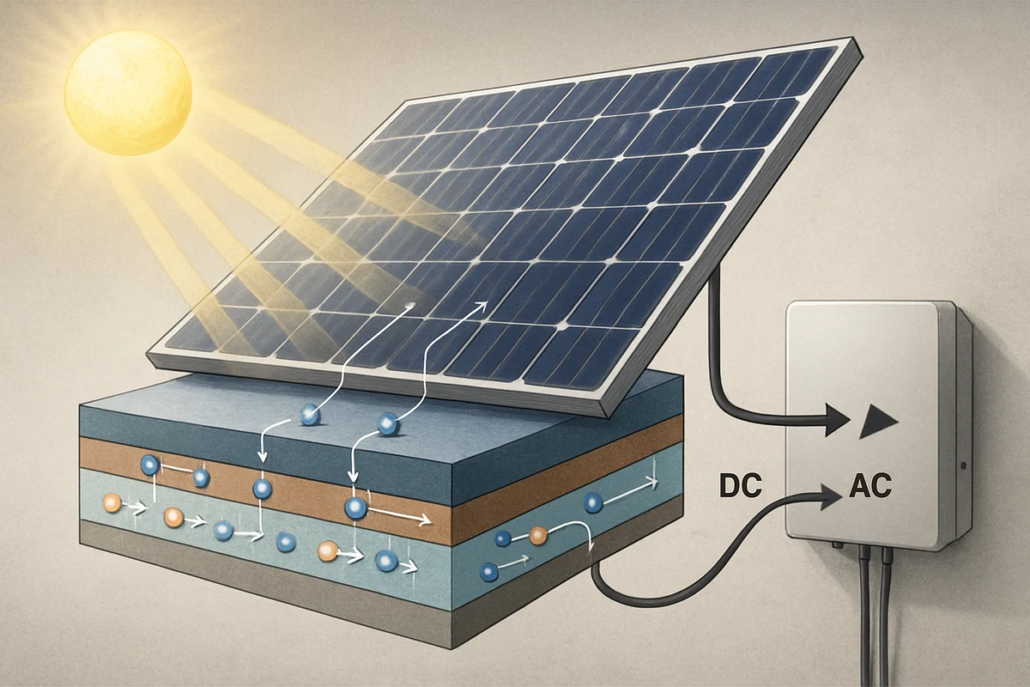
Why are these differences so significant? Consider the following: String inverters may have slightly higher peak efficiency, but this figure assumes that all modules in the string are operating under identical conditions. On a real rooftop, modules have varying azimuths, tilt angles, and shading conditions. When there are differences in the output power of the components, the central maximum power point tracking (MPPT) function of string inverters must compromise, and the operating point of the entire string will shift towards the component with the lowest performance. Solar microinverters, on the other hand, perform MPPT on each element, so each component can independently contribute its maximum power. Therefore, their tracking efficiency (99%) can usually compensate for the slightly lower peak conversion efficiency, as the system captures more total DC energy before conversion.
Efficiency Metrics of Solar Microinverters and Their Impact on Energy Output

Detailed Explanation of Shading Tolerance and Component-Level Optimization of Solar Micro Inverter

Shading is a fatal weakness for many solar systems. Even brief shading of a single cell string within a module can significantly reduce the power output of the entire module; in string inverter systems, underperforming modules drag down the performance of the whole string. This is where the advantage of the solar micro inverter architecture lies.

How does shading affect string inverter systems?

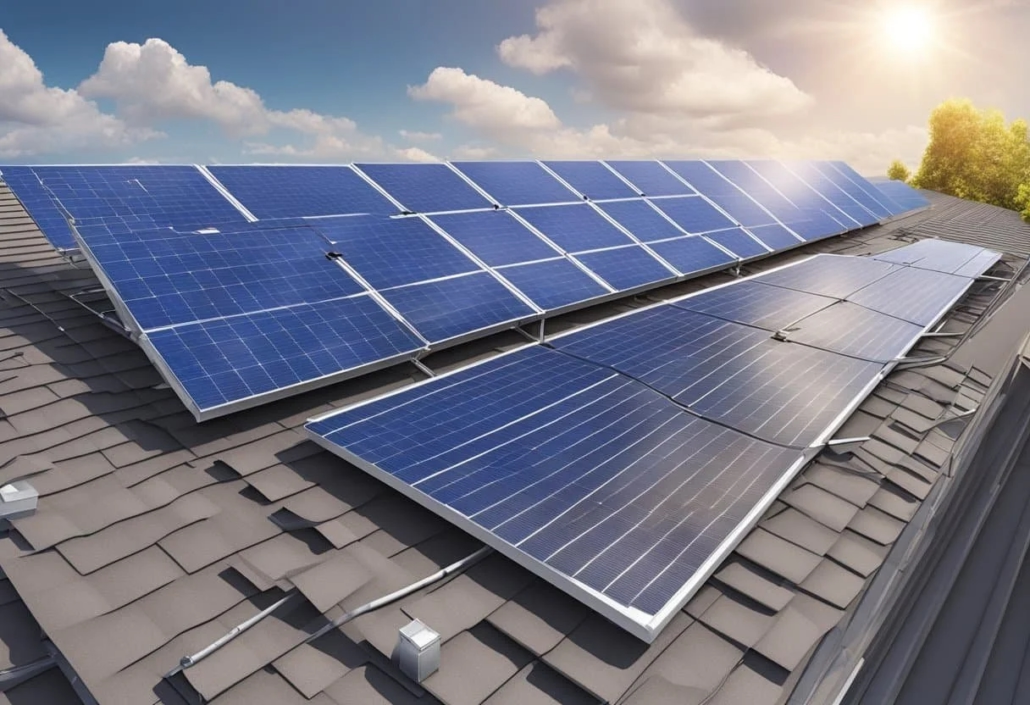
In a typical string inverter system, solar panels are connected in series to achieve the target DC voltage. The string inverter performs MPPT on the entire series circuit. When one panel is shaded, its current output drops; because a series circuit requires uniform current, the current of the whole string drops to the level of the shaded component. Therefore, string inverter systems have poor shading tolerance: a shaded area covering 10% of the array area can, in some cases, lead to more than 10% energy loss, depending on how the shading affects the cells and modules. Furthermore, mismatches between modules exacerbate this problem.

How do solar micro inverters handle shading?

Solar micro inverters are connected to each component and perform MPPT locally. When one component is shaded, the solar micro inverter optimizes only that component. The other components continue to operate near their maximum power point. In effect, this makes the system more tolerant to shading, series mismatches, and soiling.

Key shading-related advantages of component-level micro inverters:

Linear recovery: As the shading moves, the component output recovers independently; the rest of the array remains unaffected. Granular Monitoring: Micro inverters provide performance data for each component, simplifying shading diagnostics and maintenance.

Better Performance Under Partial Shading: On real-world rooftops with obstructions, microinverters typically generate more annual energy than comparable string inverter systems.

Quantifiable Benefits

The improvement in shading tolerance depends on the shading pattern, orientation diversity, and sunlight hours, but typical field tests show that arrays equipped with micro inverters perform several percentage points better than string systems on partially shaded residential rooftops, and the advantage is even greater on complex roofs. For example, a partially shaded string of solar panels might lose 30% to 50% of its expected power generation at a given moment. In contrast, a microinverter system only loses the power generation of the shaded components. This difference in environments prone to shading can translate into actual increases in annual energy yield and shorter payback periods.
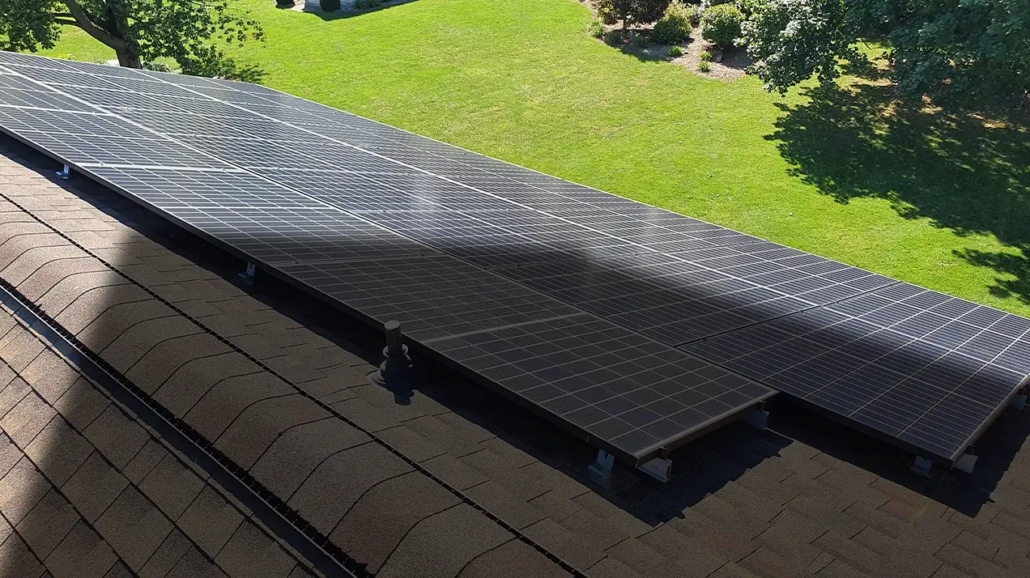
How do solar micro inverters handle shading (2)

Comparison of Actual Energy Output and Performance Under Different Conditions

When choosing between solar micro inverters and string inverters, you should consider not only instantaneous efficiency data but also the system’s annual energy yield. Let’s analyze the main factors that determine actual output and compare the performance of each type of inverter under these variables.

Scenario A: No Shading, Uniform Roof, Commercial Scale

On large ground-mounted or flat rooftops with uniform orientation and minimal shading, string inverters typically perform well. Their higher peak efficiency (usually 97%–98%), lower per-watt hardware cost, and centralized maintenance model can lead to slightly higher return on investment when components are identical and sunlight is abundant. In this scenario, the component-level Maximum Power Point Tracking (MPPT) advantage of microinverters is less significant. However, they still offer some advantages: component-level monitoring, ease of scalability, and reduced risk of DC wiring issues.

Scenario B: Residential Rooftop, Partial Shading and Varying Orientations

In this scenario, micro inverters typically outperform string inverters in annual energy yield—for example, a 6 kW system with solar panels installed on both north- and south-facing rooftops. String inverters require separate string configurations for each roof face to avoid power mismatch. Microinverters, on the other hand, can seamlessly handle power from both north and south-facing arrays and extract near-MPP power from each module. In these configurations, PowerDream microinverters offer tracking efficiency up to 99% and high conversion efficiency (CEC 92%).

Scenario C: Soiling, Degradation, and Aging

Over time, module mismatch increases due to dust accumulation, microcracks, and varying degrees of module aging. The solar micro inverter localize the effects of this aging. A faulty or soiled module only affects its own microinverter output, while a string inverter would cause a power reduction across the entire system. Therefore, unless all modules age at precisely the same rate, a microinverter array will maintain higher energy production over the long term.

Example of Actual Yield

For example, consider a suburban residential roof with minimal shading and two orientations. A simulated string inverter system might generate 8,000 kWh annually; a solar microinverter system might generate 8,600 kWh annually (approximately a 7.5% increase) because each module tracks its own MPP, and shading losses are limited to the affected modules.
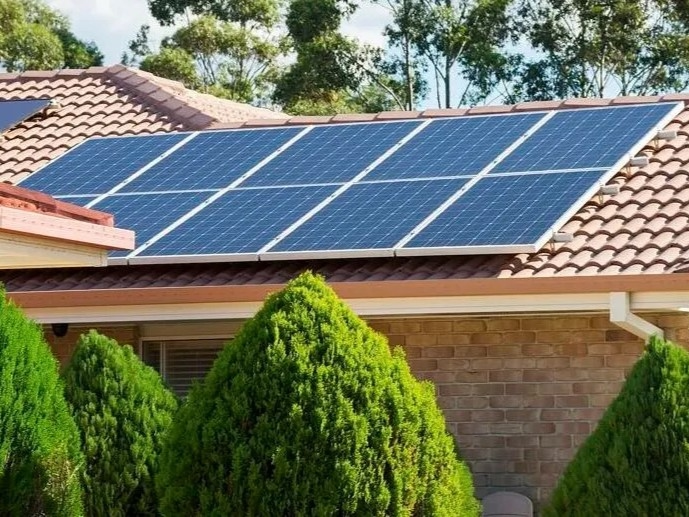
Residential Rooftop, Partial Shading and Varying Orientations

Reliability, Monitoring, Safety, and Lifecycle Maintenance

When evaluating solar inverter architectures, reliability and maintenance considerations, along with conversion efficiency, impact the total cost of ownership. Microinverters and string inverters have different failure modes, service models, and safety features.

Reliability and Mean Time Between Failures:

String inverters, with their centralized design, are generally robust; they are larger and handle higher DC currents. If a string inverter fails, the entire array goes offline until it is repaired. Solar microinverters distribute the conversion task across multiple smaller units; a single microinverter failure only affects one module, while the rest continue to operate normally. PowerDream microinverters are designed for outdoor, module-level applications with high protection ratings and thermal performance. When installed correctly, modern microinverters have a long lifespan and support remote firmware updates.

Monitoring and Diagnostic Capabilities:

Solar microinverters excel in granular monitoring. Each component reports power, voltage, and sometimes temperature, providing installers and users with a continuous performance picture. This data facilitates quick diagnosis of shading issues, component replacement, and performance optimization. String inverters also offer monitoring capabilities, but only at the string level; without additional component-level power electronics (optimizers), they cannot isolate underperforming individual components.

Safety and Electrical Risks:

From a safety perspective, solar microinverters reduce the need for high-voltage DC wiring in rooftop installations. Because the module performs AC conversion internally, the rooftop circuit operates at a lower, safer voltage, and the AC wiring provides greater safety for firefighters and technicians. String inverters require long runs of high-voltage DC wiring on the roof or in the attic. While string inverters and system designs mitigate risks through rapid-shutdown and current-limiting features, microinverters inherently minimize the dangers associated with DC electricity.

Making the Right Choice

If your installation project involves significant shading, complex roof orientations, or you require precise monitoring and safety assurances for each component, solar microinverters are generally the better choice. For large-scale, uniformly distributed arrays designed to minimize the levelized cost of electricity (LCOE), string inverters may still be a suitable option. Ultimately, the choice should be based on the specific conditions of your site and your maintenance capabilities.
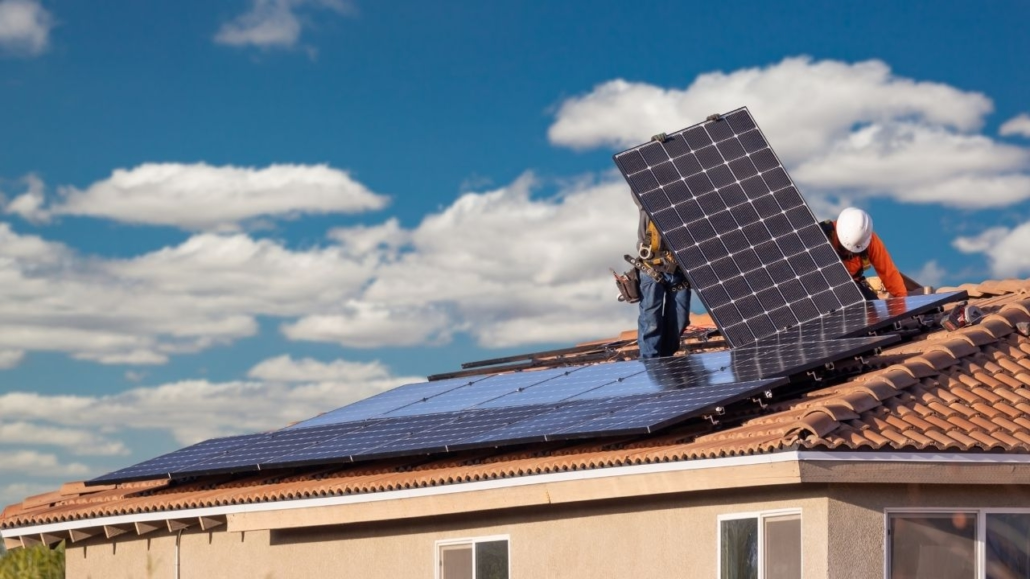
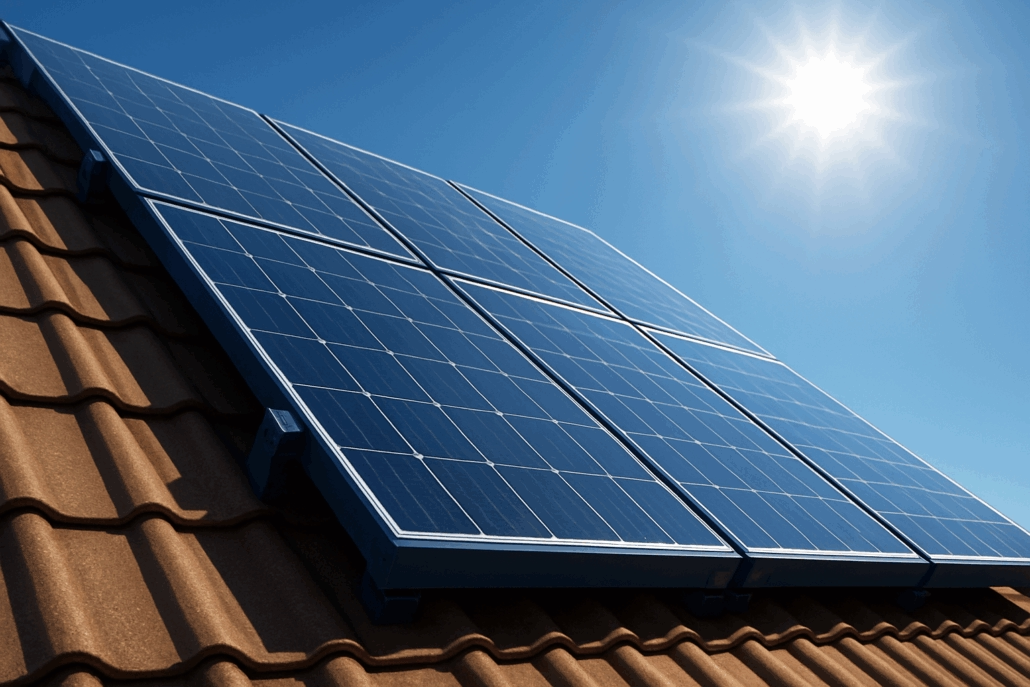
What is the Ideal tilt angle for a rooftop solar panel?

Consider two identical houses. Both have the same monocrystalline solar panel model and the same solar panel kit installed, but one house has its roof panels installed flat, while the other uses the optimal tilt angle. After a year, the tilted system generates significantly more clean energy, resulting in lower electricity bills and a faster return on investment. Therefore, subtle changes—adjusting a few degrees, slightly altering the direction—can accumulate into significant differences in performance, cost-effectiveness, and carbon reduction. As a supplier, PowerDream can help customers make these small but crucial design choices. So we’ll tell you how to determine the optimal tilt angle for your rooftop solar panel.

How does the tilt angle affect rooftop solar panel output?

To choose the ideal tilt angle, you first need to understand that the sun’s apparent movement across the sky varies with latitude, season, and time of day. The tilt angle determines the angle at which sunlight strikes the panel surface. The more perpendicular the sunlight, the more energy the panel converts; conversely, a smaller angle results in greater reflection losses and lower instantaneous power output.

Key concepts to understand:

Angle of Incidence: The angle between the incoming sunlight and the panel surface. The smaller the angle of incidence (the more perpendicular the sunlight hits the panel), the more power is generated.

Latitude Rule of Thumb: For fixed (non-adjustable) rooftop solar panels, a common starting point is to set the tilt angle approximately equal to the latitude of the location. This approach maximizes annual energy production in many places.

Seasonal Adjustment Rule of Thumb: To increase winter energy production, the tilt angle can be increased by approximately 15 °; to increase summer energy production, it can be decreased by approximately 15°. These adjustments help match seasonal load patterns.

Panel Orientation (Azimuth): Both tilt angle and azimuth are essential. In the US, rooftop solar panels facing due south (azimuth ≈ 180°) with a tilt angle equal to the local latitude typically achieve the highest annual energy production. East or west-facing arrays can also perform well, but may require adjusting the tilt angle and slightly increasing capacity to achieve the same annual energy production.

How does the tilt angle affect the output of rooftop solar panels

Tilt Angle Recommendations for Rooftop Solar Panel Based on Climate and Latitude

Different climates and load profiles require distinct tilt-angle strategies. Here are some practical starting points and examples:

1. Temperate Mid-Latitude Regions (approximately 30°–45° North or South latitude)

Recommended fixed tilt angle: Approximately equal to the latitude.

Reason: Balances summer and winter power generation, making it suitable for year-round residential electricity needs.

Seasonal adjustment: If your household uses more electricity in winter (heating, lighting), increase by 10°–15°. If you use more electricity in summer (air conditioning, pool pump), decrease by 10°–15°.

2. Low-Latitude/Tropical Regions (approximately 0°–25°)

Recommended fixed tilt angle: Latitude or slightly less than the latitude (latitude minus 5° to latitude).

Reason: The sun is higher in the sky throughout the year; near-horizontal or low tilt angles capture diffuse sky radiation and provide stable summer power generation.

Seasonal adjustment: Usually not necessary; minor adjustments can be made if considering the rainy season.

3. High-Latitude/Subpolar Regions (>45°)

Recommended fixed tilt angle: Latitude or latitude plus 10° to optimize winter power generation.

Reason: The sun angle is lower in winter, so a larger tilt angle helps capture low-angle sunlight and promotes snow shedding.

Seasonal adjustment: For systems designed to generate more winter energy or for roofs with significant snow accumulation, consider increasing by 20°.

4. Snowy Climates

Tilt angle priority: A larger angle (> the latitude) helps snow slide off and prevents long-term dust accumulation. Steeper roof solar panel tilt angles reduce snow cover time and allow for faster recovery of power generation after snowstorms.

5. Sunny, Dry Climates

Tilt angle priority: Optimize at the latitude location for maximum annual power generation. Be aware of dust accumulation – the tilt angle affects cleaning frequency and power losses from dust. Remember: These are just initial suggestions. Always conduct a site-specific solar resource assessment and horizon/shading analysis when finalizing the tilt angle for your solar panel system design.

Tilt Angle Recommendations for Rooftop Solar Panel Based on Climate and Latitude

Why do roof and mounting systems limit the angle of rooftop solar panels?

Pitched Roofs

In most cases, the roof pitch equals the tilt angle of the panel array: the panels are mounted flush with the roof surface, so the tilt angle of the panels is the same as the roof pitch. If your roof pitch is close to the recommended angle (latitude), you will get optimal performance at the lowest cost. Otherwise, consider using small-angle mounting brackets to slightly adjust the tilt angle, while accounting for structural and drainage implications.

The advantages include low installation costs, an aesthetic appearance, and lower wind loads when mounted flush. The disadvantage is that if the roof pitch deviates significantly from the optimal angle, you will lose some annual power generation.

Flat Roofs

Adjustable brackets are standard: you can set the panels to an angle and orientation close to the optimal tilt angle. For rooftop solar panels on flat roofs, the angle of the tilt brackets is typically between 10° and 30°, depending on structural factors, wind load, and aesthetic requirements.

Exceptional Cases: Dormer Windows, Mansard Roofs, and Obstacles

Micro-tilt or multi-array layouts can help. Instead of forcing all arrays to have the same tilt angle, the system can be divided into multiple sub-arrays, each facing a different roof plane. The solar panel kit may include various small inverters or micro-inverters to ensure that each sub-array operates near its maximum power point.

In practice, many residential rooftop solar panel installations use the roof pitch as the actual working tilt angle. The performance loss due to a few degrees of deviation from the latitude is usually slight, especially for monocrystalline solar panel modules, which have relatively high temperature stability and performance at different angles of incidence.

Why do roof and mounting systems limit the angle of rooftop solar panels


Seasonal Tilt, Tracking, and Technology Choices

If you want to improve performance from your rooftop solar panels, consider seasonal adjustments, single-axis trackers, or panels that respond differently to tilt and shading (e.g., monocrystalline silicon).

Seasonal Tilt Adjustment:

Manually adjustable racks allow you to adjust the tilt angle twice a year (summer and winter). This is a low-cost compromise solution to improve seasonal output: a tilt angle of -15° in summer and +15° in winter.

Cost-effectiveness:

For many residential systems, the annual gains from seasonal adjustments are not significant, but if your household’s seasonal load fluctuates considerably, the extra gains can be valuable.

Tracking Systems:

Single-axis trackers allow solar panels to rotate throughout the day, increasing annual energy production by 10% to 25% compared to fixed-tilt installations in many climates. Due to structural, wind, and roof-penetration limitations, tracking technology is less common in rooftop solar systems. Ground-mounted solar panel kits more frequently utilize tracking technology. Dual-axis trackers maximize instantaneous output but are rarely practical on rooftops due to their complexity and cost.

Monocrystalline Silicon Solar Panels and Tilt Sensitivity

Monocrystalline silicon Panels have higher module efficiency and tend to perform better under high irradiance and partial shading conditions. Their higher efficiency makes them ideal for situations where roof space is limited, and the tilt angle cannot be optimized.

Bifacial modules can utilize reflected light (albedo) for additional power generation and typically require a higher mounting height (to utilize ground reflection). The tilt angle affects the power output of bifacial modules; generally, a moderate tilt angle combined with appropriate ground treatment can improve the power generation from the back side.

Final Tilt Angle Recommendation

For most residential users, set the tilt angle of your rooftop solar panels to approximately your latitude and focus on high-quality monocrystalline silicon modules and a robust solar panel kit. If winter energy consumption (heating, lighting) is a priority, increase the latitude by approximately 15°. If summer energy consumption (air conditioning) is a priority, decrease the latitude by approximately 15°. In many cases, it’s better to accept a moderate loss in output rather than making complex structural changes; panel area and orientation are often more important than minor tilt differences.

While the tilt angle is essential, it is only one of many factors that determine the actual performance. As a supplier of rooftop solar panels, PowerDream recommends that you first determine your latitude and then optimize the tilt angle based on your home’s electricity load, roof limitations, and a simple financial model.

Are hybrid solar power systems more efficient than off-grid systems?

Two neighboring farms have both installed solar panels and batteries. Still, one connects its system to the local grid using a hybrid solar power system, while the other operates completely off-grid. During variable weather and peak evening demand, one system seamlessly draws power from the grid when needed and sells excess solar power back to the grid during midday; the other carefully conserves battery power and sometimes activates a backup generator. Which approach is more energy efficient? The answer depends on how you define efficiency. We will analyze the evidence and trade-offs from a professional engineering perspective to help you decide whether hybrid solar power systems or a completely off-grid solution better meets your efficiency, resilience, and environmental goals.

Hybrid Solar Power Systems vs. Off-Grid Systems

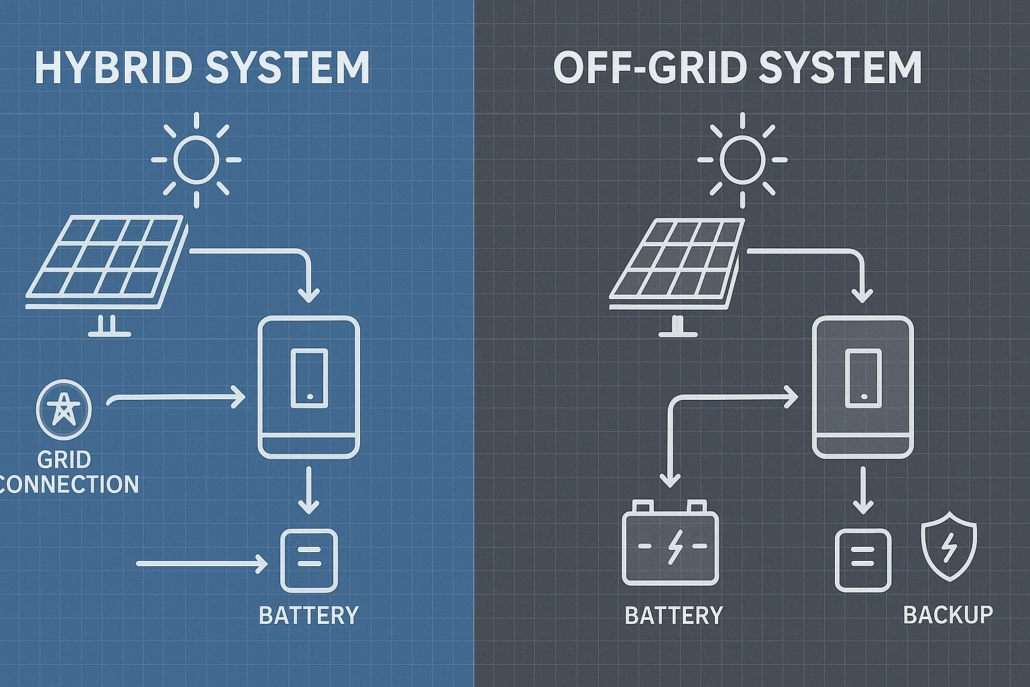
A hybrid solar power system integrates photovoltaic power generation, energy storage, and grid connection. It allows for bidirectional power flow: solar to load, solar to battery, solar to grid (export), and grid to battery or load when needed. In contrast, an off-grid solar system operates independently, balancing generation, storage, and consumption needs without drawing power from the public grid. Off-grid systems typically include a backup diesel generator to ensure reliable operation during extended periods of insufficient sunlight.

Key architectural differences determine how we compare efficiency:

  • Energy Sources and Flexibility: Hybrid solar power systems can utilize the grid as an additional energy “source” or “sink.” Off-grid systems are limited to on-site generation and storage.
  • Operating Strategy: Hybrid solar systems can optimize charging and discharging behavior based on time-of-use pricing, grid carbon intensity, or export incentives. Off-grid systems are optimized solely for local generation and storage management.
  • Loss Pathways: Hybrid systems introduce increased component and control complexity (inverters, grid relays), but benefit from the grid’s balancing capabilities. Off-grid systems avoid some losses (no grid export circuitry), but may experience increased generator run time and reduced battery cycling efficiency.

Efficiency is multidimensional: we can discuss technical, economic, and environmental efficiency. In many cases, hybrid solar systems can improve overall efficiency by reducing energy waste and optimizing scheduling across more options. However, the specific results depend on the system design, local grid carbon emission structure, electricity pricing mechanisms, climate patterns, and load profiles.

Hybrid Solar Power Systems vs. Off-Grid Systems

Key Metrics for Measuring the Efficiency of Hybrid Solar Power Systems

Before determining which method is “more efficient,” it’s important to define the metrics used to measure it. We typically use the following core metrics:

  • System Round-Trip Efficiency (RTE): For comparisons centered on energy storage, RTE measures the energy returned to the load divided by the energy input to the battery. A higher RTE means less energy is lost during the energy storage cycle.
  • Self-Consumption Rate (SCR): The proportion of on-site solar power generated that is consumed locally rather than exported to the grid. Off-grid systems typically aim for a self-consumption rate close to 100%; hybrid solar systems can adjust the self-consumption rate based on the economic benefits of grid export.
  • Self-Sufficiency Rate (SSR): The proportion of total load supplied by on-site generation over a period of time. Off-grid systems aim for SSR = 100%; hybrid systems aim for a high SSR, but can draw power from the grid when necessary.
  • Net Carbon Emission Reduction: This refers to the cumulative carbon dioxide emissions avoided by using on-site solar and energy storage systems compared to baseline grid consumption and generator use.

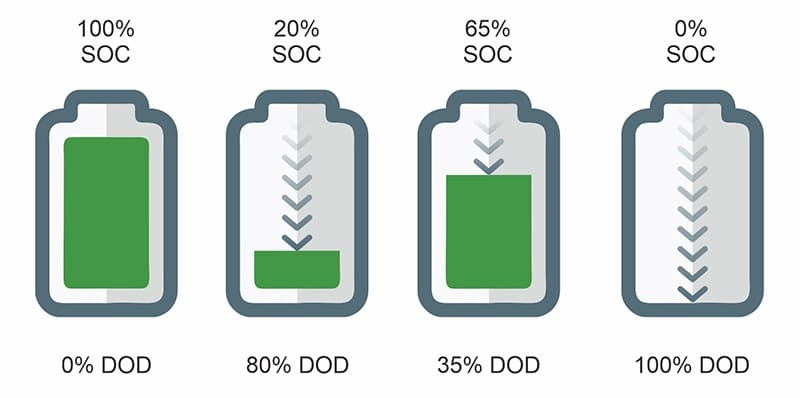
Hybrid solar power systems typically improve real-time energy efficiency (RTE) in practice by reducing unnecessary battery cycling and generator starts. For example, if the grid provides low-carbon or low-cost electricity during certain periods, a hybrid energy management system (EMS) can use this energy rather than curtail PV generation or inefficiently cycle batteries. Conversely, purely off-grid systems may force batteries to extreme depths of discharge (DoD) or require frequent generator starts, reducing cycle efficiency and increasing effective losses per kilowatt-hour (kWh).

Energy Conversion and Storage Efficiency Compared to Off Grid Systems

From a technical perspective, efficiency losses occur in the conversion (PV → DC → AC), in storage (battery charging and discharging), and in any auxiliary power generation. Let’s look at how hybrid solar systems differ from off grid solar systems. Inverter and Conversion Losses: Both systems use inverters and charge controllers; modern hybrid inverters integrate multiple power-electronics modules to handle current from PV, batteries, and the grid. Under optimal load, inverter conversion efficiency can reach 95% to 98%. Hybrid solar power systems may introduce additional conversion steps during grid charging and discharging, but advanced designs minimize these extra losses through efficient topologies.

Battery Round-Trip Efficiency (RTE): Typical lithium-ion batteries currently have an RTE of 85%–95%. Off grid systems that rely heavily on battery cycling experience numerous cycles and are therefore highly sensitive to RTE and depth of discharge. Hybrid solar power systems can reduce the number of deep cycles by using grid power during prolonged periods of low solar irradiance or by exporting excess solar energy when the battery is fully charged, thereby reducing overall battery throughput and extending battery life.

For many practical applications, the greater flexibility of hybrid systems translates to higher system-level efficiency: it minimizes fuel consumption, reduces unnecessary deep battery cycling, and maximizes the utilization of PV assets across multiple loads.

Energy Conversion and Storage Efficiency Compared to Off Grid Systems (1)

Operational Flexibility and Practical Performance Comparison

The operating strategy determines whether a hybrid solar power system actually delivers higher efficiency in practice.

Hybrid solar systems equipped with modern EMS can optimize charging and discharging based on forecasts, electricity prices, and carbon intensity. Consider the following three scenarios:

  • Solar-Priority Mode: The system first uses available PV generation to meet load demand and charge the battery, drawing power from the grid only when the energy storage system is depleted. This maximizes the use of local renewable energy and reduces electricity imports.
  • Economic Mode: The EMS charges the battery from the grid during off-peak electricity prices and discharges it during peak prices, thus reducing electricity costs but not necessarily minimizing carbon emissions.
  • Carbon-Aware Mode: The EMS primarily charges the battery using solar energy or low-carbon grid periods (e.g., nighttime nuclear or low-carbon power supply) and discharges during high-carbon grid periods to minimize emissions.

Off-grid systems lack these grid-interactive capabilities. They must prioritize reliability, maintain sufficient energy storage to sustain autonomous operation, and use generators as backup power when needed. Off-grid systems maximize independence but may sacrifice efficiency when generator usage increases during the rainy season. Hybrid solar power systems, on the other hand, strive to strike a balance: maintaining autonomous operation during short power outages and drawing on grid power during prolonged periods of low sunlight. In many commercial applications, hybrid generators can reduce operating time by 60% to 90% compared to off-grid generators with equivalent autonomous operation capabilities. This reduction can significantly save fuel and improve operational efficiency.
Choose the right system based on your energy efficiency goals and site conditions.

The choice between a hybrid or off grid system depends on clear objectives:

If the grid is reliable, a hybrid solar power system is generally superior to an off-grid system in terms of efficiency and economics. Off-grid systems are more suitable where there is no grid or the grid is unreliable, and energy independence is essential. Furthermore, if you require weeks of autonomous operation, the off-grid system must be large enough, even if efficiency is slightly lower. For most residential and commercial users, a hybrid system with a moderately sized battery capacity provides sufficient reliability and higher efficiency.

Additionally, for homes with flexible loads, hybrid solar systems can shift energy consumption to low-carbon periods, thereby achieving higher actual energy efficiency. Fixed, always-on critical loads, however, require larger energy storage capacity and may even necessitate off-grid power.

Consider multiple dimensions to make the best choice for you.

Are hybrid solar power systems more efficient than off-grid systems? In most real-world applications with a reliable grid, the answer is yes—hybrid systems are generally more efficient overall. They reduce generator usage, avoid the need for unnecessarily oversized battery banks, and enable smarter scheduling, extending equipment lifespan and minimizing lifecycle carbon emissions. However, if absolute independence is necessary, an off-grid system is the only option.

A complete guide to compliance for lithium ion solar batteries

When you install a row of aesthetically pleasing battery racks behind your solar panels, expecting them to operate quietly for years, you might encounter shipping delays, failed inspections, or even worse, avoidable safety incidents. Compliance isn’t just a buzzword; it’s fundamental to the reliable performance, legal market access, and long-term reputation risk management of lithium ion solar batteries. Both manufacturers and users need to understand which rules apply, why they exist, and how to comply with them to ensure a reliable solar battery solution.

Global Compliance Landscape for Lithium Ion Solar Batteries

Regulations and standards for lithium ion solar batteries cover multiple areas: cell and battery pack safety, system-level fire performance, electrical codes for installation, transportation regulations, and environmental/sustainability obligations. Each regulation serves a purpose. Cell and battery pack standards set basic safety requirements for electrical, thermal, and mechanical abuse. System-level standards address thermal runaway propagation and fire behavior in assembled battery energy storage systems. Installation codes dictate safe electrical connections and disconnections at the building level. Transportation regulations ensure the safe transport of lithium batteries by road, rail, sea, and air.

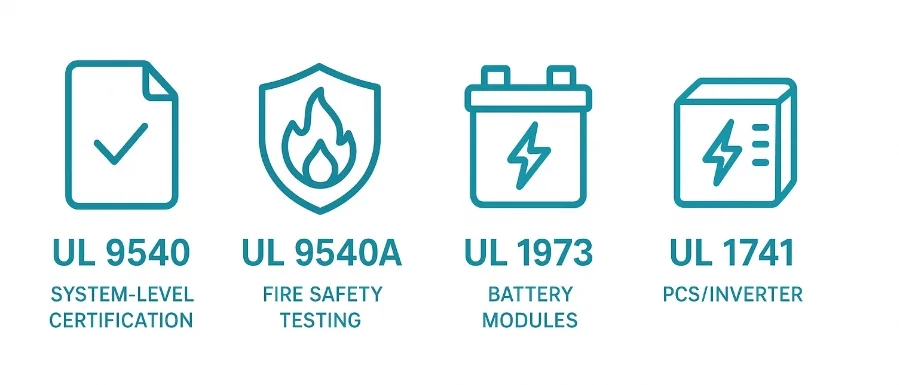
A compliant lithium ion solar battery should incorporate compliant international and regional standards, specifically IEC 62133 for portable cell/battery safety and IEC 62619 for industrial and stationary applications; these standards define tests for electrical abuse, short circuits, mechanical shock, and thermal behavior, thus forming the foundation of a compliant lithium ion solar battery. Certification to these standards demonstrates that your lithium-ion solar battery meets recognized safety performance benchmarks. At the system level, UL 9540A widely serves as a test method for evaluating the thermal runaway fire characteristics of battery energy storage systems—a critical consideration when installing in buildings or enclosed spaces.

IEC 62133

Cell and Battery Pack Safety Standards

At the heart of every compliant lithium ion solar battery are tested and certified cells and battery packs. Standards such as IEC 62133 (portable batteries) and IEC 62619 (industrial/stationary batteries) define minimum safety performance for batteries through a series of tests, including electrical cycling, overcharging, forced discharge, thermal stability, short-circuiting, vibration, shock, and mechanical crushing. These standardized tests simulate reasonably foreseeable misuse and abuse scenarios, ensuring that the cells and battery packs can operate safely under these conditions without catastrophic failure.

Why is this so important in practical applications? If a lithium ion solar battery cell or battery pack fails during these tests, thermal runaway can occur. To ensure safety standards, PowerDream’s lithium batteries feature cells with complete test records and a compliant Battery Management System (BMS) that provides cell-level protection: overvoltage, undervoltage, overcurrent, and temperature limits. We also provide documentation and test evidence at the battery pack level, demonstrating that the assembled battery pack meets the IEC 62619 or IEC 62133 standards required for the target application.

Cell and Battery Pack Safety Standards

System-Level Safety and Fire Testing

Even if individual battery packs meet cell and pack standards, system-level risks can still arise in multi-pack configurations. Thermal runaway can propagate between modules. Therefore, system-level testing and risk mitigation measures are crucial for large-scale stationary lithium ion solar batteries.

The UL 9540A battery test method characterizes the thermal runaway fire behavior of a complete battery pack or typical components. It tests how a single-cell or module failure propagates, releases gases, and the challenges it poses to fire suppression or control measures. Building code officials often require UL 9540A test evidence or system design justification for indoor energy storage systems or systems installed in enclosed spaces. Furthermore, NFPA 855 and updated electrical codes also impose requirements on the installation and fire safety of energy storage systems, including spacing, ventilation, fire suppression, and emergency disconnect devices. In short, system-level testing addresses the question of “what happens in large-scale applications,” and regulators require data and mitigation strategies before approving the installation of lithium ion solar batteries.

Cell and Battery Pack Safety Standards

Electrical Codes, Installation Rules, and Site Compliance for Lithium Ion Solar Batteries

Electrical installation codes ensure that your lithium solar batteries are safely integrated into building and grid systems. National and local electrical codes specify requirements for wiring, grounding, circuit breakers, emergency shutdowns, and labeling. In the United States, the National Electrical Code (NEC) has added and refined sections on energy storage; for example, Article 706 covers energy storage systems and includes provisions for circuit breakers, enclosures, and system-specific labeling. Similarly, many jurisdictions supplement the NEC with local amendments or by adopting relevant standards (such as NFPA 855) to address fire and safety concerns.

To ensure compliance at the installation site, follow this practical checklist:

  • Ensure the system design meets local code requirements for overcurrent protection, circuit breakers, and wire ratings.
  • Provide written documentation for emergency isolation and emergency responder procedures—clearly marking disconnect locations and providing hazard signage.
  • Implement monitoring interfaces and remote shutdown capabilities as required by code or the authority having jurisdiction. Many jurisdictions require readily accessible emergency shutdown devices to disconnect the system from power.
  • Collaborate with licensed electricians and code consultants during the design and commissioning process. Early coordination with the authority having jurisdiction helps avoid unexpected requirements and expedites the approval process for lithium-ion solar battery installations.

Shipping, Packaging, and International Transport Compliance

The transportation of lithium solar batteries—whether cells, battery packs, or replacement modules—is subject to strict transportation regulations. Section 38.3 of the UN Manual of Tests and Criteria (UN38.3) specifies test items such as altitude simulation, thermal cycling, vibration, shock, external short circuit, impact, overcharge, and forced discharge. Passing UN38.3 testing is typically a prerequisite for air, sea, and road/rail transport. Carriers and freight forwarders will require test documentation before accepting shipments, and non-compliant shipments may be delayed or refused.

Best practices for transportation compliance include:

  • Ensure that each cell or battery type shipped has a UN38.3 test report and certification. Keep test records readily available for customs and carrier inspection.
  • Use approved packaging to prevent short circuits and physical damage. For large modules or racks, frames and transportation restraints typically secure them.
  • Properly classify the goods and apply the required hazard labels and documentation according to the International Air Transport Association Dangerous Goods Regulations (IATA DGR) and the International Maritime Dangerous Goods Code (IMDG). Note that airlines and shipping companies are often conservative—some even prohibit lithium battery shipments entirely.

The Importance of Battery Compliance

Compliance is crucial for lithium ion solar batteries, which must adhere to applicable standards and regulations: IEC 62133 / IEC 62619 for battery/battery pack safety; UL 9540A and UL 1973 for system-level and battery energy storage system (BESS) regulations; UN38.3 for transportation; and regional environmental regulations such as the EU Battery Regulation for fulfilling lifecycle obligations. A structured compliance documentation package should be built, including third-party test reports, supplier traceability, firmware control logs, and clear installation documentation. As a professional lithium-ion battery manufacturer, we ensure that the lithium batteries we provide feature robust battery management systems (BMS) and undergo certified testing.

How can 20kW off grid solar systems transform the energy independence of rural farms?

For many small and medium-sized rural farms and other remote areas, choosing off grid solar systems can significantly enhance energy independence. A 20kW off-grid solar system is an ideal choice, as it can simultaneously meet the needs of multiple critical loads such as water pumps, milking machines, refrigeration equipment, lighting, and household electricity, while also being more cost-effective than larger commercial solar arrays. Agricultural production typically combines a continuous base load with intermittent high-power electricity demands. The 20kW peak power generation capacity helps manage daytime peak loads, especially when the solar panels are oriented to maximize power output at midday. At the same time, battery storage compensates for insufficient power on cloudy days and at night.

Off-Grid Solar Systems Design Structure Suitable for Rural Farms

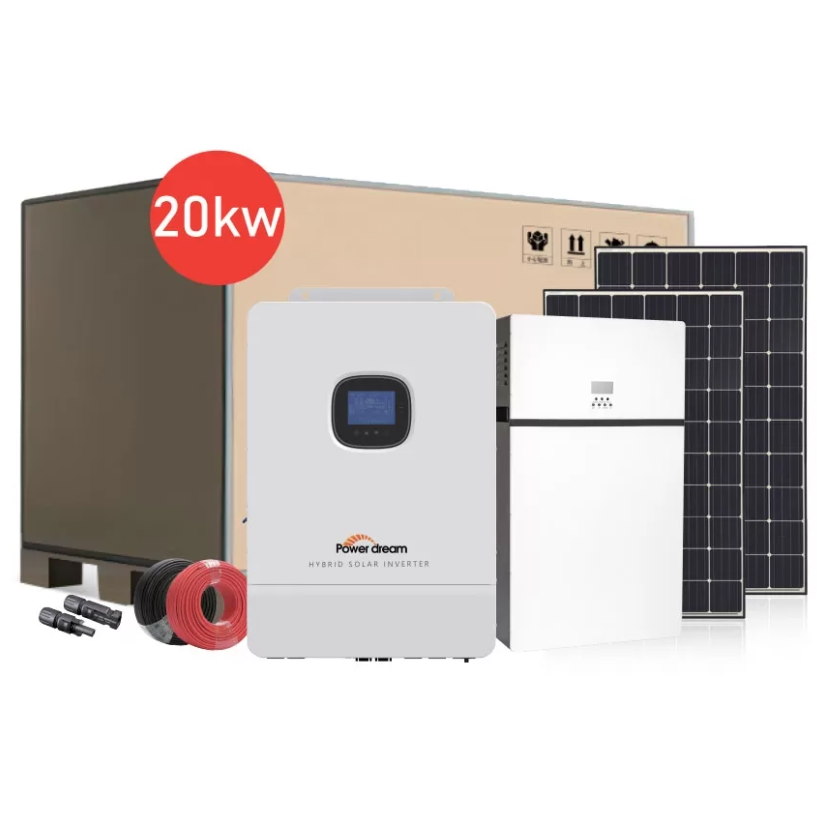
A reliable off grid solar system integrates power generation, conversion, storage, and control. PowerDream’s 20kW off grid solar power system is a prime example of a well-designed system: it consists of 36 x 550W monocrystalline silicon solar panels, 4 x 5kW pure-sine-wave off-grid inverters, and 2 x 51.2V lithium batteries equipped with a smart battery management system.

The 36 x 550-watt monocrystalline silicon solar panels offer high power efficiency and excellent performance in low light conditions. This configuration optimizes rooftop or ground-mounted layouts and concentrates power generation in a compact space, particularly important for farms with limited area. The four 5kW off-grid inverters provide pure sine-wave output, delivering precise, clean power suitable for sophisticated agricultural electronic equipment, variable-speed water pumps, and refrigeration compressors used on rural farms. Pure sine wave output minimizes harmonic distortion, protects motors, and maintains instrument accuracy.

The two 51.2V lithium battery packs provide energy buffering to meet the farm’s nighttime electricity needs and power requirements during consecutive cloudy days. Compared to lead-acid battery systems, lithium batteries offer higher cycle efficiency, longer lifespan, and superior depth-of-discharge characteristics. They can also be monitored in real-time via a mobile application, allowing farm operators to track power generation, consumption, and battery status. These components together form a powerful off-grid solar system that supports continuous farm operations with minimal human intervention.

off grid solar systems 1-1

Matching Off Grid Solar Systems: Generation, Storage, and Farm Load

Performance planning is key to achieving energy independence. A 20kW off grid solar power system must consider not only instantaneous peak power but also long-term energy consumption. A comprehensive energy audit is the first step: listing all equipment, rated power, daily operating hours, and operating cycles. For farms, the main energy-consuming equipment typically includes irrigation pumps, refrigeration equipment, grain dryers, lighting, and ventilation systems.

Under ideal conditions, a 36-panel 550W solar array can generate up to 19.8kW of peak power. Two 51.2V lithium batteries provide sufficient amp-hour capacity for backup energy during nighttime and cloudy days. A smart battery management system maximizes usable capacity while preventing over-discharge and overcharging, thus extending battery life.

This means the 20kW off grid solar system can more reliably meet the typical farm’s electricity needs. For example, a 12kW system might frequently require backup generator power during prolonged cloudy periods or peak irrigation times, while the 20kW system’s larger generation and storage capacity reduces this occurrence.

Matching Off-Grid Solar System Generation, Storage, and Farm Load

Bringing Smart Monitoring and Automatic Load Management to the Farm

Intelligent control makes the solar system not only usable but also practical. PowerDream’s mobile monitoring and automatic load management are crucial for ensuring operational stability. A real-time dashboard displays instantaneous power generation, cumulative power generation, battery state of charge (SoC), and load consumption. This transparency allows farm managers to schedule energy-intensive tasks during high-production periods, improving efficiency.

In low-light conditions, automatic load management prioritizes power to critical equipment. For example, in the evening or on cloudy mornings, the system controller maintains power to refrigeration equipment and essential irrigation pumps while reducing or temporarily cutting off non-critical loads, such as workshop heaters or charging stations.

Furthermore, the smart inverter and battery management system can implement time-of-use pricing strategies even in off-grid situations: actively charging during peak sunlight hours and reducing power to non-essential loads at dusk. By combining predictive algorithms that utilize weather forecasts and historical power generation patterns, these control measures enhance reliability. Operators receive alerts via a mobile application for low battery levels, maintenance needs, or abnormal loads, enabling proactive responses. This modular design, coupled with remote monitoring, allows for rapid diagnosis and targeted repairs, minimizing downtime for critical farm operations.

Improving Energy Economics for Rural Farms

For farms with high energy consumption, a 20 kW off grid solar system offers greater economic advantages than smaller systems.

1. Capital Cost Components: These include solar panels, inverters, batteries, balance-of-system components (installation, wiring, combiner boxes), installation, commissioning, and permits. Because PowerDream’s 20kW system uses high-efficiency 550W monocrystalline silicon solar panels and lithium batteries, the initial investment is higher than lower-performance alternatives. Still, it delivers higher energy output and a longer lifespan.

2. Operational Cost Savings: Reduced or eliminated fuel and maintenance costs for diesel generators are the primary ongoing savings. Generators require fuel, oil changes, and regular maintenance. When a 20kW system significantly reduces generator run time, the accumulated savings in fuel and maintenance costs over several years can offset the initial capital expenditure.

3. Payback Period and Lifecycle: The payback period is estimated by comparing the total annual operational savings to the annual capital cost. In many rural areas with high diesel costs or unreliable grid service, the payback period for a system of this size is typically within a manageable timeframe—usually 4-8 years.

Improving Energy Economics for Rural Farms

Enhancing Energy Independence for Rural Farms

A key advantage of the 20kW off grid solar power system is its scalability and environmental benefits. Farms can gradually expand power generation or storage capacity based on their operational scale: adding solar panels, increasing battery capacity, or deploying more modular inverters. Because PowerDream uses modular 5kW inverter units, this gradual expansion avoids the need to redesign the entire system. From an environmental perspective, replacing diesel power generation with solar power significantly reduces greenhouse gas emissions and local air pollution. For farms using mechanical equipment or employing workers, reduced generator run time improves air quality and reduces noise, creating a better working environment and increasing energy independence.

How can we solve the problem of low efficiency in solar panel kits at high temperatures?

When you install a 5kW solar panel system on your roof, and it’s a hot afternoon, the panel surface temperature can exceed 70-80°C, while the ambient air temperature is close to 40°C. In this situation, even monocrystalline silicon solar panels with a nominal efficiency of 20% will experience a significant decrease in power output. Solar cells produce more current at higher light intensity, but their voltage decreases with increasing temperature; the combined effect of these two factors reduces the maximum power output. Typically, the temperature coefficient of monocrystalline silicon cells is such that power decreases by 0.25% to 0.45% for every 1°C increase above standard test conditions. Therefore, a 50°C increase in temperature can reduce power output by approximately 12-22%, depending on the panel’s chemical composition and quality. Thus, high temperatures can cause measurable performance losses in solar panel kits.

Choosing Temperature-Insensitive Solar Panel Kits

Choosing a solar panel kit with components that minimize temperature sensitivity is crucial. Therefore, when purchasing a solar panel kit , consider the power temperature coefficient (Pmax) – the lower this value (the more negative it is), the better the component’s resistance to thermal losses. For example, high-quality monocrystalline silicon solar panels typically have a power temperature coefficient of -0.30%/°C, while lower-end polycrystalline silicon panels may have a power temperature coefficient of -0.40%/°C or lower.

In addition, check the following attributes: cell type (N-type monocrystalline silicon cells perform better at high temperatures than older P-type cells), backsheet thermal emissivity, cell metallization quality, and lamination materials.

Also, follow these selection principles: (1) Prioritize components with a clearly documented low power temperature coefficient; (2) Prioritize components using tempered low-iron glass and high-transmittance encapsulation materials to ensure optical performance is maintained at high temperatures; (3) Choose mechanical designs that facilitate heat dissipation from the cell layer, such as the frame, backsheet, and junction box mounting methods. Finally, be sure to verify the manufacturer’s thermal testing (NOCT/IEC conditions) and request actual thermal data whenever possible.

Choosing Temperature-Insensitive Solar Panel Kits

Passive Cooling Film Solutions for Solar Panel Kits

Passive cooling films and coatings are a cost-effective first line of defense. They include radiative cooling films, selective infrared emissive coatings, and thermally conductive adhesive layers, which alter the path of heat dissipation from the solar cells. Radiative cooling films reflect sunlight while strongly emitting thermal infrared radiation, allowing the modules to radiate heat into the night sky and partially dissipate heat during the day. ​​Additionally, highly conductive backsheets or adhesive films reduce the thermal resistance at the interface between the cell laminate and the aluminum frame, increasing heat flow into the frame and subsequently dissipating it into the surrounding air.

In practice, engineered multi-layer cooling films combined with high-emissivity backsheets can reduce the steady-state temperature of the modules by several degrees Celsius—enough to compensate for several percentage points of power loss. However, it is crucial to verify the manufacturer’s long-term aging data and ensure compatibility with existing lamination processes.

Ventilation Measures – Design, Installation, and Airflow Engineering

Ventilation is the most direct and reliable method for reducing module temperature. A well-designed mounting system creates convective airflow behind and beneath the modules, carrying away heat.

Practical measures include:
1. For residential systems, maintaining a continuous air gap of at least 30-50 mm between the modules and the roof/structure—larger gaps (50-150 mm) are more effective for commercial arrays;

2. Adjusting the module orientation to create chimney effect channels and facilitate wind-driven lateral airflow;

3. Using slotted rail systems or spacers to ensure uniform gaps and prevent debris accumulation;

4. Designing edge gaps and drip edges to prevent localized overheating. For ground-mounted solar panel kits, raising the mounting height (≥0.6 meters) enhances natural convection and can sometimes create passive airflow beneath the modules, significantly reducing module temperature.

Ventilation Measures for Solar Panel Kits – Design, Installation, and Airflow Engineering

Active Cooling Strategies for High-Performance Solar Panel Kits

Active cooling becomes particularly important when the value of the added energy outweighs the capital and operating costs—for example, in concentrated photovoltaic power generation, solar+storage systems with high battery charging costs, or commercial PV arrays with short payback periods. Forced-air cooling systems can use low-power fans integrated into the component frame or subframe ducting to draw ambient air into the ventilation channels. Water cooling offers even higher heat dissipation efficiency.

When designing an active cooling system for solar panel modules, the cooling capacity should be determined based on the expected heat load, controlled via temperature setpoints or Maximum Power Point Tracking (MPPT) telemetry, and include redundancy for increased reliability. A life-cycle cost analysis should be performed – active cooling typically recovers only the energy it consumes, with diminishing returns beyond a certain point, and may therefore be suitable only for hot, sunny regions or high-value installations.

Ensure proper installation and regular maintenance

High temperatures not only reduce instantaneous efficiency but also affect long-term reliability. Excessive module temperatures accelerate discoloration of encapsulation materials, embrittlement of backsheets, and solder joint fatigue. Therefore, installers should employ installation methods that improve heat dissipation and extend lifespan. In humid or coastal high-temperature regions, they should use corrosion-resistant frames and stainless steel fasteners. Easy access for cleaning and inspection of heat sinks and vents is essential.

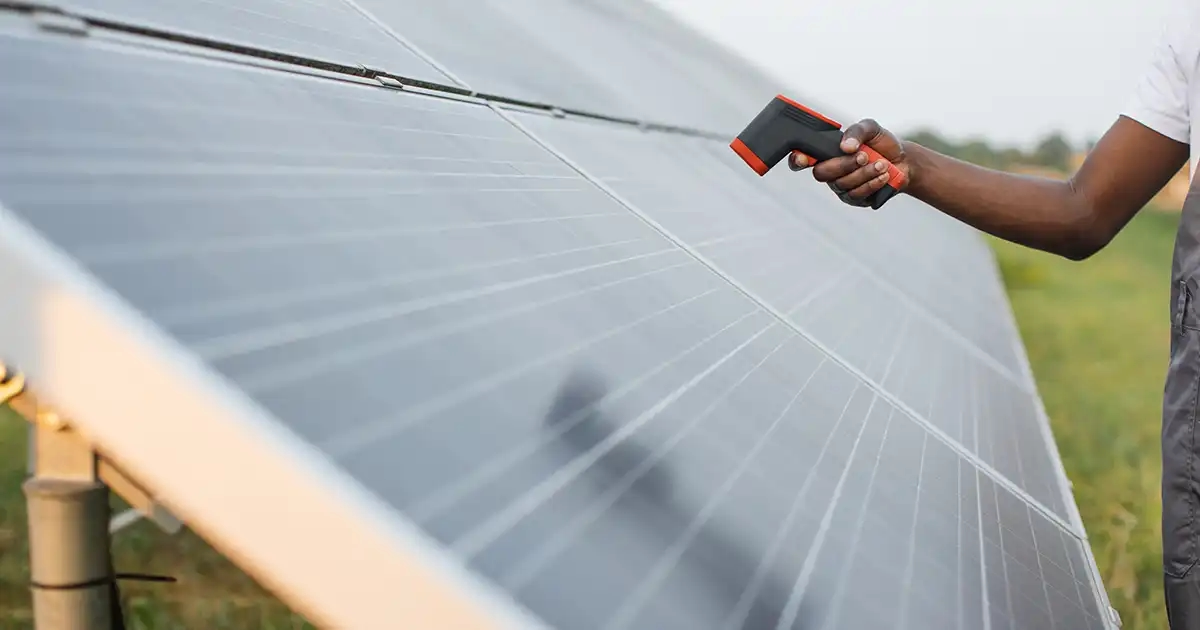
Use hydrophobic and breathable seals at frame corners to prevent moisture ingress while allowing for thermal expansion. Furthermore, regular infrared thermal imaging should be performed to detect hotspots early, and electrical performance testing should be used to quantify irreversible performance losses. During procurement, require accelerated thermal cycling and damp-heat test reports from the solar panel kit manufacturer to ensure your solar panels perform reliably.

Ensure proper installation and regular maintenance of the solar panel kit

Improving operating efficiency under high temperatures

When purchasing solar panel kits for hot climates, choose monocrystalline modules with a low temperature coefficient and thermal cycling testing. Where appropriate, consider using high-emissivity backsheets or radiative cooling films. Additionally, design a ventilated structure during installation, leaving 30-50 mm of clearance for residential applications and larger gaps for commercial use; adjust the array orientation; and finally implement a monitoring and MPPT-compatible control system to improve operating efficiency in response to thermal events.

Solar Outdoor Fan vs Traditional Outdoor Fan: Energy Savings & Environmental Impact

Traditional outdoor fans hum loudly while running and continuously draw power from the grid; solar-powered fans, on the other hand, silently sense when someone approaches, and their soft LED lights illuminate, increasing airflow only when someone enters their range. During the evening, a solar outdoor fan can operate without consuming any electricity. Which device would you choose to run for a season? Which one can help your brand or family achieve sustainability goals? We will answer this question through technical principles and real-world examples.

Solar Outdoor Fan with Solar and Battery Charging

A typical solar outdoor fan isn’t just a fan motor with a solar panel on the roof—it’s a complete energy system designed to capture energy from sunlight, store it, and release it in a controlled manner.

Core Components and Operation of a Solar Outdoor Fan:

Photovoltaic (PV) Modules (Solar Panels): Photovoltaic cells convert sunlight into direct current (DC) electricity. Panel size varies by model; typical home solar fans use 20-80-watt panels, depending on power and runtime requirements.

Battery Storage: Lithium-ion or lead-acid batteries store electricity for use at night or on cloudy days. Battery capacity determines the runtime.

Charge Controller/MPPT: Manages the charging process to maximize solar energy utilization, protect the battery, and prevent overcharging. Modern controllers use Maximum Power Point Tracking (MPPT) technology to improve efficiency.

Dual Charging (Solar + AC): PowerDream solar fans support both solar charging and AC power supply. This means the fan can run entirely on solar power when available, or use grid power when needed. Dual charging increases reliability and simplifies size selection.

Performance Impact:

When there is sufficient sunlight, the fan draws power directly from the photovoltaic array, while the battery is also charging. When there is insufficient sunlight, the system uses stored energy. If the battery is low or if the user requires it, the battery can be quickly recharged via AC power, or the fan can be powered directly. DC motors and appropriate controls maximize efficiency; furthermore, brushless DC motors are typically 30-50% more efficient than comparable AC induction motors used in traditional fans. In short, a solar-powered outdoor fan is an integrated miniature energy system. Its design choices, including photovoltaic power, battery capacity, motor type, and intelligent control, determine its energy independence and environmental performance.

Solar Outdoor Fan with Solar and Battery Charging

More Energy Efficient Compared to Traditional Outdoor Fans

Energy efficiency is the benefit most valued by many customers. To assess this, we compare the energy consumption over the lifecycle of a solar outdoor fan with that of a traditional outdoor fan.

Define a typical usage scenario. For example: a patio fan with a rated power of 50 watts, running 8 hours per night, 120 days per year.

Traditional fan energy consumption: 48 kilowatt-hours per season. At a US residential electricity price of $0.15/kWh, this is $7.20 per season.

Solar fan energy: If the solar fan is appropriately sized and the average daily solar power generation is sufficient to support its operation, then grid energy consumption can be zero during these periods. In this case, the operating energy cost from the grid is zero; however, implicit energy and battery charging efficiency losses must be considered.

Solar + AC hybrid operation: If the fan uses solar power during the day and only AC power during extended cloudy periods, the net grid load can be reduced by 70% to 100%, depending on battery capacity and usage patterns.

In many homes, PowerDream customers have found that replacing traditional AC fans with appropriately sized solar fans reduces daily grid energy consumption on porches and patios by 60% to 100%. Therefore, if properly sized, a solar-powered outdoor fan can eliminate most or all grid energy consumption.

Environmental Impact: Carbon Emissions, Lifecycle Analysis, and Materials

Energy efficiency means reduced environmental impact, but responsible buyers must look beyond immediate electricity consumption. A careful consideration should also include production emissions, material selection, battery life, and end-of-life recycling.

Key Environmental Factors:

1. Operational Carbon Reduction

If a solar fan saves 50 kilowatt-hours per year compared to a traditional fan, at 0.4 kg of CO2 equivalent per kilowatt-hour, this translates to approximately 20 kg of CO2 emissions per year. Over its 10-year lifespan, each fan can reduce approximately 200 kg of CO2 emissions – a significant impact when scaled up.

2. Embodied Emissions

The production of photovoltaic modules, batteries, electronic components, and metal casings all generates emissions. For small solar fans, component production accounts for the majority of embodied energy, but this proportion is relatively small compared to household photovoltaic modules.

Life cycle assessments (LCA) typically show that photovoltaic power generation devices can recoup their embodied emission costs within months to years. After recouping these costs, their net lifecycle emissions are lower than those of comparable grid-connected devices.

4. Net Environmental Conclusion:

Properly designed and deployed solar outdoor fans have a lower life-cycle carbon footprint than traditional grid-powered fans, and their operating costs can be recovered quickly. Intelligent control strategies extend battery life and enhance environmental benefits by minimizing unnecessary cycles.

Solar Outdoor Fans with Intelligent Control

Intelligent control systems are key to improving the efficiency of passive solar systems. PowerDream’s series of solar outdoor fans uses human detection technology and adaptive management features, offering three main advantages: energy savings, improved comfort, and enhanced safety.

When the sensor detects a person, the fan accelerates to a preset comfortable speed, and the lights brighten. When the sensor does not detect a person for a set period, the system dims the lights and enters an energy-saving standby mode, or reduces the fan speed. Furthermore, PowerDream integrates fan control with LED lighting. This means the fan provides both ventilation and localized lighting, enhancing the device’s value across different settings. Additionally, if solar power generation is insufficient or the battery level is low, the system can automatically request AC power assistance to ensure continuous comfort.

Solar Outdoor Fans with Intelligent Control

Delivering Real Energy and Environmental Benefits

A solar outdoor fan is more than just a highly efficient motor; it’s a miniature renewable energy system that can replace or supplement grid power, reduce carbon emissions, and improve living comfort. PowerDream’s combination of dual solar and AC charging, high-efficiency brushless DC motors, MPPT charging control, and intelligent human detection technology effectively reduces operating energy consumption, extends battery life, and delivers a hands-free, comfortable experience unmatched by traditional outdoor fans.

Frequently Asked Questions about Solar Fans

1. Can solar outdoor fans run solely on solar power, or do they always require a grid backup power supply?

A1: A properly sized solar outdoor fan can operate entirely on solar power on sunny days. PowerDream’s design supports both pure solar operation and a hybrid mode with AC power backup. To ensure continuous operation during prolonged cloudy periods, an AC backup power supply or a larger battery storage system can be used.

2. How much energy can a solar outdoor fan save compared to a traditional fan?

A2: Energy savings vary depending on location and usage. In many residential settings, a properly sized solar fan can reduce grid energy consumption by 60% to 100%. The motion sensor function can significantly reduce effective operating time, thereby multiplying energy savings.

3. Can solar fans work at night or on cloudy days?

A3: Yes – if the system is equipped with battery storage, the fan can operate at night or on cloudy days. The operating time depends on the battery capacity and the amount of solar energy collected beforehand. Solar + AC hybrid fans can use mains power when the battery is depleted.

How to Select PV Module Technology for On Grid Solar Systems: Mono vs Multi vs PERC

Suppose you have 1000 square feet of usable roof space. If you choose inefficient photovoltaic modules, you might generate only a fraction of your energy needs; if you choose high-efficiency modules, you might meet or exceed your household electricity needs and shorten the payback period. This simple trade-off is at the heart of photovoltaic module technology selection for on grid solar systems. With increasing pressure to reduce energy costs and achieve sustainability goals, the choice of module technology directly determines the system’s power generation, site suitability, and overall life-cycle economic benefits.

Component Performance and Efficiency of On grid Solar Systems

When purchasing an on grid solar system, module efficiency is the primary technical indicator you need to consider. Efficiency determines how much electricity a solar panel can generate per square foot of installed area. Monocrystalline silicon modules typically have a nominal efficiency between 18% and 22%; polycrystalline silicon modules typically have an efficiency between 15% and 17%; and PERC modules (which can be based on monocrystalline silicon cells) have slightly higher efficiency than traditional cell structures, typically improving efficiency by 1% to 2%. In practice, PERC monocrystalline silicon modules can achieve efficiencies of 20% to 22%, while standard monocrystalline silicon modules are slightly less efficient.

Why this is important for on grid systems:

Limited roof space: High-efficiency modules (monocrystalline silicon or monocrystalline PERC) maximize power generation in limited space. More kilowatt-hours (kWh) are obtained per square meter, resulting in higher system capacity per roof.

Ground-mounted or large arrays: If land is abundant, efficiency is less critical, so lower-cost polycrystalline silicon modules can be considered if capital expenditure per watt is the primary metric.

System capacity: High-efficiency modules allow you to achieve your target DC nameplate power (kWp) with fewer modules, simplifying string layout and racking installation.

In summary, for most residential and many commercial on grid solar systems, monocrystalline silicon or monocrystalline PERC modules are practical choices when the goal is to maximize roof power generation and minimize installation footprint.

Component Performance and Efficiency of On grid Solar Systems

Temperature Coefficient, Low-Light Response, and Actual Power Generation of On Grid Solar Systems

The nominal power of a photovoltaic module is not the same as its actual power generation. Two additional technical parameters, temperature coefficient and low-light response, have a particularly significant impact on power generation in practical applications.

The temperature coefficient indicates the extent to which module power decreases as the battery temperature rises. Since module batteries are typically 20-40°C above ambient temperature in the summer, a better temperature coefficient helps maintain output power at high temperatures. Monocrystalline silicon modules and PERC designs generally have slightly better temperature coefficients than older polycrystalline silicon modules. This difference becomes even more significant in hot weather. Over the course of a year, this represents a considerable difference.

Low-light performance is also important. Monocrystalline silicon cells generally perform better than polycrystalline silicon cells under diffuse light and at low sun angles in the morning and evening, thereby generating more energy on cloudy days or during periods of weak solar radiation. Therefore, if your location is hot or has high solar irradiance, prioritize module technologies with good temperature coefficients. Consider using PERC/monocrystalline cells to improve yield during high temperatures and low-light periods.

Temperature Coefficient, Low-Light Response, and Actual Power Generation of On Grid Solar Systems

Performance Degradation, Reliability, and Long-Term Warranty Considerations

On grid photovoltaic systems are a long-term investment in solar energy. Module degradation directly affects the power generation of the installed system over its lifespan, thus impacting its levelized cost of energy.

Typical degradation behaviors include:

Initial light-induced degradation: Some modules, particularly older p-type cells and some PERC variants, may experience 1-3% early light-induced degradation in the first year. Modern manufacturing processes have reduced light-induced degradation, but it still affects performance predictions.

Annual degradation rate: High-quality monocrystalline silicon modules typically have an annual degradation rate between 0.25% and 0.7%. Polycrystalline silicon modules usually degrade slightly faster. Over a 25-year warranty period, an annual degradation rate of 0.5% results in a final power output of approximately 88% of the initial rated power, while a 0.7% annual degradation rate reduces the power to approximately 82%.

For on grid solar systems, long-term reliability requires selecting modules with conservative degradation specifications, robust anti-PID design, and reputable third-party testing and certification. PowerDream’s grid-tied solar systems use field-proven monocrystalline silicon modules with conservative warranty coverage to minimize lifetime energy uncertainty for grid-tied customers.

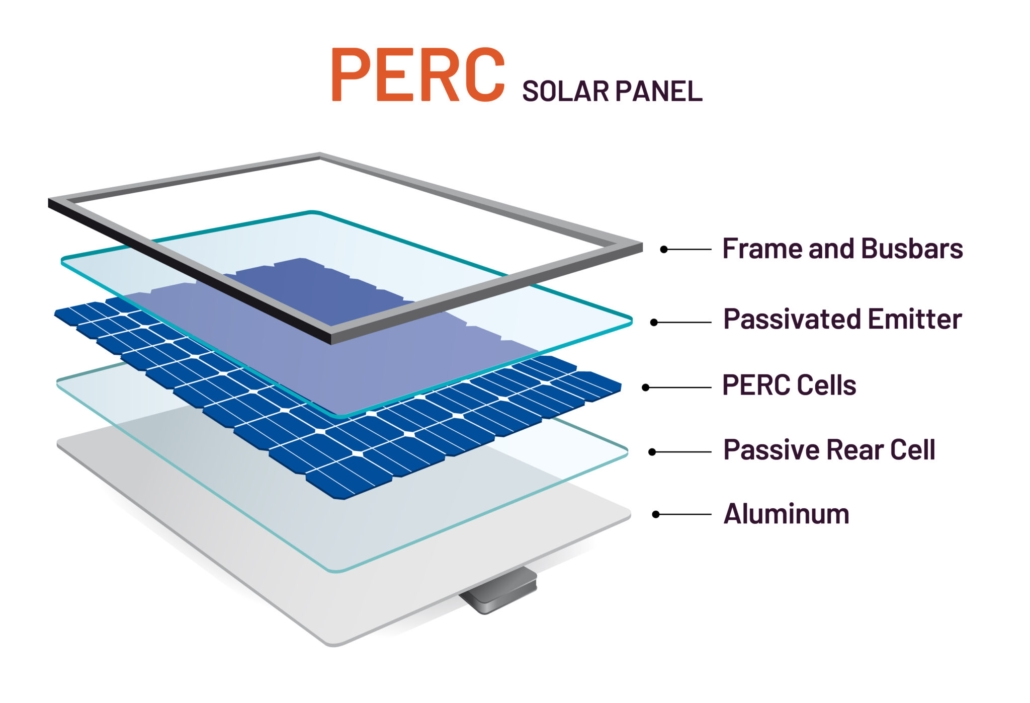
What is PERC, and when is it relevant?

PERC is a cell-level innovation that adds a thin passivation layer to the back of the cell, reflecting otherwise lost photons back into the cell, thus improving absorption and conversion. PERC is not a different material, but rather a process upgrade applied to silicon cells—typically used in conjunction with monocrystalline silicon wafers.

Advantages of PERC for on grid solar systems:

Higher power output in the same area.

Improved low-light response and slightly improved temperature performance in many cases.

Compatibility with bifacial designs.

In some PERC designs, the likelihood of LID (light-induced degradation) or high-temperature-induced degradation is increased. Manufacturers have addressed most of these issues, but production quality and process control are important. PERC monocrystalline modules have a lower premium per watt compared to standard monocrystalline or polycrystalline modules, but this premium has narrowed as PERC has become mainstream. If you need extra watts per square meter, PERC monocrystalline silicon is an excellent choice for grid-tied systems.

What is PERC, and when is it relevant

Practical Installation Considerations and System Integration

Module technology choices also impact system design choices: string/inverter layout, tilt, mounting, shading strategies, and monitoring.

Key considerations for solar on grid system integration:

Inverter Matching: Higher-power monocrystalline/PERC modules may increase string voltage and current; ensure the inverter MPPT range, maximum input current, and series string size account for module Vmp/Voc at the coldest temperatures.

Roof Tilt and Layout: With more efficient modules, you may need fewer strings and shorter arrays, simplifying wiring and reducing BOS costs.

Shading and Mismatch: If panels face different directions, consider using microinverters or optimizers for maximum yield. Monocrystalline modules with higher shade tolerance still benefit from module-level electronics.

Bifacial Options: For ground mounts or reflective roofs, some monocrystalline/PERC bifacial modules can collect additional energy from albedo. Incorporate the module backside gain into yield models. Monitoring and Data: Choose modules that support reliable firmware and monitoring integration—on grid systems require accurate power generation data for billing and performance optimization.

PowerDream integrates monocrystalline silicon modules with appropriately sized inverters and balance-of-system components to ensure high power generation, reliable grid interaction, and predictable economic benefits.

Why Monocrystalline Silicon is the Preferred Choice for on grid Systems

Choosing photovoltaic modules for an on grid solar system means balancing efficiency, site constraints, yield over lifespan, and supplier reliability. In most residential and commercial on grid scenarios, monocrystalline modules offer the best overall value. They maximize energy per unit area, typically exhibit better temperature and low-light performance, and, when sourced from reputable on grid solar system manufacturers, offer conservative degradation rates and reliable warranties. PERC can provide a meaningful boost when limited roof space requires extra wattage, while polycrystalline silicon can still play a role when cost per watt and ample space are the dominant decision factors.

Modified Sine Wave vs. Pure Sine Wave Off Grid Solar Inverter: Which Is Better?

Choosing the right off grid solar inverter is one of the most important decisions when designing a standalone solar system. The inverter determines how the clean energy stored in the battery is converted into electricity for use by homes, tools, appliances, and outdoor systems. Currently, there are two common waveform types: modified sine wave and pure sine wave. While the difference between the two seems simple in theory, in practice, it affects equipment compatibility, efficiency, noise levels, battery stress, and long-term reliability. Therefore, I will compare the performance of the two types of off grid solar inverters under typical loads and discuss their impact on batteries and motors.

What are Modified Sine Wave and Pure Sine Wave Off Grid Solar Inverter?

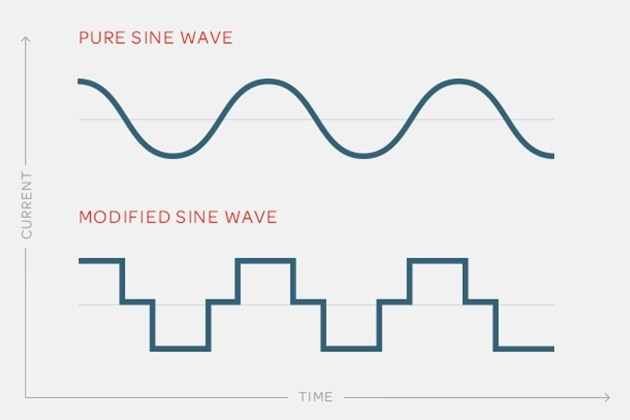
Pure sine wave off grid solar inverters produce an AC voltage waveform that is very close to an ideal sine wave – smooth, continuous, and symmetrical. This is the waveform provided by the power grid, and most household appliances are designed to operate on it. In contrast, modified sine wave off-grid solar inverters use a stepped or blocky waveform to approximate a sine wave. While this output is suitable for many resistive loads, its waveform has drawbacks: higher harmonic distortion, larger voltage transients, and less smooth current flow.

Key Practical Differences:

Harmonic Content and Total Harmonic Distortion (THD): Pure sine wave off grid solar inverters typically have lower Total Harmonic Distortion (THD), usually below 3% to 5%, while modified sine wave inverters can have much higher THD due to the larger waveform transients. Higher THD can cause motors and transformers to overheat due to waveform fluctuations.

Compatibility: Sensitive electronic devices such as computers, LED drivers, variable-speed pumps, medical equipment, and many modern household appliances require a clean sine-wave input signal. Waveform distortion can lead to malfunctions, increased electromagnetic interference, and even equipment damage.

Power Quality and Efficiency: Motors run cooler and more efficiently under a pure sine wave; audio equipment produces clear sound without buzzing; and battery charging curves are more predictable.

What are Modified Sine Wave and Pure Sine Wave Off-Grid Solar Inverters

How do the Waveform Types of the Off Grid Solar Inverter Affect Common Loads?

Different appliances respond differently to waveform quality. Solar street light controllers or LED drivers can accept modified sine waves in some cases, but many modern LED drivers and street light control units perform best with pure sine waves. Let’s analyze common off-grid loads and their performance under various inverter types.

Resistive Loads:

Modified Sine Wave: Generally acceptable. Resistive elements only dissipate power; the waveform shape has minimal impact.
Pure Sine Wave: Perfect performance. No drawbacks, but limited performance advantages compared to resistive loads.

Inductive Loads:

Modified Sine Wave: Can lead to increased heat generation, torque pulsation, increased noise, and reduced efficiency. Motor operating temperatures may be higher, shortening the lifespan. Variable frequency drives and shaded-pole motors may malfunction.
Pure Sine Wave: Smooth torque, low heat generation, and normal efficiency. Crucial for water pumps, washing machines, and HVAC compressors.

Sensitive Electronic Equipment:

Modified Sine Wave: Risks of improper operation, false alarms, or damage. Some power supplies may generate extra heat or reject the waveform.
Pure Sine Wave: Ensures safe and reliable operation of switching power supplies and electronic control equipment.

How do the Waveform Types of the Off Grid Solar Inverter Affect Common Loads

Battery Life, Charging Characteristics, and System Efficiency

One of the core objectives of off grid system design is to maximize the energy utilization of the battery bank. Off grid solar inverters are a critical component of off grid solar systems, influencing charging methods, discharge depth patterns, and overall energy efficiency.

Impact on Charging and Battery Cycling:

Modified sine wave inverters sometimes employ simpler control electronics, which can lead to reduced accuracy in charging and control signals. When integrated with the inverter’s charger, this can result in irregular charging algorithms, increasing cycle efficiency losses. Pure sine wave off grid solar inverters are typically compatible with BMS-enabled chargers, temperature compensation, and multi-stage constant-current/constant-voltage/float charging. More efficient charging methods better protect battery health and reduce premature capacity degradation.

Efficiency and Heat Loss:

The current drawn by motors and appliances varies with the waveform; changing the waveform typically increases the RMS current for the same load, thereby increasing I²R losses in the wires and internal components. This loss manifests as heat, reducing the battery’s net usable energy. Pure sine wave off-grid solar inverters produce a smoother current waveform and typically incorporate high-efficiency topologies (e.g., high-frequency transformers or transformerless designs), resulting in higher conversion efficiency and lower standby losses.

Long-Term Battery Life Impact

Because pure sine wave off grid solar inverters reduce unnecessary heat generation in the load and enable more precise charge control, the battery pack experiences fewer stress cycles and more predictable state-of-charge management. Over the system’s lifespan, this can significantly save on battery replacement costs and downtime—especially critical in off-grid applications where reliability is paramount.

At PowerDream, we use off grid solar inverters with pure sine-wave output to optimize charging algorithms and minimize parasitic losses, thereby preserving battery cycle life and maximizing overall system round-trip efficiency.

Reliability, Diagnostics, and Field Performance

When a system is off grid, remote reliability is crucial. Failures not only incur repair costs but often lead to reduced productivity or comfort. Modified sine wave off grid solar inverters are typically simpler in design but can impose higher thermal and electrical stress on connected equipment. These downstream stresses increase the probability of field failures. Pure sine wave off-grid solar inverters, with robust thermal management, conservative component derating, and active fault detection, prevent catastrophic failures.

In terms of system monitoring and diagnostics, pure sine wave off grid solar inverters typically include a range of telemetry and diagnostic features—fault logging, remote alarms, and historical energy graphs—that expedite troubleshooting of remote installations. Lower-priced modified sine wave units may lack comprehensive telemetry capabilities, resulting in slower, more costly fault isolation. Regarding field performance, off-grid systems often operate in harsh environments. Off grid solar inverters designed for these environments feature conformal coatings, higher ingress protection ratings, and dust-resistant cooling systems. These design choices reduce downtime and extend the mean time between failures. For critical applications such as telecommunications equipment rooms, medical clinics, or remote streetlights, PowerDream recommends using off-grid inverters with pure sine-wave output, as they provide predictable performance.

Reliability, Diagnostics, and Field Performance 1

Why use pure sine wave off grid solar inverters?

Considering overall performance, efficiency, reliability, and long-term economics, pure sine wave off grid solar inverters are the better choice for most practical off-grid applications. While modified sine wave inverters have advantages in certain specific applications, such as when cost is the primary consideration and the load is purely resistive, off-grid ecosystems include smart LEDs, inverters, water pumps, and precision electronic equipment that require a clean, stable AC waveform. Pure sine wave inverters reduce electromagnetic interference (EMI), lower motor operating temperatures, extend battery life, and minimize unexpected failures. Furthermore, they simplify integration with telemetry systems and modern battery management systems.

How to Verify the Quality of Lithium Ion Solar Battery?

As a lithium ion solar battery supplier with years of experience, we have encountered a wide range of lithium ion solar battery quality-related failures—from residential off-grid homes to commercial solar projects. 68% of lithium-ion solar battery failures stem from uncertified production or exaggerated cycle-life claims, and 42% of users lose thousands of dollars due to poor battery quality, resulting in downtime, repairs, or replacements. This guide will focus on two of the most critical checks: CE/UL certification and cycle life verification, explaining their importance, implementation methods, auxiliary quality tests, and PowerDream’s rigorous quality control processes.

Safety Compliance Certification for the Lithium ion Solar Battery

Certification is the primary indicator that a lithium ion solar battery has passed independent safety and performance testing. However, not all certifications are equally valid.

Key Certification Meanings:

CE (Europe): Indicates compliance with EU safety and electromagnetic compatibility requirements. For batteries, the CE mark indicates that the manufacturer has met the relevant EU directives.

UL (North America): Crucial for the United States and Canada. UL certification covers multiple battery standards: UL 1642 (cells), UL 1973 (batteries for stationary applications), and UL 9540/UL 9540A (energy storage systems and fire resistance testing). UL certification typically includes factory inspections and ongoing compliance checks.

IEC Standards: International standards such as IEC 62619, IEC 62133, and IEC 62933 are crucial in many markets.

UN38.3: A necessary condition for the transportation of lithium batteries. Passing the UN38.3 test means the battery can withstand various risks commonly encountered during transportation (altitude, temperature, vibration, shock).

TÜV/CE, RoHS, REACH: Additional markings for chemical compliance and restricted substances may be related to environmental and import regulations.

How to verify certificates? You can request test reports and certificates with laboratory markings from lithium-ion solar battery suppliers. Authoritative certificates should include the issuing laboratory name, report number, and test date. Verification with the issuing body is also possible. Many laboratories list issued certificates in searchable databases. For UL certification, use the UL online certification database to verify your product or component’s certification information.
Additionally, check the certification scope and model. CE or UL certificates should list the exact part number, rated capacity, and configuration. If a certificate only covers the “battery type” and not the assembled module, it is incomplete for an installed system.

Safety Compliance Certification for the Lithium ion Solar Battery

Cycle Life Testing of the Lithium ion Solar Battery

Cycle life determines long-term economic benefits. When suppliers claim “10,000 cycles,” they usually mean “X cycles to achieve Y% capacity under specific conditions.” Therefore, always carefully read the terms and conditions and request concrete evidence from the supplier.

Key Concepts of Cycle Life

Cycle Count: One complete discharge and charge cycle. Manufacturers typically report the number of cycles to reach 80% of rated capacity, which is the industry benchmark.

Depth of Discharge (DoD): The depth of discharge of the battery per cycle. 100% depth of discharge degrades the battery faster than 80% or 50% does. Cycle life is closely related to depth of discharge.

C-rate: Refers to the charging/discharging rate. A higher C-rate increases battery stress and shortens cycle life. Typical household battery specifications use a C-rate range of 0.2C to 1C.

Temperature: High temperatures accelerate capacity decay. Cycle life is usually determined under ambient testing temperatures.

How to interpret claims representing cycle life? First, we can look at the test conditions. A specification like “10,000 cycles” is meaningless without information such as the depth of damage (DoD), the cycle rate (C-rate), and the temperature. Ask for details of the test protocol, such as: “10,000 cycles to 80% DoD at 25°C, in 0.5°C increments.” Some reputable suppliers provide cycle-to-remaining-capacity curves that show how capacity decays over time. Examine where and under what conditions the 80% capacity degradation point occurs. Also, consider the chemical composition: lithium iron phosphate (LFP, LiFePO₄) typically offers a longer cycle life and better heat dissipation.

Cycle Life Testing of the Lithium ion Solar Battery

Supplementary Quality Testing for Lithium ion Solar Batteries

CE/UL certification and cycle life are the foundation of quality verification, but not the whole story. The following three supplementary tests ensure your lithium ion solar batteries operate reliably in a real-world solar system:

1. Capacity Retention Test

Capacity retention measures how much of a battery’s initial capacity it retains after many years of use. A high-quality lithium-ion solar cell should retain more than 80% of its rated capacity after reaching its rated cycle life. Therefore, you can request annual capacity retention data—PowerDream batteries retain 90% capacity after 1 year of use, 85% after 5 years, and 82% after 10 years.

2. Battery Management System Quality

The BMS is the “brain” of a lithium ion solar battery, responsible for regulating charging and discharging, preventing overheating, and balancing battery voltage. A poor-quality BMS can cause premature battery failure. Check the following:

Cell Balancing: Ensures all cells in the battery pack charge and discharge evenly (preventing weaker cells from dragging down overall performance). Thermal Monitoring: Shuts down the battery when the temperature exceeds 140°F (60°C) (crucial in hot climates). Overcharge Protection: Stops charging when the voltage exceeds the safe range (prevents battery swelling and fire). PowerDream tests each BMS to ensure it meets UL 1973 standards.

3. Temperature Performance

Lithium-ion solar cells perform poorly at extreme temperatures—unless specifically designed for this. Request temperature performance data:

Cold Weather: High-quality batteries retain over 80% of their capacity at 32°F (0°C) (a standard winter temperature). Inferior batteries will drop to 50% capacity at this temperature. Hot Weather: Retains over 85% of its capacity at 104°F (40°C) (a common summer temperature). Our batteries employ a thermal management system that maintains performance at temperatures up to 140°F (60°C).

PowerDream’s Four-Step Quality Validation Process

PowerDream’s lithium ion solar battery quality verification is conducted at every stage of production. Furthermore, our four-step process ensures that every cell meets CE/UL standards, achieves its expected cycle life, and operates reliably and stably in real-world environments. As a result, 99% of our customers have not reported any quality issues.

Step 1: Raw Material Testing

We only source Grade A lithium ion batteries and test them for the following: Capacity consistency. Cycle life (batteries undergo 500 cycle tests to ensure they meet our 10,000-cycle battery pack rating). Safety (batteries undergo short-circuit and overcharge tests to ensure they do not overheat).

Step 2: Battery Management System (BMS) Integration and Testing

We perform cell balancing tests to ensure all cells charge and discharge evenly. Then, we conduct thermal monitoring tests to assess their response under extreme temperatures. Next, fault detection is performed to ensure the BMS shuts down the battery in case of overcharge/short circuit. Step 3: Cycle Life and Capacity Testing. Each batch of lithium-ion solar cells undergoes 1000 cycle tests to verify capacity retention.

Step 4: Safety and Compliance Testing.

We conduct CE (IEC 62133) and UL 1973 compliance testing on each lithium ion battery to ensure thermal stability, shock resistance, and overcharge protection. Step 5: Final Inspection and Documentation. Each lithium-ion solar cell undergoes visual inspection and final capacity testing. We also provide a comprehensive quality report for each order.

Supplementary Quality Testing for Lithium ion Solar Batteries

Field Performance, Commissioning, and Continuous Monitoring.

Quality verification continues after purchase. Proper commissioning and monitoring ensure the system operates as expected under real-world conditions.

Commissioning checks require charge-discharge testing of the installed system to verify that its initial usable capacity matches the nameplate reading. A practical acceptance test might involve controlled 0.5 °C discharge under specific conditions. Additionally, a battery management system (BMS) and communication verification are required to ensure the system can report state of charge (SOC), state of health (SOH), temperature, and alarm information, and store logs for warranty verification.

Simultaneously, thermal analysis is performed using thermal imaging technology to detect hot spots in battery cells, connection points, and buses during commissioning. Continuous monitoring and remote diagnostics are also necessary; PowerDream provides a remote SOH control panel and issues alerts when battery aging exceeds expectations.

Certification and Cycle Life are Important Benchmarks

The performance of lithium ion solar batteries depends on their quality. Quality verification is not complicated—it boils down to two indispensable checks: CE/UL certification ensures safety and compliance, and cycle life verification ensures long-term durability. Furthermore, the quality, temperature performance, and manufacturing standards of the battery management system (BMS) must be checked to avoid the costly mistakes that plague 68% of solar energy users.