How does temperature affect the performance and lifespan of a lithium ion solar battery?
Premature failure of some lithium ion solar batteries is caused by improper temperature control. For example, some ranches in certain regions have experienced 10kWh battery packs failing after only three years because summer temperatures often reach 115°F (approximately 46°C). Or, in some colder areas, homeowners watch helplessly as their batteries lose 40% of their capacity in winter, leaving them without power on sub-zero nights. What is the average cost of these failures? Replacing a lithium-ion solar battery can cost thousands of dollars, not including the loss of energy savings. Unlike lead-acid batteries, lithium ion solar batteries are susceptible to temperature, but with proper use, damage can be minimized and their value maximized.
Lithium ion Solar Battery: Optimal Temperature Range – Peak Performance
Lithium ion solar batteries perform best within a specific temperature range – a range that ensures efficient chemical reactions while minimizing performance degradation. The ideal temperature range for balancing performance and lifespan is 60°F to 85°F. At this temperature, lithium ions in the battery can move freely between the positive and negative electrodes, maximizing charge acceptance and discharge capacity. Additionally, there is virtually no damage to the battery during each complete charge-discharge cycle (cycle life). Within this temperature range, PowerDream lithium-ion solar cells can cycle 3,000 to 5,000 times, equivalent to a lifespan of 10 to 15 years. Simultaneously, charge-discharge efficiency can reach up to 95%–97%, meaning that almost all the solar energy you collect is stored or utilized, without being wasted as heat.
High temperatures reduce the lifespan of a lithium ion solar battery
High temperatures are the biggest enemy of lithium ion solar batteies. Temperatures above 35°C (95°F) accelerate chemical degradation, significantly shortening cycle life and potentially posing safety hazards. For every 10°C (18°F) increase in temperature, the cycle life of a lithium ion solar battey is halved. A battery that lasts 15 years at 77°F (25°C) will last much longer at 104°F (40°C). High temperatures (typical in desert regions) may render a battery unusable after only 3-4 years.
Furthermore, high temperatures temporarily reduce the battery’s ability to store energy. A 10kWh battery at 110°F (43°C) may only store 8.5kWh of energy—and some of this loss becomes permanent over time. Simultaneously, charging a high-temperature lithium ion solar battery can lead to “thermal runaway,” a potentially hazardous chain reaction in which the battery’s internal temperature rises rapidly, potentially causing it to swell, catch fire, or even explode. Most modern batteries are equipped with safety features to prevent this, but these features limit charging, thereby reducing the battery’s energy storage capacity.

Low Temperatures Lead to Performance Degradation and Potential Hazards
While less harmful than high temperatures, low temperatures still significantly impact the performance of lithium ion solar batteries and can cause long-term damage. Temperatures below 40°F (4°C) slow down chemical reactions, making the battery feel “sluggish.” At 0°C (32°F), the usable capacity of a lithium ion solar battery can be reduced by 20% to 30%. At -20°C to 4°F, capacity loss can reach 50% to 60%.
Lithium ions move slowly at low temperatures, so the battery cannot absorb solar energy quickly. In temperatures as low as -7°C (20°F), battery charging time can double. If the temperature drops below -10°C (14°F), charging may stop completely to prevent damage. Furthermore, the most significant risk associated with low temperatures is that when charging extremely cold batteries, lithium ions cannot fully embed themselves into the anode, instead forming metallic lithium deposits. These deposits can damage the battery’s internal structure, shorten battery life, and increase the risk of short circuits.
PowerDream’s temperature-resistant design withstands both high and low temperatures
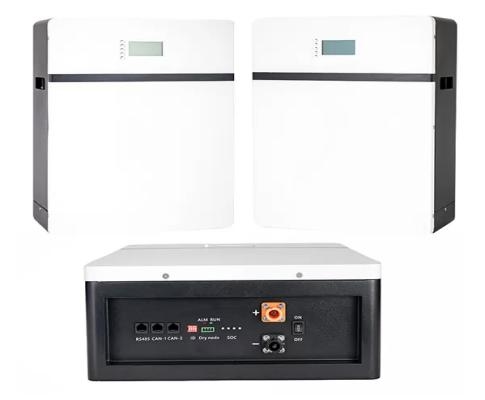
PowerDream engineers have designed lithium ion solar batteries that can withstand extreme temperatures without sacrificing users’ favorite advantages, such as portability and high efficiency. Our BMS monitors the temperature around the clock. When the temperature exceeds 90°F, the charging rate slows down to reduce the temperature; when the temperature drops to 40°F… When the following conditions occur, it activates a low-power heater to heat the battery to a safe charging temperature.
Thermal Insulation: All PowerDream lithium ion solar batteries feature a flame-retardant thermal insulation layer that effectively blocks heat in summer and maintains the internal temperature of the battery in winter. Our lightweight solar cell models utilize a thin thermal insulation layer, which does not increase the battery size.
For grid-connected systems in hot climates, we add aluminum heat sinks to the battery casing to enhance cooling. These heat sinks dissipate excess heat, keeping the internal temperature 10-15 degrees Fahrenheit lower than the ambient temperature. Furthermore, we utilize NMC cathode material, which offers superior temperature resistance compared to the less expensive LFP cathode material. NMC retains 90% of its capacity at a high temperature of 104°F (40°C), whereas LFP retains only a fraction of its capacity at this temperature.
Practical Tips for Coping with Extreme Temperatures
Even the most durable lithium ion solar batteries require your assistance to withstand extreme temperatures. Therefore, install them in a well-ventilated location, avoiding direct sunlight and metal roofs. A cool shed, basement, or insulated battery box helps maintain a stable temperature. If installing outdoors, use a white or light-colored battery box to reflect heat. Additionally, in some cold climates, you can wrap the battery box with foam insulation to retain heat. For off-grid cabins, the batteries can be used with a small space heater (controlled by a thermostat) to maintain a temperature above 40°F (approximately 4°C).
If possible, set your solar inverter to pause charging when the temperature exceeds 100°F (38°C) or falls below 20°F (-7°C). Most inverters allow you to set these parameters easily.
Meanwhile, you can use a battery monitor to track the battery’s internal temperature. If the temperature is consistently above 90°F or below 32°F, please adjust the installation location.
Proper temperature control improves performance and extends lifespan
Temperature is the most critical factor affecting the performance and lifespan of lithium ion solar batteries. High temperatures shorten battery life, while low temperatures reduce battery capacity; however, both can be mitigated. Maintaining the battery temperature within the optimal range of 60°F to 85°F, using a high-temperature resistant model like PowerDream, and following simple installation tips will ensure your solar cells provide reliable power for 10 to 15 years.