
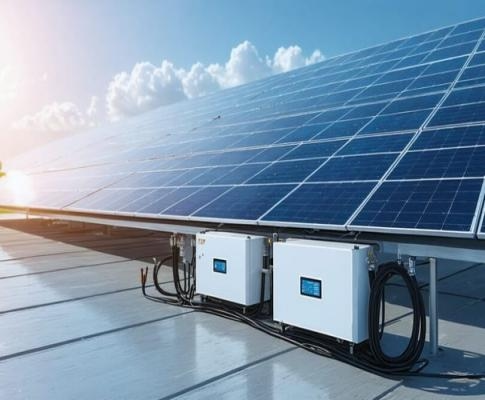
How can hybrid solar power system improve resilience and provide stable power during grid outages?
Some areas with severe weather experience unexpected power outages of 1.5 to 4 hours annually, with these severe weather events causing outages lasting several days. Traditional grid-connected solar systems pose a significant cost to homeowners during these crises, as they automatically shut down during outages, leaving users without electricity.The Hybrid solar power system offer a solution. Unlike grid-connected or off grid systems, hybrid solar power systems combine solar panels, battery storage, and a grid connection to provide reliable power regardless of grid conditions.
What is a hybrid solar power system? How does it differ from grid-connected/off-grid systems?
Hybrid solar power systems differ from other solar installations in that they bridge the gap between grid-connected and off-grid systems:
On grid systems: Connect to the utility grid but lack battery storage. They save on electricity costs but shut down during outages.
Off grid systems: Use batteries to operate independently of the grid, but are too complex for most users. They require more panels/batteries than needed for daily use and cannot rely on the grid for power during extended periods of cloudy weather.
Hybrid solar system combine solar panels, batteries, and bidirectional inverters. When solar/battery power runs low, they draw power from the grid and automatically switch to battery backup during a power outage. This “best of both worlds” design makes hybrid solar systems an excellent choice for users who value resilience.
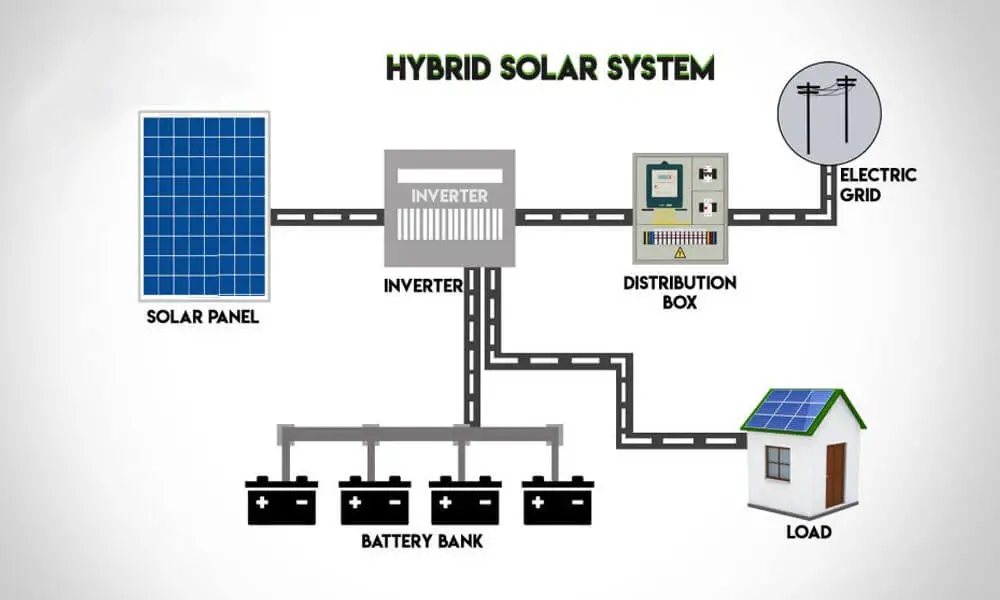
Hybrid solar power systems use batteries to store excess solar energy for use in the event of a power outage.
The key to a hybrid solar power system’s resilience to power outages lies in its battery storage technology. During regular grid operation, your solar panels generate electricity. Any unused energy is immediately charged to the hybrid solar system’s batteries. In the event of a grid failure, the system disconnects from the grid and uses the stored battery power to power your home or business.
This revolutionizes the ability of solar power systems to withstand power outages. On grid systems without batteries cannot achieve this, as they immediately cease power supply in the event of a grid failure. Even backup generators rely on fuel, which can be depleted during a prolonged power outage. In contrast, a hybrid solar power system stores energy for free, ready for use when needed. A typical 5kW hybrid system, paired with a 10kWh battery, can power critical household loads for 2-3 days during a power outage—even longer if there is sufficient sunlight to recharge the battery.
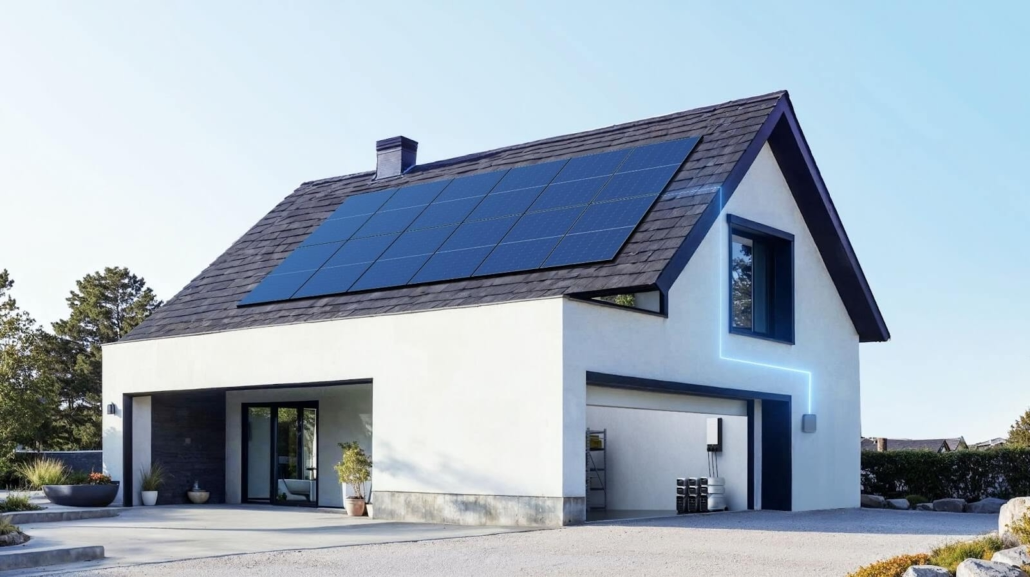
Seamless Switchover Between Grid and Backup Power
One of the most frustrating aspects of a grid outage is the “blackout interval,” the time between when the grid goes out and when the backup power source kicks in. Generators typically take 5-10 minutes to start, and manual transfer switches require frustrating manual switching from the grid to the backup source. Hybrid solar power systems eliminate this gap with seamless, automatic switching.
A hybrid solar system’s inverter continuously monitors the grid voltage. Once it detects a grid fault, it triggers islanding mode and switches to battery power in just 10 to 50 milliseconds. That is faster than the blink of an eye. For users, this means no interruption: your lights will stay on, your refrigerator will keep running, your Wi-Fi will stay connected, and you might not even notice the grid outage. This seamless switchover is crucial for sensitive loads, such as medical equipment or commercial equipment.
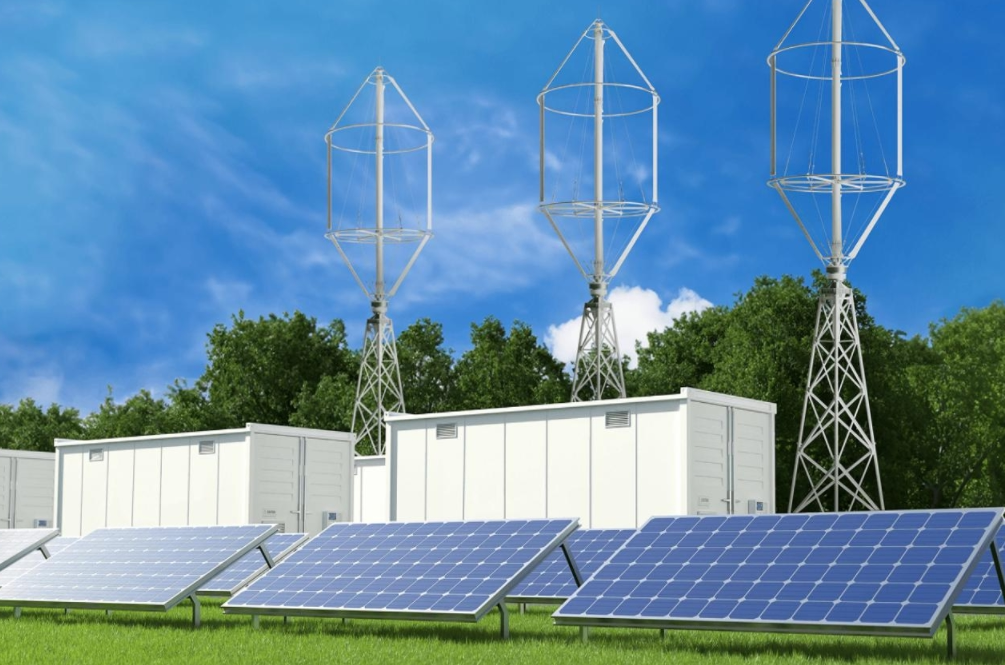
Continuous battery charging during power outages provides long-lasting power
Unlike backup generators or standalone battery systems, hybrid solar systems continuously charge their batteries during a power outage, as long as the sun is shining. This “self-sustaining” feature provides a level of power far beyond what traditional backup systems can provide.
During a power outage, a hybrid solar system’s solar panels will continue to generate electricity if there is sufficient sunlight. Instead of sending this energy to the grid, the system transfers it directly to the batteries, providing power for overnight use or extended outages. For example, a 5kW hybrid solar system with a 10kWh battery might consume 4kWh of energy overnight while powering critical loads. The next morning, four hours of sunlight will generate 15kWh, fully charging the battery and providing additional power for the day. This means a hybrid solar system can power your home for days, not just hours, even during multi-day outages.
Prioritize critical power needs with load management
During extended power outages, battery capacity is limited, and hybrid solar power systems employ intelligent load management to ensure you power your most important devices. Most hybrid solar systems allow you to program “critical loads” and “non-critical loads.” In the event of a grid failure, the system automatically cuts power to non-critical loads, dedicating all battery energy to essentials. This feature extends battery life and ensures resilience when you need it most. With load management, a 10 kWh battery can last five days instead of two, doubling your power resilience. As a hybrid solar system manufacturer, we pre-program load management into the system, but users can adjust it via the mobile app.
Providing Reliable Solar Power
Hybrid solar systems combine four key features: battery storage, seamless transfer, solar charging, and load management, resulting in more reliable operating power. Unlike grid-tied systems or generators, hybrid solar power provides reliable, free solar power even during grid failures.
As a hybrid solar system manufacturer, we recommend that you assess your outage risk and critical loads when sizing your system. A small home might require a 5kW system with a 10kWh battery, while a business might need a 15kW system with a 30kWh battery. This allows you to find the power generation system that’s right for you.

