How does a hybrid solar power system balance solar, battery, and Grid Power for a stable supply?
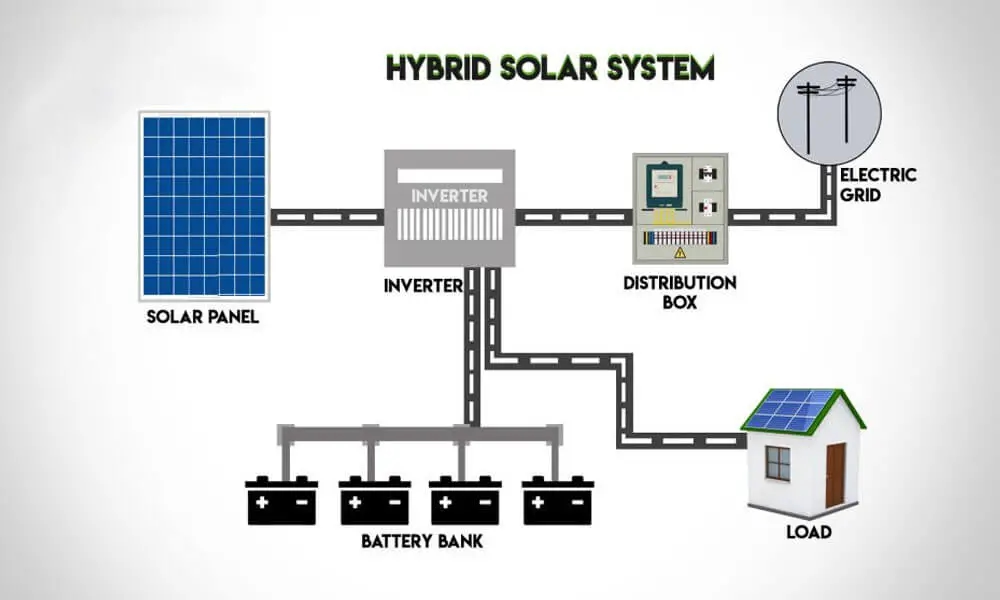
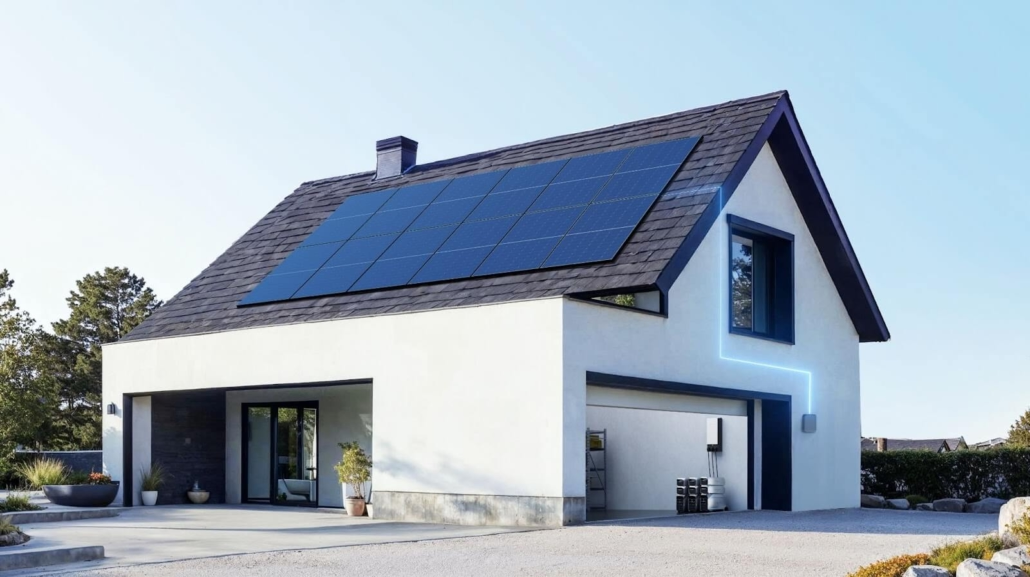
A hybrid solar power system does more than generate electricity; it continuously determines how to allocate and store every watt produced, as well as when to draw backup power from the utility grid. It is precisely this integrated design that makes hybrid solar systems ideally suited for homes, businesses, farms, and remote locations where power interruptions cannot be tolerated. When sunlight is abundant, the system utilizes solar energy directly. When electricity demand rises—or when cloud cover reduces power generation—the system seamlessly switches to battery storage. Should neither solar power nor battery storage be sufficient to meet demand, the system draws power from the utility grid without interrupting critical loads. In other words, a robust hybrid solar solution dynamically balances these three energy sources in real time, thereby providing users with a stable, uninterrupted power supply.
How Hybrid Solar Power Systems Determine Power Flow?
At the core of every hybrid solar system lies a solar output that exceeds load demand; the surplus energy is used for consumption, energy storage, and grid conditions. Rather than simply “turning on” the solar array or “turning off” the grid, the system continuously reads the current solar output, the home or facility’s electrical load, battery charge levels, and grid availability. Based on these inputs, the hybrid solar system identifies the most efficient energy pathway. If solar energy is sufficient to meet the load demand, the system will prioritize solar power, as direct consumption avoids energy losses associated with conversion processes.
Should the solar output exceed the load demand, the surplus energy will be utilized to charge the batteries; furthermore, if conditions permit, this excess electricity may also be fed back into the public grid. Conversely, if the solar output proves insufficient, the batteries will step in to bridge the power supply gap. Should the battery charge level drop below a predetermined threshold, the utility grid automatically intervenes to provide power.
A hybrid inverter typically manages this operational logic in conjunction with an energy management system. Acting as the central controller, the inverter converts the DC generated by the PV array and batteries into AC suitable for powering electrical loads, while simultaneously coordinating battery charging and discharging. High-quality hybrid solar solutions leverage this controller to prevent energy waste, protect the batteries from overcharging or deep discharge, and maintain a stable power output even amidst rapidly changing weather conditions.

Solar-Priority Operation and Self-Consumption in a Hybrid Solar Power System
Most hybrid solar systems employ a “solar-priority” strategy, as solar energy is the most cost-effective power source once the system is installed. In a solar-priority hybrid solar system, the PV array immediately supplies power to the building’s loads. This reduces reliance on the utility grid and boosts self-consumption—the proportion of generated solar energy consumed on-site rather than exported or lost. If the load is lower than the generation output, the system stores the surplus electricity in batteries. If the batteries reach full capacity and regulations permit power export, the system can feed the excess electricity back into the grid.
This approach enhances efficiency in two ways. First, it minimizes conversion steps; energy delivered directly from the solar array to the loads avoids the additional losses associated with storage and subsequent discharge. Second, it prioritizes renewable energy, thereby reducing operating costs and carbon emissions.

Battery Scheduling in Hybrid Solar Power Systems
Batteries are the key component that transforms a solar installation from a mere daytime power generator into a stable, reliable power solution. In a hybrid solar system, batteries store surplus energy generated during the day and release it when solar generation declines. This enables the system to handle cloudy days, evening peak demand periods, and even brief power outages without the user noticing any interruption. Properly managed batteries also contribute to grid stability. By avoiding excessive power exports during midday and excessive imports during the night, the system smooths the load profile, making energy usage more predictable.
Factors such as state of charge, temperature, and battery chemistry govern battery scheduling. For instance, Lithium Iron Phosphate (LiFePO4) batteries handle frequent charge-discharge cycles well and typically integrate effectively with residential and commercial hybrid inverters. The control system maintains battery voltage and temperature within safe operating ranges while determining when to charge, discharge, and reserve backup capacity. Many hybrid solar solutions also reserve a minimum battery capacity specifically for emergencies. This reserved capacity ensures that critical loads remain powered during a utility grid outage. Thus, the battery serves as more than just an energy storage device; it acts as a vital stabilizer for the entire system.
Grid Interaction and Backup Support
The utility grid constitutes the third pillar of a hybrid solar power system. Rather than replacing solar generation or battery storage, the grid serves as both a safety net and an economic tool. When solar generation and battery storage are sufficient, the system can reduce—or even eliminate—the need to purchase electricity from the grid. When weather conditions are adverse, electricity demand rises, or battery storage is insufficient, the power grid automatically steps in to supplement the power supply. It is precisely this backup power capability that gives hybrid systems a distinct reliability advantage over standalone solar-plus-storage systems.
Furthermore, with Time-of-Use (TOU) pricing, this system charges the battery during off-peak hours—when electricity rates are lower—and discharges it during peak demand periods—when rates are higher. Additionally, in regions where Net Metering is permitted, the system can export surplus solar power back to the grid. In the event of a power outage, the inverter isolates the building from the grid, relying solely on solar generation and battery storage to maintain a continuous power supply to critical loads. A robust hybrid solar solution manages these transitions seamlessly—without causing light flickering, device restarts, or unsafe back-feeding into the grid. This requires sophisticated rapid-switching logic, anti-islanding protection, and precise synchronization with local grid regulations. The ultimate result is a stable, uninterrupted power supply that combines the energy-saving benefits of renewable sources with the reliability of utility-grade backup power.
How Do Hybrid Solar Solutions Ensure Stable, Long-Term Power Supply?
The optimal approach to deploying a hybrid solar system involves sizing its components based on actual electricity consumption rather than merely on estimated capacity. The first step is to measure or estimate daily kWh consumption and peak power demand. The second step involves analyzing local solar resources—specifically focusing on the months with the poorest sunlight conditions, rather than relying solely on annual averages.
This is a critical consideration, as the system must remain fully operational even during overcast periods when solar generation output drops significantly. If the solar array is undersized, the grid or the battery bank will have to shoulder an excessive portion of the load. If the battery bank is undersized, the system will be unable to meet peak evening demand or sustain power during outages. Conversely, if the inverter is undersized, it may fail to function properly when motor-driven appliances or compressors—which draw high surge currents—start up.
A high-performance hybrid solar solution achieves this balance across its various components. The PV array should be sized to meet daytime electricity demand while simultaneously recharging the batteries within a reasonable timeframe. The battery bank should store sufficient usable energy to cover nighttime consumption and any anticipated periods of overcast weather. Finally, the inverter must be capable of meeting both continuous electricity demand and the momentary peak power surges required by appliances and motors. In practical terms, this means that residential homes, small commercial facilities, and remote microgrids each require distinct design strategies tailored to their specific needs.

Protection, Monitoring, and Maintenance: Ensuring Supply Stability
Even the most expertly designed hybrid solar power systems require protection and maintenance to ensure stable, long-term operation. Inverters must be capable of safeguarding against overvoltage, undervoltage, overload, short circuits, reverse polarity, and thermal stress. Battery Management Systems must protect batteries from unsafe charging conditions and deep discharge. Grid interfaces must prevent back-feeding into the grid during power outages and comply with local electrical standards. These safety measures are not optional; they are the critical elements that enable a hybrid system to operate safely under both routine and emergency conditions.
Monitoring is equally vital; modern hybrid solar systems should track solar output, battery charge levels, grid input/output, and fault events in real time. This data empowers users to detect performance anomalies early, enabling proactive intervention before minor issues escalate into major problems. For instance, a gradual decline in battery capacity, recurring inverter temperature alerts, or a sudden drop in PV output could all signal potential underlying issues. Routine cleaning, connector inspections, firmware updates, and battery health checks ensure that the system consistently operates at its designed performance level.
Achieving a Reliable Energy Balance
A hybrid solar power system offers far more than mere energy generation; it provides a dynamic, intelligent energy management solution that ensures stable operation in an ever-changing environment. By seamlessly coordinating solar generation, battery storage, and grid interactions, a hybrid system optimizes energy flow in real time—prioritizing renewable energy while providing reliable backup power whenever needed. This balanced approach not only enhances energy efficiency but also significantly reduces reliance on the utility grid, thereby lowering long-term electricity costs.