How to choose a solar power street light that can operate continuously for 3-5 days on cloudy days?”
A properly functioning solar power street light should not fail simply because of cloudy weather. In outdoor environments, solar street lights must continue to provide reliable illumination even after several consecutive days of overcast skies or rain. The standard for a high-performance solar street light involves ensuring stable nighttime illumination, rapid daytime charging, robust battery protection, and sufficient energy storage to guarantee continuous operation for 3 to 5 days, even during cloudy periods. Therefore, solar power street lights must integrate high-efficiency solar panels, durable lithium-iron phosphate (LiFePO4) batteries, intelligent charge-control systems, and robust outdoor protection mechanisms to ensure 3 to 5 days of continuous illumination, even on overcast days.
How Solar Power Street Light Achieves 3–5 Days of Autonomous Power Supply During Cloudy Weather?
When purchasing solar power street lights, many buyers focus on factors such as lumen output, pole height, or panel wattage; however, a far more critical question is: How long can the solar street light continue to operate under adverse weather conditions? In real-world outdoor projects, cloudy skies, rainy seasons, dust accumulation, and seasonal fluctuations are the norm. A high-brightness street light that ceases to function after just one or two cloudy days cannot be considered a reliable lighting solution.
Consequently, PowerDream has prioritized energy storage and charging efficiency right from the initial design phase. The objective is simple: even with only approximately four hours of effective daily sunlight, the system should be capable of storing sufficient energy to power the fixture for an entire night. Should the cloudy weather persist, the battery must be able to sustain power delivery for 3 to 5 days without any noticeable decline in lighting quality. This design approach is crucial for a wide range of locations, including roadways, parking lots, sidewalks, campuses, industrial zones, and remote communities.
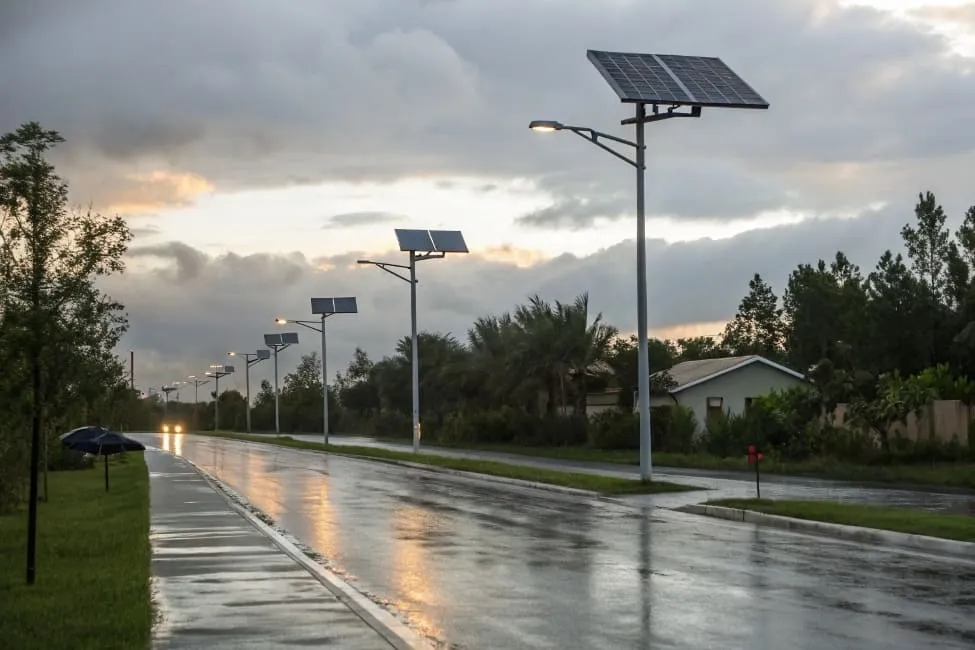
Grade A Polycrystalline Silicon Solar Panels: The Foundation for Rapid Daytime Charging
The solar panel serves as the primary critical component of the system. To ensure the reliability of solar street lights during cloudy operation, PowerDream utilizes Grade A polycrystalline silicon solar panels. These panels feature exceptional light absorption capabilities, stable performance, and robust durability in outdoor environments. Even under conditions where sunlight is scarce, these panels remain highly efficient at capturing solar energy.
In essence, a truly high-quality solar street light should be able to convert limited available sunlight into sufficient stored energy to power the lighting throughout the night. Solar panels can rapidly absorb energy and efficiently transfer it to the battery via a charge controller. Even with only four hours of daylight per day, the system can still charge efficiently and support uninterrupted illumination throughout the night. This is particularly crucial in regions with unstable weather or short daylight hours during the winter months.
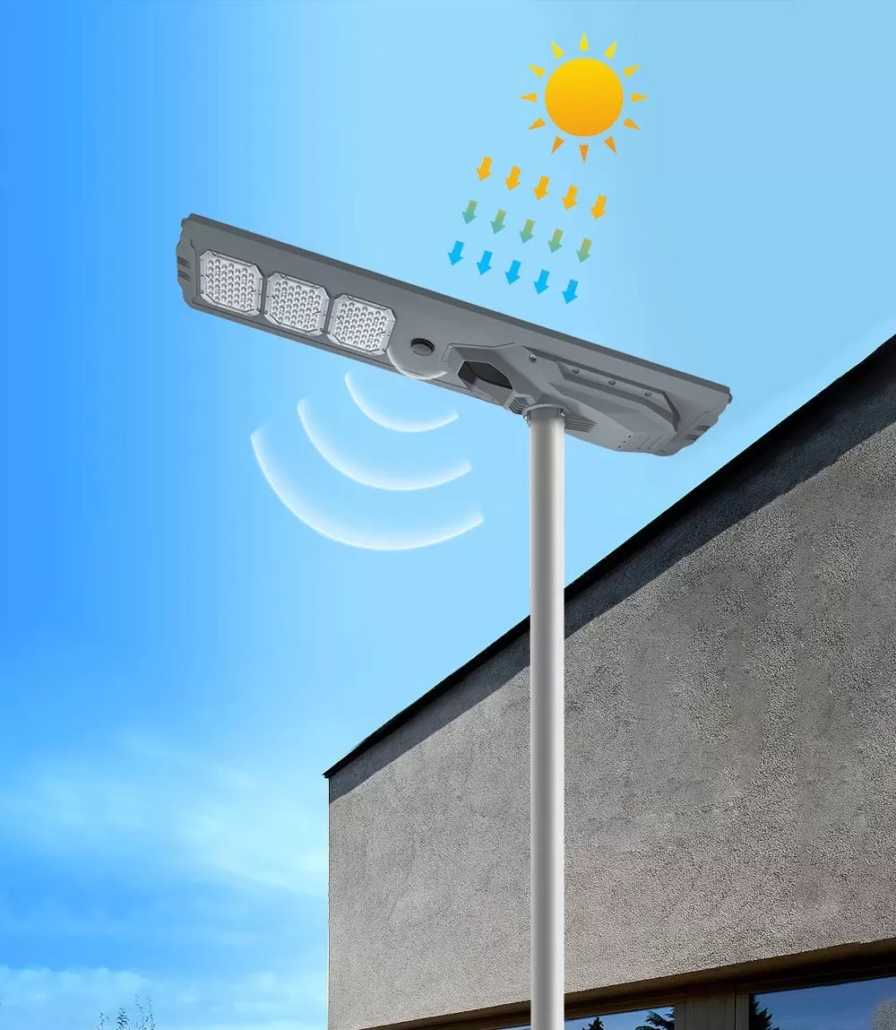
Lithium Iron Phosphate Batteries: The Core Energy Storage for Days of Continuous Lighting
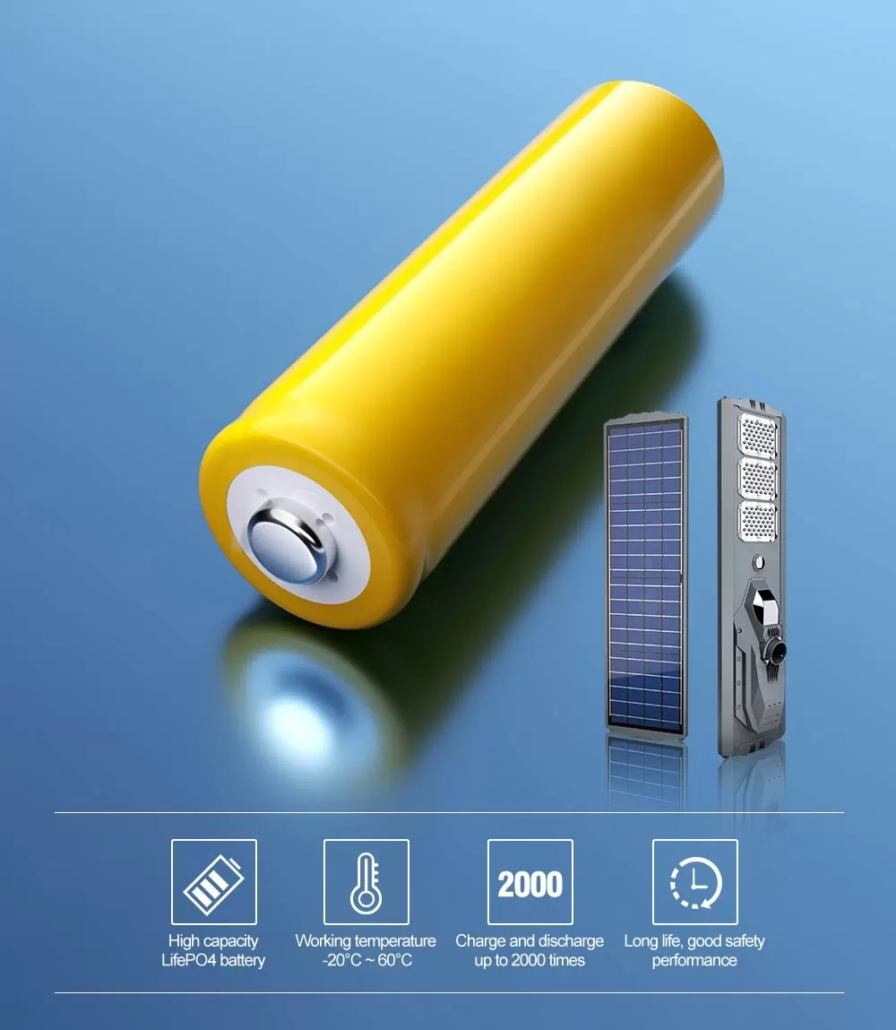
The second key component is the battery; in the context of autonomous power supply, especially in overcast environments, it is the battery’s quality that truly determines a solar power street light’s performance. PowerDream utilizes lithium iron phosphate batteries due to their exceptional stability, long cycle life, and robust safety features. An outstanding solar street light battery must do more than merely store energy; it must also discharge reliably throughout the night, withstand repeated charging cycles, and maintain stable performance amidst fluctuating temperatures and weather conditions.
LiFePO4 batteries support deep cycling and rapid charging while offering powerful protection against overcharging. In a well-engineered solar street light system, the battery should provide 4–5 days of continuous illumination during rainy weather. This ensures that the system remains operational even if solar energy input is diminished for several consecutive days. For municipalities, real estate developers, and infrastructure planners, this level of reliability minimizes downtime risk and reduces maintenance burdens. Another significant advantage is their exceptional longevity; under proper operating conditions, high-quality LiFePO4 batteries can deliver up to five years of reliable service. By equipping its products with LiFePO4 batteries, PowerDream assures users that its solar street lights will remain bright, safe, and dependable year-round.
How Do We Ensure the Reliability of Outdoor Solar Power Street Lights?
Solar street lights must withstand the rigors of rain, wind, sand, high temperatures, humidity, and seasonal shifts. If you don’t properly protect the battery, controller, or housing, their performance will quickly start to decline. Consequently, PowerDream incorporates overcharge protection, robust structural design, and an IP65 ingress protection rating into its solar street light systems. Overcharge protection prevents battery overload, thereby enhancing safety. Furthermore, we utilize corrosion-resistant materials—such as AL6063 aluminum alloy combined with Teijin PC—along with sealed enclosures and weather-resistant connectors to shield the system from moisture and dust intrusion. For buyers, a reliable solar street light should be specifically engineered for long-term outdoor deployment—not merely for short-term use during fair weather. Safety and durability are the true keys to a system’s long-term cost-effectiveness.
Choosing the Right Solar Power Street Light for the Right Location?
Not all locations require solar street lights with identical specifications. Settings such as sidewalks, parking lots, rural roads, and campuses each have distinct requirements for brightness levels, runtime, and installation methods. Therefore, before selecting a solar street light, buyers should carefully assess factors such as pole height, coverage area, local weather patterns, the average number of overcast days, and whether the site requires constant brightness or adaptive dimming.
For instance, roads where continuous illumination is critical for public safety may require a battery with greater endurance than that needed for private walkways. Remote or hard-to-reach locations may necessitate larger battery capacities and more robust solar panel designs. The ideal solar street light is perfectly matched to the actual operating conditions of its specific location. Factors such as panel angle, mounting orientation, and cable quality all play a significant role in determining the system’s charging speed and operational efficiency. When installed correctly, a solar street light can deliver the performance buyers expect: robust charging during the day, stable light output at night, and reliable operation even during periods of 3 to 5 consecutive overcast days.
Ensuring Continuous Operation During Overcast Weather
A solar power street light capable of operating for 3 to 5 days during overcast weather requires specific components: Grade A polycrystalline silicon solar panels designed to maximize energy absorption even in low-light conditions, and durable lithium iron phosphate batteries capable of providing stable, multi-day energy storage. When these components are combined with efficient energy management systems, overcharge protection, and sound installation planning, they ensure the solar street light remains fully operational for 3 to 5 consecutive overcast days.