
How to choose the right monocrystalline solar panels for your home?
How do I choose the right monocrystalline solar panels for my home? Choosing the right monocrystalline solar panels is crucial for homeowners seeking reliable electricity, optimal return on investment, and a durable roof. This requires balancing efficiency, actual performance in local climate conditions, mechanical durability, system architecture, aesthetics, cost, and product warranty and support. Carefully selected solar panels can lower your electricity bill, maximize power generation from limited roof space, and enhance the appearance of your home.
Determining the Efficiency and Power Rating of Monocrystalline Solar Panels
When roof space is limited, efficiency is the most important technical parameter. Monocrystalline solar panels are widely used in homes due to their higher cell efficiency than other mainstream technologies. Typical high-efficiency monocrystalline solar panels have an efficiency range of approximately 10% to 20%. Simply put, higher-efficiency panels generate more electricity per square foot, thus producing more energy from the same roof area.
First, estimate your available unobstructed roof area and your annual electricity consumption. If your roof area is limited, prioritize solar panels with the highest efficiency rating. Second, compare rated power ratings. A 370-watt, high-efficiency monocrystalline silicon solar panel occupies less space than a 310-watt panel of the same power, which is important when fitting solar panels around vents and skylights. Efficiency is crucial when roof space is limited. If your roof is vast, you can use lower-efficiency panels. However, most homeowners will benefit from the space savings and long-term performance of high-efficiency monocrystalline solar panels.
Temperature Coefficient and Real-World Thermal Performance of Monocrystalline Solar Panels
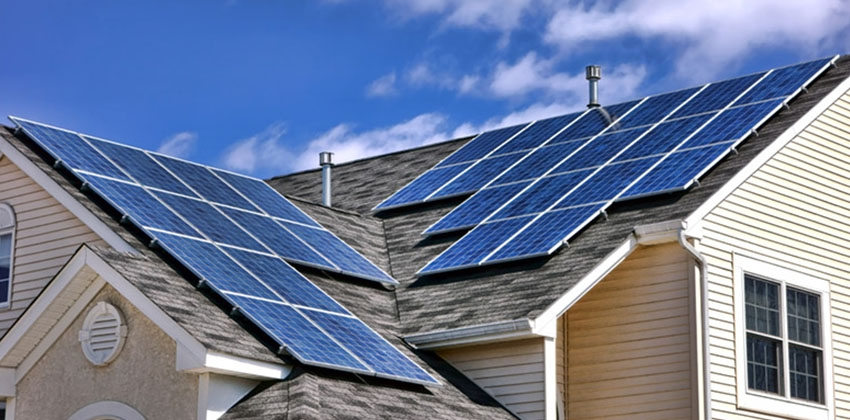
Solar panels perform differently in real-world conditions than the perfect laboratory values on the datasheet. Monocrystalline solar panel performance changes as cell temperature rises; the lower the temperature coefficient, the less energy the panel loses to heat. Therefore, check the Pmax temperature coefficient on the datasheet. High-quality monocrystalline modules have a Pmax temperature coefficient of approximately -0.30%/°C to -0.35%/°C, and premium modules may have higher Pmax temperature coefficients.
Then estimate the average operating temperature for your roof area. Multiply the temperature coefficient by any temperature rise above 25°C to predict the drop in actual output power. Consider installation and airflow. Raised and well-ventilated mounting rails can lower operating temperatures and help reduce heat loss. Furthermore, white or reflective roofing beneath the mounts can reduce heat soak compared to dark shingles. In short, if you live in a hot region, choose monocrystalline panels with a more favorable (less negative) temperature coefficient.
Evaluate degradation, performance, and reliability.
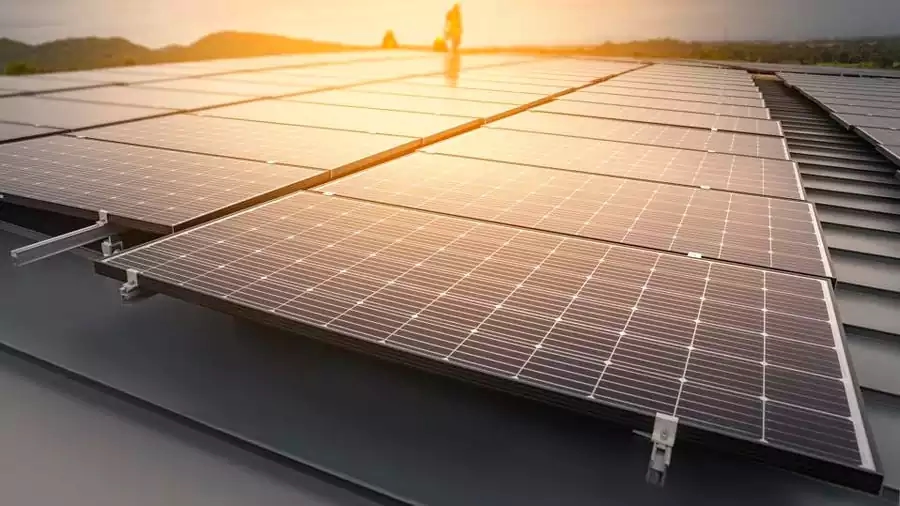
Long-term performance is more important than short-term price. Monocrystalline solar panel typically come with a performance guarantee, which guarantees a certain percentage of the rated capacity over 25 years. However, it is still important to evaluate the annual degradation rate and the terms of the written warranty. Most modern monocrystalline solar panels have a degradation rate of approximately 0.3% to 0.8% per year, while many high-quality panels have a degradation rate of approximately 0.25% to 0.50% per year. A lower degradation rate results in a higher energy yield over the system’s lifetime.
Warranty terms. A typical warranty guarantees approximately 80-87.5% of the rated output after 25 years. A more stringent warranty might guarantee 92% output after 10 years and 82% output after 25 years. Some quality monocrystalline solar panels can typically generate electricity for 25-30 years with proper maintenance. Therefore, when selecting solar panels, prioritize monocrystalline solar panel manufacturers that offer competitive guaranteed output retention and transparency degradation indicators.
Mechanical Durability, Certifications, and Environmental Resistance
Depending on the region and environment, your solar panels may be subjected to wind, snow, hail, and coastal salt spray. Monocrystalline solar panels vary in frame strength, glass quality, junction box protection, and certifications. These characteristics determine how well the solar panel withstands real-world stresses and reduces the risk of premature failure.
Check the datasheet for wind and snow load ratings. The higher the rating, the thicker the frame and the more robust the cell/glass connection. Also, ensure that the product complies with IEC 61215, IEC 61730, UL 61730, or UL 1703, as well as any applicable local certifications. Testing for PID, salt spray, and ammonia resistance is also important in coastal or agricultural areas. Additionally, tempered low-iron glass, a sturdy anodized frame, and an IP-rated junction box (e.g., IP65/68) can extend the lifespan. In short, choose a monocrystalline solar panel that is mechanically strong and meets the environmental certifications required for your region.
Aesthetics, Size, and Roof Compatibility
Most homeowners are concerned not only with the performance of their solar panels, but also with their appearance. Monocrystalline solar panels are available in a variety of finishes, including black panels, framed/frameless, and various cell patterns (full-cut, half-cut, or shingled), all of which impact both appeal and performance.
A black frame, black backsheet, and black cells create a uniform, understated look preferred by many homeowners. A silver frame can contrast with dark shingles. Panel sizes and weights also vary. You need to ensure that the roof structure can support the weight of the panels and mountings, especially on older roofs. Half-cut and shingled cell designs offer improved shade tolerance and slightly reduced resistive losses. They generally offer better low-light performance and reduce the risk of hot spots. If aesthetics are key, shingled panels offer a modern, mosaic-like visual pattern. Low-profile brackets and flush mounting can reduce wind lift and improve appearance. Standing seam metal roofs require clamps. Asphalt shingle roofs require flashing for waterproofing.
Choosing the Right Solar Panel
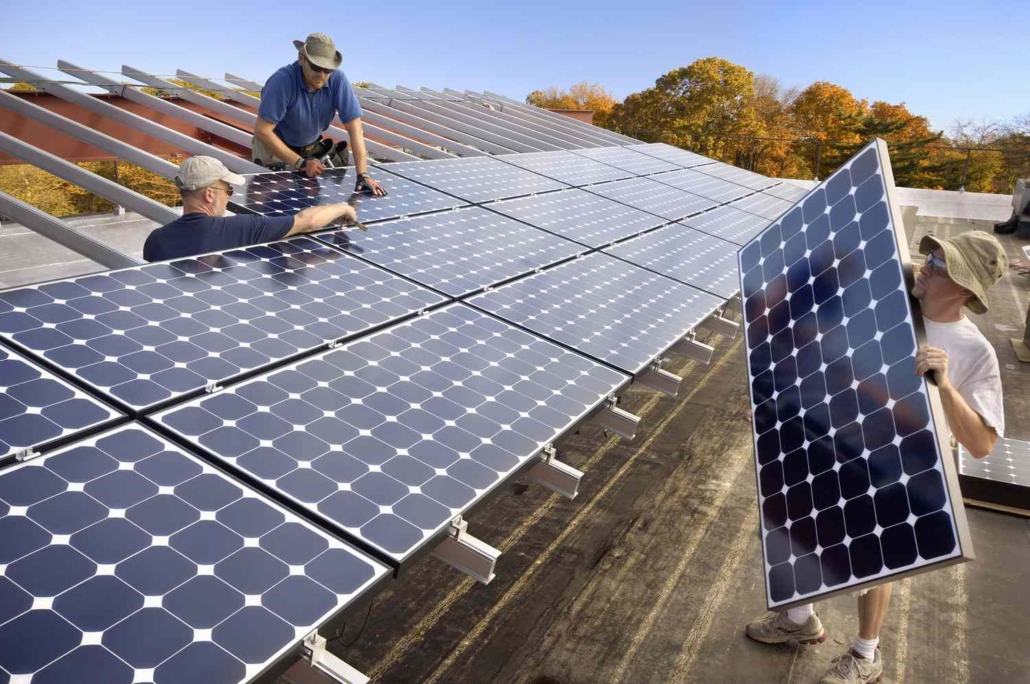
Selecting the right monocrystalline solar panel requires a comprehensive consideration of efficiency, actual performance in local climate conditions, long-term warranty and performance degradation, mechanical durability, aesthetics, and total cost of ownership. Contact us for a quick on-site assessment and a customized solar panel and inverter solution based on your roof layout and energy goals.
Related FAQs
1. Are monocrystalline solar panels better than multicrystalline for my home?
Generally speaking, monocrystalline panels are more efficient and space-efficient, making them a better fit for most residential rooftops.
2. How do I choose between string inverters and microinverters for monocrystalline solar panels?
If your roof has shade, multiple orientations, or complex geometry, a microinverter or optimizer will generally produce more energy. For simple, uniformly oriented roofs, a string inverter generally offers the best price/performance ratio.
3. How will hot summer temperatures affect my solar panel selection?
If you live in a hot climate, consider monocrystalline solar panels with a lower temperature coefficient (less negative).
4. Can I buy a complete solar panel kit that includes monocrystalline panels and all required components?
Yes, our solar system solutions offer pre-configured solar panel kits that include panels, an inverter, mounting, and wiring.