
Solving the problem of energy waste and increased costs caused by excessively large solar panel size
Solar panel arrays that exceed a house or site’s actual needs often lead to hidden costs, reduced operating efficiency, and energy waste. Choosing the appropriate solar panel size rather than the largest is crucial for maximizing cost savings, avoiding unnecessary system balancing costs, and improving the return on energy investment. Therefore, we will comprehensively explain why oversized solar panels lead to higher costs and energy waste, and how these issues manifest in terms of electricity, finance, and regulation.
Why do Large Solar Panel Size to energy waste and additional costs?
The problem with oversized solar panels is that their power generation capacity does not match the site’s ability to consume, store, or output that electricity. When a rooftop solar array generates more electricity than a household needs during the day, and grid-connected generation is limited or insufficient to generate a sufficient return, the system effectively wastes the excess electricity. Worse still, oversized arrays increase upfront costs, complicate system balancing, and lower the project’s overall levelized cost of energy (LCOE) if the owner cannot monetize the excess electricity.
Furthermore, several electrical mechanisms contribute to this waste: inverter limiting, output restriction, and grid connection limitations. Most residential systems use inverters selected based on the ratio of the rated power of the photovoltaic (PV) modules to the inverter’s rated power. If you significantly increase the capacity of the PV modules to reduce costs while keeping the inverter capacity small, the inverter will throttle and limit the output of the additional PV power generated during peak solar hours, which results in energy waste. If you oversize both the PV modules and the inverter, you will not only pay a higher purchase price, but you may also encounter grid connection restrictions. Therefore, an oversized monocrystalline silicon solar panel array may generate more energy than the system or applicable regulations allow.
Impact of Large Solar Panel Size on Operating Costs, Structure, and Permitting
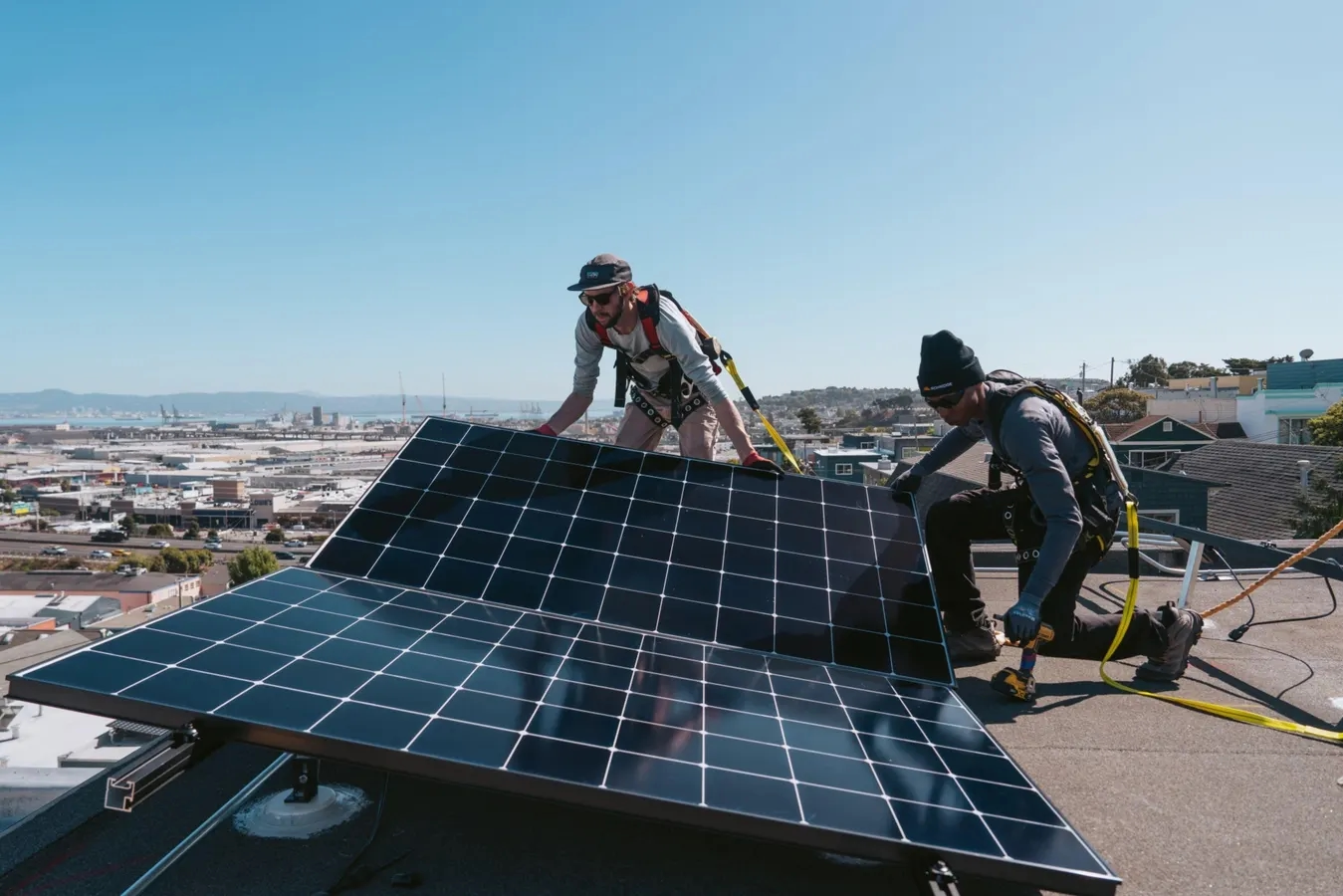
Larger solar panels mean higher system operating costs. Each additional solar panel increases the cost of mounting brackets, fasteners, labor hours, and typically requires thicker wiring and larger overcurrent protection devices. On sloping roofs, installers may require more roofing accessories, larger waterproofing layers, and more thorough structural inspections—all of which increase the complexity of approvals. Furthermore, large solar panels may change the property’s approval category or trigger utility service upgrades, increasing costs.
From a structural perspective, increasing the number of solar panels increases wind and snow loads, requiring additional engineering design or improved installation schemes. Even high-efficiency monocrystalline silicon solar panels, while generating more electricity per unit area and occupying less space, cannot eliminate the additional system maintenance and labor costs associated with large installations.
Choosing the Appropriate Solar Panel Size Based on Actual Needs
The first and most important step in choosing the size of solar panels is to conduct a rigorous load analysis. Many projects start with the available roof area or the maximum power of the panels and work backwards—this is a flawed approach. The correct approach is to quantify the household’s basic daily electricity consumption in kilowatt-hours, identify the critical loads that need to be covered, and plot hourly electricity usage patterns.
For example, if your household uses an average of 30 kilowatt-hours per day but only 12 kilowatt-hours per day in winter, and your area has unfavorable rules on electricity exports. Building a solar array capable of offsetting 100% of annual electricity consumption may not be worthwhile without an energy storage system. A practical workflow is as follows: (1) Set coverage targets; (2) Consider solar resources; (3) Consider system derating; (4) Calculate the required peak power (Wp) of the solar panels. Determining array capacity based on demand avoids building excessively large monocrystalline silicon solar panels; the usable electricity generated by these arrays may go unused or stored.
Using an Effective PV/Inverter Ratio and Clipping Analysis
A small amount of excess DC power relative to inverter capacity is beneficial because PV systems rarely operate continuously under Standard Test Conditions (STC). Many installers set the DC/AC ratio for residential systems to 1.1-1.3 to increase annual power generation while avoiding excessive clipping. However, if the DC/AC ratio exceeds approximately 1.4–1.6, clipping losses increase significantly. Use PV simulation tools to model clipping and annual power generation for a given inverter capacity, string configuration, and local irradiance conditions. These simulations can help you quantify the marginal kilowatt-hour gains and losses associated with each additional photovoltaic panel.
Equipment and Structure Selection to Reduce Losses from Large Solar Panels
High-efficiency monocrystalline solar panels deliver higher wattage per square meter, typically allowing you to achieve your energy targets with fewer modules. Fewer modules mean simpler mounting systems, fewer cables, and lower operating costs. This seemingly contradictory approach can reduce total system costs while meeting your power generation targets. Furthermore, if your goal is to match load patterns, you should plan the panel layout to avoid shading and optimize tilt/azimuth based on seasonal demand rather than maximum annual power generation.
Choosing Microinverters to Mitigate Partial Shading and Power Mismatch
If your roof geometry or shading necessitates adding more modules to reach your target capacity, consider using microinverters or power optimizers. They can reduce power-mismatch losses and enable independent module-level MPPT, ensuring each solar panel operates at its maximum efficiency even when parts of the array are shaded. While these solutions increase the cost per component, they provide higher usable energy in complex installation environments, thus reducing the temptation to over-provision.
Choosing the Right Solar Panel Size
Addressing the energy waste and increased costs caused by oversized solar panels requires careful selection based on your energy needs. A well-designed solar panel system should efficiently generate electricity that can be consumed, stored, or monetized. When system capacity exceeds actual demand or regulatory limits, additional investment often yields diminishing returns. Conversely, well-designed solar panels—especially arrays built with high-efficiency monocrystalline silicon solar panels—offer better economics, lower system balance costs, and higher long-term reliability.