
What is the difference between brushless motors and brushed motors in solar fans?
There are significant differences between brushed and brushless motors in solar fans: 68% of solar fan motor failures originate from brushed motors, compared to only 8% of brushless motor solar fan users who report motor problems. Should you choose a brushed or brushless motor when buying a solar fan? This isn’t just a technical detail; it determines the solar fan’s lifespan, energy consumption, operating noise, and ease of use. Therefore, we will explain the main differences between these two motor types from the manufacturer’s perspective.
The Core Working Principle of Solar Fans – Brushed Motors vs. Brushless Motors
To understand their differences, it’s essential first to understand the working principles of these two types of motors and how these differences affect the performance of a solar fan.
Brushed Motors: These motors use physical carbon brushes and a commutator to change the direction of current in the motor windings. The friction between the carbon brushes and the commutator generates electricity, thus producing motion. For solar fans, this design is inexpensive and straightforward, but the friction between the carbon brushes and the commutator causes wear over time.
Brushless Motors: These motors replace physical brushes with an electronic controller that can switch the direction of current. The controller uses sensors to detect the position of the motor rotor and precisely outputs power when needed. Because there is no friction from brushes, brushless motors are more efficient and have a longer lifespan.
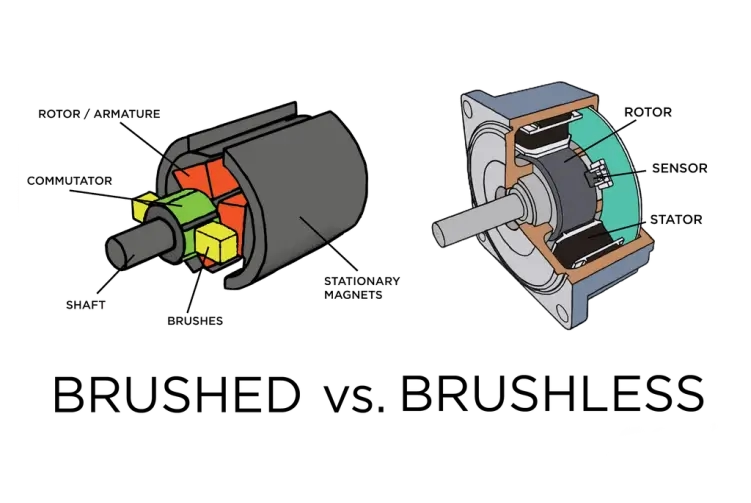
Brushed motors tend to wear out quickly; brushless motors, on the other hand, have a longer lifespan.
In solar fans, the primary difference between brushed and brushless motors is their lifespan. The physical friction in brushed motors limits their lifespan, while the frictionless design of brushless motors allows them to operate for years:
Brushed motors: Carbon brushes wear down with use, typically lasting 1,000 to 2,000 operating hours. For a solar fan running 8 hours a day, this only lasts 4 to 6 months, after which the motor will slow down, stop, or burn out. Replacing carbon brushes is inexpensive but requires regular maintenance, and the commutator also wears out frequently, potentially requiring the entire motor to be replaced eventually.
Brushless motors: Since there is no carbon brush wear, these motors can have a lifespan of 10,000 to 20,000 hours, which is 5 to 10 times longer than that of brushed motors. A solar fan equipped with a brushless motor can operate for 3 to 7 years without any motor problems, running for 8 hours a day.
PowerDream’s brushless solar fans offer a 1-year motor warranty. We can make this promise because our tests show that 95% of the motors are still functioning well after one year. For frequent solar fan users, brushless motors eliminate the hassle of frequent fan replacements.
Energy-efficient solar fans and brushless motors maximize solar energy utilization.
Solar fans rely on the limited energy provided by solar panels, so efficiency is crucial. Brushless motors are more energy-efficient than brushed motors, so under the same sunlight conditions, solar fans can run for longer:
Brushed motors: The heat generated by brush friction dissipates energy, resulting in an energy efficiency of only 60-70%. This means that 30-40% of the electricity collected by the solar panel is wasted instead of driving the fan.
Brushless motors: Due to the absence of friction, these motors have an energy efficiency of 85% to 95%. They can convert almost all the solar energy they receive into kinetic energy, thus significantly extending their operating time.
For example, a 10-watt solar panel paired with a brushed motor solar fan might only run for 5 hours on a full charge. However, the same panel paired with a brushless motor solar fan can run for 8-9 hours, almost twice as long.
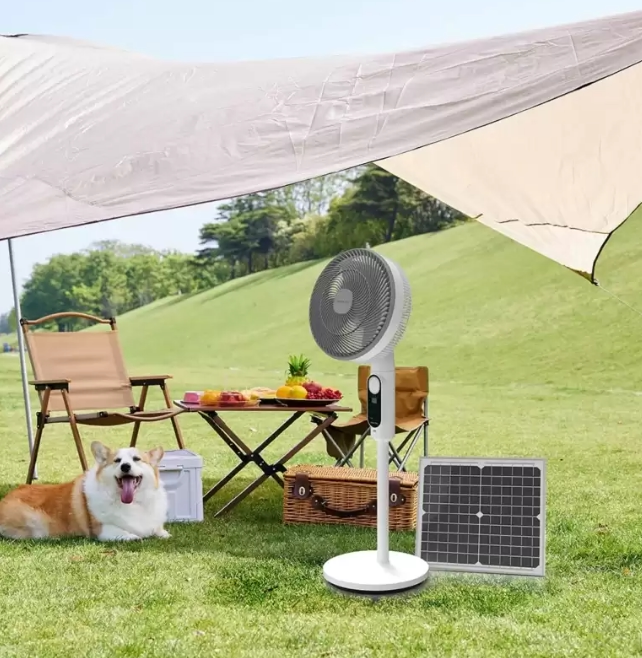
Brushless motors offer a quieter and more worry-free user experience.
No one wants a noisy solar fan or one that requires frequent maintenance. Brushed and brushless motors differ significantly in noise levels and maintenance requirements:
Brushed motors: The friction between the brushes and the commutator produces a noticeable humming or whistling sound. Over time, uneven brush wear increases the noise. Maintenance is also essential: the motor needs cleaning, brushes need to be replaced every few months, and the commutator needs to be checked for damage.
Brushless motors: Because there are no moving parts in contact with each other, these motors operate almost silently. They require no maintenance, no brush replacement, no cleaning, and no adjustments. You can install a brushless solar fan and relax, enjoying a gentle breeze. This makes brushless motors ideal for use in bedrooms, offices, and similar settings.
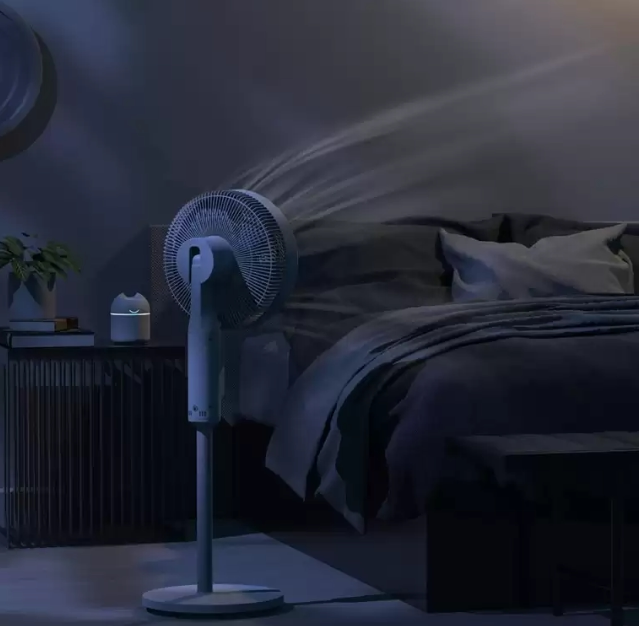
Brushless motors offer better low-light performance when solar energy is insufficient.
Solar power generation fluctuates; mornings, evenings, and cloudy days mean less energy. Brushless motors outperform brushed motors in low-light conditions. Brushed motors require a minimum voltage to start and operate smoothly. As solar input decreases, the voltage drops, causing the motor to run erratically, slow down, or even stop altogether. Brushless motors, with their more flexible electronic controllers, can start and operate at lower voltages. They adapt to varying solar input, maintaining stable performance even in low-light conditions. On cloudy days, brushed motor solar fans may struggle to start or run at a slow pace. Brushless motor solar fans, on the other hand, can run at full speed for hours, maximizing the use of limited electricity.
So, how do you choose?
The main differences between brushless and brushed motors in solar fans lie in reliability, efficiency, and cost-effectiveness. Brushed motors are affordable and suitable for short-term use; however, they wear out quickly, consume more energy, and require regular maintenance. Brushless motors, although requiring a higher initial investment, offer a longer lifespan, efficiently utilize solar energy, operate quietly, and require minimal maintenance, making them ideal for long-term, regular use. PowerDream’s solar fans utilize brushless, pure copper motors, providing powerful performance, minimal noise, and low power consumption, thereby creating a comfortable home environment.