
Which appliances in a home can a small residential off grid solar system power?
Before opting for an off grid solar system, owners of small homes often ask themselves, “Exactly which appliances can it power?” This is because a small-scale off-grid solar system is not designed to power every single appliance in the house, unlike a connection to the public utility grid. Instead, its purpose is to provide reliable, carefully managed electricity to the most critical electrical loads. If you size and configure the system correctly, an off-grid solar setup can keep a small home comfortable, fully functional, and consistently powered—without wasting money on oversized hardware or unnecessary battery capacity. For small homeowners, the real value of an off grid solar system comes from how well you match your home’s appliance demands with the available solar generation, battery storage, and inverter capacity—so you can confidently power all the appliances you actually use.
How Much Power Can a Small Residential Off Grid Solar System Actually Provide?
Small residential off grid solar systems perform best when meeting basic to moderate electricity needs rather than powering every device simultaneously. This is because off-grid living relies on the sensible prioritization of energy usage. You must take into account your daily kilowatt-hour consumption, peak power requirements, battery runtime, and the inverter’s surge capacity. Small systems usually work best for powering essential loads and everyday devices with low to moderate power use, like LED lights, Wi-Fi routers, phones, tablets, laptops, TVs, fans, and energy-efficient refrigerators. These types of appliances ensure daily comfort while keeping electricity demands effectively under control.
In off-grid system design, the most important principle is to distinguish between essential appliances and secondary ones. Most people consider refrigerators, lighting, and communication devices essential. You can still use appliances like blenders, vacuum cleaners, and microwaves—they’re helpful, but you can run them on a schedule instead of all the time. A well-designed off-grid solar system allows you to manage these priorities effectively, thereby ensuring the home remains fully operational without prematurely draining the battery bank.
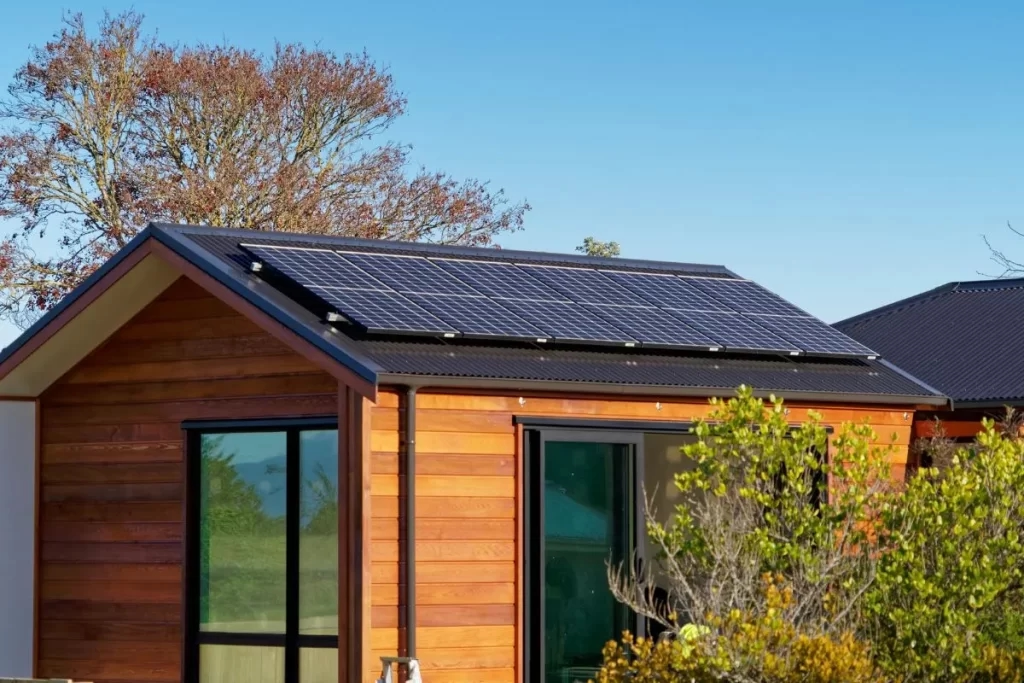
Lighting, Electronics, and Communication Devices Are the Easiest Loads to Power.
For a small residential off grid solar system, the easiest appliances to power are low-wattage electronics and lighting fixtures. LED lights serve as an excellent example of this. This becomes especially important when you’re dealing with appliances that use motors or compressors, like refrigerators, water pumps, and washing machines. This makes LED lighting one of the most efficient and reliable applications for small residential off grid solar systems. The same applies to mobile phones, tablets, routers, modems, and laptops. These devices don’t use much power, and you can usually charge them during the day when solar output is at its peak.
Televisions are also manageable, particularly modern LED TVs, which consume far less electricity than older models. If you set up the system properly and keep the battery bank in good shape, a small off-grid home solar system can usually power several hours of TV in the evening without any trouble. For households seeking both comfort and energy efficiency, these low-power appliances should be the top priority.
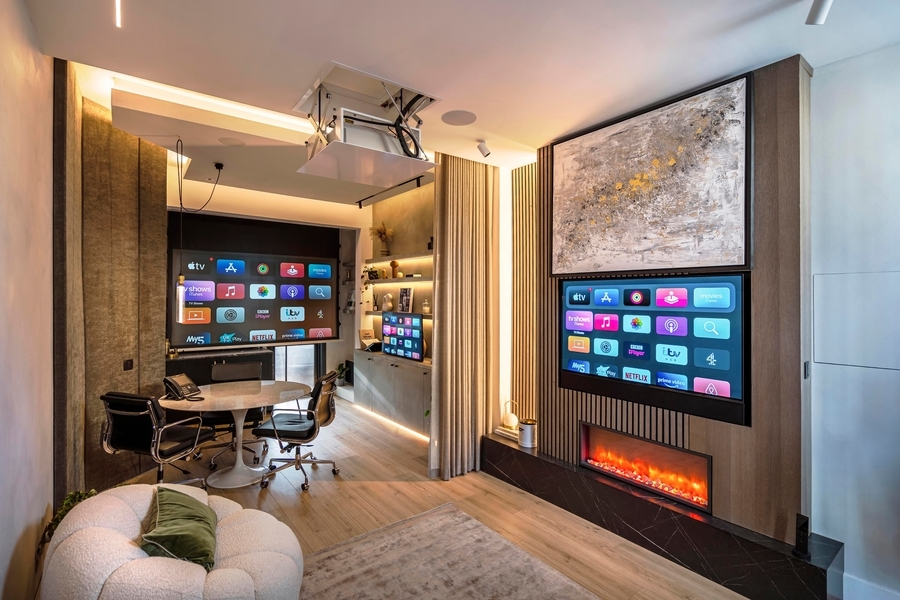
Kitchen appliances can also be utilized, provided their usage is carefully managed
The kitchen is often where many homeowners begin to test the limits of their small residential off grid solar systems. Some appliances are easily accommodated, while others can quickly overwhelm a small inverter or battery bank. Energy-efficient refrigerators and freezers are generally acceptable, as they cycle on and off intermittently rather than running continuously at full power. Using other kitchen appliances requires more careful management. Microwaves, toasters, coffee makers, and rice cookers can all be used, though typically only one at a time. These appliances require moderate to high bursts of power, so the inverter must possess sufficient surge capacity. As long as residents avoid operating multiple high-power appliances simultaneously, an off-grid home solar system can effectively meet these demands.
How to Prioritise Home Appliances for a Stable Off Grid Lifestyle?
For small residential off grid solar systems, supporting high-power heating and cooling equipment presents the greatest challenge. Consequently, expectations must remain realistic. Small off-grid home solar systems are generally ill-suited for large-scale resistive heating devices such as electric ovens, space heaters, water heaters, or clothes dryers. These devices consume vast amounts of electricity over extended periods, placing extremely heavy demands on both the photovoltaic array and the battery bank. Even if the inverter theoretically possesses the capacity to start these devices, their energy consumption can rapidly deplete the battery reserves, thereby compromising the comfort and stability of off-grid living.
Cooling can also prove to be a challenge, particularly for households relying on traditional air conditioning systems. Small fans are easy to run, but central air conditioning or large window AC units can overwhelm a system—unless you design that system specifically to handle those loads. Off-grid home solar systems can sometimes support high-efficiency split-system air conditioners, but this only works when you properly size the solar panels, battery capacity, and inverter output to meet the actual demand.
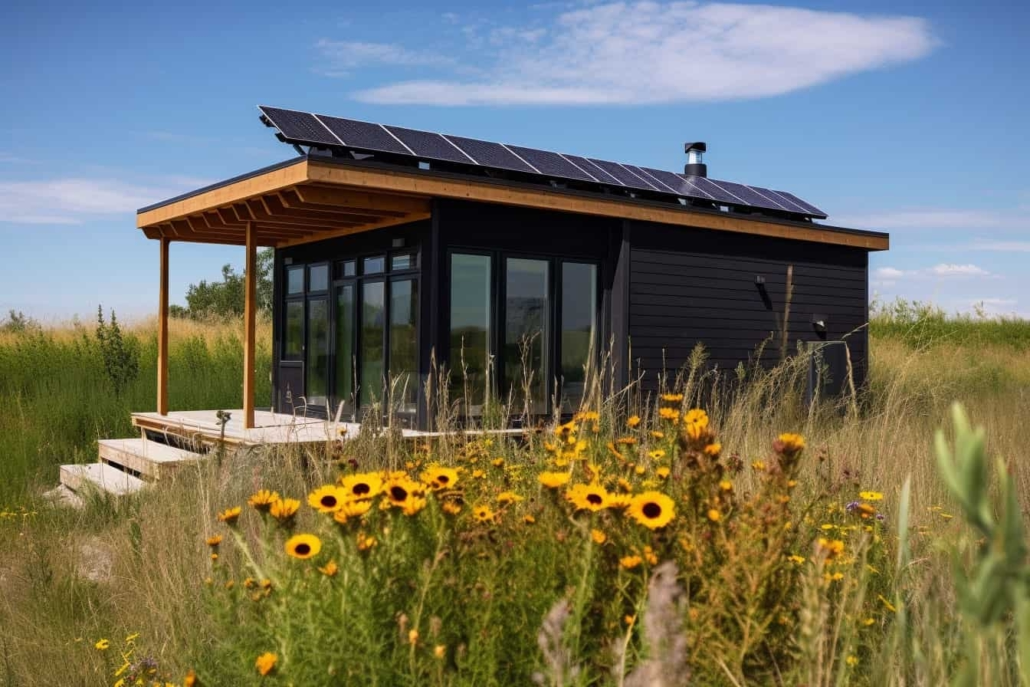
Surge Loads vs. Running Loads in Small Residential Off Grid Solar Systems
When calculating system capacity, people often focus solely on the power ratings listed on appliance labels. However, this is far from sufficient. A small residential off grid solar system must also be capable of handling “start-up” or “surge” loads. This matters most when you’re running appliances with motors or compressors, like refrigerators, water pumps, and washing machines. These devices may draw a starting current several times greater than their standard running power during the brief moment of start-up. If the inverter cannot withstand this surge load, the appliance may fail to start altogether, even if its average energy consumption is well within the system’s limits.
This underscores the importance of selecting the right inverter for an off grid solar system. You need sufficient continuous output power to ensure appliances run normally, as well as adequate surge output power to handle those momentary start-up spikes. Consequently, for homeowners relying on small residentiall off grid solar systems, cultivating sound load management habits is one of the most valuable practices they can adopt.
Building a Practical and Reliable Off-Grid Living Strategy
Small residential off grid solar systems are fully capable of meeting the basic power demands of a wide range of household appliances. However, a well-designed off-grid solar system does not attempt to power *every* device found in a grid-tied home; instead, it prioritizes meeting the needs of critical loads—such as lighting, refrigeration, communication devices, and other energy-efficient appliances. This approach ensures daily comfort while simultaneously maintaining system stability and preserving the long-term health of the battery bank.