
How to Fix Grid Connection Issues in a Residential Grid-Connected Solar System?
Residential grid-connected solar system, as a stable, efficient, and economical energy source, account for the vast majority of new residential solar installations in North America and Europe. However, grid connection problems—such as inverter shutdown, zero output, voltage tripping, islanding alarms, or intermittent reconnection failures—can disrupt energy production, reduce economic efficiency, and pose reasonable safety hazards. To quickly and safely restore system performance, troubleshooting must be a structured engineering process, not a trial-and-error approach. Therefore, this guide will show you professional-grade diagnostic strategies applicable to any grid-connected solar system.
Step One—Diagnosing Grid Connection Faults in a Residential Grid-Connected Solar System
Before performing any electrical measurements or configuration adjustments, always prioritize safety. If you detect a burning smell, visible arcing, melted connectors, or repeated circuit breaker tripping, immediately turn off the switches. Before continuing, ensure that the capacitors in the inverter are fully discharged. Safety is paramount and cannot be ignored when operating residential grid-connected solar systems, as both DC and AC circuits can be energized.
For non-emergency faults, a structured rapid assessment process should be followed first. Review the inverter’s display information and historical alarm logs. Confirm that the grid is operating normally and is not under maintenance. Inspect the DC combiner box, AC circuit breaker, and disconnector. Many grid-connected solar system failures stem from loose terminals, improper torque settings, aging connectors due to weather conditions, or incorrect output configuration.
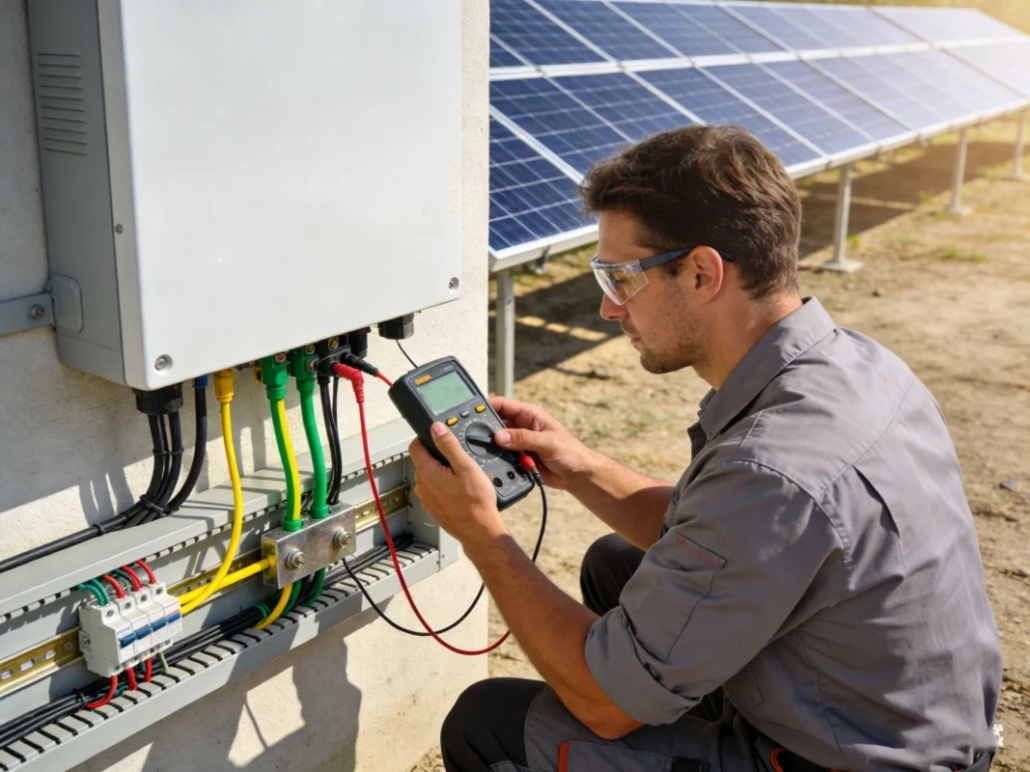
Inverter Fault Code Analysis in Residential Grid-Connected Solar System
The inverter is the central intelligent unit of a residential grid-connected solar system. It continuously monitors voltage, frequency, current, temperature, and grid synchronization parameters. Therefore, the inverter fault log provides highly specific diagnostic information that can guide corrective actions. Ignoring these fault codes may lead to repeated downtime or compliance violations. Common inverter-related grid problems include grid overvoltage or undervoltage tripping, frequency deviation, islanding protection activation, DC input imbalance, and internal overheat protection events. If the inverter reports a grid voltage exceeding permissible thresholds, measure the voltage directly at the point of common coupling (PCC) using a calibrated multimeter.
Troubleshooting DC Side Faults in Grid-Connected Solar Systems
When inverter diagnostics show low DC input voltage, string mismatch, or insulation faults, the problem is likely on the photovoltaic array side. The DC subsystem is frequently exposed to various environmental stresses, including UV radiation, temperature cycling, and moisture intrusion. These factors can cause connectors and wiring to age over time. Accurate troubleshooting of DC faults in grid-connected solar systems requires comparing real-time measurements with system design specifications. Even small deviations in string voltage can reduce inverter efficiency or prevent grid connection. By systematically testing each string, installers can isolate underperforming components and eliminate faults before they escalate.
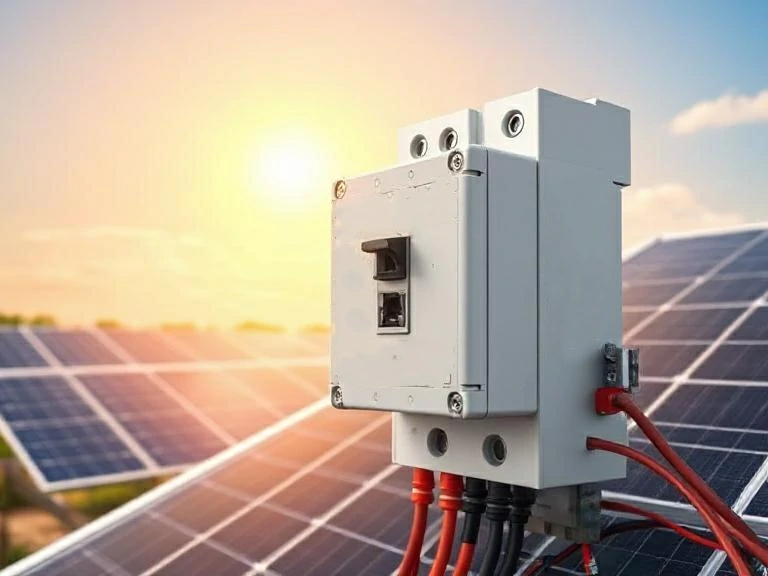
AC Side and Utility Interconnection Issues
Grid connection problems often originate on the AC side of the system. Because grid-connected solar systems must be precisely synchronised with the utility grid’s voltage and frequency, even small deviations can trigger protective shutdowns. Loose neutral wires, improper phase balance, or undersized wiring can all cause system instability. In such cases, the main switchboard needs to be checked to ensure that the circuit breaker ratings match the inverter output capacity. Measure line-to-line voltage and line-to-neutral voltage under load conditions. In some areas, power companies implement dynamic voltage regulation during peak solar hours, which may affect the inverter’s time to connect to the grid.
Step Two – Compliance and Safety Improvements for Residential Grid-Connected Solar System
Compliant residential grid-connected solar systems must meet local grid connection standards, such as IEEE 1547 or the regional grid specification. Anti-islanding protection ensures the inverter stops operating during a power grid outage, preventing unsafe reverse-feeding conditions. If non-compliance is found during inspection, verify that the inverter firmware matches the approved version from the power company. Update the software if necessary and confirm that the reconnection delay timer complies with regulatory requirements. In some installation environments, an external grid monitoring relay may be required.

Fast Shutdown and Electrical Safety Upgrades
Electrical safety regulations evolve. Many regions now require rooftop PV arrays to have fast shutdown capabilities. If your grid-connected solar system was installed before the NEC update requirements came into effect, retrofitting may be necessary. Install module-level fast shutdown devices in designated areas. Conduct simulated power outage tests to verify that the DC voltage drops within a specified time. Update warning labels and system diagrams to comply with current safety standards. These upgrades improve firefighter safety, increase inspection pass rates, and thus enhance the long-term reliability of residential grid-connected solar systems.
Restoring the Stability of Grid-Connected Systems
Troubleshooting grid connection issues in residential grid-connected solar systems requires rigorous diagnostics, a thorough understanding of relevant regulations, and precise engineering. First, conduct safety checks, analyze inverter data, isolate DC and AC faults, and verify compliance with the latest grid standards. Most grid-connected solar system failures are not due to core hardware defects but rather to misconfigurations, wiring inconsistencies, or grid instability. By applying a systematic troubleshooting approach and implementing proactive monitoring strategies, homeowners can restore seamless grid interaction.