How to resolve power inconsistencies in an off grid solar kit for small residential homes?
In the United States, small homes are the fastest-growing housing type, with 63% of homeowners opting for an off grid solar kit for sustainability and cost savings. However, small homes present unique limitations, including limited roof space, unpredictable energy demand, and tight budgets, making power instability a common problem. Consequently, many homeowners frequently experience fluctuating power levels. This power instability is not part of off grid living, but a solvable issue rooted in four key factors: incompatible off grid solar kits, improper installation, inadequate maintenance, and outdated control systems. Therefore, this guide will utilize our field test data to explain in detail how to diagnose, repair, and prevent these problems.
Why Off Grid Solar Kit’s Power Instability Has the Greatest Impact on Small Homes
Small homes are more susceptible to power instability than traditional homes. This is primarily due to three unique characteristics of using off grid solar systems in small homes, each of which can amplify minor flaws into serious malfunctions.
First, limited energy storage and generation capacity. Small homes typically have only 10-20 square feet of available roof space for solar panels, while standard homes have over 100 square feet. This means that most small off-grid home solar systems have a daily power generation limit of 1-6 kWh and a battery storage capacity of 5-10 kWh. Even a small drop in panel output or a sudden surge in load can deplete the battery or trip the inverter.
Secondly, energy use is variable and concentrated. Small homes concentrate all living needs in a small space: cooking, heating, charging appliances, and other household appliances all rely on the same small off grid solar system. These appliances combined can exceed the inverter’s power limits, causing the system to shut down. Thirdly, 58% of small homeowners build their own off-grid solar systems, often using a mix of cheap and incompatible components. Such combinations can result in the battery not being able to store enough energy generated by the solar panels, or the inverter being unable to handle the battery’s output power.
Power Instability Troubleshooting – Three Steps to Find the Root Cause
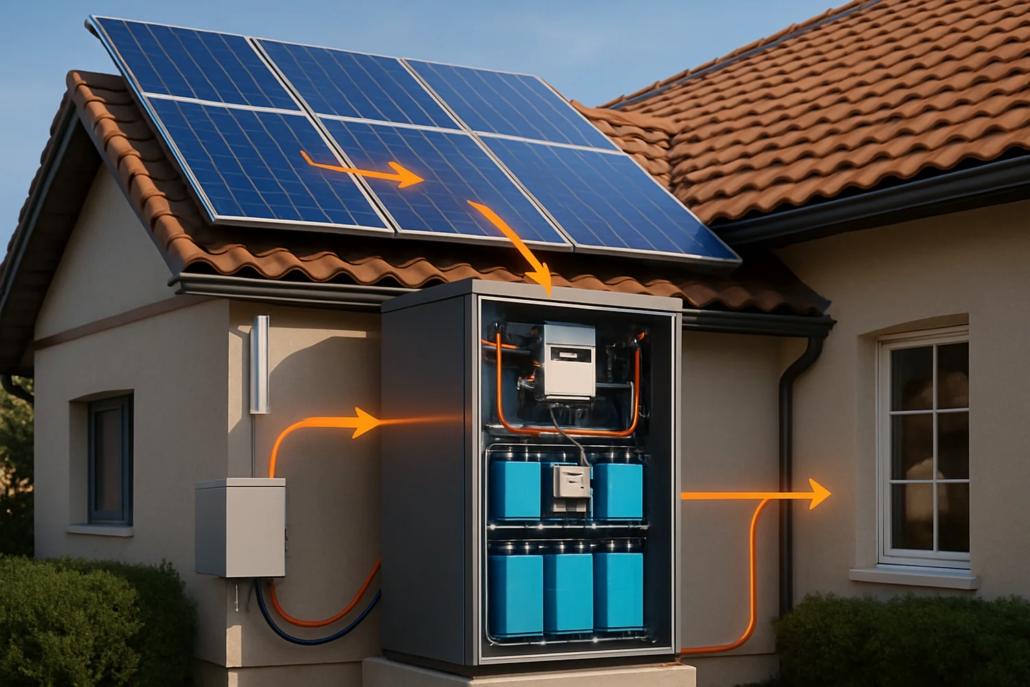
Before replacing parts or upgrading your off grid solar system, you need to diagnose the problem. Power instability is rarely caused by a problem with the solar panels themselves; it’s almost always a failure of a specific component or setup. We offer a three-step diagnostic process for every customer, which you can also complete yourself in 30 minutes.
Step 1: Test Solar Panel Output – Is Your Energy Reliable?
Solar panels are the foundation of an off grid solar system – if they don’t perform well, everything else will fail. Between 10 AM and 2 PM, connect a multimeter to the solar panel’s positive and negative terminals and measure its output. For a 300W panel, under direct sunlight, you should see 18-22V (open circuit voltage) and 13-15A (current). If the output power is more than 20% lower than the rated power, the problem may be due to shading, dust or debris, aging, etc.
Step 2: Check Battery Health – Does Your Battery Pack Still Have Power?
Batteries store energy for use on cloudy days and at night – if the batteries are low, your off grid solar system will fail when it’s most needed. After fully charging, use a multimeter to test the battery voltage. Lithium-ion batteries: Voltage should be 13.2–13.6V (12V system). A reading below 12.8V indicates degraded battery performance. Lead-acid batteries: Voltage should be 12.6–12.8V (12V system). Below 12.4V indicates reduced capacity.
Step 3: Verify Inverter and Controller Performance – Is the Power Conversion Correct?
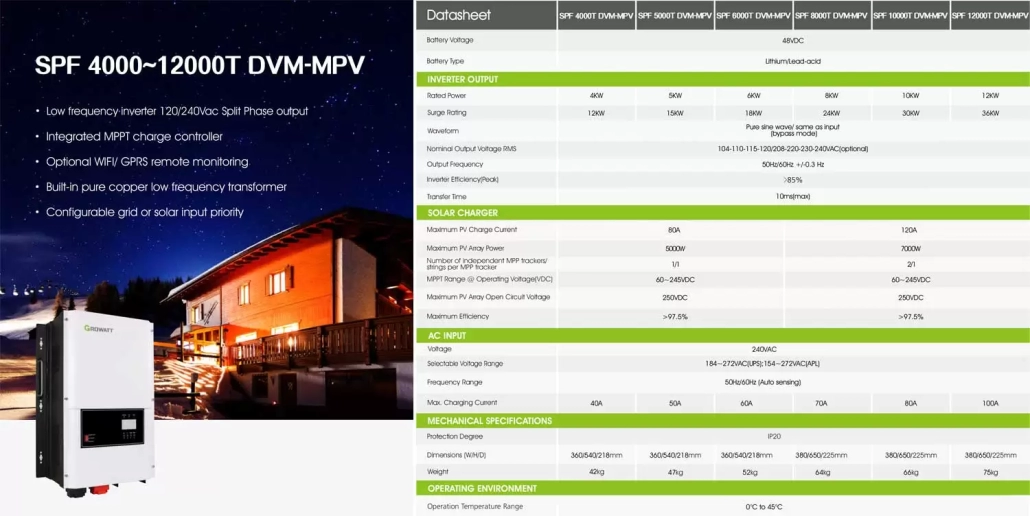
The solar inverter converts DC battery power to AC, while the charge controller regulates the power flow from the solar panels to the batteries. Both are common points of failure. To test the inverter output, plug a multimeter into a 120V outlet powered by the off grid solar kit – the voltage should be 115–125V. If the voltage is below 110V or above 130V, the inverter is faulty. For the charge controller, check if the battery is in a “float charge” state after being fully charged. If the battery remains in a “constant current charging” state after 8 hours of sunlight, the controller cannot adjust the power, leading to overcharging or undercharging.
Ensure Component Matching in Off Grid Solar Kit
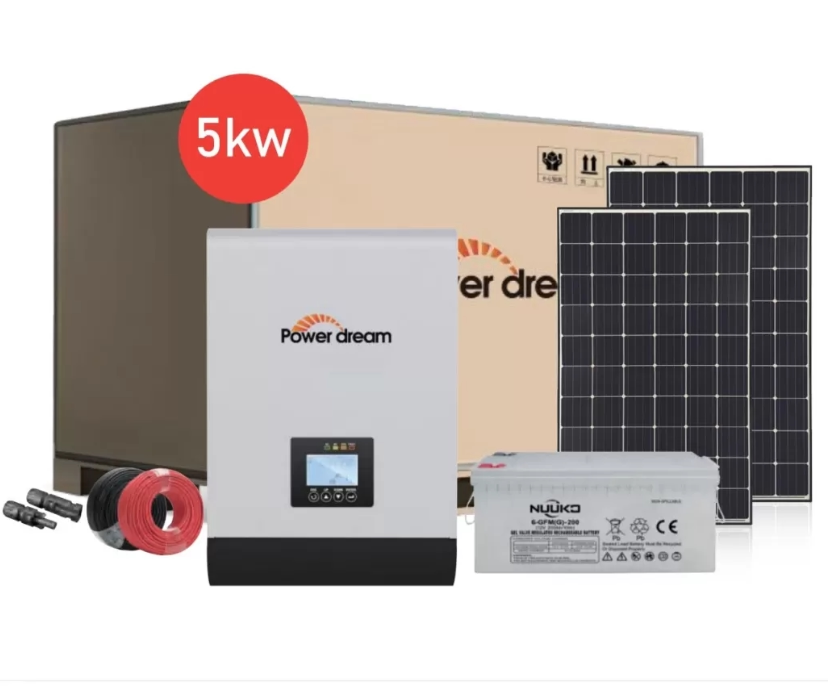
The biggest reason for unstable power in small home off grid solar kits is component mismatch. For example, a 400W solar panel paired with a 50Ah battery won’t work together. PowerDream’s off-grid solar systems are meticulously designed to match generation, storage, and conversion ideally.
Here is our formula for matching components to small homes based on daily electricity consumption (DEU):
1. Calculate your daily electricity consumption: Use a smart energy monitor to track your consumption. Most small homes consume 2-5 kWh per day.
2. Solar Panel Size: Multiply your daily electricity consumption by 1.5. For example, for a daily electricity consumption of 3 kWh: 3 x 1.5 = 4.5 kWh, which is the daily power generation required. Each 300W solar panel generates approximately 1.2kWh of electricity per day; therefore, 4 panels are needed.
3. Battery Storage Capacity: Multiply your daily energy demand (DEU) by 2 (to cover 2 cloudy days). For example, for a daily energy demand of 3kWh: 3 x 2 = 6kWh, which is the required daily storage capacity.
4. Inverter Size: Add the power of your maximum simultaneous load. Suppose you are using a 1500W heater and a 600W coffee maker simultaneously: 1500 + 600 = 2100 watts. Please choose a 2500W inverter (leaving a 20% margin to avoid overload).
Smart Control – An Effective Solution for Power Fluctuations
Even the best-matched off grid solar systems can experience fluctuations due to weather or load peaks. Intelligent control addresses this problem by “managing” power flow—prioritizing critical load demands, adjusting charging rates, and preventing overload.
Utilizing an MPPT (Multi-Stage Photovoltaic) charge controller maximizes solar input by adjusting panel output in real time to utilize every watt of sunlight fully. PowerDream’s MPPT controllers can improve panel efficiency by an average of 18%. Simultaneously, intelligent inverters with load management can be used. PowerDream inverters employ “load prioritization” technology, allowing you to specify which loads are essential and which are optional. If demand exceeds capacity, the inverter will shut down unnecessary loads rather than tripping the circuit breaker. Furthermore, real-time monitoring and adjustment can be achieved through an energy management system that connects to your off-grid solar kit via Wi-Fi, providing real-time data on panel output, battery level, and load usage.
Ensuring Proper Installation and Regular Maintenance
Even a perfectly matched, intelligently controlled off grid solar kit can fail if improperly installed or neglected. Small homeowners often cut corners in this area—DIY installations may save money initially, but subsequent repair costs can reach thousands of dollars.
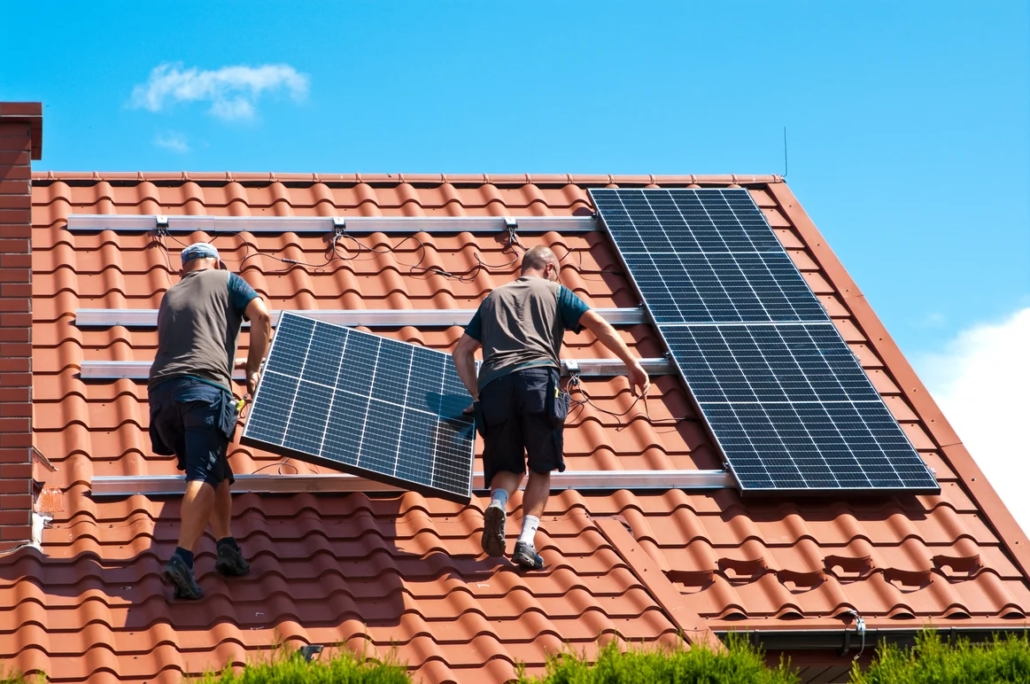
When installing, pay attention to the panel angle and orientation: In the United States, the panel should face south at a tilt angle of 30-45 degrees—this maximizes year-round sunlight absorption. Additionally, pay attention to the wiring specifications; the connection between the panel and the controller should use 10AWG copper wire. Thin wire can cause voltage drops and a 10-15% power loss. Also, ensure the batteries receive adequate ventilation. In small homes, regular monthly maintenance, including cleaning the panels, checking the battery terminals, and testing the inverter output, can help ensure the off grid solar system operates stably.
Making Off Grid Solar Systems Stable in Small Homes
Instantaneous power in small home off grid solar systems is not inevitable. This can be due to incompatible components, outdated control systems, improper installation, or lack of maintenance—all of which are solvable. Identifying the root cause and selecting appropriate components are key to resolving power instability issues. Additionally, at PowerDream, we design off grid solar kits specifically for small homes—our 5kWh and 10kWh kits can be installed on rooftops with limited space to meet the energy needs of small homes and include all the intelligent control systems and installation hardware to ensure a stable power supply for your home.