Tag Archive for: off grid solar inverter

Off grid solar inverter: Multiple Protection Features Eliminate Short Circuit/Overvoltage Risks

When a remote off grid cabin relies on solar power and a battery bank, a single wiring error or voltage spike can derail your energy plans. That’s why choosing an off grid solar inverter with comprehensive protection is crucial. PowerDream’s off-grid solar inverters feature a multi-layered safety architecture, including PV reverse polarity protection, battery overvoltage protection, overload and short-circuit protection, temperature management, surge suppression, and integration with a battery management system (BMS) to prevent minor malfunctions from escalating into catastrophic consequences.

Essential Protection Features for Off Grid Solar Inverter

The first and foremost requirement is PV reverse polarity protection. One of the most common mistakes in rooftop or ground-mounted installations is reversing the PV connector: a reversed connector can damage diodes, stress the MPPT circuitry, and cause dangerous arcing. Therefore, professional off grid solar inverters are equipped with explicit PV reverse-polarity protection, which detects DC polarity at the input and prevents current flow until the polarity is corrected. PowerDream’s off-grid solar storage inverters employ dual hardware and firmware protections: the hardware blocks DC power in the event of reverse polarity, while the inverter’s control logic reports the fault to the monitoring interface and locks the device in a safe state. Furthermore, a DC surge protector at the photovoltaic input prevents damage to the inverter from high-voltage transients such as lightning strikes or grid switching.
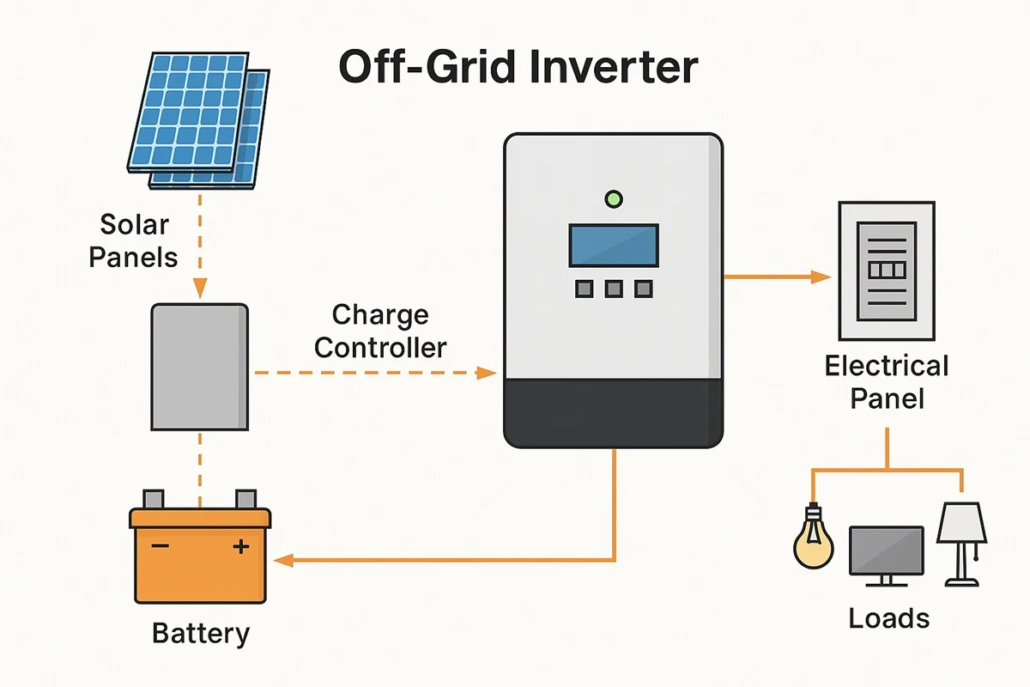
Essential Protection Features for Off Grid Solar Inverter

Battery Overvoltage and Undervoltage Protection Functions in Off Grid Solar Inverter

In off grid solar systems, the battery is the core of the entire device and the most sensitive component to inverter performance. An excellent off grid solar inverter must have robust battery overvoltage protection and undervoltage cutoff. If the battery is modular or a large-capacity pack, it must be integrated with an external BMS.

PowerDream’s off grid solar inverters support configurable charging cutoff voltage, absorption/float charging voltage, and SOC-based charging limits. In addition, the inverter includes a hardware relay and a fast electronic circuit breaker that trips when the battery voltage exceeds a safe threshold or when the BMS issues a critical fault signal. For lithium batteries, the inverter firmware supports temperature-compensated charging setpoints and charging current limits to prevent battery overvoltage. On the other hand, undervoltage protection prevents the inverter from operating below a safe battery voltage, thus protecting the battery from damage and extending cycle life.

Short Circuit Protection and Overload Handling Functions

Short circuits and overloads can occur in off grid systems: pump blockage, incorrect load wiring, lightning strikes, or cable faults can all cause the inverter to withstand extremely high currents. A reliable off-grid solar inverter must quickly detect short circuits and disconnect the affected output to limit fault current and prevent downstream damage. PowerDream employs multi-stage current protection: the inverter power stage is equipped with fast electronic overcurrent detection, clearing high current transients within microseconds; simultaneously, electromechanical relays or contactors trip when a fault persists. The overload protection function is adjustable and supports phased response. More importantly, the inverter logs fault events and reports fault details to a remote monitoring system, allowing technicians to diagnose the root cause without costly on-site service.
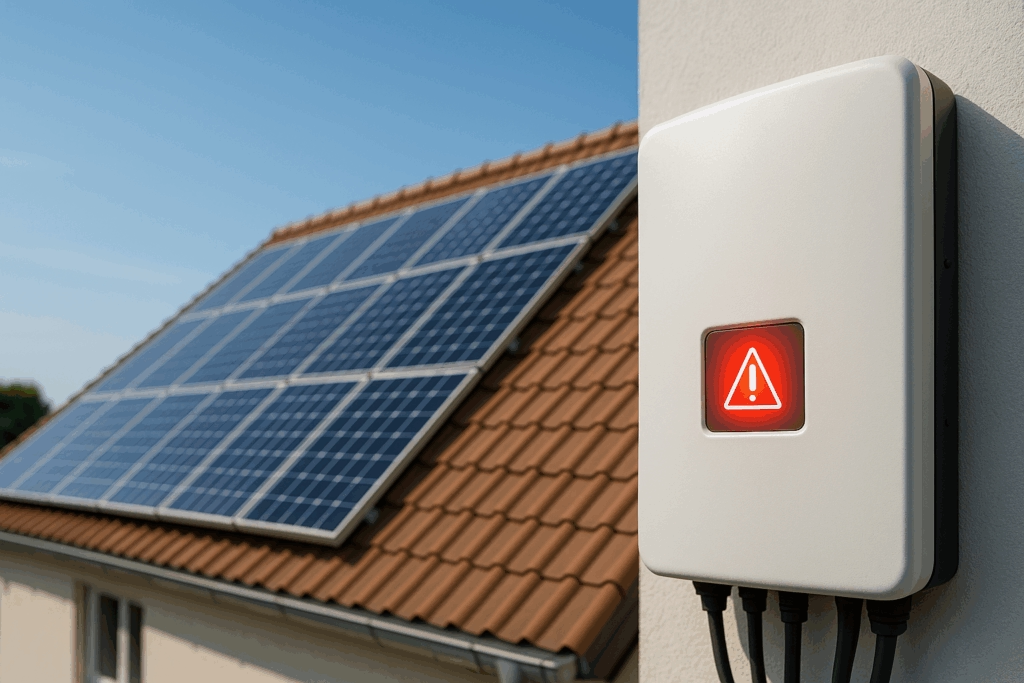
Short-circuit protection and overload handling functions for off-grid solar inverters

Advanced Protection, Environmental Protection, and System Integration for Off Grid Solar Inverter

Thermal stress is a major cause of inverter failure. Off grid inverters typically operate in harsh, un-air-conditioned environments. Therefore, professional off grid solar inverters require active thermal monitoring, conservative thermal derating profiles, and a clear enclosure design to prevent thermal runaway. PowerDream’s BHYP off-grid solar inverter provides multi-sensor temperature monitoring and implements tiered thermal protection: it slowly drains when output power exceeds a set threshold; at extreme temperatures, it reduces the MPPT’s sensitivity to limit internal heat dissipation; and it forces a shutdown if the temperature exceeds safe operating limits. Additionally, for prolonged high-temperature operation, the inverter can notify the operator and record temperature trends to support preventive maintenance.

Surge Protection and Transient Voltage Suppression

Lightning strikes and grid switching can generate transient overvoltages that can propagate into off grid systems via photovoltaic arrays, AC reverse power supplies, and even grounding systems. A robust off-grid design considers surge protection a critical feature. PowerDream integrates surge protection devices (SPDs) on both the PV DC side and the AC output/standby input side of the inverter. These SPDs are coordinated: a type 1/2 equivalent surge protector on the AC input side and a high-energy DC surge protector on the PV input side. Additionally, the inverter includes internal clamping circuitry and MOVs to absorb residual energy. Importantly, you can maintain and replace the SPD very conveniently; multiple surge events degrade its performance, so you must replace it to maintain its effectiveness.
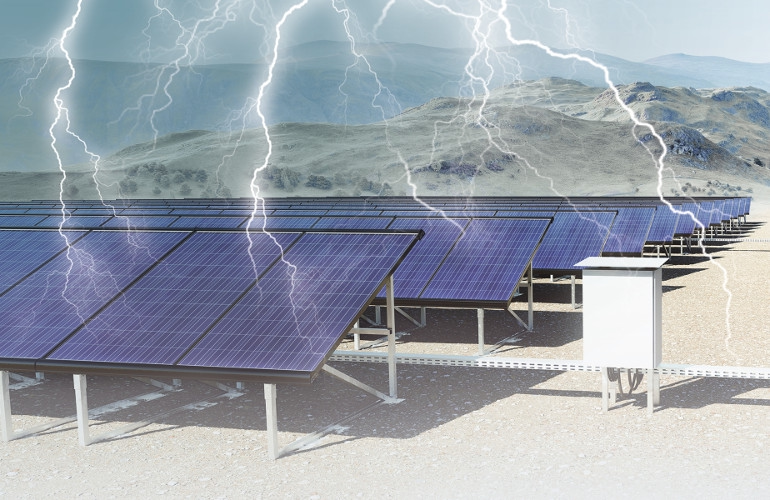
Surge Protection and Transient Voltage Suppression in Off-Grid Solar Inverters

Choosing a Protection-First Off Grid Solar Inverter

Choosing an off grid solar inverter is not simply about selecting the kilowatt rating; it’s more about choosing a protection-first architecture to prevent wiring errors, battery damage, overheating failures, and sudden transient events. PowerDream’s off-grid solar storage inverters integrate hardware and firmware protection features, including photovoltaic reverse-polarity protection, battery over- and under-voltage handling, short-circuit and overload trip coordination, temperature protection, and surge protection. These features work together to ensure the safe and efficient operation of off-grid systems.
Modified Sine Wave vs. Pure Sine Wave Off Grid Solar Inverter: Which Is Better?

Choosing the right off grid solar inverter is one of the most important decisions when designing a standalone solar system. The inverter determines how the clean energy stored in the battery is converted into electricity for use by homes, tools, appliances, and outdoor systems. Currently, there are two common waveform types: modified sine wave and pure sine wave. While the difference between the two seems simple in theory, in practice, it affects equipment compatibility, efficiency, noise levels, battery stress, and long-term reliability. Therefore, I will compare the performance of the two types of off grid solar inverters under typical loads and discuss their impact on batteries and motors.

What are Modified Sine Wave and Pure Sine Wave Off Grid Solar Inverter?

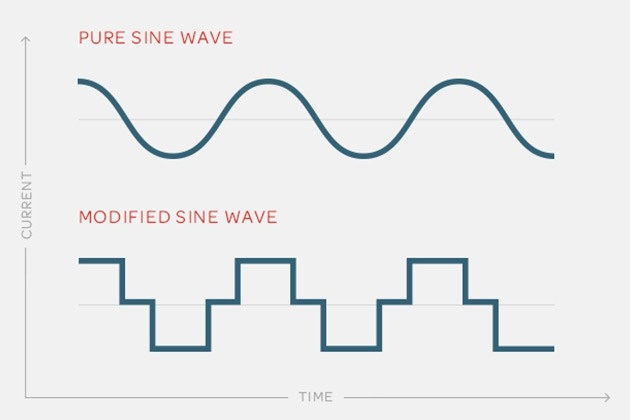
Pure sine wave off grid solar inverters produce an AC voltage waveform that is very close to an ideal sine wave – smooth, continuous, and symmetrical. This is the waveform provided by the power grid, and most household appliances are designed to operate on it. In contrast, modified sine wave off-grid solar inverters use a stepped or blocky waveform to approximate a sine wave. While this output is suitable for many resistive loads, its waveform has drawbacks: higher harmonic distortion, larger voltage transients, and less smooth current flow.

Key Practical Differences:

Harmonic Content and Total Harmonic Distortion (THD): Pure sine wave off grid solar inverters typically have lower Total Harmonic Distortion (THD), usually below 3% to 5%, while modified sine wave inverters can have much higher THD due to the larger waveform transients. Higher THD can cause motors and transformers to overheat due to waveform fluctuations.

Compatibility: Sensitive electronic devices such as computers, LED drivers, variable-speed pumps, medical equipment, and many modern household appliances require a clean sine-wave input signal. Waveform distortion can lead to malfunctions, increased electromagnetic interference, and even equipment damage.

Power Quality and Efficiency: Motors run cooler and more efficiently under a pure sine wave; audio equipment produces clear sound without buzzing; and battery charging curves are more predictable.

What are Modified Sine Wave and Pure Sine Wave Off-Grid Solar Inverters

How do the Waveform Types of the Off Grid Solar Inverter Affect Common Loads?

Different appliances respond differently to waveform quality. Solar street light controllers or LED drivers can accept modified sine waves in some cases, but many modern LED drivers and street light control units perform best with pure sine waves. Let’s analyze common off-grid loads and their performance under various inverter types.

Resistive Loads:

Modified Sine Wave: Generally acceptable. Resistive elements only dissipate power; the waveform shape has minimal impact.
Pure Sine Wave: Perfect performance. No drawbacks, but limited performance advantages compared to resistive loads.

Inductive Loads:

Modified Sine Wave: Can lead to increased heat generation, torque pulsation, increased noise, and reduced efficiency. Motor operating temperatures may be higher, shortening the lifespan. Variable frequency drives and shaded-pole motors may malfunction.
Pure Sine Wave: Smooth torque, low heat generation, and normal efficiency. Crucial for water pumps, washing machines, and HVAC compressors.

Sensitive Electronic Equipment:

Modified Sine Wave: Risks of improper operation, false alarms, or damage. Some power supplies may generate extra heat or reject the waveform.
Pure Sine Wave: Ensures safe and reliable operation of switching power supplies and electronic control equipment.

How do the Waveform Types of the Off Grid Solar Inverter Affect Common Loads

Battery Life, Charging Characteristics, and System Efficiency

One of the core objectives of off grid system design is to maximize the energy utilization of the battery bank. Off grid solar inverters are a critical component of off grid solar systems, influencing charging methods, discharge depth patterns, and overall energy efficiency.

Impact on Charging and Battery Cycling:

Modified sine wave inverters sometimes employ simpler control electronics, which can lead to reduced accuracy in charging and control signals. When integrated with the inverter’s charger, this can result in irregular charging algorithms, increasing cycle efficiency losses. Pure sine wave off grid solar inverters are typically compatible with BMS-enabled chargers, temperature compensation, and multi-stage constant-current/constant-voltage/float charging. More efficient charging methods better protect battery health and reduce premature capacity degradation.

Efficiency and Heat Loss:

The current drawn by motors and appliances varies with the waveform; changing the waveform typically increases the RMS current for the same load, thereby increasing I²R losses in the wires and internal components. This loss manifests as heat, reducing the battery’s net usable energy. Pure sine wave off-grid solar inverters produce a smoother current waveform and typically incorporate high-efficiency topologies (e.g., high-frequency transformers or transformerless designs), resulting in higher conversion efficiency and lower standby losses.

Long-Term Battery Life Impact

Because pure sine wave off grid solar inverters reduce unnecessary heat generation in the load and enable more precise charge control, the battery pack experiences fewer stress cycles and more predictable state-of-charge management. Over the system’s lifespan, this can significantly save on battery replacement costs and downtime—especially critical in off-grid applications where reliability is paramount.

At PowerDream, we use off grid solar inverters with pure sine-wave output to optimize charging algorithms and minimize parasitic losses, thereby preserving battery cycle life and maximizing overall system round-trip efficiency.

Reliability, Diagnostics, and Field Performance

When a system is off grid, remote reliability is crucial. Failures not only incur repair costs but often lead to reduced productivity or comfort. Modified sine wave off grid solar inverters are typically simpler in design but can impose higher thermal and electrical stress on connected equipment. These downstream stresses increase the probability of field failures. Pure sine wave off-grid solar inverters, with robust thermal management, conservative component derating, and active fault detection, prevent catastrophic failures.

In terms of system monitoring and diagnostics, pure sine wave off grid solar inverters typically include a range of telemetry and diagnostic features—fault logging, remote alarms, and historical energy graphs—that expedite troubleshooting of remote installations. Lower-priced modified sine wave units may lack comprehensive telemetry capabilities, resulting in slower, more costly fault isolation. Regarding field performance, off-grid systems often operate in harsh environments. Off grid solar inverters designed for these environments feature conformal coatings, higher ingress protection ratings, and dust-resistant cooling systems. These design choices reduce downtime and extend the mean time between failures. For critical applications such as telecommunications equipment rooms, medical clinics, or remote streetlights, PowerDream recommends using off-grid inverters with pure sine-wave output, as they provide predictable performance.

Reliability, Diagnostics, and Field Performance 1

Why use pure sine wave off grid solar inverters?

Considering overall performance, efficiency, reliability, and long-term economics, pure sine wave off grid solar inverters are the better choice for most practical off-grid applications. While modified sine wave inverters have advantages in certain specific applications, such as when cost is the primary consideration and the load is purely resistive, off-grid ecosystems include smart LEDs, inverters, water pumps, and precision electronic equipment that require a clean, stable AC waveform. Pure sine wave inverters reduce electromagnetic interference (EMI), lower motor operating temperatures, extend battery life, and minimize unexpected failures. Furthermore, they simplify integration with telemetry systems and modern battery management systems.