Tag Archive for: off grid home solar system

Solving residential energy problems with off grid home solar system

As more homeowners worldwide seek ways to reduce their reliance on the public grid, off grid home solar system is an effective and sustainable solution to address energy issues for all types of homes. Whether you live in a small, medium, or large home, the versatility and scalability of off grid solar systems can provide you with the energy independence you need while reducing energy costs and your carbon footprint. From tiny homes with minimal energy needs to large homes that require much electricity, BARANA has a wide variety of solar solutions to choose from that can not only help homeowners meet their energy needs but also provide additional benefits. In this article, we will share how to solve energy problems for different home-size types and how to tailor them to the unique needs of various residential environments.

How can off-grid home solar systems meet the energy needs of tiny homes?

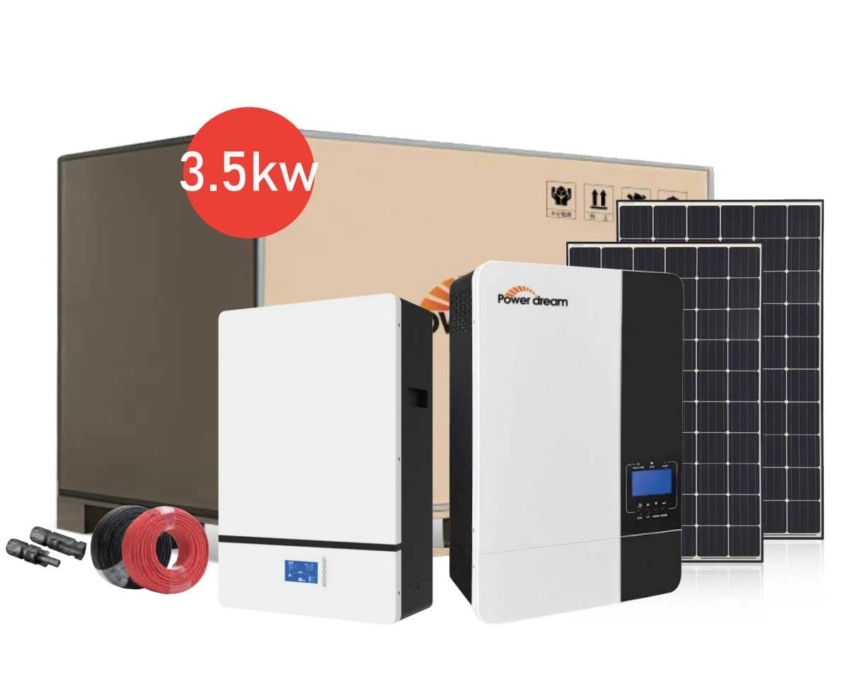
We recommend homeowners adopt 3kW off grid home solar systems for tiny homes with relatively low energy consumption. These systems are designed to provide enough power for everyday household appliances such as lighting, refrigerators, washing machines, and heating. In urban or suburban areas where space is limited, the compact size of the 3kW off grid solar system makes it an efficient and affordable off-grid energy solution.

A 3kW off grid solar system typically consists of 6 solar panels, a core kit for solar arrays and off-grid inverters, and other accessories. It ensures that the energy needs of a small family are met. In addition, the battery storage component of the system allows homeowners to store excess energy generated during the day for use at night or on cloudy days, ensuring a constant supply of electricity without a grid connection. In addition to providing energy independence, a 3kW off grid home solar system can also help homeowners significantly reduce utility bills, minimizing dependence on the public grid. At the same time, the process of a 3kW off grid solar system is relatively simple and requires low maintenance.
off grid home solar system 1

Off grid home solar system for medium-sized homes

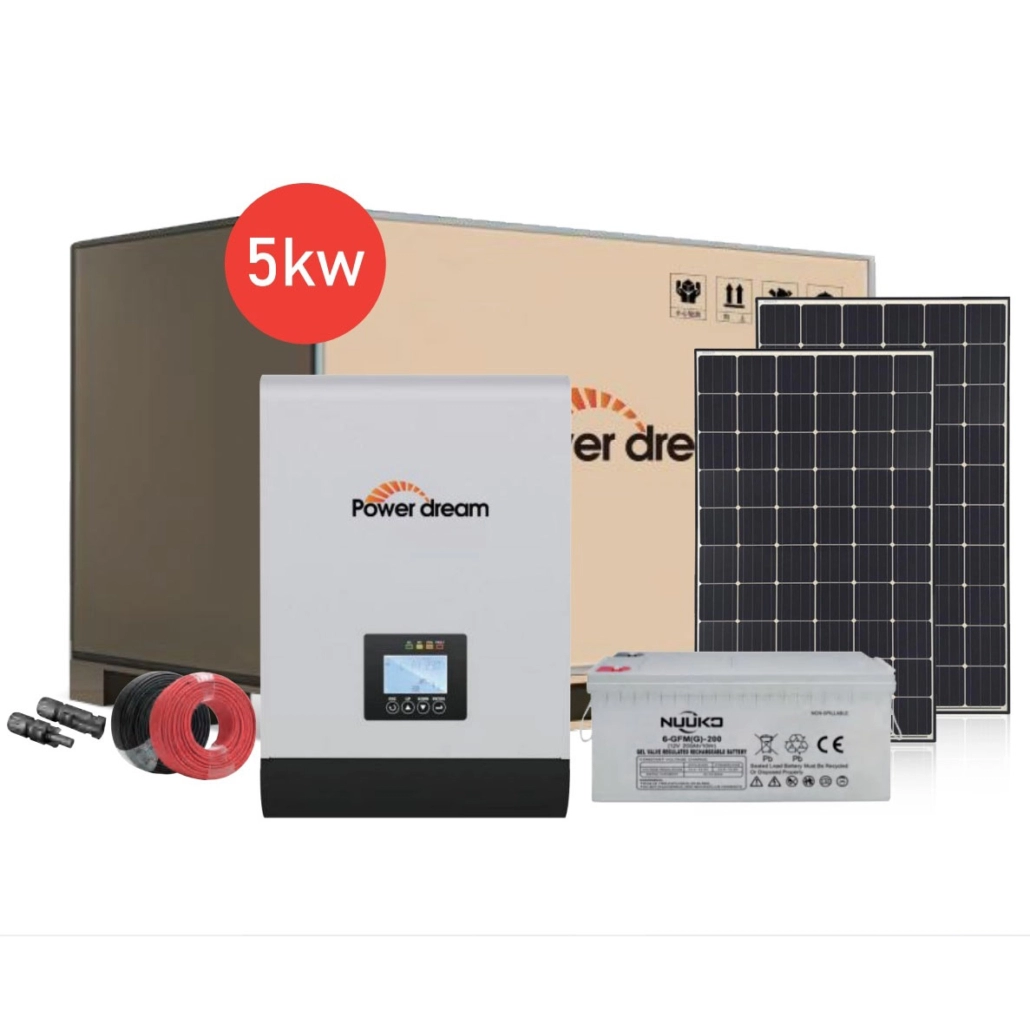
As the size of a house increases, its energy needs also increase. For medium-sized houses with relatively high energy consumption, a 5kW-8kW off grid home solar system is a more suitable choice. The system can power a home or residence with 7-10 sets of household appliances (including refrigerators, air conditioners, and home entertainment systems) without compromising efficiency or sustainability.

5kW-8kW off grid home solar systems work similarly to the smaller 3kW systems but provide more power through an expanded solar panel array and a larger battery bank. The larger capacity ensures that you can easily power your home appliances and devices while remaining independent of the grid. The main advantage is the balance between cost, efficiency, and space requirements. Although it is more significant than a 3kW system, it is still compact enough for a residential environment and does not take up space. In addition, the additional power generated by the more significant solar array allows for more extensive battery storage.
off grid home solar system 1

Meeting the energy needs of large homes

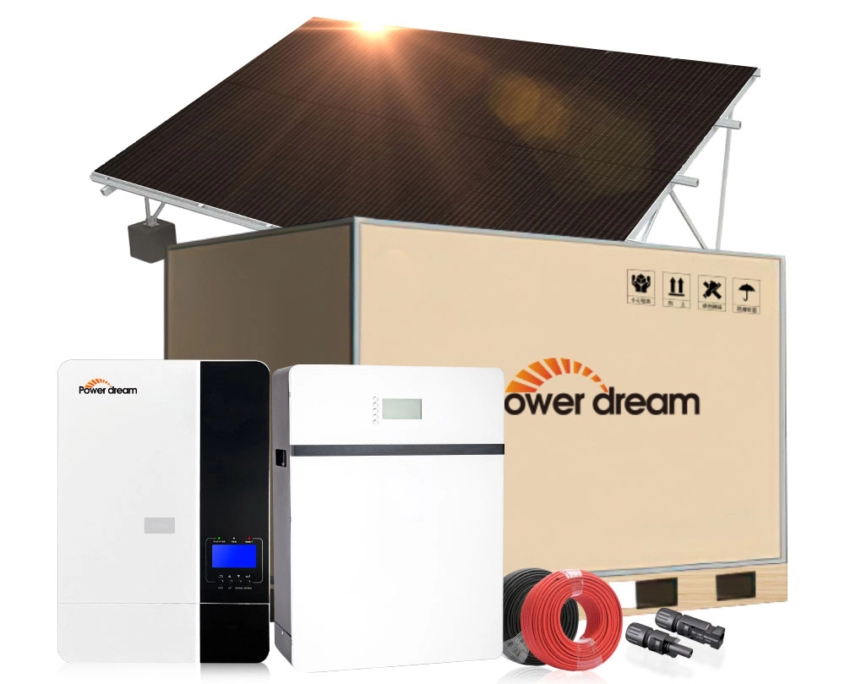
For large homes or homes with very high energy consumption, 10kW or more off grid home solar systems are the most effective solution. They can power 12-15 appliances or even multiple appliances and meet the power needs of homes that run a large number of appliances at the same time. Whether you have multiple bathrooms with electric heating or a complete set of kitchen appliances, a 10kW off grid system ensures that you have the power you need without connecting to the grid.

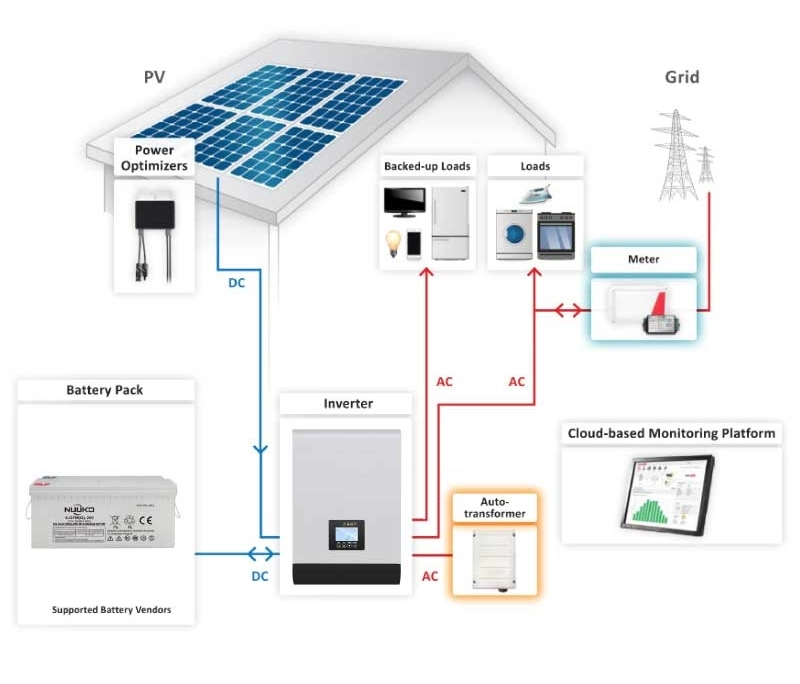
The 10kW off grid home solar system consists of a 20-panel solar panel array, large-capacity battery storage, and smart inverters. The increased system capacity also means that homeowners can store more energy for off-peak use. The added smart inverter can seamlessly switch between using stored solar energy and obtaining energy from the grid, allowing you to connect to the utility grid when necessary while being independent of energy sources for more flexibility.
10kW off grid home solar system 1-2


The role of smart inverters

One of the key innovations in BARANA’s off grid home solar system technology is the integration of smart inverters. Taking the 10kW off grid system as an example, the addition of smart inverters enables homeowners to connect to the grid when necessary, providing additional flexibility and peace of mind.

Smart inverters can adjust to fluctuations in energy demand, thereby monitoring and controlling electricity consumption. These inverters come with communication functions that enable real-time data transmission between the solar system and the grid, allowing efficient load balancing and energy distribution. They not only provide grid connection but also ensure seamless transitions between off-grid and grid-connected modes. Smart inverters are of great value, especially for large homes with highly variable energy needs. It increases the flexibility of the system and ensures that homeowners always have access to reliable and affordable electricity.

Economic Advantages of Off-Grid Solar Systems

In addition to the environmental benefits of using off grid solar systems for utility, residential, and commercial applications, there are significant economic advantages. By investing in solar energy, homeowners can significantly reduce their reliance on the public grid, lower their electricity bills, and reduce long-term energy costs. Regardless of the kW of the solar system you use, each option provides a path to greater energy independence. That economic benefit is a reduction in monthly utility bills. In many areas, electricity prices can fluctuate, making it difficult for homeowners to predict their energy expenses. With a solar home, you make energy costs more predictable by relying on renewable energy, and once you install the system, energy costs become essentially free. Over time, you can recoup the initial investment in an off-grid home solar system through savings on utility bills.
Economic Advantages of Off-Grid Solar Systems

Helping Homes Achieve Energy Independence

Whether you choose a 3kW off grid home solar system for a small home, a 5kW-8kW system for a medium-sized home, or a 10kW system for a large house, each system offers customized benefits for different energy needs. The integration of smart inverters and the ability to connect to the grid when needed make these systems flexible and reliable, ensuring homeowners always have access to the power they need.
What are the best practices for post-installation commissioning of an 18 kWh solar system?

When off grid solar kits and off grid home solar systems underperform, a small percentage of the reason is due to insufficient commissioning. To ensure your 18 kWh solar system can achieve its rated 18 kWh daily output, a thorough mechanical check of the solar panel mounting brackets and array alignment is performed. All electrical connections and PV string voltages are then verified, and the inverter, charge controller, and battery interface are configured and tested. After that, performance is verified under actual irradiance and load conditions. You subsequently calibrate safety devices, surge protectors, and ground fault monitors. Finally, you demonstrate the training monitoring software. These commissioning methods achieve continuous system uptime of more than 98% and confirm that all solar panel mounts are performing at peak performance.

Mechanical and Structural Verification of 18 kWh Solar System

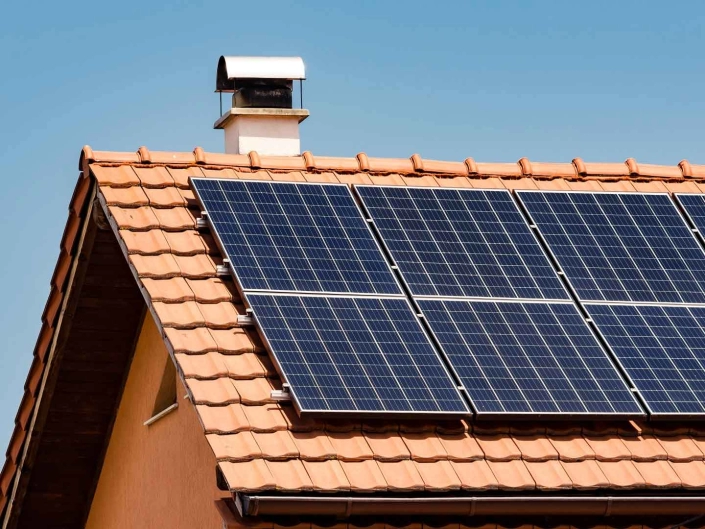
When installing an 18 kWh solar system, first ensure that the physical installation is accurate and secure. For example, you should check that all solar panel mounting brackets are properly torqued, verify that they meet the manufacturer’s specifications, and confirm that they have corrosion-resistant coatings suitable for coastal or desert climates. Additionally, verify that the tilt and azimuth settings meet the design specifications for the seasonal sun path, which is typically 30-35° for mid-latitudes. You can tighten the rail and bracket bolts to the specified 15 Nm using a calibrated torque wrench to prevent micro-movements that could cause connector fatigue or lead to wind-induced stress fractures. Additionally, you should seal the roof penetrations with UV-resistant, waterproofing materials and ensure that the battery enclosures in these off grid solar kits are level and adequately ventilated to prevent heat buildup.

Mechanical and Structural Verification of 18 kWh Solar System


Wire connection test for an 18 kWh solar system

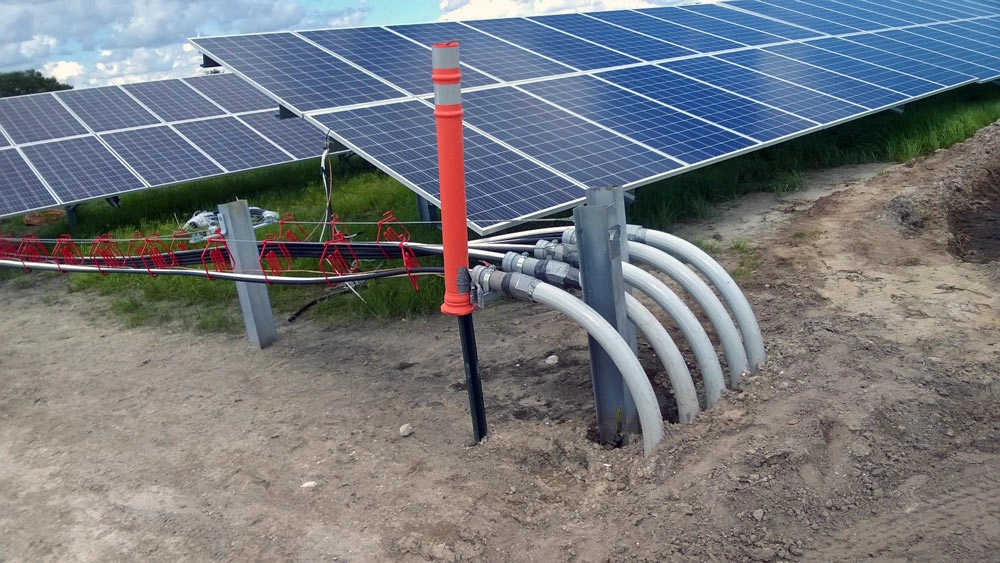
Next, we need to perform electrical verification of the 18 kWh solar system, which is critical for any off grid home solar system setup. First, confirm the open-circuit voltage and short-circuit current of each string under standard test conditions using a handheld PV string tester. Then, verify that polarity, phase alignment, and grounding between modules, inverters, and charge controllers are correct using a continuity checker. To prevent intermittent arcing, you should mark each DC string and securely lock the MC4 connectors. Then, test the ground lugs of each solar panel mounting bracket to ensure the resistance is less than 5 Ω. Additionally, ground fault detection testing ensures the off grid solar kit’s grounding electrode system is functioning correctly, preventing electrical shock hazards and fire risks. Accurate electrical checks prevent parasitic losses and dangerous faults, protecting equipment and personnel.

Wire connection test for 18 kWh solar system

Debug and check the inverter and battery interface configuration

Commissioning an 18 kWh solar system also requires the precise setup of the inverter, MPPT charge controller, and battery management system. In addition to verifying the firmware version, configure the inverter’s MPPT voltage window to match the panel Voc and maintain optimal power tracking across the temperature range. To maximize energy extraction from the panels mounted on the solar panel mounting bracket during cloudy mornings and evenings. I adjust the charge and discharge current limits of the lithium ion solar batteries to 0.5 C to balance fast charging and battery life, and test the inverters’ on-grid or off-grid switching within 200 milliseconds. Test the switching between on grid and off grid modes, and verify the low-voltage disconnect threshold at the battery pack level. Properly calibrated power electronics ensure seamless energy flow and battery health within your off grid home solar system.

Performance Verification Under Real-World Conditions

To confirm that your 18 kWh solar system is delivering the expected yield, you perform performance verification under realistic irradiance and load profiles. For example, you install a weather station module next to the solar panel mounting rack to record irradiance, ambient temperature, and module backplane temperature every minute for at least one week. This allows you to compare the measured AC output with simulated yield data of 1,000 W/m² on a sunny day. Additionally, you deploy monitoring software to calculate the system’s performance ratio (PR), which should aim for 75–85%. This is a key metric for a well-installed off grid home solar system, and it also helps troubleshoot any strings that deviate by more than ±5%. Real-world testing uncovers shading issues, voltage imbalances, and connection losses that commissioning might miss, verifying your 18 kWh solar system reliably powers critical loads.

PanelsCost-min-1024x680

Safety Device Calibration and Protection Settings

Safety comes first when commissioning any 18 kWh solar systems or off grid solar kit. Start by calibrating overcurrent protection devices, such as DC string fuses rated at 125% of their full current rating and AC circuit breakers rated at 125% of their full current rating. However, avoid oversizing, which can delay fault clearing and risk equipment damage. Next, rigorously test residual current devices (RCDs) to trip within 30 ms at a 30 mA leakage current, ensuring immediate isolation of any ground faults near the solar panel mount or battery bank. Also, verify that surge protection devices clamp transients to less than 1.5 kV on both the DC and AC sides to protect sensitive electronics in these off-grid home solar systems. Correctly set protection devices prevent damage during lightning events or utility disturbances, making your 18 kWh solar system both operationally resilient and compliant.

Best Post-Installation Commissioning Practices

Post-installation commissioning best practices for 18 kWh solar systems include mechanical integrity checks of solar panel mounts, electrical connection testing, inverter and battery setup, actual performance verification, and calibration of safety devices. We recommend referring to this commissioning process to achieve optimal energy yield and provide reliable, sustainable power.