
Tag Archive for: off grid home solar system kit

How to ensure that the off grid home solar system kit will generate enough electricity?

To ensure that your off grid home solar system can generate enough electricity, first make sure your off grid home solar system kit includes a powerful battery energy storage system to collect excess power during the day and provide power at night. I recommend at least 15 kWh of solar energy storage battery for a typical family of four to ensure at least two days of battery life. In addition, these systems require careful energy management, including integrated smart charge controllers, remote monitoring, and often include backup generators to cope with long cloudy days or unexpected load peaks. Additionally, to ensure sufficient power generation further, consider combining seasonal performance analysis with the degradation of solar panels to plan for expansion in advance.

Arrange the right PV array size and orientation for your off grid home solar system kit

The first step to ensuring your off grid home solar system kit has sufficient power is to select the correct PV array size and installation. Start by calculating your daily energy consumption (typically 18 kWh for a four-bedroom home) and increase the array size by 20% to 30% to account for inefficiencies. Additionally, orient the solar panels to within 15° of due south (in the Northern Hemisphere) and in proportion to your latitude for optimal year-round power generation. I recommend using high-efficiency monocrystalline modules rated at 550 W and mounting them on adjustable solar panel mounting brackets to adjust the tilt according to the season. Selecting an off-grid home solar system kit with the right array capacity and orientation ensures adequate energy capture even in the winter when days are shorter, and optimal performance in all seasons and weather conditions.

Arrange the right PV array size and orientation for your off-grid home solar system kit

High-quality charge controllers and inverters

The electrical heart of an off grid home solar system kit lies in the charge controller and inverter. In addition to an MPPT charge controller that can increase solar panel output by 20-30% over PWM units, selecting an inverter with at least 120% surge capacity ensures smooth starting of motors and appliances. We offer MPPT controllers with dual MPPT inputs for increased string flexibility, and pure sine wave inverters with a 5 kW continuous output to meet typical household load requirements. Additionally, hybrid inverters with integrated battery charging and grid backup simplify the system architecture. To further enhance reliability, you will equip the system with a controller that features a wide operating temperature range, an IP65 enclosure protection rating for outdoor installations, and built-in transient voltage surge protection. Selecting high-quality power electronics for your off grid solar system can minimize losses, enhance reliability, and ensure sufficient power.

Equip your off grid home solar system kit with a battery storage system and management.

Ensuring that your off grid home solar system kit generates sufficient power also relies on adequate battery storage. For example, a 15 kWh lithium-ion battery pack supports two days of endurance at an 80% depth of discharge, thereby protecting battery health and minimizing capacity decay. In the solar energy storage batteries we provide, we include a battery management system that features cell balancing, overcharge and over-discharge protection, as well as temperature monitoring functions to ensure safety. Additionally, setting the charge/discharge current limit to 0.2C can extend the cycle life to over 8,000 times. By integrating powerful energy storage and intelligent management into your off grid home solar system, you can ensure a continuous power supply during cloudy days and peak usage periods, thereby maintaining a stable power supply at all times.
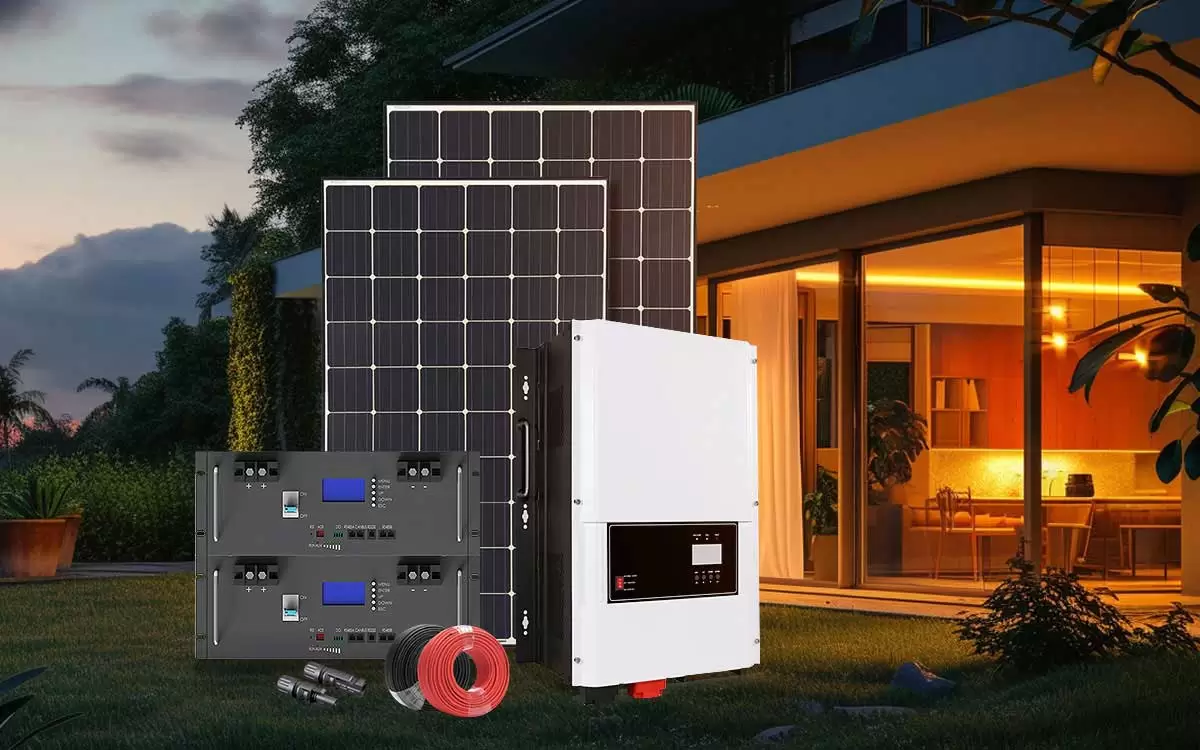
Equip your off grid home solar system kit with a battery storage system and management

Intelligent Energy Management and Load Prioritization

Optimizing the power generation of an off grid home solar system requires advanced energy management and load prioritization. You must install smart meters and home energy management software to categorize loads as critical, essential, and discretionary, allowing for automatic load shedding when battery power is low. Additionally, you must configure tiered relay controls to disconnect discretionary circuits when the battery power drops below 50%.

Additionally, you can implement time-of-day scheduling for high-power-consuming devices during peak hours of solar power generation. To further improve efficiency, you can incorporate weather forecasts to dynamically adjust load scheduling and integrate IoT-connected sensors for real-time power optimization. By adopting an innovative management approach in your off-grid solar system kit, you can maximize self-consumption and prevent voltage drops during prolonged cloudy periods, ensuring that critical loads remain continuously powered.

Integrate a backup generator for increased reliability.

Even the best off grid home solar system kits require a backup generator to cope with extreme environments. In addition to the main solar and storage system, a 10 kW diesel or propane generator can be integrated with an ATS to kick in when the battery charge drops below 20%. However, ensure it is sized to handle the main household loads. Additionally, you should schedule regular maintenance and no-load running tests for the standby generator to ensure it is adequately prepared. For optimal fuel efficiency, consider using a dual-fuel or variable-speed generator set that adjusts output based on load demand, providing your off-grid home solar system kit with near 100% availability even during prolonged periods of adverse weather.

Ensure Adequate Power Generation

To ensure your off grid home solar system kit generates sufficient power, it requires proper sizing and orientation of the PV array, robust battery storage, intelligent management, integration of a backup generator, and active monitoring. I recommend employing these strategies with every off-grid home solar system kit deployment to achieve reliable year-round power and maximize the system’s lifespan.


How to Plan for Seasonal Energy Storage Swapping in an Off Grid Home Solar System Kit?

In the 40° North latitude region, daily solar production drops by 35% during winter months, which makes it difficult for customers in this area to use solar energy year-round. Therefore, we designed a seasonal battery rotation strategy to ensure that your off grid home solar system kit always meets demand. First, calculate the winter energy gap by comparing the average summer production with the winter production. Then, plan to supplement energy storage and swap in higher capacity battery packs during the darker months. So, double the battery pack capacity between November and February. In addition, use a modular rack system so that battery modules can be added or removed quickly. By strategically rotating battery packs and adjusting the array configuration, your off grid solar system can always be fully charged regardless of the season.

Evaluating seasonal solar power generation changes

We need to understand the solar irradiation pattern to design the off grid home solar system kit in a targeted manner. For example, your solar panels may output 7 kWh/kW in the summer, but only 4 kWh/kW in the winter, so longer nights and cloudy days will exacerbate the gap. I analyzed a five-year irradiance dataset to accurately model monthly energy shortfalls while accounting for system losses due to snow, foliage, and solar panel dirt. I calculate the required battery recharge capacity (typically 30-50% of base capacity), then analyze local weather forecasts and historical peak demand to optimize the switching timing. By performing accurate seasonal performance modeling, you can ensure that your off-grid home solar system kit maintains a steady supply of power year-round, avoiding unexpected outages and ensuring critical loads remain powered.

Evaluating seasonal solar power generation changes

Modular battery pack design for easy replacement in off grid home solar system kit

The modular battery architecture simplifies seasonal replacement of off grid home solar system kits. First, select individual battery modules so they can slide into the rack enclosure. Then, you label the off-season modules and store them in a climate-controlled area to extend their life. I specify the use of quick-disconnect busbars and ergonomic handles for safe and quick tool-free replacement, minimizing downtime. In addition, by integrating a battery management system that dynamically identifies the health and charge status of each module, balances the batteries, and reports faults. We select lithium-iron phosphate batteries to ensure stability and cycle life over seasonal cycles. Your off grid solar system automatically reconfigures when adding new modules, optimizing charge rates and discharge cycles to extend battery life.

Seasonal Array Reconfiguration and Tilt Adjustment

Optimizing your off grid home solar system kit for the lower winter solar altitude can significantly increase power generation. We will adjust the panel tilt angle from the summer angle (usually latitude minus 15°) to the winter angle (latitude plus 15°). This will capture more low-angle photons even during shorter days. We use electric or manual tilt brackets to allow for two to four re-tilts per year to adjust to the changing solar altitude. In addition, consider temporarily reducing the number of parallel modules to change for the lower winter power generation and minimize mismatch losses.

In addition, you need to perform a regularly scheduled spring cleaning to remove accumulated debris and optimize power generation. By adjusting the array and tilt angle according to the season, an off grid home solar system kit can get maximum power during the period when power generation is most needed, supplement your larger winter battery bank, and keep the system running in balance.

Integrate Hybrid Backup Power and Generators in Off Grid Home Solar System Kit

Even if solar and battery swaps are optimized, long cloudy days will require an off grid solar system as a backup. Integrate a generator with an ATS in addition to seasonal energy storage. However, its capacity should be used only for essential loads to minimize fuel consumption. I configure the ATS to start only when the battery charge is below 20% for more than two hours to prevent accidental starts and wear. Also, schedule monthly load drills for the generator to maintain reliability, and keep detailed fuel and operation logs for preventive maintenance. In addition, install an eco-mode speed governor to reduce the speed under light loads to save fuel. By combining renewable generation, energy storage, and generator backup, your off-grid home solar system kit can achieve near 100% availability even during prolonged inclement weather, giving the homeowner complete peace of mind.

Monitoring, Automation, and Predictive Maintenance

Implementing seasonal energy storage swaps requires a robust monitoring and automation system in your off-grid solar system. For example, installing remote telemetry to track individual module voltages, array output, and generator run time allows for early detection of performance deviations, by setting up an energy management system that sends SMS or app alerts when winter generation is less than 10% of the forecast, prompting timely adjustments. The mobile app automatically sends swap reminders and tilt angle alerts to keep users informed. Predictive maintenance algorithms analyze battery degradation trends, inverter efficiency, and generator health to recommend proactive repairs or module retirements before failures occur. With these data-driven tools, your off-grid solar system will operate at peak efficiency, seamlessly coordinating seasonal swaps and maintenance.

Off-grid home solar system kit seasonal array reconfiguration and tilt adjustment

Ensure Year-Round Energy Security

Planning seasonal energy storage swaps in an off grid home solar system kit includes calculating seasonal generation variations, designing modular battery packs, reconfiguring array tilt, integrating hybrid backup power, and leveraging monitoring and automation technologies. By combining data-driven system sizing with modular hardware and innovative controls, you can ensure continuous power regardless of the season.