Installation Guide to Monocrystalline Solar Panels for Roofs: Orientation (South/East/West) Matching
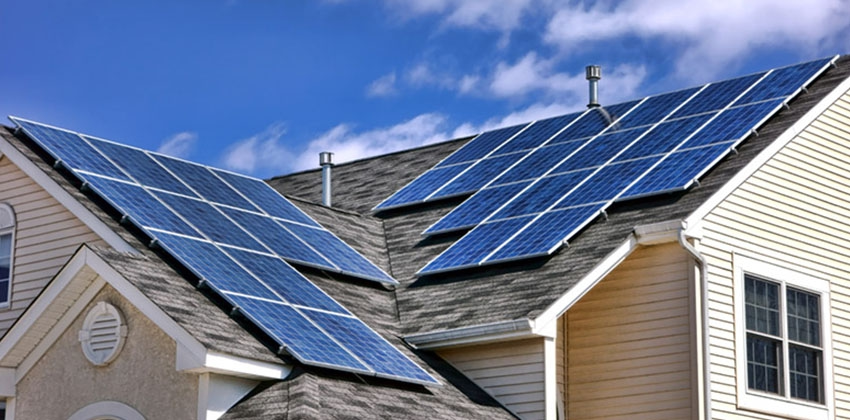
A correctly oriented and installed monocrystalline solar panel array can convert solar energy into stable, clean energy. In many climates, a well-positioned rooftop solar panel array can meet 15% to 25% of a home’s annual electricity needs per kilowatt of installed capacity; the actual figures will vary depending on latitude, shading, and orientation, but the key is that small design decisions during installation will ultimately accumulate into significant differences in energy production over the system’s lifespan. This guide will show you how to select, install, and configure monocrystalline silicon solar panels on your roof, including assessing your roof, choosing a south-facing or east-west layout, and matching strings and inverters to maximize output and reliability.
Monocrystalline Solar Panels: Starting with Roof Assessment and Site Survey
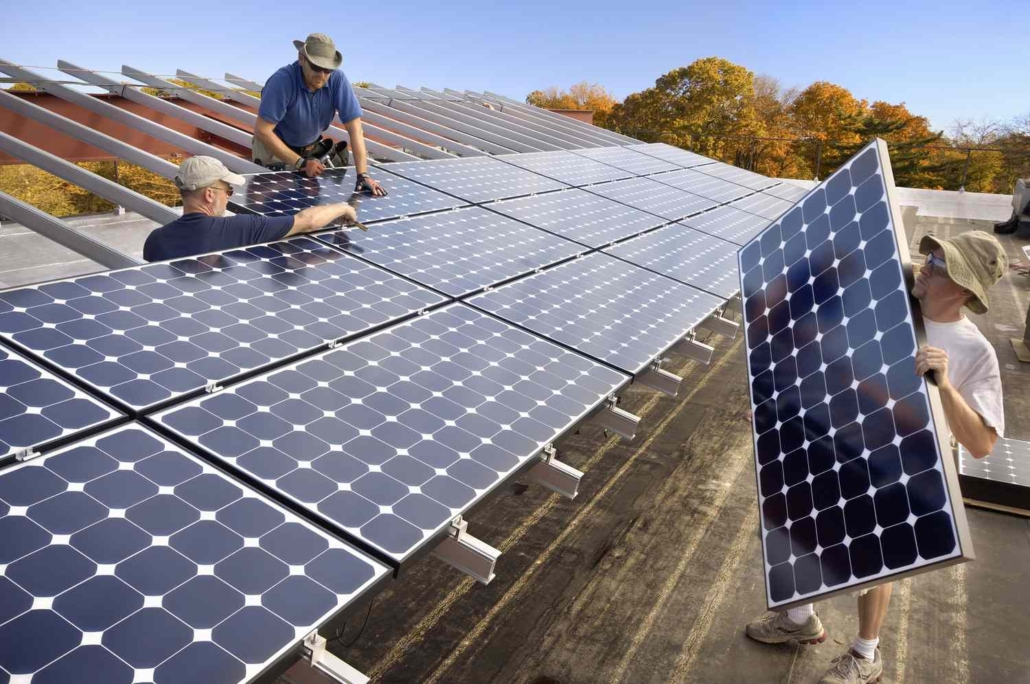
Before selecting monocrystalline silicon solar panels or signing permits, be sure to conduct a systematic assessment of your roof. The best installation orientation decisions begin with a reliable understanding of the site conditions.
Key information to record:
Roof Orientation: Measure the azimuth angle of each central roof plane. South-facing roofs in the Northern Hemisphere have an azimuth angle of 180°. A compass app can be used, or a surveyor can be hired for more precise measurements.
Roof Pitch: Standard residential roofs have a pitch ranging from 10° to 45°. The pitch interacts with the orientation to determine seasonal yield.
Available Area: Map the unobstructed area of each roof plane, considering vents, skylights, chimneys, and setback requirements.
Shading Analysis: Conduct a year-long shading study. Short-term inspections can capture noticeable shading, but simple shading tools or smartphone apps can reveal seasonal obstructions.
Structural Load Capacity: Confirm that the roof structure can support the additional dead and live loads. Most modern roofs can support a standard PV array, but older roofs may require reinforcement.
Installation Options for South-Facing Monocrystalline Solar Panels
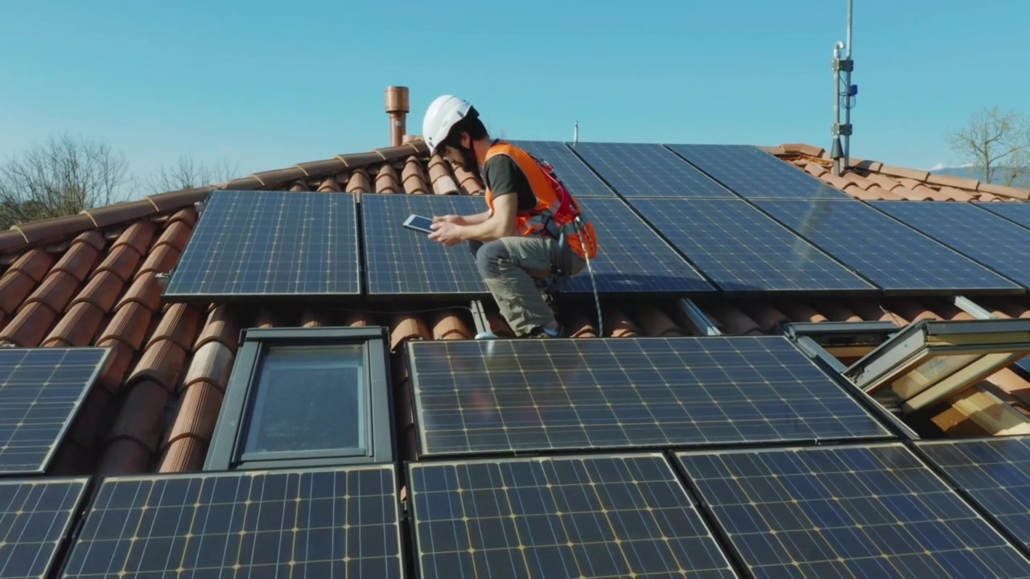
For most roofs in the Northern Hemisphere, south-facing is the default recommended installation direction. Installing solar panels facing south allows them to absorb the maximum amount of daily sunlight throughout the year, thus typically maximizing annual power generation.
Advantages of South-Facing Orientation:
With the correct tilt angle, south-facing arrays often produce the most energy annually because they receive balanced sunlight in both the morning and afternoon. Furthermore, system sizing is easier, and real-time shading decisions are simpler.
Practical Orientation and Tilt Rules:
If you live in a mid-latitude region (e.g., 30° to 40° North latitude) and want the highest annual energy output, the tilt angle should be close to or slightly less than your latitude (latitude minus 10° to latitude). If winter production is more important, increase the tilt angle by about 10°; if summer production is more important, slightly decrease it. Installation is both more straightforward and more aesthetically pleasing when the roof slope matches the desired tilt.
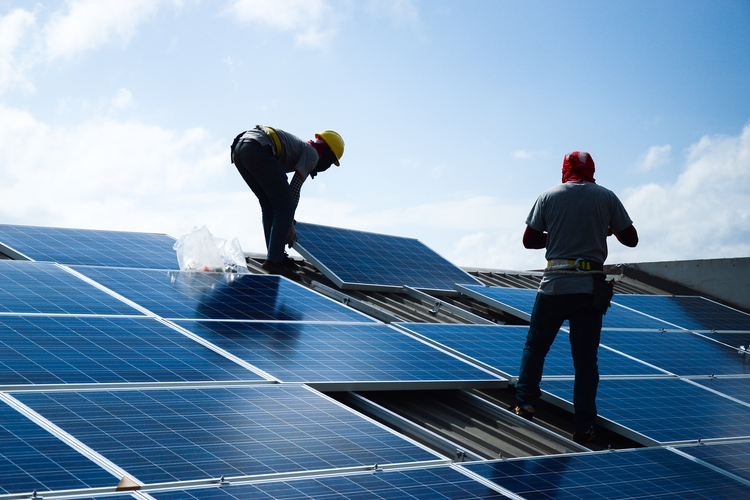
When can separate east-west installations provide greater value?
East-west layouts are not a secondary option, but a strategic one. When roof geometry or obstructions limit south-facing monocrystalline silicon solar panel installations, orienting panels east and west can provide greater value.
Why choose East-West?
Because it provides a wider production curve, the east side is better for morning power generation, and the west side is better for afternoon power generation. An east-west side-by-side layout produces a flatter daily power generation curve and better matches morning and evening peak electricity demand. Also, many residential roofs have large east-west-facing planes. Utilizing these two planes can increase the total area of solar panels and power generation. Furthermore, if trees or chimneys shade the south side, but the east and west sides remain unobstructed, utilizing the east and west sides is practical and often more effective.
Design Tips for East-West Arrays:
Use matched strings: Group east-facing modules together and west-facing modules together to avoid string mismatch issues in case of partial shading. Ideally, each orientation should have its own MPPT input on the inverter. Consider the inverter structure: Microinverters or DC optimizers perform well in east-west installations because they can manage panel-level power mismatches and extract more energy from mixed orientations. If using string inverters with single maximum power point tracking,
Tilt angle is essential: A moderate tilt angle should be maintained for east-west orientations, as the sun is lower on the horizon in the morning/afternoon, and a steep tilt angle will reduce the angle of incidence.
Energy efficiency: An east-west balanced layout typically results in slightly lower annual energy consumption than an optimal south-facing layout, but in cases where peak electricity demand occurs during off-peak hours or roof area is limited, an east-west layout can improve overall system efficiency.
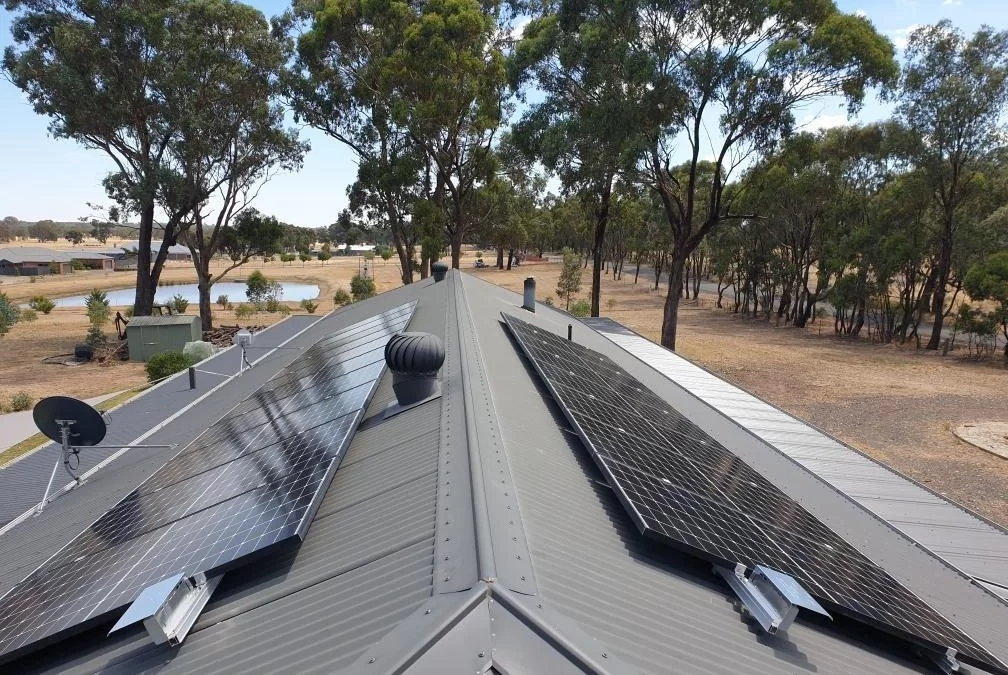
Roof Array Tilt, Spacing, and Row Matching
Orientation is only half of what affects solar panel installation performance; tilt angle and array spacing also significantly impact annual energy generation and system reliability. For rooftop monocrystalline silicon solar panel installations, these geometric parameters are often constrained by roof slope and available area; if adjustable, they should be deliberately set.
Tilt Guidance:
Based on latitude rules, a standard baseline tilt angle for balanced performance throughout the year equals the latitude, which can be adjusted by ±10° depending on seasonal needs. When the rack tilt angle does not match the roof slope, wind load, and structural load requirements must be confirmed. Low-friction tilt frames (10°–15°) can also be used to balance performance with wind load and maintenance access.
Row Spacing:
Avoid self-shading: When panels are tilted, the upper monocrystalline solar panels may shade the lower panels in the early morning during winter; increasing spacing appropriately can reduce energy loss. For single-layer rooftop PV systems, spacing is less of an issue. Still, if you are installing multiple layers of panels or elevated frames, you need to calculate the spacing to prevent winter shading.
Service Space: Maintain minimum clearance required for cleaning and fire escape. Many regions have requirements for walkway width or edge clearance.
Matching Panels and Strings:
Maintain a consistent electrical group configuration: combine panels of the same brand/model and orientation into the exact string. Mixing panels with different tilt angles/azimuths in the precise string will lead to mismatch losses. Paired panels should maintain a consistent tilt angle. If the modules in the exact string have uneven tilt angles, the string’s performance will depend on the module with the smallest tilt angle. Maintain consistent panel geometry within each string.
Electrical Matching and Inverter Selection
Matching orientation and the electrical aspects of panels may sound technical. Still, the key points are simple: minimize mismatches, use the correct inverter approach, and plan for the long term.
Two common inverter strategies:
Single Maximum Power Point Tracking (MPPT) string inverter: Best suited for arrays with consistent orientation. It is cost-effective but more sensitive to orientation deviations.
String inverter with multiple MPPTs: Allows you to connect east-facing solar panel strings to one MPPT and west-facing strings to another. This is a good option for roofs with asymmetrical orientations.
Practical Matching Rules:
Ensure the string voltage is within the inverter limits; installers will design the strings based on the inverter’s input voltage range. This limits the number of modules per string, but it’s standard practice. Also, allocate MPPTs by direction: if the inverter has two MPPT inputs, one for south/east and the other for west or different tilt groups. Prioritize designs that facilitate monitoring: choose inverters with module-level monitoring to quickly identify underperforming modules.
Adjust Installation Orientation Based on Goals and Document All Information
The choice of orientation for rooftop monocrystalline solar panel systems is not a simple either/or decision. In many regions, south-facing arrays maximize annual energy production. Still, when roof geometry, shading, or electricity usage patterns are better suited to morning or evening generation, east-west or split layouts often yield higher returns. The right choice depends on three factors: a reliable site survey, a clear understanding of electricity load and tariff structures, and a power solution that minimizes mismatches.