How does net metering work with grid-connected solar system and what must buyers know?
Buyers of grid-connected solar systems using net metering can see a 2-5 year payback period, which is 30% faster than for those without net metering. However, according to a recent survey, 62% of US homeowners considering a grid-connected solar system admitted they “didn’t fully understand” how net metering works. This gap can cost buyers thousands of dollars: some of our customers in California save $150 per month on a 5kW grid-tied solar system with net metering, but only $90 per month without it, resulting in a three-year payback period. As a manufacturer of grid-tied solar systems, Power Dream understands how net metering can turn solar energy into a wise financial investment.
What is a grid-connected solar system?
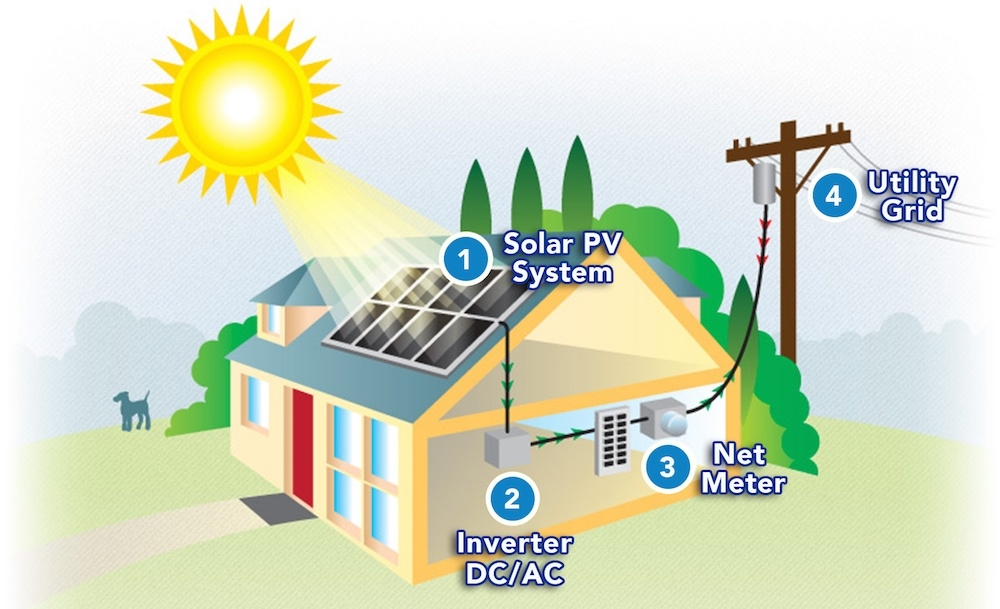
Before understanding net metering, you must understand what a grid-tied solar system is and why it’s the only system that uses net metering. Unlike off-grid solar systems, on grid solar systems connect directly to your local utility grid. Here’s how it works in a nutshell:
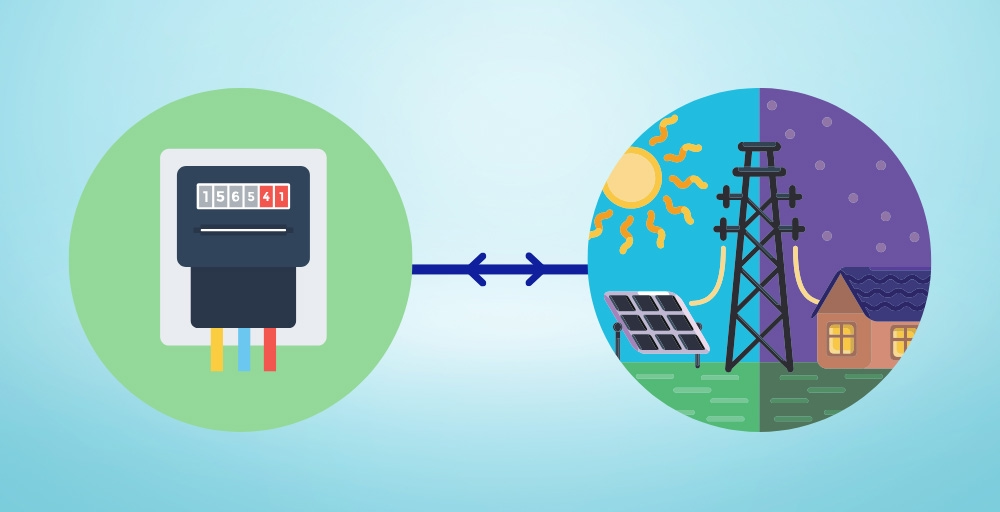
Your solar panels generate electricity during the day, and you can use that electricity as needed (for example, to power a refrigerator, lights, or air conditioning). Any excess electricity not used then flows back to the utility grid (this is where net metering comes into play). Then, when your solar panels aren’t generating enough electricity (for example, at night or on cloudy days), you can draw power from the grid, just as you do now.
Grid-connected solar systems don’t require batteries, though you can add batteries for backup, making the upfront cost lower than off-grid systems. The utility grid acts as your “virtual battery,” storing excess electricity through net metering for you to use later.

How Net Metering Works with a Grid-Connected Solar System: Step-by-Step
Net metering is a utility program that tracks the “net” amount of electricity you use—the difference between the amount your grid-connected solar system generates and the amount you draw from the grid. Here’s a simple, practical explanation:
Step 1: The utility company installs a net meter
When you install a grid-tied solar system, the utility company replaces your standard electricity meter with a net meter. This meter tracks two numbers:
Input electricity: The amount of electricity drawn from the grid.
Output electricity: The excess electricity your solar panels deliver to the grid.
Step 2: Your grid-connected solar system generates electricity, which you use or export.
During the day, your solar panels generate electricity. Let’s assume a typical day: from 9 AM to 5 PM, the solar panels generate 8 kWh, and you use 4 kWh (exporting 4 kWh to the grid). From 5 PM to 11 PM, the solar panels generate 0 kWh, and you use 6 kWh (importing 6 kWh from the grid).
Step 3: Your utility company bills you for your “net” usage.
At the end of your billing cycle (usually monthly), your utility company calculates your “net” usage: Net usage = electricity imported – electricity exported.
In the example above, 6 kWh – 4 kWh = 2 kWh net usage. Therefore, you only pay for these 2 kWh, plus a fixed utility fee. If you export more electricity than you import, you’ll receive a net metering credit for the 2 kWh difference. These credits will then be rolled over to your next bill to offset future usage.
Key Net Metering Rules You Must Know When Purchasing an On Grid Solar System
Net metering rules vary across states, utilities, and even cities. Ignoring these rules can lead to missed savings or unexpected costs. We’ve summarized the three most critical rules to verify before installing a on grid solar system:
1. Wide Variations Across States and Utilities
Each state handles net metering differently. For example, in California, the Net Energy Metering (NEM) 3.0 program pays lower rates for exported energy than previous versions, while still providing significant credits. Net metering in Texas isn’t a state requirement; each utility sets its own rules. Some utilities offer full net metering, while others restrict export limits. Be sure to review your local utility’s net metering policy and use the DSIRE database to confirm regulations.
2. Net Metering Credits Are Not “Cash,” But Bill Credits
A common misconception is, “My on grid solar system makes money by selling excess energy to the utility.” This is rarely true. Most net metering plans offer bill credits, not cash.
3. Some Utilities Limit Exports
Many utilities limit the amount of excess energy a on grid solar system can export to the grid, typically to 100% of your historical annual usage. If you install an oversized system, the utility may refuse to net meter the extra 5 kW or pay you at a much lower rate.
How Net Metering Improves Your Grid-Tied System’s ROI
Net metering is the most critical factor in ensuring the economic viability of an on grid solar system. Let’s use a real-time example to illustrate its impact:
Example: 5kW On Gird Solar System in Arizona
Upfront cost: $15,000.
Monthly Solar Power Generation: Approximately 700 kWh (Arizona has abundant sunshine). Monthly electricity usage: Approximately 500 kWh.
Electricity price: $0.14/kWh.
Without net metering:
You use 500 kWh of solar power, but the additional 200 kWh is fed back to the grid and not counted towards the credit. Although you pay $0 for the kWh, you miss out on potential savings of $28 per month.
Annual savings: $0.
Payback period: Approximately 12.5 years.
With net metering:
You use 500 kWh of electricity and export 200 kWh, earning a $28 credit. In a cloudy month, if you use 600 kWh of electricity and export 400 kWh, you can use the $28 credit to offset the 200 kWh you imported.
Annual savings: $1,680. Payback period: Approximately 9 years. This represents a 3.5-year reduction in payback period.
Common Myths About Net Metering and Grid-Tie Systems
Debunking these myths will help you set realistic expectations for your grid-tied solar system:
Myth 1: “Batteries Replace Net Metering”
Batteries allow you to store excess electricity for nighttime use, but they don’t replace net metering. If your battery is fully charged, the excess electricity will still be delivered to the grid, and net metering will pay you accordingly. Batteries complement net metering, not replace it.
Myth 2: “Net Metering Is On the Way Out”
While some states have updated their net metering rules, the complete elimination of net metering is rare. Utilities need distributed solar to reduce the strain on the grid during peak hours. As long as your grid-tied solar system was installed before significant rule changes, you’ll likely be able to enjoy current electricity rates for 10 to 20 years.
Myth 3: “All grid-connected solar systems are eligible for net metering”
Some utilities exclude small commercial systems or systems over a specific size from net metering. So, before you commit to a grid-tied system, be sure to check with your utility company to confirm your eligibility.
Net metering is essential for grid-tied systems.
For anyone considering a grid-connected solar system, net metering isn’t just a bonus; it’s what makes solar a wise economic choice. It turns excess energy into real savings, shortens payback times, and makes solar energy accessible to homes and small businesses. The key to success lies in doing your homework: review state/utility regulations, size your system appropriately, and work with a grid-tied solar system manufacturer who can guide you through the net metering process.