Tag Archive for: commercial storage system

Using a commercial storage system to reduce peak electricity demand: reducing energy costs by 30%

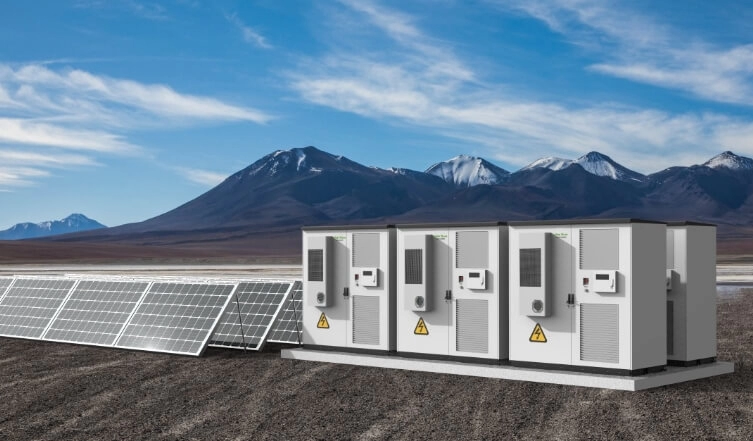
In some large businesses or enterprises, electricity consumption can spike in just 15 minutes when refrigeration equipment, air conditioning, and point-of-sale systems are running at full speed, triggering high utility charges and increasing monthly electricity bills several times over. A survey showed that 72% of commercial electricity bills include peak-hour charges, accounting for 30% to 50% of total costs. For businesses with fluctuating and high energy demands, such as warehouses, retail stores, and manufacturing plants, these costs represent a significant financial burden. Therefore, installing a commercial storage system can reduce peak-hour electricity costs. As a professional solar product manufacturer, we can also tell you how our energy optimization platform can achieve energy savings of over 30%.

What are peak-hour charges? Why do they waste so much money?

During peak-hour charges, unlike residential users who pay per kilowatt-hour (kWh) of electricity consumption, utility companies charge commercial customers two main fees:

1. Energy Fee: The fee per kilowatt-hour of electricity consumed.

2. Peak Demand Charge: This is a charge based on the 15-30 minutes of peak electricity consumption your business experiences during the month (in kilowatts (kW)). It is a way for utility companies to compensate for the cost of maintaining grid capacity to cope with sudden peak electricity demand.

The problem is: Peak demand charges are costly, typically $15-40 per kilowatt. For a manufacturing plant with a peak consumption of 100 kilowatts, this translates to an extra $1,500-$4,000 per month. These peaks are often avoidable: peak electricity consumption in retail stores occurs around 10 am, when employees turn on lights and cash registers; in warehouses, it occurs around 2 pm, when forklifts and refrigeration systems run simultaneously.

Most businesses are unaware of the significant waste caused by high peak-hour electricity charges, which is precisely where commercial storage systems excel. They act as a “demand buffer,” storing cheap energy during off-peak hours and using it during peak hours, thus keeping electricity consumption below the threshold that triggers high charges. It not only reduces your electricity consumption but also slows it during peak electricity pricing periods.

What are peak-hour charges 1

Commercial Storage System: How Peak Shaving Reduces Costs by Over 30%

The core value of a commercial storage system lies in “peak shaving,” which matches your energy usage with the lowest possible utility costs.

1. Off-Peak Charging: The system draws power from the grid during off-peak hours. PowerDream’s batteries efficiently store this energy, with a round-trip efficiency of over 92% (virtually no energy loss during storage).

2. Peak Discharge: When your business demand begins to rise (e.g., retail at 9 am, manufacturing at 1 pm), the commercial storage system automatically releases stored energy to power your operations. This keeps your grid consumption below historical peak levels, avoiding hefty demand charges.

3. Real-Time Adjustment: Unlike basic energy storage systems, PowerDream’s platform monitors your electricity consumption in real time. In the event of a sudden surge, the system increases discharge within milliseconds, ensuring your consumption remains below peak thresholds. Peak shaving and valley filling are not about reducing energy consumption, but about using energy more intelligently. Commercial storage systems allow you to “shift” your electricity usage to periods with lower electricity prices, thus making power company pricing models unfavorable to them.

PowerDream Commercial  Storage System Optimization Platform

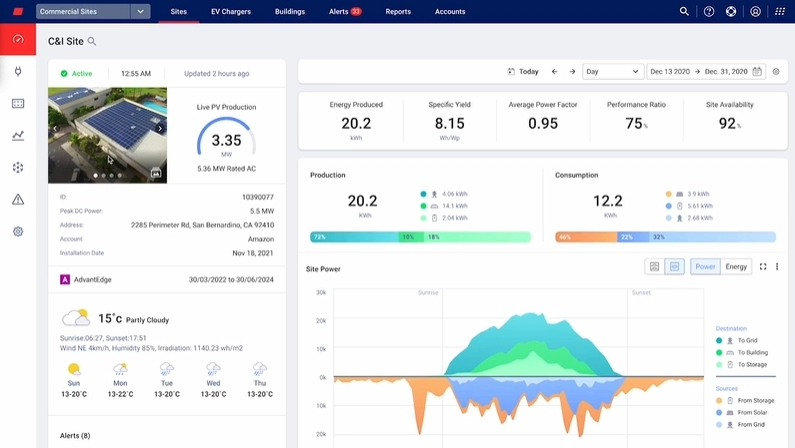
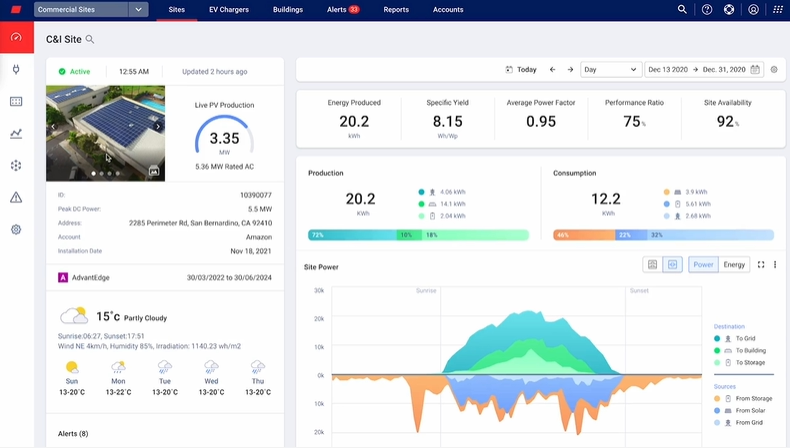
The performance of a commercial energy storage system depends on the software that determines when to charge, discharge, and adjust. PowerDream’s energy optimization platform stands out for using dynamic algorithms and real-time data to maximize energy savings, not just basic scheduling.

The platform connects to your business’s smart meters, solar inverters (if any), and building management systems (BMS) to obtain usage data every second. It also integrates with local utility data to track real-time energy prices and demand periods. Furthermore, unlike static systems that follow fixed schedules, PowerDream’s algorithms learn your business’s operating patterns over time.

Suppose your business has an on-site solar system. In that case, the platform prioritizes a “self-consumption” model—using solar power first, storing excess electricity in batteries, and drawing power from the grid only when necessary. This eliminates your dependence on grid power during peak hours. Better ensure your commercial energy storage system always operates at peak efficiency, saving you money while protecting battery life.
PowerDream Commercial  Storage System Optimization Platform

Customized Commercial Energy Storage Solutions for All Businesses

Each business has different energy needs. Supermarkets experience peak electricity demand from refrigeration equipment, while data centers experience peak demand from servers. PowerDream’s commercial energy storage systems are customizable and offer tailored solutions for three common industry categories:

1. Retail and Grocery

Key Challenges: Peak electricity demand from refrigeration, lighting, and POS systems. Solution: 50-150kWh commercial storage systems with a “refrigeration priority” mode—ensuring continuous power to refrigeration systems while mitigating peak demand.

2. Manufacturing and Warehousing

Key Challenges: Peak electricity demand from machinery, forklifts, and HVAC systems. Solution: 100-500kWh systems with fast-response discharge capabilities (1 millisecond) to handle sudden power surges.

3. Healthcare and Data Centers

Key Challenges: Sustained high electricity demand + backup power requirements. Solution: 200-1000kWh energy storage systems equipped with a “resilient mode” for peak shaving during regular operation and automatic backup power activation during grid failures.

We will first review your electricity usage over 2-4 weeks, then design a suitable energy storage system based on your peak demand, budget, and unique business needs.

ROI and Long-Term Savings: Beyond Peak Shaving

Business owners often ask, “Is a commercial energy storage system worth the upfront cost?” The answer is yes—using PowerDream systems, most customers recoup their investment in about 5 years, and the cost savings continue to increase over time. Let us analyze the key figures for a 100kWh system in detail:

– Upfront Costs: $80,000 to $100,000 (including hardware, installation, and platform usage rights).

– Monthly savings: $1,500 to $2,500 (based on a demand charge of $25 per kilowatt-hour and a 30% reduction in total costs).

– Annual savings: $18,000 to $30,000.

– Payback period: 3-5.5 years.

However, the cost savings go far beyond peak shaving. PowerDream’s commercial storage system enables grid services that encourage businesses to feed stored energy back into the grid in emergencies. Additionally, there are tax incentives that reduce initial costs.
ROI and Long-Term Savings

Reducing Peak Demand

Peak electricity costs don’t have to be a fixed cost for your business. Commercial storage systems—especially those powered by the PowerDream Energy Optimization Platform—can turn these hidden costs into savings, reducing your electricity bill by 30% or more. Beyond cost savings, PowerDream systems enhance grid resilience (protecting you from power outages), unlock tax incentives, and even allow you to profit from grid services.
What Space Requirements Should You Plan for Commercial Energy Storage Systems?

When installing a commercial energy storage system, optimizing the site layout can reduce project costs by up to 20%. That’s why we evaluate every square foot of space on every commercial energy storage system project to ensure that your commercial energy storage systems meet both operational needs and regulatory standards. First, we quantify the total equipment footprint while allocating space for auxiliary components such as inverters, transformers, and power control cabinets. In addition to the original footprint, space for electrical switchgear, fire suppression equipment, and thermal management units is also taken into consideration. Utilize real-world data and industry benchmarks to develop a site plan that creates a layout that ensures optimal performance, safety, and future expansion.

Calculate the footprint of the equipment related to commercial energy storage systems

First, accurately estimate the footprint of the commercial storage system. For example, a 1 MWh lithium ion solar battery rack may occupy 10 square feet per module. Additionally, some related inverters and HVAC units can increase the total area by 30% to 40%. I measure the dimensions of each component throughout the installation, including the depth of cable trays and ventilation space. At the same time, I also leave a 10% buffer space to account for calibration tolerances and seismic support requirements. Also, consider clearances required for conduit entries, junction boxes, and possible future cable expansion. By performing a detailed floor space calculation, you can ensure that your commercial energy storage system can be installed in a designated room or outdoor cabinet without expensive last-minute modifications. It is also best to verify the ceiling height of rack-mounted equipment and overhead ducting to avoid collisions during installation.

Calculate the footprint of the equipment related to commercial energy storage systems

Reserve ventilation and thermal management space for commercial energy storage systems

To maintain safe operating temperatures, we reserve dedicated cooling and ventilation space around commercial energy storage systems. Therefore, at least 3 feet of clearance is left on all sides of the battery rack for air circulation. This prevents hot spots that shorten battery life. I utilize HVAC ducts and louvers to deliver conditioned air directly to the equipment’s air intakes. In addition, floor or roof space is reserved for external chillers or evaporative coolers. And filter maintenance, clearances, and condensate drain locations are planned to maintain air handler performance. By integrating thermal management space requirements into your site planning, you can ensure that your commercial storage system maintains optimal performance and longevity.

Safety and fire isolation zones

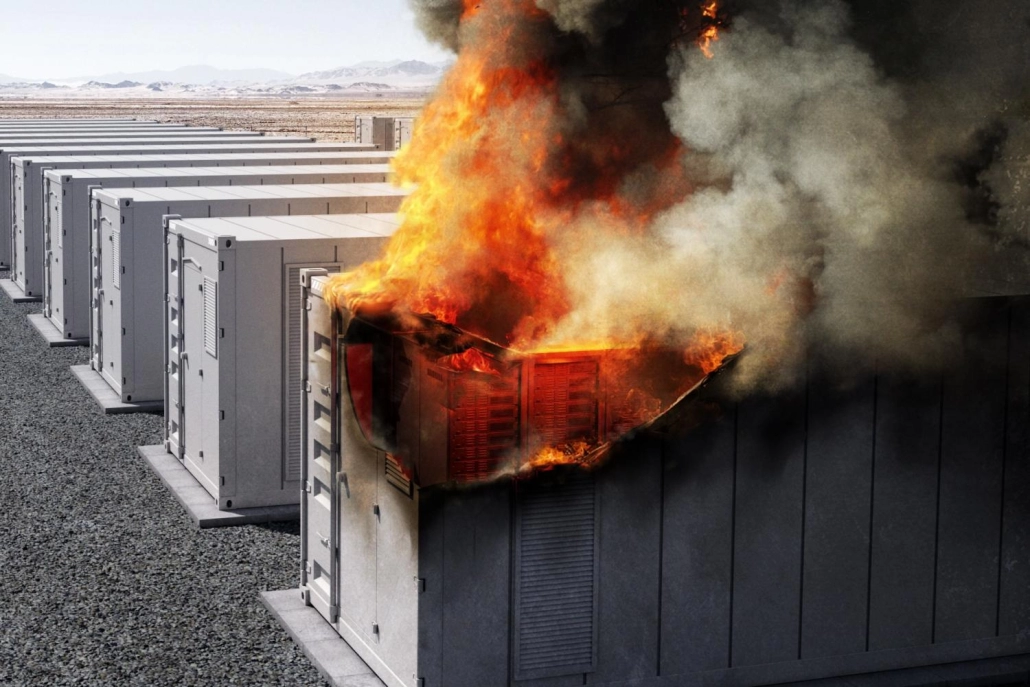
Safety regulations require apparent isolation around commercial energy storage systems to reduce the risk of fire. In addition to complying with NFPA 855 guidelines, we reserve a 5-foot aisle width for emergency exits. However, if the fire suppression system coverage is enhanced, we will reduce it to 3 feet (about 9 meters). In addition, we will design firewalls or non-combustible partitions to isolate battery modules from adjacent equipment. At the same time, we will add space for portable fire extinguishers, gas fire nozzles, and smoke detectors. Of course, we will also reserve signs and ground markings, including those indicating hazardous areas and emergency shut-off switches. By planning these safety and fire isolation zones, your commercial storage system installation will comply with regulations and ensure personnel safety. Additionally, coordinate with local firefighters during the design phase to address any specific space or equipment requirements.

Commercial energy storage system installation safety and fire isolation area

Installation and maintenance permits

Sufficient installation and maintenance space can ensure the life cycle cost of commercial energy storage systems. First, we allocate at least 4 feet of front clearance for rack insertion and cable termination. Let technicians replace modules and perform preventive maintenance without relocation. Meanwhile, removable panels are installed on the wall to access the power conduits and control cabinets. Additionally, an 8-foot overhead workspace is set up for crane or pipe operations. By embedding these installation and maintenance gaps into your facility planning, commissioning can be simplified and downtime can be minimized. In addition, ensure that the design accommodates future modifications, such as battery chemistry upgrades or capacity expansion.

Integration and expansion areas

To plan for the future of commercial energy storage systems, we include areas for planned expansion. For example, leaving 20% open area near the initial battery stack allows capacity upgrades without significant rework. At the same time, separate areas are divided for electric vehicle charging stations, renewable energy access points, and microgrid controls. Additionally, reserved network rack space is allocated for data and communication hardware, as well as reserved channel space for fiber and copper cable backbone cabling to support IoT sensors and energy management platforms. By pre-allocating integrated and scalable areas, your commercial energy storage system will seamlessly adapt to changing energy needs and technological advances.

Bring the most suitable installation space

When planning the installation space for your commercial energy storage system, we will accurately calculate the floor space, consider ventilation gaps, safety isolation, installation channels, and future scalability. Let your commercial energy storage system achieve reliable performance, meet specifications, and provide operational flexibility, thereby ensuring a successful and cost-effective deployment of commercial energy storage.

How do commercial battery storage systems improve power quality?

Power quality, defined by parameters such as voltage stability, frequency consistency, and waveform purity, is essential for sensitive equipment ranging from data centers to precision production lines. The main power quality challenges faced in the construction of commercial facilities can be improved by commercial battery storage systems, which can intercept voltage sags, absorb instantaneous spikes, and seamlessly reconnect to clean energy during grid disturbances. By combining advanced control algorithms with high-performance lithium-ion modules, our commercial energy storage systems can not only store power but also actively regulate the grid interface.

Commercial battery storage systems can perform voltage regulation and fluctuation smoothing.

One of the main functions of commercial battery energy storage systems is real-time voltage regulation. Industrial and commercial power grids often experience voltage fluctuations due to sudden load changes or long-distance transmission losses. For example, the startup of a large motor in a large device can cause a significant voltage drop, potentially endangering sensitive electronic equipment. Therefore, we deploy inverters with fast voltage control loops in our commercial storage systems to detect undervoltage or overvoltage conditions within milliseconds. Additionally, I will configure the inverter’s droop settings and voltage set points to match the equipment’s tolerance, ensuring smooth machine operation. At the same time, the battery’s bidirectional power flow capability compensates for line impedance effects, creating a quasi-ideal voltage source at the point of common coupling. This voltage smoothing capability extends equipment life and reduces downtime in any commercial energy storage system environment.

Commercial battery storage systems can perform voltage regulation and fluctuation smoothing.

Frequency Stabilization and Grid Support

In addition to voltage, commercial battery energy storage systems stabilize grid frequency, thereby improving power quality. The grid sustains 50/60 Hz frequency. Sudden wind turbine outages (10 MW+) or mass EV bus charging trigger imbalances that disrupt this stability. Commercial energy storage systems detect frequency drops through a phase-locked loop, which injects active power to suppress frequency drops. Additionally, you can program our energy management software to provide primary frequency response within 100 milliseconds, automatically replenishing the frequency reserve margin. In addition, our energy storage systems can participate in secondary frequency response, smoothing oscillations within seconds to minutes. Commercial energy storage systems can also act as fast-response virtual generators to support grid stability and prevent cascading blackouts.

Frequency stabilization and grid support

Harmonic Suppression and Waveform Improvement

Harmonic distortion is the non-sinusoidal waveform components generated by non-linear loads, which poses another threat to power quality. A commercial battery energy storage system equipped with advanced inverters can actively filter out these harmonics. For example, our inverters employ pulse width modulation strategies combined with digital signal processing to inject anti-harmonic currents, thereby eliminating 3rd, 5th, and higher-order harmonics. As a result, the waveform generated on the facility bus is very close to a pure sine wave. We can calibrate the inverter’s filter coefficients based on field harmonic sweeps to ensure that the total harmonic distortion remains below 3%, which is well below the IEEE 519 standard. By providing active power and power quality correction, commercial energy storage systems can deliver cleaner power, reduce overheating in inductive equipment, minimize nuisance trips, and enhance overall electrical system efficiency.

Commercial Battery Storage Systems Perform Reactive Power Compensation and Power Factor Correction

Commercial battery energy storage systems can provide or absorb reactive power independently of active power flow. In addition to active power services, our inverters can dynamically adjust their volt-ampere reactive output. As a result, they can correct lagging or leading power factor conditions at the point of common coupling. Setting the inverter to maintain a power factor of 0.98 or higher reduces utility bills and relieves transformer loads. Additionally, this reactive support helps stabilize grid voltage during peak demand, thereby preventing voltage collapse. Commercial energy storage systems can, therefore, act as both an energy buffer and a reactive power compensator, ensuring your facility consumes only the reactive power it needs, thereby improving efficiency and reducing electricity expenses.

Peak shaving, load leveling, and voltage sag prevention

In commercial facilities, peak demand charges typically account for a significant portion of the electricity cost. Commercial battery energy storage systems mitigate this problem by peak shaving and load leveling. However, without energy storage, a sudden increase in HVAC or process loads can trigger a network voltage sag. Therefore, the battery discharges to support the load, preventing voltage sags and equipment stress. Engineers write energy storage dispatch algorithms by analyzing historical load profiles, ensuring peak shaving aligns with utility price windows and grid stability events. Additionally, by keeping the load within a narrow range, the facility avoids excessive transformer magnetizing current and line losses. This dual functionality demonstrates the value of integrated commercial energy storage systems in modern energy strategies.

Enhanced Power Quality

Commercial battery energy storage systems enable multiple power quality improvements: fast voltage regulation, precise frequency stabilization, harmonic mitigation, reactive power compensation, and strategic peak regulation. Utilizing commercial energy storage systems that integrate smart inverters, energy management software, and powerful lithium-ion modules can improve your facility’s electrical performance. By adopting these technologies, businesses can achieve cleaner power, reduce operating costs, and enhance grid resiliency.

What can commercial storage system bring to commercial industrial applications?

The commercial storage system can seamlessly integrate smart energy storage with existing power infrastructure. These systems enable companies to utilize and store excess energy, deploying it efficiently when needed. Therefore, commercial energy storage systems not only enhance operational resilience but also significantly reduce energy costs. Commercial industrial applications often have to deal with energy fluctuations, peak demand electricity charges, and potential grid instability. In this case, commercial energy storage systems can capture surplus energy during low-demand periods or peak solar radiation and then release this stored energy during high-demand periods or peak electricity rates. Therefore, it can help companies reduce their dependence on the grid, increase self-use rates, and optimize overall energy utilization.

Intelligent Energy Storage and Optimization of Commercial Storage System

The intelligent energy storage capabilities of commercial storage systems enable companies to capture and utilize energy in a way that significantly optimizes its deployment. By leveraging predictive analytics and historical usage data, these systems can determine the best time to charge or discharge the battery, ensuring maximum efficiency and cost-effectiveness. In this way, commercial energy storage systems transform intermittent renewable energy sources, such as solar photovoltaics, into reliable, dispatchable resources to support peak energy demand and reduce the impact of fluctuating electricity prices.

When solar panels generate more electricity than the facility consumes, the system transfers the excess power to commercial storage system for later use. This time-of-day shifting capability enables companies to minimise their grid input during peak demand hours, when electricity prices are highest. In addition to cost optimization, innovative storage solutions enhance operational continuity and stability. For industrial processes that require stable power, commercial storage systems can provide seamless backup power during grid failures.

Intelligence designed for maximum savings

The commercial storage system can enhance grid stability and reliability

In addition to energy optimization, commercial storage systems can enhance grid stability and improve reliability for commercial and industrial applications. As utilities face increasing pressure from the integration of renewable energy, extreme weather events, and changing load patterns, companies can utilize their energy storage assets to support grid resilience proactively.

Peak shaving is one of the main ways commercial energy storage systems enhance grid stability. During peak electricity demand hours, industrial users can tap into battery reserves instead of importing expensive peak grid power. By smoothing the load curve, energy storage systems can help utilities maintain voltage stability and reduce the risk of local brownouts or blackouts.

Another key capability is load balancing, where commercial storage systems continuously monitor energy consumption patterns and automatically discharge during instantaneous load peaks to ensure that the grid’s power consumption remains within contracted limits. This practice minimizes transmission losses, reduces power infrastructure losses, and improves the overall system efficiency.

Seamless installation and integration

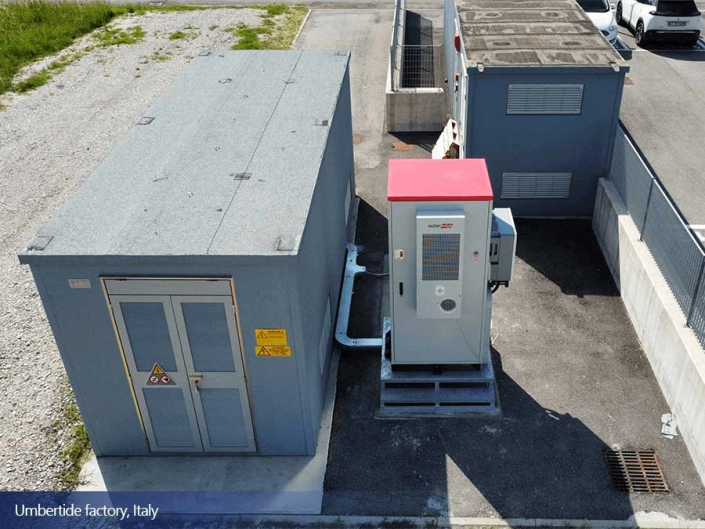
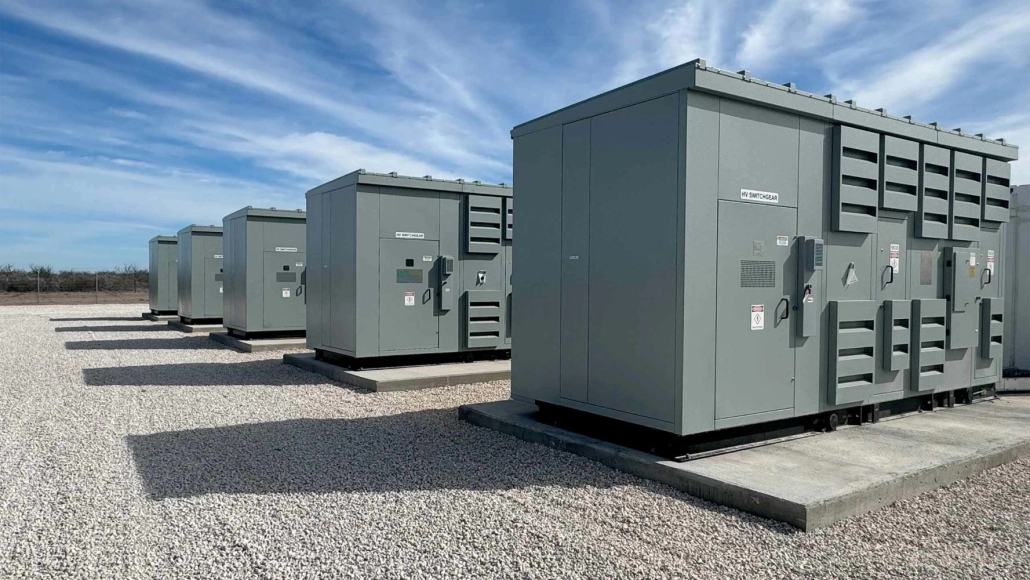
First, a significant advantage of the commercial storage system is its flexibility, both for indoor and outdoor use. PowerDream’s energy storage cabinets are NEMA or IP-rated and designed to withstand environmental stresses, including extreme temperatures, humidity, dust, and precipitation. For indoor installations, the same pre-assembled units can be loaded into standard electrical rooms, requiring minimal space.

Second, commercial storage system come with pre-configured wiring harnesses and fluid connections, which significantly reduces installation time. Typically, the commissioning of a stand-alone energy storage cabinet can be completed in a few hours, as installers only need to bolt the rack, connect AC/DC cables, and perform a final safety check.

In addition, seamless integration with the SolarEdge photovoltaic ecosystem further simplifies deployment. If the facility already has a PV array based on SolarEdge inverters, integrating a PowerDream commercial storage system will be simple. With SolarEdge’s remote setup assistant, installed inverters, energy storage units, and smart meters can be automatically detected, and optimal operating parameters can then be configured through a unified dashboard for greener energy.

Seamless setup and integration

Bringing higher safety and active monitoring

PowerDream’s commercial storage system integrates multi-sensor safety features designed to detect flooding, overheating, and other potential hazards, ensuring the safety of personnel and equipment. Combined with the advanced active monitoring capabilities provided by SolarEdge ONE for commercial and industrial (C&I) software, these systems enable real-time monitoring to facilitate proactive maintenance and minimize downtime. With high-precision thermal sensors distributed on each battery module and power electronic component, when the sensor detects that the temperature exceeds the safety threshold, the system will automatically initiate an active cooling program, starting the built-in fan or opening the shutters to dissipate heat.

Additionally, liquid detection sensors are integrated at the bottom of the cabinet and near the cable entry to detect any signs of flooding, such as coolant leaks or water intrusion from environmental sources. At the same time, with SolarEdge ONE for C&I software, users can view real-time indicators, including charge status (SoC), charge and discharge rates, historical cycle data, and event logs, through a web-based dashboard or mobile application, allowing them to detect problems promptly and minimize downtime.

Bringing higher energy independence and resilience

By intelligently storing excess solar power generation, optimizing energy utilization, and enhancing grid stability, these systems can help companies significantly reduce operating costs, improve resilience, and achieve sustainable development. Combined with the active monitoring capabilities of SolarEdge ONE for C&I software, it provides industrial and commercial users with real-time insights and predictive maintenance capabilities, helping companies achieve higher energy independence and resilience.