
Parallel expansion of 100Ah Solar Battery: Solving the problem of insufficient energy storage
In residential and small-scale commercial energy projects, energy storage capacity often becomes a bottleneck before solar power reaches its full potential. A single cell typically cannot meet the demands of peak evening demand, prolonged power outages, or off-grid applications. PowerDream addresses this limitation not by replacing the entire system, but through modular expansion. Our 100Ah solar cells feature a flexible parallel design that supports up to 10 batteries, increasing total storage capacity from 5.12kWh to 40.96kWh. This scalable architecture enables owners, installers, and project developers to address energy shortages efficiently. Furthermore, each 100Ah lithium-ion solar cell utilizes advanced lithium iron phosphate (LiFePO4) technology, combining safety, durability, and intelligent management features.
Core Technology and Expandable Architecture of the 100Ah Solar Battery
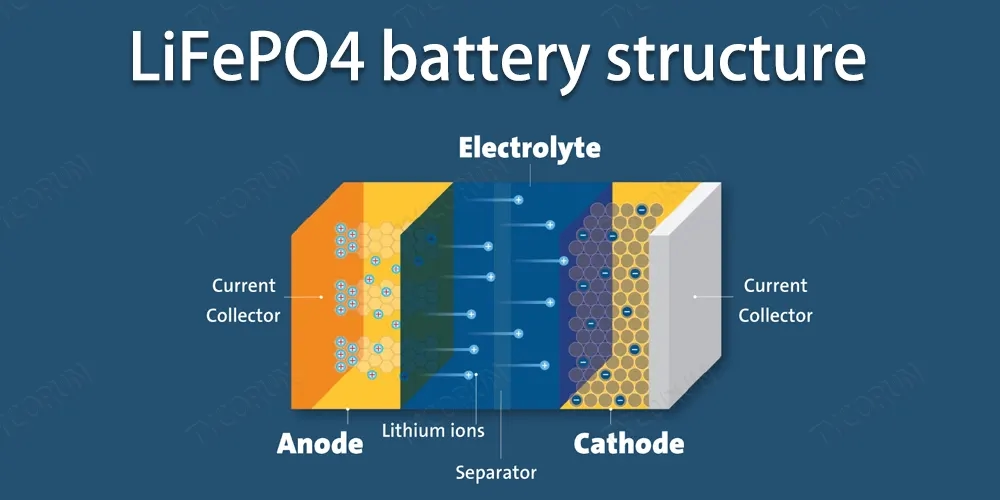
The PowerDream 100Ah solar battery uses lithium iron phosphate (LiFePO4), selected for its excellent thermal stability, long cycle life, and high safety margin. Unlike traditional lead-acid batteries, 100Ah lithium-ion solar battery maintain stable voltage output and a high usable depth of discharge, significantly improving energy efficiency.
Each module also integrates an advanced battery management system (BMS) that monitors cell voltage, temperature, and current in real time. The BMS ensures balanced charging and discharging while preventing overvoltage, undervoltage, short circuits, and overheating. This intelligent protection layer allows for safe parallel expansion without compromising system stability. The combination of high-quality cells and advanced electronic control provides a solid foundation for the modular expansion of the 100Ah solar batteries.
Parallel Expansion Capability of 100Ah Solar Batteries
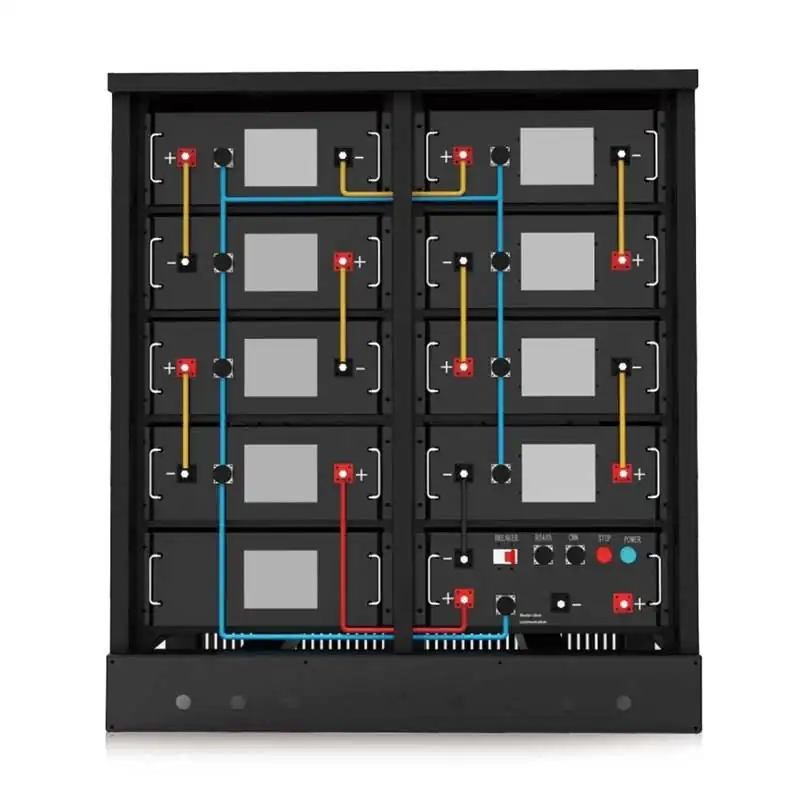
A major advantage of the Power Dream 100Ah solar batteries is their ability to be connected in parallel with up to 10 cells. Each cell provides approximately 5.12kWh of nominal energy, allowing the system to expand to 40.96kWh seamlessly. This linear expansion simplifies capacity planning and avoids complex redesigns of inverters or power infrastructure. When multiple 100Ah solar cell modules are connected in parallel, the nominal voltage remains constant while the capacity increases proportionally. The built-in Battery Management System (BMS) communication function ensures synchronized operation and even current distribution across modules. Therefore, installers can progressively expand storage capacity—starting with one or two batteries and gradually increasing as household energy needs grow.
Capacity Planning and Energy Storage Optimization
A single 100 Ah lithium-ion solar battery provides approximately 5.12 kWh of capacity. However, the usable energy depends on the depth-of-discharge setting and system efficiency. Using recommended operating parameters, users can achieve higher usable capacity while maintaining a long cycle life.
For households with insufficient energy storage, this modular approach offers flexibility. For example:
2 batteries ≈ 10.24 kWh
5 batteries ≈ 25.6 kWh
10 batteries ≈ 40.96 kWh
Furthermore, this product series supports a wide range of applications, from backup power systems to partially or fully off-grid configurations. The scalability of the 100Ah lithium-ion solar battery ensures that the energy storage system can evolve with changing electricity consumption patterns.
Installation, Durability, and Long-Term Value of the 100Ah Solar Battery
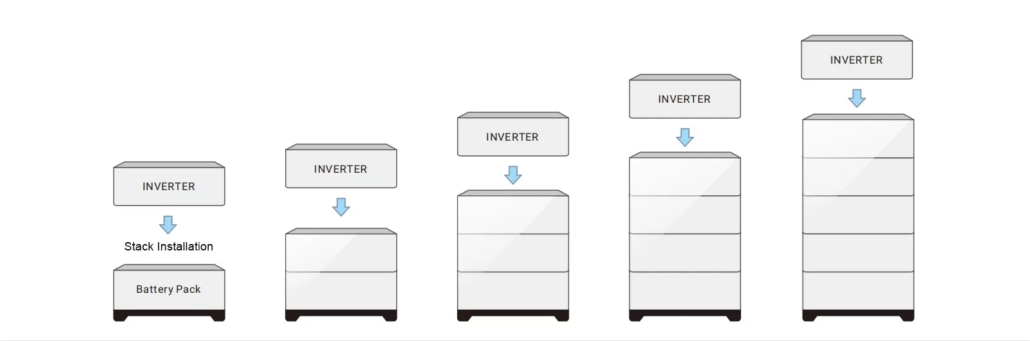
PowerDream’s 100Ah solar battery features a stacked mounting structure that maximizes space utilization. This vertical modular configuration simplifies wiring and enhances structural stability. Installers can neatly assemble the cell packs in equipment rooms or energy storage cabinets while maintaining adequate ventilation spacing. Furthermore, this lithium ion solar battery supports natural heat dissipation. Its casing design promotes air convection, reducing the need for an active cooling system. Lower operating temperatures directly translate to longer battery life and higher system reliability.
IP54 Protection Rating and Environmental Adaptability
Durability is crucial for home energy storage systems. This 100Ah solar battery features an IP54 protection rating, effectively preventing dust ingress and water splashes. Therefore, it is suitable for installation in garages, basements, sheltered outdoor areas, or other semi-enclosed environments.
The robust casing effectively protects internal components from moisture and environmental stressors. Combined with the inherent stability of lithium iron phosphate chemistry, this lithium-ion solar cell maintains reliable performance across a wide temperature range. These protective features reduce performance degradation caused by environmental factors and extend overall lifespan.
Safety Systems and Operational Reliability
Safety is always paramount in energy storage design. This 100Ah solar battery employs multi-layered protection mechanisms, including current limiting, temperature monitoring, and automatic shutdown protocols. An integrated battery management system ensures safe operation during charge-discharge cycles, even under fluctuating loads. Parallel expansion does not compromise safety because each lithium-ion solar battery operates independently while communicating with other modules. Even in the event of a fault, isolation mechanisms prevent the fault from spreading throughout the entire battery pack. This architecture enhances operational reliability and meets the safety requirements of modern homes.
Flexible Parallel Expansion Solves Energy Storage Shortages
The parallel expansion of the PowerDream 100Ah solar batteries addresses energy shortages in residential and small-commercial energy-storage systems. Supporting up to 10 modules in a stacked installation, they feature natural heat dissipation and an IP54 protection rating, perfectly combining electrical scalability with proven durability. This modular design reduces upfront costs, improves lifecycle economics, and allows users to flexibly expand energy storage capacity as needed, effectively addressing the challenge of insufficient energy storage to meet varying power demands.