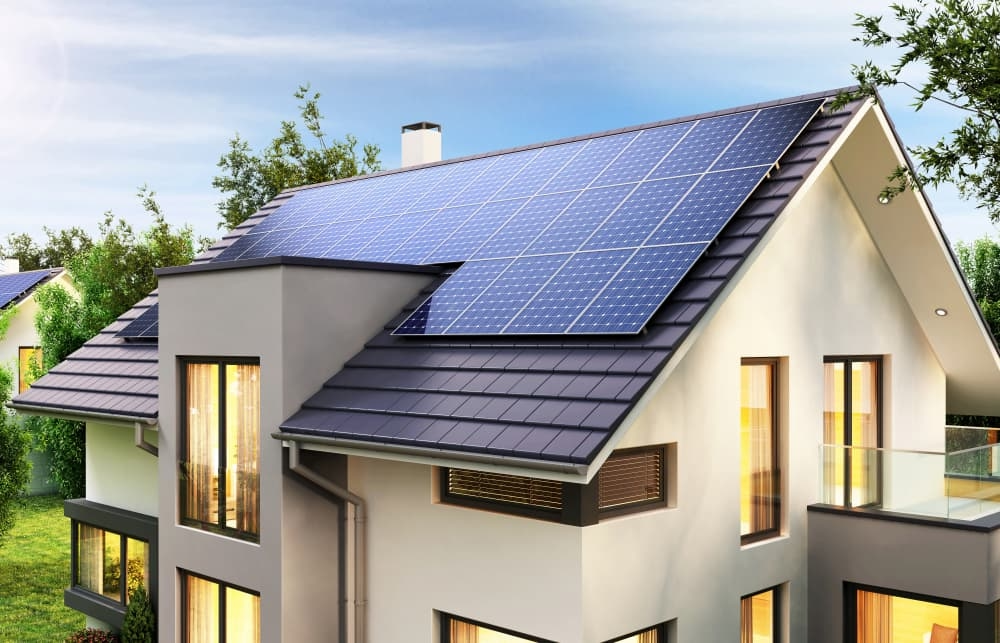
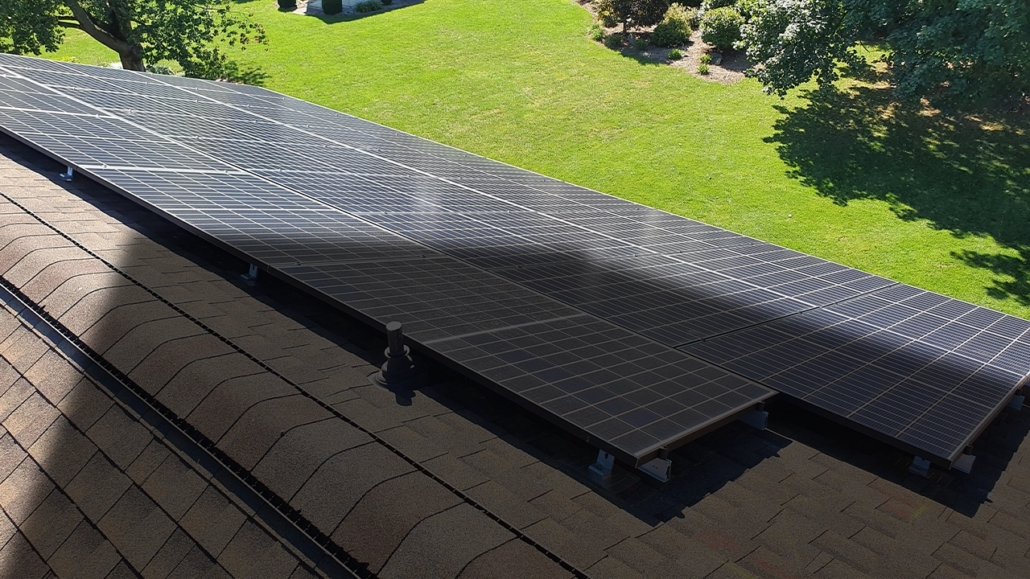
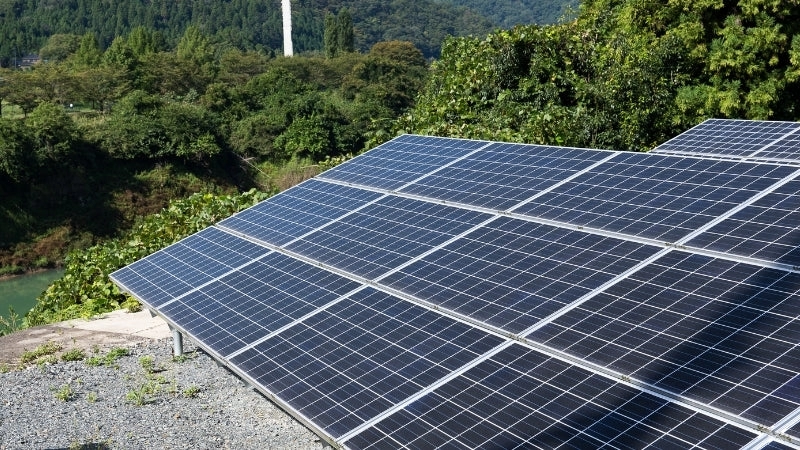
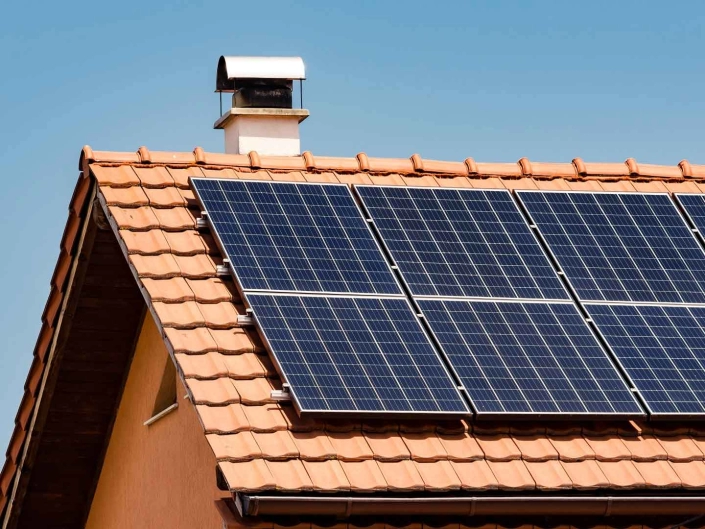
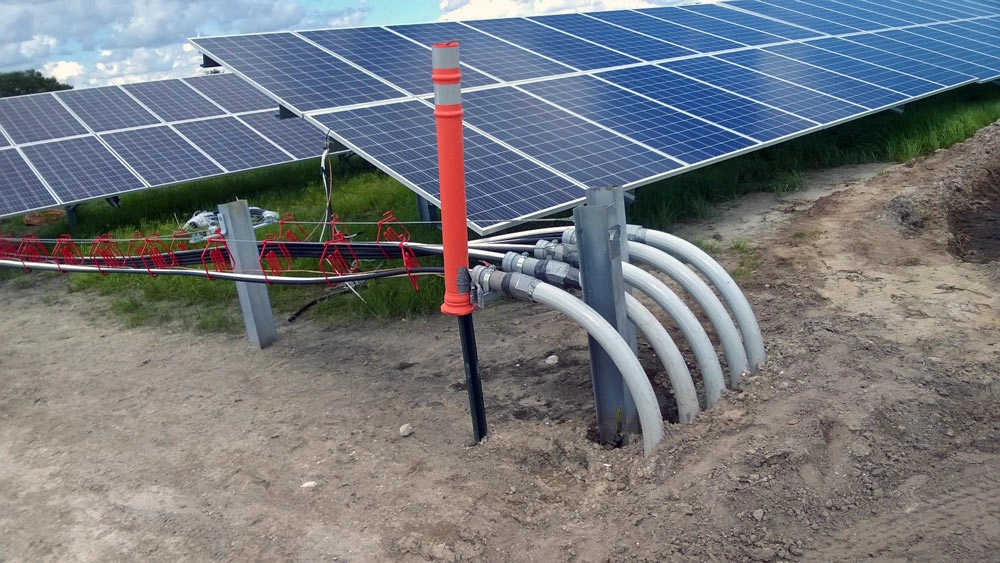
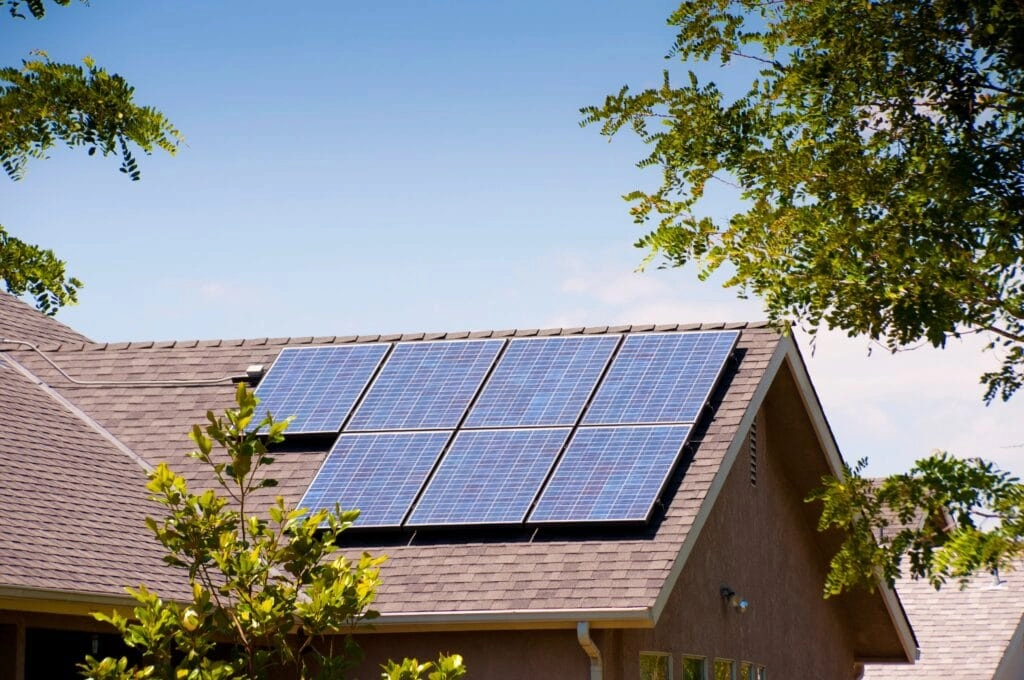
The US added a record 32.4 GW of solar capacity in 2023, up 51% year-over-year and 37% more than the previous record in 2021, according to a report released today by the Solar Energy Industries Association (SEIA) and Wood Mackenzie.
SEIA and Wood Mackenzie already signaled in their report for the third quarter that the US was poised to add record solar capacity in 2023.
“If we stay the course with our federal clean energy policies, total solar deployment will quadruple over the next ten years,” said SEIA president and CEO Abigail Ross Hopper.
The total US solar capacity is expected to grow from 177 GW DC at the end of 2023 to 673 GW DC by 2034 in the base case outlook. However, developments in the supply chain, tax credit financing and interest rate environment can significantly swing the outlook.
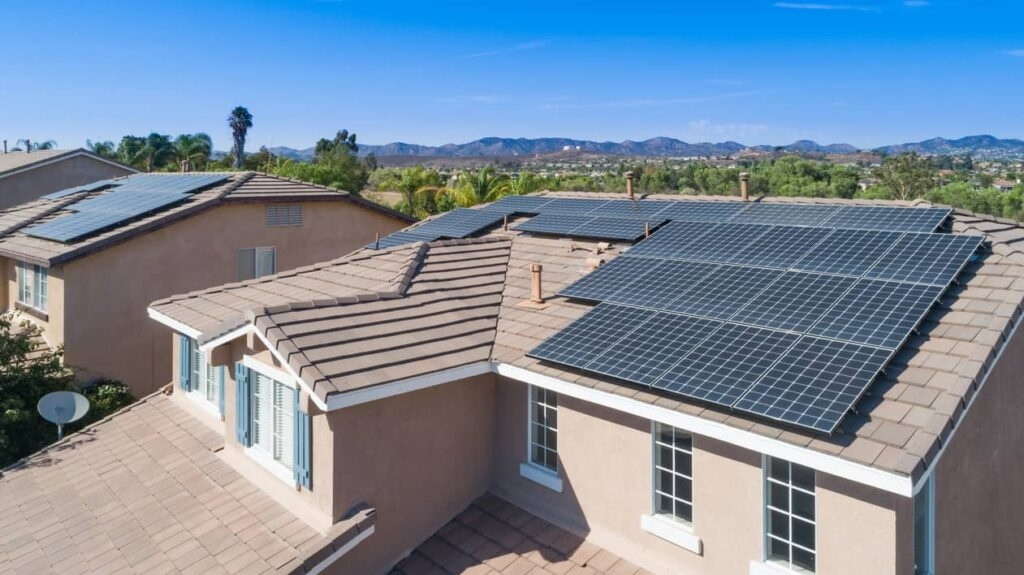
In 2023, all segments of the solar market grew compared to 2022. The utility-scale sector added 22.5 GW, marking 77% annual growth and underscoring the impact of supply chain constraints in 2022. More than 10 GW DC was installed in the fourth quarter. Residential solar expanded 12% to 6.8 GWdc, helped by a rush in California to take advantage of more favorable net metering rules before April.
According to the data, solar module manufacturing capacity increased from 8.5 GW to 16.1 GW in 2023. However, the organisations warned that record-low module prices and a difficult economic climate could make it hard for US manufacturers to follow through on announced facilities. In 2023, prices for monofacial and bifacial solar modules dropped 26% and 31%, respectively. At the moment, the US does not have any operational ingot, wafer or cell manufacturing facilities.
SEIA and Wood Mackenzie further said that 53% of all new electric generating capacity added to the grid last year was solar, the first time in 80 years that a renewable electricity source has accounted for more than half of annual capacity additions.
/wp-content/uploads/2023/08/logo-1.png00administrator/wp-content/uploads/2023/08/logo-1.pngadministrator2024-03-06 03:02:112024-03-11 11:21:59US’ solar additions surge to 32.4 GW in 2023
Home PV (photovoltaic) systems can be found in different varieties, however, the most basic and economical type of home systems today are offered in Grid connected or On-grid configurations. The term On-grid basically means that the PV system for your home will need to be connected, just like any other home appliance in your main electrical fuse box, or in essence, to your electricity service provider network (grid) in order for it to work.
Other home PV systems types are available in the market today such as Hybrid PV systems, which include a battery storage system for when the power goes out, are a bit more complex in their operation. Nevertheless, this article will focus on the most basic type of PV system which is On-Grid home PV systems.
Is solar energy for me?
Solar energy is the most upcoming renewable energy technology and has
a proven and constant growth record throughout the last decade. Whether you want to reduce your electricity bill, increase the value of your property or contribute to the next generations by reducing your carbon footprint, solar energy is the right choice for you. At the end of the day, Home PV Systems can usually pay themselves off in less than 5 years which means many years of 0 or reduced electric bills. There are few low risk investments in the market today as good as solar energy.
How do Home PV Systems work?
The main goal of a home PV system is to generate electricity by converting the sun’s energy, (energy collected during daylight hour periods) from photos into electrons. As simple as it might seem, this conversion will determine the amount of energy/power a PV system can generate throughout its expected life-cycle.
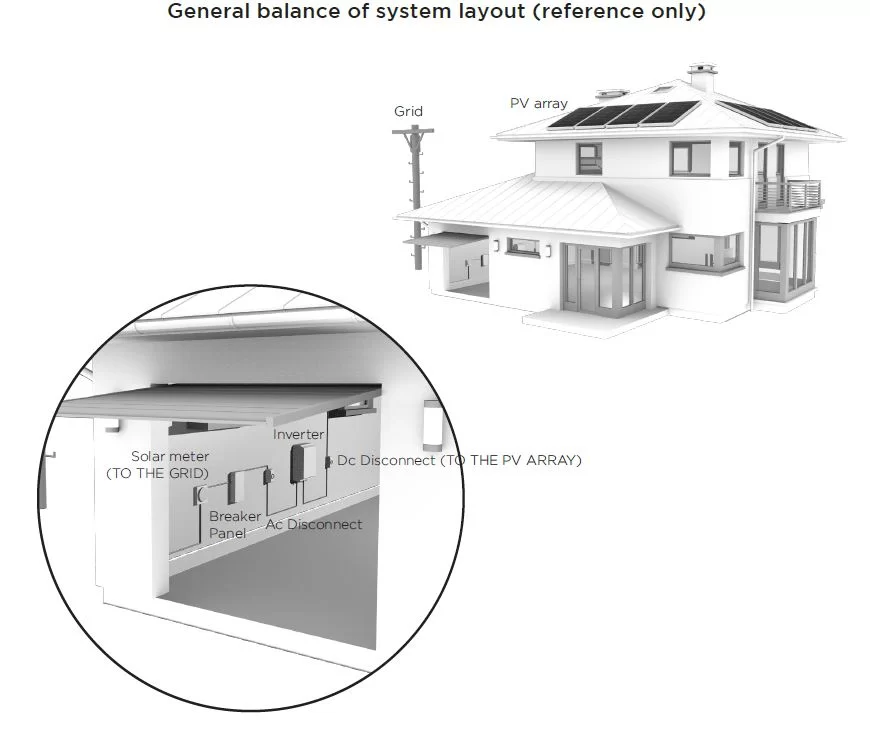
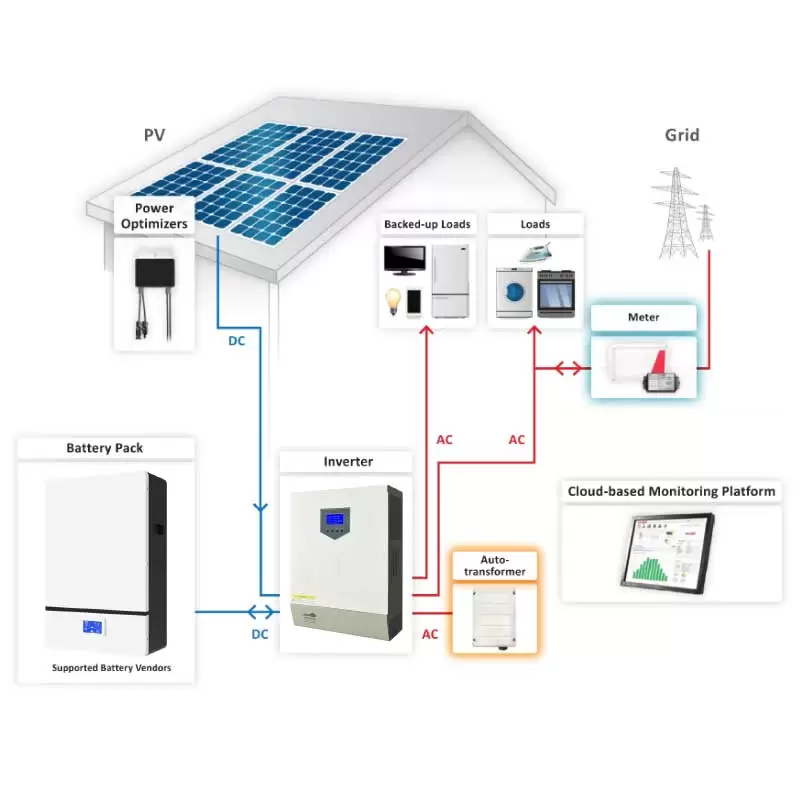
The energy converted by the PV modules, as a first step, produces direct current (DC electricity) which flows through the DC circuit and is transformed, converted or inverted, (as a second step) into alternating current (AC) electricity. This conversion process is performed by a solar inverter which matches the electrical systems or home appliances power source. This is all done seamlessly and without any moving parts.
The electricity generated by an ‘on-grid’ PV system can be used either for self-consumption or can be fed back to the grid at periods when the home electricity consumption is low. Feeding electricity back to the utility grid will rely on grid connection permissions offered by your electricity provider.
How much electricity can my PV system generate?
This will depend on the following criteria:
Size of the PV system
Amount of sunshine hours throughout the year (Irradiance)
Optimal installation conditions
A very simple equation can be used however please note this is just for estimation purposes only.
Average DAY PV system production in kWh’s
(4 peak sunshine hours/day) x (size of PV System in kW) x (0.85 system derating factor = kWh/day generation
Average YEAR PV system production in kWh’s
(1460 peak sunshine hours/year) x (size of PV System in kW) x (0.85 system derating factor = kWh/year generation
What are the main components of On-grid Home PV Systems?
PowerDream ON GRID PV SYSTEMS
What is the lifetime of a PV system?
PV Modules serve as the main component of a PV system and include a power output warranty of 25 years. This means that your system can last for at least 25 years after installed. With that said however, other system components such as inverters, conductors and mounting systems will sometimes need to be replaced or maintained throughout the lifetime of the system. Inverters usually offer 5 to 20 year warranties, PV mounting systems or racks depending on the manufacturer include 10+ year or more warranty the same stands for other components.
How expensive is a PV system?
PV Module prices continue to show a decreasing cost within the market which makes them more affordable year after year. However, the price of a PV system will depend not only on the brand and technology of components selected for the system but other factors that need to be considered for their installation.
The following considerations will determine the overall cost of a PV system:
PV System size (kW)
PV system components
Labor installation costs
Installation material costs
Material transportation costs
Administrative costs
Depending on your local energy policies, some electricity service providers and or States offer PV system users incentives which will decrease the overall costs of a PV system.
Can I install my home PV System?
The PV components of a system are electronic devices manufactured under electrical safety principles that need to be compliant with grid interactive standards since these will indirectly or directly be connected to your home and the utility grid. It is recommended to seek an authorized professional installers that meets all electrical, building and safety credentials which will guarantee a successful installation.
PV Installation Cycle Diagram
The list of tools below will be required to install the PV module roof kit. It is recommended that they are acquired preceding the installation.
Hammer
Tape Measure
Cable knife
Combination pliers
Crimping tool for cable lugs (suitable for cable cross-sections of up to 2/0 AWG)
Diagonal cutting pliers
Wire stripping pliers
Chalk Line
Electric Drill
Drill Bits (e.g. masonry or wood bit), 5/16th or 0.3125mm
Extension cords
Flathead screwdriver (small and large)
Philips screwdriver (small and large)
Hexagon/Allen keys, 3 mm to 8 mm
Open-end/box wrenches or socket wrench in the sizes 1/4, 5/8th,
Spirit level
Multimeter
Ladders and or roof staging (optional)
Metal Saw (optional)
20.Safety harnesses (optional)
Safety helmet
Work Gloves
Shingle Knife (optional)
/wp-content/uploads/2023/08/logo-1.png00administrator/wp-content/uploads/2023/08/logo-1.pngadministrator2024-03-04 08:17:462024-03-07 03:34:11HOME PV SYSTEMS – How They Work
In an era where sustainable living takes center stage, the concept of off-grid home energy storage systems has become increasingly appealing. These systems, designed to liberate households from traditional power grids, offer a multitude of benefits that extend beyond environmental considerations.
Harnessing Solar Power
At the heart of off-grid living is the utilization of solar panels to capture and convert sunlight into electricity. The installation of solar panels on rooftops or within the property allows for a continuous and renewable energy source. This eco-friendly approach not only reduces carbon footprints but also provides homeowners with a reliable and sustainable power solution.
Battery Storage for Uninterrupted Power
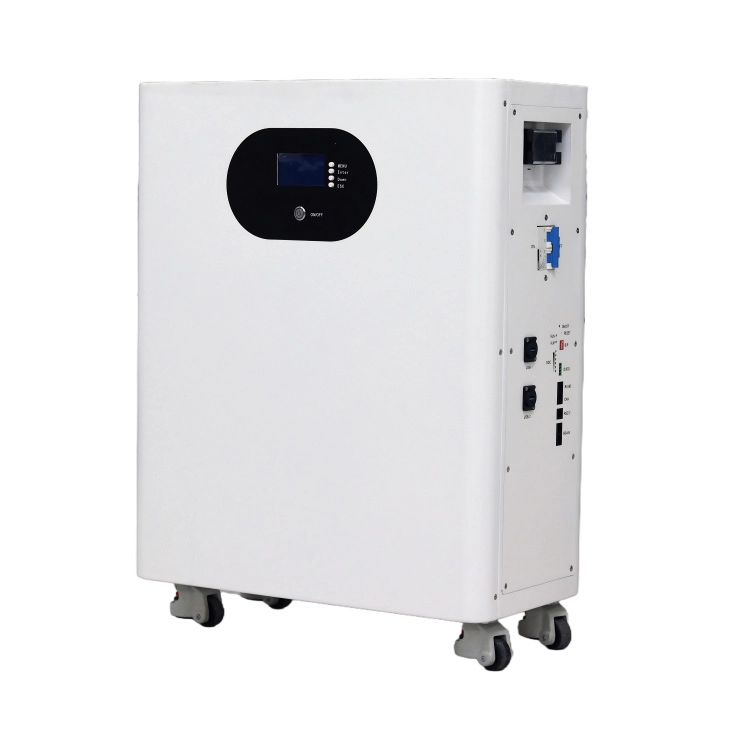
One of the key components of off-grid systems is advanced battery storage technology. These batteries store excess energy generated during sunny days for use during periods of low sunlight or at night. This feature ensures a constant and uninterrupted power supply, granting homeowners autonomy over their energy needs irrespective of external factors.
Energy Management and Efficiency
Modern off-grid systems are equipped with sophisticated energy management tools. Users can monitor real-time energy production and consumption, enabling them to optimize usage patterns for maximum efficiency. Smart technologies ensure that power is distributed intelligently, minimizing waste and maximizing the utility of stored energy.
Environmental Impact
The environmental benefits of off-grid living are profound. By relying on renewable energy sources and minimizing dependence on conventional power grids, households contribute significantly to the reduction of greenhouse gas emissions. This eco-conscious approach aligns with global efforts to combat climate change and promote sustainable practices.
Economic Considerations
While the initial investment in an off-grid home energy storage system may seem significant, the long-term economic advantages are substantial. Reduced reliance on external power sources translates into lower electricity bills over time. Additionally, some regions offer incentives and tax credits for adopting renewable energy solutions, further enhancing the financial appeal of off-grid living.
Challenges and Future Developments
Despite the numerous advantages, off-grid living comes with its set of challenges. Storage capacity limitations, occasional reliance on backup generators, and the need for occasional maintenance are aspects that homeowners must consider. However, ongoing advancements in technology are addressing these challenges, with innovations aimed at enhancing efficiency and overcoming existing limitations.
https://homesolar.cn/wp-content/uploads/2023/10/Message-2.jpg400495admin/wp-content/uploads/2023/08/logo-1.pngadmin2023-10-11 11:50:592024-02-29 01:43:50Embracing Energy Independence: The Off-Grid Home Energy Storage System
One building is a single-story residence, and the other is a three-story building with balconies and dormer windows. Both houses require a reliable power supply during grid outages, but how sunlight hits the roof and the placement of the solar panels will determine whether the final system will meet your needs. For homeowners evaluating an off grid solar system kit, the placement of solar panels is more than just a rooftop task; it is one of the most critical design decisions affecting energy harvesting, battery capacity, cost, and long-term stability.
Assessing Roof Geometry and Solar Resources for Single-Story Residences
For single-story residences, the roof geometry is often the best choice for installing off grid solar system kit. Key advantages include a large roof area, predictable azimuth, and simple shading patterns. A site assessment of the system is essential, including roof orientation, slope, available area, and shading analysis for different seasons.
First, measure the available floor area and document any obstructions. Single-story residences often allow for larger, continuous arrays, simplifying series configurations and reducing system balancing costs. Second, assess the azimuth: in the Northern Hemisphere, south-facing or near-south-facing planes capture the most annual power generation. Third, determine the roof slope: a slope angle close to the local latitude generally achieves balanced power generation throughout the year; flatter roofs may require tilted supports to optimize energy capture.
Additionally, considering shading is crucial; even small trees or nearby buildings can cast long shadows in winter, disproportionately reducing power generation. A simple solar path application or a professional shading analysis can create a shading map and prioritize unshaded planes. For single-story homes with minimal shading, ground-mounted microinverters or optimisers are unnecessary; string inverters are typically the most cost-effective option. Finally, consider the ease of cleaning and maintenance of the panels. Lower roofs are easier to maintain and contribute to long-term energy output.
Complexity of Installing Off Grid Solar System Kit in Multi-Story Homes
The vertical structure of multi-story homes results in varying roof orientations, slope angles, and azimuths. Therefore, designing the installation locations of solar panels for multi-story homes requires a more meticulous and comprehensive approach.
First, plot the azimuth and slope angles for each roof plane. Multi-story building roofs typically include a south-facing gable, east-west dormer windows, and a north-facing shaded side. You can leverage this diversity to install more efficient solar panels on less-than-ideal surfaces and larger arrays in optimal locations. Next, assess shading from surrounding tall trees, neighboring buildings, and the building’s own eaves—multi-story buildings can experience self-shading over time.
Due to varying orientations and tilt angles, MPPT segmentation technology is necessary. This can be achieved through multiple MPPT inputs on a string inverter, a DC optimizer, or a microinverter, to avoid losses caused by string mismatch. For example, connect east-facing panels to one MPPT and west-facing panels to another. If panels are located on balconies or vertical facades, designers should treat them as auxiliary generators and account for their lower output in the off grid solar system design.
Balancing Orientation and Tilting Angle
Orientation (south/east/west) and tilt angle determine the energy output time and total power generation of an off grid solar system suite. For both single-story and multi-story residences, during installation, we prioritise factors such as daily peak power generation (south-facing), power generation during peak electricity demand periods (east- or west-facing), or a more balanced, flatter power generation curve.
South-facing arrays typically maximize annual power generation and simplify string design. If your load is evenly distributed and you prioritise maximum total power generation, a south-facing orientation is recommended, with the tilt angle set to the local latitude. East-facing arrays concentrate power generation in the morning; west-facing arrays concentrate it in the evening. For households with higher evening electricity consumption, a slightly west-facing orientation can improve self-consumption and reduce battery cycle counts or generator runtime. East-west-oriented split arrays are particularly useful when roof geometry limits the continuous south-facing area. They produce a flatter daily power generation curve, better matching the electricity demands of many residences. Additionally, for multi-story residences with multiple orientations, you should use dedicated MPPTs or module-level power electronics to maximize energy from different orientations without compromising the off grid solar system kit’s efficiency.
Shading Mitigation and Array Layout for Off Grid Solar System Kit
Shading causes energy loss. Whether it’s a single-story or multi-story building, we incorporate shading mitigation measures and rigorous power generation modeling into your off grid solar system kit or residential solar solution. First, we conduct 24/7, year-round shading simulations to quantify expected losses and determine the optimal solar panel installation locations.
Mitigation measures include:
Micro-inverters/DC optimizers: These component-level electronics allow each panel to operate independently at its maximum power point, significantly reducing shading losses common in multi-story roofs under mixed azimuth or partial shading conditions.
Multiple MPPTs: Different strings are used for each azimuth or tilt angle, assigned to separate MPPT channels on the inverter so that each group performs optimally.
Strategic panel placement: Avoid installing panels in locations that will be shaded at least part of the time in the morning/afternoon; choose unshaded flat surfaces and sunny, fan-shaped areas whenever possible. If shading is unavoidable, consider its impact—use shaded modules for lower-priority loads or as supplemental power. Panel Spacing and Row Layout: In installations with significant inclination, ensure rows do not overlap during winter; maintain adequate setback distances for maintenance access and to comply with fire safety regulations.
Performance Monitoring, Maintenance, and Size Selection Considerations
For off grid solar system kits, panel installation location determines system capacity, monitoring strategies, and maintenance plans. After installation, continuous monitoring and preventive maintenance ensure power generation and that the system meets household electricity demands.
Performance Monitoring: Install a monitoring platform to report power generation, battery SoC, and inverter status for each MPPT or each series connection. For mixed-orientation sites, real-time data from each MPPT helps quickly identify poorly performing roof surfaces or shading. Many off-grid inverters include cloud monitoring or maximum power point tracking diagnostics.
Maintenance: Single-story systems typically require seasonal inspection and cleaning every 6-12 months. Multi-story systems may require longer maintenance intervals due to complex access routes, but can benefit from remote monitoring alerts.
Key Considerations for Capacity Planning: The installation location of the panels will affect actual daily power generation, so engineers need to run model simulations based on expected orientation and shading conditions to determine battery backup and generator capacities. For example, if peak demand does not match power generation, an east-west-oriented split array may require a larger battery buffer capacity.
Finally, we consider lifecycle factors to estimate solar panel degradation, seasonal fluctuations in power generation, and future load growth. Therefore, when selecting the location for solar panel installation, we consider both current demand and reasonable growth expectations.
Adjusting Layout to Home Conditions for Resilient Off-Grid Living
The panel layout in an off grid solar system kit is a design consideration that brings together roof geometry, home needs, and system structure. For single-story homes, priority should be given to large, unobstructed south-facing planes, simple series designs, and ease of maintenance. For multi-story homes, segmented layouts, MPPT diversity, and carefully designed shading measures should be adopted to utilize complex roof areas while minimizing power generation losses fully. Throughout the process, we select appropriate inverters/chargers and battery capacities based on the actual power generation of the chosen layout, and plan the installation process, safety measures, and permit compliance as early as possible.
https://homesolar.cn/wp-content/uploads/2023/10/Off-Grid-Solar-System-Kit-for-Single-Story-vs-Multi-Story-Homes1.avif400485admin/wp-content/uploads/2023/08/logo-1.pngadmin2023-10-07 09:09:442025-12-23 03:39:34Off Grid Solar System Kit for Single-Story vs Multi-Story Homes: Panel Placement
In the 40° North latitude region, daily solar production drops by 35% during winter months, which makes it difficult for customers in this area to use solar energy year-round. Therefore, we designed a seasonal battery rotation strategy to ensure that your off grid home solar system kit always meets demand. First, calculate the winter energy gap by comparing the average summer production with the winter production. Then, plan to supplement energy storage and swap in higher capacity battery packs during the darker months. So, double the battery pack capacity between November and February. In addition, use a modular rack system so that battery modules can be added or removed quickly. By strategically rotating battery packs and adjusting the array configuration, your off grid solar system can always be fully charged regardless of the season.
Evaluating seasonal solar power generation changes
We need to understand the solar irradiation pattern to design the off grid home solar system kit in a targeted manner. For example, your solar panels may output 7 kWh/kW in the summer, but only 4 kWh/kW in the winter, so longer nights and cloudy days will exacerbate the gap. I analyzed a five-year irradiance dataset to accurately model monthly energy shortfalls while accounting for system losses due to snow, foliage, and solar panel dirt. I calculate the required battery recharge capacity (typically 30-50% of base capacity), then analyze local weather forecasts and historical peak demand to optimize the switching timing. By performing accurate seasonal performance modeling, you can ensure that your off-grid home solar system kit maintains a steady supply of power year-round, avoiding unexpected outages and ensuring critical loads remain powered.
Modular battery pack design for easy replacement in off grid home solar system kit
The modular battery architecture simplifies seasonal replacement of off grid home solar system kits. First, select individual battery modules so they can slide into the rack enclosure. Then, you label the off-season modules and store them in a climate-controlled area to extend their life. I specify the use of quick-disconnect busbars and ergonomic handles for safe and quick tool-free replacement, minimizing downtime. In addition, by integrating a battery management system that dynamically identifies the health and charge status of each module, balances the batteries, and reports faults. We select lithium-iron phosphate batteries to ensure stability and cycle life over seasonal cycles. Your off grid solar system automatically reconfigures when adding new modules, optimizing charge rates and discharge cycles to extend battery life.
Seasonal Array Reconfiguration and Tilt Adjustment
Optimizing your off grid home solar system kit for the lower winter solar altitude can significantly increase power generation. We will adjust the panel tilt angle from the summer angle (usually latitude minus 15°) to the winter angle (latitude plus 15°). This will capture more low-angle photons even during shorter days. We use electric or manual tilt brackets to allow for two to four re-tilts per year to adjust to the changing solar altitude. In addition, consider temporarily reducing the number of parallel modules to change for the lower winter power generation and minimize mismatch losses.
In addition, you need to perform a regularly scheduled spring cleaning to remove accumulated debris and optimize power generation. By adjusting the array and tilt angle according to the season, an off grid home solar system kit can get maximum power during the period when power generation is most needed, supplement your larger winter battery bank, and keep the system running in balance.
Integrate Hybrid Backup Power and Generators in Off Grid Home Solar System Kit
Even if solar and battery swaps are optimized, long cloudy days will require an off grid solar system as a backup. Integrate a generator with an ATS in addition to seasonal energy storage. However, its capacity should be used only for essential loads to minimize fuel consumption. I configure the ATS to start only when the battery charge is below 20% for more than two hours to prevent accidental starts and wear. Also, schedule monthly load drills for the generator to maintain reliability, and keep detailed fuel and operation logs for preventive maintenance. In addition, install an eco-mode speed governor to reduce the speed under light loads to save fuel. By combining renewable generation, energy storage, and generator backup, your off-grid home solar system kit can achieve near 100% availability even during prolonged inclement weather, giving the homeowner complete peace of mind.
Monitoring, Automation, and Predictive Maintenance
Implementing seasonal energy storage swaps requires a robust monitoring and automation system in your off-grid solar system. For example, installing remote telemetry to track individual module voltages, array output, and generator run time allows for early detection of performance deviations, by setting up an energy management system that sends SMS or app alerts when winter generation is less than 10% of the forecast, prompting timely adjustments. The mobile app automatically sends swap reminders and tilt angle alerts to keep users informed. Predictive maintenance algorithms analyze battery degradation trends, inverter efficiency, and generator health to recommend proactive repairs or module retirements before failures occur. With these data-driven tools, your off-grid solar system will operate at peak efficiency, seamlessly coordinating seasonal swaps and maintenance.
Ensure Year-Round Energy Security
Planning seasonal energy storage swaps in an off grid home solar system kit includes calculating seasonal generation variations, designing modular battery packs, reconfiguring array tilt, integrating hybrid backup power, and leveraging monitoring and automation technologies. By combining data-driven system sizing with modular hardware and innovative controls, you can ensure continuous power regardless of the season.
https://homesolar.cn/wp-content/uploads/2023/10/Off-Grid-Home-Solar-System-Kit-2-1.webp400495admin/wp-content/uploads/2023/08/logo-1.pngadmin2023-10-07 08:41:132025-07-24 09:48:02How to Plan for Seasonal Energy Storage Swapping in an Off Grid Home Solar System Kit?
When purchasing an off-grid system, customers often ask: how many lithium ion solar batteries are needed to power a home or facility reliably? Simply put, you need to calculate the site’s daily energy needs, select the required operating range, and then determine the battery capacity by adjusting for available depth of discharge (DoD), round-trip efficiency, temperature, and aging margin. Finally, ensure that the battery pack’s nominal capacity, voltage, and charge rate match those of the inverter and solar array, allowing the system to power and recharge loads under available sunlight. Below, I’ll provide a practical, step-by-step approach with formulas and example figures to give the clarity off-grid buyers need.
Lithium ion Solar Batteries: Assessing Daily Energy Needs and Load Profiles
Accurate sizing begins with a pragmatic energy audit. List all appliances and estimate their daily energy consumption in kWh. For example, a small LED lamp (10 W) running for 4 hours consumes 40 Wh; a laptop (60 W) running for 5 hours consumes 300 Wh. Add these items together to arrive at the total daily energy consumption. If you have meters, measure your actual electricity consumption over a typical week, as behavioral habits and seasonal variations can significantly impact electricity use.
In addition to energy consumption, also record peak loads and surge demands: Motors, pumps, refrigerators, and inrush currents may require high, short-term power. Furthermore, your inverter and battery must safely deliver sustained peak power. For example, a fridge operating at a 100-W load might generate a 700-W startup surge, and designers must ensure that a lithium ion solar battery can withstand this surge for hundreds of milliseconds.
Determine the required autonomy and reserve days
Reaching time, also known as storage days, refers to the amount of time a lithium ion solar battery must provide energy without requiring a recharge. Typical design options are 1-3 days for low-risk areas, 3-5 days for remote locations or high-reliability sites, and longer for mission-critical facilities. Multiplying the reaching time by the daily energy consumption directly determines the available storage capacity. For example, if a small household uses 4 kWh of electricity per day and you want 3 days of autonomy for the baseload (70%), the available energy is 4 × 3 × 0.7 = 8.4 kWh.
Determining the autonomy period also influences the size of the PV array in an off grid solar system. A more extended autonomy period generally means more days of charging, but users may need to recharge during months of low electricity. If weight and cost limit battery capacity, designers should strike a balance between autonomy and the use of a backup generator. Many systems combine moderate battery storage (2-3 days) with a backup generator to handle extended periods of cloudy weather economically.
Consider the DoD, cycle efficiency, and aging of lithium ion solar batteries
A battery must provide the required available energy with a nominal capacity exceeding the target available energy, as solar battery are not designed to be fully depleted and incur losses during both charging and discharging processes. Lithium ion solar batteries, particularly those using lithium iron phosphate (LIFP), typically have a deeper Depth of Discharge (DoD) (70-90%) and a longer cycle life, thereby providing higher usable energy than traditional battery chemistries. For LFP batteries, a DoD of 80% is a safe, long-life design. The round-trip efficiency (battery, inverter, and charger losses) is approximately 0.85–0.92, depending on the hardware. Engineers include a safety/aging factor of 1.10–1.25 to ensure sufficient capacity as the battery ages.
Continuing with the previous example (8.4 kWh usable capacity), the Depth of Discharge (DoD) is 80%, the round-trip efficiency is 90%, and the safety factor is 1.15. Because lithium battery capacity slowly degrades with the number of cycles and time, slightly increasing the nominal capacity can ensure years of reliability.
Capacity Matching with Inverter and System Voltage
The nominal capacity is only part of the story. The solar array must be matched to the inverter power, charger/MPPT rating, and PV array size so that the off grid solar system can supply peak loads and take advantage of available sunlight hours for charging.
Standard off grid solar systems use 24 V or 48 V DC battery banks. A higher voltage (48 V) reduces the current for a given power and is more suitable for larger off grid solar systems. For a battery with a nominal capacity of 13 kWh at 48 V, the amp-hours are ≈ 271 Ah. Manufacturers typically rate modules at, for example, 51.2 V and 200 Ah, allowing you to connect modules in parallel or series to meet capacity and voltage requirements.
If your site has a continuous load of 2 kW and a refrigerator with a surge power of 6 kW, select an inverter with a surge power of at least 6 kW and a continuous power margin of 2-3 kW. The lithium-ion solar cell capacity must be balanced with the PV array power to allow for battery charging during daylight hours and typical weather conditions.
Estimate the daily sunshine hours for your location. For a cabin with 4 kWh of daily usage and 4 hours of peak sunshine, PV_kW ≈ (4 / 4) / 0.9 = 1.11 kW. To charge a larger battery after autonomous use, increase the PV power, or accept multi-day charging.
Environmental, Installation, and Safety Considerations
Sizing also requires consideration of practical installation details: weight, footprint, ventilation, temperature control, and BMS integration. Lithium ion solar batteries offer high energy density and good thermal performance, but they still require a suitable ambient temperature range (typically -20°C to +50°C). Their capacity decreases in cold weather, typically by 10% to 30% at low temperatures. Battery thermal management is crucial when operating the system in cold climates.
Safety and monitoring features include a battery management system, which provides battery balancing, overvoltage/undervoltage protection, temperature monitoring, and remote telemetry communications. The battery cabinet should be located in a dry, secure, and easily accessible location, adhering to the manufacturer’s clearance and access requirements. You must install appropriate fuses and DC circuit breakers, and you must adhere to local electrical codes. Furthermore, when planning for spare parts and service, our quote includes the expected service life, warranty, and replacement schedule, helping buyers understand long-term costs.
Providing you with a precise quote breakdown
The required battery capacity equals your available energy requirements, adjusted for system efficiency and the allowable depth of discharge (DoD). This energy requirement must be converted to the number of modules and physically laid out using the supplier’s dimensions. Our quotes to customers include kWh, module model and quantity, cabinet footprint and weight, electrical single-line diagrams, BMS functionality, environmental requirements, and maintenance/commissioning scope.
https://homesolar.cn/wp-content/uploads/2023/10/How-to-size-lithium-ion-solar-batteries-for-off-grid-applications?.webp400495admin/wp-content/uploads/2023/08/logo-1.pngadmin2023-10-07 08:40:062025-08-16 07:30:39How to size lithium ion solar batteries for off-grid applications?
As the years passed, the Smiths became pioneers in the solar realm, hosting workshops to share their magical knowledge with the community. They transformed their garage into a solar tinkering workshop, inviting neighbors to join in crafting solar-powered lanterns and whimsical garden ornaments.
The solar adventure took an unexpected turn when the family decided to embark on a road trip, equipped with a solar-powered camper. The mobile haven not only provided them with a cozy home on wheels but also garnered admiration from fellow travelers who were captivated by the idea of harnessing the sun for their journeys.
In an effort to give back to the environment, the Smiths initiated a neighborhood tree-planting project. Solar-powered lights illuminated the pathway as families came together to plant saplings, creating a green oasis powered by the same sun that fueled their homes.
The Smiths’ tale of solar enchantment reached far and wide, attracting the attention of a renowned environmentalist who commended their commitment to sustainability. The family found themselves participating in solar advocacy campaigns, spreading the message of clean energy and inspiring others to embark on their own eco-friendly adventures.
As the sun set on each day, casting a warm glow over the solar panels, the Smiths gathered in their enchanted backyard. The solar-powered fairy lights twinkled overhead, and the family marveled at how a simple decision to embrace solar power had transformed their lives into an ongoing saga of joy, innovation, and environmental stewardship.
And so, the Smiths’ home continued to be a beacon of solar magic, where the sun’s rays not only illuminated rooms but also sparked creativity, connected communities, and turned the ordinary into the extraordinary. In this ever-evolving tale, the sun remained the steadfast protagonist, casting its spell over the Smiths’ home and inspiring others to embark on their own solar adventures.
/wp-content/uploads/2023/08/logo-1.png00admin/wp-content/uploads/2023/08/logo-1.pngadmin2023-10-07 08:38:282024-02-27 10:14:03The Solar Adventure: A Home’s Journey to Energy Independence (3)
When off grid solar kits and off grid home solar systems underperform, a small percentage of the reason is due to insufficient commissioning. To ensure your 18 kWh solar system can achieve its rated 18 kWh daily output, a thorough mechanical check of the solar panel mounting brackets and array alignment is performed. All electrical connections and PV string voltages are then verified, and the inverter, charge controller, and battery interface are configured and tested. After that, performance is verified under actual irradiance and load conditions. You subsequently calibrate safety devices, surge protectors, and ground fault monitors. Finally, you demonstrate the training monitoring software. These commissioning methods achieve continuous system uptime of more than 98% and confirm that all solar panel mounts are performing at peak performance.
Mechanical and Structural Verification of 18 kWh Solar System
When installing an 18 kWh solar system, first ensure that the physical installation is accurate and secure. For example, you should check that all solar panel mounting brackets are properly torqued, verify that they meet the manufacturer’s specifications, and confirm that they have corrosion-resistant coatings suitable for coastal or desert climates. Additionally, verify that the tilt and azimuth settings meet the design specifications for the seasonal sun path, which is typically 30-35° for mid-latitudes. You can tighten the rail and bracket bolts to the specified 15 Nm using a calibrated torque wrench to prevent micro-movements that could cause connector fatigue or lead to wind-induced stress fractures. Additionally, you should seal the roof penetrations with UV-resistant, waterproofing materials and ensure that the battery enclosures in these off grid solar kits are level and adequately ventilated to prevent heat buildup.
Wire connection test for an 18 kWh solar system
Next, we need to perform electrical verification of the 18 kWh solar system, which is critical for any off grid home solar system setup. First, confirm the open-circuit voltage and short-circuit current of each string under standard test conditions using a handheld PV string tester. Then, verify that polarity, phase alignment, and grounding between modules, inverters, and charge controllers are correct using a continuity checker. To prevent intermittent arcing, you should mark each DC string and securely lock the MC4 connectors. Then, test the ground lugs of each solar panel mounting bracket to ensure the resistance is less than 5 Ω. Additionally, ground fault detection testing ensures the off grid solar kit’s grounding electrode system is functioning correctly, preventing electrical shock hazards and fire risks. Accurate electrical checks prevent parasitic losses and dangerous faults, protecting equipment and personnel.
Debug and check the inverter and battery interface configuration
Commissioning an 18 kWh solar system also requires the precise setup of the inverter, MPPT charge controller, and battery management system. In addition to verifying the firmware version, configure the inverter’s MPPT voltage window to match the panel Voc and maintain optimal power tracking across the temperature range. To maximize energy extraction from the panels mounted on the solar panel mounting bracket during cloudy mornings and evenings. I adjust the charge and discharge current limits of the lithium ion solar batteries to 0.5 C to balance fast charging and battery life, and test the inverters’ on-grid or off-grid switching within 200 milliseconds. Test the switching between on grid and off grid modes, and verify the low-voltage disconnect threshold at the battery pack level. Properly calibrated power electronics ensure seamless energy flow and battery health within your off grid home solar system.
Performance Verification Under Real-World Conditions
To confirm that your 18 kWh solar system is delivering the expected yield, you perform performance verification under realistic irradiance and load profiles. For example, you install a weather station module next to the solar panel mounting rack to record irradiance, ambient temperature, and module backplane temperature every minute for at least one week. This allows you to compare the measured AC output with simulated yield data of 1,000 W/m² on a sunny day. Additionally, you deploy monitoring software to calculate the system’s performance ratio (PR), which should aim for 75–85%. This is a key metric for a well-installed off grid home solar system, and it also helps troubleshoot any strings that deviate by more than ±5%. Real-world testing uncovers shading issues, voltage imbalances, and connection losses that commissioning might miss, verifying your 18 kWh solar system reliably powers critical loads.
Safety Device Calibration and Protection Settings
Safety comes first when commissioning any 18 kWh solar systems or off grid solar kit. Start by calibrating overcurrent protection devices, such as DC string fuses rated at 125% of their full current rating and AC circuit breakers rated at 125% of their full current rating. However, avoid oversizing, which can delay fault clearing and risk equipment damage. Next, rigorously test residual current devices (RCDs) to trip within 30 ms at a 30 mA leakage current, ensuring immediate isolation of any ground faults near the solar panel mount or battery bank. Also, verify that surge protection devices clamp transients to less than 1.5 kV on both the DC and AC sides to protect sensitive electronics in these off-grid home solar systems. Correctly set protection devices prevent damage during lightning events or utility disturbances, making your 18 kWh solar system both operationally resilient and compliant.
Best Post-Installation Commissioning Practices
Post-installation commissioning best practices for 18 kWh solar systems include mechanical integrity checks of solar panel mounts, electrical connection testing, inverter and battery setup, actual performance verification, and calibration of safety devices. We recommend referring to this commissioning process to achieve optimal energy yield and provide reliable, sustainable power.
https://homesolar.cn/wp-content/uploads/2023/10/18-kWh-solar-system-1-1.webp400495admin/wp-content/uploads/2023/08/logo-1.pngadmin2023-10-07 06:55:122025-07-22 09:43:45What are the best practices for post-installation commissioning of an 18 kWh solar system?
We may request cookies to be set on your device. We use cookies to let us know when you visit our websites, how you interact with us, to enrich your user experience, and to customize your relationship with our website.
Click on the different category headings to find out more. You can also change some of your preferences. Note that blocking some types of cookies may impact your experience on our websites and the services we are able to offer.
Essential Website Cookies
These cookies are strictly necessary to provide you with services available through our website and to use some of its features.
Because these cookies are strictly necessary to deliver the website, refusing them will have impact how our site functions. You always can block or delete cookies by changing your browser settings and force blocking all cookies on this website. But this will always prompt you to accept/refuse cookies when revisiting our site.
We fully respect if you want to refuse cookies but to avoid asking you again and again kindly allow us to store a cookie for that. You are free to opt out any time or opt in for other cookies to get a better experience. If you refuse cookies we will remove all set cookies in our domain.
We provide you with a list of stored cookies on your computer in our domain so you can check what we stored. Due to security reasons we are not able to show or modify cookies from other domains. You can check these in your browser security settings.
Other external services
We also use different external services like Google Webfonts, Google Maps, and external Video providers. Since these providers may collect personal data like your IP address we allow you to block them here. Please be aware that this might heavily reduce the functionality and appearance of our site. Changes will take effect once you reload the page.
Google Webfont Settings:
Google Map Settings:
Google reCaptcha Settings:
Vimeo and Youtube video embeds:
Privacy Policy
You can read about our cookies and privacy settings in detail on our Privacy Policy Page.