
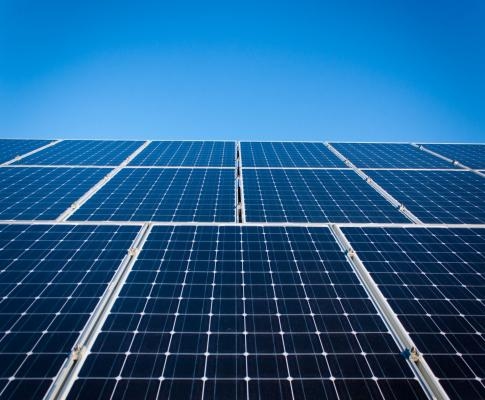
Monocrystalline solar panel: High-Purity Silicon Material Delivers 24% Lab Peak Efficiency
Among the various photovoltaic technologies available today, monocrystalline solar panel is distinguished by their high efficiency and widespread applicability. Thanks to advancements in semiconductor engineering and manufacturing processes, the laboratory peak efficiency of monocrystalline solar panels has reached 24%. For customers selecting solar panels for applications such as solar streetlights, rooftop systems, or off-grid solar installations, efficiency is one of the most critical performance metrics. Higher efficiency means that, within the same physical footprint, a solar panel can convert a greater amount of sunlight into usable electrical energy. This advantage is particularly significant in applications where installation space is limited—such as solar streetlight systems, urban rooftops, and compact off-grid solar solutions.
High-Purity Silicon in Monocrystalline Solar Panel
The exceptional efficiency of monocrystalline solar panels stems from their fundamental material: high-purity monocrystalline silicon. Unlike polycrystalline silicon solar panels, which are composed of multiple silicon crystals, monocrystalline cells are fabricated from a single, continuous silicon crystal structure. This uniform lattice structure allows electrons to move more freely within the semiconductor material, thereby minimizing energy losses during the photovoltaic conversion process.
Manufacturers typically use the Czochralski crystal growth process to produce monocrystalline silicon, slowly pulling a cylindrical silicon ingot from a molten silicon melt under controlled conditions. This process yields a highly ordered crystal structure with minimal grain boundaries, thereby enhancing electrical conductivity and overall energy conversion efficiency. In high-end photovoltaic manufacturing, high-purity silicon feedstock is utilized to minimize impurities and defects within the crystal lattice. Fewer defects translate to fewer recombination centers. Consequently, monocrystalline silicon solar panels can achieve higher open-circuit voltages and superior carrier mobility—two factors that are crucial for attaining efficiencies approaching or exceeding 24% under laboratory test conditions.
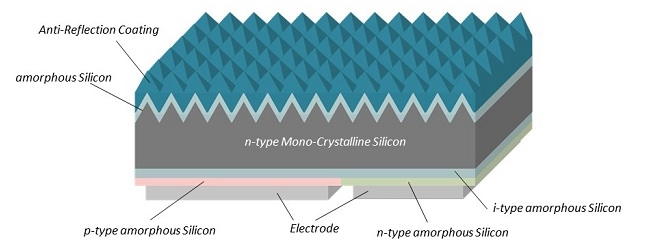
Solar Cell Architectures Achieving 24% Efficiency
Material purity alone is insufficient to achieve record-breaking efficiencies. Modern monocrystalline silicon solar panel also rely on advanced photovoltaic cell architectures designed to maximize light absorption while minimizing electrical energy losses.
Several cutting-edge technologies contribute to the enhancement of solar cell efficiency:
- PERC technology boosts performance by incorporating a passivation layer on the rear surface of the solar cell. This passivation layer reflects unabsorbed sunlight into the silicon wafer, thereby increasing the probability that photons will generate an electric current.
- TOPCon technology further enhances performance by introducing an ultra-thin oxide layer to reduce recombination losses at the contact interface. TOPCon cells have emerged as one of the most promising technologies for next-generation high-efficiency monocrystalline solar panels.
- HJT technology combines crystalline silicon with thin layers of amorphous silicon to achieve superior surface passivation and enhanced voltage performance. HJT cells demonstrate remarkable potential for high efficiency while maintaining excellent temperature characteristics.
These innovations have significantly boosted the energy conversion efficiency of solar panels, enabling laboratory prototypes to reach approximately 24% efficiency, while commercial modules typically achieve 21% to 23% in real-world applications.
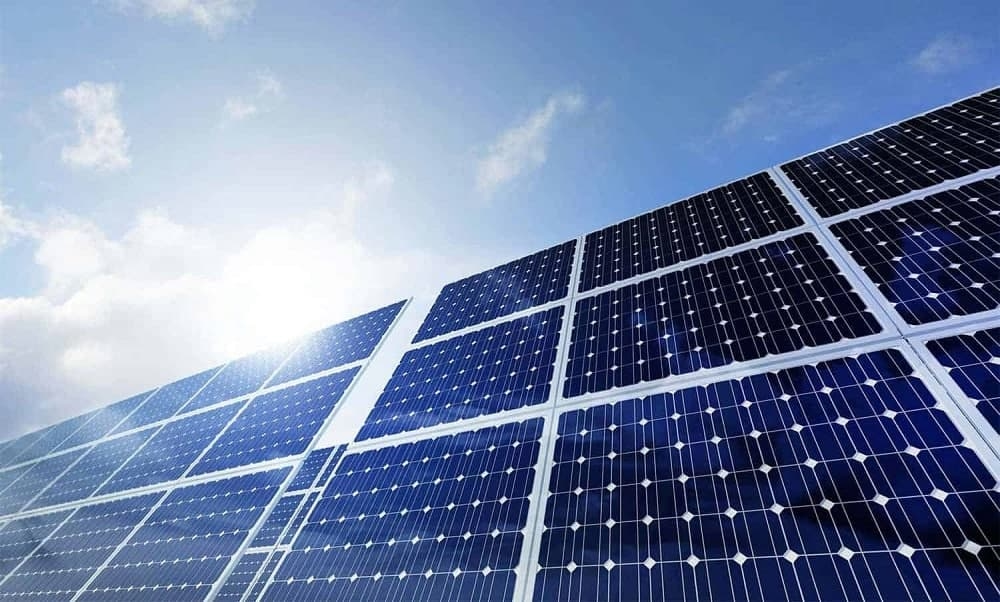
Real-World Performance and Applications of Monocrystalline Solar Panel
While an efficiency of 24% represents peak performance under laboratory conditions, actual operating environments differ significantly from controlled testing settings. Factors such as temperature fluctuations, dust accumulation, shading, and seasonal variations in sunlight can all impact the actual power output of solar panels.
Nevertheless, monocrystalline solar panels retain distinct advantages in practical applications. Compared to other photovoltaic technologies, their higher efficiency allows them to generate more electricity per square meter. This makes them particularly valuable in installations with limited space—such as rooftop solar systems, solar-powered streetlights, and residential solar installations. Another key advantage of monocrystalline solar modules is their excellent temperature coefficient. While the efficiency of solar panels naturally declines as temperatures rise, advanced cell designs help mitigate this performance degradation. Consequently, monocrystalline panels can maintain higher power output in hot climates than many other solar technologies.
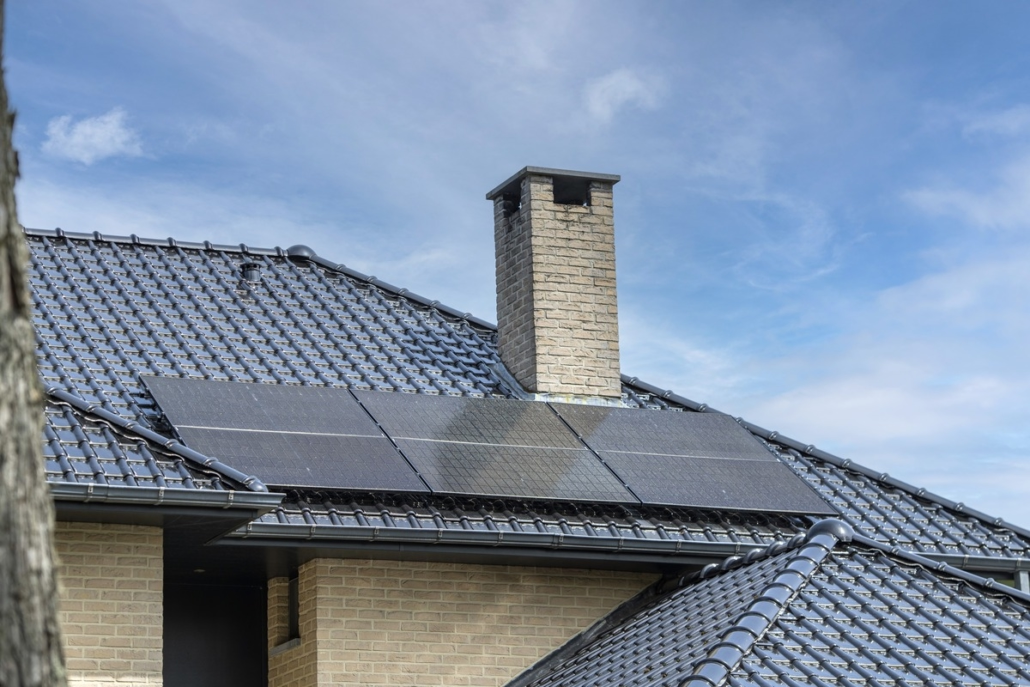
Durability, Lifespan, and Reliability
When investing in a solar system, long-term reliability is a critical consideration. Engineers design high-quality monocrystalline solar panels for reliability and ensure they operate stably for decades, making them a dependable choice for both residential and commercial applications. Most high-end manufacturers offer a 25-year performance warranty, ensuring that solar panels retain a substantial portion of their original power output for decades. The typical annual degradation rate for monocrystalline silicon solar panels is approximately 0.4% to 0.6% per year. This means that even after 25 years of use, these panels can still generate more than 80% to 85% of their original power output.
Furthermore, modern solar panels undergo extensive testing to ensure their durability under extreme environmental conditions. These tests evaluate their tolerance to high humidity, thermal cycling, mechanical loads, and potential PID. Panels that pass these tests demonstrate robust resilience against environmental stresses, thereby ensuring the long-term stability of the system.
Key Applications of Monocrystalline Solar Panels
Due to their exceptional efficiency and durability, monocrystalline solar panels are widely used across a broad spectrum of solar applications. One of the most common applications is in solar streetlights, which require compact, high-efficiency panels to generate sufficient electricity for nighttime illumination. High-efficiency monocrystalline panels enable solar streetlights to operate reliably, even in regions with limited sunlight. Additionally, installers extensively use them in residential rooftop solar installations, where maximizing energy yield within limited roof space is paramount. Their superior efficiency allows homeowners to generate more electricity without expanding the installation footprint. Moreover, installers frequently deploy monocrystalline solar panels in off-grid solar systems, remote telecommunication stations, and agricultural solar solutions. In these environments, reliability and stable energy output are critical for maintaining uninterrupted operations.
Unlocking Maximum Efficiency
Monocrystalline silicon solar panels combine high-purity silicon, advanced cell structures, and durable designs to deliver exceptional energy efficiency and long-term reliability. Laboratory tests indicate that the efficiency of monocrystalline panels can reach up to 24%, enabling them to perform outstandingly in both residential and commercial settings, ranging from rooftop solar systems to solar streetlights and off-grid solutions. Their compact design, superior temperature performance, and exceptionally long service life ensure that investors and users can achieve maximum energy output while simultaneously minimizing space requirements, maintenance expenses, and long-term costs.
