Off grid solar systems for farms: 3kW–30kW Sizing Guide for Smallholder & Large-Scale Farms
For many farmers, off grid solar systems are a tool for enhancing resilience and improving profitability. However, designing a suitable off-grid system requires rigorous capacity planning, not guesswork. We offer off-grid solar systems ranging from 3kW to 30kW for small and large farms. We will show you how to convert your farm’s actual load into a practical PV + storage system that safely and cost-effectively meets irrigation, cooling, lighting, and processing needs.
Size determination method for off grid solar systems for farms
The most common selection mistake is estimating PV system capacity based on roof area or the number of panels, rather than the load. For off grid solar system for farm, a detailed load list should be prepared first. List all equipment, their rated power, and actual daily operating hours. Categorize the load into three categories: critical, flexible, and optional.
Example load chart (based on a smallholder’s daily load):
- Submersible irrigation pump: 2.2 kW motor × 2 hours = 4.4 kWh/day
- Small cold storage: Average power 1.2 kW × 24 hours = 28.8 kWh/day
- Lighting and others: 0.5 kW × 6 hours = 3 kWh/day
- Control electronics and sensors: 0.2 kW × 24 hours = 4.8 kWh/day; Total approximately 41 kWh/day; Peak instantaneous demand ≈ 9–11 kW
Two key metrics stand out: daily electricity consumption and peak instantaneous power. Off grid solar system designs must meet both metrics simultaneously. Daily electricity consumption determines the configuration of photovoltaic power generation and energy storage systems; peak power determines the capacity of inverters and lines. Furthermore, the electricity cycle and time must be considered: while refrigeration is continuous, it is periodic. Use a smart meter with recorded data, or measure with a clamp meter over a typical week. To ensure the safety of the capacity configuration, always assume a conservative electricity-usage profile.
Solar Resources and Worst Month Planning
Farm systems must be able to cope with seasonal low temperatures and cloudy days. To ensure the safety of off-grid system design, the capacity of the photovoltaic system and cells should be determined using the peak sunshine hours of the worst month, rather than the annual average. Local sunshine data can be obtained from NASA, Meteonorm, PVGIS, or the National Weather Service.
A rule of thumb for estimating photovoltaic system capacity: Required PV power (Wp) ≈ (Daily kWh demand) / (Worst month power collector value × System derating factor). Use a derating factor (0.7–0.8) to account for inverter losses, temperature losses, dust, and line losses. For example, with a daily demand of 20 kWh, a worst month power collector value of 3, and a derating factor of 0.75;
PV Wp ≈ 20,000 Wh / (3 × 0.75) ≈ 8,889 W ≈ 9 kWp.
Under ideal peak-sun conditions, this 9 kW peak-power photovoltaic array can generate the required energy, provided the battery capacity is sufficient to meet electricity demand during consecutive cloudy days. Do not plan the capacity of a photovoltaic power plant solely based on peak day projections.
Battery Capacity and Endurance: Planning for Power Outages and Cloudy Days
Battery capacity is key to improving system resilience. For off-grid solar systems on farms, a target number of autonomous operating days must be set.
Common Targets:
- Short-term Resilience: 1 day of autonomous operation
- Strong Farm Disaster Resilience: 2-3 days of autonomous operation
- High Reliability/Off-grid Remote: 4-7 days of autonomous operation
Calculate Available Battery Capacity: Daily Electricity Consumption (kWh) × Endurance. Then consider the DoD and round-trip efficiency of the battery chemistry. For lithium iron phosphate batteries: available capacity is approximately 80-90%; for premium modules, assume 90% available capacity. Lead-acid battery systems require a higher nominal capacity to achieve the same usable energy due to their lower depth of discharge and shorter cycle life.
In addition, charge acceptance capability must be considered: large-capacity battery packs can withstand high currents; ensure the photovoltaic system and MPPT can meet the high charging-rate requirements; and be aware of BMS limitations. For water pumps and high-power motors, ensure the battery can provide the required inrush current (C-rate) and the inverter’s peak rating.
Inverter Capacity Selection for Off-Grid Solar Systems for Farms
For farm applications, motor inrush currents are high. When selecting an inverter, consider the following factors:
- Continuous power rating ≥ the sum of your simultaneous continuous loads, with a 10-20% buffer margin.
- Sufficient in surge rating to meet maximum motor starting requirements (e.g., a 3 kW water pump, 5 times the inrush current requires >15 kVA of surge power).
- Provide pure sine-wave output for precision electronics and variable-speed drives.
For larger power installations such as 10–30 kW, multiple inverters can be connected in parallel or a hybrid inverter system can be used, supplemented by generator support, to distribute surge stress and increase redundancy. Microgrid inverters capable of independent operation and forming a voltage/frequency reference are particularly important when farms rely entirely on on-site power generation.
Furthermore, the system voltage must be determined: a nominal voltage of 48V is typically used for 3–10kW farms; for larger loads, a 120V/240V split-phase system or a 400V three-phase system is required. Higher DC bus voltages can reduce current and cable size in 20–30kW systems, but require suitable battery architecture and specialized technology.
3 kW–30 kW configurations suitable for small to large farms
Small Farmers: 3 kW to 10 kW Off-Grid Solar Systems – Practical Solutions
Use Cases: Small farms, pumping water for several hours, LED lighting, small refrigerators or refrigeration, and basic processing.
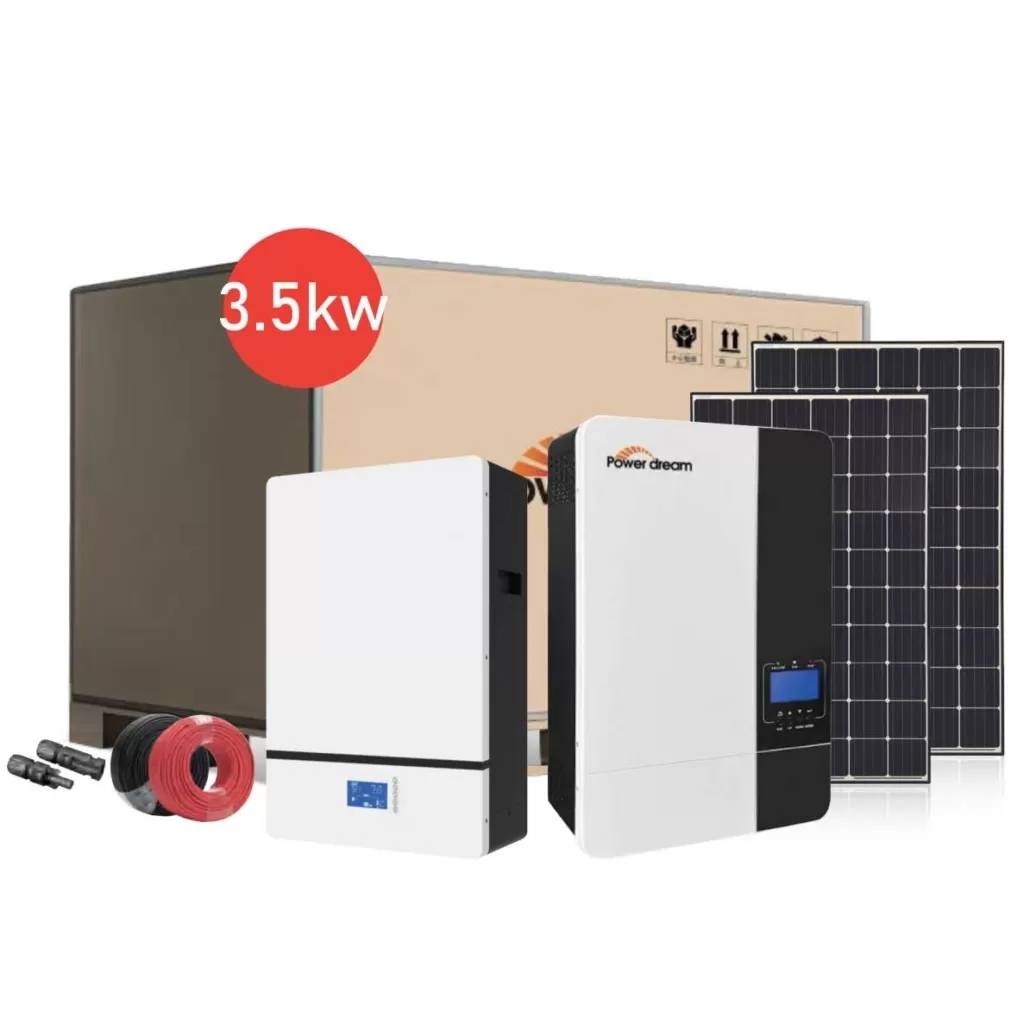
Example Scenario A (3 kW System):
- Daily Power Consumption: 6-8 kWh/day (Lighting, 1 kW/hour small water pump, refrigerator operation)
- PV Power Generation: 3.5 kWp (approximately 10-12 panels, 300-360 Wp each), calculated based on a worst-month PSH of 2-3, with a derating of 0.75
- Battery: 5-8 kWh usable capacity (e.g., 48 V, 100 Ah LFP battery pack), providing 1 day of continuous operation
- Inverter: 3-4 kW pure sine wave, surge power 6-8 kW
- Control Functions: MPPT charge controller, basic remote monitoring (cellular/LoRa), automatic pump start schedule
Practical Tips: Use high-efficiency monocrystalline silicon solar panels to reduce array footprint; add soft starters to the water pumps to reduce inverter surge requirements; schedule irrigation during periods of abundant solar energy to reduce battery cycle count.
Example Scenario B (7–10 kW Small Commercial):
- Daily Load: 25–35 kWh (larger cold storage, milking machine running 2–3 hours, lighting)
- PV: 8–12 kWp array
- Batteries: Nominal capacity 20–30 kWh, runtime 1–2 days
- Inverter: 8–10 kW hybrid inverter with 20–30 kVA surge capacity or parallel inverters
- Add automatic generator start-up capability to cope with prolonged periods of insufficient sunlight.
Smallholders can benefit from a modular system that scales capacity as income or grant funding increases.
Large Farms: 10 kW–30 kW Off-Grid Solar System
Use Cases: Large dairy farms, large irrigation systems, processing and cold chain, multi-building applications.
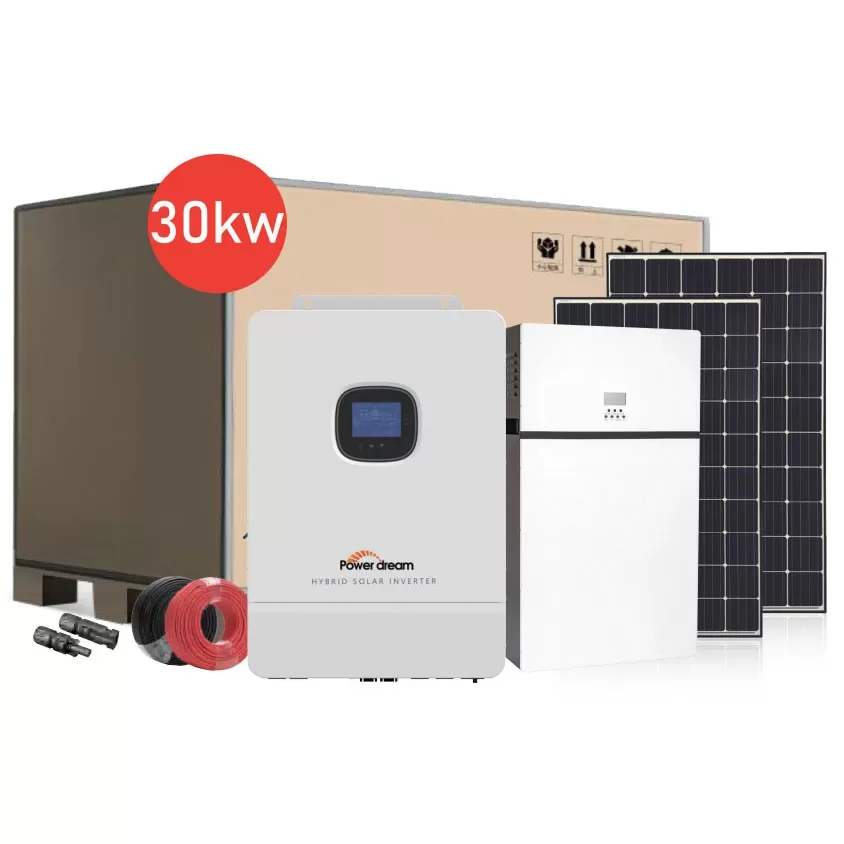
Example of a large farm (20 kW system):
- Daily base load: 150 kWh/day (large cold storage, multiple pumps, processing)
- PV power generation: 50–70 kWp, capacity determined based on pumped storage and derating factors during the worst month.
- Batteries: Nominal capacity 100–200 kWh, range 1–2 days
- Inverter architecture: Commercial hybrid inverters or stacked three-phase inverters providing 20–60 kW continuous power with coordinated control and generator synchronization.
- Power distribution: Three-phase AC distribution with N+1 redundancy.
Key design considerations for large farms:
- Use three-phase inverters or multiple inverters with a main energy management controller.
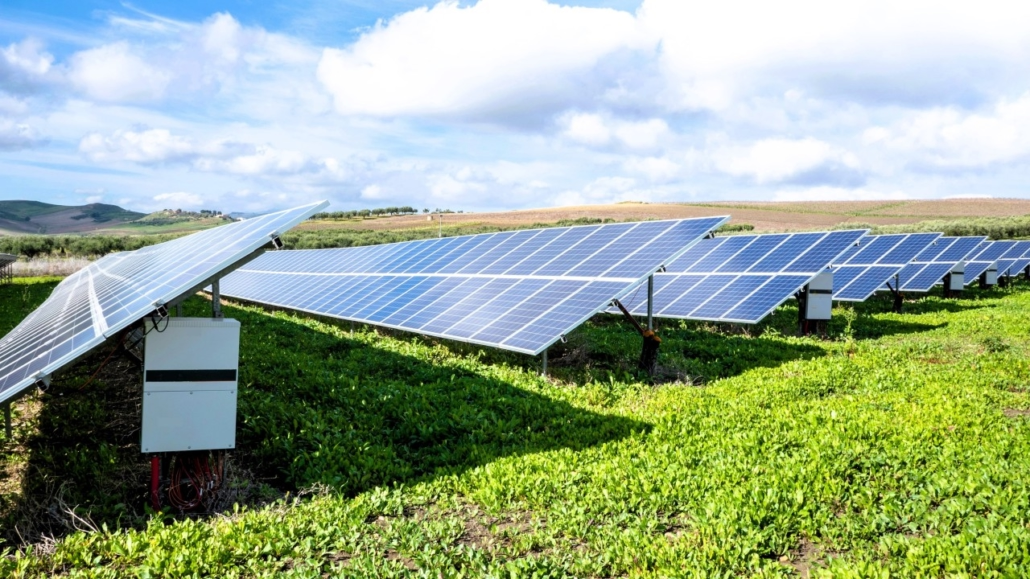
- Consider ground-mounted arrays or trackers: Trackers can increase daily output and reduce variations in PV area during peak irrigation seasons.
- Consider integrating diesel or biogas generators with automatic start-stop functionality to cope with long rainy seasons; use generators only as a last resort to reduce fuel costs.
- During sustained periods of low photovoltaic power generation, implement sub-metering by load type to enable targeted demand control and smarter load shedding.
- Large farms should treat the system as a microgrid, integrating SCADA, telemetry, demand-response logic, and planned maintenance windows.
Designing Robust Off Grid Solar Systems for Farms
Designing off-grid solar systems for farms requires quantifying actual loads, planning for the worst months of solar availability, determining battery capacity based on the required resilience level, and selecting an inverter architecture that matches peak power and surge demand. Small farms (3-10 kW) can typically use modular LFP batteries and a single hybrid inverter with appropriate load dispatch; large farms (10-30 kW and above) require a microgrid sensing and control system, three-phase power, and a combination of photovoltaic, energy storage, and backup generators. Of course, the first consideration should be energy-saving measures, using high-efficiency monocrystalline silicon solar panels where rooftop or land space is limited, and prioritizing modular, scalable battery systems so that investment can increase as demand grows.
