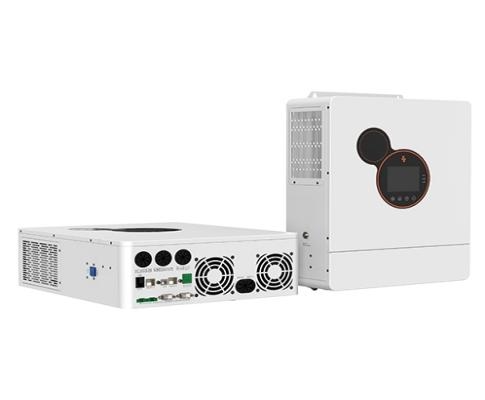
Off grid solar inverter: Multiple Protection Features Eliminate Short Circuit/Overvoltage Risks
When a remote off grid cabin relies on solar power and a battery bank, a single wiring error or voltage spike can derail your energy plans. That’s why choosing an off grid solar inverter with comprehensive protection is crucial. PowerDream’s off-grid solar inverters feature a multi-layered safety architecture, including PV reverse polarity protection, battery overvoltage protection, overload and short-circuit protection, temperature management, surge suppression, and integration with a battery management system (BMS) to prevent minor malfunctions from escalating into catastrophic consequences.
Essential Protection Features for Off Grid Solar Inverter
The first and foremost requirement is PV reverse polarity protection. One of the most common mistakes in rooftop or ground-mounted installations is reversing the PV connector: a reversed connector can damage diodes, stress the MPPT circuitry, and cause dangerous arcing. Therefore, professional off grid solar inverters are equipped with explicit PV reverse-polarity protection, which detects DC polarity at the input and prevents current flow until the polarity is corrected. PowerDream’s off-grid solar storage inverters employ dual hardware and firmware protections: the hardware blocks DC power in the event of reverse polarity, while the inverter’s control logic reports the fault to the monitoring interface and locks the device in a safe state. Furthermore, a DC surge protector at the photovoltaic input prevents damage to the inverter from high-voltage transients such as lightning strikes or grid switching.
Battery Overvoltage and Undervoltage Protection Functions in Off Grid Solar Inverter
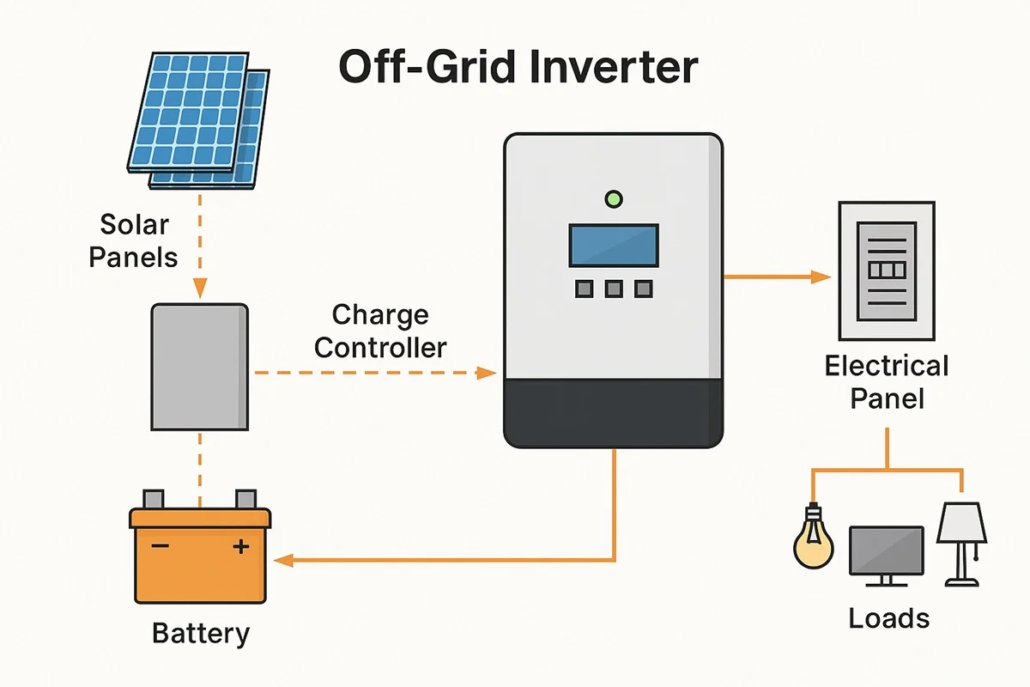
In off grid solar systems, the battery is the core of the entire device and the most sensitive component to inverter performance. An excellent off grid solar inverter must have robust battery overvoltage protection and undervoltage cutoff. If the battery is modular or a large-capacity pack, it must be integrated with an external BMS.
PowerDream’s off grid solar inverters support configurable charging cutoff voltage, absorption/float charging voltage, and SOC-based charging limits. In addition, the inverter includes a hardware relay and a fast electronic circuit breaker that trips when the battery voltage exceeds a safe threshold or when the BMS issues a critical fault signal. For lithium batteries, the inverter firmware supports temperature-compensated charging setpoints and charging current limits to prevent battery overvoltage. On the other hand, undervoltage protection prevents the inverter from operating below a safe battery voltage, thus protecting the battery from damage and extending cycle life.
Short Circuit Protection and Overload Handling Functions
Short circuits and overloads can occur in off grid systems: pump blockage, incorrect load wiring, lightning strikes, or cable faults can all cause the inverter to withstand extremely high currents. A reliable off-grid solar inverter must quickly detect short circuits and disconnect the affected output to limit fault current and prevent downstream damage. PowerDream employs multi-stage current protection: the inverter power stage is equipped with fast electronic overcurrent detection, clearing high current transients within microseconds; simultaneously, electromechanical relays or contactors trip when a fault persists. The overload protection function is adjustable and supports phased response. More importantly, the inverter logs fault events and reports fault details to a remote monitoring system, allowing technicians to diagnose the root cause without costly on-site service.
Advanced Protection, Environmental Protection, and System Integration for Off Grid Solar Inverter
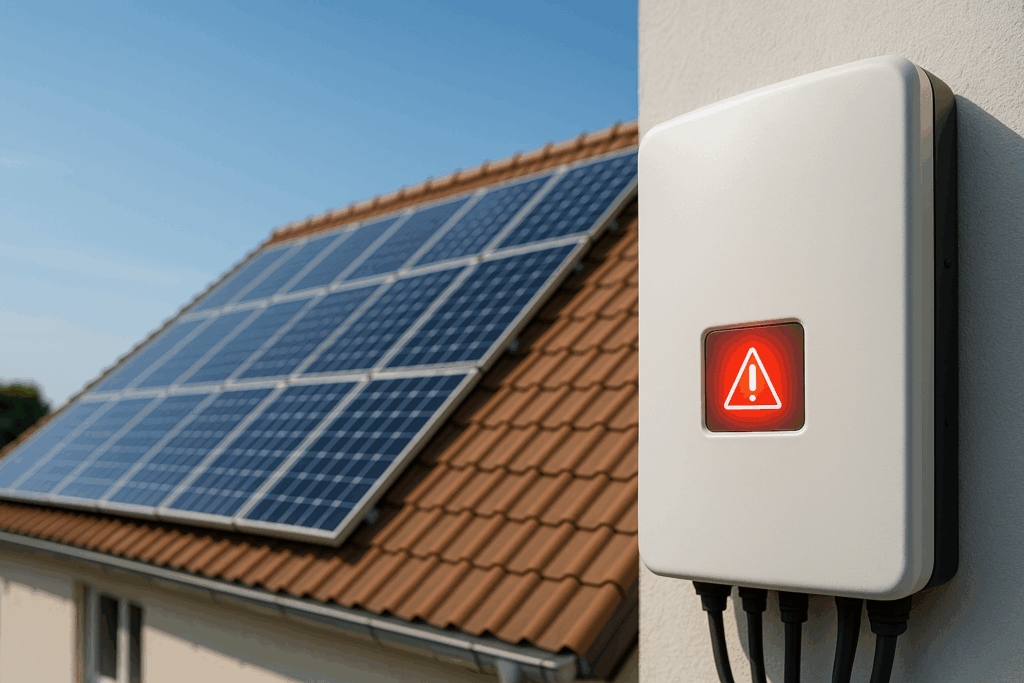
Thermal stress is a major cause of inverter failure. Off grid inverters typically operate in harsh, un-air-conditioned environments. Therefore, professional off grid solar inverters require active thermal monitoring, conservative thermal derating profiles, and a clear enclosure design to prevent thermal runaway. PowerDream’s BHYP off-grid solar inverter provides multi-sensor temperature monitoring and implements tiered thermal protection: it slowly drains when output power exceeds a set threshold; at extreme temperatures, it reduces the MPPT’s sensitivity to limit internal heat dissipation; and it forces a shutdown if the temperature exceeds safe operating limits. Additionally, for prolonged high-temperature operation, the inverter can notify the operator and record temperature trends to support preventive maintenance.
Surge Protection and Transient Voltage Suppression
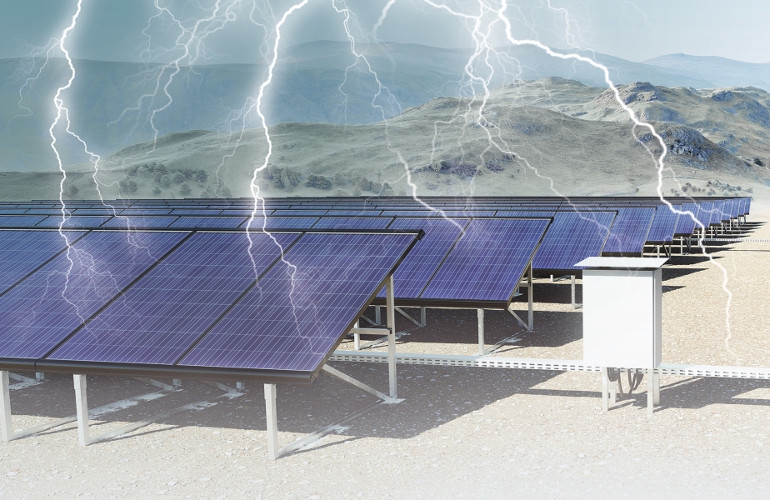
Lightning strikes and grid switching can generate transient overvoltages that can propagate into off grid systems via photovoltaic arrays, AC reverse power supplies, and even grounding systems. A robust off-grid design considers surge protection a critical feature. PowerDream integrates surge protection devices (SPDs) on both the PV DC side and the AC output/standby input side of the inverter. These SPDs are coordinated: a type 1/2 equivalent surge protector on the AC input side and a high-energy DC surge protector on the PV input side. Additionally, the inverter includes internal clamping circuitry and MOVs to absorb residual energy. Importantly, you can maintain and replace the SPD very conveniently; multiple surge events degrade its performance, so you must replace it to maintain its effectiveness.
Choosing a Protection-First Off Grid Solar Inverter
Choosing an off grid solar inverter is not simply about selecting the kilowatt rating; it’s more about choosing a protection-first architecture to prevent wiring errors, battery damage, overheating failures, and sudden transient events. PowerDream’s off-grid solar storage inverters integrate hardware and firmware protection features, including photovoltaic reverse-polarity protection, battery over- and under-voltage handling, short-circuit and overload trip coordination, temperature protection, and surge protection. These features work together to ensure the safe and efficient operation of off-grid systems.