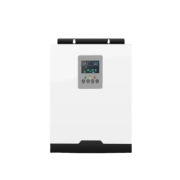

How does Power Dream’s hybrid inverters maximize solar energy utilization with an MPPT efficiency of 99%?
In such a dynamic environment, every watt of electricity generated by a photovoltaic array is crucial. Power Dream’s hybrid inverters precisely capture this fleeting power and convert it into usable energy, thanks primarily to the industry-leading 99% efficiency of its MPPT subsystem. We will explain, from a practical engineering perspective, how our hybrid inverters and system-level design solutions maximize solar energy utilization and are suitable for various deployment models—from small residential hybrid solar power systems to large commercial grid-connected hybrid inverter arrays.
The Importance of 99% MPPT Efficiency for Hybrid Inverters
Maximum Power Point Tracking (MPPT) is the core algorithm of any hybrid inverter in a hybrid solar power system. MPPT continuously adjusts the electrical operating point of the photovoltaic array, enabling the panel to produce the maximum possible power under given instantaneous irradiance and temperature conditions. Overall, a 1-2% difference in MPPT efficiency translates into a significant amount of extra energy gained annually, and 99% MPPT efficiency transforms this slight difference into an important, measurable benefit.
First, the 99% efficient MPPT captures almost all extractable power, even under rapidly changing irradiance conditions, by narrowing the search step, reducing conversion jitter, and quickly converging to the actual maximum power point.
Second, in hybrid solar power systems utilizing battery storage, 99% MPPT efficiency improves the charging acceptance rate. The battery’s charging acceptance rate depends on its state of charge (SOC): when the SOC is low, the battery can accept higher charging power; when the SOC is high, the charging acceptance rate decreases.
Third, the 99% MPPT subsystem can reduce the overall levelized cost of electricity (LCOE) by increasing the amount of electricity generated over its lifespan without changing the installed PV capacity. This is especially important for systems with limited roof space, high component costs, or limitations on additional PV installations. Finally, MPPT efficiency interacts with other advanced features, such as dynamic maximum power point tracking under partial shading, multi-string or multi-MPPT topologies, and machine-learning-assisted irradiance change prediction, thereby further increasing power generation.
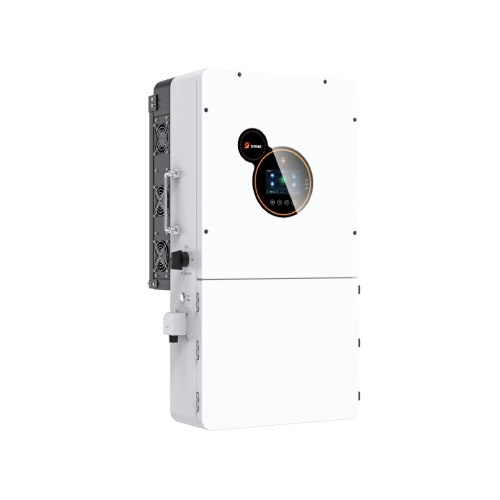
How does Power Dream’s hybrid inverters design support maximum energy harvesting?
Power Dream’s hybrid inverter architecture is optimized end-to-end: the front-end PV capture, MPPT stage, DC bus management, and inverter output stage work together to achieve highly efficient energy transfer. Three key architectural pillars enable this: multi-MPPT segmentation, high-resolution sensing and control, and advanced DC link management.
Multi-MPPT Segmentation: In commercial and residential hybrid solar power systems, string mismatch and partial shading can cause different strings to exhibit different I-V curves under the same irradiance. Power Dream implements multiple MPPT channels, each tracking with near single-module resolution. Each MPPT channel runs its own algorithm, achieving up to 99% efficiency, so shaded strings do not drag down the entire array’s performance.
High-Resolution Sensing and Control: To achieve 99% MPPT efficiency, the hybrid inverter must sample PV voltage and current with high precision and high sampling rate. Power Dream employs high-bandwidth analog-to-digital converters (ADCs), a compact analog front-end design, and digitally compensated measurement paths to reduce noise and measurement errors.
DC Bus and Power Stage Optimization: Power Dream’s hybrid inverter utilizes a low-loss DC bus topology, minimizing the number of DC-DC conversions.
Finally, firmware-level energy orchestration seamlessly coordinates MPPT output, battery charging setpoints, and load prioritization. Power Dream’s optimization strategy maximizes on-site PV utilization while ensuring battery protection and safety.

Energy Savings, Extended Lifespan, and Grid Services Support
Hybrid solar power systems rely on batteries to convert intermittent PV generation into continuous power. Power Dream’s hybrid inverter precisely manages battery charging, achieving 99% maximum power point tracking (MPPT) energy harvesting without compromising battery lifespan.
Charging Accuracy: With high MPPT efficiency, the inverter can deliver more energy to the battery faster. However, batteries have limited capacity and require specific charging curves and temperature-compensated voltages. Power Dream’s hybrid inverter supports programmable charging curves and fast constant-current charging, intelligently adjusting charging rates as PV power increases. This ensures that the extra energy gained from 99% MPPT efficiency does not force the adoption of aggressive charging modes, thus avoiding shortening battery life.
Thermal-Aware Charging and BMS Integration: Batteries perform optimally within specific temperature ranges. The hybrid inverter monitors battery temperature by communicating with the BMS and adjusts charging voltage and current accordingly. If high MPPT energy harvesting coincides with high battery temperatures, the inverter reduces the charging rate to avoid thermal stress while prioritizing critical load demands.
Intelligent SOC and Peak Shaving Strategies: Power Dream’s hybrid inverters employ predictive SOC management to optimize both self-consumption and grid-connected performance. In off-grid hybrid solar power systems, the inverter prioritizes maintaining the reserve SOC required to meet peak nighttime electricity demand. For grid-connected hybrid inverter systems with grid output capability, the inverter can flexibly output surplus energy while maintaining a minimum battery reserve.
Furthermore, the hybrid inverter’s fast response capabilities enable it to act as a dynamic buffer during transient changes in cloud cover, smoothing photovoltaic power delivery to connected loads and reducing battery cycling stress.
MPPT Tracking Algorithms, Prediction, and Adaptive Control for Solar Utilization
High MPPT efficiency is necessary, but not sufficient. Power Dream’s hybrid inverters employ multi-layered adaptive algorithms and predictive models to translate MPPT gains into continuous system-level optimization. These features include intelligent ramp detection, integration of irradiance prediction, and load prioritization heuristics.
Intelligent Ramp Detection and Dynamic Step Size Control: MPPT search strategies must be fast enough to capture transient irradiance peaks while being stable enough to avoid oscillatory behavior. Power Dream’s MPPT uses dynamic step-size control, increasing search intensity during rapid irradiance increases and decreasing it during steady-state conditions to prevent overshoot. This approach improves capture rates during ramp events and prevents reduced MPPT efficiency due to micro-oscillations.
Prediction-Based MPPT and Charging Planning: By integrating short-term irradiance forecasts, the hybrid inverter can proactively plan the battery charging and discharging sequence. If the system predicts stormy weather, it can maintain a higher state of charge (SOC) to cope with cloudy conditions; if it predicts a sunny afternoon, it can release more power in advance to increase daytime load compensation.
Load-aware MPPT allocation: In a hybrid solar power system with critical and optional loads, the inverter dynamically allocates harvested energy according to priority. For example, when photovoltaic power generation reaches its maximum, the hybrid inverter will prioritize powering immediate loads and charging the battery, and only after these loads are satisfied will it begin to output optional power.
Maximizing solar energy utilization into tangible value
Power Dream’s hybrid inverters are meticulously designed to capture, manage, and convert virtually every watt of solar energy into tangible value, boasting an industry-leading MPPT efficiency of up to 99%. By combining advanced multi-MPPT architecture, intelligent system-level control, seamless battery integration, and robust thermal and reliability design, each hybrid inverter becomes the core intelligent control unit of a high-performance hybrid solar power system. This comprehensive approach not only maximizes solar energy utilization under varying weather and load conditions but also extends battery life and reduces reliance on the grid.