
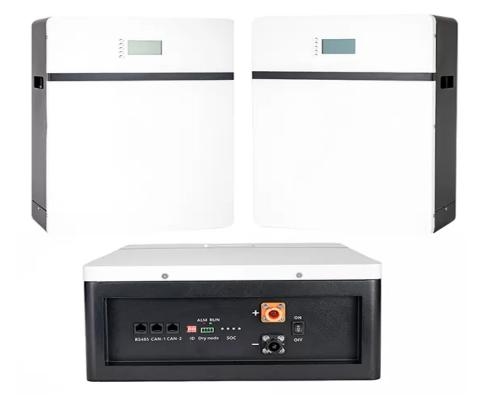
200Ah Solar Battery: Multi-Charging Modes Solve Energy Shortages in Cloudy Weather
For some households and small businesses that rely on photovoltaic (PV) power systems, their limitations become apparent on cloudy days. Modern energy storage systems centered around 200Ah solar batteries no longer rely solely on sunlight. By combining MPPT solar charging, priority grid AC charging, and hybrid charging logic, a 200Ah solar battery becomes a flexible and reliable energy asset, ensuring basic living needs while maximizing the use of renewable energy.
When a 200Ah solar battery employs multiple charging modes, redundancy, speed, and adaptability are improved. Solar charging remains the primary source of zero-marginal-cost energy. When solar power is insufficient, grid AC charging is prioritized as a backup. Hybrid charging intelligently coordinates the two power sources. Therefore, regardless of weather conditions, users can obtain a continuous, clean, and economical power supply.
The Importance of Multiple Charging Modes for a 200Ah Solar Battery
MPPT solar charging of 200Ah solar batteries can extract maximum energy from PV cells under varying light intensities. Priority grid AC charging provides a deterministic, programmable backup solution to situations where PV cell performance is insufficient. Hybrid charging intelligently coordinates photovoltaic (PV) and AC charging: it can charge the battery from the grid during off-peak electricity periods, accept simultaneous PV and grid charging when safe, or delay grid charging when grid carbon emissions are high. Therefore, multiple charging modes transform the 200Ah solar cell from a passive energy storage device into a dynamic energy optimizer. This foundation is crucial because capacity alone cannot guarantee a continuous power supply; control logic and the charging source determine how effectively the 200Ah capacity meets actual needs.

Performance of the 200Ah solar battery’s solar charging modes under cloudy conditions
Maximum Power Point Tracking (MPPT) is the core technology for the 200Ah solar battery’s efficient harvesting of PV energy, functioning even in low-light or diffused conditions. The MPPT charge controller regulates voltage and current to keep the PV module operating at its peak power point. In cloudy weather, where sunlight intensity fluctuates rapidly, MPPT responds quickly as cloud edges move, restoring power output within seconds. However, under overcast conditions, photovoltaic (PV) output power can drop to 10% to 30% of its peak under clear skies, and even the best MPPT (Maximum Power Point Tracking) cannot compensate for the unavailable energy.
Therefore, when a 200Ah solar battery relies on solar charging on cloudy days, two practical strategies can help: first, increase the capacity of the PV array to exceed average daily electricity consumption; second, use a high-efficiency MPPT to charge for a longer period at a lower current. Increasing the capacity of the PV array increases the likelihood of generating effective charging power even under low light intensity.
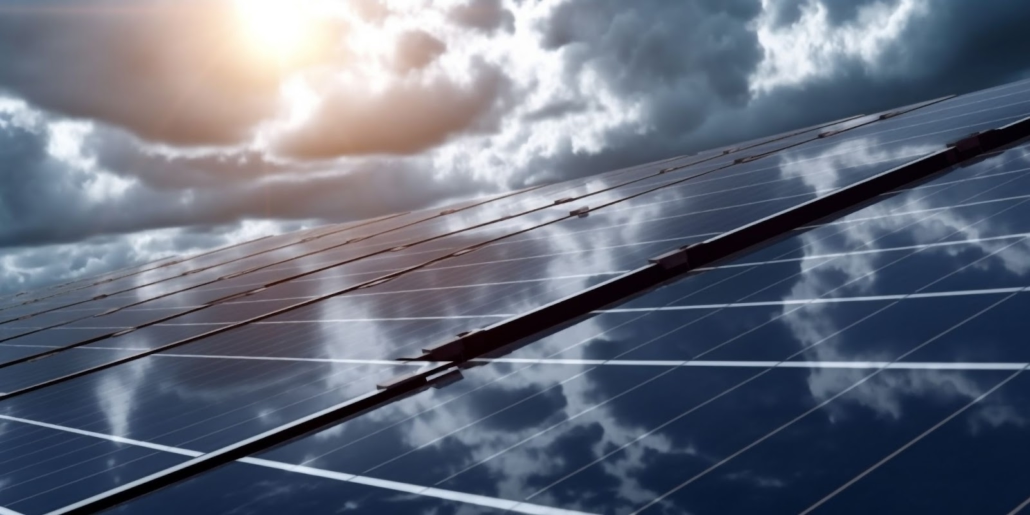
Priority Grid-Connected AC Charging Provides Safety During Prolonged Cloudy Days
When PV power generation cannot meet electricity demand for an extended period, the priority grid-connected AC charging function ensures the 200Ah solar battery remains safe. In this mode, the system defaults to solar charging. Still, it automatically switches to grid charging when the battery’s state of charge (SoC) falls below a configurable threshold or when planned recharging is required. For users requiring a reliable backup power source, the priority grid-connected AC charging function can prevent deep battery discharge and its associated operational risks.
Under cloudy conditions, the inverter/charger monitors the battery’s state of charge (SoC) and photovoltaic input power. If cloud cover suppresses photovoltaic power generation for several hours, causing the battery’s SoC to drop to near the standby capacity threshold, the controller will initiate AC charging. Importantly, modern hybrid inverters allow you to configure priorities and charging timing rules: you can set grid charging to occur only during off-peak hours to reduce costs, or to occur whenever standby capacity falls below a preset threshold. Furthermore, priority grid AC charging can be adjusted to minimize battery stress. This charging method extends battery cycle life and provides rapid-response backup power during prolonged cloudy periods.
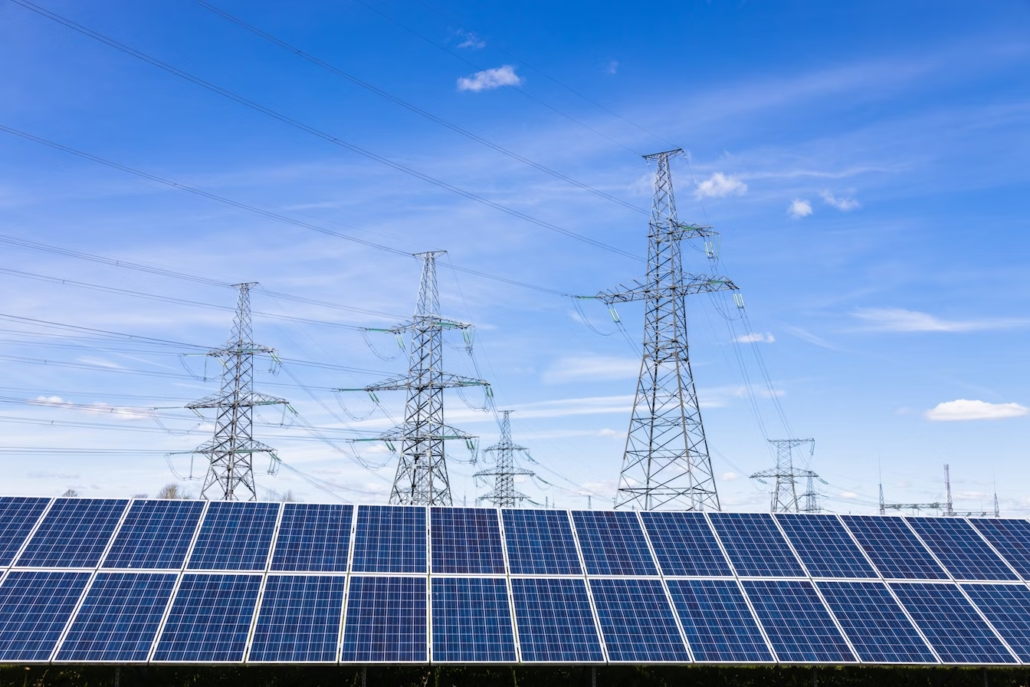
Hybrid Charging Balances Cost, Carbon Emissions, and Reliability
Hybrid charging is the state-of-the-art approach for managing 200Ah solar cells. It integrates photovoltaic, grid, and optional generator power to reduce costs, decrease carbon emissions, or ensure availability. Hybrid charging systems rely on an energy management controller and communication between the photovoltaic MPPT, the inverter/charger, and the battery BMS.
Assuming a weather forecast predicts low sunlight intensity for the next 48 hours. The hybrid charging mode can pre-charge the 200Ah solar battery during off-peak electricity periods; automatically reduce non-critical loads; and only activate priority grid AC charging when photovoltaic (PV) generation falls short of minimum targets. Conversely, when grid renewable energy generation is high, the hybrid controller may accept grid supplemental power to extend battery life and reduce generator uptime. Hybrid charging also supports simultaneous PV and AC charging within the system, provided the battery can accept both simultaneously without exceeding its C-rate or Battery Management System (BMS) limitations. The hybrid charging mode of the 200Ah solar cell maximizes flexibility for power use on cloudy days.
Ensuring a Reliable Energy Supply Even on Cloudy Days
Equipped with multiple charging modes, including solar charging, priority grid AC charging, and smart hybrid charging, the 200Ah solar battery transforms energy storage from a simple backup power source into a dynamic, highly resilient system. Whether it’s cloudy weather, prolonged overcast days, or fluctuating load demand, the combination of solar harvesting, grid support, and hybrid smart technologies ensures power is available when you need it most.

