

Are hybrid solar power systems more efficient than off-grid systems?
Two neighboring farms have both installed solar panels and batteries. Still, one connects its system to the local grid using a hybrid solar power system, while the other operates completely off-grid. During variable weather and peak evening demand, one system seamlessly draws power from the grid when needed and sells excess solar power back to the grid during midday; the other carefully conserves battery power and sometimes activates a backup generator. Which approach is more energy efficient? The answer depends on how you define efficiency. We will analyze the evidence and trade-offs from a professional engineering perspective to help you decide whether hybrid solar power systems or a completely off-grid solution better meets your efficiency, resilience, and environmental goals.
Hybrid Solar Power Systems vs. Off-Grid Systems
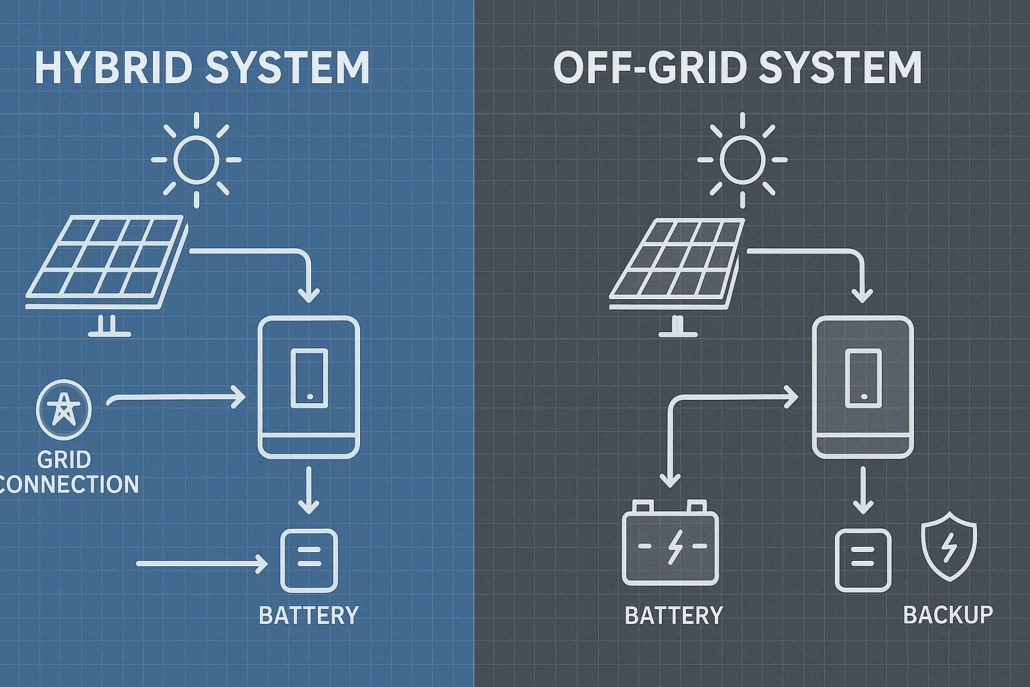
A hybrid solar power system integrates photovoltaic power generation, energy storage, and grid connection. It allows for bidirectional power flow: solar to load, solar to battery, solar to grid (export), and grid to battery or load when needed. In contrast, an off-grid solar system operates independently, balancing generation, storage, and consumption needs without drawing power from the public grid. Off-grid systems typically include a backup diesel generator to ensure reliable operation during extended periods of insufficient sunlight.
Key architectural differences determine how we compare efficiency:
- Energy Sources and Flexibility: Hybrid solar power systems can utilize the grid as an additional energy “source” or “sink.” Off-grid systems are limited to on-site generation and storage.
- Operating Strategy: Hybrid solar systems can optimize charging and discharging behavior based on time-of-use pricing, grid carbon intensity, or export incentives. Off-grid systems are optimized solely for local generation and storage management.
- Loss Pathways: Hybrid systems introduce increased component and control complexity (inverters, grid relays), but benefit from the grid’s balancing capabilities. Off-grid systems avoid some losses (no grid export circuitry), but may experience increased generator run time and reduced battery cycling efficiency.
Efficiency is multidimensional: we can discuss technical, economic, and environmental efficiency. In many cases, hybrid solar systems can improve overall efficiency by reducing energy waste and optimizing scheduling across more options. However, the specific results depend on the system design, local grid carbon emission structure, electricity pricing mechanisms, climate patterns, and load profiles.
Key Metrics for Measuring the Efficiency of Hybrid Solar Power Systems
Before determining which method is “more efficient,” it’s important to define the metrics used to measure it. We typically use the following core metrics:
- System Round-Trip Efficiency (RTE): For comparisons centered on energy storage, RTE measures the energy returned to the load divided by the energy input to the battery. A higher RTE means less energy is lost during the energy storage cycle.
- Self-Consumption Rate (SCR): The proportion of on-site solar power generated that is consumed locally rather than exported to the grid. Off-grid systems typically aim for a self-consumption rate close to 100%; hybrid solar systems can adjust the self-consumption rate based on the economic benefits of grid export.
- Self-Sufficiency Rate (SSR): The proportion of total load supplied by on-site generation over a period of time. Off-grid systems aim for SSR = 100%; hybrid systems aim for a high SSR, but can draw power from the grid when necessary.
- Net Carbon Emission Reduction: This refers to the cumulative carbon dioxide emissions avoided by using on-site solar and energy storage systems compared to baseline grid consumption and generator use.
Hybrid solar power systems typically improve real-time energy efficiency (RTE) in practice by reducing unnecessary battery cycling and generator starts. For example, if the grid provides low-carbon or low-cost electricity during certain periods, a hybrid energy management system (EMS) can use this energy rather than curtail PV generation or inefficiently cycle batteries. Conversely, purely off-grid systems may force batteries to extreme depths of discharge (DoD) or require frequent generator starts, reducing cycle efficiency and increasing effective losses per kilowatt-hour (kWh).
Energy Conversion and Storage Efficiency Compared to Off Grid Systems
From a technical perspective, efficiency losses occur in the conversion (PV → DC → AC), in storage (battery charging and discharging), and in any auxiliary power generation. Let’s look at how hybrid solar systems differ from off grid solar systems. Inverter and Conversion Losses: Both systems use inverters and charge controllers; modern hybrid inverters integrate multiple power-electronics modules to handle current from PV, batteries, and the grid. Under optimal load, inverter conversion efficiency can reach 95% to 98%. Hybrid solar power systems may introduce additional conversion steps during grid charging and discharging, but advanced designs minimize these extra losses through efficient topologies.
Battery Round-Trip Efficiency (RTE): Typical lithium-ion batteries currently have an RTE of 85%–95%. Off grid systems that rely heavily on battery cycling experience numerous cycles and are therefore highly sensitive to RTE and depth of discharge. Hybrid solar power systems can reduce the number of deep cycles by using grid power during prolonged periods of low solar irradiance or by exporting excess solar energy when the battery is fully charged, thereby reducing overall battery throughput and extending battery life.
For many practical applications, the greater flexibility of hybrid systems translates to higher system-level efficiency: it minimizes fuel consumption, reduces unnecessary deep battery cycling, and maximizes the utilization of PV assets across multiple loads.
Operational Flexibility and Practical Performance Comparison
The operating strategy determines whether a hybrid solar power system actually delivers higher efficiency in practice.
Hybrid solar systems equipped with modern EMS can optimize charging and discharging based on forecasts, electricity prices, and carbon intensity. Consider the following three scenarios:
- Solar-Priority Mode: The system first uses available PV generation to meet load demand and charge the battery, drawing power from the grid only when the energy storage system is depleted. This maximizes the use of local renewable energy and reduces electricity imports.
- Economic Mode: The EMS charges the battery from the grid during off-peak electricity prices and discharges it during peak prices, thus reducing electricity costs but not necessarily minimizing carbon emissions.
- Carbon-Aware Mode: The EMS primarily charges the battery using solar energy or low-carbon grid periods (e.g., nighttime nuclear or low-carbon power supply) and discharges during high-carbon grid periods to minimize emissions.
Off-grid systems lack these grid-interactive capabilities. They must prioritize reliability, maintain sufficient energy storage to sustain autonomous operation, and use generators as backup power when needed. Off-grid systems maximize independence but may sacrifice efficiency when generator usage increases during the rainy season. Hybrid solar power systems, on the other hand, strive to strike a balance: maintaining autonomous operation during short power outages and drawing on grid power during prolonged periods of low sunlight. In many commercial applications, hybrid generators can reduce operating time by 60% to 90% compared to off-grid generators with equivalent autonomous operation capabilities. This reduction can significantly save fuel and improve operational efficiency.
Choose the right system based on your energy efficiency goals and site conditions.
The choice between a hybrid or off grid system depends on clear objectives:
If the grid is reliable, a hybrid solar power system is generally superior to an off-grid system in terms of efficiency and economics. Off-grid systems are more suitable where there is no grid or the grid is unreliable, and energy independence is essential. Furthermore, if you require weeks of autonomous operation, the off-grid system must be large enough, even if efficiency is slightly lower. For most residential and commercial users, a hybrid system with a moderately sized battery capacity provides sufficient reliability and higher efficiency.
Additionally, for homes with flexible loads, hybrid solar systems can shift energy consumption to low-carbon periods, thereby achieving higher actual energy efficiency. Fixed, always-on critical loads, however, require larger energy storage capacity and may even necessitate off-grid power.
Consider multiple dimensions to make the best choice for you.
Are hybrid solar power systems more efficient than off-grid systems? In most real-world applications with a reliable grid, the answer is yes—hybrid systems are generally more efficient overall. They reduce generator usage, avoid the need for unnecessarily oversized battery banks, and enable smarter scheduling, extending equipment lifespan and minimizing lifecycle carbon emissions. However, if absolute independence is necessary, an off-grid system is the only option.

