
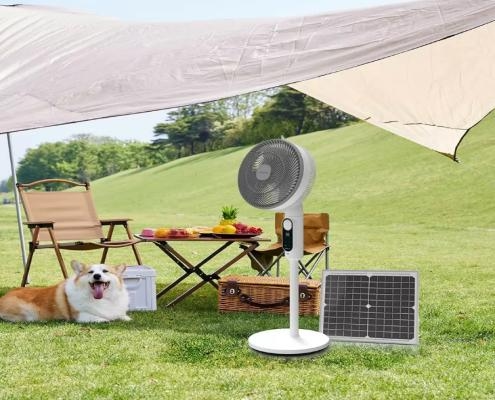
Solar Outdoor Fan vs Traditional Outdoor Fan: Energy Savings & Environmental Impact
Traditional outdoor fans hum loudly while running and continuously draw power from the grid; solar-powered fans, on the other hand, silently sense when someone approaches, and their soft LED lights illuminate, increasing airflow only when someone enters their range. During the evening, a solar outdoor fan can operate without consuming any electricity. Which device would you choose to run for a season? Which one can help your brand or family achieve sustainability goals? We will answer this question through technical principles and real-world examples.
Solar Outdoor Fan with Solar and Battery Charging
A typical solar outdoor fan isn’t just a fan motor with a solar panel on the roof—it’s a complete energy system designed to capture energy from sunlight, store it, and release it in a controlled manner.
Core Components and Operation of a Solar Outdoor Fan:
Photovoltaic (PV) Modules (Solar Panels): Photovoltaic cells convert sunlight into direct current (DC) electricity. Panel size varies by model; typical home solar fans use 20-80-watt panels, depending on power and runtime requirements.
Battery Storage: Lithium-ion or lead-acid batteries store electricity for use at night or on cloudy days. Battery capacity determines the runtime.
Charge Controller/MPPT: Manages the charging process to maximize solar energy utilization, protect the battery, and prevent overcharging. Modern controllers use Maximum Power Point Tracking (MPPT) technology to improve efficiency.
Dual Charging (Solar + AC): PowerDream solar fans support both solar charging and AC power supply. This means the fan can run entirely on solar power when available, or use grid power when needed. Dual charging increases reliability and simplifies size selection.
Performance Impact:
When there is sufficient sunlight, the fan draws power directly from the photovoltaic array, while the battery is also charging. When there is insufficient sunlight, the system uses stored energy. If the battery is low or if the user requires it, the battery can be quickly recharged via AC power, or the fan can be powered directly. DC motors and appropriate controls maximize efficiency; furthermore, brushless DC motors are typically 30-50% more efficient than comparable AC induction motors used in traditional fans. In short, a solar-powered outdoor fan is an integrated miniature energy system. Its design choices, including photovoltaic power, battery capacity, motor type, and intelligent control, determine its energy independence and environmental performance.
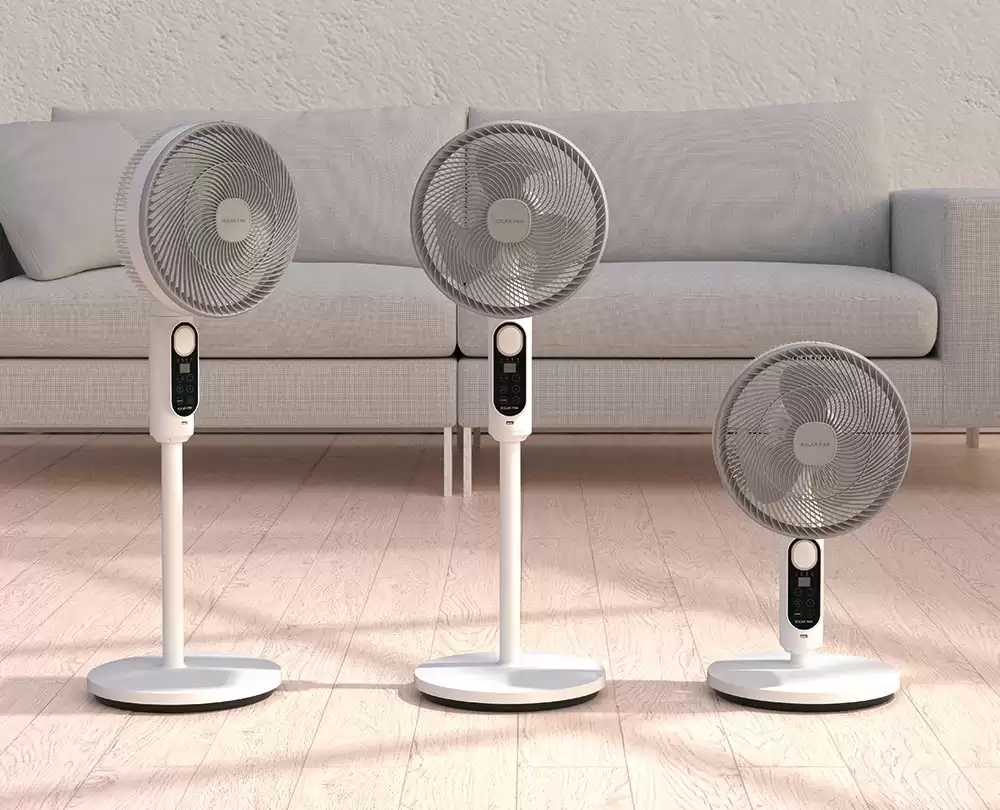
More Energy Efficient Compared to Traditional Outdoor Fans
Energy efficiency is the benefit most valued by many customers. To assess this, we compare the energy consumption over the lifecycle of a solar outdoor fan with that of a traditional outdoor fan.
Define a typical usage scenario. For example: a patio fan with a rated power of 50 watts, running 8 hours per night, 120 days per year.
Traditional fan energy consumption: 48 kilowatt-hours per season. At a US residential electricity price of $0.15/kWh, this is $7.20 per season.
Solar fan energy: If the solar fan is appropriately sized and the average daily solar power generation is sufficient to support its operation, then grid energy consumption can be zero during these periods. In this case, the operating energy cost from the grid is zero; however, implicit energy and battery charging efficiency losses must be considered.
Solar + AC hybrid operation: If the fan uses solar power during the day and only AC power during extended cloudy periods, the net grid load can be reduced by 70% to 100%, depending on battery capacity and usage patterns.
In many homes, PowerDream customers have found that replacing traditional AC fans with appropriately sized solar fans reduces daily grid energy consumption on porches and patios by 60% to 100%. Therefore, if properly sized, a solar-powered outdoor fan can eliminate most or all grid energy consumption.
Environmental Impact: Carbon Emissions, Lifecycle Analysis, and Materials
Energy efficiency means reduced environmental impact, but responsible buyers must look beyond immediate electricity consumption. A careful consideration should also include production emissions, material selection, battery life, and end-of-life recycling.
Key Environmental Factors:
1. Operational Carbon Reduction
If a solar fan saves 50 kilowatt-hours per year compared to a traditional fan, at 0.4 kg of CO2 equivalent per kilowatt-hour, this translates to approximately 20 kg of CO2 emissions per year. Over its 10-year lifespan, each fan can reduce approximately 200 kg of CO2 emissions – a significant impact when scaled up.
2. Embodied Emissions
The production of photovoltaic modules, batteries, electronic components, and metal casings all generates emissions. For small solar fans, component production accounts for the majority of embodied energy, but this proportion is relatively small compared to household photovoltaic modules.
Life cycle assessments (LCA) typically show that photovoltaic power generation devices can recoup their embodied emission costs within months to years. After recouping these costs, their net lifecycle emissions are lower than those of comparable grid-connected devices.
4. Net Environmental Conclusion:
Properly designed and deployed solar outdoor fans have a lower life-cycle carbon footprint than traditional grid-powered fans, and their operating costs can be recovered quickly. Intelligent control strategies extend battery life and enhance environmental benefits by minimizing unnecessary cycles.
Solar Outdoor Fans with Intelligent Control
Intelligent control systems are key to improving the efficiency of passive solar systems. PowerDream’s series of solar outdoor fans uses human detection technology and adaptive management features, offering three main advantages: energy savings, improved comfort, and enhanced safety.
When the sensor detects a person, the fan accelerates to a preset comfortable speed, and the lights brighten. When the sensor does not detect a person for a set period, the system dims the lights and enters an energy-saving standby mode, or reduces the fan speed. Furthermore, PowerDream integrates fan control with LED lighting. This means the fan provides both ventilation and localized lighting, enhancing the device’s value across different settings. Additionally, if solar power generation is insufficient or the battery level is low, the system can automatically request AC power assistance to ensure continuous comfort.
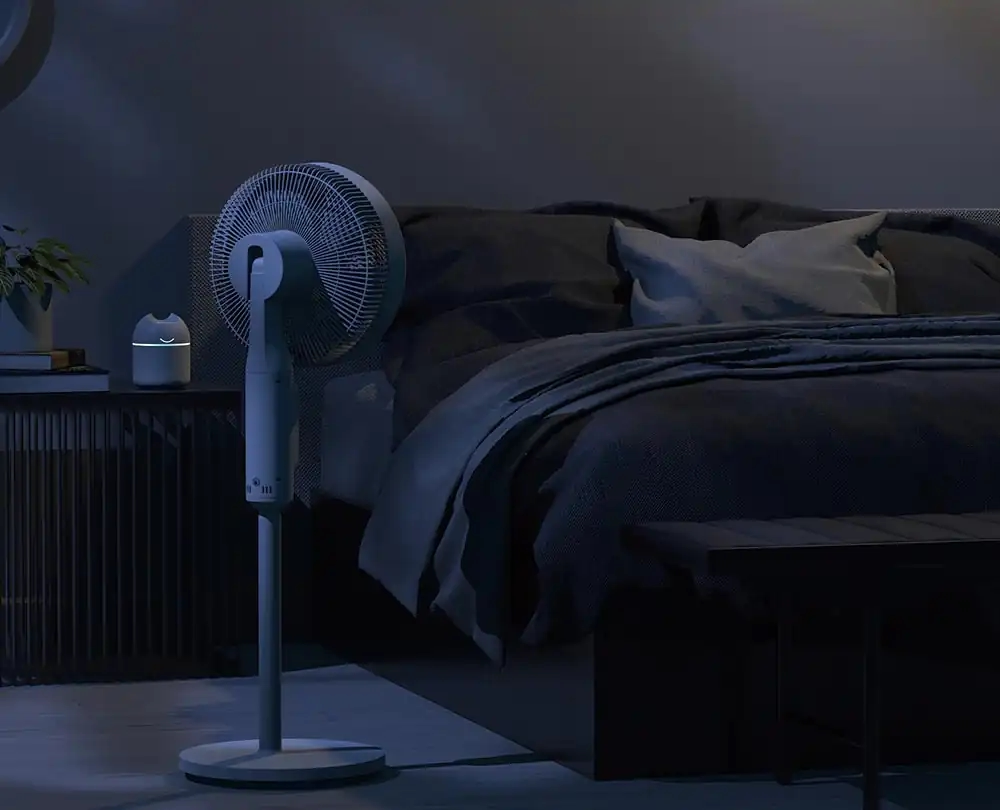
Delivering Real Energy and Environmental Benefits
A solar outdoor fan is more than just a highly efficient motor; it’s a miniature renewable energy system that can replace or supplement grid power, reduce carbon emissions, and improve living comfort. PowerDream’s combination of dual solar and AC charging, high-efficiency brushless DC motors, MPPT charging control, and intelligent human detection technology effectively reduces operating energy consumption, extends battery life, and delivers a hands-free, comfortable experience unmatched by traditional outdoor fans.
Frequently Asked Questions about Solar Fans
1. Can solar outdoor fans run solely on solar power, or do they always require a grid backup power supply?
A1: A properly sized solar outdoor fan can operate entirely on solar power on sunny days. PowerDream’s design supports both pure solar operation and a hybrid mode with AC power backup. To ensure continuous operation during prolonged cloudy periods, an AC backup power supply or a larger battery storage system can be used.
2. How much energy can a solar outdoor fan save compared to a traditional fan?
A2: Energy savings vary depending on location and usage. In many residential settings, a properly sized solar fan can reduce grid energy consumption by 60% to 100%. The motion sensor function can significantly reduce effective operating time, thereby multiplying energy savings.
3. Can solar fans work at night or on cloudy days?
A3: Yes – if the system is equipped with battery storage, the fan can operate at night or on cloudy days. The operating time depends on the battery capacity and the amount of solar energy collected beforehand. Solar + AC hybrid fans can use mains power when the battery is depleted.

