
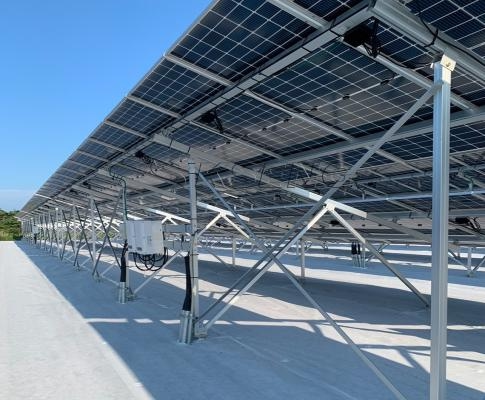
Aluminum Alloy Solar Mounting System: Lightweight & High-Strength for Easy Installation
When evaluating the efficiency of solar power systems, most people focus on the conversion rate of solar panels or the stability of inverters, neglecting a critical component that directly affects system lifespan and operational efficiency: the solar mounting system. According to data from the International Renewable Energy Agency (IRENA), poorly performing solar mounting systems can reduce overall power generation efficiency by 5%-15% and shorten the lifespan by more than half. This is precisely where PowerDream, as a professional solar product manufacturer, excels. Our solar mounting system is made of aluminum alloy and stainless steel (A2-70, SUS304/410). These systems not only address common pain points of traditional brackets, such as heavy weight, difficult installation, and susceptibility to corrosion, but also achieve a perfect balance between lightweight design and high strength, ensuring a stable service life of 20-25 years, even in harsh environments.
Aluminum Alloy: The Lightweight Material in Solar Mounting System
Material selection is fundamental to high-quality solar mounting systems, and aluminum alloy stands out among many materials due to its unique properties. Unlike traditional steel brackets, which are prone to rust and heavy, PowerDream solar mounting systems use high-purity aluminum alloy that undergoes rigorous heat treatment and surface anodizing. This material has a density of only 2.7 g/cm³, which is 35% of carbon steel, making the entire solar mounting system significantly lighter.
For example, a mounting system for a 10kW rooftop solar project weighs only 300-400kg, while a traditional steel system of the exact specifications weighs 800-1000kg. This lightweight advantage is particularly evident in rooftop installations: it can reduce the load-bearing pressure on the building’s roof by more than 50%, eliminating the need for additional roof reinforcement and saving significant construction costs and time. At the same time, the anodized layer on the aluminum alloy brackets is more than 10 μm thick, effectively resisting oxidation, acid rain, and salt spray corrosion, making it suitable for harsh environments such as coastal areas, industrial zones, and high-altitude regions.
Hybrid Design with Stainless Steel for High Strength
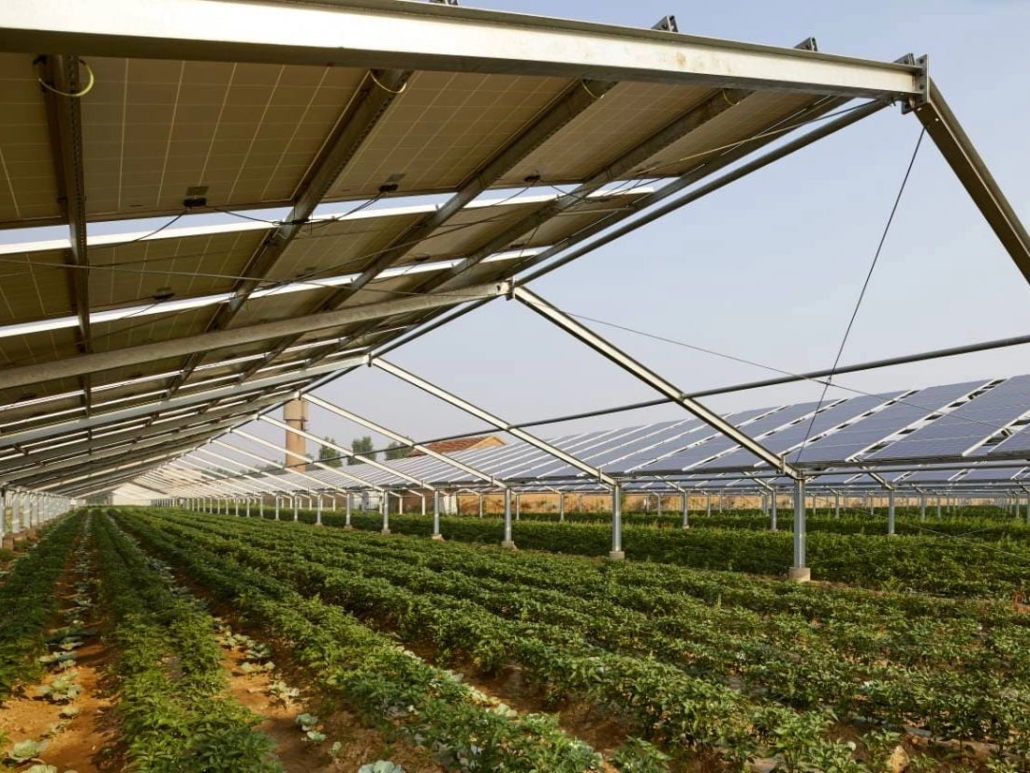
Lightweight design does not mean sacrificing strength. To further enhance the system’s structural stability, we use a hybrid design combining an aluminum alloy with high-quality stainless steel components. Power Dream makes key stress points—such as connecting bolts, nuts, and fasteners—from stainless steel materials that meet international standards, including A2-70 stainless steel for general applications and SUS304/SUS410 stainless steel for high-corrosion, high-load environments. A2-70 stainless steel has a tensile strength of up to 700 MPa, twice that of ordinary steel bolts, ensuring a strong, reliable connection between the solar mounting system and the roof or ground and preventing loosening.
In addition, we have optimized the structural design of the aluminum alloy beams and columns by using a hollow-section design, increasing bending and torsional strength by 30% while reducing weight. Through rigorous mechanical performance testing, the PowerDream solar mounting system can withstand a maximum wind load of 60 m/s and a maximum snow load of 1.2 kN/m², meeting the installation requirements of different climate zones worldwide.
How does the solar mounting system save 50% of construction time?
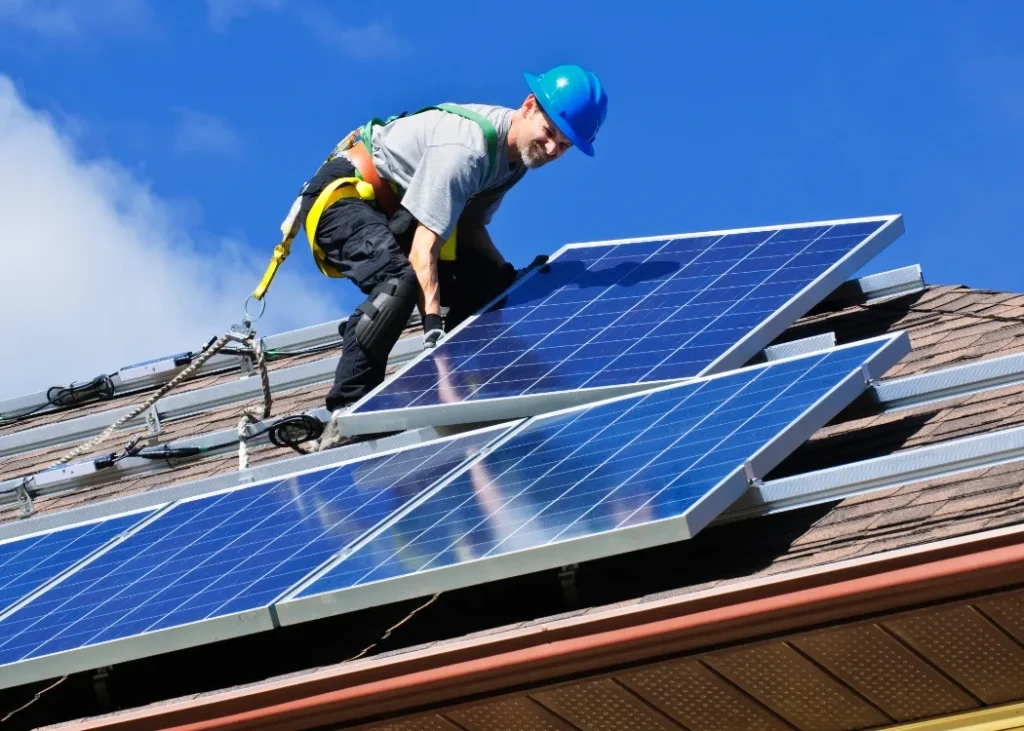
For solar project contractors and installers, the installation efficiency of the solar mounting system directly affects project progress and labor costs. PowerDream has fully considered this need in the product design process and created a modular, pre-assembled solar mounting system. First, all system components, including aluminum alloy beams, columns, clamps, and stainless steel fasteners, are pre-processed and numbered at the factory. Installers only need to assemble them according to the installation manual, eliminating the need for on-site cutting, welding, or drilling, significantly reducing the difficulty of on-site construction.
Secondly, we have designed a quick-connect structure for the key components of the solar mounting system: the beams and columns use an insert-type connection design with locking bolts, which can be fixed with a simple wrench, and the installation time for a single connection point is less than 1 minute. Compared with traditional steel mounting systems that require on-site welding and rust prevention treatment, PowerDream’s system can save more than 50% of installation time.
20-25 year service life, more reliable durability
Traditional steel solar mounting systems typically have a service life of 10-15 years, and problems such as rust, deformation, and loose connections often occur after 5-8 years, requiring frequent maintenance and replacement, thereby increasing the project’s operating and maintenance costs. In contrast, PowerDream manufactures solar mounting systems from high-quality aluminum alloy and stainless steel, follows rigorous manufacturing processes, and designs them for a service life of 20–25 years, perfectly matching the lifespan of solar panels. Authoritative third-party testing confirms this: after 3000 hours of salt-spray corrosion testing, the aluminum alloy brackets showed no significant corrosion and their mechanical properties remained unchanged; after 10,000 fatigue vibration tests, the system connection points remained secure, with no signs of loosening or deformation.
For users choosing solar projects, selecting PowerDream’s solar mounting systems means no need to replace brackets over the entire lifespan of the solar system, significantly reducing operational and maintenance costs.
Roof, Ground, and Floating Solar Mounting System
Different photovoltaic installation scenarios have different requirements for photovoltaic mounting systems. PowerDream has launched a series of targeted products to meet the diverse needs of its customers. For rooftop photovoltaic projects, we have designed a lightweight bracket that does not require roof penetration: we fix the base to the roof using counterweights or vacuum suction cups, avoiding damage to the roof’s waterproofing layer, and we adjust the bracket’s angle based on local latitude to maximize solar energy utilization.
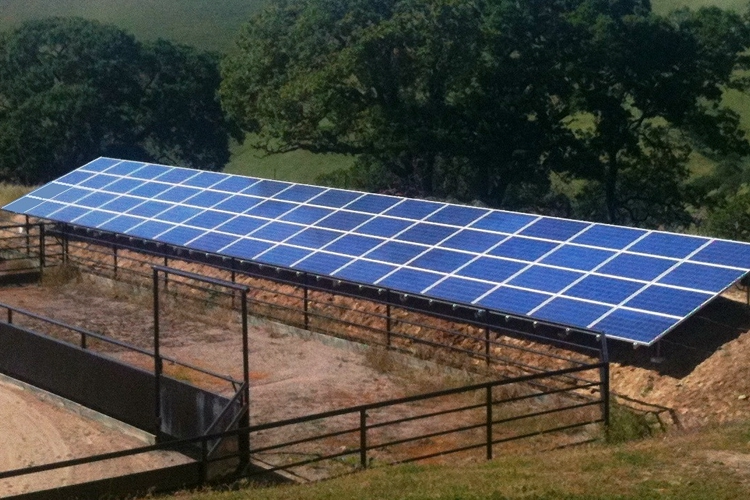
For ground-mounted photovoltaic projects, we have developed pile-driven and concrete foundation support systems: professional equipment is used to drive piles into the ground, and the depth of the piles is adjusted according to geological conditions to ensure system stability. Additionally, for floating photovoltaic projects on lakes, reservoirs, and other bodies of water, we use a combination of corrosion-resistant aluminum alloy frames and high-density HDPE pontoons. This structure not only provides excellent buoyancy but also effectively resists corrosion from water and microorganisms. Whether on residential rooftops, large industrial plants, desert ground, or water surfaces, PowerDream can provide customized photovoltaic mounting system solutions to ensure stable operation in various scenarios.
The Foundation of High-Efficiency and Durable Solar Systems
In the entire solar power system, the solar mounting system is far more than just an accessory; it is the solid foundation that ensures long-term, efficient, and stable operation. While many users are preoccupied with improving solar panel conversion efficiency and neglecting the potential risks posed by inferior brackets, PowerDream has already developed a comprehensive bracket installation solution built on aluminum alloy and stainless steel. It not only solves the pain points of traditional mounting systems—such as heavy weight, complex installation, and short service life—but also incorporates advantages such as a lightweight design (reducing roof load by 50%), high strength (withstanding strong winds of up to 60 meters per second), and a modular design, ensuring reliable conversion of your solar energy into value.

