
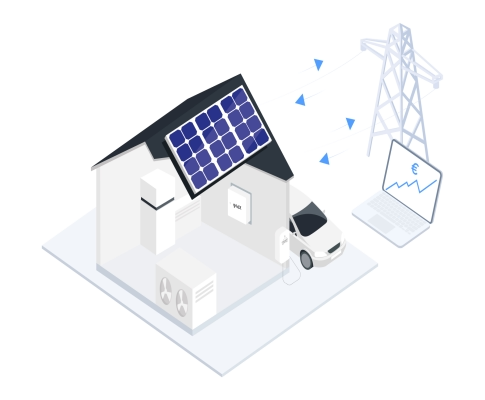
How to solve the grid compatibility problem of a grid connected solar system?
A homeowner who installed a 15kW grid-connected solar system by a local contractor experienced a grid outage that not only failed to reduce electricity bills but also crippled his refrigerator, grill, and POS system. The power company stated that the solar inverter was incompatible with the grid, causing unstable voltage and triggering their safety switches. Many grid connected solar system users encounter grid incompatibility issues. On average, each incompatibility-related outage costs businesses significant money, and 22% of homeowners face fines from utility companies for non-compliant systems. As a grid-connected solar system manufacturer, I will explain how to address the grid compatibility issues that plague these systems, ensuring your solar system and the grid work in harmony.
Problems Caused by Grid Incompatibility of Grid Connected Solar System
Many solar buyers believe that “compatibility” is merely a technical afterthought that the installer will handle. However, grid connected solar systems do not exist in isolation; they are intricately connected to the local power company’s grid, and even minor mismatches can lead to catastrophic failures.
The first is unplanned power outages. The power grid relies on stable voltage (120V/240V for residential, 480V for commercial) and frequency (60Hz in the US). A mismatched inverter will supply unstable power to the grid, triggering the power company’s protective relays to disconnect. This is because the inverter cannot handle the frequent voltage spikes in the state. Secondly, it will result in energy savings losses. Incompatible systems often operate less efficiently or shut down during peak sunlight hours. Thirdly, there are power company fines and legal risks. All US power companies have strict grid connection standards for grid-connected solar systems (defined by the IEEE 1547 standard). Non-compliant systems will face fines and may even be disconnected entirely. Fourthly, it can damage equipment. Voltage mismatch can burn out solar panels, inverters, and even your business’s electrical equipment.
What we need to understand is that not all grid-connected solar systems work on all grids. Instead, you need a system designed specifically for your grid, not a “works for any grid” system.
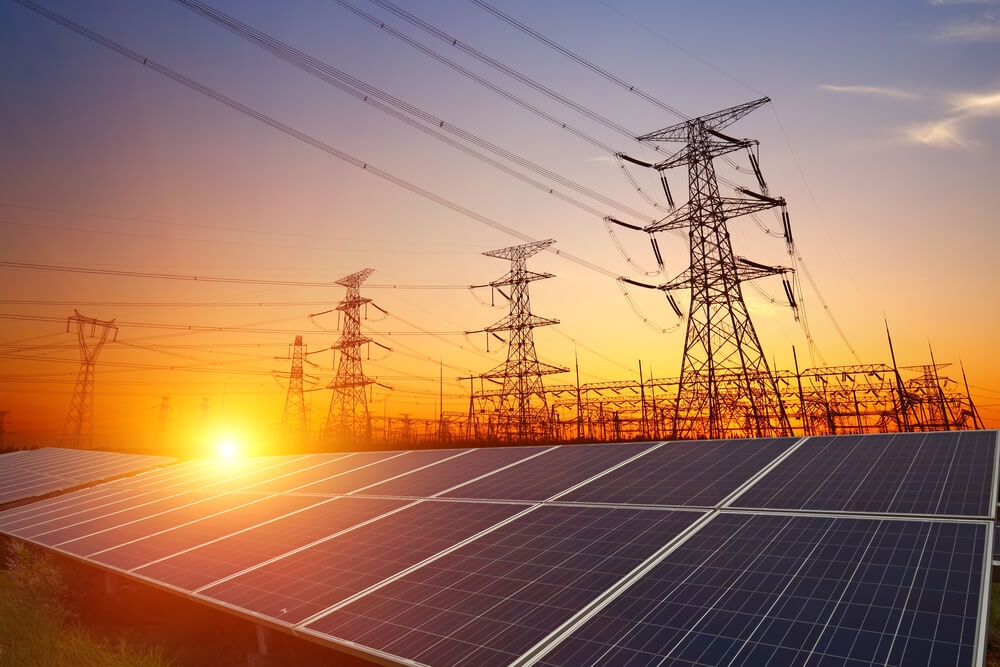
Three Core Compatibility Issues of Grid Connected Solar System
Compatibility issues don’t happen by chance—they stem from four predictable gaps between the solar system and the grid.
1. Voltage and Frequency Mismatch
Grid voltage and frequency fluctuate slightly, but your inverter must match these changes in real time. If the grid voltage is 118V and the inverter outputs 125V, the grid’s relays will trip. Signs of this problem:
The system shuts down during peak sunlight. Your home/office lights flicker when the solar system is on. Your power company notifies you of a “voltage anomaly.” Cause: Ordinary inverters use a “fixed” voltage setting, not an “adaptive” one. PowerDream’s grid-connected inverters use grid tracking technology, adjusting voltage and frequency 100 times per second to match your power company’s specifications.
2. Anti-Islanding
Anti-islanding is a safety feature that shuts down your on grid solar system during a grid outage. This prevents the formation of an “island” of power that could potentially electrocute repair personnel. All power companies require anti-islanding devices, but many inexpensive systems use defective devices. For example, the system continues to operate during grid outages, and the power company rejects your grid connection application, citing “insufficient safety features.” The inverter displays an “anti-islanding failure” code. This is because low-quality equipment uses outdated “passive” detection methods, missing many outages.
3. Communication Protocol Defects
Your grid-connected solar system needs to communicate with the power company for net metering and remote monitoring. If the protocols of both parties are incompatible, you will not be able to save costs or understand your electricity usage. Signs of incompatibility include:
The power company cannot track your remaining electricity consumption—therefore, you will not receive net metering subsidies. You cannot view the system’s output or grid status in the power company’s application. The power company requires you to perform a “protocol upgrade” after installation. This is because the power company uses a different protocol. Systems designed for Modbus are incompatible with power companies using SEP 2.0.
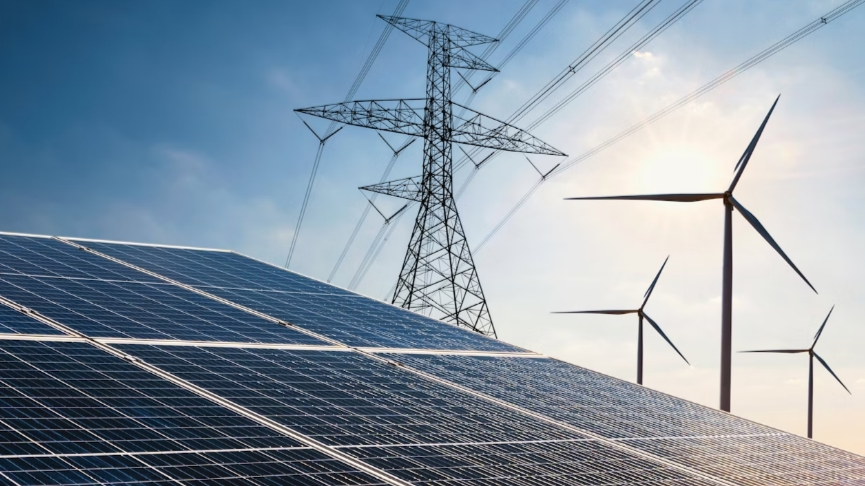
Design Strategies to Ensure Smooth Grid Interaction
Effective grid compatibility begins in the design phase of the on grid solar system. First, a comprehensive grid impact study should be conducted to assess feeder strength, transformer capacity, voltage distribution, and background harmonic levels, as these factors determine the technical limits the system must adhere to. System capacity should not only match available rooftop or land area but also the local grid strength, avoiding excessive photovoltaic system integration on weak feeders. Therefore, smart inverters with advanced grid-connection support can be selected, enabling the system to actively regulate voltage and frequency rather than passively operate as a generator. Proper phase balancing minimizes imbalances and neutral point loads.
If power quality risks exist, line reactors, passive filters, or active harmonic suppression devices can be integrated into the design. Output control and power curtailment strategies should be embedded from the outset through a dynamically adjusted output energy management system. In situations with limited grid capacity, adding energy storage or reactive power compensation devices can provide rapid response support. At the same time, well-coordinated protection schemes ensure that relays, circuit breakers, and inverters work together to prevent false tripping.
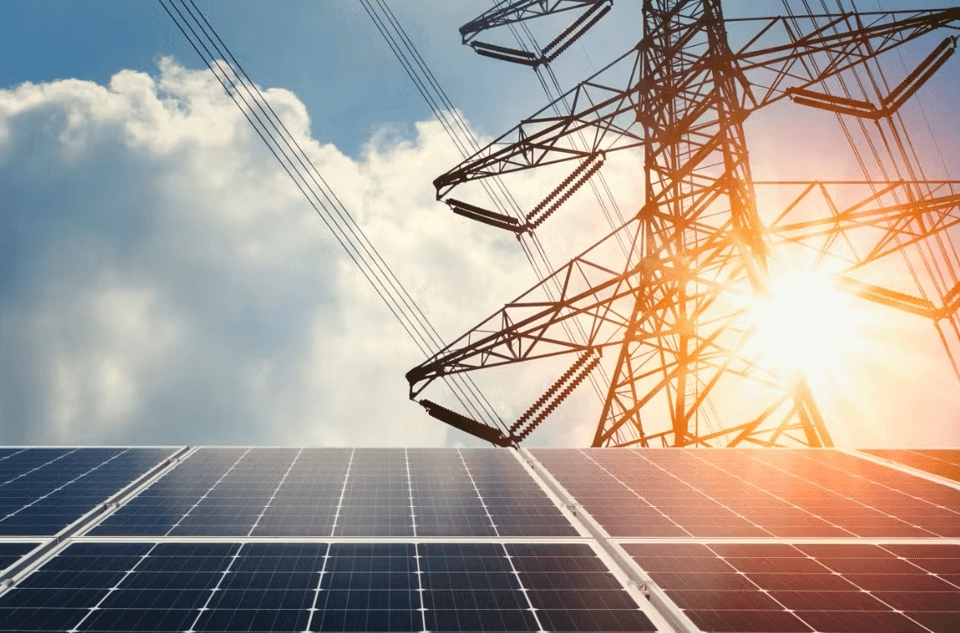
Inverter and Control Solutions for Compatibility Issues
In grid connected solar systems, the inverter is the primary interface between solar power generation and the grid; therefore, its control capabilities are crucial for resolving compatibility issues. Advanced inverters equipped with volt-ampere (VA), volt-watt (W), and frequency-watt (W) functions can automatically adjust active and reactive power output in response to real-time grid conditions, helping stabilize voltage and frequency. Properly configured low-voltage and high-voltage ride-through capabilities keep the system grid-connected during short-term disturbances, reducing unnecessary outages and improving overall grid resilience.
Simultaneously, anti-islanding algorithms must be carefully calibrated to meet the requirements of local power companies, ensuring rapid disconnection during actual power outages and preventing false tripping. Communication protocols must support standard protocols; inverters can seamlessly integrate with monitoring systems, power company telemetry systems, and site-level energy management platforms.
Grid Connection Rules, Compliance, and Testing Best Practices
Resolving grid compatibility issues also requires strict adherence to grid connection rules and testing procedures. Power companies should be involved early in the project lifecycle to review preliminary designs and clearly define constraints such as output limits or protection requirements. The selected grid-connected solar system must comply with applicable national, regional, and power company-specific standards that guide equipment selection and protection settings. Additionally, during commissioning, functional testing should verify power quality metrics, including inverter operation, protection logic, ride-through performance, and harmonic distortion. In many cases, power companies require witness testing to verify safety-critical functions before approving operation.
Compatibility is key to a reliable grid connected solar system
A grid-connected solar system should make your life easier, not more complicated. It should lower your electricity bills, reduce carbon emissions, and operate quietly in the background—not cause outages, fines, or equipment damage. Compatibility is fundamental to every successful grid-connected solar system. This requires understanding your power company’s unique specifications, using appropriate inverters and controllers, and conducting rigorous testing before and after installation. Furthermore, it requires partnering with a manufacturer that prioritizes engineering development over sales and has the expertise to back up its commitments.

