
Break free from grid dependence: Achieving energy independence through a solar hybrid system
A solar hybrid system integrates photovoltaic power generation, battery storage, intelligent control, and grid-connected or generator power supply, providing reliable electricity, reducing electricity bills, and offering power backup during grid failures. In many regions and countries, residents are affected by power outages caused by severe weather and other environmental factors. To ensure reliable electricity and energy access for users in these areas, we will explain how a hybrid solar system reduces dependence on the grid, its advantages over traditional solar systems, and how to choose the right system for your needs.
Why a Solar Hybrid System is Superior to Individual Grid-Connected or Off-Grid Systems?
First, the most common solar systems are grid-connected and off-grid, but neither solves the core problem of grid dependence. A hybrid solar system combines the advantages of both, creating a reliable, self-sufficient energy source with a degree of security.
1. Grid-Connected Solar: Ineffective During Power Outages
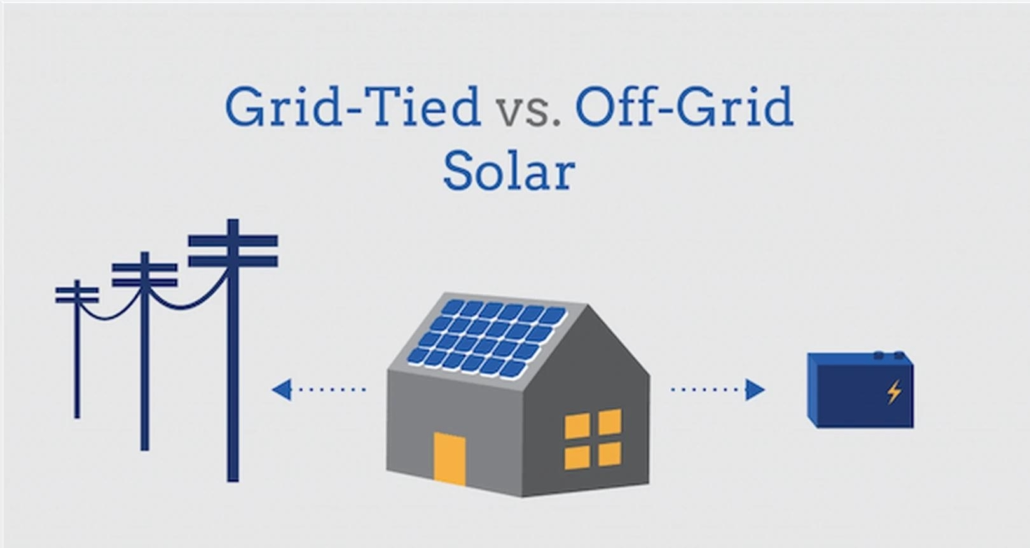
Grid-connected systems use solar panels to power your home and feed excess energy back into the grid to offset your electricity bill (net metering). But the problem is: they stop working during power outages. Why? To protect power workers repairing transmission lines from reverse power generation. This means that even when it’s sunny, you’ll still be in darkness when the grid is down.
2. Off-Grid Solar: Independent, but Unreliable
Off-grid systems use solar panels and batteries to power your home without a grid connection. However, they carry risks: if your electricity consumption exceeds the battery’s storage capacity (e.g., a week of consecutive cloudy days), you’ll experience a power outage. They also require larger batteries to handle insufficient sunlight.
3. Solar Hybrid Systems: The Best Option for Independence
Solar hybrid systems combine solar panels with battery banks while maintaining grid connectivity. They work as follows: On sunny days, solar energy powers your home, and excess energy charges the batteries. On cloudy days or at night, the batteries supplement solar energy, reducing reliance on the grid. During power outages, the system automatically switches to battery power to keep the house running. The grid serves as a backup power source, only activated when the batteries are depleted.
Key Components for True Energy Independence in Hybrid Solar Systems
The power of hybrid solar systems lies in their components—each meticulously designed to work together to ensure reliability and energy self-sufficiency. PowerDream’s solar hybrid systems consist of three core components, all optimized for energy independence.
1. High-Efficiency Solar Panels: Maximizing Sunlight Capture
We use high-efficiency monocrystalline silicon solar panels that capture more sunlight, even on cloudy days. A 5kW system (10-12 panels) is suitable for most residential rooftops, generating 600-750 kWh per month in sunny areas and 400-550 kWh per month in less sunny regions.
2. Hybrid Inverter: The Core Control of the System
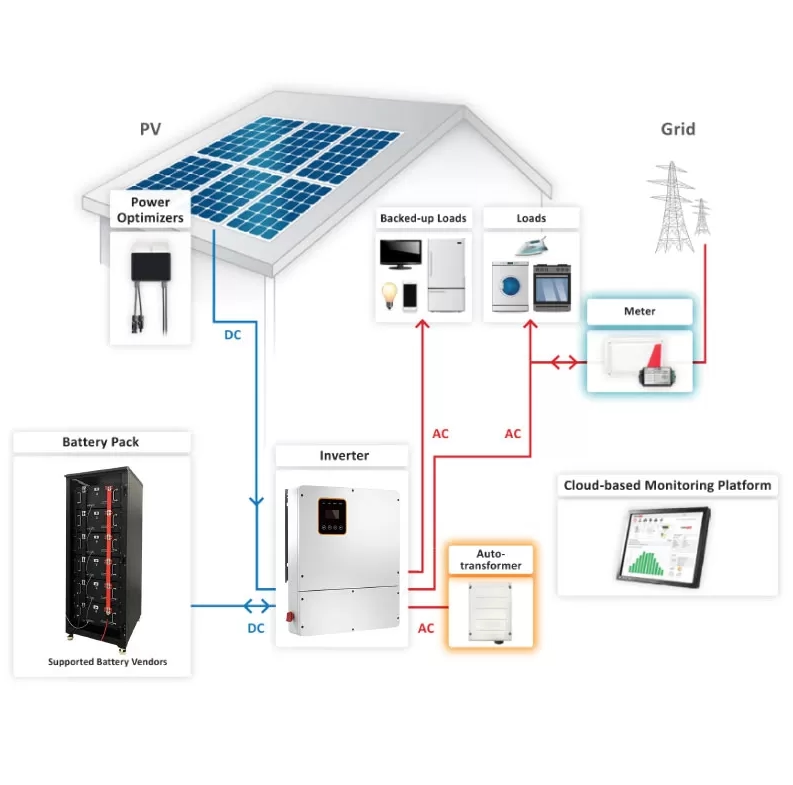
The hybrid inverter is key to the system’s “intelligence.” It converts the direct current (DC) generated by the solar panels into alternating current (AC) for home use, manages battery charging and discharging, and seamlessly switches between solar power, batteries, and the grid. PowerDream inverters feature two key functions for independent power generation:
– Dual MPPT: Optimizes power generation even when some solar panels are partially shaded.
– Zero Output Mode: Allows you to store all excess solar energy in the battery for use during power outages.
3. Lithium-ion Battery Pack: Stores electricity on demand to meet your needs
Batteries are key to energy independence—we use only high-quality lithium-ion batteries to ensure their long lifespan and superior reliability. Our 10kWh battery stores enough energy to power a 2000 sq ft home for 1-2 days of everyday use, or 3-4 days if you prioritize essentials.
Smart Energy Controller: Monitor energy management via your smartphone
You can connect to your hybrid solar system via an app to track energy usage, battery level, and solar power generation in real time; you can also set priority modes, such as a “standby mode” during storms or an “energy-saving mode” during peak hours. Beyond its core appeal, the authentic charm of a hybrid solar system lies in its user-friendliness and ease of operation—you don’t need to toggle switches or manually adjust settings, as it automatically adapts to sunlight, your electricity consumption patterns, and grid conditions, thus maintaining your energy independence.
Furthermore, excess energy is stored in the battery, which starts at 70% after nighttime use and rises to 85% by 10 AM. Solar power peaks between 10 AM and 3 PM, while the home’s HVAC, dishwasher, and children’s tablet consume approximately 1.5 kW; this means there’s a surplus of 1.5-2.5 kW to charge the battery, which reaches 100% capacity by 1 PM. The system then switches to “zero-output mode,” storing all excess solar energy instead of feeding it into the grid for later use.
How to Choose a Hybrid Solar System for Your Energy Independence Goals?
Not all hybrid solar systems are created equal—size, components, and design are all crucial. The right system for you depends on your energy consumption, location, and priorities. Find the perfect system for you by following these four steps—the PowerDream team will handle the rest:
Step 1: Calculate Your Energy Needs
First, review your electricity bills from the past 12 months. Find your average monthly electricity consumption and peak consumption. A household using 600 kWh per month needs a 5 kW system; a small business using 1200 kWh per month needs a 10 kW system.
Step 2: Assess Your Sunlight and Space
The orientation, shading, and area of your roof determine how many solar panels you can install. South-facing roofs receive the most sunlight, but east-west facing roofs can also work with PowerDream’s dual MPPT inverters. A 5kW system requires 150–200 square feet of unshaded roof space; a 10kW system requires 300–350 square feet. If you have limited roof space, we offer ground-mounted solar panels.
Step 3: Choosing Battery Capacity
Battery capacity depends on how long you want to maintain independent power during a power outage:
10kWh (most popular): Powers a home for 1-2 days or 3-4 days.
15kWh: Powers a home or small business for 2-3 days or 5-6 days.
20kWh and above: Suitable for rural homes or businesses requiring longer backup power.
Installation, Operation, and Maintenance Best Practices
Proper installation and operation of a solar hybrid system ensures efficient and safe operation. Obtaining the necessary permits and inspections before installation, and complying with local building, electrical, and fire regulations, will protect your legal and financial interests. Furthermore, plan for an easy-to-install location, placing the batteries and inverter in a well-ventilated, temperature-controlled area to maximize lifespan and ensure safety. Utilize real-time monitoring technology to monitor power flow, battery health, and alarm status. Remote diagnostics reduce downtime and streamline support processes. Then, schedule preventative maintenance, check electrical connections, test generator starting functionality, verify battery voltage, and update system software annually or as directed by the manufacturer. Most importantly, install appropriate fire extinguishers where needed, label critical circuits, and ensure emergency personnel can quickly disconnect circuits.
Achieve Energy Independence for Your Home
Solar hybrid systems not only save you money but also enable you to achieve energy independence. At PowerDream, we design solar hybrid systems around three key engineering priorities: reliability, efficiency, and user-centric operation. First, we use integrable components, long-life photovoltaic modules, hybrid inverters with intelligent EMS, and battery systems seamlessly with predictable cycle life. Second, our systems include flexible operating modes: grid-connected, self-consumption maximization, and safe islanding with load priority. Third, we provide comprehensive commissioning, monitoring, and warranty services for installations.

