Complete Guide to Choosing a Solar Mounting System: Rooftop vs Ground-Mounted
Most homeowners and business owners allocate 90% of their solar budget to solar panels and inverters. However, the solar mounting system, which supports these panels, determines 30% of the system’s efficiency and 40% of its long-term reliability. Therefore, choosing the correct installation method maximizes sunlight utilization, reduces maintenance costs, and protects your investment. An inappropriate choice can lead to performance degradation, repairs, or even the replacement of the entire system. As a solar product supplier, we understand that the choice between rooftop and ground-mounted installations ultimately depends on five factors: space, sunlight conditions, budget, roof condition, and long-term goals. Therefore, we combine on-site testing and customer case data to analyze the advantages, disadvantages, and ideal application scenarios of each option in detail.
The Core Difference Between Rooftop and Ground-Mounted Solar Mounting System
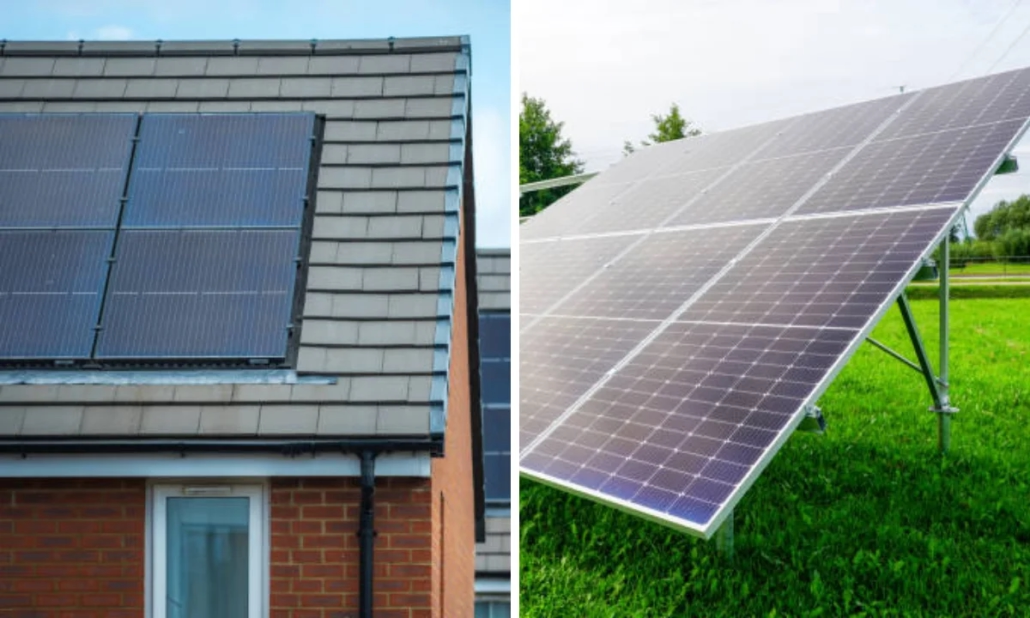
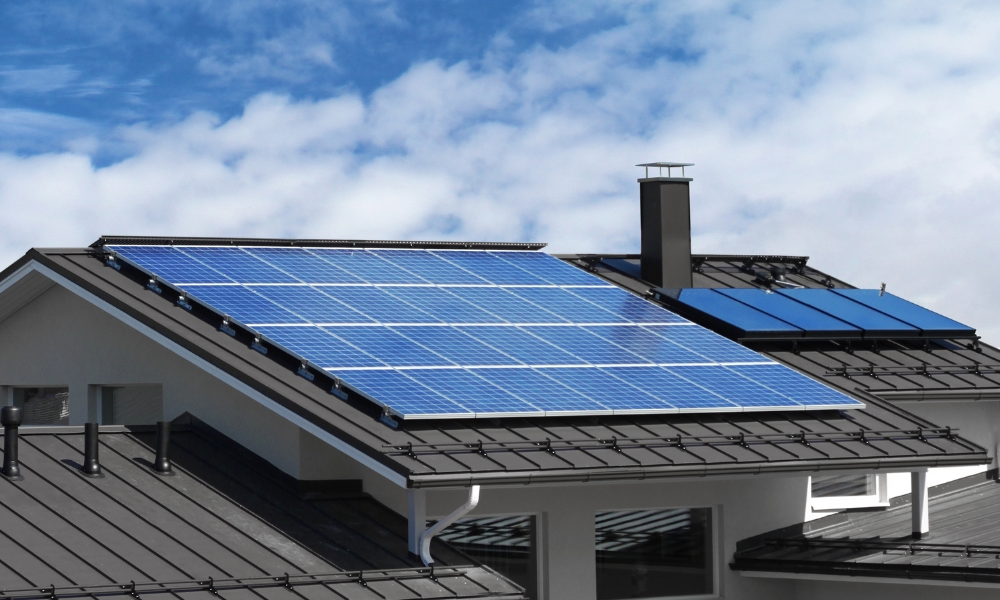
Both solar mounting systems can mount solar panels, but their design, installation, and performance differ. First, there’s their compatibility with your home. Rooftop solar mounting systems use solar mounting brackets, rails, and anchors to secure the panels directly to the roof. It makes full use of existing roof space, thus not taking up yard or land area. Common rooftop solar installation systems include:
Pitched roof mounting: Suitable for sloping roofs (asphalt, metal, tile); Flat roof brackets: Suitable for commercial buildings or residential flat roofs, these brackets use counterweights instead of drilling for fixation; Adjustable tilt brackets: These brackets allow you to adjust the angle of the solar panels according to the season to increase sunlight exposure.
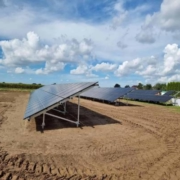
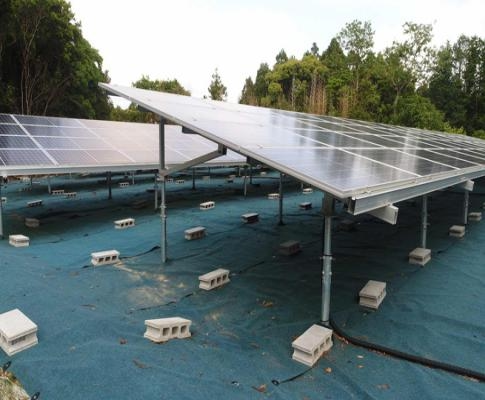
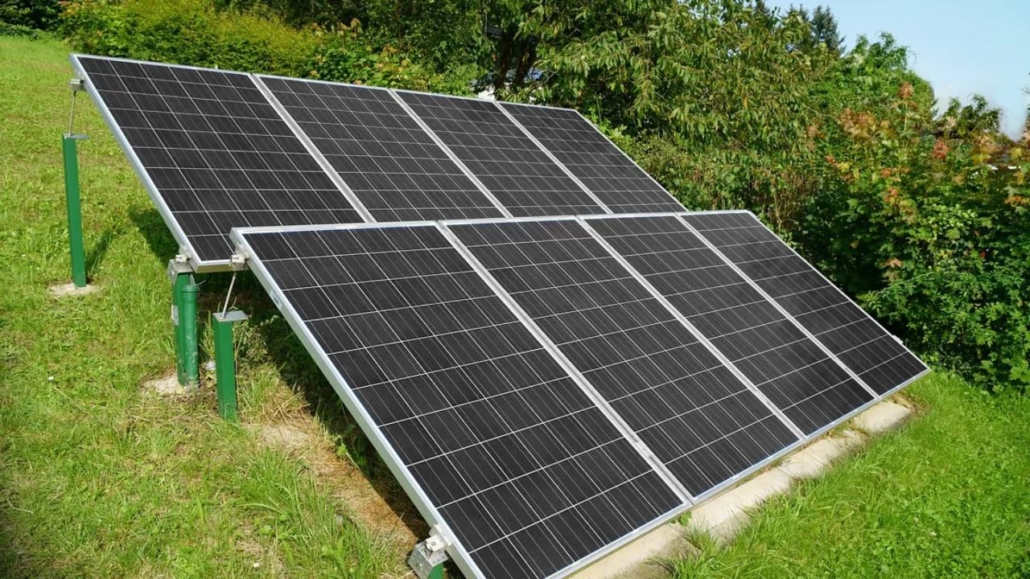
Ground-mounted solar mounting systems mount solar panels on poles or frames fixed to the ground, typically installed in patios, fields, or vacant land. It offers greater flexibility in terms of installation location and tilt angle, but requires ample open space.
Advantages of Rooftop Solar Mounting System and When to Choose Them
Rooftop solar mounting systems are the most popular choice for residential customers—most of PowerDream’s residential installation projects use rooftop mounting—because they solve two significant problems: limited space and budget constraints.
Space Saving: Ideal for urban and suburban homes
If your patio area is small or used for gardening, play, or parking, a rooftop solar mounting system can make the most of the space on your roof. A 5kW system only requires 35-40 A of square footage of roof space, roughly equivalent to the size of a small patio.
Lower Cost: Faster Installation, Less Material
Rooftop solar systems cost 20% to 30% less than ground-mounted systems because they use less material, have shorter installation times, and lower installation costs.
No Land Permit Required:
Ground-mounted solar systems typically require a land-use zoning permit, especially in communities governed by a Homeowners Association (HOA) or a historic district. Rooftop solar systems are usually covered by standard solar licenses, which result in faster approval processes.
Advantages of Ground-Mounted Solar Systems
Ground-mounted solar systems are uncommon in urban residences but are common in commercial projects and rural homes. Their flexibility and efficiency make them worthwhile if you have enough space.
Maximum Efficiency: Optimal Tilting Angle and Sun Coverage
Unlike rooftop installations, ground-mounted solar systems allow you to set the optimal tilt angle based on your location. Power generation can be increased by 8-10% compared to a 25° tilt rooftop installation. Power generation can be further improved by adding a tracking system. 15-20%.
Easy Maintenance
Cleaning, inspecting, or repairing ground-mounted solar panels is safer and more economical—no ladders or roof work required. For homeowners with limited mobility, ground-mounted solar panels eliminate the risk of falls when cleaning panels themselves.
Scalability: Expand Your System Over Time
Ground-mounted systems are easy to expand if you plan to add more solar panels, for example, to power electric vehicles or for home extensions. PowerDream’s modular ground-mount design allows you to add 1-2 solar panels at a time without significant modifications.
No Roof Risk
Old, fragile tiled, or structurally complex roofs are not suitable for rooftop solar systems. Ground-mounted solar systems avoid roof damage, leaks, and load-related issues.
Key Factors to Help You Choose the Right Solar Mount
The choice between rooftop and ground-mounted is not about “which is better,” but about “which is better for your home.” PowerDream engineers use a 4-factor evaluation method to recommend the right solar mounting system for each customer. You can use this process to narrow down your choices.
1. Space Availability: Careful Measurement and Decision-Making
First, measure two dimensions: roof space and patio space. For rooftop installation: calculate the available roof area (excluding skylights, chimneys, and shaded areas). For ground-mounted installations, mark shaded areas and ensure at least 30 square feet of space per kilowatt.
2. Budget: Balancing Upfront Costs and Long-Term Savings
Rooftop solar systems have lower upfront costs, but ground-mounted systems may be more cost-effective in the long run due to their higher efficiency. If you plan to live in your current residence for more than 10 years, the higher savings from a ground-mounted system may outweigh the longer payback period. If you plan to sell your home in 5 years, the lower cost of a rooftop solar system is more beneficial to your property’s resale value.
3. Local Regulations and Homeowners Associations (HOAs)
Check the planning regulations and homeowners’ association (HOA) rules in your city. Some homeowner’s associations prohibit ground-mounted solar systems or restrict the color of roof panels.
4. Climate and Weather
In snow-prone areas (such as the northeastern and midwestern United States), rooftop installations are easier to clear of snow (due to gravity) than ground-mounted installations, but ground-mounted installations are easier to clear. In hurricane-prone areas, PowerDream’s wind-resistant solar mounting brackets (capable of withstanding 150 mph winds) are suitable for both rooftop and ground-mounted installations, but ground-mounted installations require deeper bases.
Key Components – Solar Mounting Brackets and More
The quality of a solar mounting system depends on its components. Cheap solar mounting brackets, rails, or anchors are prone to damage, leading to solar panel displacement, leaks, or even detachment. PowerDream systems use commercial-grade components designed for a lifespan of over 20 years, and we prioritize the following three key components:
1. Solar Mounting Brackets: The Foundation of Stability
Brackets secure the solar panels to rails (roof mounting) or frames (ground mounting) and must withstand wind, snow, and the weight of the solar panels. We use two materials:
– Aluminum Brackets: For roof mounting systems, aluminum is lightweight (reducing roof load by 40%) and rust-resistant. Our brackets undergo a powder-coated process to resist rain and UV radiation.
– Stainless Steel Brackets: For ground mounting systems, steel is stronger and ideal for movable tracking brackets. These steel brackets undergo hot-dip galvanizing, which effectively prevents rust even in coastal or humid areas.
2. Rails: Even Load Distribution
The rails run horizontally across the panel, evenly distributing weight. Our extruded aluminum rails (roof mount) and steel rails (ground mount) feature a hollow construction—lightweight yet robust. The rails are pre-drilled for easy installation and are compatible with all panel sizes.
3. Anchors and Fasteners: Preventing Leaks and Displacement
Roof anchors are bolted to the roof rafters (not just the cladding), and the holes are sealed with EPDM rubber gaskets—100% leak-proof. Ground mount anchors use concrete bases or helical piles.
All our solar mounting system components come with a 25-year warranty, and every batch of brackets and rails is tested in our in-house laboratory to ensure they meet our standards.
Choose the right installation system for you.
The key to choosing between roof- and ground-mounted systems is matching the system to the unique characteristics of your property, including space, roof condition, budget, and climate. For urban/suburban homes with good roof conditions, roof mounting can save money and space. For rural homes and commercial properties with open land, ground mounting offers the highest efficiency and scalability.