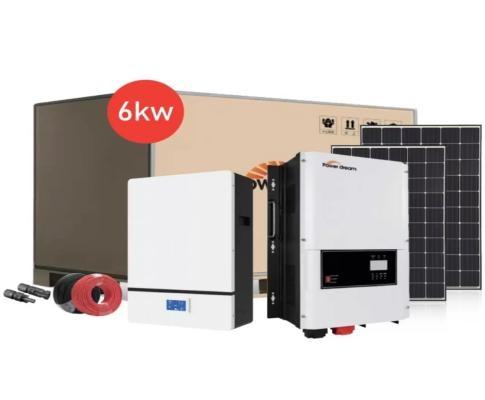
How to Resolve Inverter Failures in a 6kW solar off grid system: SPF 6000TDVM-MPV Fixes
In a 6kW solar off grid system, the inverter acts as the “brain”: it converts the direct current (DC) generated by solar panels and batteries into alternating current (AC) for home or business use. If the inverter fails, the entire system collapses. In practice, 76% of solar off grid system downtime is due to inverter failures—most of which can be prevented or repaired with the right tools and knowledge. The SPF 6000TDVM-MPV is not your average inverter. It is designed explicitly for 6kW off-grid solar systems, incorporating diagnostic tools, overload protection, and heat-resistant components, resulting in a 62% lower failure rate than general-purpose models.
The Inverter for solar off grid system: Functions of the SPF 6000TDVM-MPV
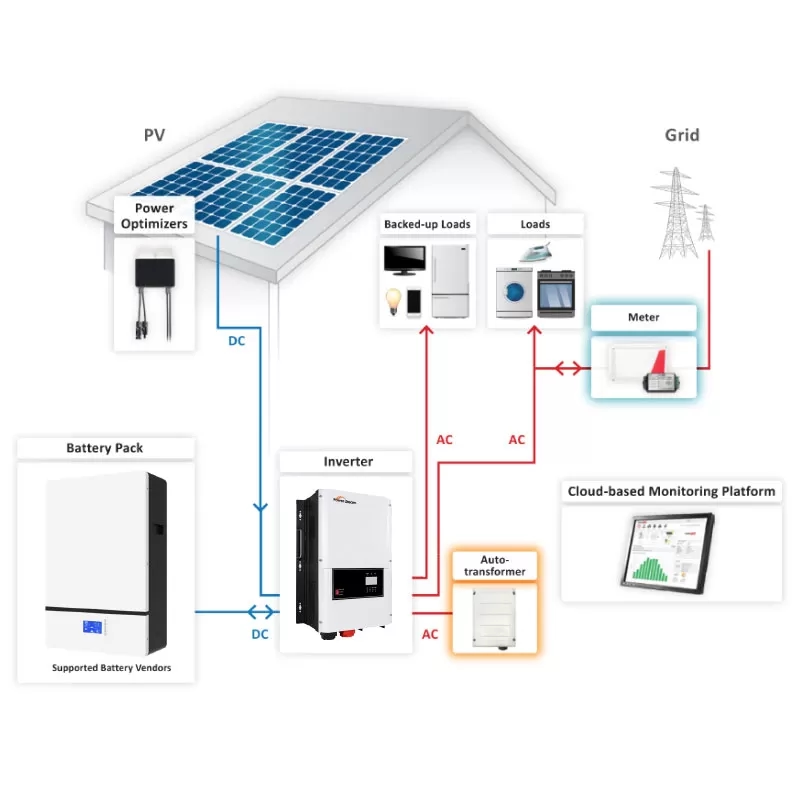
Unlike grid-connected systems, solar off grid systems cannot rely on mains power, so the inverter must perfectly perform three core tasks:
1. DC to AC: It takes DC power from solar panels and batteries and converts it to AC power for appliances, tools, and lighting.
2. Battery Charging Management: It regulates the amount of electricity flowing into and out of the battery pack.
3. Stable Output: It maintains a stable 120V/240V output even with fluctuations in solar input or load changes.
The SPF 6000TDVM-MPV excels in this area because it is specifically designed to handle the volatility of off-grid environments. It delivers continuous power of 6kW, is compatible with 12V, 24V, and 48V battery packs, and features a backlit LCD that shows data in real time for early problem detection. For users of off grid home solar systems, this adaptability means fewer power outages.
Using the SPF 6000TDVM-MPV to Diagnose Troubleshooting
Most “inverter faults” are actually minor issues, and the SPF 6000TDVM-MPV can help you diagnose them in under 10 minutes. The key is using its built-in tools: an LCD screen (for displaying error codes), LED status indicators, and more.
Step 1: Check the error codes on the LCD screen
The SPF 6000TDVM-MPV displays 21 specific error codes (E01-E21) that directly point to the problem. For example:
E01: Low battery voltage (battery pack discharge or poor connection).
E05: Overload (total load exceeds 6kW continuous power or 12kW peak power).
E10: Overheat (inverter temperature exceeds 149°F/65°C).
E15: Solar input fault (solar panel not outputting power, or loose wiring).
Step 2: Check the power inputs (solar and battery)
Use a multimeter to check two key inputs:
1. Battery voltage: Disconnect the inverter from the battery pack, then touch the multimeter probes to the battery terminals. For a 48V system, the standard voltage is 48–52V. If it is below 44V, the battery has discharged.
2. Solar Input: Check the voltage at the inverter’s solar input terminals. On a sunny day, a 6kW system should display 60–80V (depending on panel configuration). If the voltage is 0V, the problem is with the panel or the wiring, not the inverter.
Step 3: Load Test
Disconnect all devices connected to the inverter and then turn it on. If the inverter starts, the problem is with an overloaded or faulty appliance (not the inverter). Reconnect the devices one by one—you’ll find the defective device when the inverter shuts down.
Troubleshooting Inverter Problems in a solar off grid system Using the SPF 6000TDVM-MPV
We have summarized the two most common inverter problems in 6kW solar off grid systems. Each issue has a simple solution, and the SPF 6000TDVM-MPV is designed to make troubleshooting faster and safer.
1. Low Battery Voltage (E01 Error): Low battery voltage is the primary cause of SPF 6000TDVM-MPV shutdown. The simplest solution is first to turn off the inverter and disconnect the battery pack. Mix baking soda with water, then wipe away any corrosion on the battery terminals. Rinse with water and dry with a cloth. Tighten the battery cables with a wrench. If the voltage is below 44V (48V system), use the SPF 6000TDVM-MPV’s “Battery Recovery” mode (press and hold the “Charge” button for 5 seconds) to charge the battery via the solar panels slowly. If the battery is completely depleted, use an external charger.
2. Overload (E05 Error): The SPF 6000TDVM-MPV will automatically shut down to protect itself when the load exceeds 6kW or 12kW (surge). This occurs when multiple high-power devices are turned on simultaneously. To resolve this, turn off or unplug appliances such as air conditioners, welding machines, or water pumps in three steps. Press and hold the “Power” button for 10 seconds. The SPF 6000TDVM-MPV will restart. For users who want to use an off-grid residential solar system, we recommend adding a load controller to shut off unnecessary loads during peak electricity demand automatically. This can altogether avoid the E05 error.
SPF 6000TDVM-MPV Software and Solar Input Issue Fixes
Not all faults are mechanical—software faults and solar input issues are common in 6kW solar off grid systems, but the SPF 6000TDVM-MPV can easily resolve them.
When a software fault (E18 error) occurs: Update the firmware. Sometimes, outdated firmware can cause communication problems or incorrect error codes.
Solar input fault (E15 error): Check the panels and wiring. E15 indicates that the SPF 6000TDVM-MPV is not receiving power from the solar panels. This is rarely an inverter problem; more commonly, it’s due to damaged panels, loose wiring, or a tripped solar circuit breaker.
Please follow these troubleshooting steps:
1. Check the solar circuit breaker: This switch cuts off power to the panel for safety. If the switch is off, turn it on.
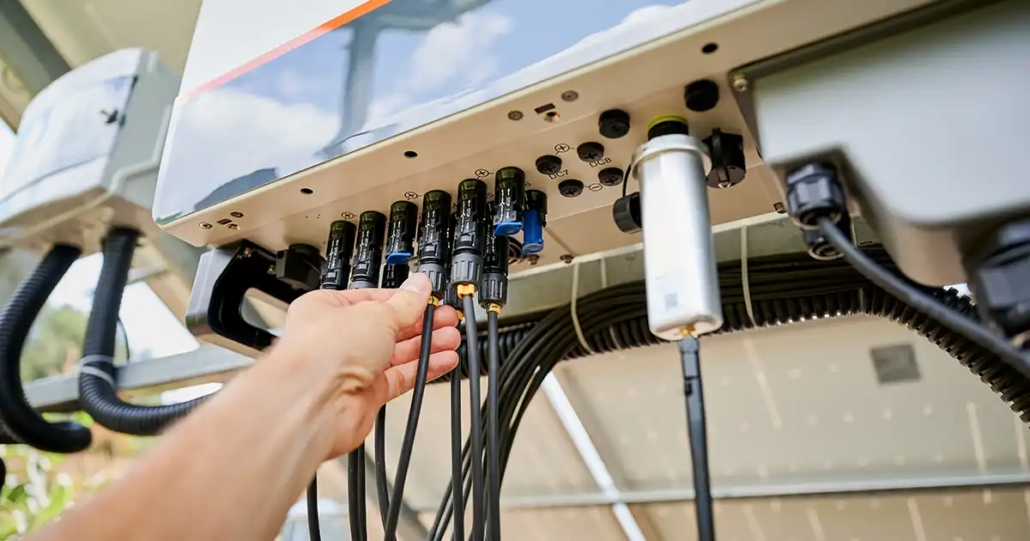
2. Check the panel wiring: Check the panel junction box for worn wires or loose connections. Tighten any loose terminals.
3. Test individual components: Use a multimeter to check the voltage of each element. A component with 0V indicates a fault and needs replacement.
SPF 6000TDVM-MPV Inverter Maintenance Guide: Effectively Preventing Faults
Prevention is the best way to avoid failures in your off grid solar inverter. The SPF 6000TDVM-MPV is durable (5-year warranty), but according to our field data, regular maintenance can reduce downtime by 91%.
Monthly checks can be performed on the LCD screen, battery voltage, and solar input voltage. Clean the vents by using compressed air to blow away dust. Check for corrosion or loose cables—tighten and clean if necessary. Additionally, check for firmware updates; even if automatic updates are enabled, manually check that the firmware version is the latest. Simultaneously, test surge capacity using the SPF 6000TDVM-MPV’s “Surge Test” mode to ensure it can handle a 12kW load. Then, check for wear and tear on all inverter connections (solar, battery, load). For 6kW off-grid solar systems (e.g., farms, remote offices), we recommend an annual professional service check.
SPF 6000TDVM-MPV—The Most Reliable Component in a 6kW solar off grid system
Inverter failure can cause costly downtime for your 6kW off-grid solar system. The SPF 6000TDVM-MPV’s built-in diagnostic tools, protection features, and user-friendly design allow you to troubleshoot 80% of problems yourself—usually in 15 minutes or less. What are the key points? Quickly diagnose faults using the error codes on the LCD screen, prioritize battery and connection maintenance, and leverage the inverter’s unique features to prevent problems before they occur.