Why are monocrystalline silicon solar panels more suitable for on grid solar systems?
A survey of on grid solar systems users revealed that homeowners using monocrystalline silicon solar panels generate 18% more electricity annually than those using polycrystalline silicon panels. For a typical residential 6kW on grid solar system, this translates to an extra 850 kWh of electricity generated per year, resulting in a $320 saving on electricity bills. This difference is precisely what motivates many solar system providers and grid-connected users to choose monocrystalline silicon panels over other materials. On grid solar systems rely on maximizing power generation to offset electricity bills and feeding excess power back into the grid, and monocrystalline silicon panels are designed for this purpose.
Monocrystalline silicon solar panels perform better in on grid solar systems
Unlike off grid systems that rely on batteries, on grid solar systems connect directly to the public grid, resulting in high energy production. More electricity means greater bill savings and more excess electricity that can be sold back to the grid (through net metering). They also offer greater space efficiency, as most residential and commercial rooftops have limited space, requiring solar panels to generate maximum power per square foot. Furthermore, they offer long-term reliability. On grid systems represent a multi-year investment, requiring regular maintenance of solar panels to ensure optimal performance and a return on investment. Polycrystalline, thin-film, and other types of solar panels fall short in one or more of these areas. In contrast, monocrystalline silicon solar panels excel in all three.
Making on grid solar systems More Efficient
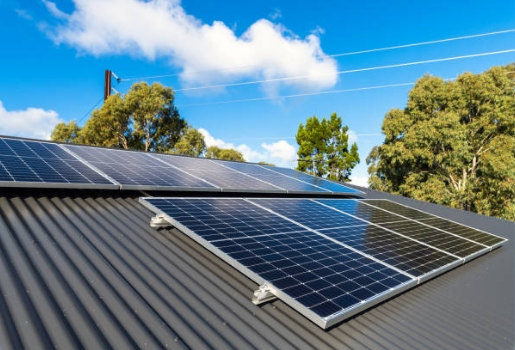
The primary advantage of monocrystalline silicon solar panels for an on grid solar system is their efficiency. Efficiency measures how much sunlight a panel converts into electricity, and monocrystalline silicon panels boast efficiencies of 22% to 24%, significantly higher than the 15% to 18% of polycrystalline silicon panels. This maximizes net metering revenue for grid-connected solar systems, which sell excess electricity back to the power company at retail price. A 6kW monocrystalline silicon system generates approximately 10,200 kWh per year, while a similarly sized polycrystalline silicon system generates approximately 8,600 kWh per year, earning an additional $570 in net metering credit annually.
This higher efficiency can shorten the payback period. Monocrystalline on grid systems can recoup their costs in 5-7 years, while polycrystalline systems require 7-9 years. Furthermore, as electricity costs rise, the increased energy generated by high-efficiency solar panels can protect you from price increases.
Maximizing Space Utilization in Limited Roof Space
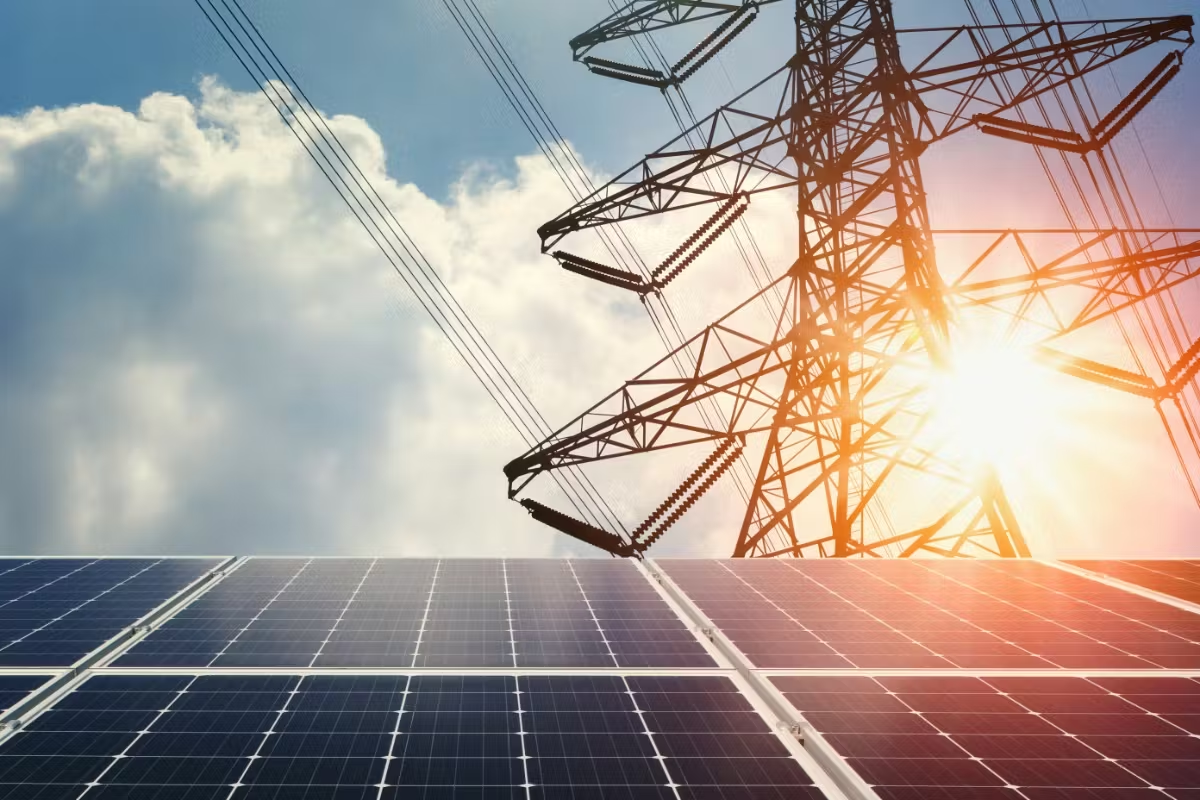
Most homeowners and businesses have limited roof space, and monocrystalline silicon solar panels maximize the use of that space, a key advantage for residential users of an on grid solar system. Specifically, each monocrystalline silicon solar panel produces 350–400 watts of power, while a polycrystalline silicon solar panel of the same size produces only 250–300 watts. This means you need 20–25% fewer solar panels to achieve the desired system size.
Additionally, a 5kW on grid solar system requires 13–15 monocrystalline silicon solar panels, while polycrystalline silicon requires 17–20. This difference makes on grid solar systems possible for situations with limited roof space. This also means fewer panels translate to fewer roof perforations, faster installation, and lower labor costs. A 6kW monocrystalline silicon solar system can be installed in just 1-2 days, while a polycrystalline silicon solar system of the same capacity takes 2-3 days.
It provides a more stable power supply from the grid.
Grid-connected solar systems need to generate electricity throughout the day, not just during the peak sunlight hours, to maximize energy savings. Monocrystalline silicon solar panels, due to their monocrystalline structure, perform better than other materials in low-light conditions.
The uniform crystal structure of monocrystalline panels captures more light across the solar spectrum, including diffuse and red/infrared light. This maintains a stable voltage even in low-light conditions, ensuring efficient operation of the grid-connected inverter. Polycrystalline silicon solar panels, on the other hand, often experience voltage drops below the inverter’s minimum threshold in low-light conditions, resulting in power generation being halted. Furthermore, monocrystalline silicon solar panels generate 1-2 hours more power per day than polycrystalline silicon solar panels, which translates to an additional 300 kWh of power generation per year for a 6kW system.
Long-Term Durability
Solar on grid systems are a long-term investment, with most homeowners using them for 25 years or more. Monocrystalline silicon panels are durable, ensuring your solar on grid system continues to generate benefits for decades to come. PowerDream’s monocrystalline silicon solar panels come with a 30-year warranty, guaranteeing 80% of their original efficiency over an extended period of use. They also boast a superior temperature coefficient: monocrystalline silicon solar panels lose only 0.34% of their efficiency for every 1°C increase above 25°C (77°F), compared to 0.4% for polycrystalline silicon solar panels. In hot climates, this translates to a 5% to 7% annual increase in energy production. Monocrystalline structures are also less prone to microcracks and photodegradation than polycrystalline panels, which may lose 2-3% of their efficiency in the first year.
Compatibility with on grid Inverters
Solar on grid systems rely on inverters to convert the direct current (DC) generated by solar panels into alternating current (AC) supplied to the grid. Monocrystalline silicon solar panels are perfectly compatible with modern on grid inverters. Monocrystalline silicon solar panels have higher open-circuit and operating voltages, matching the input voltage range of most on grid inverters. This ensures the inverter operates at maximum efficiency, converting a higher percentage of DC into usable AC. Additionally, the stable voltage of monocrystalline silicon panels prevents the inverter from shutting down due to voltage spikes or drops. Scalability: Monocrystalline silicon solar panels are easily scalable for larger-scale on grid solar systems. Their uniform performance ensures all panels in the array operate synchronously, avoiding string losses.
The Best Choice for on grid Systems
For on grid solar systems, monocrystalline silicon solar panels offer higher efficiency, maximum energy output, space savings that fit limited rooftops, a stable power supply even in low-light conditions, durability to ensure a high return on investment, and perfect compatibility with inverters. Compared to users of other types of solar panels, monocrystalline silicon users generate 18% more electricity, have lower electricity costs, and recover their investment more quickly.