
Off grid home solar system kit specifications: Key parameters buyers should ask for
Many off-grid households experience power shortages two years after installing their off-grid systems. Many of these issues are attributed to mismatched specifications—for example, the battery capacity is too small to cover cloudy days, or the inverter is too weak to power basic appliances. For families relying on off grid power, this means power outages can disrupt their lives at any time. Therefore, before purchasing an off grid home solar system kit, it’s crucial to inquire about the correct specifications. As a supplier, PowerDream carefully designs all off grid solar system specifications to avoid these pitfalls. We also explain six key specifications buyers must verify, using our 18 kWh kit as an example to illustrate the importance of proper sizing.
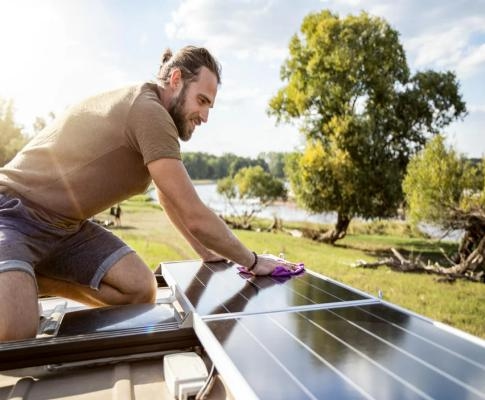
Off grid Home Solar System Kit: Solar Panel Power and Efficiency
If the solar panels in your off grid home solar system kit have too little power or low efficiency, you’ll never generate enough electricity to meet your needs. Buyers should be aware of the following questions and the specific performance of the PowerDream 18 kWh solar system:
Question 1: “What is the total power of the solar panels? How many panels are included in the kit?” The total power determines the daily power generation. A 1,500-square-foot (approximately 147 square meters) off-grid home requires 5-7kW of solar panels; PowerDream’s 18 kWh kit includes 36 550-watt monocrystalline solar panels, enough to generate 19.8kW of electricity on a sunny day.
Question 2: “What is the efficiency rating of the solar panels?” Efficiency is crucial for off-grid homes with limited rooftop/ground space. PowerDream’s solar panels have an efficiency of up to 23%, while budget kits have an efficiency of only 18-20%, allowing them to generate more electricity in the same space.
Question 3: “Are the solar panels suitable for extreme weather?” Off-grid homes often face inclement weather. PowerDream’s solar panels are IP68-rated and can withstand harsh conditions.
Battery Capacity and Type for Off Grid Home Solar System Kit
Off-grid solar systems cannot rely on the grid for backup power; your battery is your “energy bank” for nighttime and cloudy days. This is a common mistake buyers make. Here are some questions to ask and specifications to understand:
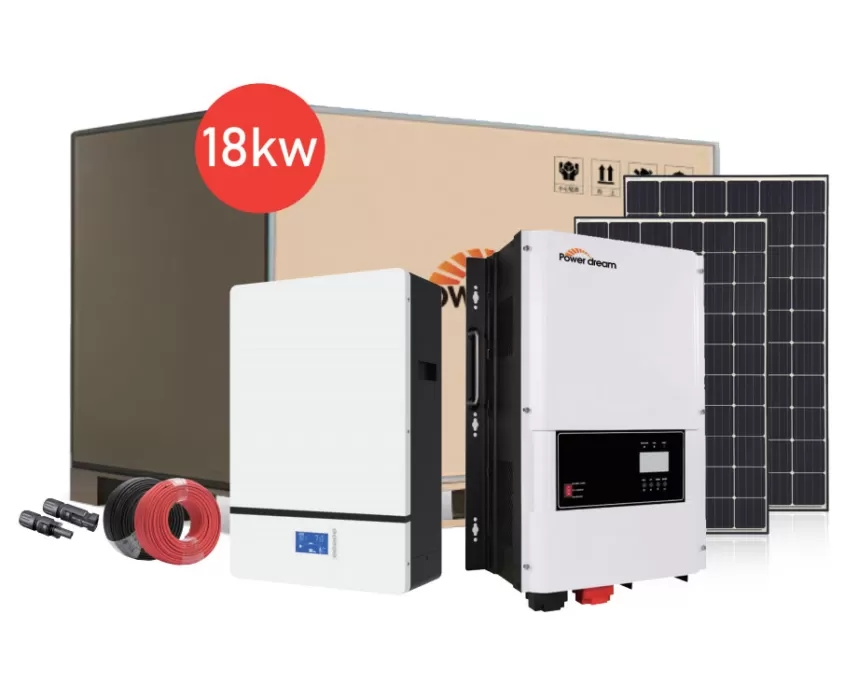
Question 1: “What is the usable capacity of the battery?” The nominal capacity is the total energy a battery can hold, while the usable capacity is the amount of energy you can safely use without damaging the battery. The PowerDream 18 kWh solar system uses a 19.2 kWh lithium-ion battery, which is enough to power a 1,500-square-foot house for more than 2 days on cloudy days.
Question 2: “What type of battery does this kit use, and what is its lifespan?” Lead-acid batteries have a lifespan of 3-5 years; lithium-ion batteries have a lifespan of 10-15 years. PowerDream uses lithium-ion batteries, which are safer and have a longer lifespan than other types.
Question 3: “Can the battery withstand temperature fluctuations?” Off-grid batteries can freeze in the winter and overheat in the summer. PowerDream batteries operate at a temperature range of -20°F to 60°F.
Inverter Power and Waveform, Converting DC to AC
Solar panels generate DC power, but your home appliances use AC—the inverter converts DC to AC. An underpowered or low-quality inverter can shut down when you need it most. Here are some questions to ask:
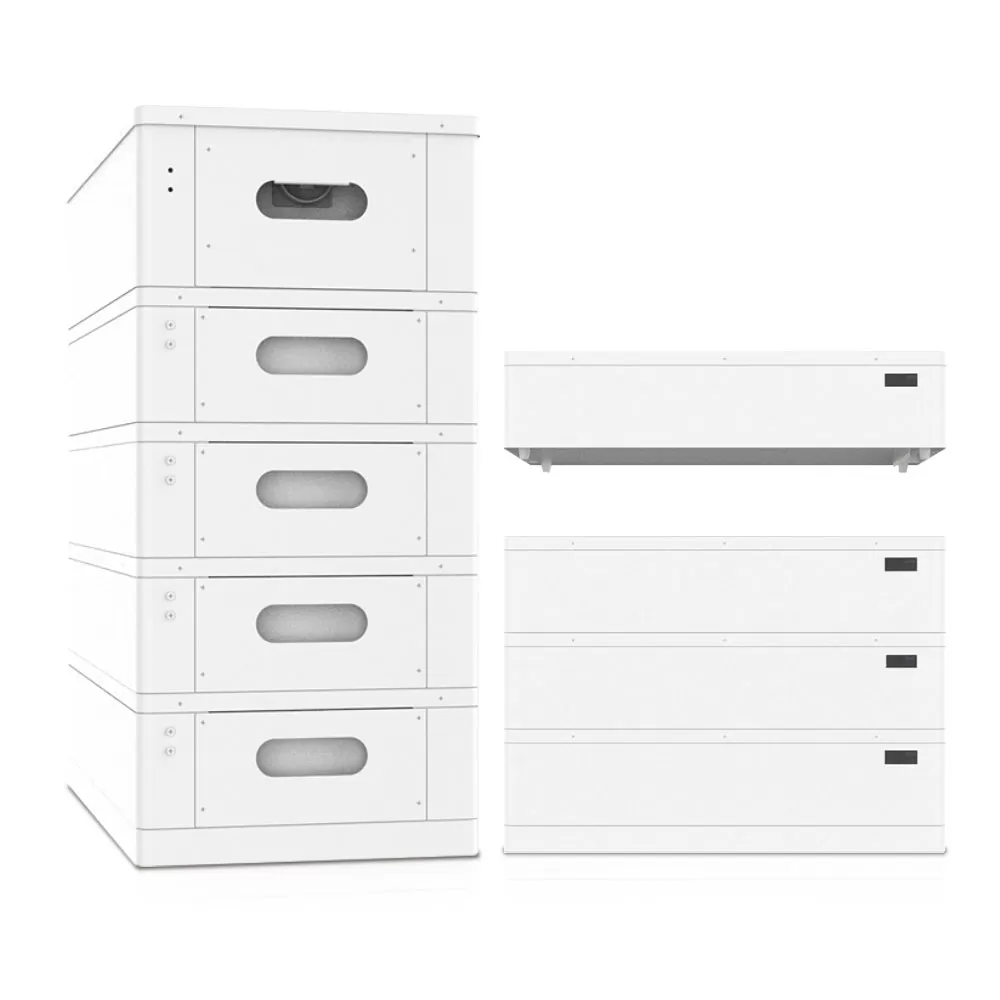
Question 1: “What is the inverter’s continuous power rating? What is its surge rating?” Continuous power rating refers to the amount of power it can deliver uninterrupted; surge rating refers to its ability to withstand short bursts of current. The PowerDream 18 kWh kit includes a 5kW pure sine wave inverter with 10kW surge power, enough to simultaneously power a 3kW heater, refrigerator, and lights.
Question 2: “Is this a pure sine wave inverter or a modified sine wave inverter?” Modified sine-wave inverters can damage sensitive electronics and generate noise. Ours uses pure sine wave, so all your devices will operate safely.
Question 3: “Does the inverter have built-in monitoring?” Off-grid households need to track their electricity usage. PowerDream’s inverters connect to a mobile app, allowing you to view real-time power generation, battery charge, and appliance usage on your phone.
Charge Controller Type and Amperage to Protect Your Batteries
A charge controller regulates the power flow from the solar panel to the battery. Excessive current can damage the battery, while too little current wastes energy. Here are some essential spec questions buyers should ask:
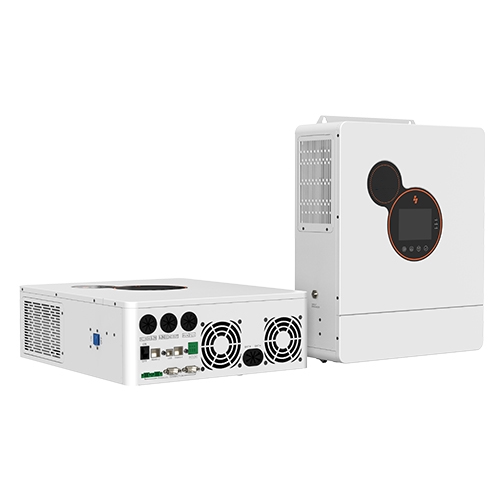
Question 1: “Is it an MPPT or PWM charge controller?” MPPT controllers have an efficiency of 90-99%; PWM controllers are only 75-80% efficient. PowerDream’s 18 kWh kit uses a 60A MPPT controller.
Question 2: “What is the controller’s voltage compatibility?” It must match your system voltage (12V, 24V, 48V). PowerDream’s kit uses 48V, which means lower current and thinner wiring, resulting in less energy loss.
Question 3: “Does it have battery protection?” Overcharging or deep discharging can damage the battery. The PowerDream controller cuts off power when the battery reaches 100% or 20% charge, extending battery life by 30%.
One user who recommended the PowerDream kit stated, “The PWM controller is overrated. The MPPT controller in the 18kWh kit yields 20% more battery power per day—a great value for off-grid customers.”
Backup Generator Compatibility for Extended Cloudy Days
Even the best off grid home solar system kits require backup power for weeks of cloudy days. To ensure compatibility, the following specifications should be determined:
Question 1: “What size generator is compatible with this kit? How do I connect it?” The PowerDream 18kWh kit works with 3-7kW propane/gas generators. It also has a built-in generator input, eliminating the need for additional wiring.
Question 2: “Will the kit automatically switch to generator power when the battery is low?” Manual switching is cumbersome. PowerDream’s off-grid solar system automatically starts the generator when the battery reaches 15% charge and automatically shuts down at 80%.
A Minnesota homeowner said, “Last January, we had 10 cloudy days. My generator automatically switched on and off, keeping the batteries charged, and I didn’t have to take cold showers or eat spoiled food.”
Understand the specifications to choose a reliable off grid solar system
The quality of an off grid home solar system kit depends on the specifications you choose or the specifications provided by the supplier. By understanding the panel power/efficiency, battery capacity/type, inverter size/waveform, charge controller type, generator compatibility, and warranty, you can avoid common problems that plague 62% of off-grid homeowners.

