String Monitoring vs. Central Monitoring for Solar On grid System: Pros, Cons, and Costs
For those considering or already using a solar on grid system, a system without proper monitoring can lose 5-15% of its energy annually due to undetected issues such as shaded solar panels, faulty inverters, or wiring errors. This not only wastes sunlight but also wastes electricity bills and delays return on investment. Therefore, appropriate monitoring tools are needed to transform reactive repairs into proactive optimization. To this end, we’ve analyzed the two core monitoring methods for solar on grid systems—string and centralized—and analyzed their pros, cons, and costs to help you choose based on system size, budget, and performance goals.
What are string and centralized monitoring for solar on grid system?
String monitoring tracks the performance of “strings” (groups of 8-12 solar panels) by measuring string-level voltage and current, typically through sensors connected to the system’s inverter. Most entry-level home solar on grid systems include basic string monitoring functionality, as they need to be paired with the home inverter. Central monitoring, by contrast, provides system-wide visibility, tracking not only the strings but also the output of individual inverters, battery storage systems, and sometimes even individual solar panels. Central monitoring systems for solar on grid systems are scalable and often include cloud-based dashboards, allowing users to access real-time data anytime, anywhere.
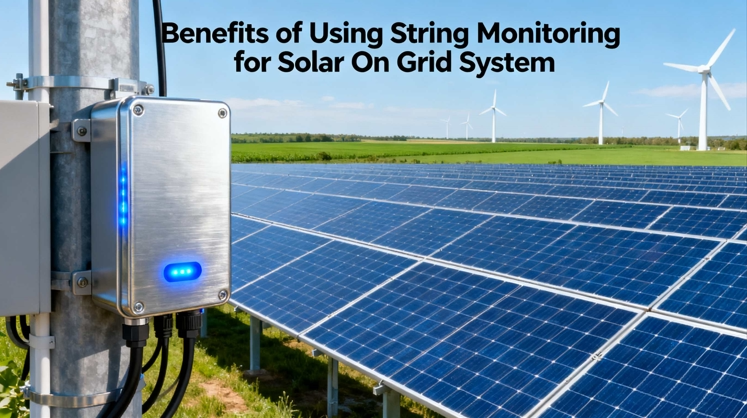
Benefits of Using String Monitoring for Solar On Grid System
String monitoring is particularly advantageous for users who prioritize simplicity and cost when purchasing a solar on grid system, especially for small and medium-sized systems. First, it’s affordable: Solar On Grid System manufacturers often reduce the price of string monitoring hardware (sensors, basic dashboards) to a fraction of that of central monitoring tools, making it an ideal choice for homeowners or small businesses with tight upfront budgets. Second, it’s easy to install. Most string monitors integrate directly with standard inverters, allowing installers to set up within hours.
Third, it provides actionable data for small systems: if the output of a particular string drops, you know to check whether there are issues with shading, debris, or faulty panels within that group. Furthermore, string monitoring requires virtually no maintenance. For many users, this balance of affordability and ease of use makes string monitoring a popular choice when purchasing a solar on grid system.
Disadvantages of String Monitoring
While string monitoring is suitable for small systems, it has some key limitations that become increasingly apparent as the system size or performance requirements grow. The most significant disadvantage is that string monitors cannot pinpoint problems with individual panels; they can only identify issues with the entire string. If a single panel in a string of 10 panels fails, the monitor will indicate low output power for that string, but you must manually inspect each panel to locate the fault. This delays repairs and prolongs energy losses.
Secondly, string monitoring often lacks advanced features, such as predictive maintenance. Unlike centralized tools, it cannot alert you to impending inverter failure or decreased panel efficiency, requiring you to become aware of the problem only after performance has degraded. Furthermore, string monitoring struggles with complex setups: if your solar on grid system includes multiple inverters or battery storage systems, string monitoring tools may not synchronize data across the components, resulting in fragmented information.
Advantages of Central Monitoring
Central monitoring is explicitly designed for users with large solar on grid systems, and its advantages more than offset the higher procurement costs of solar on grid systems. First, it provides unparalleled visibility: solar on grid system manufacturers build central tools to track every component, from individual panels to inverters and energy storage systems. This means you can identify a single faulty panel or a failing inverter within minutes, reducing energy losses.
Second, it supports predictive maintenance: Central monitoring utilizes data analytics to identify trends and alert you to issues before they cause downtime, such as an inverter starting to overheat or a panel’s efficiency decreasing at a rate faster than usual. Third, it is scalable. As you expand your solar on grid system, central monitoring can seamlessly integrate new components without the need for additional hardware. For users with large solar on grid systems, this means less downtime, lower repair costs, and a faster return on investment.
Disadvantages of Central Monitoring
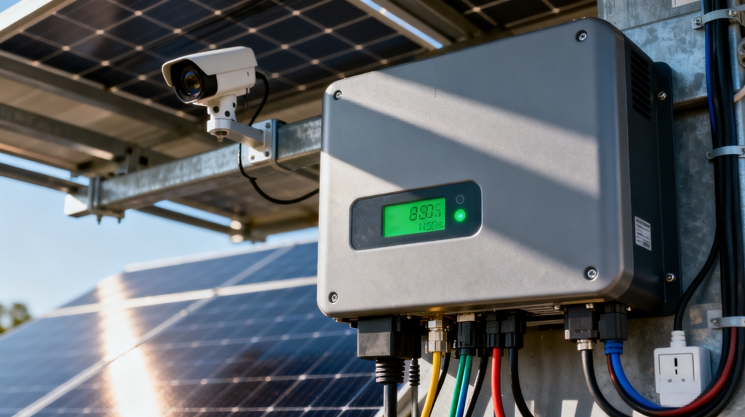
The main obstacles to central monitoring are cost and complexity, two key considerations when purchasing a solar on grid system, especially for budget-conscious users. First, there are higher upfront costs: Central monitoring hardware and software subscriptions increase your initial investment. Solar on grid system manufacturers typically charge 10% to 25% more for central monitoring than for similarly configured string monitoring, which can be prohibitive for homeowners or small businesses on a tight budget.
Second, the installation process is more complex, requiring additional technicians to connect sensors, synchronize components, and set up the cloud dashboard. This can add one to two days to the installation time compared to string monitoring. Small businesses without a dedicated maintenance team may struggle to fully utilize the potential of central monitoring, resulting in a wasted investment.
Choosing the Right Monitoring Solution
The decision between string monitoring and central monitoring depends on three key factors: system size, budget, and performance goals. For homeowners and small businesses with systems of 8 kW or less, string monitoring offers a better balance of affordability and ease of use, reducing the purchase cost of a solar on grid system while providing sufficient data to fix common problems. For commercial users, large farms, or anyone with a system over 8 kW, central monitoring is more suitable, minimizing downtime, lowering maintenance costs, and maximizing energy output.