
Weatherproofing of off grid solar system kit: IP ratings, enclosures, and corrosion protection
When purchasing an off grid solar system kit, users typically prioritize the number of solar panels, battery capacity, and inverter power. However, a crucial factor in determining long-term uptime and warranty performance is the hardware’s resistance to weather and corrosion. Even an appropriately sized system can quickly fail if installed in a humid coastal yard, a rooftop subject to monsoon winds, or a dusty desert plain, if the enclosure, connectors, and materials are not of standard quality. Poor weatherproofing increases the need for repairs, shortens module life, and often voids the warranty.
The Significance of IP and NEMA Ratings for Off Grid Solar System Kit
Selecting the appropriate IP rating is a primary consideration when purchasing an off grid solar system kit. The globally recognized IP (Ingress Protection) standard (IEC 60529) and the associated NEMA/UL ratings represent the enclosure’s ability to resist solid objects, water, and corrosion. Therefore, buyers typically map each module to the appropriate IP rating based on the intended installation.
IPxx: A two-digit number. The first digit (0-6) indicates protection against solid objects (dust), and the second digit (0-9K) indicates protection against liquids. For example, IP65 means dustproof (6) and protected against low-pressure water jets (5). IP66 means dustproof and protected against high-pressure water jets (6); IP67 means short-term immersion; IP68 means long-term immersion to a specified depth. IP69K adds resistance to high-pressure, high-temperature washdowns (suitable for industrial environments).
NEMA ratings (US): NEMA 3R (rain and snow weather), NEMA 4/4X (washdown and corrosion resistant), NEMA 6, NEMA 12 (dustproof/industrial). NEMA 4X is often used in coastal or corrosive environments because it specifies resistance to corrosion. UL50/UL50E specifies the enclosure structure and certification.
Protection level requirements for each component in the off grid kit:
PV combiner box and DC junction box: Minimum protection level is IP65; IP66 or NEMA 4X is preferred in coastal or monsoon climate areas.
Inverter/Inverter Charger: Many outdoor string inverter models are rated IP65/IP66. Ensure they are housed in a weatherproof enclosure for outdoor installations. For small off-grid inverter chargers installed on exposed rooftops or free-standing poles, ensure they meet at least an IP65 rating, with UV-resistant housing and corrosion-resistant fasteners.
Battery Enclosure: Both lithium-ion and lead-acid batteries typically require a well-ventilated enclosure. For sealed lithium-ion modules, an IP54–IP66 rated enclosure can provide controlled ventilation while protecting the electronics. For flooded lead-acid batteries, the enclosure must provide ventilation and drip protection, rather than a fully sealed immersion rating.
Electronics and Controllers: MPPT charge controllers and monitoring gateways can be IP65-rated or housed in a small weatherproof enclosure. If installed outdoors, ensure the enclosure has pressure equalization vents to prevent pressure buildup.
Enclosures, Vents, and Pressure Equalization for Off Grid Solar System Kit
A weatherproof enclosure is more than just a pressurized box. Effective enclosure design should consider factors such as drainage, condensation, pressure differentials, UV exposure, and ease of maintenance. Consider these features when selecting an enclosure for your off grid solar system kit.
Pressure-Equalizing Vent:
Sealed enclosures experience pressure changes in response to temperature fluctuations. If pressure is not balanced, these pressure cycles can force moisture to penetrate the seal. High-quality vents, however, allow air to pass while preventing liquid water from entering. For outdoor charge controllers or small combiner boxes, it’s crucial to install the vent on the enclosure cover or sidewalls, especially in humid climates, where moisture intrusion is a primary failure mode.
Drainage and Sloped Covers:
Select enclosures with sloped covers or integrated drip edges for rapid drainage. Gaskets should be compressed evenly; choose molded, fixed gaskets rather than glued or loose-fitting gaskets, as these can easily degrade or become compressed during repairs.
Mounting and Clearances:
The enclosure should be installed with a small gap behind the backplate to facilitate air circulation and prevent heat soak. Do not mount the cabinet of an off grid solar system kit directly on highly conductive surfaces, as these surfaces may conduct heat or moisture, potentially compromising the system’s performance. In coastal areas or rainy climates, install the cabinet under an eave or use an additional weatherproof cover to protect the top while allowing for air circulation.
Desiccant, Heater, and Thermostatic Control:
For humid areas, place removable desiccant packs inside smaller cabinets. For larger battery/inverter compartments, consider using a thermostatically controlled, low-wattage heater to prevent condensation at night. In cold climates, heaters prevent the internal temperature from dropping below the recommended operating range for the batteries, thereby preventing moisture from being generated when the equipment is heated.
Corrosion-Resistant Materials, Coatings, and Fasteners
Corrosion is a hidden killer for off grid solar system kits, particularly in areas near saltwater or in industrial environments. Therefore, it’s essential to ensure the appropriate materials and coatings are in place to significantly extend the lifespan. The following are some functional, corrosion-resistant materials to consider when selecting an off-grid solar system kit.
Construction Materials and Coatings: Aluminum is a lightweight material that is anodized for its inherent corrosion resistance. Suitable for module frames, junction boxes, and some small enclosures. For coastal locations, use marine-grade anodized steel with a thick oxide layer for enhanced corrosion resistance. When joining aluminum to steel, be mindful of galvanic corrosion; use non-conductive washers or coatings to isolate the dissimilar metals.
Hot-dip galvanized steel is the standard for racking structures. If your off grid solar system supplier offers options such as Aluzinc, Magnelis, or S350GD, ensure they meet ISO 1461:2009 or equivalent standards for hot-dip galvanized steel, with a minimum zinc coating. These materials offer improved corrosion resistance. For the harshest coastal environments, consider a two-layer system.
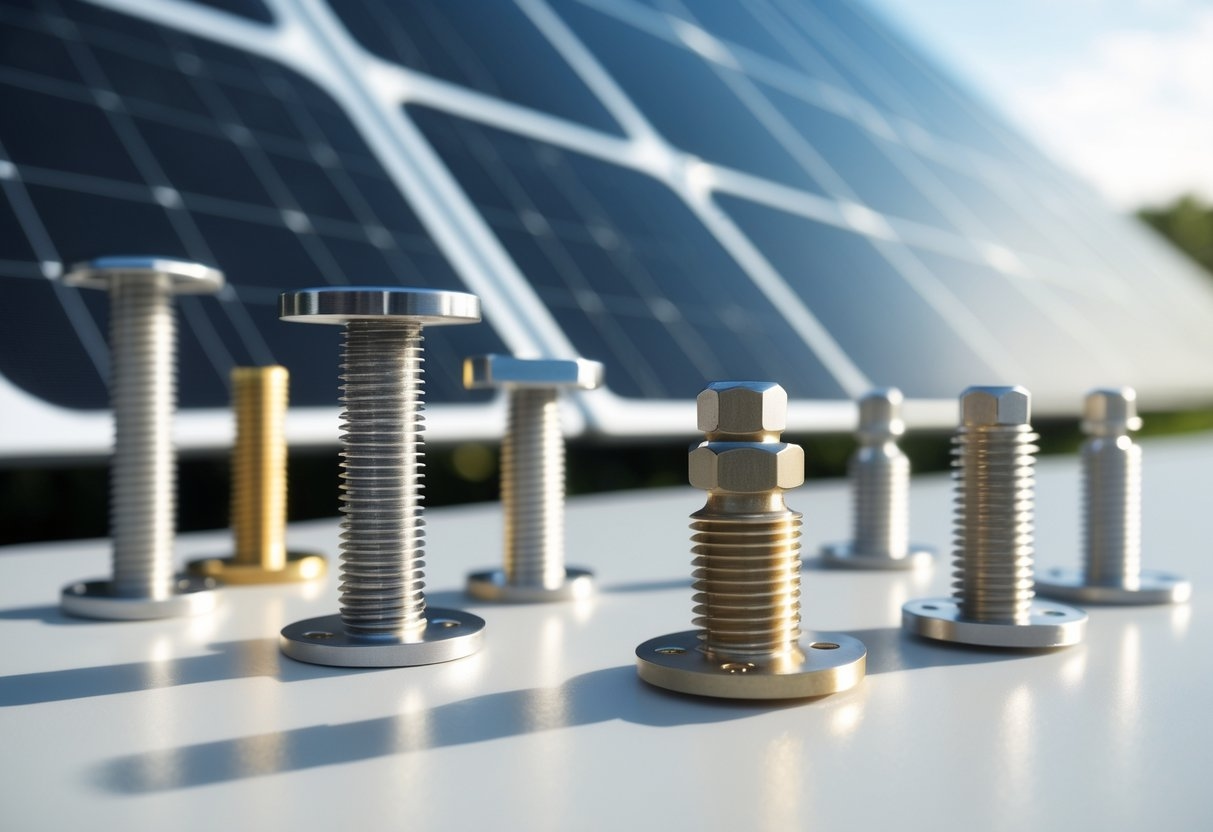
Stainless steel fasteners: For coastal installations, use A4/316; A2/304 is acceptable in inland areas but corrodes more rapidly in coastal locations. Specify the material grade and mechanical rating, and avoid using mixed metal fastener kits.
Climate-Specific Recommendations and Best Installation Practices
Weather conditions vary significantly from region to region. The following are practical recommendations for specific climates from Power Dearm, an off grid solar system supplier.
Coastal and marine environments:
Use A4/316 stainless steel fasteners or a double-sided system (hot-dip galvanizing + polyester powder coating). For hot-dip galvanized rails, specify Aluzinc/Magnelis or high-weight zinc with a double-sided coating. Additionally, use conformally coated PCBs and sealed connectors, and ensure regular maintenance intervals of every 6-12 months to inspect fasteners and remove salt deposits.
Tropical monsoon climates (high humidity, heavy rain):
Outdoor enclosures must meet an IP65 or higher rating and use pressure-equalizing vents to control condensation. Use stainless steel hardware and a UV-resistant coating to prevent mold and biodegradation. Opt for elevated mounting and avoid installation in areas with stagnant water; route cables indoors whenever possible.
Arid, dusty deserts and high-sand areas:
Use a dust-resistant enclosure (IP65/IP69K, washdown compatible) and select filters for vents. Consider fanless designs to reduce dust ingress.
Choose a Weatherproof Off Grid Solar System Kit
When selecting an off-grid solar system kit, be sure to check the IP/NEMA ratings of the components, the manufacturer’s testing (including IP/UL certification, salt spray, and UV exposure), and the rugged materials and fastening specifications. Furthermore, if necessary, tailor your selection to suit local climate conditions (coastal, tropical, desert, and cold climates).

