
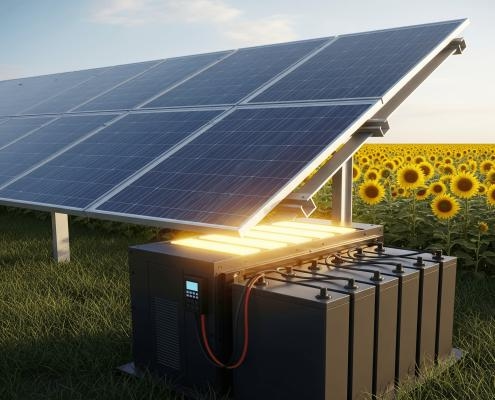
Hidden factors leading to the rising solar battery cost
Overall data for residential and commercial energy storage has raised concerns among many users. Fluctuations in installation prices and inconsistent quotes from suppliers have left customers wondering why a seemingly mature technology continues to experience cost fluctuations. The rising solar battery cost often involves less obvious drivers, not just the obvious battery price, but also a range of factors, including materials, manufacturing, regulation, logistics, and market factors, which all contribute to the rising costs.
Raw Materials and Battery Chemistry Pressures Drive Solar Battery Costs
One of the most significant hidden drivers of solar battery costs is the raw material supply and the specific battery chemistry. Modern batteries used with solar batteries primarily utilize lithium-ion chemistries: lithium iron phosphate (LFP), nickel manganese cobalt (NMC), and variations in between. Each chemistry relies on different commodity inputs: lithium, nickel, cobalt, manganese, graphite, and electrolyte precursors. Fluctuations in the prices of any of these inputs directly impact battery pack costs.
For example, when nickel or cobalt prices rise due to production disruptions or EV demand, NMC-based battery packs can become more expensive. Conversely, LFP contains no nickel or cobalt, making it typically cost-effective when these metals rise in price. However, lithium iron phosphate requires high-purity iron phosphate raw materials and specialized manufacturing adjustments. Regional bottlenecks have emerged in the supply of graphite for anode production. The choice of synthetic versus natural graphite also affects cost and yield. Furthermore, lithium conversion capacity is highly capital-intensive and can become a bottleneck. These imbalances are not always reflected in manufacturers’ quotes, but they determine the marginal price of additional capacity.
Manufacturing Capacity, Factory Economics, and Volume Effects
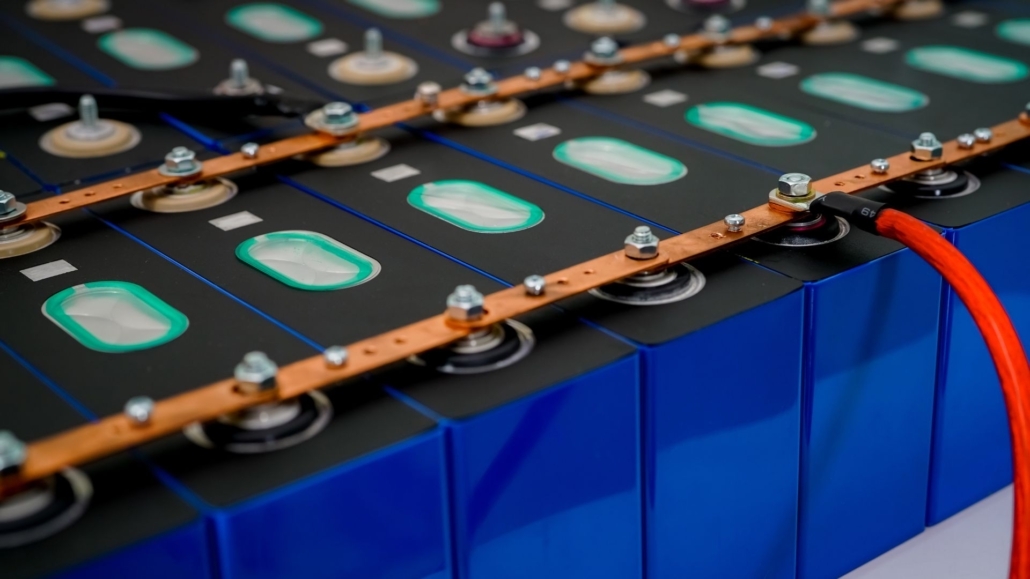
A second hidden pressure on solar battery costs comes from manufacturing costs. Unlike commercial photovoltaic batteries, battery production is capital-intensive and yield-sensitive. Battery manufacturing requires gigafactory-scale investments in electrode coating lines, battery formation chambers, drying rooms, and high-precision assembly. New factories take years to come online; therefore, rapid demand growth outstrips existing capacity, forcing manufacturers to increase capital utilization and allocate batteries to the most profitable customers. This allocation dynamic raises the marginal price for buyers without scale or long-term contracts.
Furthermore, solar batteries must meet strict quality tolerances and formation cycles to ensure stable battery aging. Yield issues on early production lines—uneven coatings, electrode misalignment, or formation anomalies—can result in scrap. High initial defect rates can increase the actual cost of solar batteries until process control stabilizes. Even after production lines mature, incremental capacity expansions often use older equipment or third-party components, which can suppress yield and increase the cost per kilowatt-hour.
Supply chain disruptions, logistics, and policy frictions drive up solar battery cost
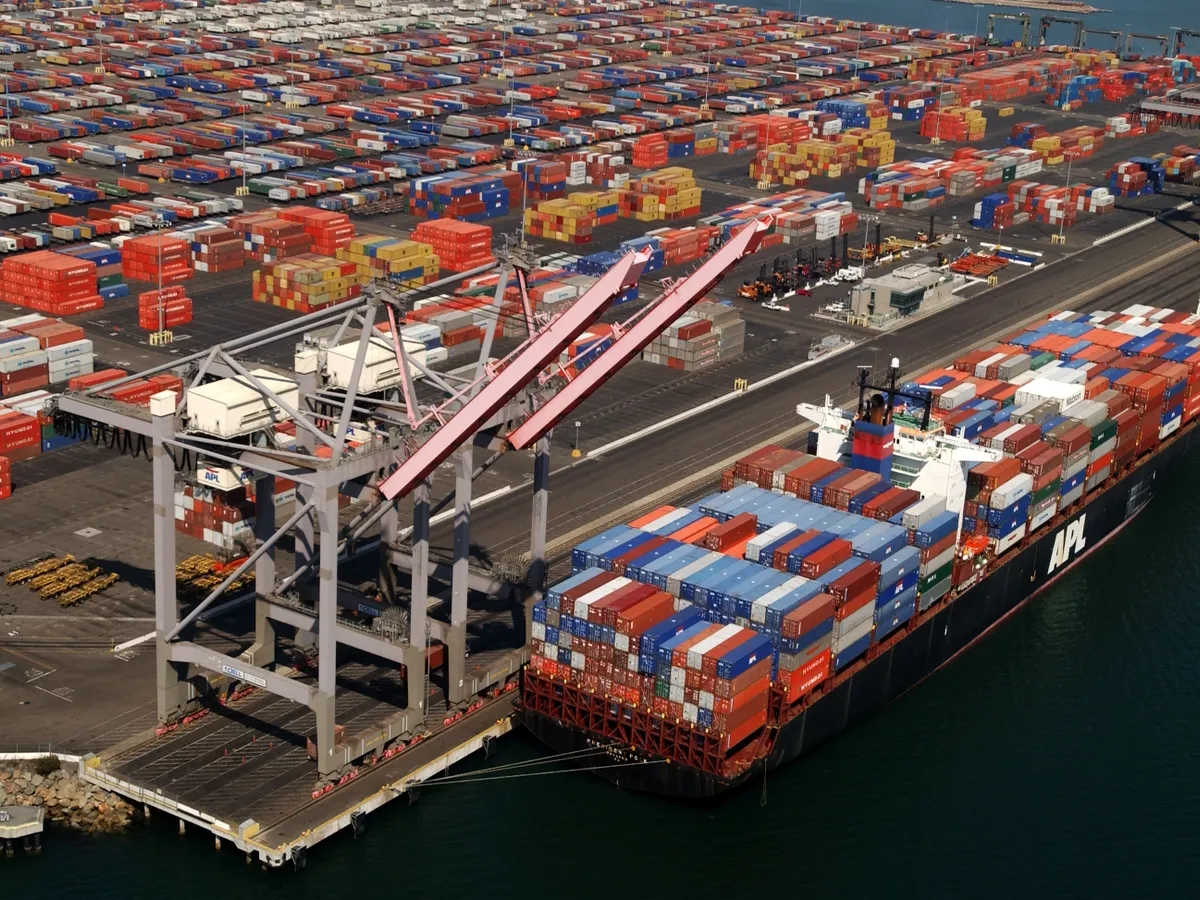
Logistics and trade policies are powerful hidden drivers of solar battery costs. Batteries and modules are heavy, regulated commodities. Freight rate fluctuations, port congestion, and trade policy changes can add hundreds of dollars to the landed cost of each battery stack. Furthermore, batteries are classified as hazardous goods under IATA/IMDG regulations, which increases packaging, documentation, and carrier costs compared to many other electronic products. These subtle freight and compliance costs can significantly impact the final price of solar cells delivered to installers and end customers.
Trade and tariff policies further complicate the situation. Anti-dumping duties, import tariffs on batteries or chemical precursors, or country of origin rules can unpredictably increase landed costs if new measures impact supply chain nodes. During periods of geopolitical pressure or sanctions, solar battery suppliers may reroute supply through the more profitable secondary market, and manufacturers typically pass these costs on. For global solar energy storage buyers comparing quotes from different suppliers, differences in shipping terms and their treatment of tariffs often result in significant line-item differences.
Regulatory, Testing, and Safety Compliance Burdens
Regulatory compliance carries significant hidden costs, increasing solar battery costs beyond raw material and factory costs. Batteries must meet increasingly stringent safety, shipping, environmental, and recycling regulations. Obtaining certification to local standards—such as UL 1973 and UL 9540A in the US, UN38.3 for shipping, CE and WEEE in the EU/UK, and CSA standards in Canada—requires laboratory testing, design changes, and documented factory processes.
Furthermore, shipping regulations (UN38.3) require rigorous testing of batteries and battery packs, while airlines or freight carriers require additional documentation and packaging, which can increase shipping costs. The growing emphasis on secondary use and recycling creates new compliance burdens, or the need to internalize end-of-life costs. These obligations increase manufacturing costs and are often reflected in the final solar battery cost in the form of recycling fees or service surcharges.
Multiple Factors Influencing Costs
The rising solar battery costs are the result of a complex interplay of factors: the commodity cycles of lithium and metals, capital and revenue realities in manufacturing, logistics, and tariffs, rising energy and chemical prices, and intense competition for demand from other large buyers. Each of these factors contributes to costs, and these costs can be easily overlooked when focusing solely on battery pack prices.

