How to determine the corresponding configuration before purchasing solar energy street light?
Before purchasing a solar energy street light, it’s important to understand the basic lighting conditions in your area. For example, a north-facing suburban area located at 45° north latitude experiences an average of 2.8-3.4 hours of peak sunshine in winter, while a site situated at 15° north latitude experiences an average of 5-6 hours of peak sunshine year-round. These figures influence the size of your PV array, the required battery capacity, and even the tilt and azimuth of the solar panels. Therefore, the first step in planning your solar street light purchase is to gather local site data. Next, align the climate benchmarks with your lighting specifications. This helps you determine the size of the solar panels, batteries, controller, and supporting hardware.
Site Assessment and Solar Resource Analysis for solar energy street light
First, determine the precise latitude and longitude of each solar energy street light pole location. This determines the annual solar altitude and the duration of daylight. Next, collect local meteorological data, including the monthly average global horizontal irradiance or peak sunshine hours, the monthly average temperature range, and the prevailing wind speed. You can obtain this data from national meteorological services, satellite solar radiation maps, or industry databases.
Why are these figures important? Because solar yield tells you how many hours of sunshine are needed, on average, to produce the equivalent of full sun. For example, a site with a solar yield of 4 means a 100-watt solar panel can generate the equivalent of 400 watt-hours of electricity per day under standard conditions. Next, document shading and orientation. Map any trees, buildings, or overhead obstructions that could cast shadows during peak sunlight hours. Even partial shading of a single string can significantly reduce output power. Finally, if the panels can receive reflected light, document the ground reflectivity.
Determine the lighting requirements for a solar energy street light
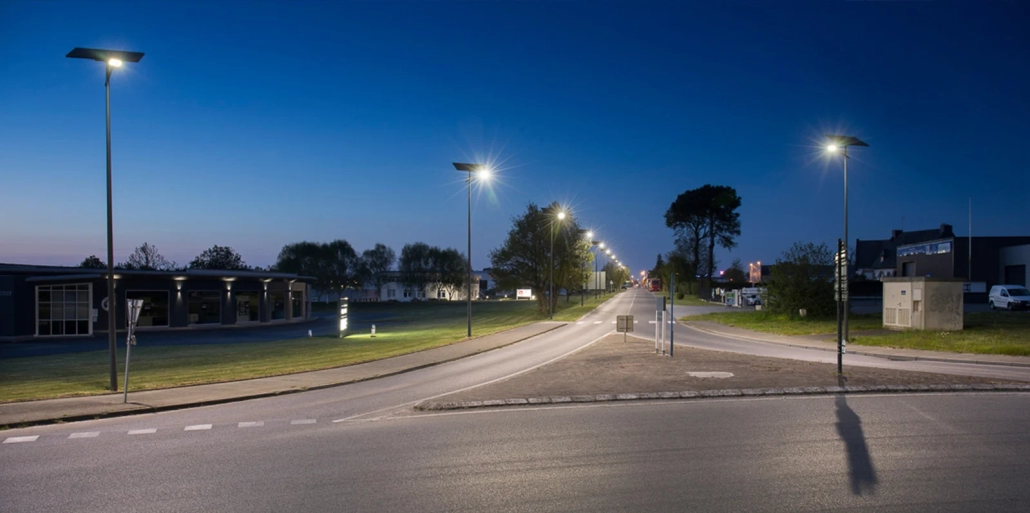
First, determine whether you need lighting based on lux levels or lumen output. Target parameters include the average maintained illuminance required on the road surface, uniformity, pole spacing, and nightly operating hours. Select appropriate LED lumen output and efficacy. The current LED lumen output for solar street lights ranges from 120 to 180 lm/W, but actual luminaire efficacy depends on driver losses, the optical system, and environmental factors. A 30 W LED module, with a raw efficacy of approximately 130 lm/W, produces a raw luminous flux of roughly 3,900 lumens. Consider lumen maintenance: specify LEDs with good light decay characteristics.
Also, define nighttime operating modes: continuous full power, scheduled dimming, motion-triggered boost, or adaptive dimming based on battery status. Dimming strategies can significantly reduce energy consumption, thereby reducing demand on photovoltaics and batteries.
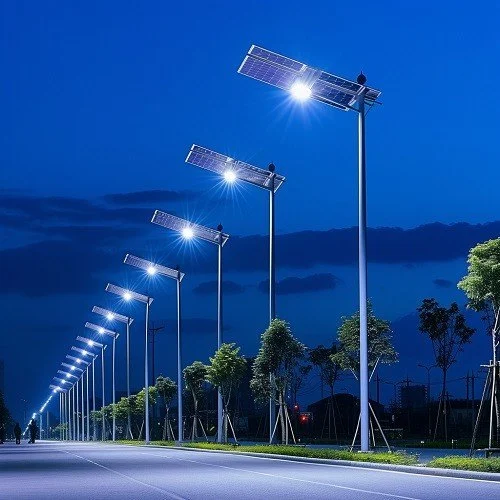
Battery Sizing and Autonomy Considerations
After determining daily power requirements, adjust the battery capacity based on the desired endurance. Typical designs are designed for 2-3 days of continuous operation in urban areas and 4-7 days for remote areas or safety-critical applications.
Battery Sizing Process:
1. Determine average daily energy usage.
2. Multiply by the desired number of days of autonomy to determine the required energy reserve.
3. Apply the allowed DoD and battery temperature derating.
After sizing, pay attention to battery temperature. Battery capacity decreases at low temperatures, and cycle life is shortened at high temperatures. Temperature compensation should be provided, or lithium-iron-phosphate batteries should be used to achieve optimal battery performance over a wide temperature range. Finally, ensure that the charge controller supports the appropriate battery charging algorithm and includes a battery management system (BMS) for cell balancing and protection.
PV Array Sizing and Panel Configuration
PV system sizing converts energy requirements into panel area and power based on the local solar system power factor and system losses. A conservative energy balance approach can be used:
Required daily energy ÷ PSH = Required PV wattage before losses.
Then consider system losses: temperature, pollution, cabling, MPPT efficiency, mismatch, and tilt deviation. Industry practice generally uses a system efficiency factor of 0.7-0.8 (i.e., 20-30% losses), depending on local conditions. The panel tilt and azimuth should also be determined. For year-round performance, the tilt should be roughly equal to the latitude; in summer climates, the tilt can be lowered; for winter performance, the tilt can be increased.
Regarding panel orientation and series connection, consider the following points. For single-pole solar energy street light installations, monolithic panels are typically mounted at an optimized tilt. For urban lighting fixtures, low-profile frameless panels are integrated to reduce wind loads. Furthermore, for multi-panel arrays, the MPPT charge controller should support the selected array voltage and maximum power point. Finally, ensure that the PV array can charge the battery after periods of continuous overcast skies. To increase resilience, you can specify a larger variety or accept a lower level of autonomy.
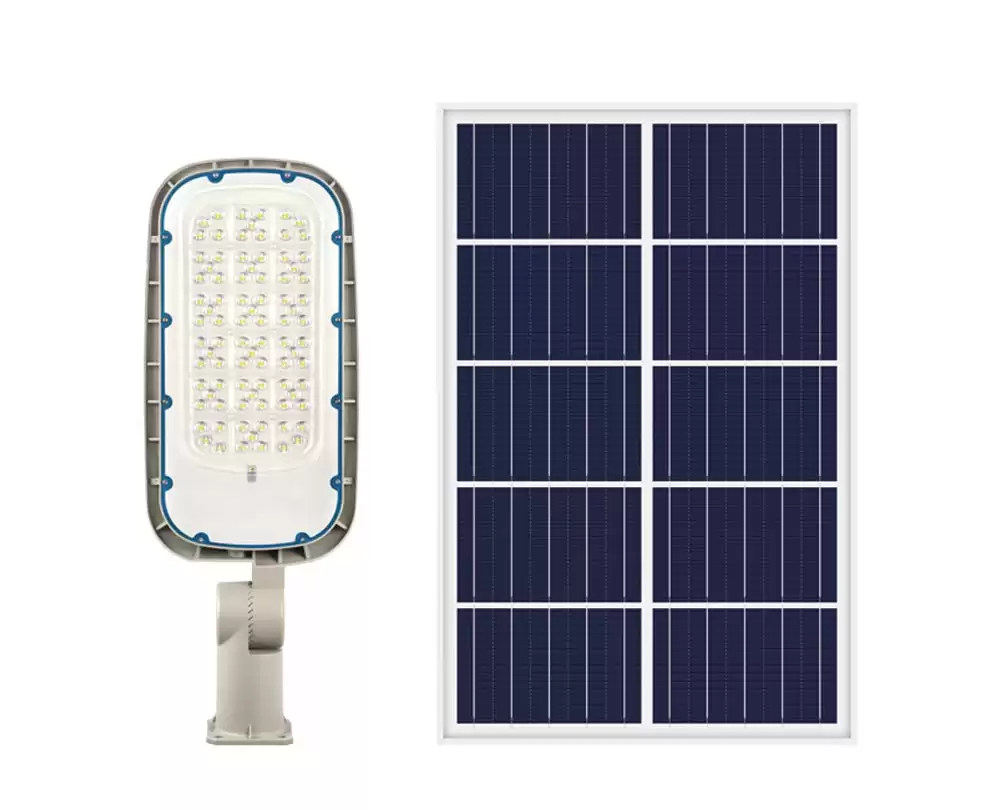
Holistic Design and Environmental Protection
Solar street light design ensures longevity in the field. Pole selection, mounting brackets, and enclosure engineering must comply with local regulations and environmental loads. Structurally, the solar street light pole strength and wind resistance rating must be determined, and the pole size should be able to withstand the local base wind speed and gusts. Furthermore, during installation, ensure the use of shock-absorbing brackets and fixing fasteners, as well as stainless steel fasteners and anti-seize compound to prevent wear and corrosion. Furthermore, the battery and electronics must be housed in an enclosure with good thermal management, adequate ventilation, and IP protection. Ensure an IP65/66 enclosure and powder-coated or hot-dip galvanized steel poles for enhanced corrosion resistance. For environmental protection, add lightning and surge protection to the PV input and DC distribution points. Use UV-resistant cable sheathing and portable connectors for outdoor use.
Choosing a Resilient Solar Lighting System
To determine the appropriate configuration for solar energy street lights, first gather site-specific data, including latitude and longitude, monthly peak power, temperature, and wind conditions. Convert your lighting needs into daily watt-hour loads. Then, choose the battery capacity based on the desired operating time. Also, size the PV array based on local isolation conditions to allow for battery charging while accounting for actual losses. This selection process can help you avoid system undersizing, reduce field failures, and ensure reliable and efficient lighting.