

How to shorten the payback period of a home solar battery?
Homeowners who use home solar battery often tell us that, in addition to achieving energy resilience and lower utility bills, they also want a quick financial return on their investment. The payback period depends largely on choices you can control, including system size, battery chemistry, round-trip efficiency, consumer behavior, and intelligent controls. In fact, by combining demand-side measures, appropriate sizing, and incentives, homeowners can significantly reduce the typical 6-12 year payback period and achieve a faster return on investment without compromising reliability or safety.
Maximizing Home Solar Battery Self-Use to Get More Value
The most effective way to shorten the payback period for a home solar battery is to increase your on-site solar generation. Put, home solar saves you money only when it replaces energy you would otherwise have purchased from the grid. Therefore, the more solar power you store and use during high-cost hours during the day, the faster you’ll recoup the cost of the battery.
How to do it:
1. Analyze your electricity usage: Use your utility bills and your home energy monitor to identify peak usage times. If your bill shows peak usage after sunset, you can install a battery to shift solar power to those times.
2. Choose a battery capacity based on your daily evening electricity load. For many homes, a 5-10 kWh home solar battery is sufficient to meet peak evening lighting, cooling, and some HVAC needs.
3. Optimize usage time: If your utility company offers time-of-use pricing, meaning higher electricity prices in the late afternoon and evening, schedule your battery to discharge during these peak times. This arbitrage strategy can significantly shorten your payback period.
Sample calculation: Assume the grid’s off-peak electricity price is $0.20/kWh and the peak electricity price is $0.40/kWh. If a 10 kWh usable lithium ion solar battery is cycled once daily to offset 10 kWh of peak power, the savings would be $2.00 per day, or approximately $730 per year.
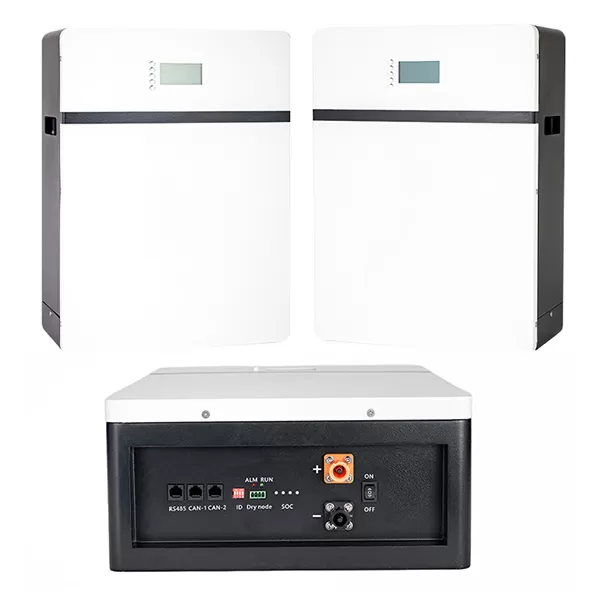
Select the optimal home solar battery chemistry and capacity to ensure optimal efficiency and longevity.
Selecting the optimal battery technology and capacity has a significant impact on long-term economic success. Currently, mainstream home solar cells utilize lithium ion solar batteries. Batteries offer high cycle efficiency, good cycle life, and compact size—key features for a rapid payback.
Key metrics influencing return on investment:
1. Round-trip efficiency: This is the percentage of energy you recover relative to the energy you store. Higher is better. Typical lithium-ion battery systems have efficiencies ranging from 85% to 95%. Every point of efficiency you gain reduces the effective cost per stored kilowatt-hour.
2. Depth of Discharge: A higher usable Depth of Discharge (DoD) allows you to unleash more installed capacity with each cycle. For example, lithium-ion batteries may allow a 90% DoD. Older lead-acid systems, on the other hand, limit DoD to 50%, effectively doubling the cost per usable kilowatt-hour.
3. Cycle life and calendar life: A longer cycle life means less frequent replacements. A battery with 6,000 cycles is equivalent to approximately 16 years of daily cycling, extending the payback period because the cost of battery replacement is delayed or avoided.
Sizing Principles:
Match available capacity to predictable load: Calculate the average evening shortfall and size available battery capacity accordingly, adding a buffer for cloudy days. Avoid oversizing. Large batteries that sit idle for extended periods do not accelerate return on investment and only increase capital costs.
1. Optimize inverter size and battery power rating. Power capacity (kW) determines how quickly the battery can discharge to meet demand; ensure it matches peak loads (e.g., HVAC activation).
2. Practical Tip: A 10 kWh usable lithium-ion battery with 90% round-trip efficiency and an extended warranty will generally provide a higher return than a larger, less efficient system.
Deploy Smart Energy Management and Automation
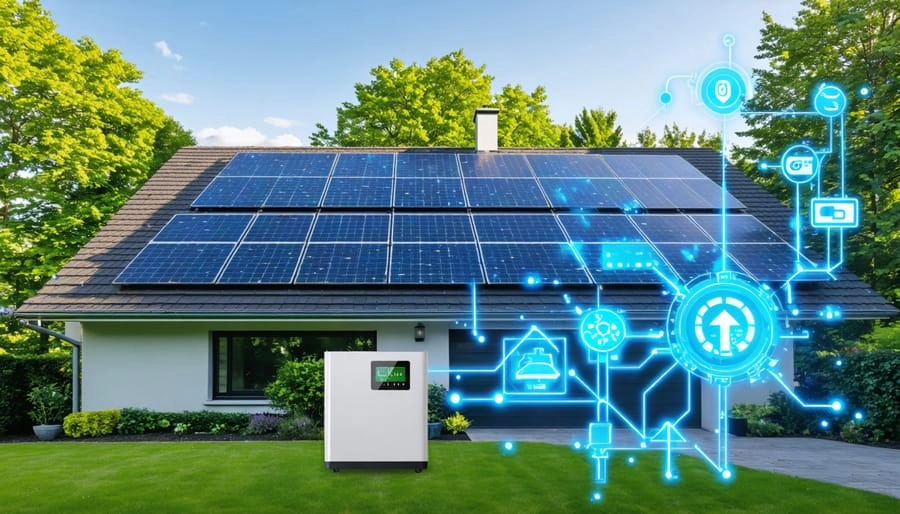
Home solar batteries become even more valuable when intelligently controlled. Intelligent energy management systems and automation can effectively save energy, reduce human error, and help your system operate at optimal cost.
Innovative Features for Shortening Payback Periods:
1. Automated Time-of-Use Scheduling: Use an EMS to automatically schedule battery discharge during high-price windows and recharge via solar or grid during inexpensive times.
2. Demand Charge Reduction: For properties subject to demand charges, batteries can be deployed to mitigate brief peak demand events, eliminating significant monthly demand charges.
3. Load Prioritization and Critical Load Profiles: Program batteries to prioritize critical circuits during outages and defer non-critical loads until solar power is available.
4. Electric Vehicle Charging Coordination: If you own an electric vehicle, you can use your vehicle to charge to absorb excess midday solar power and limit charging to times when grid prices are at peak. This can improve home solar utilization.
5. Behavioral Automation: Integrate with smart thermostats, water heater controllers, and smart plugs to shift discretionary loads to stored solar windows.
Real-World Example: Homes utilizing an EMS for TOU optimization and EV coordination can increase their solar self-use by 10-30% compared to unmanaged systems, resulting in meaningful additional annual savings and compressing the payback period.
Pairing Batteries with Energy Savings and Load Reduction Measures
A well-executed efficiency program can reduce the base energy demand that the battery must meet, thereby increasing the relative impact of stored solar power and accelerating payback, amplifying the value of a home solar battery.
Smart efficiency investments with quick payback:
1. LED lighting and high-efficiency appliances: Replacing high-use incandescent bulbs or older appliances can reduce baseline kilowatt-hour consumption.
2. Heat pump upgrades: Replacing electric resistance heating or older air conditioning units with modern heat pumps typically reduces HVAC energy consumption by 30-50%, reducing battery size requirements and conserving stored energy.
3. Insulation and air sealing: Simple attic and duct sealing can reduce heating and cooling loads, reducing battery cycles and improving long-term economic benefits.
4. Behavioral changes and appliance scheduling: Use smart plugs and schedulers to run dishwashers and washing machines during peak midday solar radiation.
Reducing overall electricity demand reduces the home solar battery capacity required for a given level of resilience, lowering upfront costs and shortening payback time. For example, a 15% reduction in household load could allow you to purchase a smaller battery at a significantly lower cost while providing similar outage coverage and bill savings.
Leveraging Incentives, Smart Financing, and Revenue Sources
Policy support and financing structures are powerful levers for shortening the payback period for home solar batteries. In many regions, incentives can significantly reduce the installation costs. Of course, we need to verify eligibility requirements, program timelines, and accrual rules. Furthermore, in some locations with low export credits, adding batteries for self-consumption offers a greater advantage. Conversely, robust net metering can reduce the relative benefits of energy storage. Furthermore, some utilities or third-party aggregators offer fees for allowing battery storage systems to provide grid services. Enrolling in these programs can generate recurring revenue or one-time incentives.
Final Recommendations for Accelerating Returns
Shortening the payback period for home solar battery requires a comprehensive approach that encompasses optimizing storage utilization, selecting efficient and durable battery technology, deploying innovative energy management systems, reducing household electricity consumption, and leveraging incentives and creative financing. We can collect usage and TOU pricing data over 12 months and appropriately select battery sizing to match the available kilowatt-hours to evening/peak demand, rather than relying on panel size.
Also, we choose efficient chemistries, prioritizing lithium ion solar batteries with high round-trip efficiency and guaranteed throughput. Use an EMS to program time-of-use optimization, demand reduction, and EV coordination. Before adding battery capacity, seal, insulate, and upgrade to a heat pump and LED lighting. Offer rebates, tax credits, and aggregate payments where feasible. By following these approaches, most homeowners can achieve a payback period several years faster than with a simple, pre-configured system.

