

How to size lithium ion solar batteries for off-grid applications?
When purchasing an off-grid system, customers often ask: how many lithium ion solar batteries are needed to power a home or facility reliably? Simply put, you need to calculate the site’s daily energy needs, select the required operating range, and then determine the battery capacity by adjusting for available depth of discharge (DoD), round-trip efficiency, temperature, and aging margin. Finally, ensure that the battery pack’s nominal capacity, voltage, and charge rate match those of the inverter and solar array, allowing the system to power and recharge loads under available sunlight. Below, I’ll provide a practical, step-by-step approach with formulas and example figures to give the clarity off-grid buyers need.
Lithium ion Solar Batteries: Assessing Daily Energy Needs and Load Profiles
Accurate sizing begins with a pragmatic energy audit. List all appliances and estimate their daily energy consumption in kWh. For example, a small LED lamp (10 W) running for 4 hours consumes 40 Wh; a laptop (60 W) running for 5 hours consumes 300 Wh. Add these items together to arrive at the total daily energy consumption. If you have meters, measure your actual electricity consumption over a typical week, as behavioral habits and seasonal variations can significantly impact electricity use.
In addition to energy consumption, also record peak loads and surge demands: Motors, pumps, refrigerators, and inrush currents may require high, short-term power. Furthermore, your inverter and battery must safely deliver sustained peak power. For example, a fridge operating at a 100-W load might generate a 700-W startup surge, and designers must ensure that a lithium ion solar battery can withstand this surge for hundreds of milliseconds.
Determine the required autonomy and reserve days
Reaching time, also known as storage days, refers to the amount of time a lithium ion solar battery must provide energy without requiring a recharge. Typical design options are 1-3 days for low-risk areas, 3-5 days for remote locations or high-reliability sites, and longer for mission-critical facilities. Multiplying the reaching time by the daily energy consumption directly determines the available storage capacity. For example, if a small household uses 4 kWh of electricity per day and you want 3 days of autonomy for the baseload (70%), the available energy is 4 × 3 × 0.7 = 8.4 kWh.
Determining the autonomy period also influences the size of the PV array in an off grid solar system. A more extended autonomy period generally means more days of charging, but users may need to recharge during months of low electricity. If weight and cost limit battery capacity, designers should strike a balance between autonomy and the use of a backup generator. Many systems combine moderate battery storage (2-3 days) with a backup generator to handle extended periods of cloudy weather economically.
Consider the DoD, cycle efficiency, and aging of lithium ion solar batteries
A battery must provide the required available energy with a nominal capacity exceeding the target available energy, as solar battery are not designed to be fully depleted and incur losses during both charging and discharging processes. Lithium ion solar batteries, particularly those using lithium iron phosphate (LIFP), typically have a deeper Depth of Discharge (DoD) (70-90%) and a longer cycle life, thereby providing higher usable energy than traditional battery chemistries. For LFP batteries, a DoD of 80% is a safe, long-life design. The round-trip efficiency (battery, inverter, and charger losses) is approximately 0.85–0.92, depending on the hardware. Engineers include a safety/aging factor of 1.10–1.25 to ensure sufficient capacity as the battery ages.
Continuing with the previous example (8.4 kWh usable capacity), the Depth of Discharge (DoD) is 80%, the round-trip efficiency is 90%, and the safety factor is 1.15. Because lithium battery capacity slowly degrades with the number of cycles and time, slightly increasing the nominal capacity can ensure years of reliability.
Capacity Matching with Inverter and System Voltage
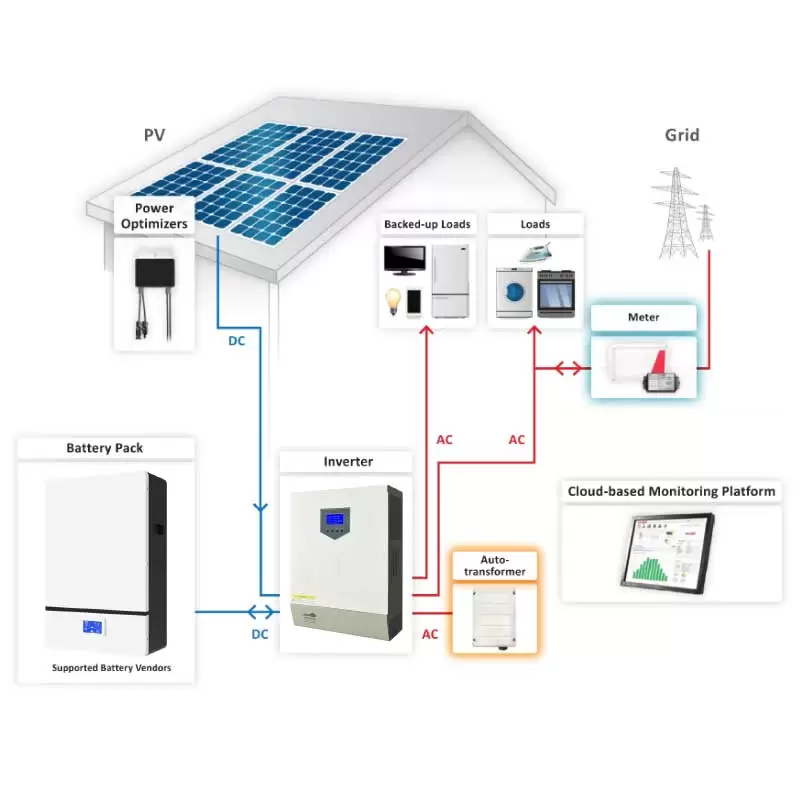
The nominal capacity is only part of the story. The solar array must be matched to the inverter power, charger/MPPT rating, and PV array size so that the off grid solar system can supply peak loads and take advantage of available sunlight hours for charging.
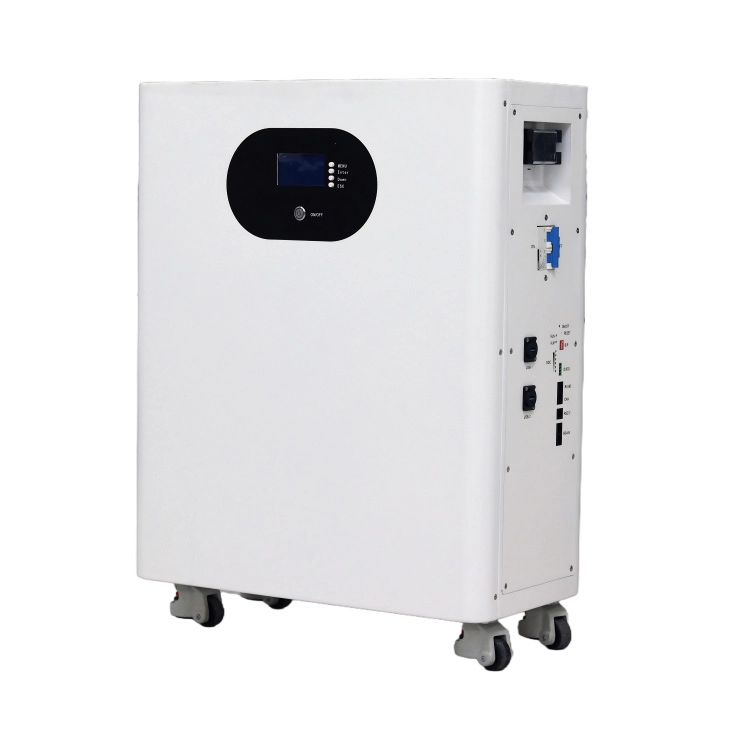
Standard off grid solar systems use 24 V or 48 V DC battery banks. A higher voltage (48 V) reduces the current for a given power and is more suitable for larger off grid solar systems. For a battery with a nominal capacity of 13 kWh at 48 V, the amp-hours are ≈ 271 Ah. Manufacturers typically rate modules at, for example, 51.2 V and 200 Ah, allowing you to connect modules in parallel or series to meet capacity and voltage requirements.
If your site has a continuous load of 2 kW and a refrigerator with a surge power of 6 kW, select an inverter with a surge power of at least 6 kW and a continuous power margin of 2-3 kW. The lithium-ion solar cell capacity must be balanced with the PV array power to allow for battery charging during daylight hours and typical weather conditions.
Estimate the daily sunshine hours for your location. For a cabin with 4 kWh of daily usage and 4 hours of peak sunshine, PV_kW ≈ (4 / 4) / 0.9 = 1.11 kW. To charge a larger battery after autonomous use, increase the PV power, or accept multi-day charging.
Environmental, Installation, and Safety Considerations
Sizing also requires consideration of practical installation details: weight, footprint, ventilation, temperature control, and BMS integration. Lithium ion solar batteries offer high energy density and good thermal performance, but they still require a suitable ambient temperature range (typically -20°C to +50°C). Their capacity decreases in cold weather, typically by 10% to 30% at low temperatures. Battery thermal management is crucial when operating the system in cold climates.
Safety and monitoring features include a battery management system, which provides battery balancing, overvoltage/undervoltage protection, temperature monitoring, and remote telemetry communications. The battery cabinet should be located in a dry, secure, and easily accessible location, adhering to the manufacturer’s clearance and access requirements. You must install appropriate fuses and DC circuit breakers, and you must adhere to local electrical codes. Furthermore, when planning for spare parts and service, our quote includes the expected service life, warranty, and replacement schedule, helping buyers understand long-term costs.
Providing you with a precise quote breakdown
The required battery capacity equals your available energy requirements, adjusted for system efficiency and the allowable depth of discharge (DoD). This energy requirement must be converted to the number of modules and physically laid out using the supplier’s dimensions. Our quotes to customers include kWh, module model and quantity, cabinet footprint and weight, electrical single-line diagrams, BMS functionality, environmental requirements, and maintenance/commissioning scope.


Leave a Reply
Want to join the discussion?Feel free to contribute!